36Kr Exclusive | The first profitable domestic medical exoskeleton company in China, Robo-Step, has secured nearly 100 million yuan in strategic financing from CITIC Construction Investment.
Recently, exoskeleton robot company Moonwalk Robotics announced that it has secured a new round of nearly 100 million yuan strategic investment from CITIC Construction Investment, with Haoguan Capital acting as the exclusive financial advisor.
As the first enterprise in China's medical exoskeleton sector to run a profitable business model, Moonwalk Robotics has adopted a systematic product logic of "Rehabilitation Medicine - Mechanical Design - Control Algorithm", proving that profitability and in-depth technological cultivation are not mutually exclusive choices.
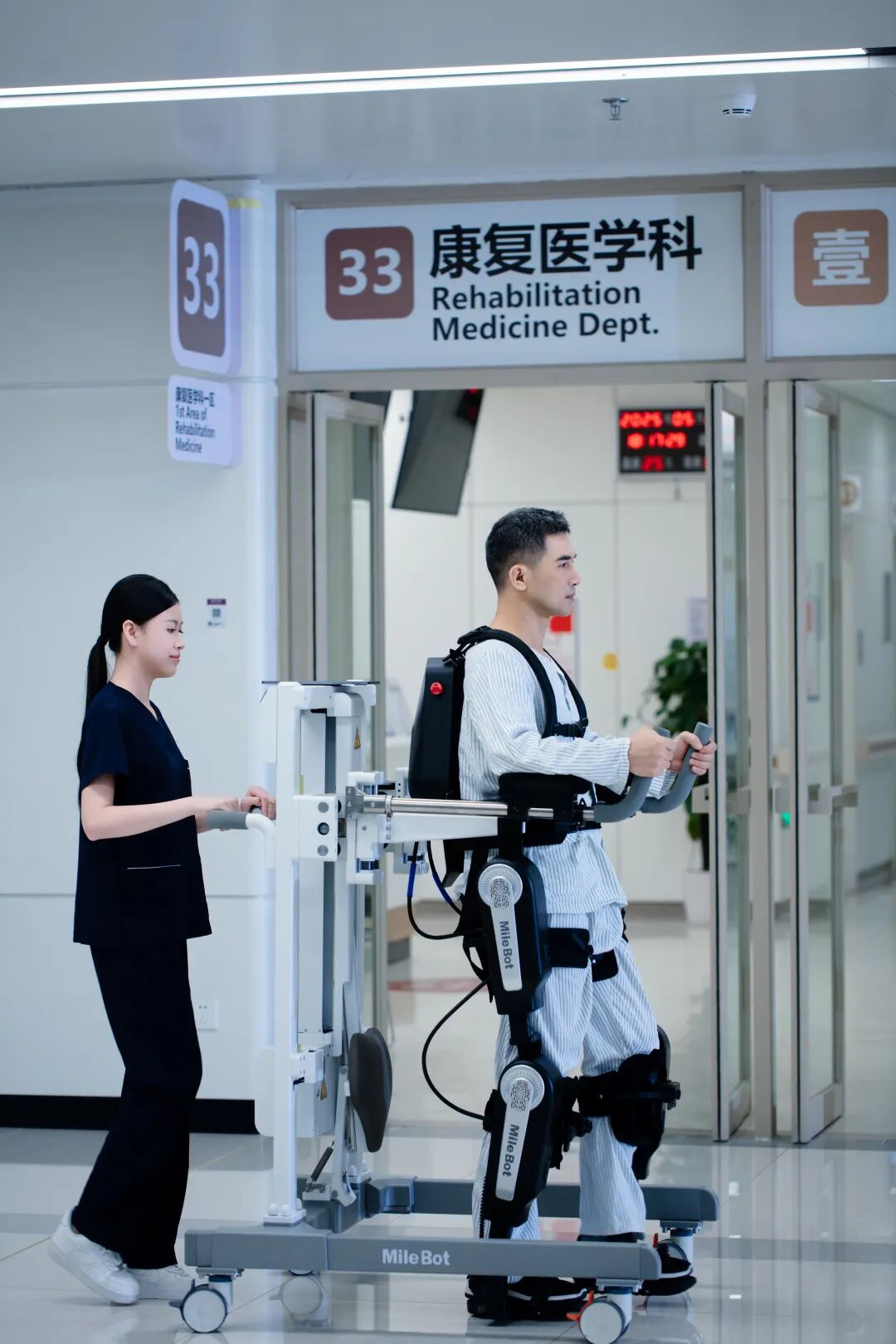
36Kr exclusively learned that after completing the Series B financing, Moonwalk Robotics is accelerating product iteration and the implementation of cutting-edge technology directions such as brain-computer interface, and strives to cover the "last mile" health and elderly care scenarios from hospitals, communities to families.
The Foundation of Profitability is a Repurchasable Medical-Grade Closed Loop
The profit code of Moonwalk Robotics is hidden in the generational gap of underlying technologies.
Traditional rigid-drive exoskeletons are like "iron frames", which passively drive patients to move through mechanical limits. Patients lack active participation during training, which not only limits the rehabilitation effect, but also easily leads to impedance and secondary injury risks.
However, Moonwalk Robotics chose a more difficult but more correct path from the very beginning of its establishment: independently developing flexible actuators.
The core of this flexible drive solution is to take the principles of rehabilitation medicine as the starting point of product design — in the view of Moonwalk Robotics, motor dysfunctions caused by diseases such as stroke and spinal cord injury have different rehabilitation mechanisms, and robots should first follow medical logic rather than "challenge" medical principles.
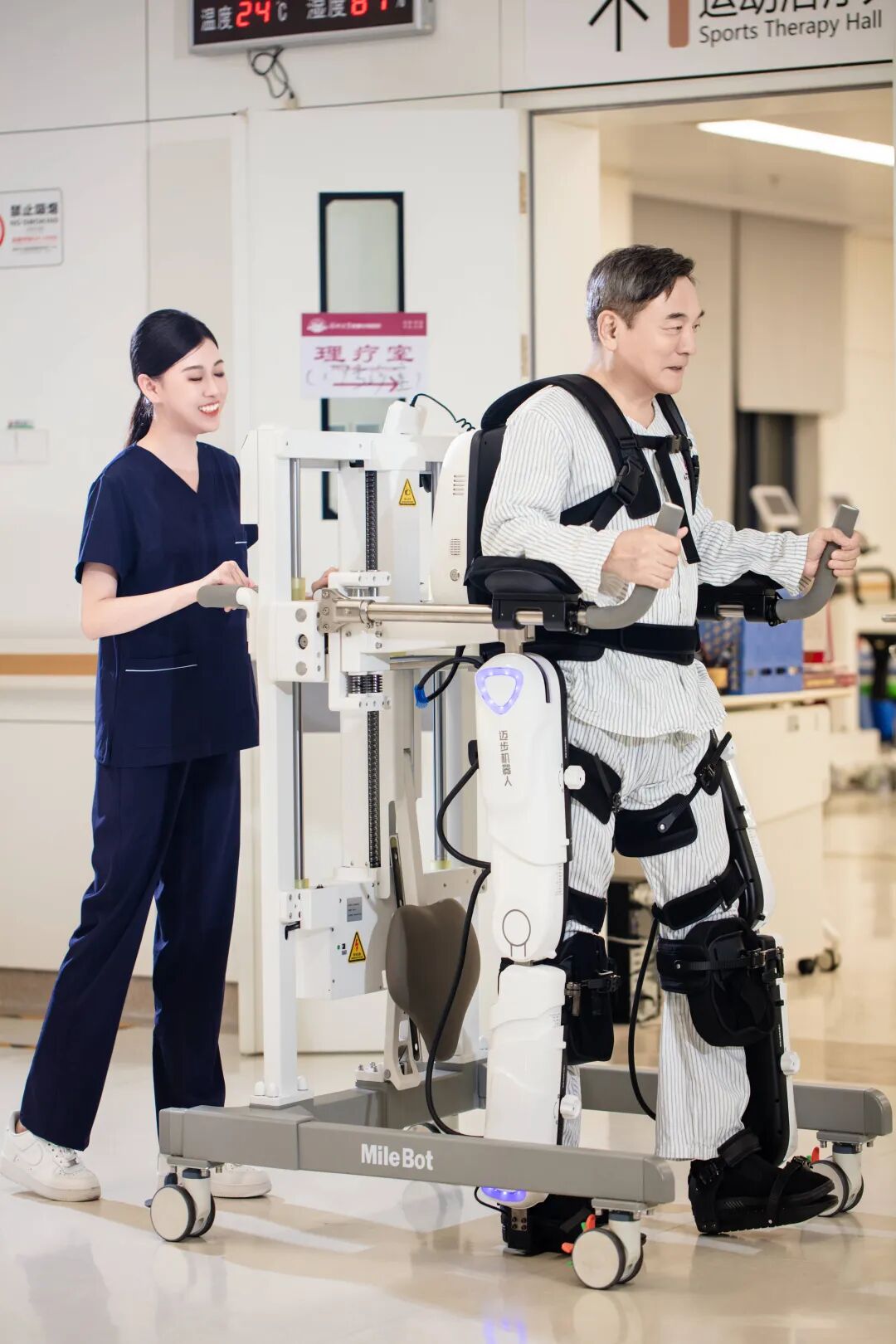
Based on this concept, starting from sensor layout and gait biomechanical model, Moonwalk Robotics took the lead in using flexible actuators as power output to realize active rehabilitation training. At the same time, it developed a patented biomechanical model to analyze gait, providing users with accurate, intelligent and personalized rehabilitation training schemes.
"We are not making an automated device that replaces human labor, but creating an intelligent partner that can understand the patient's intention," said Chen Gong, founder of Moonwalk Robotics and PhD in Biomedical Engineering from the National University of Singapore.
Clinical data shows that the motor function recovery effect of stroke patients after active training is significantly better than that of passive training. The robot group can achieve significant differences from the pre-treatment state as early as the 2nd week, while traditional treatment can only achieve significant effects until the 4th week.
Moonwalk Robotics also took the First Affiliated Hospital of Nanjing Medical University and the Second People's Hospital of Shenzhen as test bases, verified the effectiveness of the new intelligent rehabilitation lower limb exoskeleton robot through industry-university-research cooperation, with more than 100 samples fully verifying its effectiveness and safety.
A good product itself is the best business model. This "medical-engineering cross" system integration capability has gradually formed the deepest technical moat of Moonwalk Robotics, and also consolidated the foundation of its early profitability: terminal hospitals form real repurchases, replacing the one-time procurement logic; the sales network reaches effective density, and the unit customer acquisition cost enters a controllable range; the supply chain cost management is excellent, leading the revenue expansion.
This concept has been verified in performance. In 2025, the performance of Moonwalk Robotics increased by nearly 200%, and the overseas market contributed more than one third of the revenue.
When the industry moves from the "technology test site" to the key inflection point of the "golden period of application", Moonwalk Robotics has taken the lead in occupying a position in the top camp.
J&J Background Senior Executive Joins, Shifting from Selling Equipment to Clinical Business
The acceleration of commercialization requires the support of organizational capabilities, and the appointment of new CEO Chen Kangning is a key move under this logic.
Chen Kangning has rich working experience in multinational medical giants such as Johnson & Johnson, with full-chain experience from product registration and listing to channel system construction. She will bring a complete set of "medical operation methods" verified by multinational pharmaceutical companies to Moonwalk Robotics: replicable compliance system, refined agent management, deep cultivation capability for tertiary hospital channels, as well as pricing and service models redesigned for high-value medical equipment.
This is not only an upgrade of the management system, but also a key step for Moonwalk Robotics to transform from a "product-centered" to a "customer-centered" clinical promotion system, further consolidating the medical-grade compliance foundation while expanding the market.
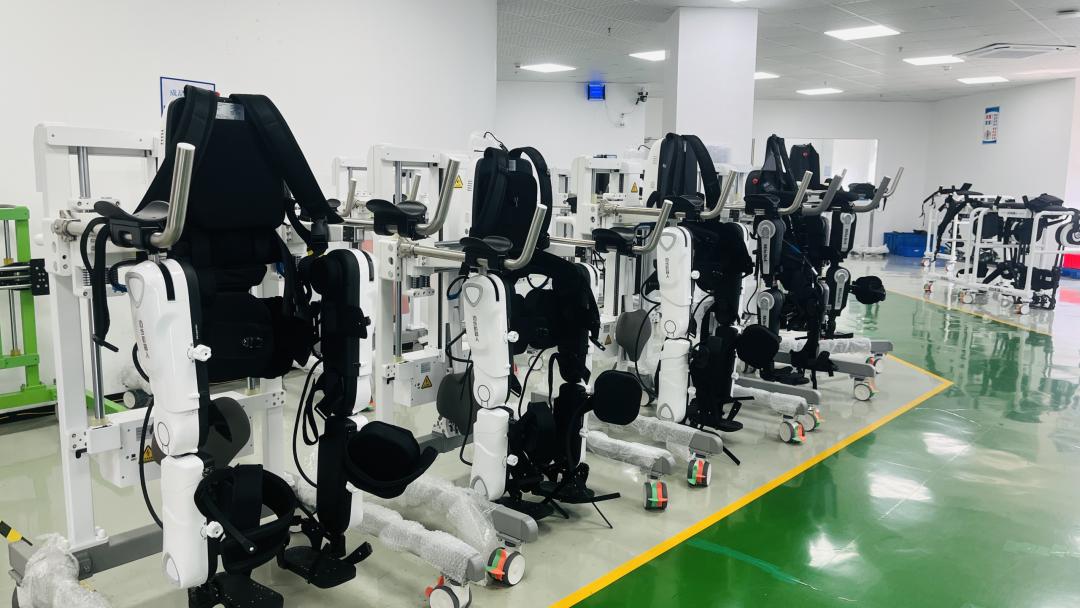
Corresponding to this new organizational system of Moonwalk Robotics is the constantly expanding market.
2025 is regarded as the first year when exoskeleton robots "break out of the circle" — at the beginning of the year, videos of exoskeleton robots helping tourists climb Mount Tai were widely spread on the Internet; at the end of the year, in the fire at Hong Fu Yuan, Tai Po, Hong Kong, mainland enterprises including Moonwalk Robotics donated exoskeleton robots for stair climbing assistance to Hong Kong, and many Hong Kong officials publicly expressed their gratitude for the mainland's support.
These two events brought exoskeleton robots from the professional medical field to the public view.
Even earlier, Moonwalk Robotics' overseas expansion story had already started quietly.
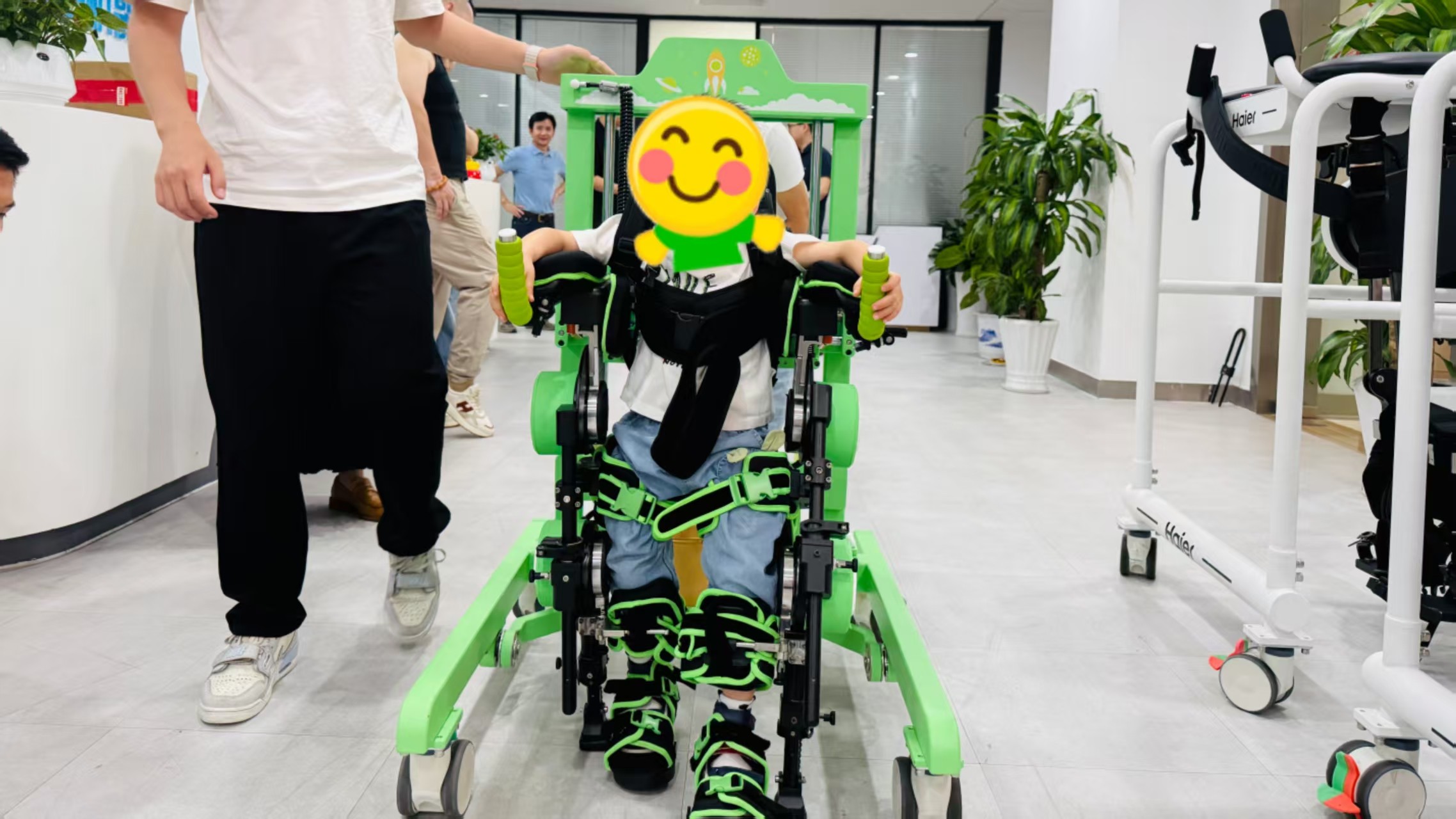
Zhou Deqiang, overseas business director of Moonwalk Robotics, clearly remembers that in 2023, a special education school in Hong Kong took the initiative to contact them with a clear demand: children need more stable and sustainable lower limb training. Before the robot was available, training was mainly completed manually by rehabilitation therapists, which consumed a lot of physical strength and was limited in efficiency. With the robot, each child can train for about 30 minutes at a time, and rehabilitation therapists can also be liberated from high-intensity repetitive movements.
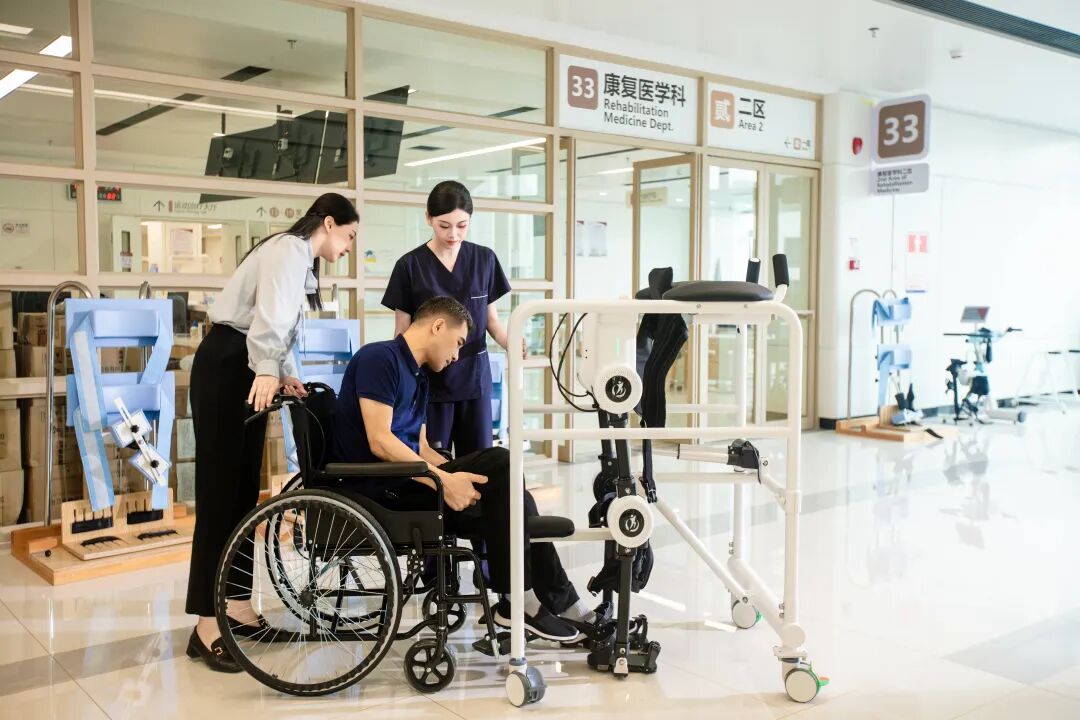
What is more signal-significant is an affordable model named "3000 Steps" — it was originally designed to meet the actual budget of rehabilitation institutions in developing countries. The Indian agent only read the product introduction, did not even wait for the prototype, and directly placed an order for two units.
At present, focusing on the human-computer interaction technology of flexible actuators, Moonwalk Robotics has built three major product lines: lower limb rehabilitation (H series, A series, C series children's lower limb rehabilitation series), 3000 Steps health care series, and daily mobility assistance (MAX series), covering the full scenario demands of in-hospital rehabilitation, home health care and daily mobility assistance. All core products have obtained NMPA Class II medical device certification and entered large-scale sales.
From "Wanting to Step Forward" to "Actually Stepping Forward", Building a Medical-Engineering Closed Loop That Embeds Brain-Computer Interface Into Medical Insurance Path
If the flexible actuator human-computer interaction technology "drives" the "present" of Moonwalk Robotics, then cutting-edge technologies such as brain-computer interface are its bet on the "future".
While the outside world's imagination of brain-computer interface still stays at futuristic concepts such as "typing by thought" and "consciousness uploading" in science fiction movies, Moonwalk Robotics has already started to promote the combination of this technical path with medical health care robots.
Behind this is a reorganized technical logic: in the technical logic of rehabilitation medicine, brain-computer interface and exoskeleton robots are naturally complementary "partners": the exoskeleton is responsible for "performing actions" as the execution end; the brain-computer interface is responsible for "reading intentions" as the perception and transmission end.

This closed loop of "intention initiation - device response - sensory feedback transmitted back to the brain" upgrades rehabilitation from "being dragged by the machine" to "driving the body with thoughts", which truly hits the core of neuroplasticity rehabilitation — the synchronous coupling of central commands and peripheral movements, which is currently recognized as a high-value cutting-edge direction in the international rehabilitation field.
The confidence of Moonwalk Robotics to enter this track does not lie in "chasing hot spots", but in that it has already laid a solid foundation in medical-grade scenarios.
Many domestic brain-computer interface enterprises choose to break through from the consumer market: game interaction, concentration headbands, meditation monitoring, etc. These products have fast iteration and prominent concepts, but they generally face natural barriers of "returning from the C-end to the B-end" such as lack of clinical resources, unclear medical registration paths, and uncertain payment scenarios.
The industrial accumulation of Moonwalk Robotics is almost "the opposite": it has been deeply engaged in rehabilitation robots for many years, holds more than 200 patents, has gone through the whole process of obtaining NMPA Class II medical device certification, has long cooperated with Tsinghua University and top domestic rehabilitation clinical teams to build scientific research and test networks, and more importantly — it has rooted its sales and service terminals in hundreds of hospitals across the country.
From "future concept" to "bedside device", what is missing in the middle is never imagination, but respect for medical rules, repeated polishing of clinical pain points, and a complete set of systematic capabilities to truly "medicalize" cutting-edge technologies.
For peers, the hardest part of brain-computer interface may be "after leaving the laboratory", but for Moonwalk Robotics, that is precisely the "easiest" part of the road. While others are making up lessons from "0 to 1", what Moonwalk Robotics is doing is the multiplication from "1 to N".
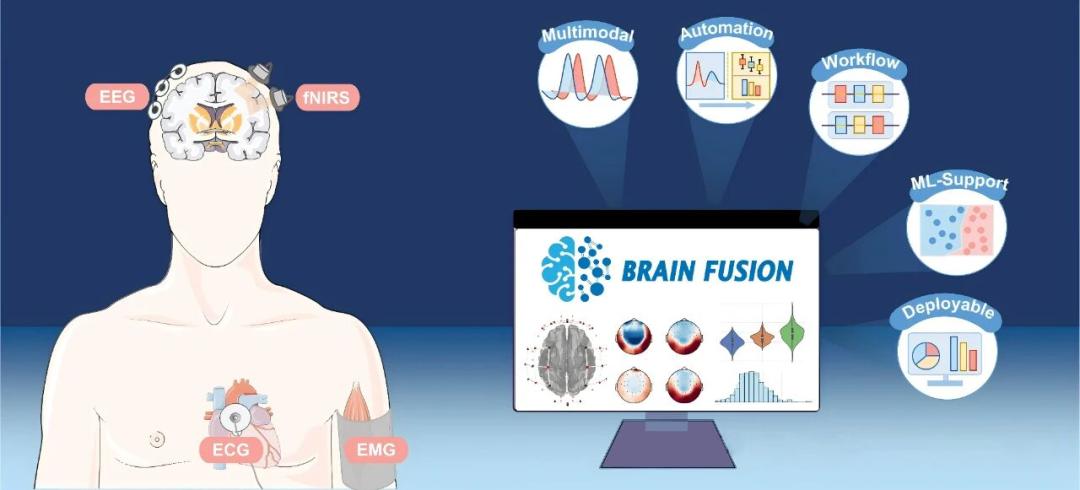
Policies have already "built the road" to the door of the laboratory in advance. In 2025, the National Healthcare Security Administration made a rare forward-looking move in the "Guidelines for the Establishment of Neurological Medical Service Price Items (Trial)": while the brain-computer interface is still in the laboratory stage, it simultaneously set up invasive and non-invasive related price items, directly opening up the "key last mile" for innovative technologies to enter clinical practice.
Less than a year later, on March 22, 2026, the world's first invasive brain-computer interface medical device was officially approved and assigned a medical insurance code — this is not only the birth of a product, but also the first time that China has demonstrated how a cutting-edge technology moves from papers to wards, from special cases to inclusive services in the complete closed loop of "R&D - listing - payment".
For Moonwalk Robotics, this is not a distant trend, but a window that has already been opened.
At the moment when the commercialization inflection point has arrived and technical barriers are to be built, Moonwalk Robotics is trying to prove that on the long and snow-covered track of medical rehabilitation, early profitability and in-depth technological cultivation are not choices, but the only way to reach the final destination.
From the surprised expression of patients when they stand on the machine for the first time, to the small progress of an old man walking from the room to the yard — these specific, individual moments constitute the true background of the "ubiquity" that Moonwalk Robotics pursues.