The two "AI Colosseums" have been sold for a combined sky-high price of 150 billion yuan. What on earth are the giants after?
In the past few years, the most valuable assets in the AI industry have long been model capabilities and computing power.
OpenAI has become one of the most high-profile AI companies worldwide with its GPT series, Anthropic has secured massive financing backed by Claude, and Google and Meta have also continuously invested capital to train more powerful models.
Meanwhile, the competition around AI infrastructure is equally fierce. Leveraging the surging demand for GPUs, NVIDIA has become one of the chip companies that benefit the most from the AI boom. Microsoft, Amazon, Google and Meta are all investing hundreds of billions of dollars to build data centers, competing for the computing resources required to train and run large models.
But recently, another shift has begun to emerge in the AI industry.
Companies that do not train large models, produce chips, or build data centers have started to become targets of competition among tech giants.
According to reports, open-source AI platform Hugging Face is exploring a sale, with a potential transaction value of at least 13 billion US dollars.

Coincidentally, before the news of Hugging Face's sale came out, another similar transaction had just taken place in the AI industry. Stripe announced the acquisition of AI model routing platform OpenRouter, with the transaction price reaching the level of 8 billion US dollars.
Behind the high-priced deals of Hugging Face and OpenRouter is a new battle for the "AI Colosseum".
Not building models, still worth 13 billion US dollars
Hugging Face may be put up for sale.
According to reports, this open-source AI platform is exploring a sale, with a potential transaction value of at least 13 billion US dollars. At present, AI giants including Microsoft, Google, Amazon, NVIDIA and others are all considered to be potentially interested in the company.

If the news is finally confirmed, it will become another high-stakes transaction in the AI industry.
This acquisition is particularly noteworthy, as Hugging Face is not a traditional model company.
Hugging Face is a large open-source community and distribution platform in the AI model world. Researchers and developers can upload, download and test various models here, and also perform fine-tuning and secondary development based on existing models.
If AI producers are equivalent to shop operators, then Hugging Face is the operator of a shopping mall.
Founded in 2016, Hugging Face initially developed a chatbot. With the development of the Transformer model and open-source AI, the company gradually shifted to a model community and development platform.
In 2023, Hugging Face completed a $435 million financing round, and the company was valued at approximately $4.5 billion at that time, with an annualized revenue of around $30 million.
In other words, in that financing round, the market gave it a valuation of more than 100 times its revenue.
Calculated based on the rumored transaction price of 13 billion US dollars today, Hugging Face's valuation will nearly triple in just a few years.
Looking at these numbers alone, this transaction does seem somewhat unbelievable.
A company founded less than a decade ago has not trained any industry-leading large model, and its revenue scale is far from comparable to that of OpenAI and Anthropic. Why is it competed for by giants at the level of tens of billions of dollars?
The answer is: ecosystem.
With the rapid development of open-source models, Hugging Face has gradually become one of the most important platforms for AI developers around the world.
Today, Hugging Face already hosts more than 3 million public models, approximately 1 million public datasets, and over 13 million users. Developers can upload, download and test models here, and also carry out fine-tuning and secondary development based on existing models.
Many open-source models choose Hugging Face as their first stop for release.
After the DeepSeek-R1 open model, which became a hit early last year, opened its weights, it simultaneously landed on Hugging Face, becoming an important channel for global developers to access and secondarily develop the model. For another example, after the Kimi K3 model from Moonshot AI opened its full model weights, it landed on Hugging Face immediately, and topped the platform's trending list in just half an hour.
For developers, large model companies create model capabilities, while Hugging Face connects the entire process of models from development to implementation.
This is also the core value of Hugging Face.
Code collaboration in the software world requires platforms like GitHub. Now in the AI era, models, data and tools also need an entry point that connects developers and technical resources.
When giants compete for Hugging Face, they are targeting a forming entry point of the AI ecosystem.
In the AI Colosseum, not only the competitors are valuable
Shortly after the news that Hugging Face is exploring a sale came out, another unexpected transaction emerged in the AI industry.
Also in August this year, payment company Stripe announced the acquisition of AI model routing platform OpenRouter. According to reports, the transaction price reached the level of 8 billion US dollars.
This figure is quite staggering.
OpenRouter is a very young company. It was founded in 2023, and it has not been several years since then.
In May this year, OpenRouter just completed a $113 million financing round, and the company was valued at approximately $1.3 billion at that time. Just a few months later, the acquisition price rose more than 6 times compared to the company's valuation.
In terms of revenue, OpenRouter is also not a company that is traditionally considered to be worth 8 billion US dollars.
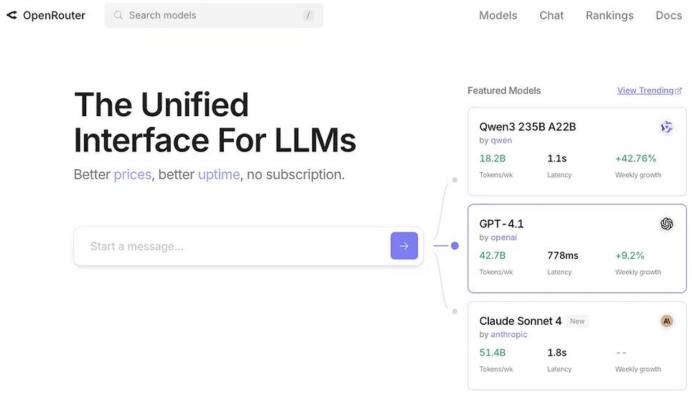
According to reports, OpenRouter's recent annualized revenue is about 140 million US dollars. Calculated at the transaction price of 8 billion US dollars, the acquisition price is equivalent to nearly 60 times of its annual revenue.
Such a valuation multiple is almost unimaginable for mature enterprises.
Like Hugging Face, OpenRouter is not a company that trains large models.
If companies like OpenAI, Anthropic and Google are the "competitors" at the center of AI competition, constantly fighting to train more powerful models, then Hugging Face and OpenRouter are more like the "Colosseum" built around these competitors.
None of them have created the most core model capabilities, but they connect a large number of model developers and users.
Hugging Face enables developers to find and use a large number of open-source models, while OpenRouter allows enterprises and developers to call different models across providers.
For developers, the more model options there are, the more troublesome the access process becomes. To use OpenAI's model, you need to access the OpenAI API. To call Claude, you need to integrate with Anthropic. If you want to test an open-source model, you also have to handle the deployment and calling issues on your own.
As the number of models increases, this process becomes more and more complicated.
OpenRouter provides a unified entry point, allowing developers to access different companies' models with a single integration, and switch between different models according to task requirements.
Today, OpenRouter has integrated more than 400 models, covering dozens of model suppliers, processing trillions of Token requests every day, and its users include individual developers, startups and enterprise customers.
This is also the reason why Stripe is willing to spend tens of billions of dollars to acquire it.
In the past, Stripe solved the payment problem in Internet commerce. When merchants sell goods, they need to handle payment methods, transaction settlement, risk control and taxation, and all these complex links can be handed over to Stripe. Now AI applications are beginning to enter enterprise businesses, and new complex problems have emerged accordingly, as enterprises call different models in the ever-changing model market.
Stripe also mentioned in its acquisition announcement that in the future, enterprises will not only face payment problems, but also issues such as how to optimize Token consumption and how to choose between different models.
This is actually very similar to Stripe's past business logic. In the payment industry, Stripe does not directly participate in transactions, but it controls the most critical channel between merchants and consumers.
From this perspective, although OpenRouter and Hugging Face are in different positions in the AI industry chain, they represent the same trend.
What giants are competing for is no longer limited to becoming the best competitor in the Colosseum, but also controlling the "AI Colosseum" that defines how competitors are selected and connected.
Why do all giants want to acquire these "third-party" platforms
The software industry once had a very similar case — in 2018, Microsoft announced the acquisition of GitHub for 7.5 billion US dollars in stock.
This transaction was not cheap at the time.
Founded in 2008, GitHub was initially just a platform that helped developers host code and collaborate on development. By the time Microsoft announced the acquisition, GitHub already had more than 28 million developers and 85 million code repositories, making it one of the largest code hosting platforms in the world.
But in terms of business scale, GitHub does not look like a company worth 7.5 billion US dollars.
Before the acquisition, GitHub mainly relied on enterprise version subscriptions for revenue. In its last financing round in 2015, the company was valued at about 2 billion US dollars; by the time it was acquired by Microsoft in 2018, although it had become the core platform of the developer community, it still had not achieved profitability.
What Microsoft actually bought was the largest developer network in the software industry.
Microsoft stated at the time that GitHub has become a platform for developers around the world to learn, share and collaborate, where everyone from large enterprises to individual developers builds software. Code is the most important means of production in the software era, and GitHub connects code creators, open-source projects and enterprise development processes.
GitHub has proven one thing: in the technology industry, controlling the means of production is important, but controlling the entry point through which the means of production flow also has huge value.
Now similar changes are emerging in the AI industry.
Since the entry point is so important, why can't giants like Microsoft, Google and Amazon, which already have models, cloud services and developer tools, build one on their own?

Of course the giants can do that, but the problem is that such a platform will naturally carry a commercial stance, which does not help to stimulate vitality. The most special feature of the "Colosseum" represented by Hugging Face is that it has long played a relatively neutral role.
No matter the model comes from Meta, Google, or a large number of individual developers, in theory, they can all be displayed, tested and used on the same platform. This neutrality cannot be purchased with capital in the short term.
GitHub was the same back then. When announcing the acquisition, Microsoft specifically emphasized that GitHub will continue to operate independently and maintain its open platform attributes. Microsoft tried its best to keep GitHub as it originally was, and then launched GitHub Copilot on this developer ecosystem, allowing AI programming tools to directly enter the daily workflow of developers.
If Hugging Face is acquired by Microsoft, Google or Amazon in the future, it will face similar problems.
The acquisition can bring more capital, stronger infrastructure and faster commercialization, but at the same time it may weaken its neutrality as a public AI community.
This is actually the contradiction that is emerging in the AI era. Open-source models require an open platform, developers need freedom of choice, and giants want to control these key entry points that connect intelligent capabilities.
Will this become an "impossible triangle"?
This article is from the WeChat official account "Letter AI", written by Xiao Jinya, and published with authorization by 36Kr.