Costco and Trader Joe's are vying to sell it. The "purple yam" that Starbucks introduced to China, could it be the next matcha?
No more envying overseas markets! The wildly popular dreamy Ube latte that took global social media by storm has finally landed in China!
"What exactly does Ube, the drink that every Western and Korean young woman carries in their hand, taste like?" Netizens who have been curious for a very long time can finally get to try it. Recently, Starbucks has brought this overseas viral iced Ube matcha latte to the Chinese market. The collision of Ube's purple hue and matcha's green tone has fascinated many consumers at first sight.
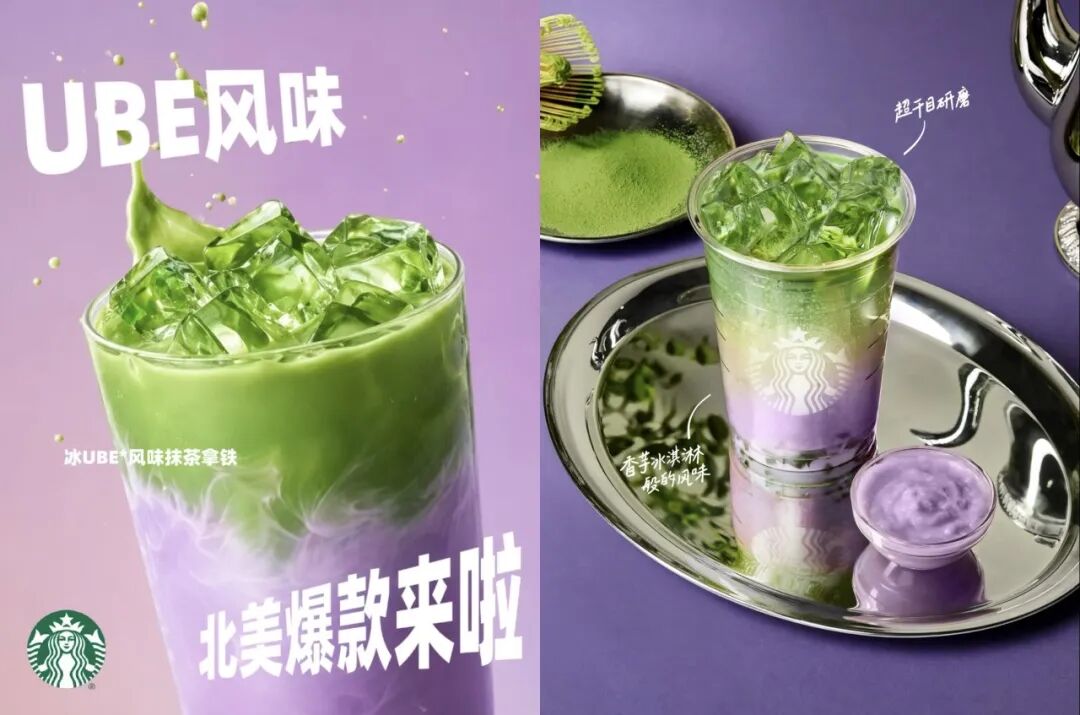
Image source: Starbucks
However, Starbucks is far from the only brand that has set its sights on Ube. Costco and Trader Joe's are scrambling to sell Ube products, Korean coffee shops are also frantically launching new Ube items, this "purple yam" Ube from the Philippines is setting off a massive purple storm across the global food market.
Even more, global brands are moving so fast to snap up Ube supplies that the upstream raw material chain is starting to struggle to keep up. Bloomberg's headline explicitly stated: "Americans are so obsessed with Ube that the crop is nearly being wiped out in the Philippines." South Korean media also reported that "Ube raw materials are already hard to source, and cannot meet the surging demand in the local market."
What exactly makes Ube so sought-after by global brands?
This local ingredient that used to only appear in Filipino desserts has traveled all the way from the Philippines to the US, then exploded in popularity in South Korea, and has been continuously featured by leading coffee, tea, bakery and retail giants, and is even referred to as "the next matcha" by the overseas food industry today. How did it achieve all that?
1
Known as "the next matcha", what exactly is Ube, the super ingredient from the Philippines?
Many people who see Ube for the first time will ask three questions: Is this purple sweet potato? Is this taro? What does it have to do with taro flavor?
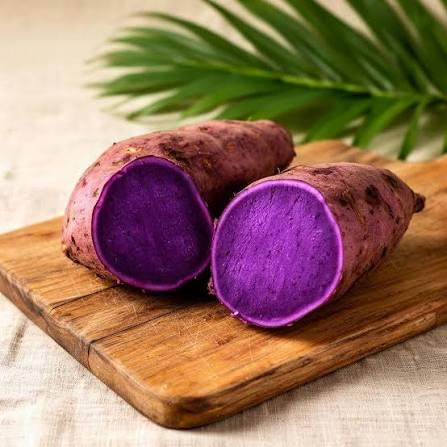
Image source: Ube Nolia
Some people even say: "Ube tastes exactly the same as the taro flavored ice cream we ate when we were kids! In fact, all the taro flavored ice cream you ate back then used Ube flavoring!"
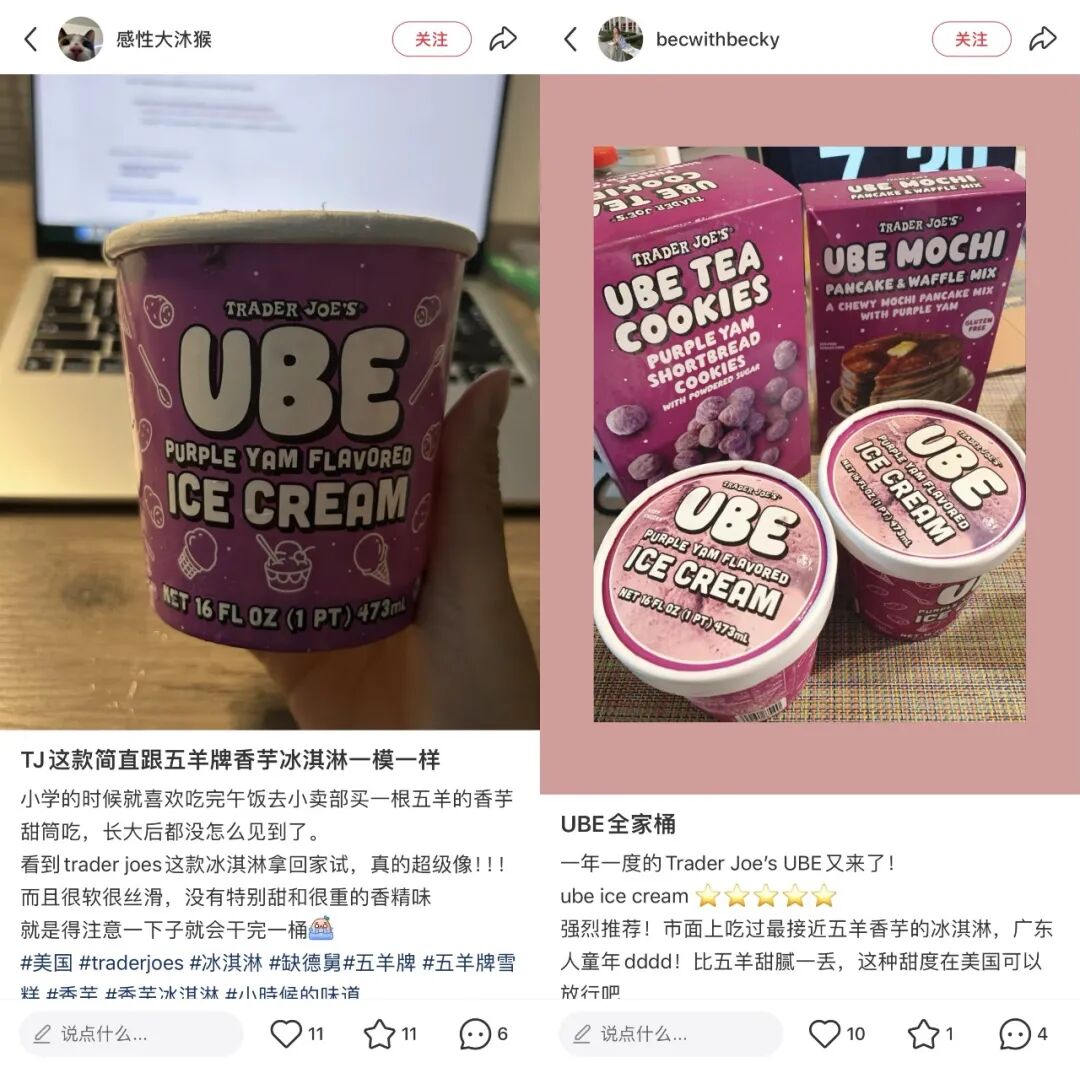
Image source: Xiaohongshu
In fact, Ube is neither purple sweet potato nor taro. It is a type of greater yam, with the scientific name *Dioscorea alata*, commonly referred to as purple yam in English, and locally called Ube or Ubi in the Philippines. In regions like Guangdong, Guangxi and Jiangxi in China, it has more down-to-earth local names: greater yam or foot yam.
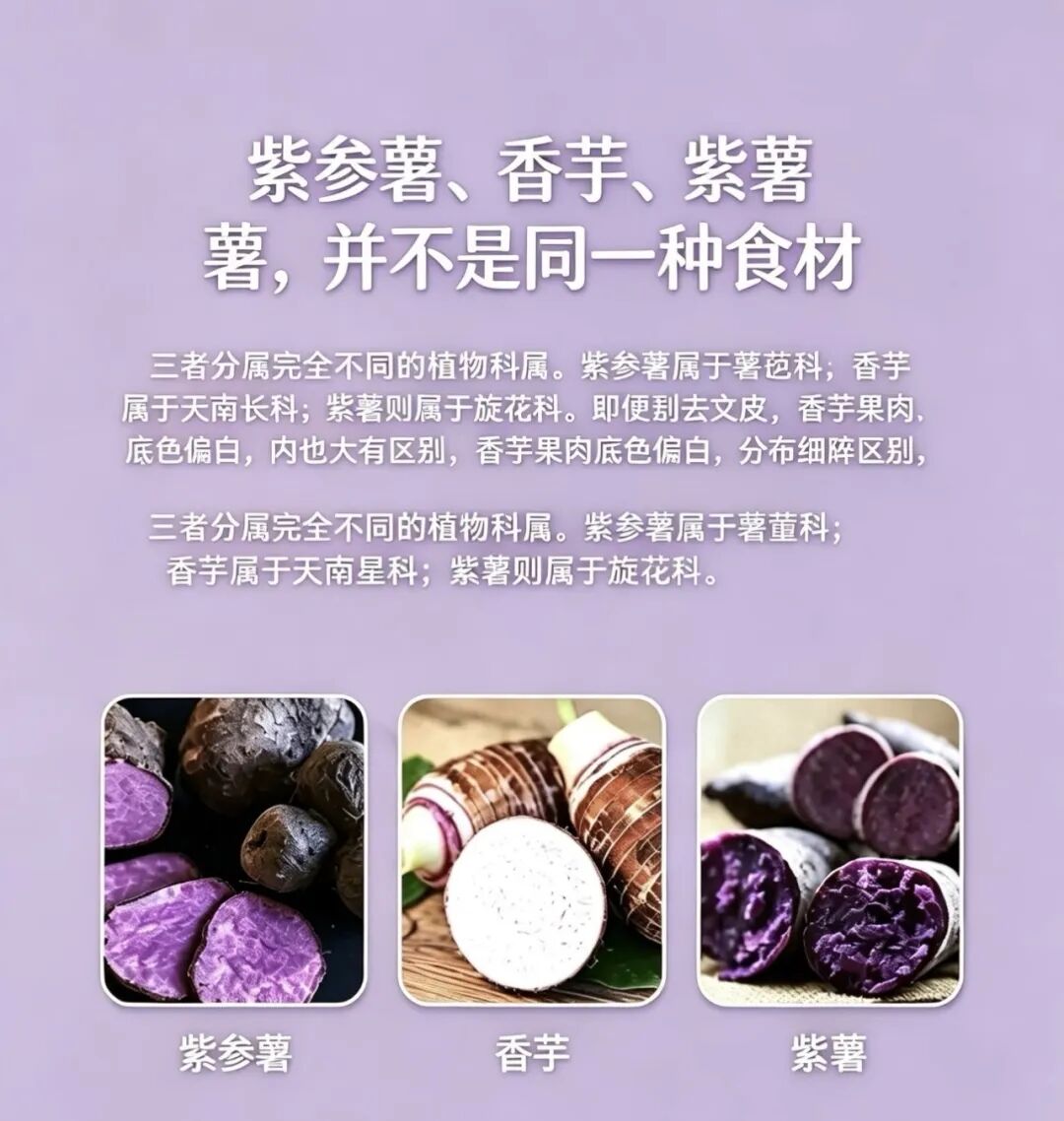
Image source: Xiaohongshu
Ube is mainly distributed in tropical regions including the Philippines and other Southeast Asian countries. Among these regions, the Philippines is the core origin of Ube in terms of culture and consumption, with a planting history spanning thousands of years. According to a report from *The New York Times* last December, the Philippines produces more than 14,000 tons of greater yam every year, and is recognized as the world's largest producer of this crop.
So why exactly did this specific ingredient from the Philippines become a global sensation?
The reason is exactly that Ube has four commercially exploitable assets: visual appeal, unique flavor, health benefits and cultural connotation.
The first layer of its charm comes from its incredibly photogenic dreamy purple hue.
Compared with common yams, Ube comes with a natural purple color derived from natural pigments such as anthocyanins, with an anthocyanin content of 300mg/100g, which gives it an innate "social media friendly" attribute.
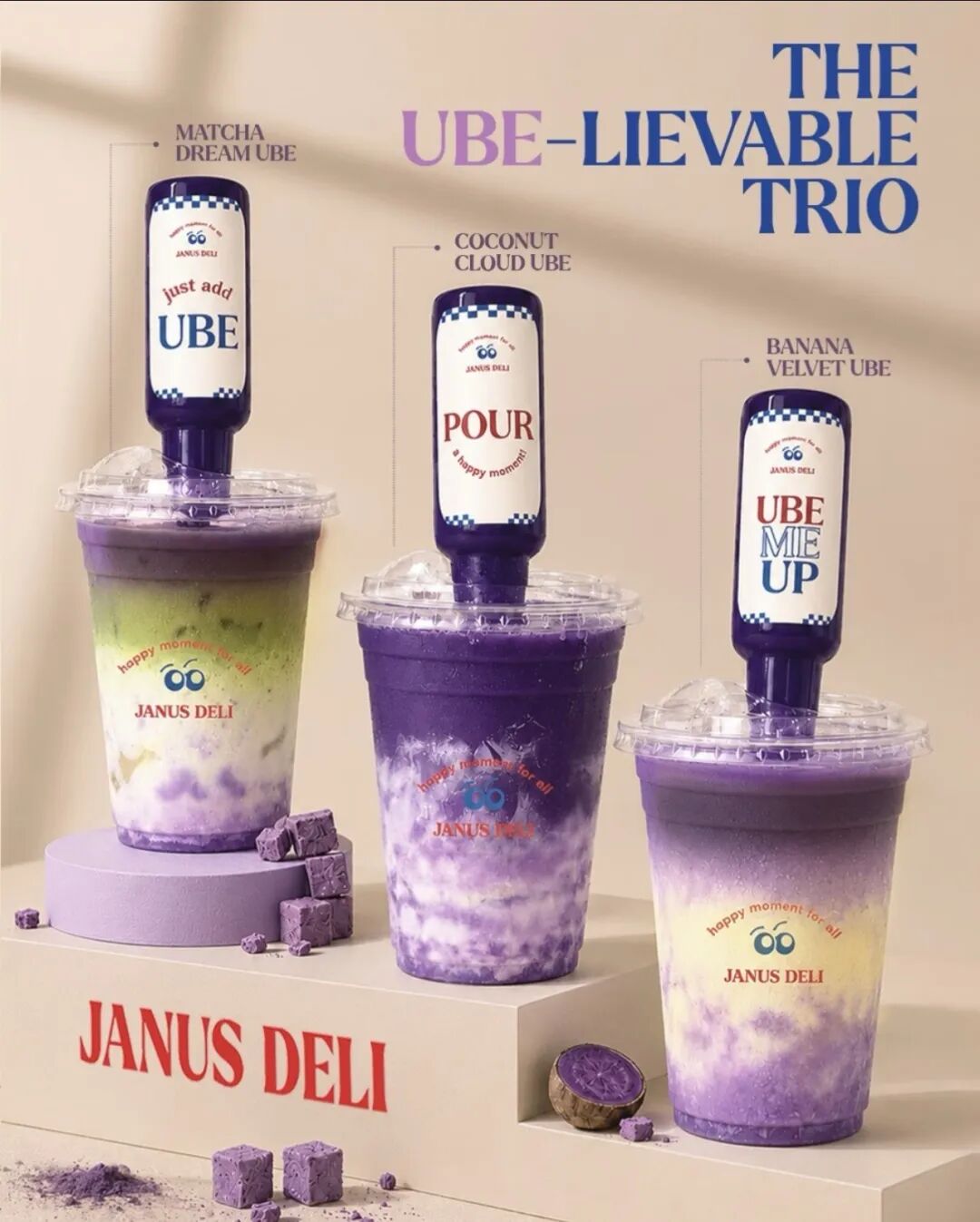
Image source: Xiaohongshu @Janus Deli
The purple color has conquered the camera, while Ube's distinct and highly adaptable flavor profile has won over consumers' taste buds.
Ube has a smooth, delicate texture with relatively mild sweetness, and carries subtle nutty, vanilla and faint coconut aromas. This means it can not only act as the core flavor in desserts, but also pair perfectly with a wide range of ingredients including coconut, cheese, matcha and chocolate.
Nutritionally, Ube also has the "superfood" health halo.
It is rich in vitamin C, vitamin A, dietary fiber and antioxidants, and has natural anti-inflammatory properties. Coupled with its low glycemic index (low GI) and resistant starch content, it is friendly to gut health and blood sugar control, perfectly aligning with the health-focused dietary trend pursued by the younger generation.
Beyond its high nutritional value, Ube also has notable commercial potential in the clean label segment.
Its purple color comes from anthocyanins that are very stable, and it does not fade easily during processing and storage, making it an ideal natural pigment. Compared with solutions that rely on artificial pigments to create a purple appearance, Ube is a much cleaner option in the era of clean label food.
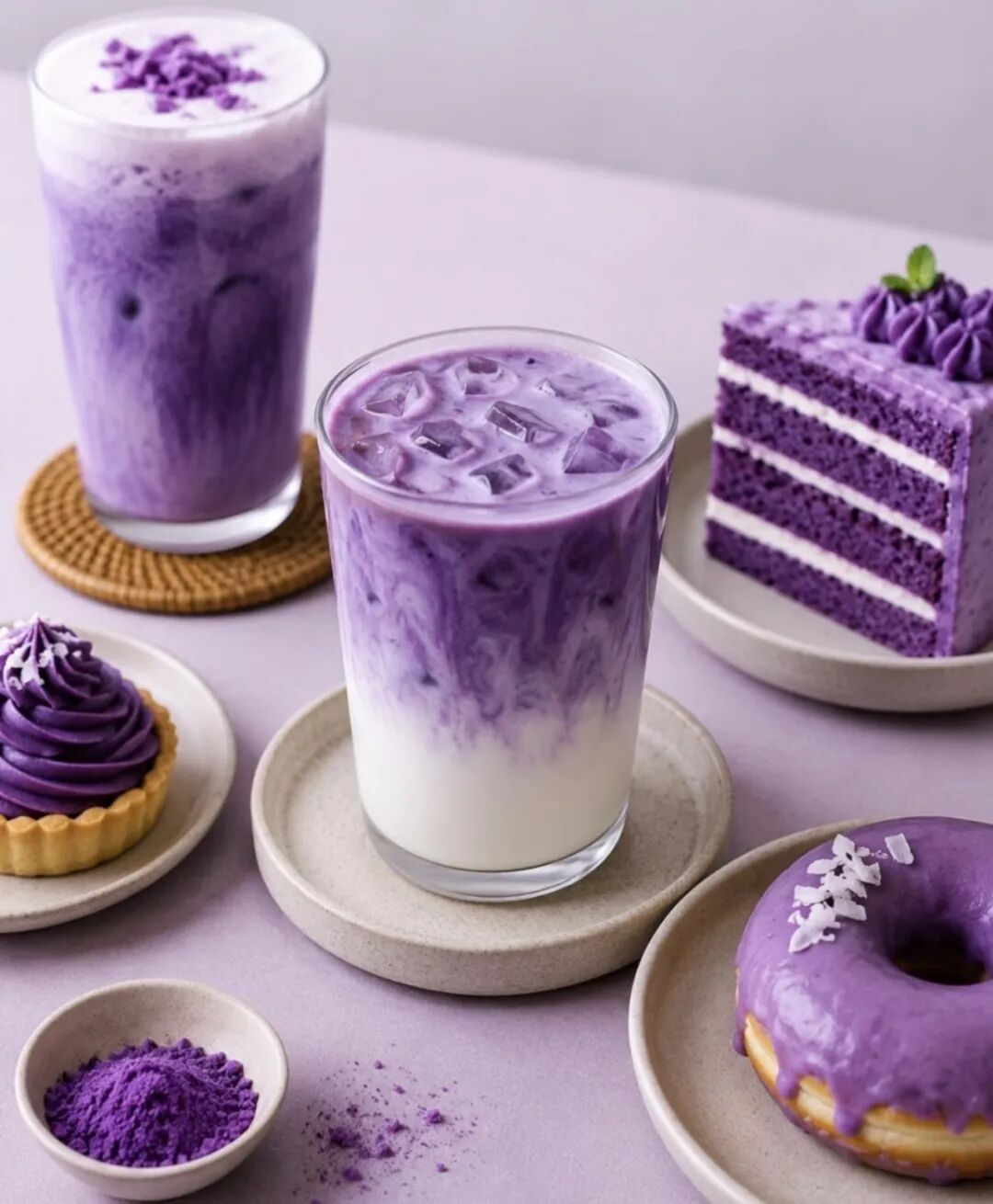
Image source: Xiaohongshu
Philippine reference materials show that Ube has been used in a wide range of food products including pan de sal, hopia, jam and ice cream; in other parts of Southeast Asia, it is also a common practice to steam or boil Ube then mix it with coconut milk and sugar to make desserts.
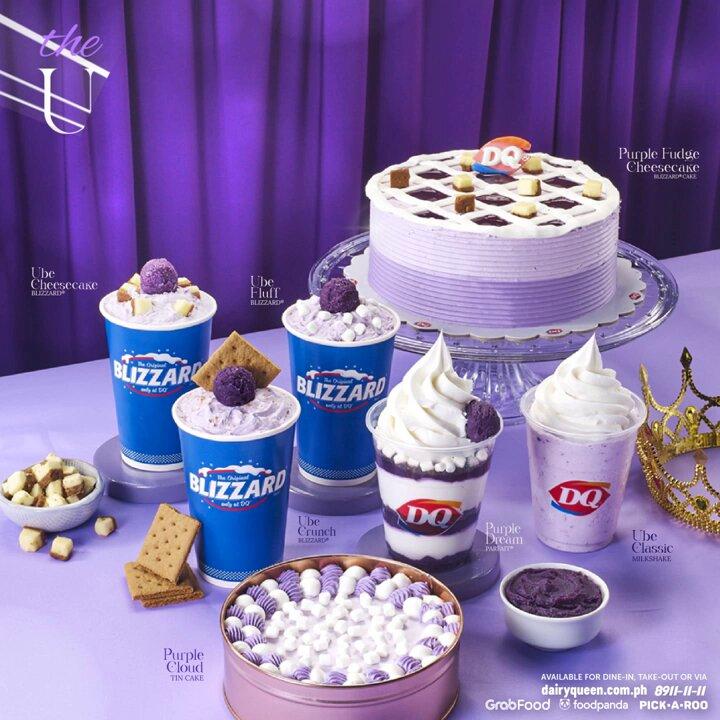
Image source: Philippines DQ
The truly special thing about Ube is not just its bright purple color, but the combination of three values: natural pigment, unique flavor and regional food culture, which gives it all the potential to become a viral internet-famous ingredient.
But are these innate advantages enough to make Ube a global hit?
Clearly not.
The global market never lacks "good-looking" food ingredients. After digging into Ube's development history, Foodaily found that what is really worth paying attention to is who pushed Ube out to the world, and who gradually turned it from a "Filipino local taste" into a brand new popular flavor in the global food and beverage market?
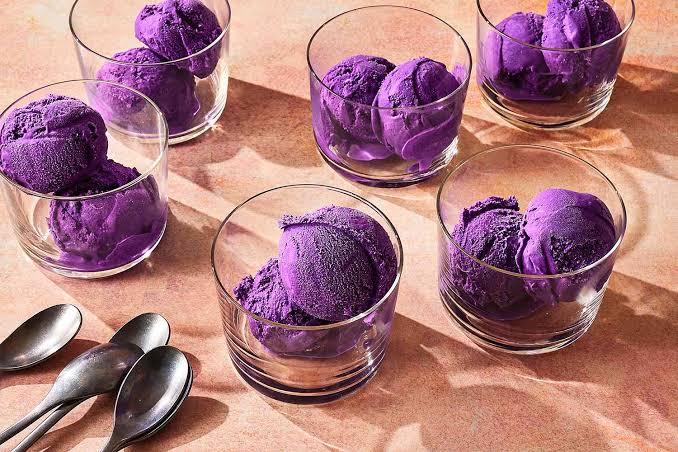
Image source: The Spruce Eats
2
From viral hit on Instagram to new product launches by Trader Joe's and Starbucks, Ube's path to global breakout
Many people think Ube suddenly became popular overnight.
In reality, Ube's globalization has been a long journey, more like a decades-long commercial relay race that has lasted for more than 10 years.
In the last century, Ube was first introduced overseas along with Filipino immigrants and local Filipino restaurants. Back then, its consumer base was mostly limited to small Asian communities including Filipino diaspora, and had not reached the general public. A local ingredient that aims to go global usually needs to build its core consumer base overseas first. Filipino immigrants and the local Filipino restaurant industry completed this first step, laying a solid consumer foundation for Ube's later explosive growth.
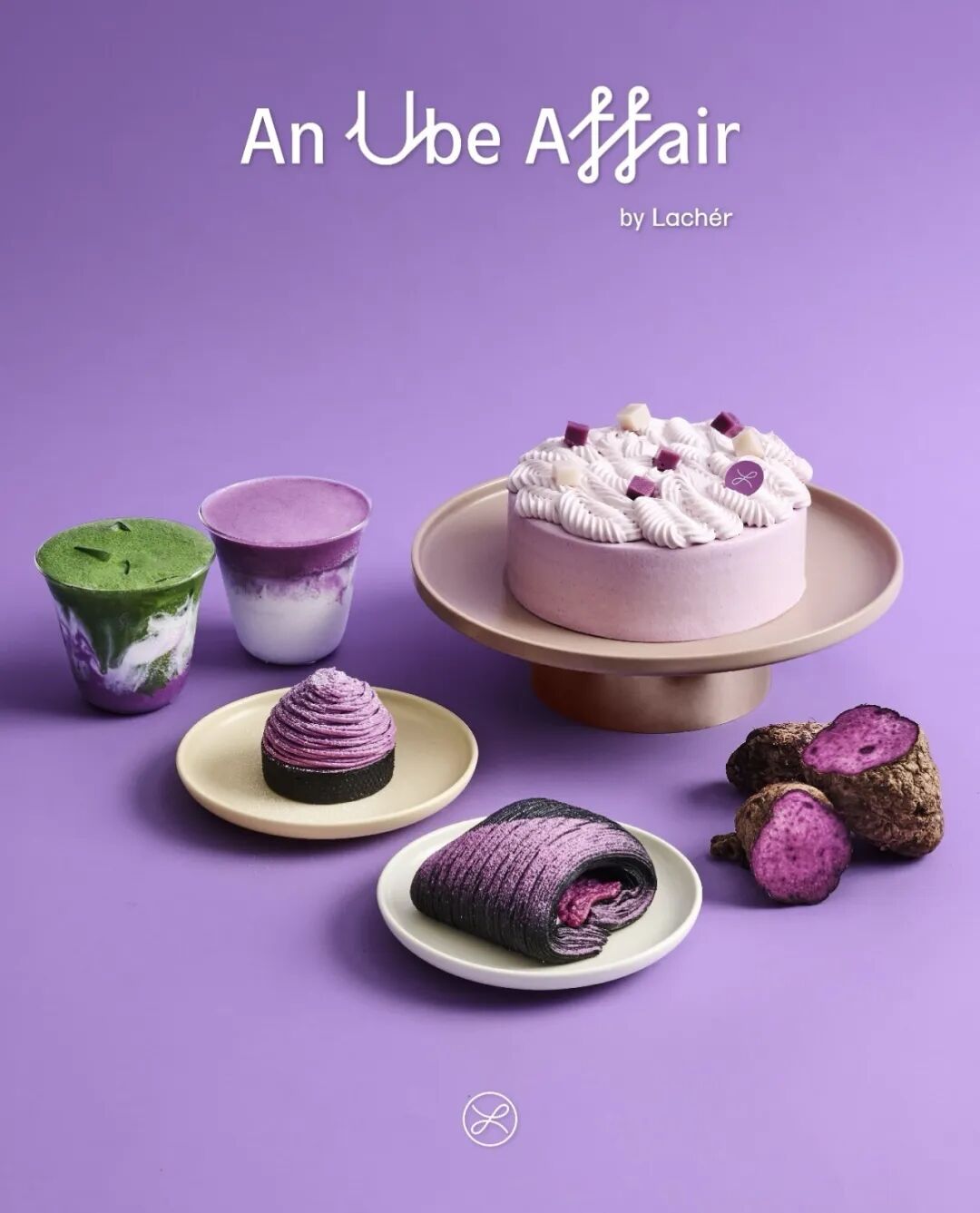
Image source: Xiaohongshu
What really helped Ube break out of the Filipino consumer circle for the first time was the rise of Instagram.
In the early 2010s, food content spread rapidly across social media platforms, and Instagram is a platform that places extreme emphasis on visual communication. Therefore, Ube's inherent vivid purple quickly became its biggest communication advantage.
Compared with traditional ingredients, this highly recognizable natural purple color is easier to feature in products like cakes, ice cream and donuts, and easily sparks consumers' curiosity about "what is this?"
Instagram further amplified its visual appeal, and Ube gradually transformed from "traditional Filipino flavor" to a trending purple flavor on overseas social media.
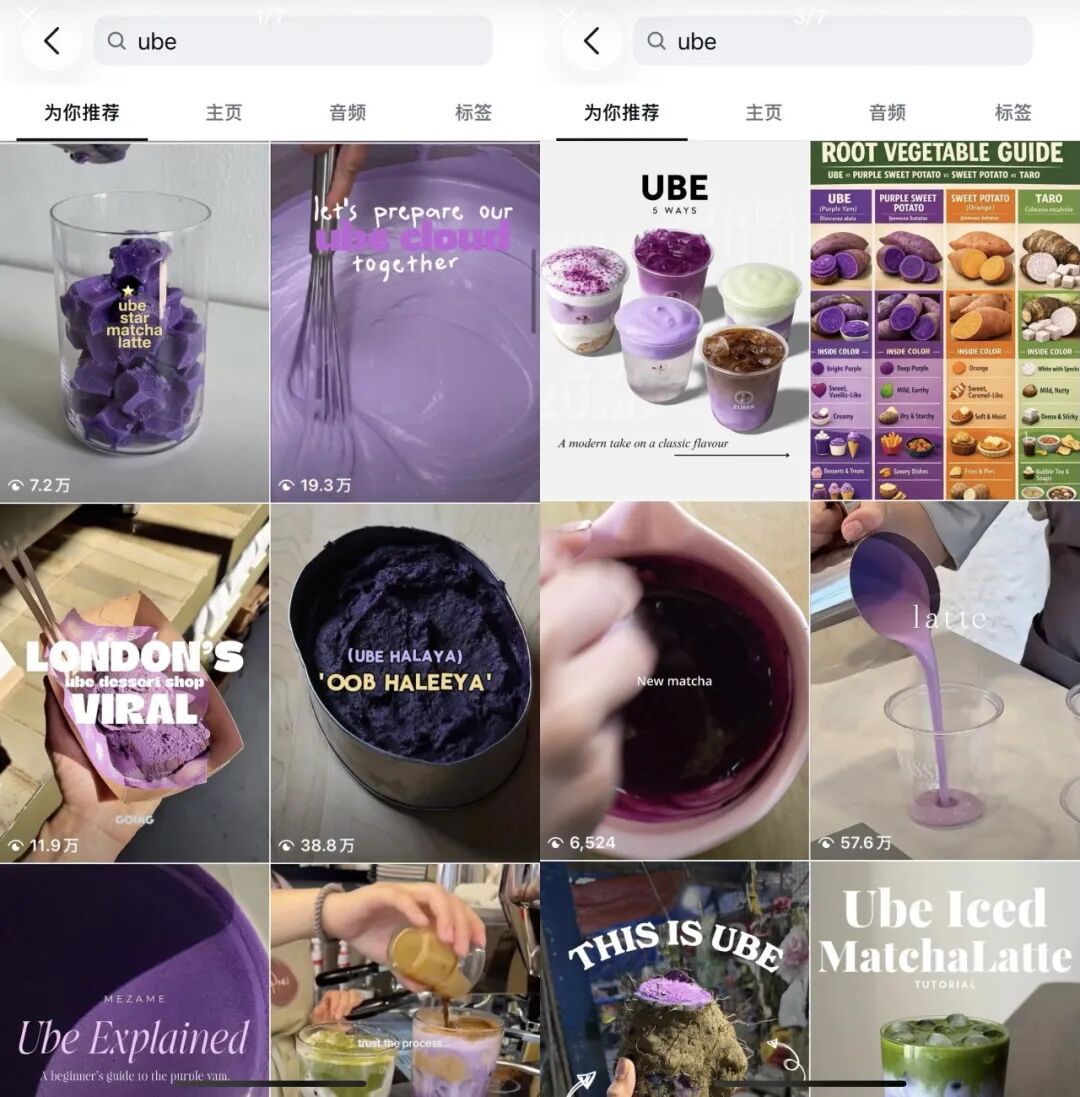
Image source: Screenshot of Instagram on Xiaohongshu
By 2016, a joke from a Filipino restaurant chef accidentally brought Ube into the spotlight of mainstream media, marking its second breakout moment.
In that year, Manila Social Club, a Filipino restaurant in Brooklyn, New York, launched the Golden Cristal Ube Donut priced at as high as 100 USD, combining mousse, champagne, 24K gold foil and Ube all inside one single donut.
The exaggerated price, gold foil and bright purple color made this product a hot topic that New York media outlets rushed to report. More importantly, media attention soon shifted from "the 100 dollar golden donut" to the Ube inside the donut, and consumers started asking from "what is this weird dessert" to "what on earth is Ube".
This time, Manila Social Club accidentally completed a very important commercial move: turning a local ingredient into a newsworthy food event with a highly viral hit product.
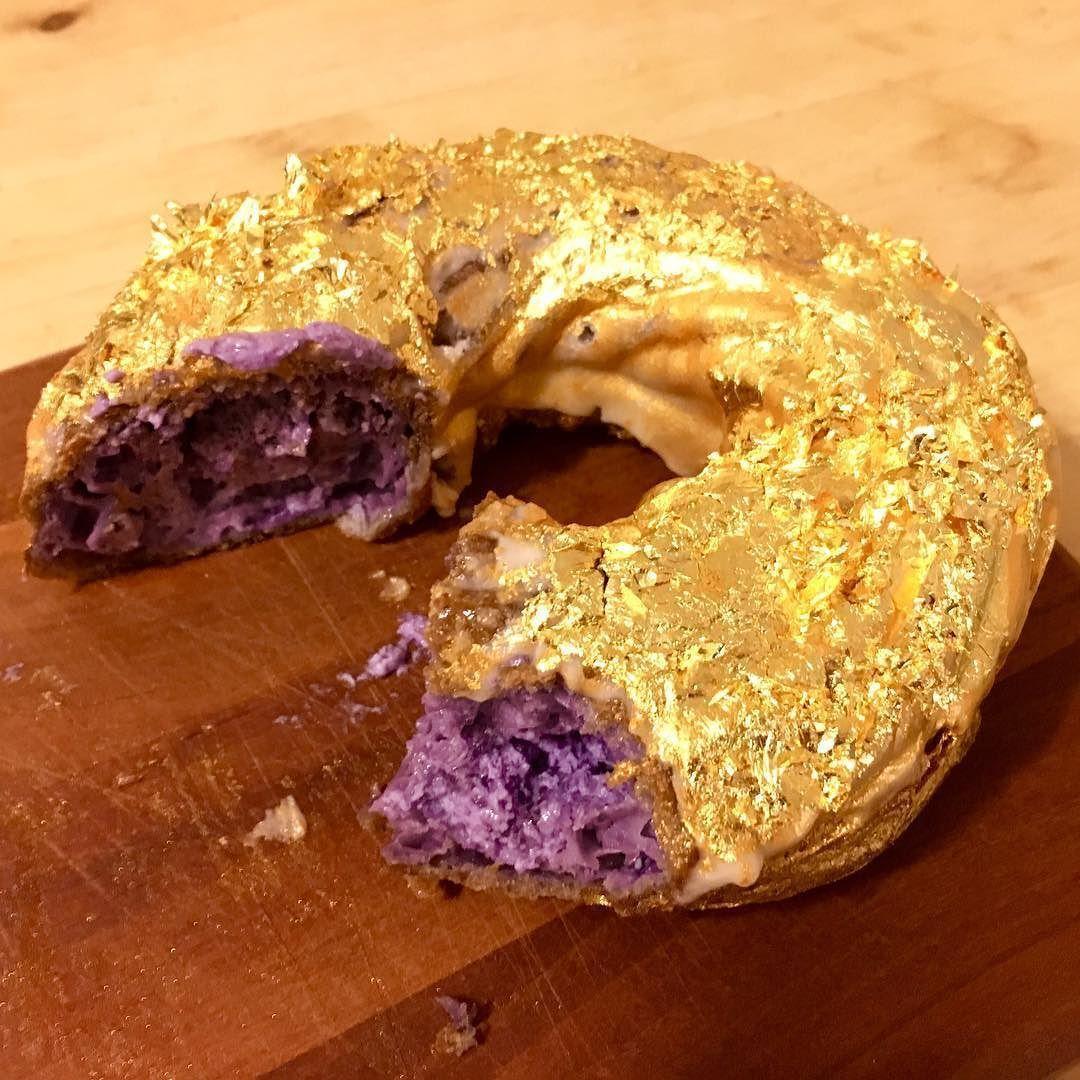
Image source: Pinterest
In 2019, Trader Joe's launched Ube Purple Yam Flavored Ice Cream, which became a key milestone for Ube to expand from the restaurant sector to mass retail.
Different from the previous scattered spread that relied mainly on Filipino restaurants, internet-famous desserts and social media, Ube for the first time entered the shopping lists of ordinary American consumers as a daily retail product. Since 2019, Trader Joe's has successively launched products including Ube Mochi Pancake & Waffle Mix and Ube Tea Cookies, and even launched a dedicated Ube Season to further expand Ube's consumption scenarios.
With retail channels getting fully involved, Ube finally transformed from a scattered "trendy ingredient" to an "affordable product that ordinary people can buy". The "fashionable flavor ingredient" attribute of Ube also started to become more prominent.
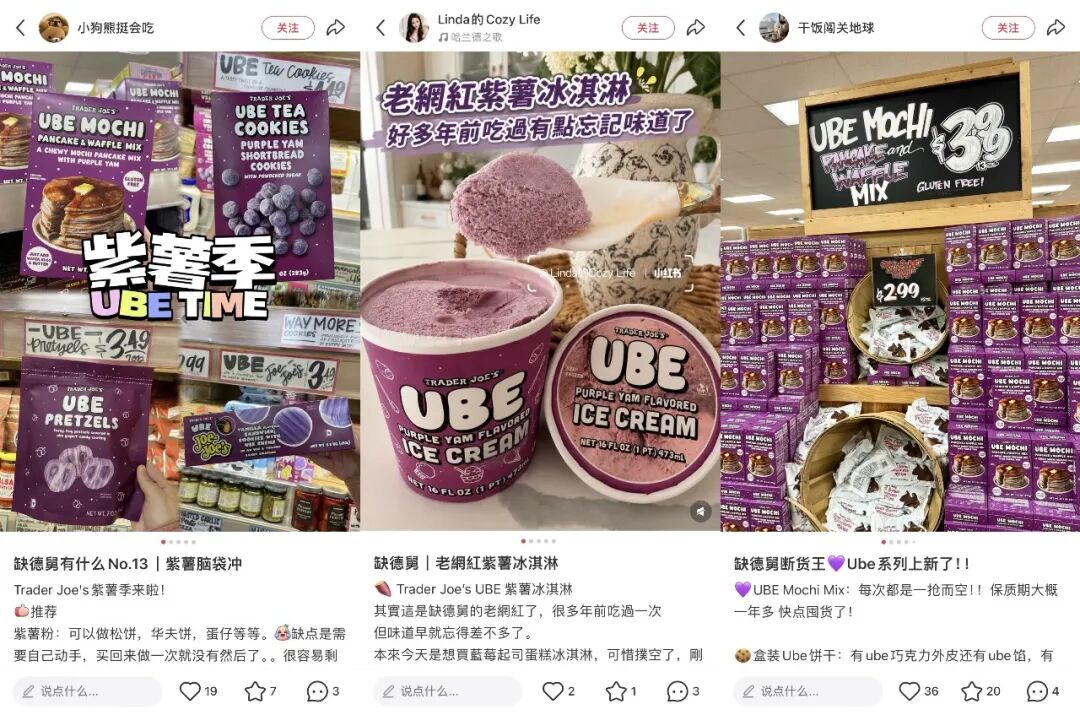
Image source: Xiaohongshu
Around 2020, Ube's application scope became wider and wider, expanding from desserts to bread, cakes, yogurt and beverages.
At the same time, TikTok, which also uses visual spectacle as its core communication point, took over the popularity, further expanding Ube's reach through video content. While a large number of visually appealing videos drove consumer interest, users recreating Ube's viral recipes spontaneously also boosted its spread.
During this period, Ube's commercial identity changed again, gradually transforming from "Filipino ingredient" to "popular fashionable flavor in the US", and the influence it accumulated in the US market started to spill over. Ube desserts, beverages and baked goods also began