Ren Shaoqing, the author of ResNet, has founded a robotics startup, which has attained unicorn status immediately upon its registration.
Shaoqing Ren, the author of ResNet, has officially embarked on his entrepreneurial journey in embodied intelligence.
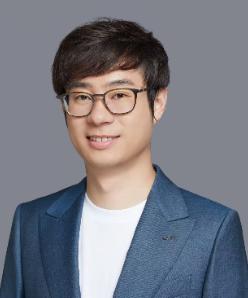
As confirmed by QbitAI, Dr. Shaoqing Ren, a renowned AI scientist, author of ResNet, Director of the Institute of General Artificial Intelligence of the University of Science and Technology of China, Senior Vice President of NIO and Head of Intelligent Driving, and winner of the 2023 Future Science Prize, has formally established a company to devote himself to the embodied intelligent robot business.
According to LatePost, at the all-hands meeting of NIO's internal intelligent driving business, NIO CEO Li Bin announced internally that Shaoqing Ren, head of NIO's intelligent driving, has founded an independent company focused on physical AI foundation models and embodied intelligence.
NIO has made it clear that it will make strategic investment and carry out business cooperation. The news also says that Shaoqing Ren's new company has been registered, with a valuation reaching the unicorn level (exceeding the magnitude of 1 billion US dollars), but the company name and specific financing details are still undisclosed.
△
It is worth noting that the model of Shaoqing Ren's embodied intelligent robot startup is not yet fully clear —
Although he is starting a robot business, he is still employed at NIO.
In other words, it's like "getting a divorce but still living together" (manual doge emoji).
Shaoqing Ren Dives into Embodied Intelligence
Regarding Shaoqing Ren's robot startup, a source close to NIO's management said:
NIO has long focused on cutting-edge AI technologies, and carries out industrial layout by attaching equal importance to independent R&D and open cooperation. In recent years, NIO has continued to invest in key technical fields such as chips and operating systems and made key progress. At the same time, NIO continues to support the development of innovative enterprises in fields including embodied intelligence, algorithm models, intelligent hardware, new energy and computing power infrastructure through strategic cooperation and industrial collaboration.
It was further revealed that NIO's internal view is that:
Intelligent driving is one of the most mature large-scale implementation scenarios of AI in the physical world. It shares underlying capabilities with embodied intelligence including perception, prediction, planning, control, world models and reinforcement learning. Over the past two years, more and more talents in the autonomous driving and intelligent driving fields have flowed into the robotics industry, which is also related to this technology transfer.
However, it is worth noting that NIO has blurred this "change" of Shaoqing Ren.
Combined with NIO's business and development status, the strategy behind this subtle ambiguity may be glimpsed.
On the one hand, as a world-class AI scientist and the absolute hero behind the qualitative leap of NIO's intelligent driving, if Shaoqing Ren left NIO to start a business, it would not be good news for NIO which is in a strong development momentum. On the other hand, if it is regarded as an incubated or internal innovative business of NIO, the characteristics of embodied intelligent robots that require high investment and have a long cycle will also bring pressure to NIO, which has just achieved a financial turnaround.
Connecting the dots, Xpeng Motors, which was one of the earliest bettors on embodied intelligent robots, has just announced its first round of independent external financing before releasing the financial results of the new quarter — the statement that the robot business is financially independent is quite clear.
As for NIO, although its attempt in embodied intelligent robots is not very early, its internal thinking and external statements have long been clear.
When facing financial pressure in 2025, both Li Bin and Shaoqing Ren clearly told QbitAI that for the next step of AI + automotive business, NIO prefers robots rather than Robotaxi.
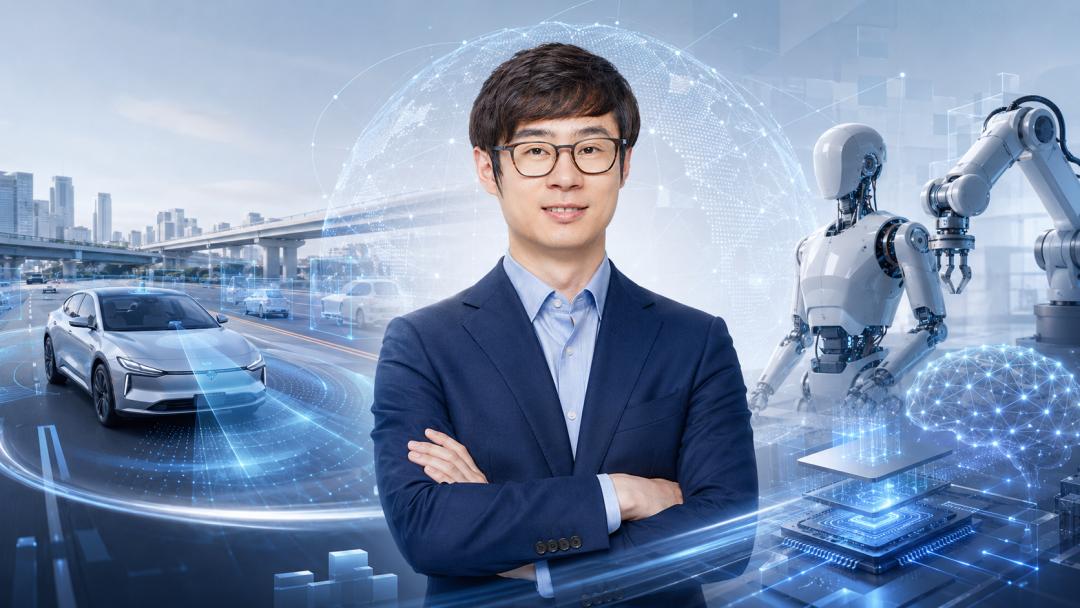
Now, Shaoqing Ren's diving into this field can be regarded as the start of NIO's attempt in embodied intelligent robots.
△
Previously, in terms of cutting-edge AI technologies, NIO has launched internal R&D of world models in the second half of 2023.
In July 2024, Shaoqing Ren, on behalf of NIO, released NIO World Model (NWM) at the NIO Tech Day event. The model was put into mass production and delivery in 2025, and its architecture was upgraded to "World Model + Supervised Fine-tuning + Closed-loop Reinforcement Learning" this year.
Shaoqing Ren himself has emphasized many times that the world model is the shared basic paradigm for autonomous driving and robots.
The spatiotemporal cognition, long-sequence reasoning and closed-loop optimization capabilities accumulated on the vehicle side can be directly transferred to physical AI and embodied intelligence scenarios, which is also one of the technical foundations for him to recently establish a company related to embodied intelligence.
In fact, Shaoqing Ren is one of the earliest practical pioneers in the industry to bet on world models, which is also the key reason why NIO's intelligent driving achieved overtaking on a straight track. The world model is becoming a new convergent direction for robot brains.
NIO's own business scenarios and supply chain manufacturing are also naturally suitable for the closed-loop implementation of robots.
Moreover, people who know Shaoqing Ren may know that although he became a co-founder of the autonomous driving startup Momenta directly after graduating with his doctorate, his personality and characteristics are more suitable for roles like chief scientist or CTO...
World-class AI Scientist Shaoqing Ren
Shaoqing Ren was born in Bengbu, Anhui Province in 1988. He graduated from Bengbu No. 2 High School in 2007 and was admitted to the University of Science and Technology of China, majoring in Information Security.
In 2016, under the supervision of Jian Sun, one of the authors of ResNet, Shaoqing Ren obtained his joint PhD degree from the University of Science and Technology of China and Microsoft Research Asia.
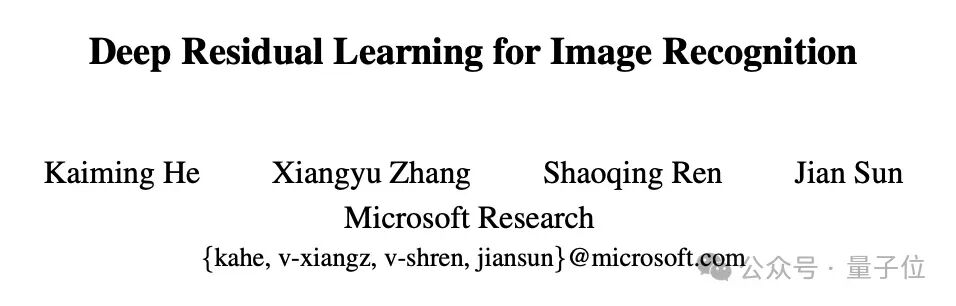
He is also one of the four authors of ResNet.
ResNet is a landmark work in the field of deep learning. Its achievement is that it fundamentally solves the problem of gradient vanishing in the training of deep neural networks. It makes the construction of high-performance and high-depth neural networks practically feasible, and has made great contributions especially in fields with high perception capability requirements such as computer vision and autonomous driving.
This research won the Best Paper Award at CVPR 2016, and has been cited more than 340,000 times so far.
The core authors are Kaiming He, Xiangyu Zhang, Shaoqing Ren and Jian Sun.
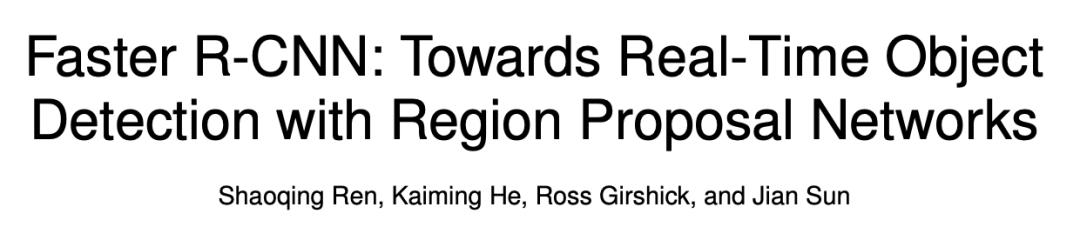
He is also the first author of Faster R-CNN, an efficient two-stage object detection algorithm that successfully solves the time-consuming problem of candidate region generation in previous object detection algorithms, achieving a good balance between speed and accuracy. It is widely used in autonomous driving, security, medical image analysis and other fields.
After graduating with his doctorate, Shaoqing Ren joined the autonomous driving startup Momenta as R&D Director and co-founder.
In 2020, he officially joined NIO. Initially, he served as Chief Expert of Autonomous Driving R&D and Assistant Vice President, mainly in charge of the autonomous driving algorithm team; later he was adjusted to Vice President of Intelligent Driving R&D, reporting directly to CEO Li Bin. At the end of 2024, NIO's intelligent driving R&D department carried out an organizational restructuring, setting up a new technical committee. Shaoqing Ren directly managed this team and led the large model department, further expanding his scope of authority.
After Shaoqing Ren took over NIO's intelligent driving R&D system, NIO took the lead worldwide in deploying "world models" on vehicles, and combined with NIO's self-developed chips, realized the overtaking of NIO's intelligent driving on a straight track, which to a certain extent made him one of the key contributors to NIO's first profit after turning losses into gains in 2025-2026.
Thanks to the achievements of the world model, Shaoqing Ren was promoted to Senior Vice President of NIO.
At the same time, Shaoqing Ren also started to "give back" to his alma mater, the University of Science and Technology of China. In September 2025, Shaoqing Ren returned to USTC to enroll students, serving as a Chair Professor, PhD supervisor and Director of the Institute of General Artificial Intelligence. Earlier, Shaoqing Ren donated all the prize money of the Future Science Prize to USTC.
On the academic official homepage of Professor Shaoqing Ren on USTC's website, his main research fields listed on the homepage already include "embodied intelligence", specifically: artificial intelligence, world model, embodied intelligence, autonomous driving, computer vision, deep learning, AI for Science.
Of course, what is even more remarkable is Shaoqing Ren's proven achievements:
As of March 2026, his academic papers have been cited more than 490,000 times, ranking first among domestic scholars and top 3 among global Chinese scholars.
He has won the 2023 Future Science Prize (Mathematics and Computer Science Award), the first prize of 2025 Wu Wenjun Artificial Intelligence Science and Technology Progress Award, CVPR Best Paper Award, 2025 NeurIPS Test of Time Award, 2025 Helmholtz Prize (ICCV 10-year Impact Award), Software-defined Vehicle Innovator Award, global champion of ImageNet Competition and MSCOCO Competition, and ranked 3rd in the AI 2000 Global AI Scholars List.
This article is from the WeChat official account "QbitAI", author: Yuyang, published with authorization from 36Kr.