How many of the members whose accounts have been banned by Zhipu are wrongfully penalized?
Platform membership prices have been raised repeatedly, with covert transactions taking place between new and existing users.
Many users paid real money for their Zhipu membership, only to find their accounts suddenly banned.
If this happened to you, wouldn't you be on the verge of losing your mind the moment your account gets suspended?
Don't panic first. Zhipu usually bans user accounts when it detects anomalies in login devices, IP addresses and other information, judging that the account is being used by multiple people.
This situation stems not only from the increasingly expensive pricing of Zhipu's services, but also from the differentiated pricing for new and existing Zhipu members, which creates more room for arbitrage for members.
The reason why Zhipu implements a "dual-track" membership pricing system lies on one hand in the huge pressure from finance and cost sides, and on the other hand in retaining its existing user base.
However, for a company like Zhipu that relies heavily on capital injection, merely setting different prices for new and existing members is far from enough. To stay competitive in the fierce AI industry and claim the final victory, the company needs to secure more resources from the capital market.
Why is my account banned?
Recently, a number of Zhipu members have found their accounts, which they regard as essential productivity tools, suddenly banned by the official platform.
Yan, a Zhipu Max member, told Pan Ge: "I usually connect the platform to Claude Code, and I log in with no more than 4 devices: the company server, the desktop at home, and two laptops. My IP address switches between the office and my home, and sometimes I use my mobile phone's hotspot."
He said: "One day Zhipu suddenly banned my account, claiming that I violated the terms of use, but it did not specify the exact reason."
This unexpected account ban from Zhipu has severely disrupted Yan's work. Such unexplained account bans have also happened to other Zhipu users.
Another member Zhu told Pan Ge: "I have been using Zhipu with Claude Code all the time. I was banned right after I used Codex last week, but I had been using the service normally at home and in the company before that."
Zhu added: "I filed a complaint to 12315, and later Zhipu replied that my VPN had switched the address and the account was logged in from multiple locations. They knew it was caused by the VPN, but they still banned my account anyway."
On the other side, Shui, a Zhipu Pro member, also told Pan Ge: "I logged into Zhipu with more than 3 devices, and the platform judged that my account was shared by multiple people, so it was banned for 30 days."
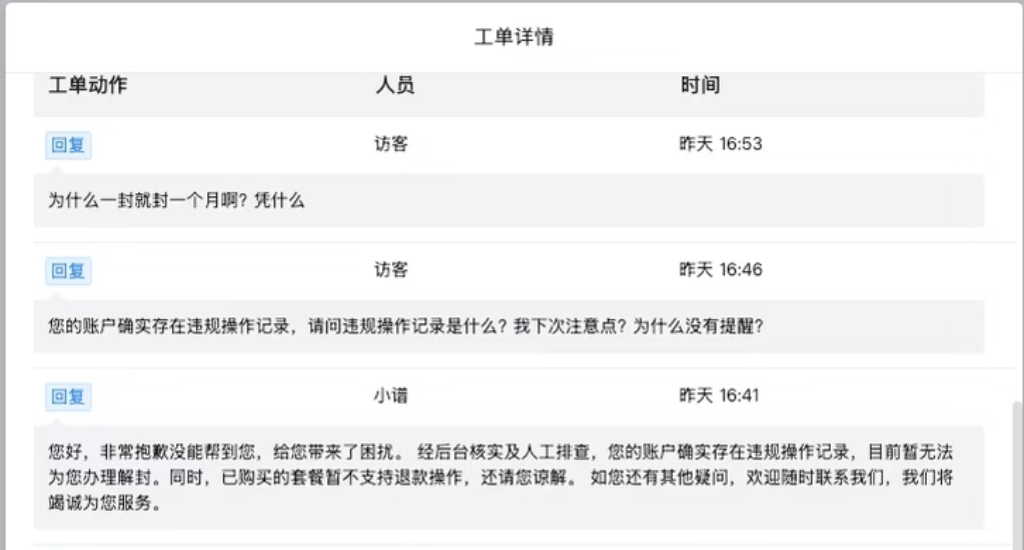
It can be seen that most of Zhipu's account bans for members are triggered by suspected account sharing behaviors during use. So what is the official specific evaluation criteria?
For this question, Pan Ge consulted Zhipu's customer service, who responded: "There are no restrictions on multi-device login for now, but logging into the same account from multiple devices poses potential security risks, so we recommend one account for one device."
As for account bans that may be caused by users frequently switching IP addresses, the customer service said: "The specific situation shall be subject to actual circumstances."
Most law-abiding users feel wronged when their accounts are banned by Zhipu. However, behaviors such as shared accounts purchased by multiple users splitting the cost do commonly exist among Zhipu members.
Member Xiao Li told Pan Ge: "A shared Zhipu membership costs 150 yuan per person per month. I use a transfer station to allocate the Token quota, and the group has a total of 400 million Tokens per week. During the peak hours from 2 p.m. to 6 p.m., Token consumption is tripled. If the 5-hour daily limit of the Coding Plan is used up, all members have to wait for the quota to reset together."
On the other side, Xiaoxiao, a Zhipu Max member, also told Pan Ge: "I only need 10% of the total quota, so 3 to 4 people share one account. After we complete the group purchase, I will create a group chat to report the weekly Token usage, so that everyone will try not to exceed their share. The total cost is 200 yuan per month."
Differentiated Pricing for New and Existing Members
The fundamental reason why so many Zhipu users want to share accounts seems to be that Zhipu's membership price is too high.
In July 2026, Zhipu adjusted its membership pricing. The monthly subscription for the three packages, namely Lite, Pro and Max, are priced at 118 yuan, 538 yuan and 1078 yuan respectively. The Token quota of the latter two packages are 6 times and 14 times that of the Lite version respectively.
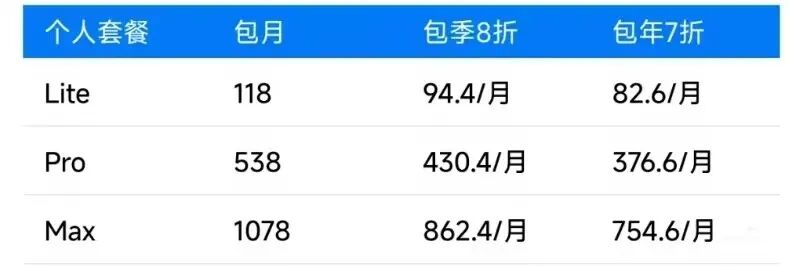
Before this adjustment, the monthly fees for Zhipu's Lite, Pro and Max packages were 49 yuan, 149 yuan and 469 yuan respectively, which means the prices have increased by 2.4 times, 3.6 times and 2.3 times respectively.
The sharp price hike of Zhipu's membership is unaffordable for many users. If you had a Zhipu membership before the price adjustment, you can enjoy the benefits of the old pricing scheme.
Pan Ge learned that Zhipu's existing members are divided into two levels: V1 and V2. Among them, the earliest V1 members will not be automatically renewed for their original services after expiration, and will be compensated with two months of V2 packages of the same level.
At the same time, V2 members' current packages will not be affected, and they can still subscribe to Zhipu's packages at the old price after expiration.
If a user is a Zhipu V1 member, the best operation for him is to enjoy two months of free packages after the original membership expires, and then subscribe to Zhipu membership at the V2 price.
In addition to the price difference, there are also differences in the Token quota between new and existing Zhipu AI large model members.
V1 members have no weekly quota limit, so their Token usage is more flexible. Although V2 members do not have as much freedom as V1 members, their Token quota is still much higher than that of the current V3 members.
After all, the current Zhipu V3 level members use an integral system to calculate Token consumption. Not only is there a total weekly quota limit, but Token consumption will also double during peak hours.
It seems that the differences in pricing and rights between new and existing Zhipu members create arbitrage space for membership packages. Instead of recharging through official channels, some new users prefer to purchase existing Zhipu old member accounts from other users.
This also makes many Zhipu old members' accounts highly valuable. Pan Ge consulted a Zhipu V1 member, who said: "I am transferring my old Zhipu Lite package, which still has more than 5 months of validity left. Its experience is even better than the current Zhipu Pro package, and the total transfer price is 3000 yuan."
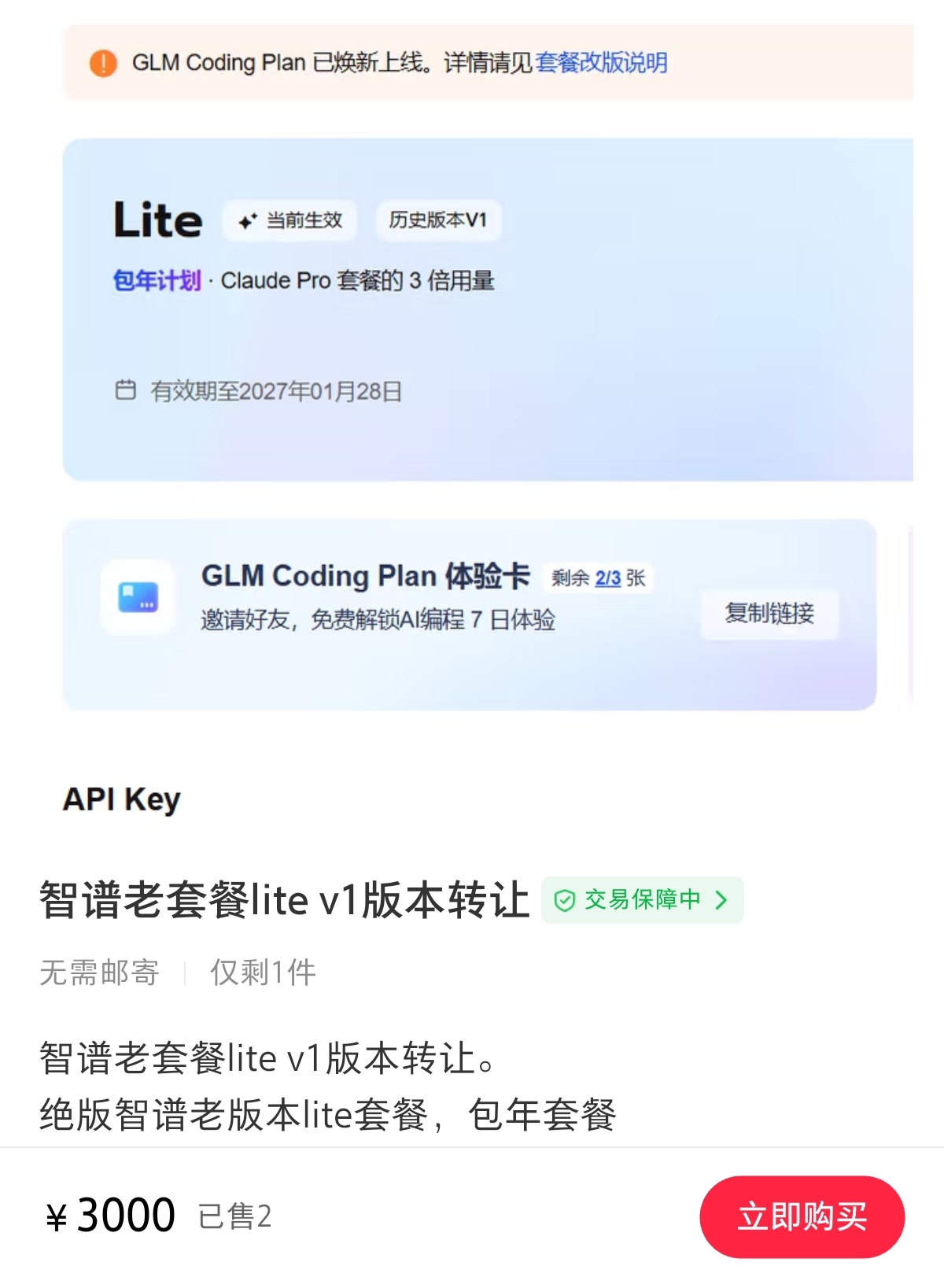
On the other side, another account transferor said: "The transfer fee for a Zhipu V2 member account is roughly between 1000 yuan and 1200 yuan, and the cost of the remaining membership package needs to be paid separately."
Is the "Dual-Track" Pricing System Effective?
As an AI large model company, why did Zhipu raise its package prices? There seem to be two main reasons:
First, the company can no longer afford the soaring costs.
The widespread increase in demand for AI large models has led to a shortage of upstream hardware such as GPUs. At the same time, the growing number of end users has also resulted in higher and higher Token consumption.
Zhipu's financial report shows that in 2025, the company achieved a revenue of 724 million yuan, a year-on-year increase of 131.85%, while its net loss reached 4.698 billion yuan, representing a year-on-year increase of 58.91%.
In 2023 and 2024, Zhipu recorded revenues of 125 million yuan and 312 million yuan respectively, up 116.93% and 150.86% year on year. However, its net losses were 788 million yuan and 2.956 billion yuan respectively, with a year-on-year growth of 449.58% and 275.21%.
According to the financial data, Zhipu's total accumulated losses in the past three years have exceeded 8.4 billion yuan, while its total accumulated revenue is only 1.161 billion yuan. Achieving profitability is critical to the company's future development.
Second, many AI manufacturers have adjusted their prices frequently, so Zhipu has to make corresponding adjustments to cope with industry competition.
On August 17, 2026, DeepSeek adjusted its pricing: the output price of its AI large model V4-Pro increased by 350%, the input price for cache hits increased by 1100%, and a peak-valley pricing model was introduced.
Less than a week later, DeepSeek revised its peak-valley billing rules, stipulating that there is no distinction between peak and off-peak hours on weekends, and the two-tier billing rule only applies on working days.
Meanwhile, in July 2026, after releasing its K3 large model, Kimi also adjusted its Token billing rules: the output price increased by about 270%, and the input price increased by about 208%.
It can be seen that the price hike of Zhipu's membership is a last resort. The implementation of the "dual-track" pricing system is also to protect the interests of old users and prevent them from leaving due to the price increase.
As of August 2026, the number of registered API users on Zhipu's MaaS open platform has exceeded 7 million, while the figure was only more than 4 million half a year ago.
In the first quarter of 2026, Zhipu's API call volume increased by 400% year-on-year, making it one of the Chinese manufacturers with the highest paid Token consumption.
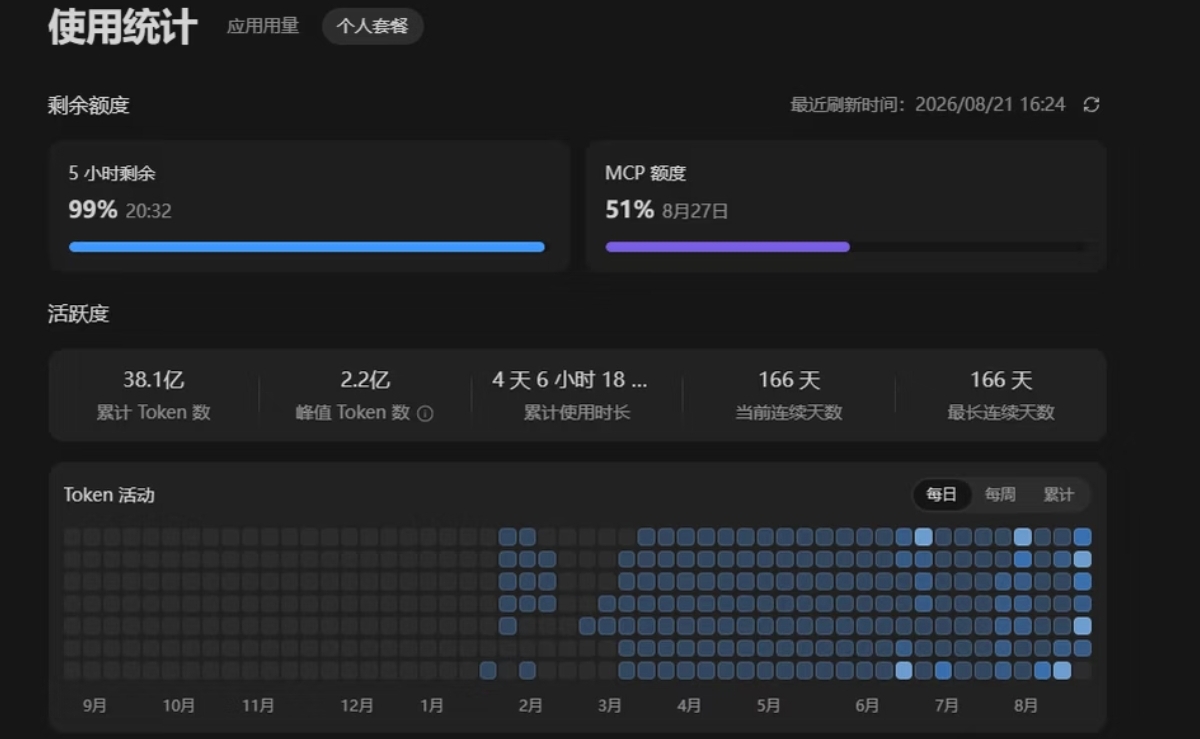
Zhipu's cautious approach to pricing seems to stem from its increasingly severe development situation.
As a listed company on the Hong Kong Stock Exchange, after its market value exceeded 1 trillion Hong Kong dollars in June 2026, Zhipu lost about half of its market value in just over two months, and its current market value is only more than 500 billion Hong Kong dollars.
For AI manufacturers, the strength of their financing capacity often determines how far they can go in the future. If Zhipu wants to win the fierce AI competition, it may not only need to focus on pricing issues, but also build a compelling capital story of its own.
This article is from the WeChat official account "Zinc Consumption Research Center", written by Pan Ge, and published with authorization from 36Kr.