Latest progress of 12 automakers in robot manufacturing: Xiaomi made its debut, XPeng entered trial production, Tesla is installing production lines...
At the World Robot Conference that concluded on August 23, automotive enterprises became the most prominent contingent in the robot sector.
BYD publicly unveiled "Xiao Di" for the first time, Xiaomi brought its new-generation "CyberOne" which is currently "interning" at its automotive factory, Chery connected robots in 22 cities simultaneously, and GAC released the actual operation data of nearly 50 robots.
As of August 24, at least 10 domestic automotive enterprises including Chery, GAC, XPeng, BYD, Xiaomi, FAW, Dongfeng, Seres, Li Auto and Changan have directly developed complete robot machines or established robot subsidiaries. If Tesla and Hyundai Motor, which has taken a controlling stake in Boston Dynamics, are included, the number has reached 12.
Their development progress varies, and the following is the latest update on robot development from these 12 automotive enterprises.
1. Chery: Over 3,000 robots delivered, around two-thirds deployed overseas
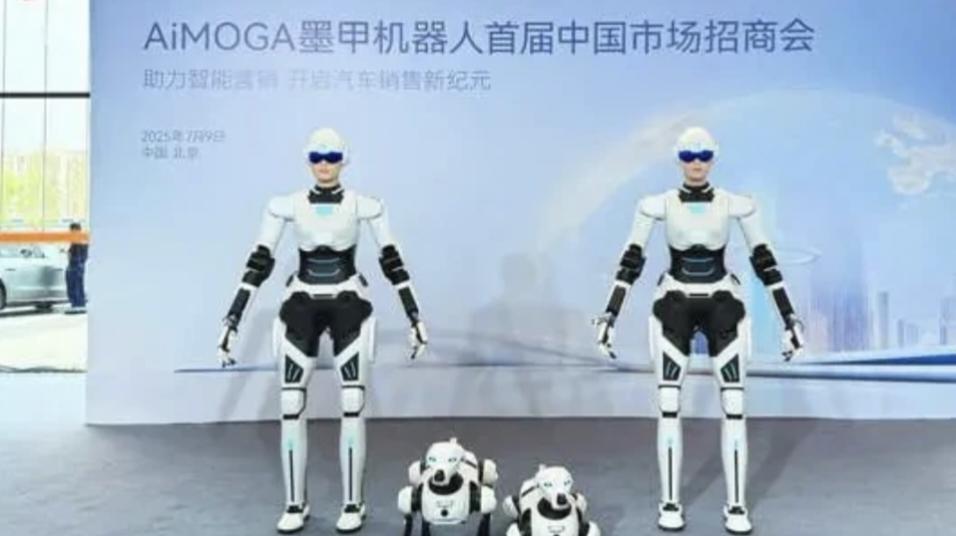
Chery is the first domestic automotive enterprise to realize batch commercial delivery of humanoid robots. Its independent brand AiMOGA has formed a complete product matrix and overseas expansion capabilities.
According to *Core Intelligent Headlines*, AiMOGA was officially established in 2025, with Chery holding an absolute controlling stake, and introducing industrial and financial investors such as Fourier Intelligence and IDG Capital at the same time. The products under AiMOGA include the full-size humanoid robot Mornine M1, the Argos quadruped robotic dog and other multi-form products. Among them, Mornine M1 is the world's first humanoid robot that has passed both EU software and hardware CE certifications, with capabilities including multilingual explanation, autonomous navigation and interactive services.
AiMOGA disclosed that the cumulative global delivery of various robots has exceeded 3,000 units, of which about 2,000 are deployed overseas, covering more than 60 countries and regions. It is one of the Chinese humanoid robot brands with the largest overseas expansion scale. In April 2026, Mornine M1 was officially put on sale at a price of 285,800 yuan, becoming the first humanoid robot independently developed by an automotive enterprise to be publicly sold to the consumer market. A flexible production line has been completed at its Wuhu base, with an annual production capacity of 15,000 robotic dogs and 2,000 humanoid robots. The company's goal for the next year is to deliver 10,000 units globally, and it has already started discussing potential listing locations.
Chery is synchronously migrating the overseas dealer, after-sales service and government customer resources accumulated from its automotive business to its robot business. At present, its robots have been applied in scenarios such as automobile dealerships, traffic management and public security, and 110 police robots alone have been deployed in multiple domestic cities.
During the World Robot Conference, Chery also connected 22 cities including Changzhou, Anqing and Shanghai on site to demonstrate the operation of robots in positions such as traffic command and civilized travel reminder.
2. GAC: Nearly 50 robots put into projects, orders close to 10 million yuan
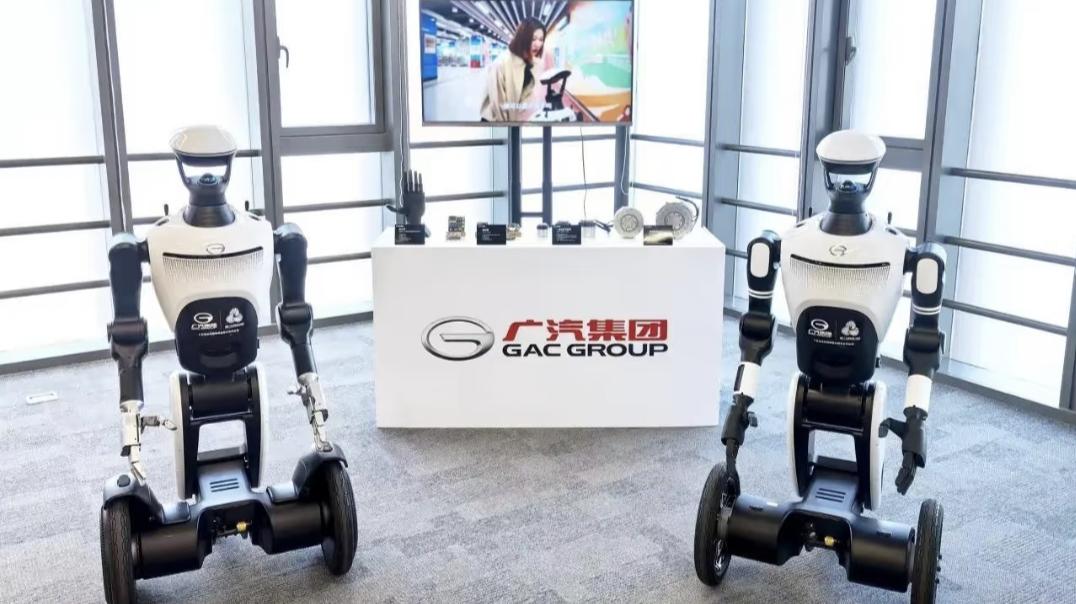
GAC has been laying out embodied intelligence since 2022, and spun off an independent operating company in February 2026, which mainly focuses on wheel-legged hybrid humanoid robots, prioritizes landing in industrial and security scenarios, and completed financing of over 100 million yuan in August 2026.
Through self-developed core components, GAC Huitun Technology Robot introduces the vehicle-level quality control and supply chain management system of GAC, and completes product iteration and testing relying on GAC Passenger Car Factory. Products such as GoMate and GoMate Mini have been launched. At the 2026 World Robot Conference, GAC GoMate Mini robot publicly demonstrated its "three-folding" form for the first time, adopting a deformable wheeled chassis that can switch between patrol and logistics modes to meet the needs of various automotive factories. Compared with the complete biped structure, the wheeled chassis is easier to solve the problems of battery life, stability and long-term operation.
According to GAC's disclosure, these robots are distributed in 7 projects, with a cumulative inspection mileage of about 63,000 kilometers, completed nearly 190,000 anomaly disposals, equivalently replacing the workload of 20.5 basic positions, and commercial orders are close to 10 million yuan. Among them, nearly 50 GoMate Mini units have been deployed in Guangzhou, Hong Kong, Xiamen, Tianjin and other regions, covering automotive production lines, park patrol, subway security and tour guide services.
GAC plans to build a production capacity of 10,000 units in the next step, but has not given a specific production start time.
3. XPeng: Launched small-batch trial production, plans to achieve official mass production within the year
XPeng launched R&D on quadruped robots in 2018, and shifted to biped general-purpose humanoid robots in 2023. In April 2026, it established a wholly-owned subsidiary Pengyan Technology, which is the domestic automotive enterprise closest to the mass production of complete robot machines.
On July 24, XPeng IRON launched small-batch trial production in Guangzhou, responsible for production line sorting, material handling and other work, and the dedicated production line has entered the final commissioning. It is reported that XPeng signed a contract for a 110,000-square-meter humanoid robot mass production base in Tianhe, Guangzhou in February last year. According to the plan, IRON will be officially mass-produced in 2026, initially entering XPeng dealerships to undertake reception, tour guide and vehicle explanation, and start commercial delivery to domestic and foreign customers in 2027.
XPeng proposed that by the end of 2026, the monthly production capacity of robots will be increased to more than 1,000 units. However, this figure is still a production capacity target, not the actual delivery volume.
According to *Core Intelligent Headlines*, XPeng's new-generation IRON is equipped with 3 Turing AI chips and the VLA 2.0 model, with 82 active degrees of freedom all over the body, and has the capabilities of environmental perception, autonomous decision-making and complex operation. He Xiaopeng personally took over the robot business, listed robots as the third growth curve after intelligent vehicles and globalization, and fully migrated the chip, visual perception, end-to-end model and supply chain capabilities accumulated from intelligent vehicles to robots.
Small-batch trial production means that XPeng has started to deal with the problems of component consistency, complete machine assembly, commissioning efficiency and yield, and it is only one step away from real mass production.
4. BYD: "Xiao Di" makes its debut, preparing to enter automotive dealerships
BYD formed a team in 2022 and entered the robot track relying on its technical accumulation in the automotive field. On August 23, BYD's first commercial service humanoid robot "Xiao Di" completed its real machine debut and started normal services.
"Xiao Di" is mainly oriented to automotive dealerships and commercial service scenarios, and can perform tasks such as welcoming guests, vehicle explanation and product demonstration. It has 31 degrees of freedom all over the body, and its dexterous hand can grasp objects of 1 kilogram. Among them, the self-developed proportion of BYD robots exceeds 80%, and the three-electric system, motion control and intelligent driving technologies have been fully migrated to the robot sector, with a relatively complete industrial chain system. Li Ke, Executive Vice President of BYD, previously stated that in the future, it hopes to deploy robots in automotive dealerships, with 2 to 3 units placed in each store for reception and vehicle introduction.
However, BYD has not yet announced the price, order, production capacity and delivery time of "Xiao Di". Although it has been made public, there is still a certain distance before large-scale sales.
5. Xiaomi: Robots enter automotive factories, nut installation success rate rises to 98%
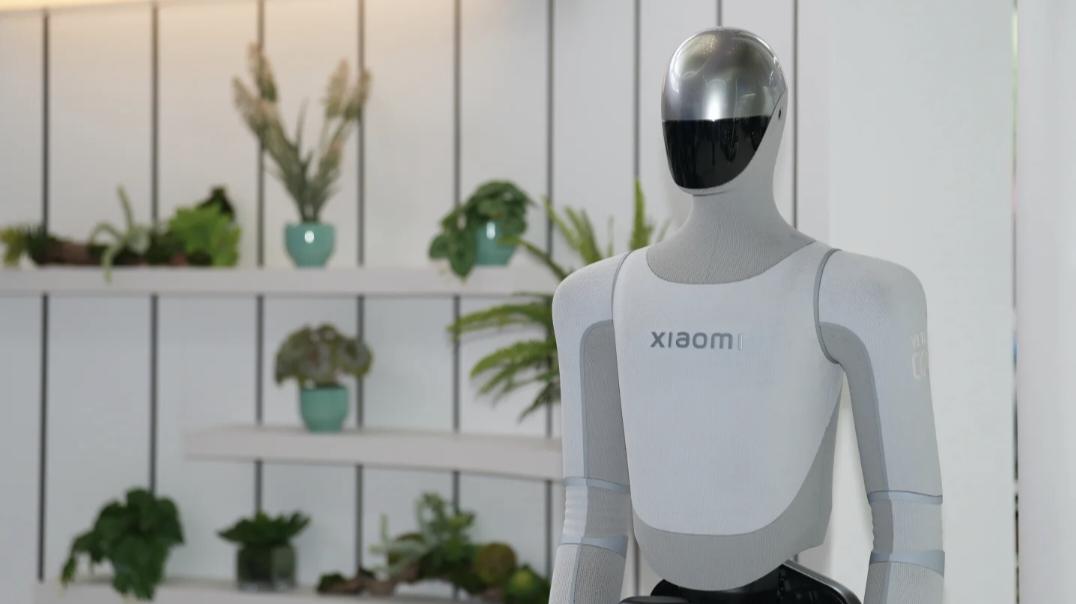
Xiaomi is one of the earlier automotive enterprises to enter the robot sector. It launched its first quadruped robot "CyberDog" to cut into the track in 2021, and launched the first-generation humanoid robot "CyberOne" one year later, which is 177 cm tall, weighs 52 kg, and has the capabilities of emotion perception, gesture recognition and basic action interaction.
The new-generation humanoid robot "CyberOne" iterated by Xiaomi in 2026 is 1.7 meters tall, weighs 66 kg, and has increased from the original 21 degrees of freedom to 66, half of which are concentrated in the hand, which can complete fine operations such as screwing screws and picking up beans. It already has stable deployment capabilities for standardized production line tasks with a single process of 3 to 5 seconds, and will be mainly deployed in automotive industrial scenarios in the future.
In March this year, "CyberOne" entered the Xiaomi Auto Factory to test material box folding, component loading and self-tapping nut installation. At the self-tapping nut station, "CyberOne" once ran continuously for 3 hours, with an installation success rate of 90.2%, and a single task can keep up with the 76-second production line rhythm. By July, Xiaomi stated that the success rate had increased to about 98%, only 1 percentage point lower than the qualification rate of manual operations. At present, the new-generation "CyberOne" and another high-dynamic robot developed from 2023 to 2024 are continuously collecting data and verifying tasks in the factory.
Xiaomi has not yet announced the mass production and external sales time of the robots. The current focus is still to put robots into real production lines to verify whether visual positioning, force control and motion planning can adapt to the changing industrial environment. Xiaomi also stated that its R&D direction will be deeply coordinated with Xiaomi's "full-scenario human-vehicle-home ecosystem" strategy.
6. FAW R&D of both wheel-arm and biped robots simultaneously
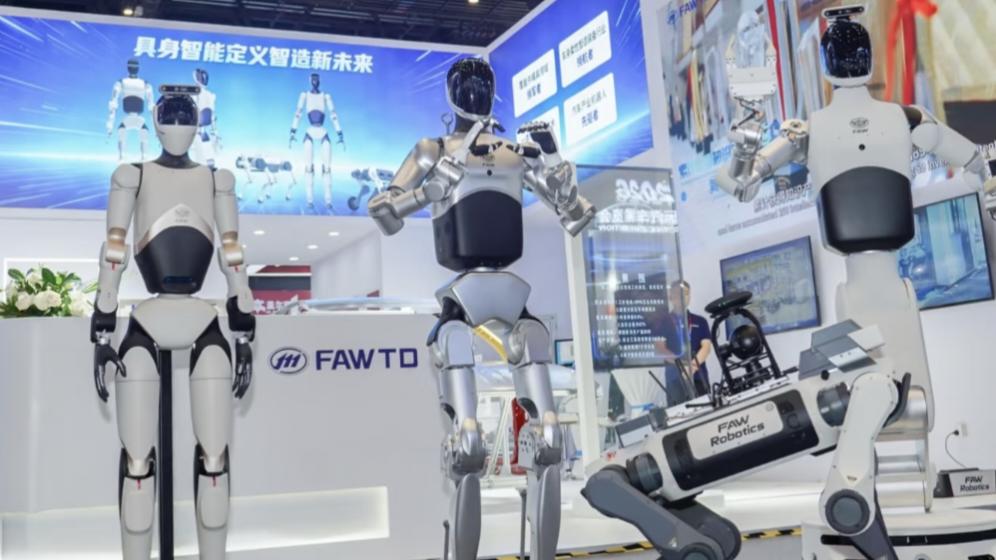
As a representative of central SOE automotive enterprises, FAW established the FAW Mould Intelligent Robot Division in October 2025, and has formed a layout of multiple robot products, including wheel-arm robots, the full-size humanoid robot "Qi Xiaozhi", small biped service robots, heavy-load robots and joint modules, covering scenarios such as industrial operations and commercial services.
Among them, the wheel-arm robot adopts a wheeled chassis and double-arm structure, is equipped with a vision-language-action model, has capabilities such as autonomous operation, and can meet the needs of component identification and flexible grasping in factory scenarios. It has been tested in automotive factories for grasping water kettles, tightening rear suspension bolts and loading welding parts. FAW's full-size biped robot is 1.73 meters tall, has 41 degrees of freedom, adopts a "brain + cerebellum" collaborative architecture, and the complete machine is independently developed by FAW. Compared with the wheel-arm robot, the biped product has stronger versatility, but its stability, battery life and work efficiency are more difficult to meet the requirements of automotive factories.
In addition, the small biped humanoid robot oriented to commercial scenarios can complete functions such as hosting, interaction and tour guide. The heavy-load robot suitable for industrial heavy loads adopts a four-steering-wheel mobile chassis, integrates SLAM navigation and multi-modal perception system, and is deployed in industrial scenarios.
At present, FAW has not disclosed the order, delivery quantity and mass production time, and its robot business is still mainly focused on technical verification and product platform construction.
7. Dongfeng: Humanoid robots are responsible for sorting, robotic dogs undertake park inspection
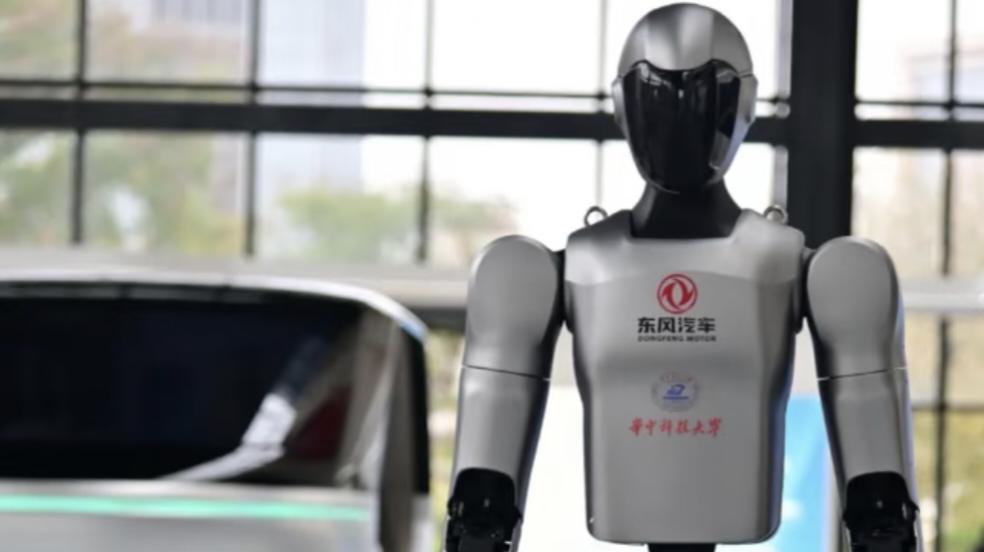
Relying on the "Tianyuan Intelligence" technology strategy and the technical accumulation in the field of automotive intelligence, Dongfeng has launched the humanoid robot "Xiao Dong" and the quadruped robot "Yuan Zai".
At present, the "Xiao Dong" humanoid robot was initially designed for automotive sales and service scenarios, and then gradually entered automotive factories to undertake tasks such as material sorting; the quadruped inspection robot "Yuan Zai" is mainly responsible for park patrol and equipment inspection. Dongfeng robots reuse capabilities such as vehicle-grade chips and intelligent computing platforms, adopt a one-brain-multi-body architecture that can drive multi-form robots at the same time. Dongfeng is also synchronously developing core robot components, and its self-developed linear joint module has a peak thrust of 8500 Newtons. Automotive electronic controllers and the "Tianyuan" embodied intelligent brain are also used in robot products.
At the 2026 World Robot Conference, Dongfeng appeared at the central SOE exhibition area with its full-stack achievements, and the intelligent sorting and distribution scenario of final assembly logistics was also selected as one of the top 10 high-value application scenarios of central SOEs. Dongfeng's advantage is that it can provide humanoid robots, quadruped robots and core components at the same time, but it has not disclosed the specific deployment quantity at present. Judging from public information, relevant projects are still mainly focused on production line trial and scenario verification.
