Is Unitree Technology really worth 240 billion yuan?
On August 19, 2026, Unitree Technology was listed on the STAR Market. Its issuance price was RMB 150.80, corresponding to a post-issuance market value of about RMB 61 billion; on the first trading day, its stock price once surged to RMB 1100 intraday, corresponding to a market value of about RMB 444.9 billion, and closed at RMB 341.8 billion. After that, the stock price retreated continuously: it closed at RMB 687 on August 20, RMB 672.41 on August 21, and further closed at RMB 603.08 on August 24, with a total market value of about RMB 243.9 billion.
In just four trading days, Unitree's stock price retraced by more than 45% from its intraday high on the first listing day, with a market value evaporation of over RMB 2000 billion, but it still rose by about 300% compared with the issuance price. Short-term stock prices are obviously affected by chip scarcity, market sentiment and floating share supply, but behind the valuation lies a more difficult question: Why is a robotics company with revenue of about RMB 1.7 billion in 2025 and about RMB 1.15 billion in the first half of 2026 still priced at about RMB 240 billion after a rapid correction?
Zhang Feida, Associate Professor of Accounting at China Europe International Business School, applied the Ohlson Residual Income Model to analyze Unitree Technology from four valuation dimensions: ROE (Return on Equity), sustainability, growth and risk assessment, trying to answer this question.
In the article Is SpaceX Worth $2.5 Trillion?, I have introduced the Ohlson Residual Income Model: enterprise value depends not only on its current book value (physical value), but more on its ability to continuously generate residual income higher than the cost of capital in the future (soul value). Readers who are interested in the model can refer back to the previous article. This article will not repeat the formula.
If we compare these two newly listed companies, what SpaceX needs to prove is when huge capital expenditures and current losses can be converted into sustainable cash flow. Unitree Technology faces a different problem: It is already profitable, but its scale is still small; after obtaining more capital after listing, can it extend the phased high return to long-term high return?
Technological leadership is an industry judgment; excellent company performance is an operational judgment; undervalued stock price is a price judgment. The three can sometimes be established at the same time, and they can also be separated from each other.
01
What has Unitree proven,
and what has the market priced in advance?
Unitree Technology is not a robotics company that only relies on viral videos to attract attention without actual revenue.
In 2025, the company achieved operating revenue of about RMB 1.699 billion, a year-on-year increase of 332.6%; attributable net profit was about RMB 278 million, attributable net profit after deducting non-recurring gains and losses was about RMB 591 million, and net cash flow from operating activities was about RMB 670 million. The reason why the non-recurring profit and loss deducted net profit in 2025 is higher than the attributable net profit is that the one-off share-based payment expense is included in non-recurring gains and losses.
For a general-purpose robotics enterprise that is still in the period of rapid technological iteration, it is rare to achieve simultaneous scale growth, profitability and positive cash flow.
More notably, the data for the first half of 2026 disclosed in the listing announcement shows that the company's revenue was RMB 1.152 billion, a year-on-year increase of 48.54%; attributable net profit was RMB 274 million, but non-recurring profit and loss deducted net profit was RMB 244 million, a year-on-year decrease of 19.34%, and net cash flow from operating activities was RMB 232 million, a year-on-year decrease of 32.53%. Growth continues, but profit quality and cash conversion are already under pressure from rising R&D and sales investment.
Unitree's revenue growth does not fully rely on high-priced scientific research prototypes. Through self-development of core components, motion control and supply chain integration, the company has gradually turned quadruped robots and humanoid robots into products that can be sold in batches.
In 2025, the company's humanoid robot shipments exceeded 5500 units. It has completed the most difficult step for many robotics startups: from being able to develop products to being able to sell them at scale.
However, the price given by the capital market is not just a reward for this 2025 performance report.
The market value of the company corresponding to Unitree's issuance price is about RMB 61 billion. Roughly calculated based on the 2025 non-recurring profit and loss deducted net profit, the price-earnings ratio is about 103 times ①, and the price-to-sales ratio is about 36 times; by the close of August 24, the company's market value is about RMB 243.9 billion. Calculated by the same caliber, the price-earnings ratio is about 413 times, and the price-to-sales ratio is about 144 times.
This means that the market is not only buying the RMB 600 million non-recurring profit and loss deducted profit that Unitree has achieved today, but the expectation of larger-scale commercialization: robots enter factories, warehouses, commercial services and even households; Unitree upgrades from a hardware manufacturer to an embodied intelligence platform; today's thousands of units of shipments will eventually expand to deployment scales of hundreds of thousands or even millions of units.
This article aims to answer: In the price of about RMB 240 billion, how much reasonable expectation has the market priced in, and how much expectation that requires the company to maintain high-quality execution for a long time to fulfill?
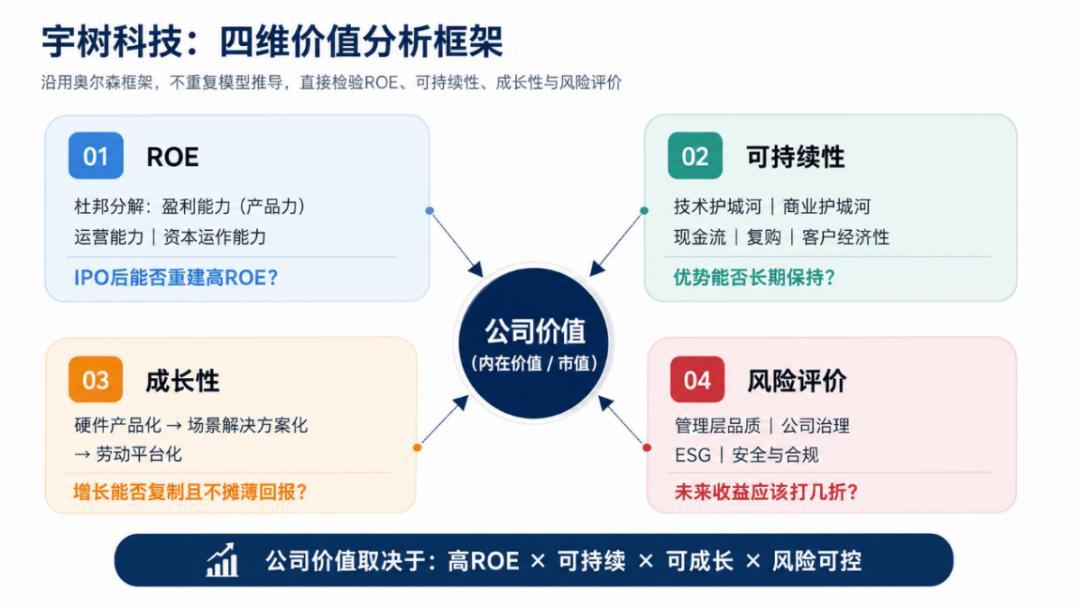
Figure 1. Four-dimensional value analysis framework of Unitree Technology
02
Four dimensions to test the future value of Unitree Technology
I
ROE: The high return before listing, can it be rebuilt after IPO?
The Ohlson model puts ROE at the core of value creation, because only when ROE is higher than the rate of return required by shareholders for a long time, can enterprises continuously generate residual income. And only when new investments can still obtain returns higher than the cost of capital, can growth truly increase value. For Unitree Technology, ROE cannot only be viewed as a nice ratio, it is more appropriate to use DuPont analysis to break it down from three aspects: profitability (product strength), operational capability and capital operation capability.
ROE = Net Profit Margin × Asset Turnover × Equity Multiplier
Applied to robotics companies, these three parts can be understood respectively as whether products can generate sufficient profits, whether assets can be turned over efficiently, and whether the management can use leverage effectively, corresponding to profitability (product strength), operational capability and capital operation capability.
➊Profitability (Product Strength): Can technological leadership be continuously converted into profits?
Unitree's profitability first comes from product strength. In 2025, the company's revenue was about RMB 1.699 billion, non-recurring profit and loss deducted attributable net profit was about RMB 591 million, and net cash flow from operating activities was about RMB 670 million. More importantly, through self-development of core components, motion control, complete machine design and cost engineering, the company has gradually turned robots from high-priced scientific research prototypes into products that can be sold in batches.
For robotics enterprises, product strength does not mean the higher the selling price the better, but whether performance improvement and cost reduction can occur at the same time. Price reduction helps to expand the installed base, but to avoid pressure on gross profit margin, the unit cost needs to drop faster, or the gross profit pressure brought by hardware price reduction can be gradually offset by revenue from software, services and solutions.
In the future, we need to focus on tracking the gross profit margin, unit manufacturing cost, R&D conversion efficiency, and whether new products can continue to maintain a competitive performance-price ratio.
The actual data for the first half of 2026 has further brought this stress test to the table: revenue still increased by 48.54% year-on-year, but it has dropped significantly compared with the 332.6% high growth rate in 2025; in the same period, non-recurring profit and loss deducted net profit decreased by 19.34% year-on-year, and net operating cash flow decreased by 32.53% year-on-year. The company explained that the main reasons are the expansion of R&D teams, new product development and increased sales investment. For a newly listed high-growth company, the most critical next step is not just to continue growing, but to prove that new R&D and sales investment can be reconverted into profit margin and cash flow.
➋Operational Capability: From R&D, production to payment collection, can assets be turned over faster?
One of Unitree's advantages before listing is its relatively light asset structure, rapid product iteration and good operating cash flow. The robotics industry is changing rapidly. Operational capability is not only reflected in factory production efficiency, but also in the entire chain from R&D project initiation, product finalization, supply chain procurement, production and delivery to customer payment collection, to see whether the cycle can be kept short enough.
After the IPO, this advantage will face new tests. The raised funds will be used for robot model research, ontology R&D, new product development and manufacturing base construction, and fixed assets, inventory and R&D investment may all rise.
If capacity construction grows faster than real demand, or new scenario deployment relies heavily on manual customization, asset turnover may decline. In the future, we need to focus on inventory turnover, accounts receivable, operating cash flow conversion, capacity utilization and deployment cycle of a single scenario.
➌Capital Operation Capability: After listing, the biggest challenge is not financing, but capital allocation.
Unitree's high return before listing was not mainly amplified by high financial leverage. The company had a low asset-liability ratio and few short-term borrowings before; as of June 30, 2026, attributable net assets were about RMB 2.88 billion, while the net funds raised from IPO were about RMB 5.917 billion, equivalent to about 2.05 times of the net assets at that time. That is to say, new capital will raise the "denominator" of shareholder equity significantly at one time, but will not raise net profit by the same magnitude at the same time. Therefore, the phased decline of ROE after listing is not unexpected, it is almost mathematically inevitable.
This is not a bad thing in itself. The key is what return the new capital can finally obtain.
Capital operation capability is not just about using leverage, more importantly, how to prioritize investment in R&D, manufacturing bases, new products and ecology, which projects should be increased in investment, and which projects should stop loss in time.
Only when the marginal return of new capital continues to be higher than the cost of capital, financing is creating value, not just expanding the balance sheet.
Financial Conclusion
Unitree's ROE in the next stage needs to be re-established by relying more on product profit margin, asset turnover and capital allocation discipline, rather than just leverage. IPO is not the end of high ROE, but a reset of the capital denominator.

II
Sustainability: Can the moat evolve from performing tricks to performing labor?
A high ROE that only lasts for one year cannot support high valuation. The Ohlson model is more concerned about how long this excess return can last. Sustainability in operation is the moat problem: can today's technological advantages continue to be converted into profits and cash flow in the face of competition, price reduction and industry iteration.
Unitree's most intuitive moat is motion control and full-stack engineering capabilities. From quadruped robots to humanoid robots, the company has formed strong collaborative capabilities in motors, reducers, joints, motion control, reinforcement learning, complete machine design and cost engineering. The value of these capabilities is not only reflected in the difficult movements in videos, but also in the ability to turn new movements, new models and core components into products at a faster speed and lower cost.
Investors need to distinguish between two types of value. The first is display value: being able to run, jump, flip and punch, used to prove motion control and complete machine engineering capabilities. The second is production value: working continuously for several hours or even thousands of hours in unfamiliar environments, with stable task success rate, controllable maintenance cost, rapid recovery after failure, and total customer cost lower than labor or traditional automation solutions. The former is easier to bring traffic and early orders, while the latter is more likely to bring repurchases, long-term contracts and large-scale capital expenditure.
The two latest pieces of information on August 20 just put the difference between "display value" and "production value" side by side. On the one hand, the day after listing, Unitree launched the R1 bionic 7-axis dexterous robotic arm with a starting price of RMB 9900, targeting scientific research and education, material sorting and assembly, and service robot exploration, which shows that the company's hardware productization and cost reduction are still advancing rapidly.
On the other hand, Wang Xingxing admitted at the 2026 World Robot Conference that the biggest bottleneck for robots to truly enter factories and households on a large scale is still the lack of efficiency and embodied intelligence generalization ability, and new tasks often require retraining. The former shows that the ability to "develop products and sell them at lower prices" continues to increase, while the latter reminds investors that "stably replacing humans to perform labor" is still a threshold that has not yet been crossed.
Commercial moat needs to go one step further than technical moat. Factory customers are more concerned about whether the robot can work stably for eight consecutive hours, whether the deployment takes weeks or months, who will maintain it after a failure, whether re-customization is required when switching to another scenario, and how much cost it can ultimately save for customers.
When reliability, delivery, after-sales, data and customer economy jointly form a barrier, technological leadership is more likely to be converted into sustainable ROE.
The technical barrier itself also requires continuous maintenance. The prospectus materials indicate that the company's relatively small number of patents may increase the difficulty of core technology rights protection and anti-counterfeiting to a certain extent.
For the robotics industry with rapid iteration, the moat is more likely not a static patent, but a dynamic capability formed by continuous R&D and iteration, cost engineering, supply chain, real scene data and organizational learning.
Financial Conclusion
What is easiest to be priced on the first listing day is the performance movements, and what is hardest to fulfill in the next ten years is stable labor output. Unitree's sustainability depends on whether it can convert its motion control advantages into stable labor capabilities, and bring repurchases and sustainable cash flow.
