A master's degree holder from a 985 university is forced to work on an assembly line tightening screws, and China's automotive industry does not need a "rise achieved by humiliating talents".
"It may not involve total layoffs of all relevant people, but forcing employees to leave by means of job transfer is a very common tactic," Huang Hailin (a pseudonym) commented.
He works for a complete vehicle enterprise, has had cooperation with Xingyu Automotive Lighting Systems, and is quite familiar with the company.
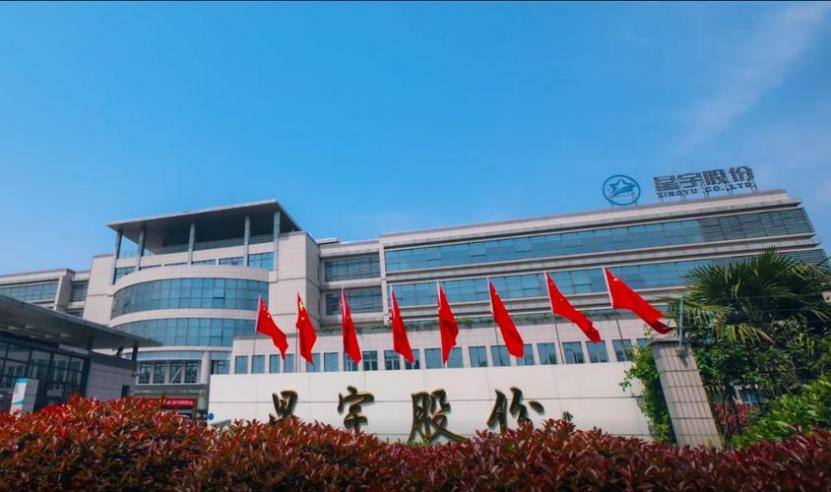
From the end of July to the beginning of August, this "king of Chinese automotive lighting" that "is not very familiar to the public but is widely famous in the industry" was caught in the controversy of "disguised layoffs of fresh graduates".
Multiple media outlets broke the news that more than 400 fresh graduates were pressured by Xingyu Automotive Lighting Systems, forced to choose between resignation or being transferred to screw tightening positions on the production line.
"The boss of Xingyu is from Changzhou and is very good at doing business," Huang Hailin on the other end of the phone sighed, "On the one hand, Xingyu's status is getting higher and higher. The German-funded auto supporting market in China is almost its territory, and now the Japanese-funded market has also been broken through by it. On the other hand, the whole industry is under great pressure this year, and cost reduction is understandable, but don't take things too far."
We contacted other sources, including people who claimed to be veteran employees of Xingyu, who complained that Xingyu Automotive Lighting Systems has poor working conditions, too many meetings, and excessive working hours.
"It ranks first in China and seventh in the world, it can't be so narrow-minded," another insider commented, "This is the style of a third-class private enterprise." Since this person comes from a state-owned enterprise, it is inevitable that there is a certain degree of prejudice against different types of companies.
However, it is worth noting that judging from the change in the number of employees, Xingyu Automotive Lighting Systems has lost nearly 30% of its employees since the end of 2024. Therefore, no matter how much moisture is squeezed out of the rumors of "disguised layoffs of fresh graduates", the incident reflects the imbalance in the rapid development process of the local automotive supply chain.
July is also the month when the global top 100 automotive suppliers list is released. The Chinese automotive supply chain spent 20 years, starting from no Chinese enterprise being selected in the global top 100 list, to 17 Chinese enterprises being shortlisted in 2026, exceeding the number of enterprises from the United States. CATL jumped to the third place in the world, while Weichai and Huayu Automotive entered the top 20. This is a counterattack from scratch, and the pride of generations of Chinese automotive practitioners.
However, when a leading automotive lighting enterprise that ranks first in China and seventh in the world forces away the 985 Project master's graduates it recruited by itself through the way of "transferring to tighten screws on the production line", how much luster will those proud numbers in the rankings and statistical tables lose?
Can the rise of China's automotive supply chain be realized in a more decent way?
01
From "Master Graduates Tightening Screws" to "30% Layoffs"
985 Project master's graduates being transferred to the assembly line to tighten screws - this is not a joke, but something that is happening now.
According to online revelations and our verification with insiders, in July this year, Xingyu Automotive Lighting Systems recruited more than 400 fresh graduates through campus recruitment, most of whom had master's degrees, and some even had doctorates. The positions they signed for were all R&D, technical and management posts.
Many recruited employees said that the company promised a one-month production line internship during recruitment, but the internship was quietly extended to three months after they joined the company.
On the assembly line, fresh graduates have to tighten five or six thousand screws a day, and their thumbs hurt so much that they can't exert strength. They all gritted their teeth and persisted, thinking that they could return to the signed position after surviving the internship.
However, on August 8, the conversation in the meeting room completely shattered their expectations.
According to the recordings and chat records provided by many fresh graduates, the HR was straightforward when talking to them in batches: "The overall market environment is not good" and "the company has problems in operation". Then they gave a "two-choice" plan -
Plan 1: Sign the termination agreement on the same day, the resignation certificate will state "resignation for personal reasons", the company will pay half a month's salary as compensation, the social security in August will be paid normally, and a job recommendation letter will be attached.
Plan 2: Refuse to sign? You will be transferred to the front-line operation post, that is, "tightening screws". All salary and benefits will be re-signed according to the standards of operators.
"This is not a job transfer, this is humiliation," said a fresh graduate who did not want to be named. A 985 Project master's graduate who spent seven years on undergraduate and postgraduate studies was arranged to tighten screws, and the intention is self-evident.
The HR's methods are considered to be carefully designed.
The first move is coercion. If you don't sign, you will be transferred to the front line to work as an operator, and all salary and benefits will be re-signed according to the standards of workers.
The second move is pressure. The HR implicitly mentioned background checks and arbitration records. Some fresh graduates revealed that the HR said in the conversation that only by cooperating to sign can they not be affected in the background check. Young people who just graduated from school can't stand such intimidation at all.
The third move is setting traps. The reason for resignation must be written as "personal reason". Once these four words are signed, the responsibility lies with the employee, the company does not need to pay N+1 compensation, and there is no need to worry about subsequent legal risks.
The result is shocking. The original fresh graduate group of more than 400 people was reduced to only about 120 people after the layoffs. About 70%, nearly 300 people, lost their jobs in just one month. At the same time, many veteran employees who have worked for 4 to 7 years were also interviewed and forced to resign. It is said that the layoff ratio in some factories in Changzhou is as high as 40%.
This is not what an enterprise in "operating difficulties" should look like. Financial reports show that from 2023 to 2025 and the first quarter of 2026, the company's revenue was 10.248 billion yuan, 13.253 billion yuan, 15.257 billion yuan and 3.43 billion yuan respectively, and the profit during the period was 1.102 billion yuan, 1.408 billion yuan, 1.624 billion yuan and 355 million yuan respectively. On the whole, the company's revenue scale and profitability still maintain growth.
What is even more ironic is that one week before the forced resignation interview - on July 29, Xingyu Automotive Lighting Systems just submitted its listing application to the Hong Kong Stock Exchange for the second time, restarting the "A+H" listing plan. While telling beautiful stories in the capital market, it cleared out the fresh graduates it just recruited.
Some employees put forward a sharp question: "If you don't need so many people, why recruit so many? After they pay social security and lose their fresh graduate identity, they are all dismissed?"
This speculation cannot be confirmed at present. But the timing is really thought-provoking - this batch of fresh graduates joined the company in July, social security has been paid, and their identity as fresh graduates has been lost. After being laid off, the campus recruitment channels, civil service positions for fresh graduates, and recruitment channels of state-owned enterprises are all closed to them.
Some lawyers have pointed out that forcing R&D post master's graduates to transfer to the assembly line is an insulting and unreasonable job transfer, and workers have the right to refuse. This "two-choice" is not a voluntary negotiation at all, it is a coercive agreement, and employees can claim 2N compensation. Dismissing hundreds of people at one time has triggered the statutory economic layoff procedure. The company deliberately split it into "one-on-one negotiation" to avoid supervision and evade obligations.
But fresh graduates are facing a realistic dilemma: to safeguard their rights, they have to go through arbitration. Even if they succeed, they will only get a few thousand yuan more, but they may have an arbitration record, which will affect their application for civil service jobs and jobs in state-owned enterprises. Xingyu Automotive Lighting Systems is betting on this point.
A 985 Project master's graduate using the pseudonym Li Lei said directly: "I have studied for seven years for my undergraduate and master's degrees in a 985 university. I joined the company through campus recruitment in July, and I will be laid off after working for only one month. If I don't cooperate, I can only be sent to tighten screws!"
The experience of veteran employees is more tortuous. Since July, the company has asked veteran employees to write self-criticism reports, admit mistakes, and accept public criticism.
Many people didn't understand it at that time. Now they see it clearly - first let you admit that "you have problems with your ability", then the company will have a basis to lay you off later. If you don't leave, the company will say you are incompetent, and under the name of "job transfer", transfer you to a factory more than ten kilometers away to tighten screws.
Some people counted the number of employees of Xingyu Automotive Lighting Systems: 10426 at the end of 2024, and 7532 at the end of 2025. The number decreased by nearly 30% in one year. And this is only the number in the public financial report.
02
China's Top Automotive Lighting Factory, Unworthy of Its Status?
Xingyu Automotive Lighting Systems has a very high position in China's auto parts industry.
Public information shows that this company focuses on the R&D, design, manufacturing and sales of automotive lighting, and is one of China's major manufacturers of complete automotive lighting assemblies.
According to data from Frost & Sullivan, calculated by sales in 2024, Xingyu Automotive Lighting Systems has an overall market share of 11.0% in China's automotive lighting market, ranking first in China; its global market share is 4.2%, ranking seventh in the world. In the global smart automotive lighting market, Xingyu Automotive Lighting Systems ranks first.
Its customer list is very impressive: Volkswagen Germany, FAW-Volkswagen, SAIC Volkswagen, Mercedes-Benz, Beijing Benz, BMW Germany, BMW Brilliance, General Motors, Toyota Japan, FAW Toyota, GAC Toyota. It has established business relationships with nine of the world's top ten complete vehicle manufacturers.
Judging from financial data, this company is far from being in "operating difficulties". From 2023 to 2025, the company's revenue increased from 10.248 billion yuan to 15.257 billion yuan. In the first quarter of 2026, the company achieved revenue of 3.43 billion yuan and net profit of 355 million yuan, with year-on-year increases of 10.8% and 10.3% respectively.
A company with growing revenue year by year and sprinting for a Hong Kong stock listing told fresh graduates who had just joined for a month that "the company has operating problems" - this is hardly convincing.
The industry's evaluation of Xingyu Automotive Lighting Systems is quite complicated. Some people from complete vehicle enterprises said bluntly that although Xingyu Automotive Lighting Systems is the domestic leading enterprise in automotive lighting, it still retains many drawbacks of small private enterprises in its bones, and does not have the bearing and norms that a large enterprise should have, which can almost be described as "unworthy of its status".
Although this evaluation is harsh, the various operations exposed in this layoff incident seem to confirm this judgment to a certain extent.
In recent years, Xingyu Automotive Lighting Systems has indeed been gaining momentum in the German-funded complete vehicle supporting business. Relying on its cost-effective advantage and localized service capabilities, the company has won a large number of orders from Volkswagen and BBA, which has directly led to a sharp shrinkage of the business of long-established overseas automotive lighting enterprises such as Hella, Magneti Marelli and Valeo in the domestic market.
If this is only the replacement of European-funded auto companies' business in China, that's okay. What makes international opponents more nervous is that even the local market in Europe is being eroded by Chinese supply chain enterprises. Recently, Xingyu Automotive Lighting Systems and Jiali Automotive Lighting have also entered the Toyota system, posing a substantial threat to Japanese automotive lighting giants such as Koito and Stanley Electric.
The global automotive industry is undergoing in-depth adjustment, cost reduction and efficiency improvement have become the main theme, and the localization of the supply chain has been accelerated as a result. Local suppliers like Xingyu Automotive Lighting Systems have ushered in an unprecedented historical opportunity. There are even radical views suggesting that domestic enterprises take the opportunity to acquire international opponents such as Stanley Electric - this should have been the golden age for Chinese auto parts enterprises to go global.
However, at this critical juncture, Xingyu Automotive Lighting Systems smashed its own sign on the ground with a "humiliating layoff".
Some media commented that Xingyu Automotive Lighting Systems handled the "termination of contract" in such a simple and rude way, which sent a very negative signal to the capital market. The focus of R&D is never to purchase equipment and materials with a lot of money, but to rely on a stable team of engineers to implement and realize the technology.
Large-scale autumn campus recruitment to recruit technical fresh graduates is originally an important means to build a long-term R&D echelon, but dissuading them from leaving just over a month after joining the company exposes a serious mismatch between the company's recruitment planning and actual business needs.
In the future talent market, Xingyu Automotive Lighting Systems' attractiveness to high-quality fresh graduates will decline, and subsequent recruitment will have to bear higher talent acquisition costs.
An internal employee of Xingyu Automotive Lighting Systems anonymously complained to us about the company's daily management: no rest for a whole month, fines for being late, fines for exceeding the time limit for going to the toilet, the food quality is so poor that it is hard to swallow, and leaders yell at employees at will - although the words are intense, they also reflect the long-standing drawbacks of this company in grassroots management.
Even if we exclude the emotional expression, the reflected rude management and lack of humanistic care are far from the image that a modern industry leader should have.
A company that wants to tell beautiful stories on the Hong Kong stock market is unwilling to give the most basic decency to young people who have just joined. This is not only a legal issue, but also a test of corporate culture and values. Enterprises have the autonomy to use labor, but this autonomy should be based on respecting contracts. Economic cycles always have ups and downs, and cost reduction and efficiency improvement are understandable, but the price should not be passed on to fresh graduates who have no bargaining power at all.
Similarly, when laying off employees in the name of "cost reduction", some companies frankly admit their difficulties and pay N+1 compensation - this is called responsibility. Some companies ask employees to write "personal reasons" for resignation, transfer them to tighten screws, threaten them with background checks, and restrict them with their fresh graduate identity - this is called calculation.
The former is a business choice, while the latter is blatant humiliation.
What makes people most uncomfortable is that every step of the calculation can't find any legal flaw. Writing "personal reason" is voluntary for you. Job transfer is for "business needs". Background check is a "normal work process".
It is legal, but not decent.