The Chill and Fervor of Chengdu Auto Show: Absentees, First-movers and Persistent Stalwarts
On August 21, the 29th Chengdu International Automobile Exhibition kicked off at the Western China International Expo City. With an exhibition area of 220,000 square meters, nearly 120 brands, and about 1,600 displayed vehicles, it is still the first Class A auto show in China in the second half of the year in terms of scale. The exhibition period falls right at the entry of the traditional "Golden September and Silver October" peak consumption season for automobiles. However, the absence of more than 20 brands, a large number of pre-show press conferences, and the heated discussions around "rush-developed vehicles" have made this auto show present a complex mix of cold and hot dynamics.
Absences, Empty Booths and Exclusive Pavilions
Judging from the official booth layout, more than 20 brands are absent from this Chengdu Auto Show. In the ultra-luxury camp, Bentley, Porsche, Rolls-Royce, Lamborghini, Maserati, Aston Martin, Lotus and other brands are all absent, which is the second consecutive year that some brands have given up participating in the Chengdu Auto Show.
The changes of mainstream market brands are more noteworthy: Dongfeng Nissan is absent for the first time in many years, Dongfeng Honda, Chevrolet, and Yueda Kia are also not on the list; second-tier luxury brands such as Lexus, Genesis, Infiniti, as well as brands including Tesla, Rock, and Skyworth also do not appear in the exhibitor list.
Behind the absence of many brands is a clear economic account. Data from the China Association of Automobile Manufacturers shows that in the first half of 2026, China's automobile production and sales reached 15 million units respectively, down 4% year-on-year. With the total market under pressure, the marketing budgets of automakers are naturally tightened. The venue fee for a Class A auto show often costs millions of yuan, plus the costs of booth construction, travel and communication, the total investment for a single show often reaches the level of tens of millions of yuan. When online live streaming and private domain operations can achieve more precise reach at lower costs, automakers are re-examining the cost-effectiveness of auto shows.
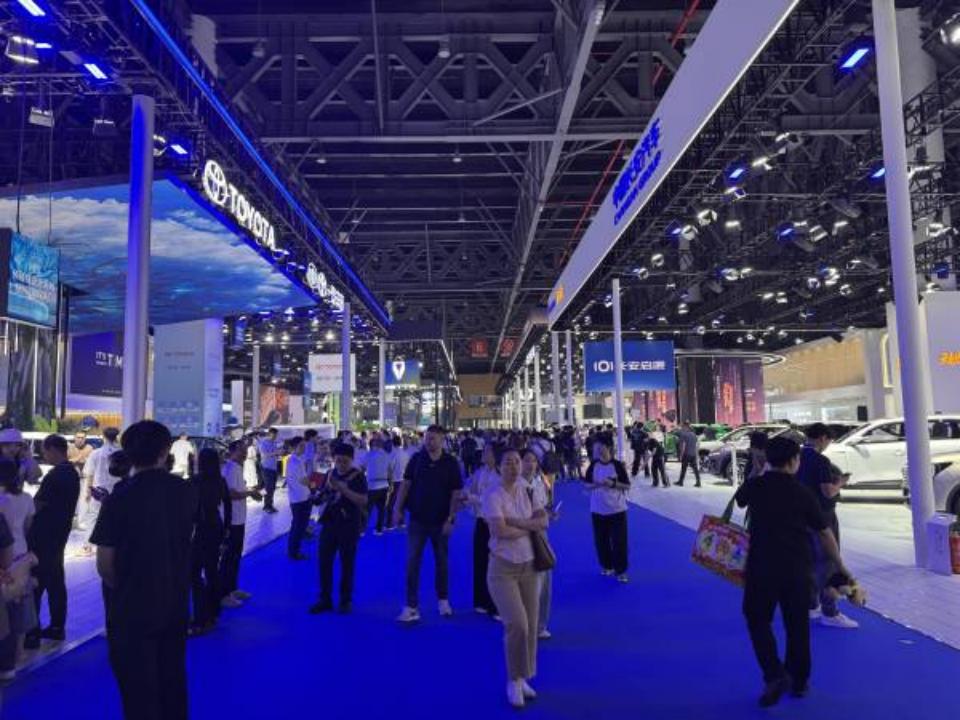
2026 Chengdu International Auto Show | Guancha.cn
In addition to the absence of some brands, the "shrinking" of some booths themselves at this auto show is also worthy of attention. For example, although Audi has a normal booth, its booth area has been reduced by 20% to 30% and is split into two separate booths. Some exhibitors reported that many brands cannot fill their booths with displayed vehicles, the number of exhibition cars is significantly less than in previous years, and the empty space is more than before. In addition to the shrinking number of debut new cars, the number of advertisements on the exterior walls of pavilions has also decreased significantly, which intuitively reflects the reduction of brand investment.
In sharp contrast to the absentees and those who shrunk their booths, leading independent brands have taken strong positions. BYD appeared in Hall 9 with an exclusive pavilion for the third consecutive year, with multiple sub-brands exhibiting together; Chery Group brought 5 brands with a total of 38 models to Hall 5; Great Wall Motors and HarmonyOS Intelligent Mobility also occupy large exhibition areas.
The contrast between retreat and advance reflects the ebb and flow of market share. Data from the China Association of Automobile Manufacturers and the China Passenger Car Association show that the new energy penetration rate has risen to 65.1% in July this year, the market share of independent brand passenger cars has exceeded 77%, and the overall share of joint-venture and foreign brands is less than a quarter.
"Pre-emptive Launch": The Unwillingness to Give Up Traffic
On the other hand, many new cars have already been launched in clusters before the Chengdu Auto Show opens. According to incomplete statistics, since August 10, more than 20 new cars including the Land Cruiser 8 First Limited Edition, Geely Galaxy TT, and Voyah Light S have been launched or pre-sold in advance. Even on August 18, the eve of the auto show, 5 models including Yijing X9 and the new generation IM L6 started pre-sale or launch on the same day; on August 20, models such as Zhijie RX completed pre-sale or launch before the opening.
The logic behind some automakers' "pre-emptive launch" is not difficult to understand: when new cars are unveiled intensively during the auto show, the traffic will naturally be diluted; releasing new car information in advance can not only seize the public opinion opportunity, but also leave enough space for subsequent order conversion. This "strike first" strategy is a true portrayal of the white-hot competition in the current automobile market.
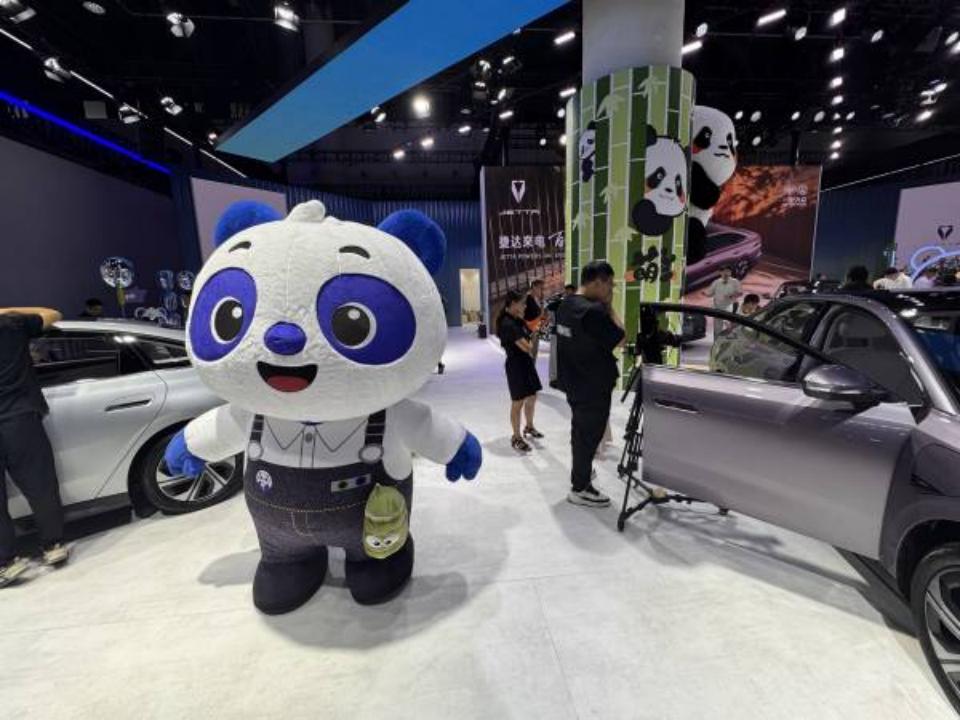
FAW-Volkswagen Jetta booth full of panda elements | Guancha.cn
In fact, the clustered release of new cars is no longer a new thing. Data shows that more than 650 new cars were launched in the domestic market in the first half of this year, with an average of more than 3.5 models per day. Although Li Yanwei, an expert from the Expert Committee of the China Automobile Dealers Association, once explained that the so-called more than 500 models are the combined statistics of vehicles with various configurations and derivative models, and there are only about 165 completely new models in the first half of the year, even so, an average of more than 0.9 new cars are launched every day.
In addition, since the Beijing Auto Show in April this year, it has been normal for the automotive industry to hold two or three press conferences per day. On April 22, the eve of the Beijing Auto Show, 12 press conferences were held. When hundreds of brands speak on the same day, a press conference invested millions of yuan by ordinary brands may only get a few hours or even tens of minutes of attention.
The Unavoidable "Rush-Developed Vehicles"
With the accelerating launch speed of new cars, the controversy over "rush-developed vehicles" has also emerged. At this Chengdu Auto Show, many executives of automakers spoke out on this topic. For example, Li Jun, Executive Director of Marketing Business of SAIC Volkswagen Volkswagen Brand, revealed at the press conference that the cycle from project approval to mass production of many new products is constantly being compressed, and some brands can roll out a new car in a year and a half, or even one year.
"Metal fatigue, rubber aging, battery cycle charging and discharging, and vehicle durability all take time, not a single minute can be saved, nor can it be replaced by AI simulation." Li Jun emphasized that the development and verification of models cannot violate the laws of physics: "R&D can be accelerated, but verification cannot." He promised that SAIC Volkswagen will never build "rush-developed vehicles", "minimum-standard vehicles" or "double-standard vehicles".
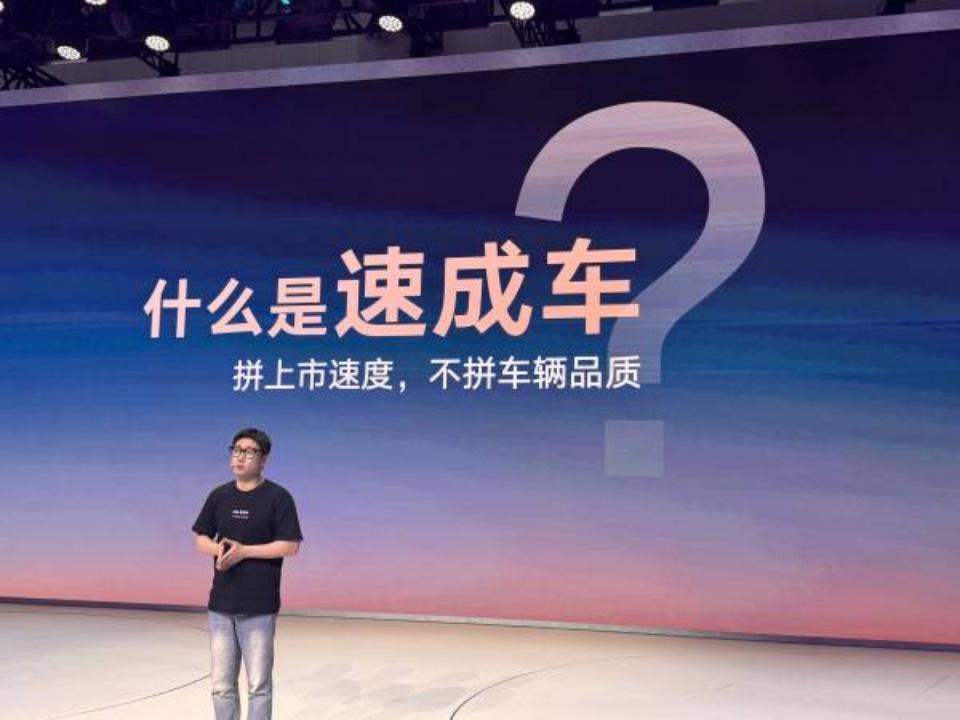
Li Jun from SAIC Volkswagen emphasized that no "rush-developed vehicles" will be built during the auto show | Guancha.cn
Zhao Yongpo, General Manager of Wey Brand, also said when talking about "rush-developed vehicles" during the auto show that a means of transportation carrying the travel safety of the whole family cannot afford any eagerness for quick success, and we must never leave the problems that should be solved in the test field to users, making users passively become free test drivers. Earlier, Wei Jianjun, Chairman of Great Wall Motors, also promised: Great Wall Motors has never built a single "rush-developed vehicle" in its 36-year history.
As one of the initiators of this round of "rush-developed vehicles" topic, Wu Zhoutao, Chairman of Beijing Hyundai, also re-emphasized at the auto show: Beijing Hyundai adheres to strict vehicle manufacturing standards and abandons the "rush to launch" tendency; Li Fenggang, General Manager of Beijing Hyundai, who once revealed that some automakers only complete one verification test, also announced during the auto show that the R&D cycle of the new car Ioniq V is three years, "it cannot be built in 18 months".
Lu Fang, Chairman of Voyah Automobile, said during the auto show that the premise of improving the efficiency of automobile development is the scientific reconstruction of the development process. We cannot delete necessary tests, weaken road verification, or skip key quality links just to catch the launch window. Earlier, he spoke out on the topic of "rush-developed vehicles" that the only criterion for judging whether a car is "rush-developed" is not the time spent, but whether it has gone through all the necessary verification procedures completely.
Judging from the public statements of automaker executives, not building "rush-developed vehicles" should have been the industry consensus. However, against the background that the complete R&D and verification of a model generally takes 3 to 4 years in the traditional fuel vehicle era, some brands have now begun to drastically compress the R&D cycle: when new cars are launched to the market at a speed close to that of mobile phone iteration, how to ensure product reliability and safety has become a common concern of consumers and regulators.
From Industry Weathervane to Practical Marketing
According to the on-site perception of Guancha.cn, the flow of people in the pavilions on the first day of the auto show is relatively small: many senior executives of automakers did not attend the auto show, and the operation of booths is mostly entrusted to regional teams, most booths have started the sales mode early in the morning... The performance of automakers during the auto show is becoming more and more pragmatic.
This phenomenon is actually not unexpected: when the number of global debut models is very limited and technical exhibits give way to the display of existing vehicles for sale, the auto show's attribute as an industry weathervane is naturally weakening. Although the consumer demand has not disappeared, the function of auto shows is shifting from equal emphasis on brand communication and sales to regional exhibition and sales platforms at an accelerated pace.
On the other hand, the marketing strategies of automakers are changing quietly. At this auto show, celebrity endorsement has become a major highlight. The M-Hero Automobile booth was extremely popular with the appearance of its spokesperson and celebrity owner Guli Nazha, and the passage of the exhibition area was once crowded with people; at the Zeekr booth, Xueye, one of the leading actors of the recently hit movie Kung Fu Women's Football and a well-known "Star Girl", also appeared at the Zeekr booth, attracting a lot of attention.
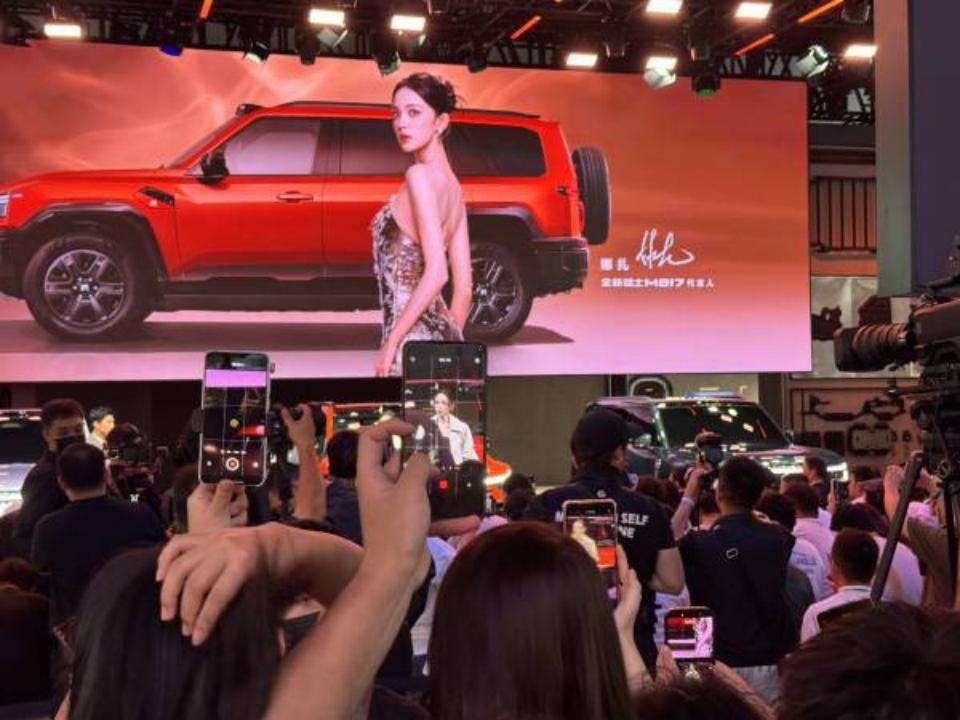
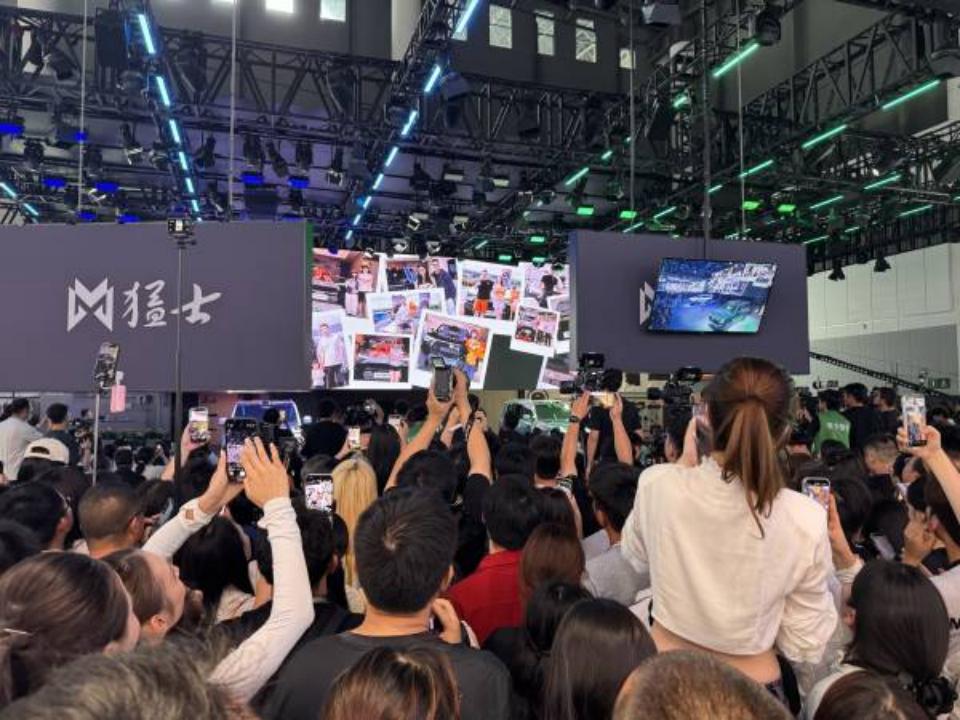
The M-Hero booth attracted a large number of audiences to stop and watch because of Nazha's arrival | Guancha.cn
In addition, iCAR officially announced that Zhao Jinmai will serve as its global brand spokesperson at the auto show; Beijing Hyundai Ioniq V announced that Fan Chengcheng is its spokesperson. Before the opening of the auto show, Voyah's spokesperson Yang Yang, and Enjoy's spokespersons Yang Mi and Shen Teng have all appeared at their respective brand new car launch events.
When the traffic of the auto show itself is diluted, automakers need to re-gather popularity and create topics, and the personal appeal of celebrities has become one of the important choices for them. Celebrity appearances have replaced part of the functions of brand press conferences, becoming a new entry point to attract public attention.
However, beyond the competition for traffic, the product itself is still the main highlight of the auto show. Judging from the new cars unveiled at this auto show, independent brands are focusing on three main lines: breaking through with high-end flagship models, deep cultivation of intelligent family vehicles, and segmentation of personalized scenarios. For example, the first D-class luxury flagship sedan "Han" of BYD Dynasty series made its debut; Chery iCAR V25, Exeed EX6 and other models made their global debut. Mainstream joint-venture brands also brought a number of localized products - two new energy models of SAIC Volkswagen, ID.ERA 8X and ID.ERA 5X, made their global debut; the new generation BMW iX3 started pre-sale with a starting price of 270,000 yuan.
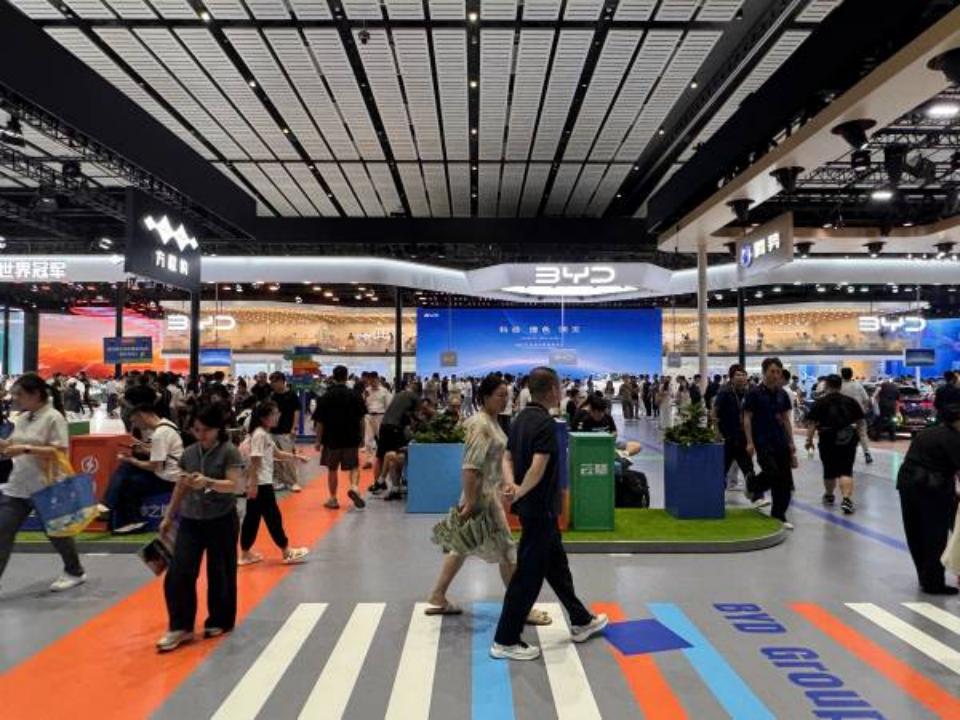
BYD exclusive pavilion in Hall 9 of 2026 Chengdu Auto Show | Guancha.cn
Another special feature of this auto show is that 5 local vehicle manufacturers in Chengdu brought 15 locally manufactured models to exhibit together, creating a 1,000-square-meter "Chengdu-made" intelligent connected vehicle industry chain zone for the first time; the "Chengdu-made" model Yijing X9 has started national pre-sale before the auto show, with orders exceeding 20,000 units within 24 hours after launch. This extension from "exhibition" to "production" may be one of the directions for the value reconstruction of auto shows.
The Chengdu Auto Show is still ongoing. Some are absent from the pavilions, some occupy exclusive pavilions; some launch pre-emptively, some stick to their principles; some lament the deserted atmosphere, some focus on selling cars, and some invite celebrities to create a lively scene... All these pieces put together present the real picture of the current Chinese automobile market: fierce competition with diverse directions. When automakers start to carefully calculate economic accounts, when auto shows change from "must-attend" to "attend only when it is worthwhile", and when the controversy over "rush-developed vehicles" forces the industry to re-examine the balance between R&D and verification, the entire automotive industry is undergoing a transformation from scale expansion to value deep cultivation.
This article is from the WeChat official account "Guan Xing Chu", author: Pan Yuchen, editor: Gao Shen, authorized for release by 36Kr.