QQ Pet, which disappeared for 8 years, is back.
If you accidentally open QQ recently, you will find a surprisingly familiar figure.
Yes, QQ Pets, which was shut down 8 years ago, has made a comeback.
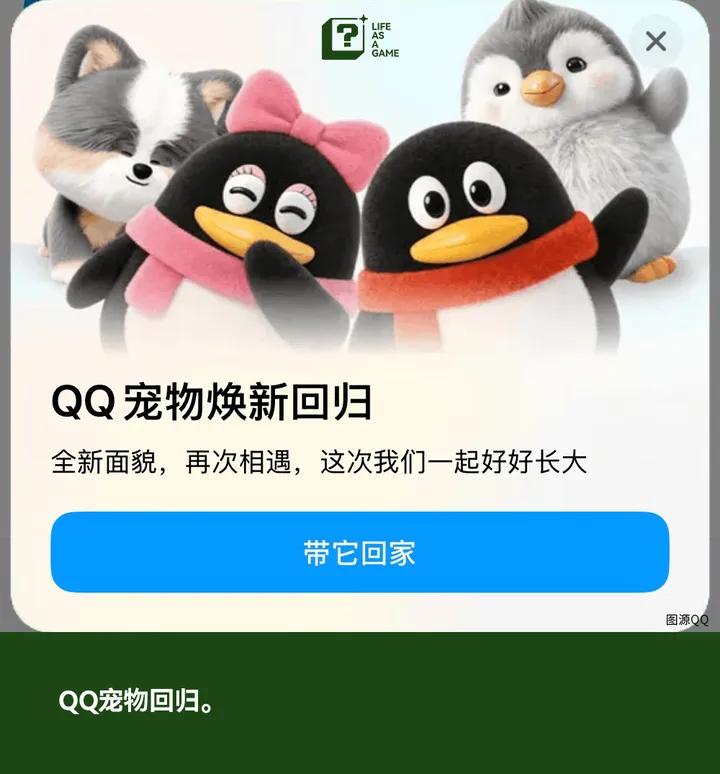
As a time-honored star product, QQ Pets was launched in 2005 and accompanied the youth of a generation of netizens. But in 2018, Tencent officially announced the shutdown of this project for various reasons.
Then here comes the question, why on earth did QQ Pets become Tencent's "abandoned child" back then? Why can it come back to life after 8 years of shutdown? Is the revived QQ Pets the same as the old version?
Rising on the desktop, "dying" on the desktop
To figure out why QQ Pets was abandoned, you first need to understand why it was born in the first place.
In 2005, this project was launched under the leadership of Wang Haibing, a famous Tencent product manager, and generated 2 million yuan of revenue in its first month. One year after launch, the number of concurrent online users of QQ Pets exceeded 1 million, and the peak reached 1.6 million in 2007. This figure seems unremarkable now, but in 2005, for Tencent, which was not even ranked among the top 5 Chinese game companies by revenue at that time, the revenue-generating capacity of QQ Pets was impressive enough.
When talking about the success of QQ Pets, the most unignorable background is the desktop Internet era when everyone accessed the Internet via computers. In terms of product form, it played a very good regulatory role: when you opened QQ, it would show up, and when you logged out, it would go offline too. QQ Pets would pop up from the lower right corner of the desktop from time to time, you had to feed it, give it a bath, take it to work to earn ingots...
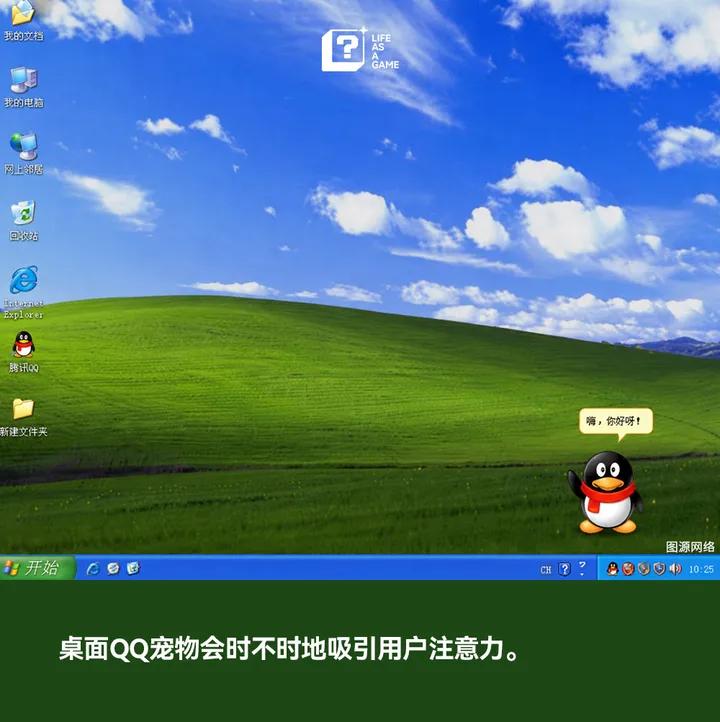
This experience of "light" companionship not only made some users willing to pay for it and created considerable revenue, but also gave users a reason not to close QQ, making a large number of users willing to stay on QQ for a few more minutes.
In this way, QQ Pets has become an indelible memory of the Internet for many people.
But the good times did not last long. Wang Haibing saw the huge demand for children's games and communities from QQ Pets, so he chose to leave Tencent and start his own business. The later games that carried the childhood feelings of a generation of players, Mole's World and Seer, were developed by Taomee, the company founded by Wang Haibing.
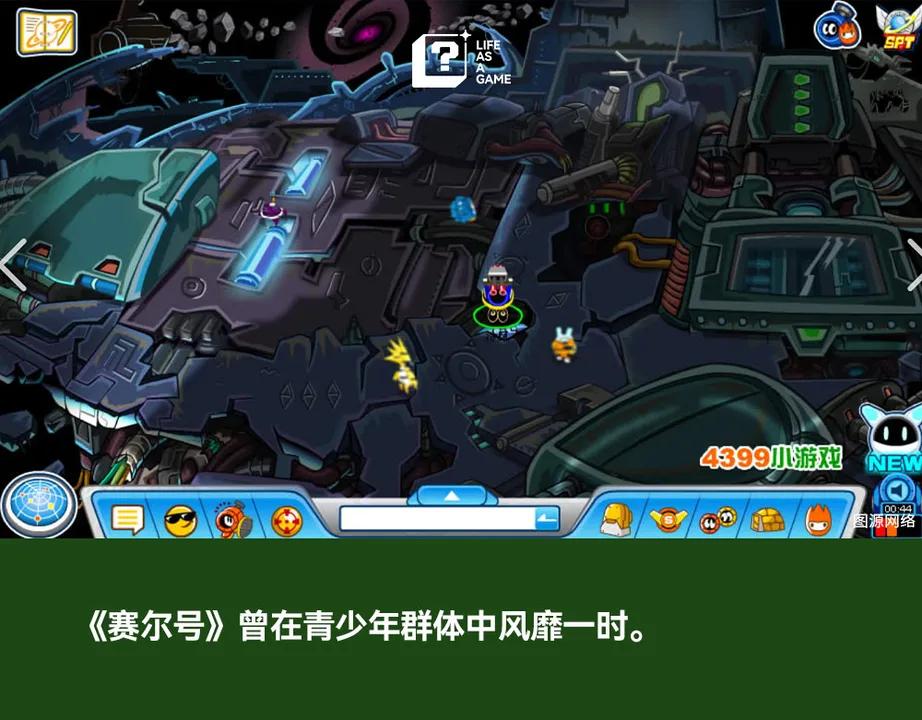
After Wang Haibing left, the core members of the QQ Pets team were transferred to develop Roco Kingdom, a new Tencent project to compete with Taomee. The internal priority of QQ Pets plummeted, no one maintained it as a priority, and the product gradually changed from a virtual pet to a collection of Flash mini-games.
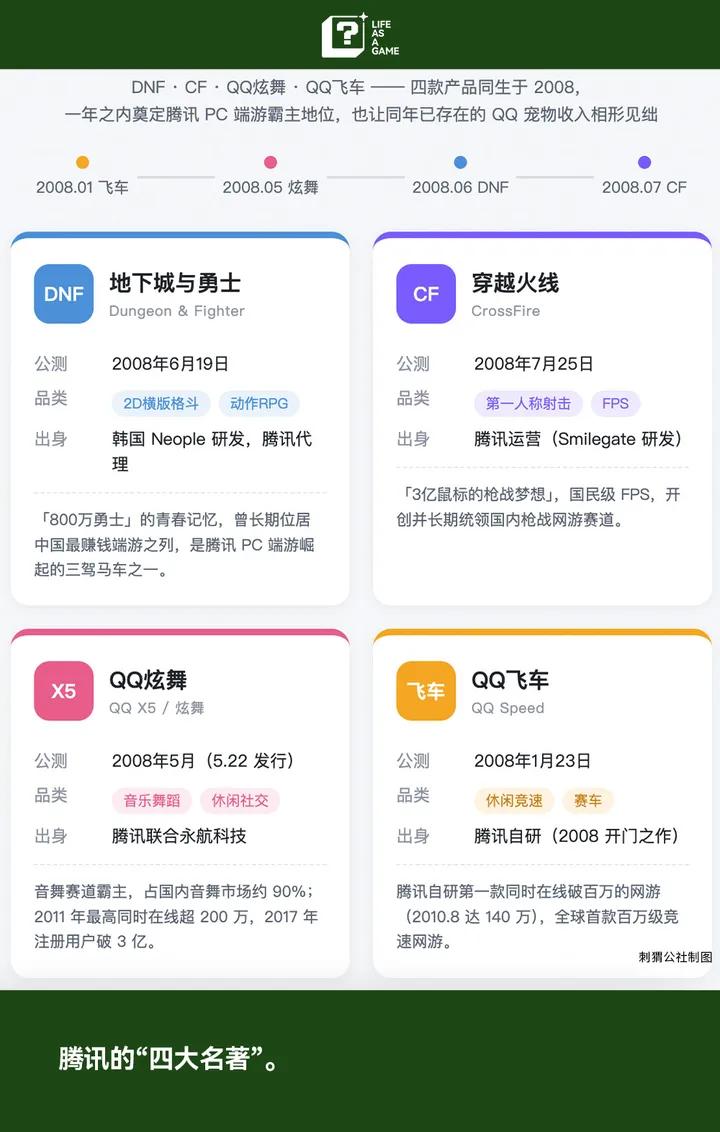
Since 2008, the "four masterpieces" of Tencent Games — QQ Dancer, QQ Speed, CrossFire, and Dungeon & Fighter — have been launched one after another, quickly establishing Tencent's dominant position in the domestic game industry. Tencent had several cash cows that continuously created value, making the revenue-generating capacity of QQ Pets even more overshadowed.
By 2018, Tencent's official statement was that QQ Pets was shut down "for various reasons". The unexpanded reasons may be very complicated, but the core rule of the business world is clear: giving up a product is nothing more than the imbalance of input-output ratio.
In 2018, QQ Pets had been running continuously for 13 years, accumulating too much technical debt to fill. But its commercial return was too insignificant in the entire Tencent group, so it was natural for it to be shut down.
What's more, 2018 was the era of iPhone XR, and the penetration rate of smartphones was quite high. According to data from CNNIC, the scale of mobile Internet users in China reached 817 million in 2018, accounting for 98.6% of the total Internet users at that time. The number of users who still used desktop computers to access the Internet was less than half of the total number of Internet users.
The desktop Internet era is over, and the little penguin on the desktop naturally lost its meaning of existence.
The next question is, in 2026 when the mobile Internet is more prosperous and the desktop Internet remains marginal, why has QQ Pets come back to life instead?
New buds on old branches, opportunities emerge
At the 2024 Tencent Staff Conference, Pony Ma put forward a concept: new buds sprouting from old branches.
At that time, this concept was generally interpreted as promoting internal innovation to make Tencent, the old tree, grow new buds. But at the 2026 staff meeting, Pony Ma almost explicitly used this concept to explain the return of QQ Farm and QQ Show.
The answer is clear. The so-called "old branches" actually refer to Tencent's early classic products, and "new buds" mean leveraging new technologies and new markets to let old products play their remaining value.
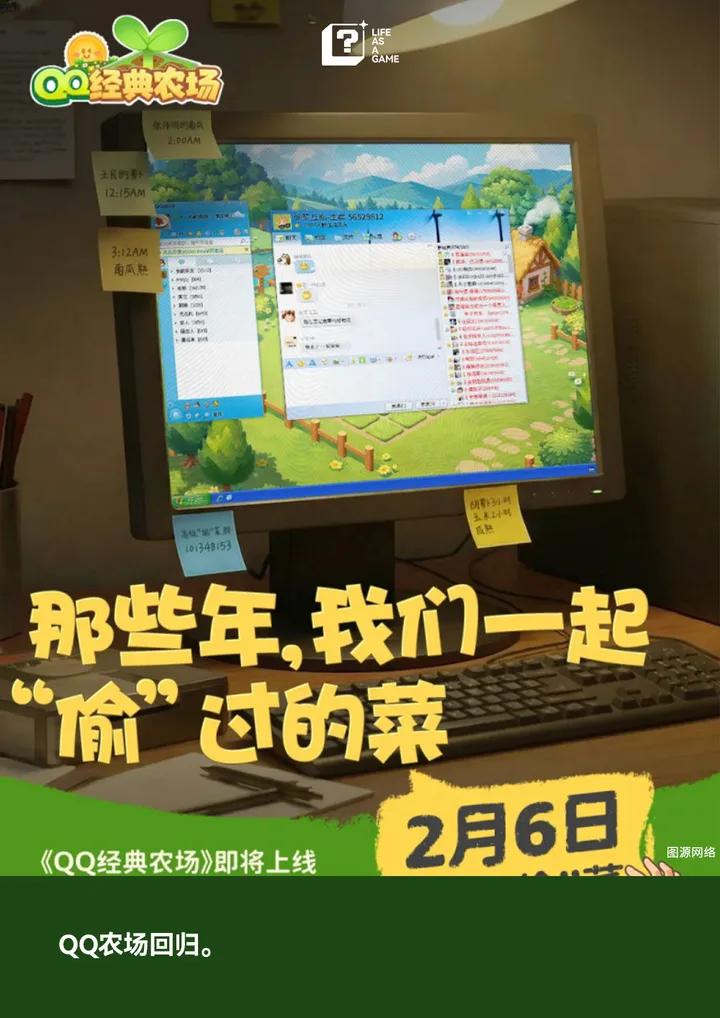
After the top leader set the strategic tone, the product team followed up quickly. In September 2025, QQ Classic Farm started its closed beta test; in December, the QQ Classic Mode on PC made a comeback; in January 2026, QQ Show returned with AI-generated avatars supported; in February, QQ Classic Farm officially launched again.
Then on July 27, QQ Pets returned.
However, the return of QQ Pets is not as simple as just pressing the "play" button again. The new QQ Pets is no longer a product of the desktop Internet era, but is exclusive to mobile QQ. QQ Pets is no longer a 2D pixelated small square, but has become a 3D fluffy image with physical feedback when you touch it. The species are no longer limited to penguins, and new options such as dogs are added.
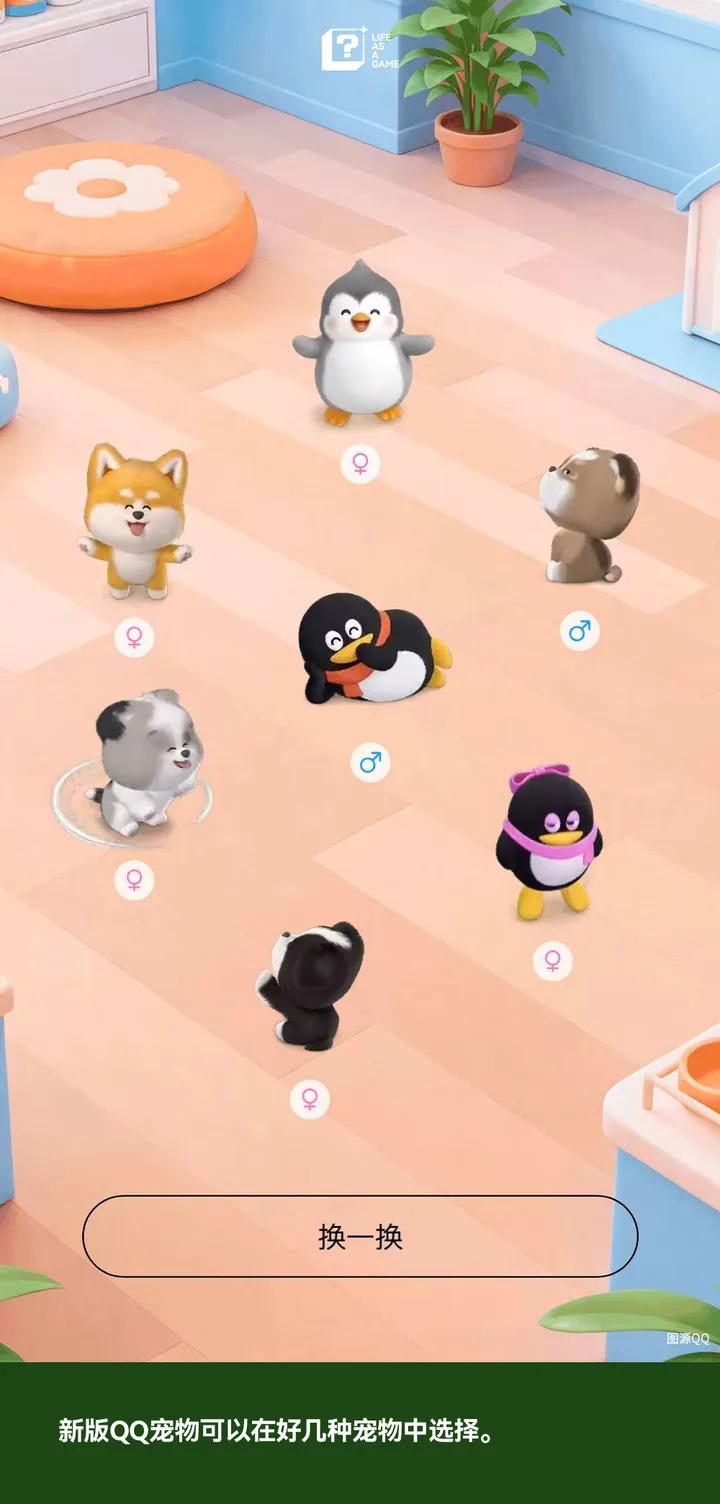
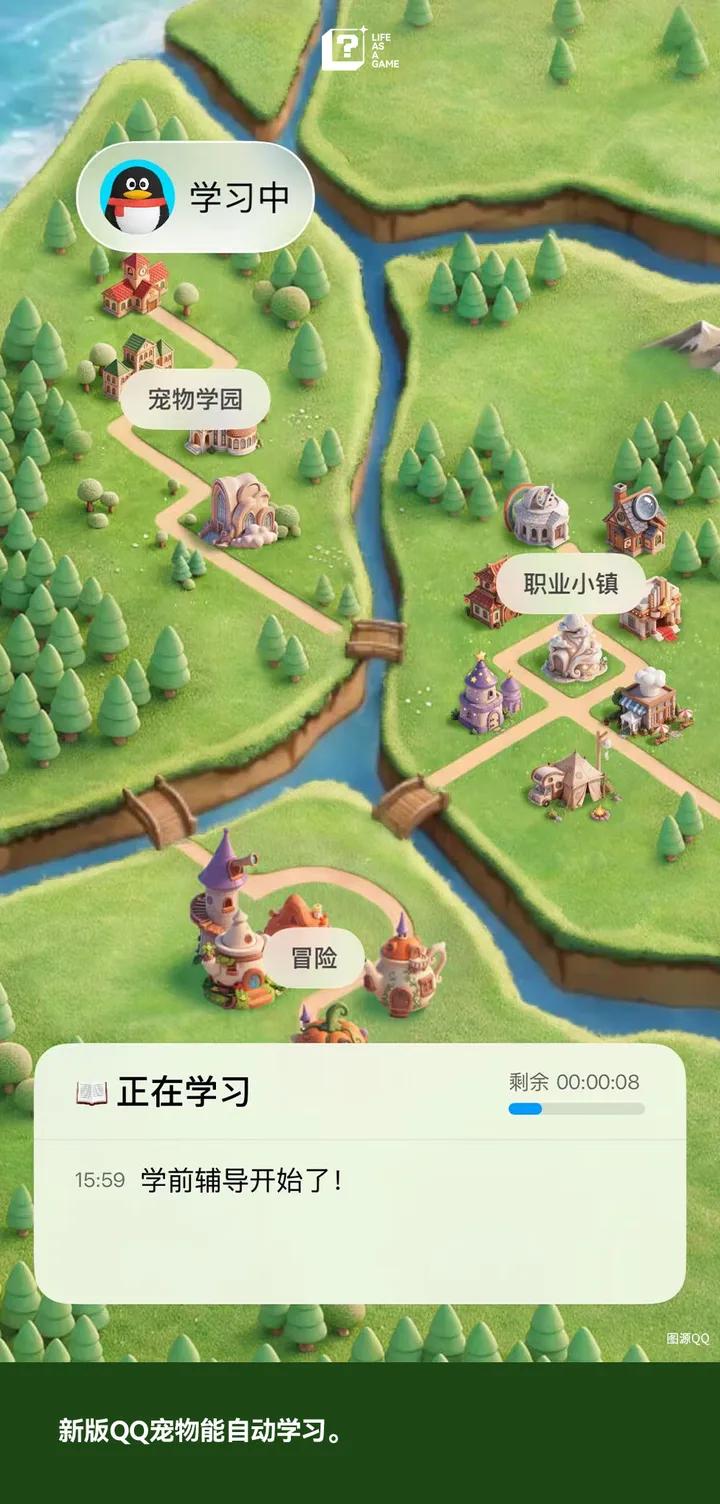
In addition, the mobile QQ Pets is also connected to Tencent Hunyuan Hy3 large model, and each pet has a preset personality: little sun, clingy one, naughty kid, little drama queen. Pets of different personalities will take the initiative to greet users, remind the weather, express their needs, and even generate a "pet diary" every day. The pet diary is not a preset script, but automatically generated by AI according to the pet's personality, level and the interaction situation of the day.
So far, AI has transformed two products, QQ Show and QQ Pets, echoing the theme of "new buds sprouting from old branches" set by Pony Ma. But up to now, the problems that caused QQ Pets to shut down back then still seem to be unsolved. Because this version of QQ Pets seems to be even less profitable.
The original commercial model of QQ Pets had a sense of urgency: for example, the fullness and cleanliness levels dropped very fast, the ingots earned from working could not cover the cost of food and medicine, you had to pay to see a doctor when the pet got sick, and the pet would die directly if you used the wrong medicine.
But the new version is different, its only paid items are pet costumes and decorations. Now, the pet work system is self-sustaining, feeding and bathing cost nothing, and even the paid first-aid prop similar to the "revival pill" in the old version has disappeared along with the death mechanism.
In that case, why did Tencent go to so much trouble to restart this product? Apart from providing more application scenarios for its large model, what kind of strategic task does the AI version of QQ Pets undertake?
Changing the mindset, "dimension reduction" of the category?
Saying that QQ Pets is "not profitable enough" is only calculated when it is regarded as an independent product. But at present, the positioning of QQ Pets has actually changed, and it is more like those young "peers": the chicken in Ant Manor, the little fireman of Douyin, and the little fire cub of Kuaishou.
This category has not been like this since the first day. Thirty years ago, it was called a companion pet game, and its representative work was Tamagotchi developed by Bandai — a virtual electronic chicken in a plastic egg. Tamagotchi has no pause button, it will "die" if you neglect to take care of it. It built emotional bonds with users through "irreversible sense of responsibility", and has sold 100 million units worldwide.
In 2018, the Japanese game Travel Frog also became a hit in China. It is a frog that you don't need to take care of, it will go on a trip by itself and send you photos regularly. This kind of "light bond" quickly became popular on social networks, and verified the market demand for low-pressure companionship with the Buddhist-style pet raising mode.
However, in retrospect, although this category has good activity, its revenue is not high. Tamagotchi achieved great success with the dividends of the times and first-mover advantage, but latecomers are often not so lucky. For a long time, a very wide range of players are willing to try this kind of game, but commercial blockbusters in this field are very rare.
Of course, the fact that independent companion pet games are difficult to make huge profits does not mean that the product design itself is a failure.
If you change your mindset and regard it as an auxiliary function, companion pets will have their use again. The word "companion" means that it can make users stay for a few more minutes. And these extra few minutes are very precious for every super App.
According to the CICC Research Report, the average daily usage time of WeChat users in 2017 was 81.5 minutes, while that of Alipay was only 6.4 minutes.
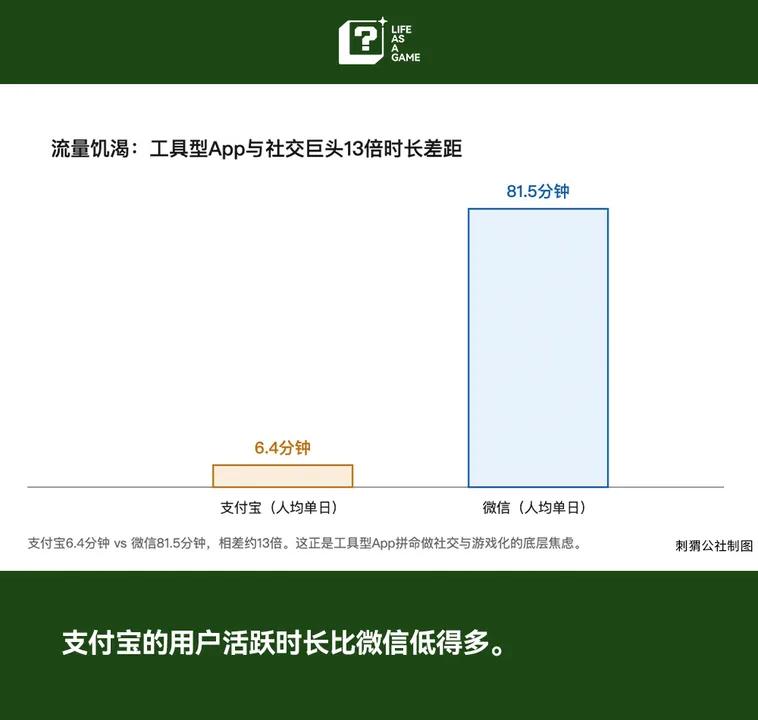
In order to make users stay longer, Alipay has tried many non-utility gameplay features, such as the famous "Ant Manor". In the manor, users can raise chicks and collect love eggs for public welfare. Alipay does not want you to pay for this product, but hopes to "use" your sense of responsibility for the chicks to make you unconsciously spend more time on Alipay.
On the other hand, Douyin and Kuaishou have no shortage of traffic, their average daily usage time is around two hours, but they need to expand social connections. If users see interesting videos on Douyin and Kuaishou, but still need to share them with friends through other apps, it will be difficult for short video platforms to form a complete ecological closed loop.
The little fireman and the little fire cub are both helping the platform solve this problem. They require users to share videos with each other to maintain activity, which imperceptibly increases users' sense of responsibility, and actually promotes users to build social connections within the short video apps.
In this way, Ant Manor aims to improve user activity, Douyin and Kuaishou aim to make up for the shortcomings of social relations, then what about QQ?
In the era when super Apps compete fiercely, the "new buds sprouting from old branches" of QQ Pets is also of great significance to QQ. On the one hand, QQ can seize the position on the track of AI emotional companionship and catch up with new technological opportunities. On the other hand, when QQ announces the return of the companion gameplay that once led the industry, it has the opportunity to awaken old users and attract new generations with this national-level IP at the same time.
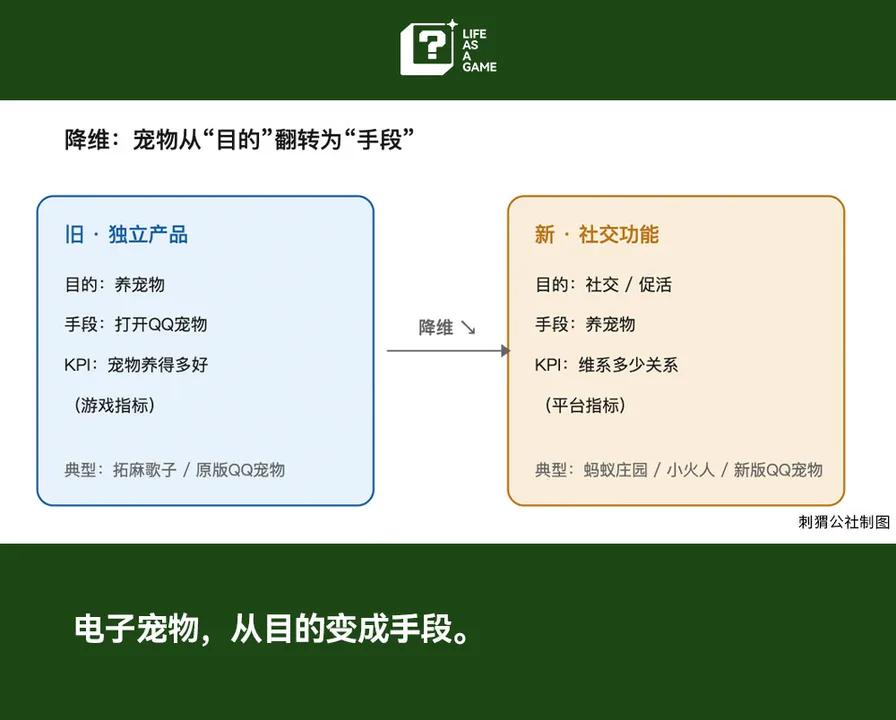
From the perspective of product positioning, the new generation of companion pets is generally facing "dimension reduction". But this "dimension reduction" does not mean that companion pet games become "smaller" or die out. On the contrary, they have actually become "larger".
Now, the DAU of Douyin's little fireman has exceeded 100 million, and Kuaishou's little fire cub has 60 million users. When pets change from independent products to featured modules, their user scale is far larger than that in the era of independent products.
In comparison, the restarted QQ Pets still faces some challenges. For example, the core of the little fireman and the little fire cub is "co-raising", the cooperative relationship between two users doubles the social stickiness naturally, while the new QQ Pets is still dominated by individual raising, and social interaction is only an auxiliary function, whose long-term performance remains to be verified.