The gaming industry may face 15,000 layoffs in 2026, and the opening speech at Gamescom calls out "Please be kind to industry practitioners!"
"Please treat practitioners well" is the first piece of advice Amir Satvat gave to the industry in the opening speech of this year's gamescom dev.
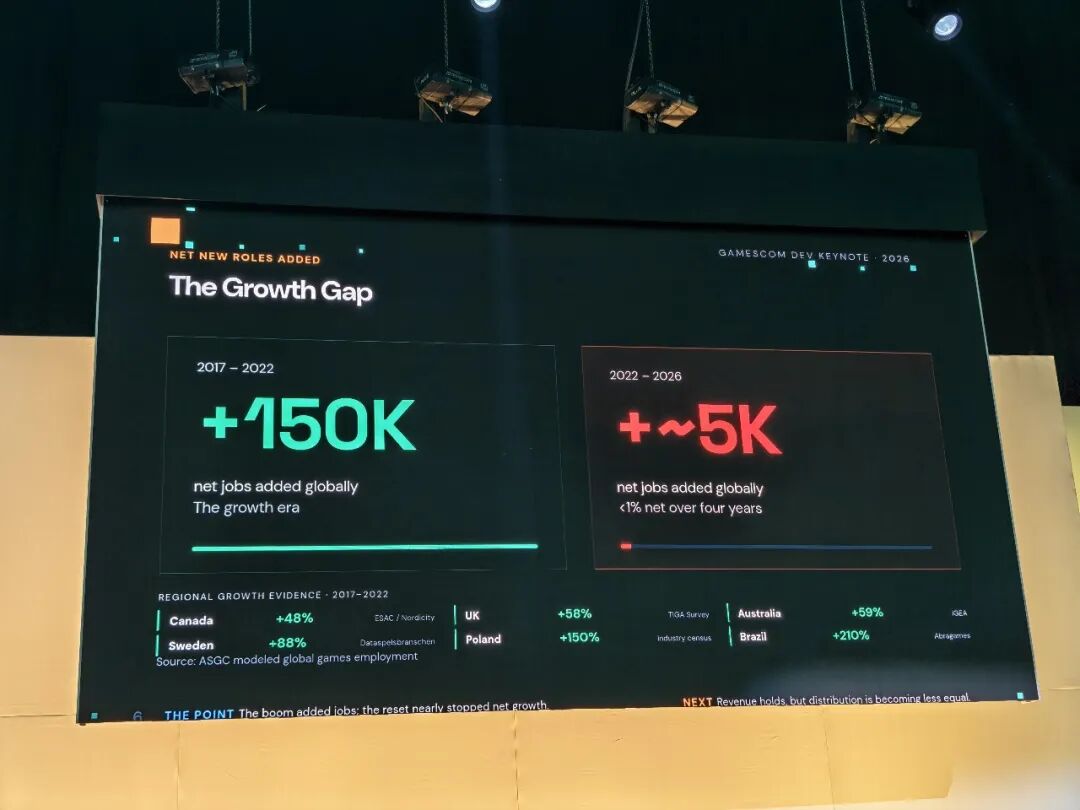
In this speech, Amir first explained the concept of "Reset": it is estimated that about 15,000 people will be laid off in the game industry this year, and the situation may be as bad as it was in 2024. There are approximately 750,000 practitioners in the global game industry. The industry added 150,000 new jobs from 2017 to 2022, but only added about 5,000 new jobs in the past 4 years. Industry revenue is still growing, but it is highly concentrated in top-tier games, and user acquisition is getting increasingly difficult...
At first glance, these changes are disturbing. However, Amir broke down the industry transformation from the perspectives of regions and practitioner mobility, and also talked about the challenges and opportunities in exposure, UGC and investment. He did not rule out the possibility that the industry might eventually move towards giant monopoly or complete fragmentation, but he hoped that it could return to the smaller, more stable and healthier ecosystem decades ago.
Amir specially emphasized the role of people: "The game industry is made up of people, and it is nothing without people."
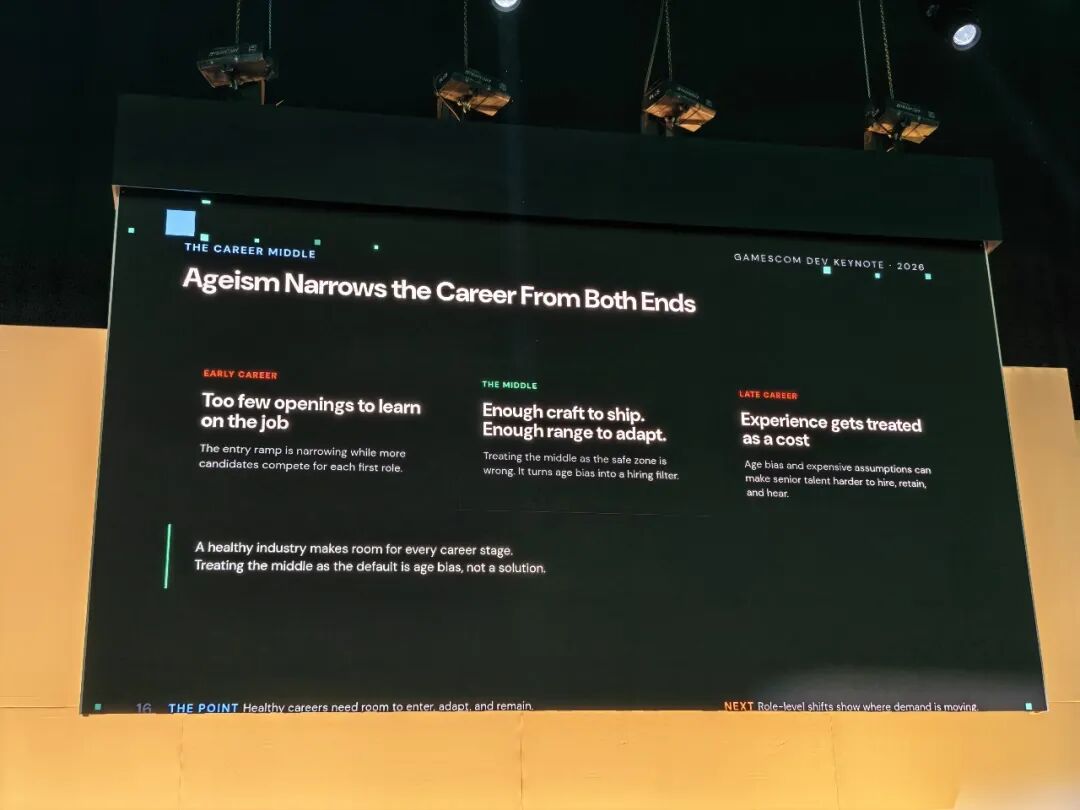
He called on the industry to treat practitioners well, provide more learning opportunities and more sustainable career paths, instead of keeping the annual entry rate of both newbies and senior practitioners at only 4%. He also hoped that the industry would re-evaluate outsourcing and stop treating outsourced workers differently from full-time employees.
He also mentioned China: no matter in terms of industry scale, number of practitioners, transformation or increment, China will bring huge energy to the global game industry. For example, 42% of the global PC revenue increment comes from China; WeChat mini-games have 500 million monthly active users; during the Spring Festival in past years, more than half of Steam's monthly active users were from China; China is expected to add more than 10 million new PC users every year.
This speech is highly related to Amir's experience: he is currently in charge of business development at Tencent and has long-term observations of China's game industry. His founded ASGC (Always Supporting the Games Community) has helped many peers find jobs during the layoff wave in the European and American game industries, and thus enjoys a high reputation.
The following is the sorted content of the opening speech "Reset of the Game Industry: What Has Happened and What Will Happen Next":
Today I want to talk about the "reset" of the game industry, discuss the difficulties and positive signals of the game industry, and where it may head after several years of predicament.
Let me introduce myself first. I am in charge of business development at Tencent, and I founded ASGC at the same time. The latter has been committed to supporting the game community, and we have accumulated a large amount of data about the game industry, especially human resource data, which may be more comprehensive than any institution in the world.
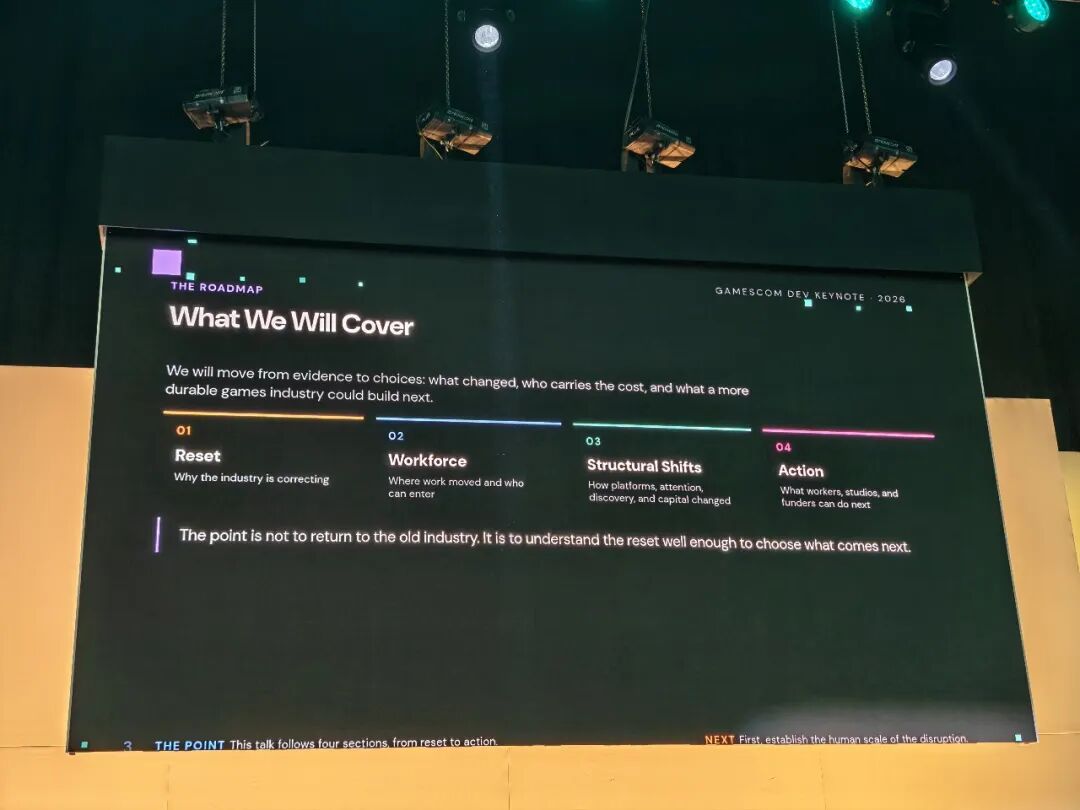
The game industry is made up of people. Without people, the industry is nothing. Therefore, the first part of today's speech will focus on "people". I will use statistical data and details to lay a foundation for the discussion. I will also talk about what "reset" is, what impact it has on practitioners, what structural changes are worth paying attention to, and finally give action suggestions. These suggestions come not only from my own thinking, but also from the consensus that has been repeatedly mentioned by people and supported by data.
01
What is Reset
Last year, about 9,000 people were laid off in the industry. I originally expected that this number would drop to around 8,000 this year.
But I predict that by the end of this year, about 15,000 people will be laid off, which is almost as miserable as 2024. The reason for this prediction is that community members trust us and are willing to share more data with us.
This number is certainly terrifying, but compared with this large number, it is more important to understand its corresponding base. There are about 300,000 to 400,000 practitioners in the game industry, but an organization called Games Industry Coffee Chat counted the data and believed that the direct and indirect employment in the game industry is about 750,000, which I also agree with. People do not understand the employment scale of the game industry in places like China and India, so they often underestimate this number.
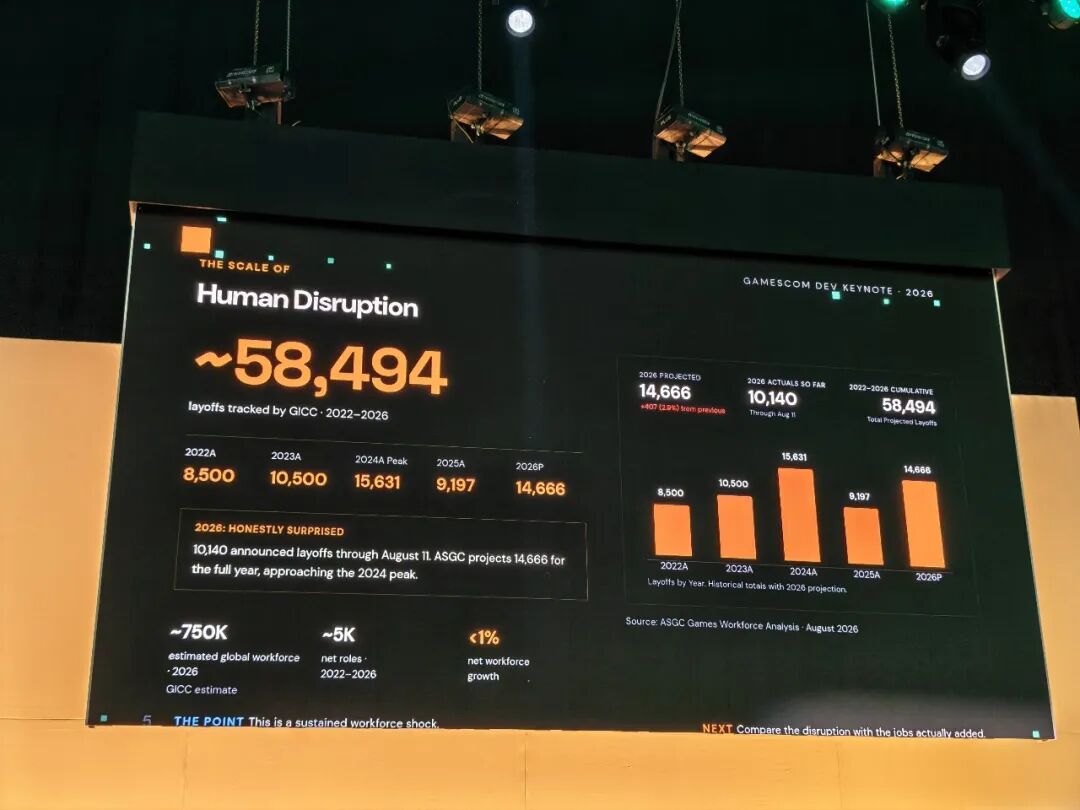
For four years, I have collected data into the model, which shows that even after continuous layoffs, the total number of practitioners in the industry has actually achieved a net growth since 2020.
You may say: This does not match the miserable situation around me.
To explain this, I compared the data of the past 5 years with the data from 2017 to 2022: the industry added 150,000 new people from 2017 to 2022, while only 5,000 new people were added in the past 5 years. That is to say, the industry still maintains a weak positive growth, but compared with the huge increment in the previous 5 years, it is almost negligible.
The same is true for industry revenue. The revenue is indeed growing, but if you break it down, you will find that the revenue is highly concentrated: 50% to 60% of the revenue flows to the top 20 games; user acquisition on mobile terminals is getting more and more difficult, and it is increasingly dependent on the return of users and monetization of stock players; 80% of the game duration on PC and PS platforms is concentrated on 70 to 80 top-tier products.
The total number looks very good, but for small teams and new companies, the actual life is much harder.
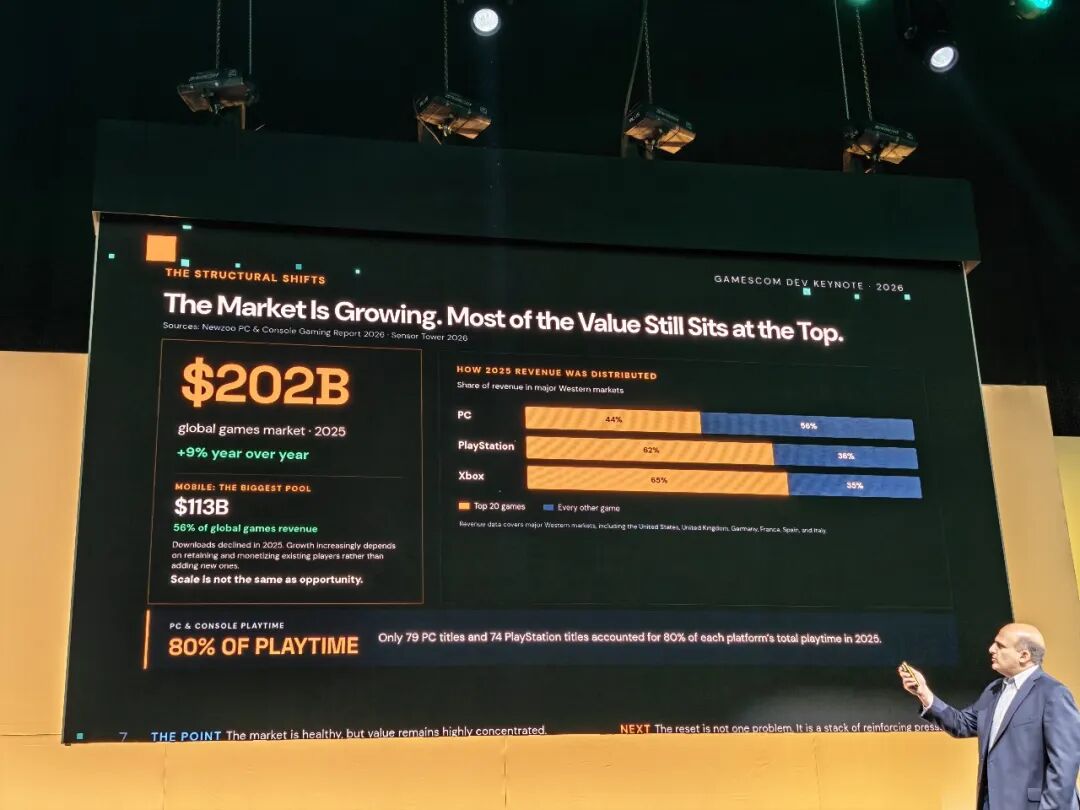
The next slide is the key point. People often attribute the difficulties to two or three factors such as over-hiring and AI, but I have summarized 15 to 20 factors. No matter what position you are engaged in, you can always find a problem related to yourself among them.
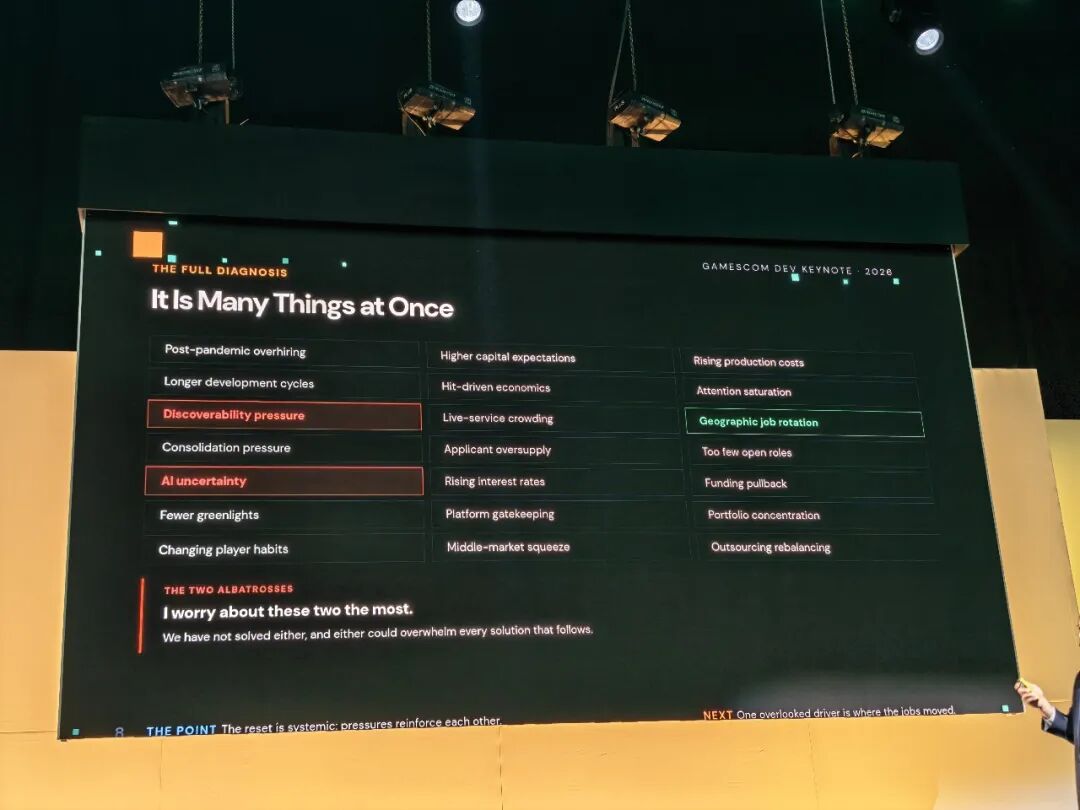
The green marked item is "geographical job transfer", which best explains the current changes in the industry; while "exposure pressure" and "AI uncertainty" are marked in red, because no one can solve them. If they cannot be solved, many things I will talk about next may become nonsense.
02
Mobility of Practitioners
After you have a general impression of the industry's "reset", I want to talk about practitioners first.
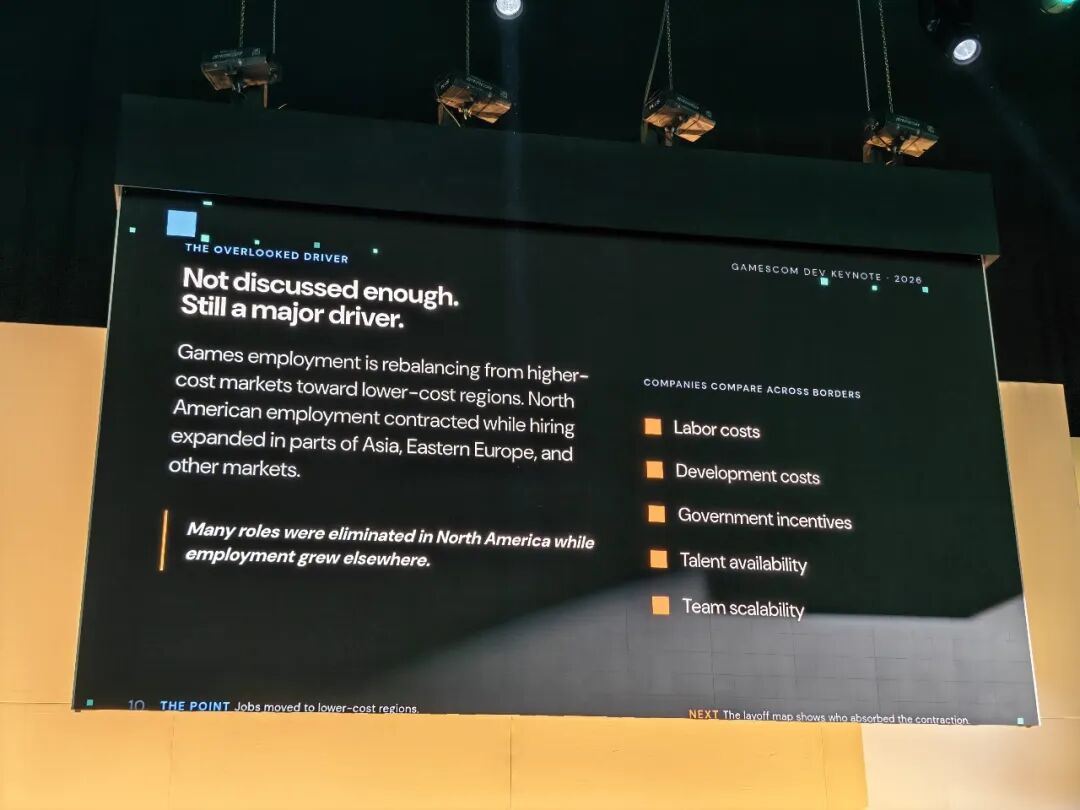
I just mentioned "geographical job transfer", which essentially means that game jobs are flowing from North America (including Western Europe) to other parts of the world. The reasons for this flow include labor cost, policies, talent supply and so on.
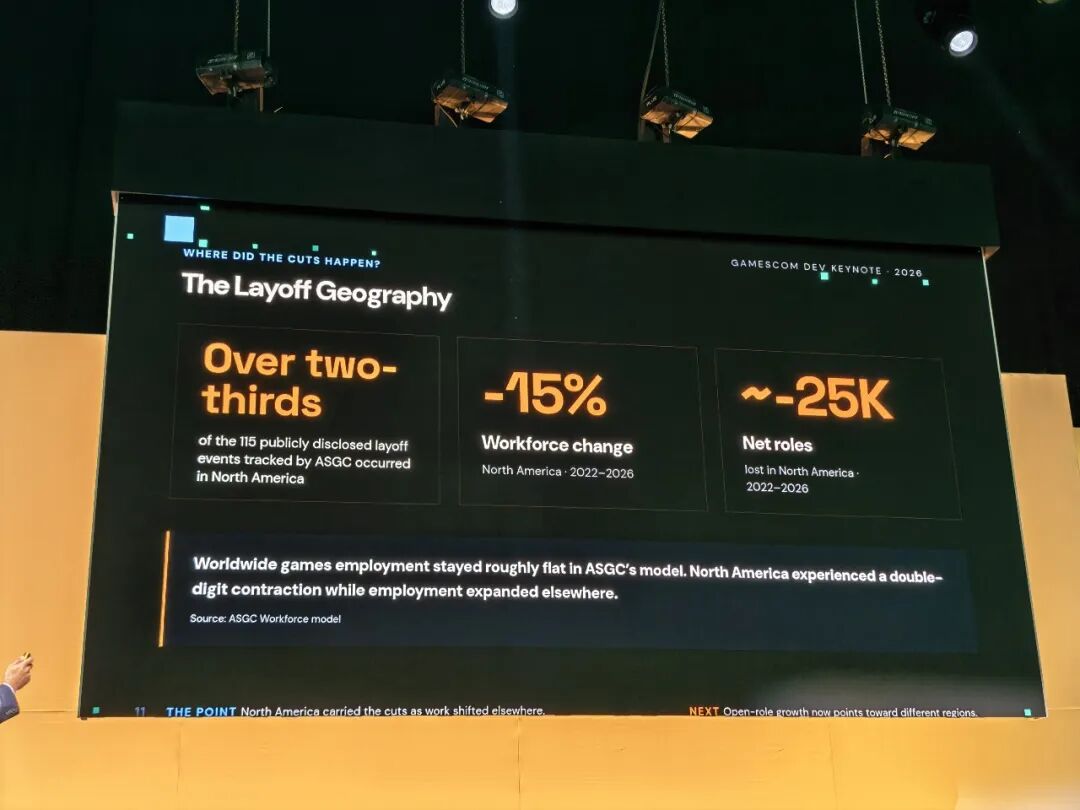
I will list some data from this year so that you can feel it. There have been 115 layoffs this year, of which more than two-thirds came from North American companies. According to my estimation, North America has reduced 15% of practitioners, which is about 25,000 jobs. More specifically, there was a period of 1 to 1.5 years when more than half of the global layoffs occurred in California, and this momentum has not decreased so far.
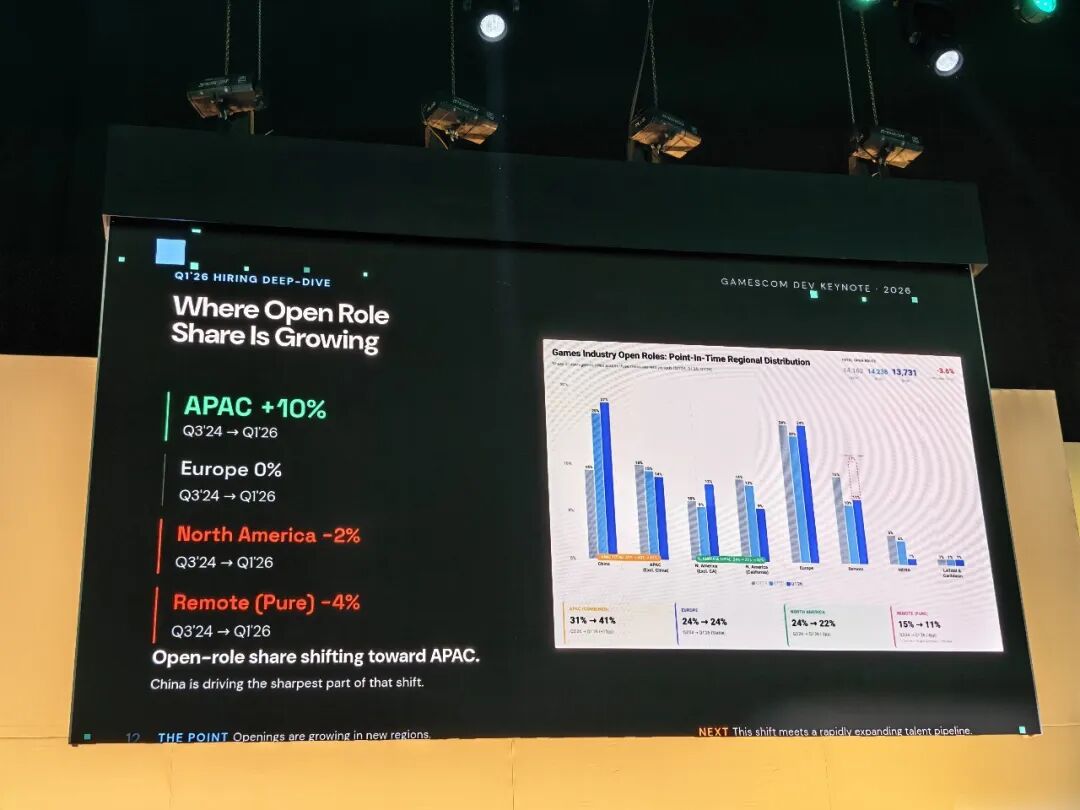
Let's take a look at the open positions (future-oriented recruitment, not existing stock positions): I compared the data of Q3 2024 and Q1 2026, and the biggest change is that the proportion of positions in the Asia-Pacific region has increased by 10 percentage points, among which China's share in the global total has increased by 12 percentage points; the proportion in Europe has remained basically unchanged; North America has decreased slightly. In particular, remote work positions have shrunk significantly, now accounting for only 10% of all positions.
After talking about the changes of positions, let's look at the talent supply.
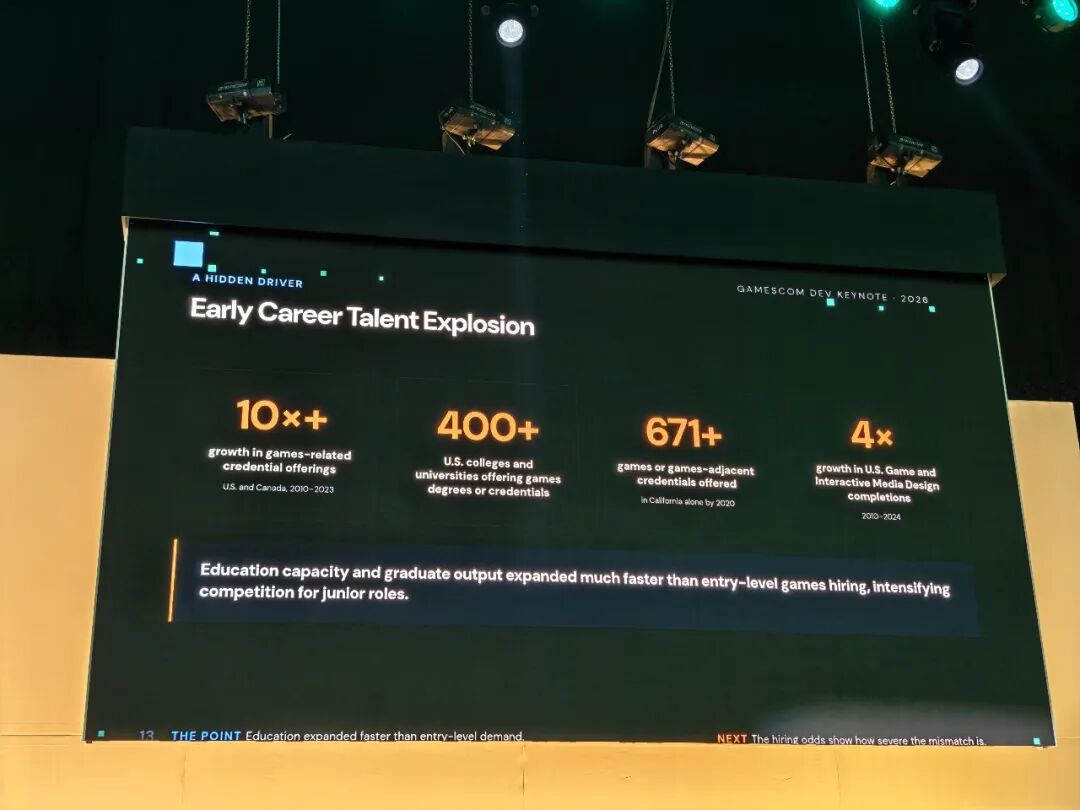
From 2010 to 2023, the number of degree and certificate programs aimed at entering the industry increased by 10 times, and there are 400 colleges and universities in the United States alone offering game-related majors.
Looking at the major of game and interactive media design alone, the number of graduates has increased by 4 times in 14 years.
Worse still, the distribution of graduates from different majors is very uneven. In many places, more than half of the graduates are studying majors like game design, which are the hardest to find jobs in.
It can be seen that there are more people than ever who want to pour into the industry, but their hope of entering the industry is very slim.
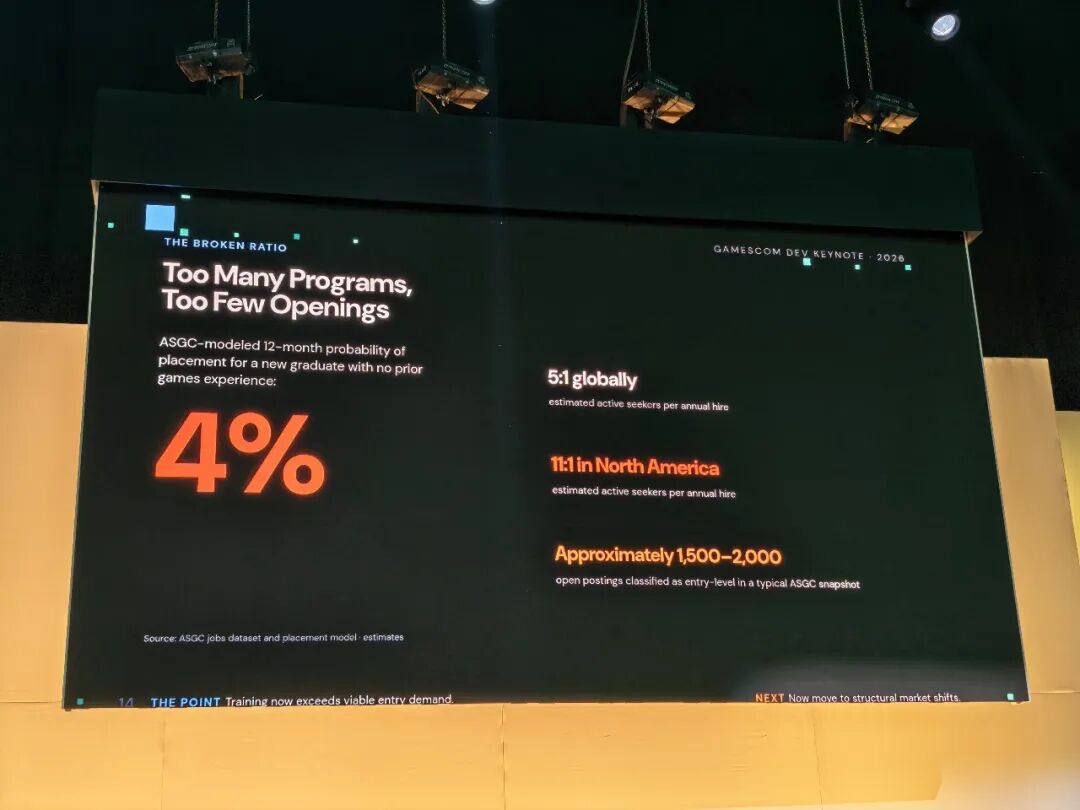
According to my estimation, if a job seeker has no experience in the game industry (not just graduates), the probability of him entering the game industry within one year is 4%.
Looking at the recruitment situation of the whole industry, there are only about 2,000 junior positions open for recruitment at the same time in the world. Even if the job mobility is calculated, there are only 2,500 to 3,000 positions a year. For every 1 game position, there are 5 job seekers competing, and in North America, this ratio is about 11:1.
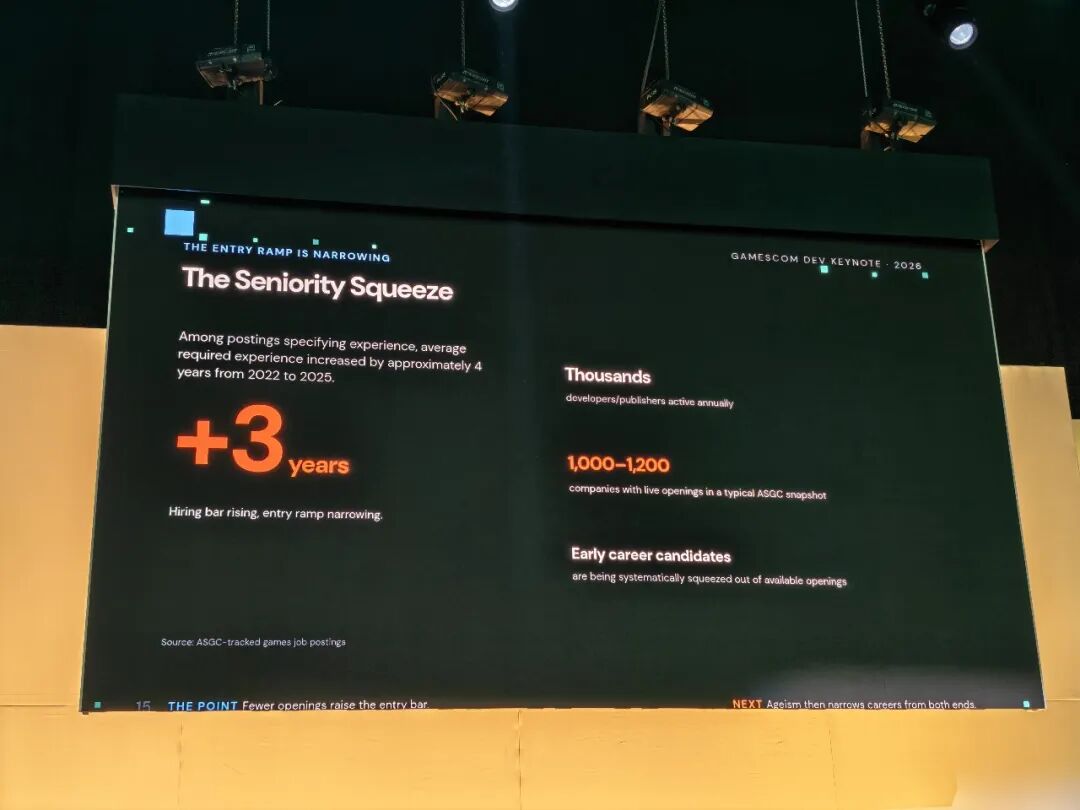
The qualification requirements are also rising. I have tracked for 4 years and found that the average required years of experience for the same position has increased by 3 years. Because experienced people are also looking for jobs, positions that used to be accessible to people with zero experience or 1-2 years of experience can now often recruit people with 3-4 years of experience, which also raises the difficulty of entering the industry.
Not only is it difficult for newbies to enter the industry, but the annual entry rate for people aged 50 or with equivalent qualifications is only 4% to 5%, leading to a strange phenomenon in the industry: people with several years to 20 years of experience are very easy to find jobs, while people with zero experience or senior qualifications find it very difficult to get employed.
The proportion of job functions is also changing. I usually divide game industry positions into four categories: positions related to art, animation and cinematization; engineering positions; game design positions; and positions related to production, project management and product. These four categories of positions account for about 70% of all open positions.
But for the first time in four years, the proportion of game design has dropped out of the top four, replaced by marketing and