Sam's Club, Hema and 7FRESH are launching a fierce competitive offensive in Jinan. Is the "neighborhood proximity advantage" of local supermarkets losing its effectiveness?
The supermarket business in Jinan has suddenly become bustling recently.
On July 24, 7FRESH of JD officially launched online delivery services in Jinan. Instead of rushing to open a number of large hypermarkets in the first phase, it first deployed 4 satellite stores covering surrounding areas including Lihuang Road, Huizhan Road, Biaoshan South Road and Tiechang North Road. Following the model of "1 flagship store + N satellite stores", it promises delivery within 3 kilometers with the fastest arrival time of 30 minutes.
This step seems small but carries far-reaching significance. Because just a few months ago, Sam's Club had already opened its first store in Jinan.
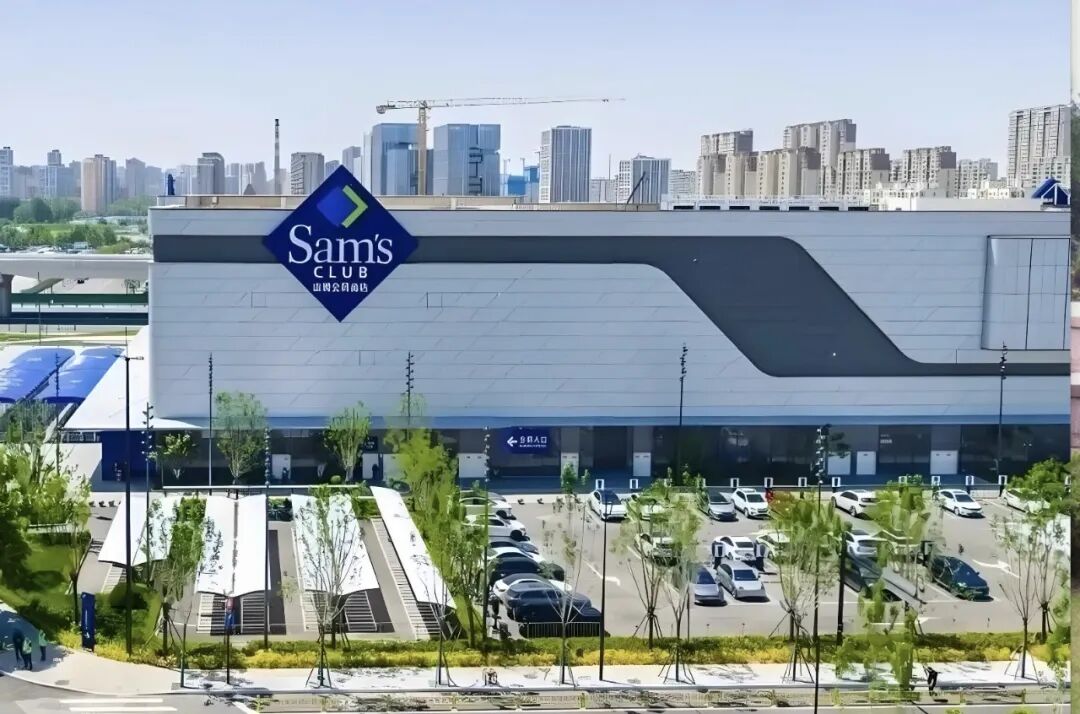
On May 15, Sam's Club Jinan Store and Sam's Club Qingdao Store opened at the same time. This is the first time in Sam's Club's 30-year presence in China that it opened two stores on the same day in the same province, bringing its total number of stores nationwide to 67. When the first Jinan store opened, long queues formed at the site; even before the official opening, Sam's Club had already delivered products to some Jinan consumers via its "Speed Delivery" service.
Hema is also not idling.
In July, it was confirmed that the 11th Hema store in Jinan will be located in Lixiu City Guihe. More interestingly, online delivery has already started in advance before the official opening of the store. Beijing Hualian, which had operated here for 11 years, withdrew at the end of March this year, and then a Hema pop-up store took its place.
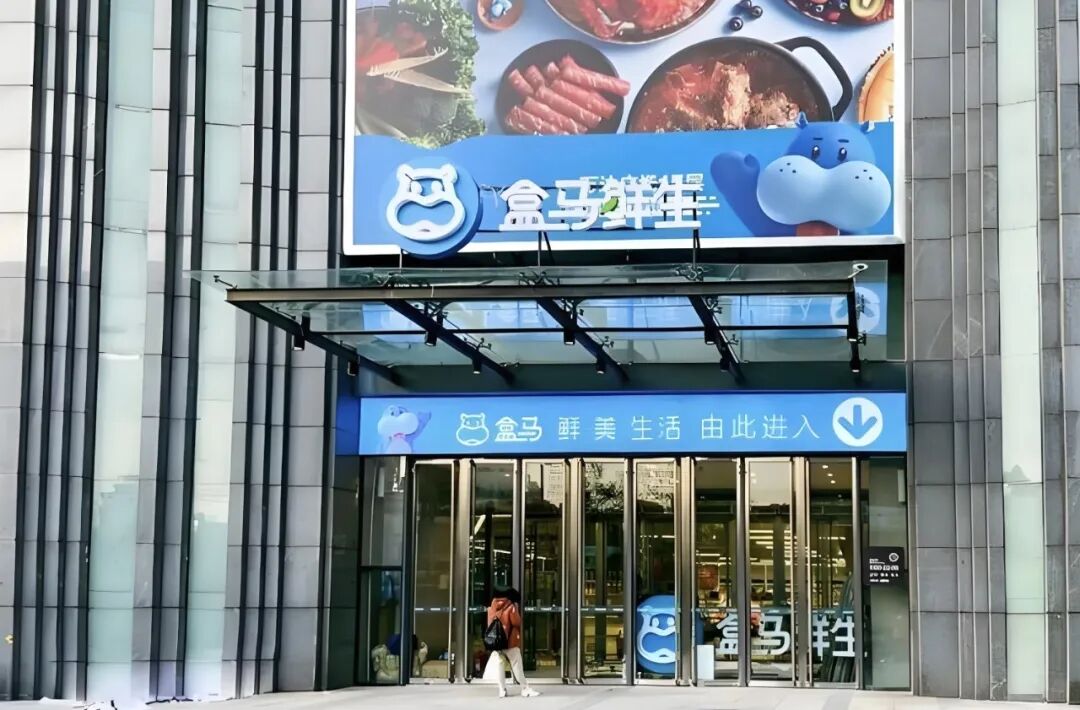
On one side are the large-format stores of Sam's Club, on the other side are the community stores of Hema, and 7FRESH enters the market with several light-weight satellite stores.
If we take Jinan as an observation sample, we will find that the way national retail giants enter regional markets today is quite different from the past.
They no longer just find a plot of land, build a hypermarket and hang a signboard.
Some rely on the membership system, some rely on the supply chain, some rely on instant retail, and some even lay out the delivery network first before gradually opening physical stores.
Opposite them are regional supermarket chains that have taken root in the local market for years and are familiar with local consumers, such as Jiajiayue, Liqun and Quanfuyuan.
This is where the real interest of this competition lies: national retail giants may not easily defeat regional supermarkets, but the advantages that regional supermarkets have relied on for survival in the past are being eroded one by one.
1
Why does 7FRESH open "small stores" first?
In the past, when a supermarket entered a new city, the first question to be solved was generally: where should I open a large enough store?
When 7FRESH entered Jinan, it first answered another question: how can I get close enough to consumers?
On July 24, 7FRESH launched its first 4 satellite stores in Jinan. These are not complete traditional hypermarkets, but rely on the flagship store and supply chain to undertake the instant fulfillment work for nearby consumers.
3 kilometers, fastest 30 minutes of delivery: these two sets of numbers precisely hit the territory that traditional supermarkets are most familiar with — communities.

For a traditional regional supermarket that has operated for decades, its biggest advantage is often "being just around the corner".
Consumers can drop by to buy a bag of rice on their way home from work; when they find there are no eggs in the fridge at night, they can buy some just downstairs; on weekends, they go to a large store to stock up on household supplies for the whole week.
This kind of business seems to have no technical content, but in fact it is a network accumulated by regional supermarkets for decades.
Now 7FRESH is starting to do the same thing in another way. Instead of opening a store downstairs of you, it puts the "shelf" into your mobile phone.
The first 4 satellite stores of 7FRESH in Jinan cover a number of large communities and schools, with delivery service running from 6:30 a.m. to 12 p.m.
This turns the "proximity" of traditional supermarkets into a comparative advantage. You are 500 meters away from me, and I am 3 kilometers away from you.
In the past, 500 meters would definitely win; now, if the store 3 kilometers away can deliver goods to your home in 30 minutes, while the store 500 meters away requires you to put on shoes, go downstairs, drive, park and wait in line, the result is not so certain.
2
Three giants, three different strategies
If you put Sam's Club, Hema and 7FRESH together, it is easy to draw the conclusion that "giants are besieging regional supermarkets", but the real core competitiveness of the three is different.
Sam's Club's greatest strength is turning product sales into a membership-based business; Hema's greatest strength is turning supermarkets into an instant retail network; 7FRESH is more like doing another thing: bringing JD's logistics and supply chain capabilities into the supermarket sector.
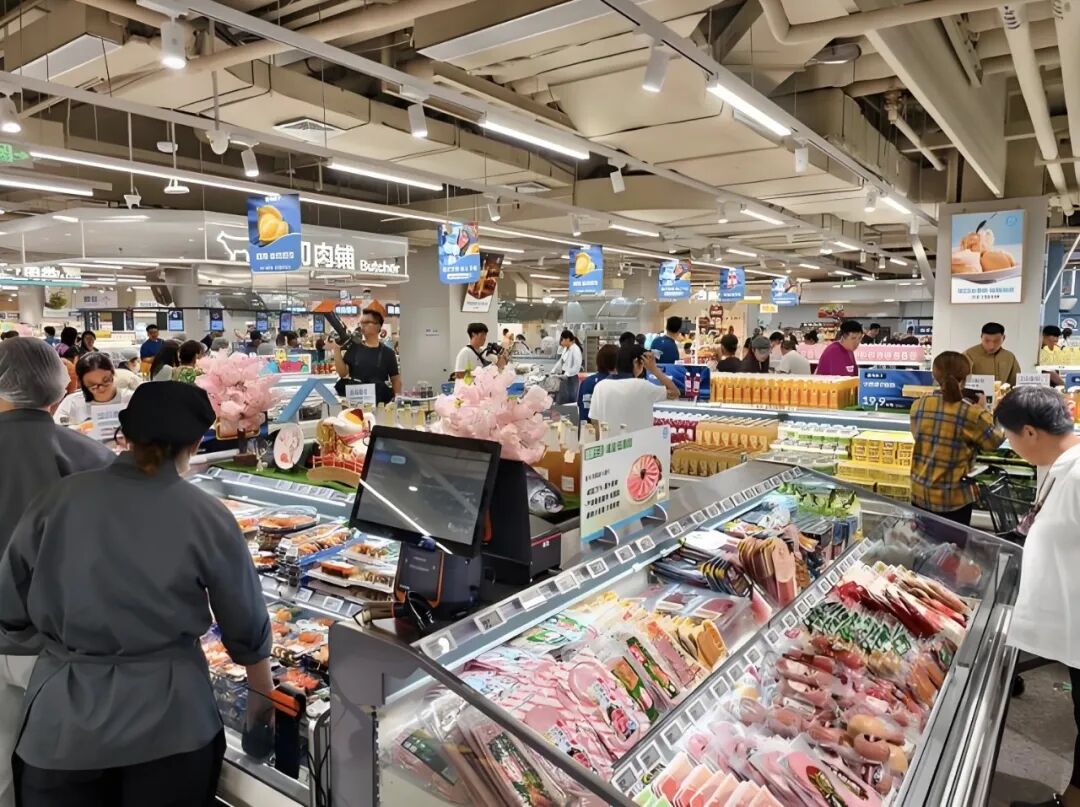
They are not three versions of the same supermarket.
Sam's Club does not rely on "being close to home", but on "being worth a special trip".
The first Sam's Club store in Jinan has a total construction area of about 81,000 square meters, including shopping space, parking lot and other supporting facilities, with about 1,100 parking spaces.
From the very beginning, this kind of store never intends to compete with community supermarkets on "how convenient it is to go downstairs". It targets another consumption scenario: drive there once on weekends and buy a whole cart of goods.
Milk, paper towels, meat, snacks, baked goods, cooked food, daily necessities, and even some unnecessary products will be put into the shopping cart by consumers conveniently.
Sam's Club's real advantage is the combination of curated products, private brands, membership system and bulk procurement.
According to market sources, Sam's Club China's sales exceeded 140 billion yuan in 2025, with a year-on-year increase of about 40%. This figure cannot be simply interpreted as "every Sam's Club store makes a lot of money", but it at least shows that membership warehouse stores have become one of the fastest-growing models in China's supermarket industry.
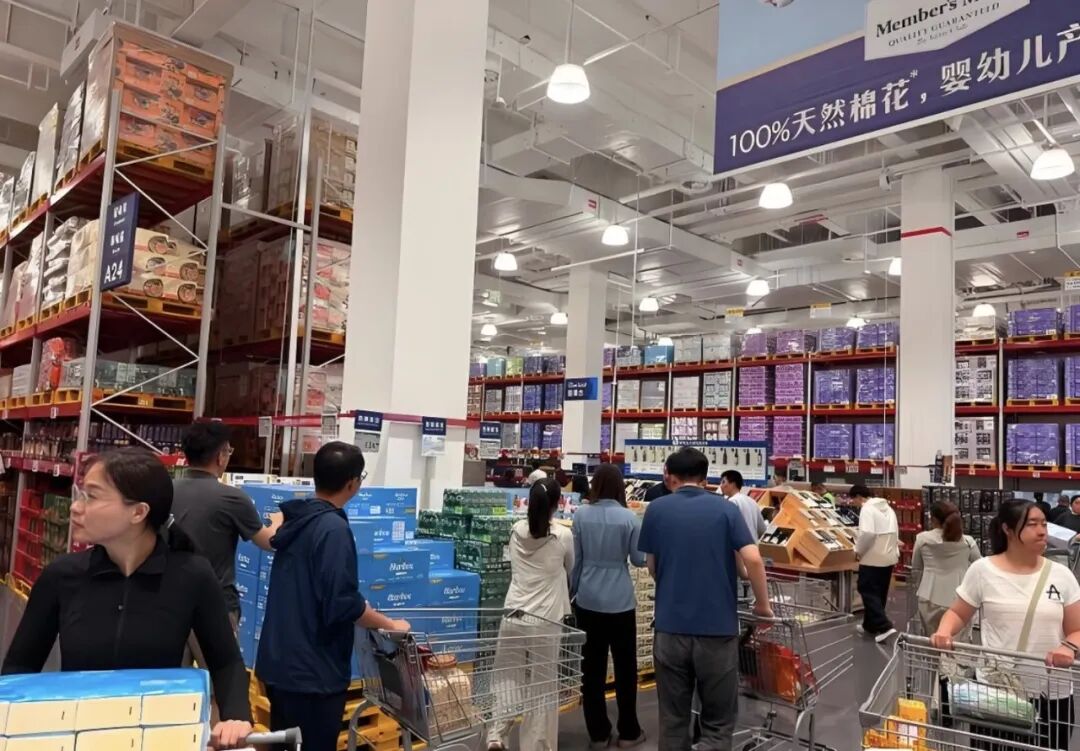
More importantly, Sam's Club does not only sell imported goods. In Shandong, Sam's Club has also taken the initiative to make localized adjustments. The Qingdao store has about 4,000 SKUs, some of which are debut products nationwide, some of which are only available in Shandong, and Sam's Club is also introducing local Shandong products.
This has led to changes in the territory that regional supermarkets are most familiar with.
In the past, regional supermarkets could say, "You sell national products, but I understand Shandong consumers." Now Sam's Club can say, "I can also sell Shandong products." This is what local supermarkets really need to be alert to.
Hema's logic is different. Its real strength lies in "speed".
If consumers go to Sam's Club mostly because "it's worth the trip", then consumers open Hema's app probably just because they want to have a nice meal tonight.
The 11th Hema store in Jinan has not yet officially opened, but its online delivery service has already been launched.
On July 16, the online delivery service of Hema at Lixiu City Guihe started. Some consumers placed orders directly, saying that they had been Hema members before, but previously they had to go to a store further away.
This detail is noteworthy, which shows that the value of Hema's stores does not entirely depend on the physical sales space. The store is the source of goods, the mobile phone is the traffic entrance, and delivery covers the last mile.
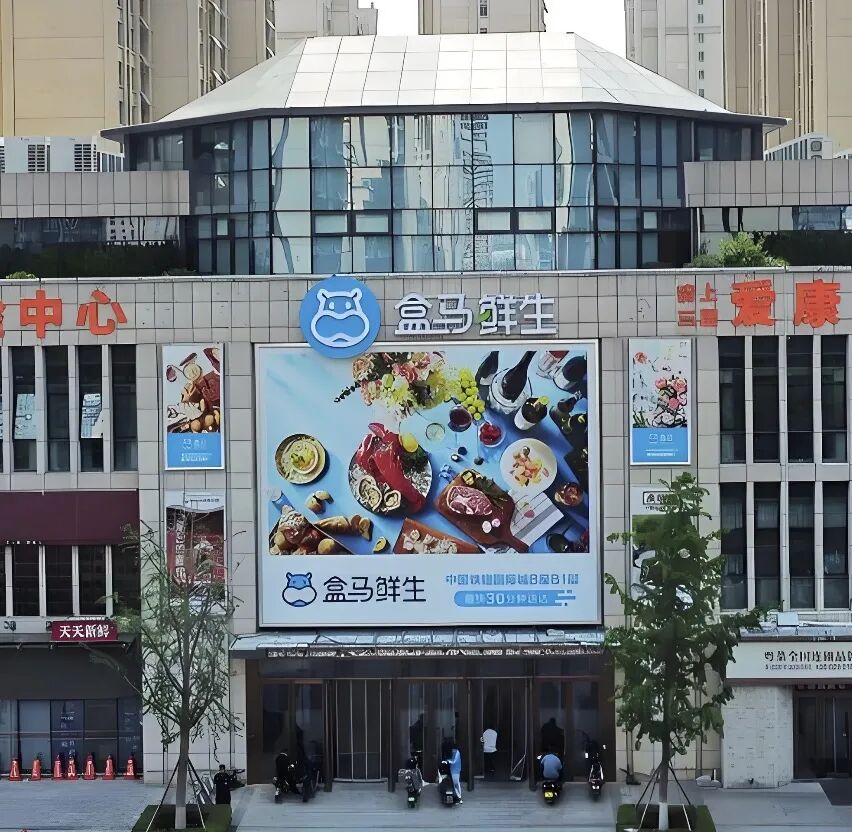
In 2025, Hema ranked among the Top 100 supermarkets in China, with a sales volume of 107 billion yuan. Data released by the China Chain Store & Franchise Association also shows that in 2025, online sales of the Top 100 enterprises accounted for 19.7% of total sales, up 2.8 percentage points year on year.
Hema just benefits from this change. Its advantage is not "extremely large store space", but integrating fresh food, catering, instant delivery and online membership system together. However, Hema also has its own shortcomings: it has very high requirements for supply chain, fulfillment and store density.
When there are not enough consumers around a Hema store, it is difficult to maintain long-term efficient operation only by the "novelty effect". For this reason, when expanding to new regions, Hema is paying more and more attention to the density of store layout and instant delivery capabilities.
What Hema really wants to seize is not just a supermarket consumer, but every meal of consumers every day.
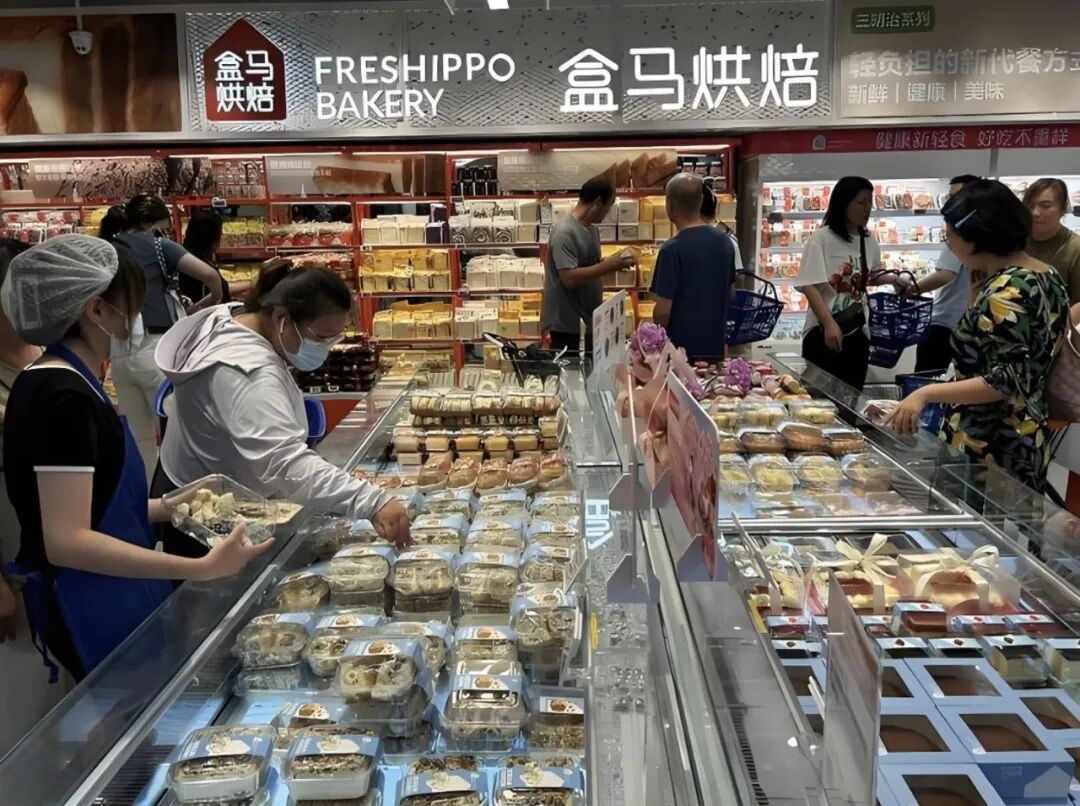
The story of 7FRESH is more like another version. Its biggest imagination comes from JD.
On July 24, 7FRESH adopted 4 satellite stores in its first phase in Jinan, instead of building a large flagship store first. It is backed by the "1+N" model.
One flagship store is responsible for the supply chain, and multiple small stores are responsible for reaching consumers.
This is different from the traditional supermarket idea of "one large store covering surrounding communities". It is more like a supply chain center plus a capillary network.
7FRESH is backed by JD, which means it naturally has capabilities in e-commerce, logistics and instant delivery. Therefore, when 7FRESH enters a regional market, its biggest advantage is not "how many supermarkets I have", but whether it can deliver goods to consumers faster with lighter-format stores.
The first 4 satellite stores in Jinan have a service radius of 3 kilometers, with the fastest delivery time of 30 minutes. This strategy that has a very direct impact on regional supermarkets does not target traditional hypermarkets, but the fundamental last-mile market of regional supermarkets.
3
The most valuable part of local supermarkets, once the most easily overlooked
At this point, it is easy to portray regional supermarkets as the "defending side", but this is not the case.
Jiajiayue is a good example. It has operated in Shandong for many years, and its biggest advantage is not a single hit product, but the long-formed regional network, supplier relationships and consumer recognition.
By the end of 2025, Jiajiayue had a total of 1,074 stores, including 907 directly-operated stores and 167 franchised stores; among them, there were 239 comprehensive supermarkets, 399 community fresh food supermarkets, and 202 rural supermarkets.
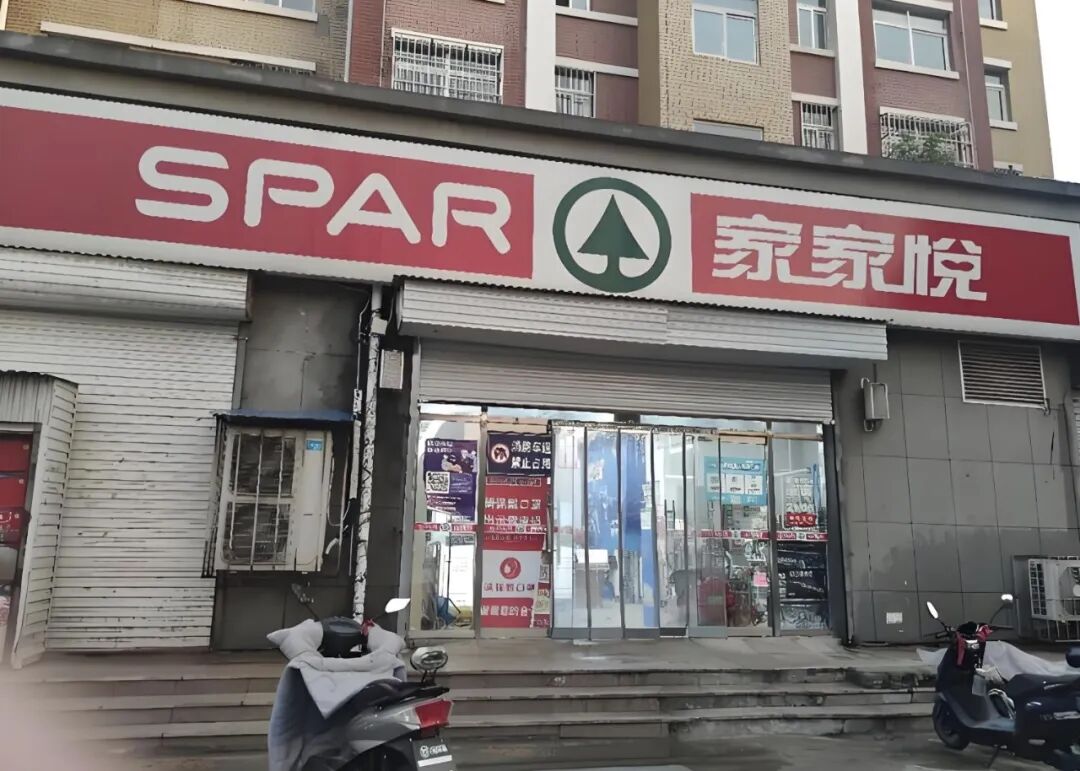
This network is difficult for Sam's Club to replicate in the short term, especially in county-level markets.
A national giant may open 10 stores in Jinan, but will not immediately open 10 stores in a county with a population of hundreds of thousands, while regional supermarkets can do that. This is the real hidden card of Jiajiayue, Liqun, Quanfuyuan and other local players: they do not only know one city well, but have cultivated the consumption capillary network of an entire region for many years.
The question is, is this network still valuable enough?
When "proximity" is no longer the only advantage, regional supermarkets begin to expose their shortcomings. Jiajiayue's data in 2025 is quite representative. Its total operating revenue was 17.957 billion yuan, down 1.64% year on year, of which the operating revenue in Shandong was 13.653 billion yuan, down 1.97% year on year, while the business outside Shandong grew by 2.78%.
This does not mean that Jiajiayue has lost its competitiveness in Shandong. On the contrary, its profit performance is good. In 2025, its attributable net profit increased by 52.09% year on year, and the non-recurring profit and loss deducted net profit increased by 59.35% year on year.
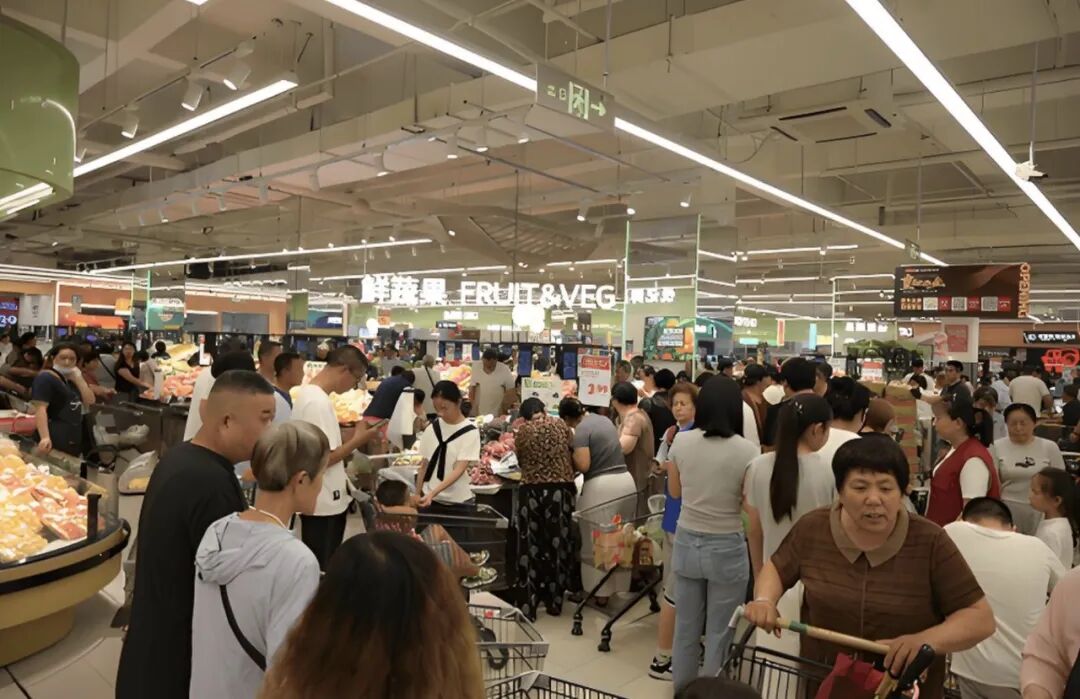
However, there is a very important move behind this figure: closing low-efficiency stores.
In