Sam's Club makes its first foray into Hebei, reshaping high-quality supply and local value.
At the Walmart China 30th Anniversary event held not long ago, Zhu Xiaojing, President and CEO of Walmart China, clearly stated that in the next three decades, Walmart China will continue to deepen its local roots, continuously optimize its business layout, and empower the development of the local industrial chain.
The weight of this statement was soon reflected in a specific practice. On August 21, 2026, Sam's Club's first store in Hebei officially opened to the public in Shijiazhuang. As the 68th store of Sam's Club in China, the Shijiazhuang store not only fills a key gap in the Beijing-Tianjin-Hebei regional layout, but also introduces a high-quality membership-based lifestyle to the hinterland of North China.
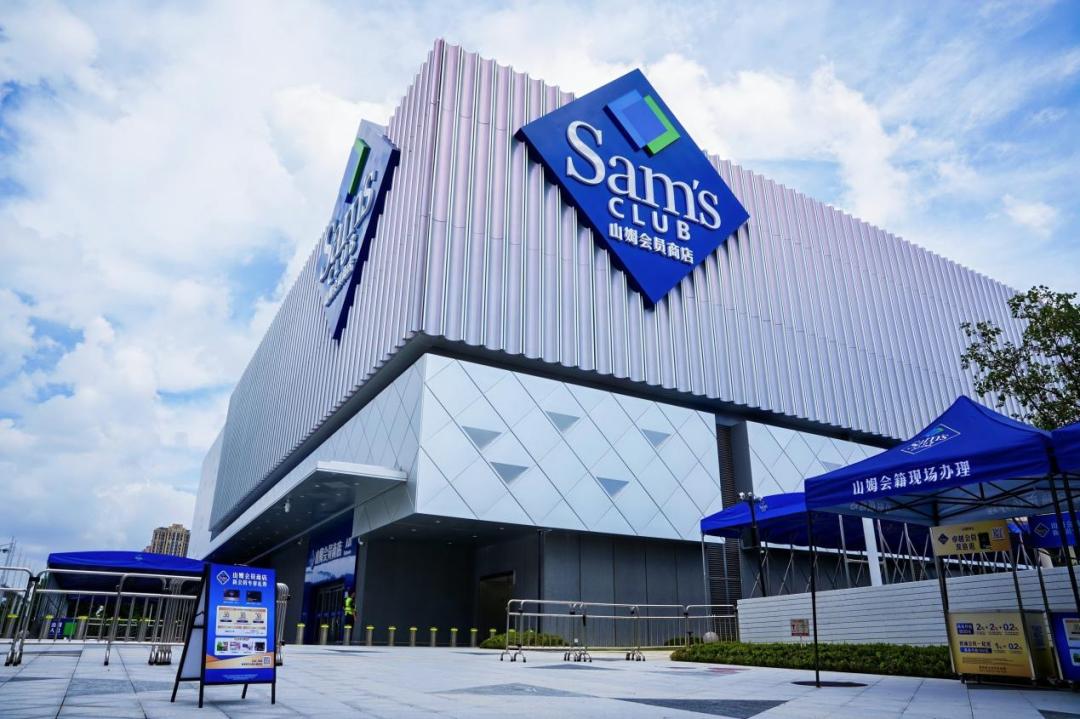
The new store is located in Fangcun Town, Yuhua District, Shijiazhuang, with a business area of 11,600 square meters and 1,150 parking spaces including double underground garages and ground parking spots.
As an important hub for the coordinated development of the Beijing-Tianjin-Hebei region, Shijiazhuang boasts extremely high population density and consumption vitality. Millions of core residents gather in the urban area. Local families not only retain the traditional northern emphasis on family reunion banquets and gift-giving in social interactions, but also show the younger generation's urgent demand for refined, high-quality daily consumption.
On the eve of the store's opening, the Sam's Club team conducted a detailed survey of local families' consumption preferences through pre-deployed cloud warehouses. Different from the situation where most new stores see sales dominated by internet-famous desserts or trendy items in the early stage, the best-selling product sought after by members in Shijiazhuang is the basic livelihood product, Member's Mark fresh milk. At the same time, garlic sprouts and premium potatoes also show extremely high repurchase rates.
This strong willingness to pay for high-quality daily supplies confirms the universality of demand for quality consumption. Qu Yan, Director of Walmart China Group and Head of Fresh Food Procurement of Sam's Club, told 36Kr: "The Shijiazhuang store is a brand new starting point for Sam's Club to continue to deepen its presence in the Chinese market, get close to and understand the real needs of Hebei families."
Against the current backdrop where traditional hypermarkets are facing growth bottlenecks, instant retail is intertwined with homogeneous low-price competition, Sam's Club has once again delivered a sample worthy of in-depth analysis at a steady pace. Its core logic does not lie in complex business model innovation, but in the pure return to member value, long-termism and retail common sense.
I. Understand Local Members and Reshape the Value Anchor of Quality Life
Sam's Club's entry into Shijiazhuang itself constitutes an extremely scarce incremental supply in the regional retail market.
For most consumers in the vast inland areas, Sam's Club has long been a presence that only appears in social media discussions, or is occasionally accessed through online purchasing agents, and rarely becomes an offline physical destination for frequent visits. However, this time Sam's Club did not mechanically copy its shelves, but deeply adapted its mature global procurement system to the real lifestyle of local consumers.
Luo Tao, Store Manager of Shijiazhuang Sam's Club, mentioned when leading the media to tour the store that Shijiazhuang consumers are highly sensitive to life quality. Faced with cheaper mass agricultural products on the market, local families are still willing to pay a reasonable premium for strict food safety standards and stable taste. Consumers' real feedback made him realize that "Shijiazhuang people love life and know how to live it, and the arrival of Sam's Club will definitely provide them with a brand new standard for quality life."
The essence of membership-based supermarkets is not a simple shelf transporter, but based on in-depth member insights, to discover demands ahead of users and provide solutions. Based on the climate patterns and social customs in North China, Sam's Club has implemented precise pre-optimization on product selection. For example, considering that the autumn-winter season comes earlier and the temperature drops rapidly in North China, the store has put on shelves thermal textile products such as Member's Mark 140-count mercerized long-staple cotton 4-piece bedding set, cashmere T-shirts and goose down vests in advance.
Targeting the scenarios of social interactions and family dinners that northern consumers attach great importance to, Sam's Club has launched a diverse mooncake matrix covering 13 Member's Mark series products. The shelves not only feature high-fiber multigrain mooncakes that conform to the healthy low-sugar trend, but also include premium wine-filled mooncakes with Western-style inspiration. Together with the "Seas of Treasures" dried seafood gift box and "Tea Ode Six Blessings" gift box, they fully cover multi-dimensional scenarios of gifting and personal use. This product selection logic goes beyond the superficial practice of catering to festivals, and truly integrates into the cultural context of social interactions among northern families.
In the deep structure of product implementation, Sam's Club pays more attention to in-depth co-creation with the local high-quality industrial ecosystem.
As a major province of agriculture and food processing, Hebei has a solid industrial foundation. While introducing globally selected products to the local market, Sam's Club also uses its strict quality control standards to promote the quality upgrading of production capacity of leading local enterprises.
In the fresh food area of the Shijiazhuang store, the black pork category adopts Zhili Black Pig, a well-known leading local brand in Hebei. In the daily dairy section, Sam's Club cooperated with Junlebao, a leading dairy company headquartered in Shijiazhuang, to develop Yuexianhuo zero-lactose milk over one year, targeting the common pain point of lactose intolerance among Chinese people. This product also reduces the content of carbohydrates and sodium, and quickly became a benchmark item with high repurchase rate after its launch.
Qu Yan told 36Kr: "The Shijiazhuang store is not an independent single project, but fully integrated into Sam's Club's mature warehouse network planning and North China supply chain system." From upstream supply, logistics trunk lines to terminal fulfillment, the new store fully relies on the coordinated resources of the Beijing-Tianjin-Hebei region.
This is exactly the deep industrial value demonstrated by mature multinational retailers when deepening local operations. Sam's Club does not regard the local supply chain as just a low-cost procurement source, but through standard export and product co-creation, integrates Hebei's high-quality local agricultural and animal husbandry resources into its national distribution network.
This two-way empowering distribution mechanism not only allows local members to enjoy more cost-effective local high-quality products, but also drives the regional agriculture and food manufacturing industry to transform towards standardization and industrialization, building a long-term symbiotic ecosystem that goes beyond the simple buying and selling relationship.
II. Iteration and Return of Classic Items: Where Does the Cross-cycle Product Vitality Come From?
Every time Sam's Club enters a new city, it will attract the attention of the whole city. This almost certain market response is particularly rare in the current retail environment full of uncertainties. If analyzed from the underlying logic of business, this popularity is by no means the product of marketing investment or short-term traffic creation, but stems from its certain delivery of products and spatial experience.
Traditional hypermarkets make profits by relying on shelf entry fees, which essentially transfers the cost of product selection and trial and error to consumers, leading users to fall into the fatigue of screening massive amounts of inferior products. Sam's Club builds a business closed loop by relying on membership fees, and must fulfill the certain consumption trust with extremely strict product selection standards under the framework of only about 4000 SKUs.
In the life cycle management of products, Sam's Club shows a completely different long-termist logic from traditional retail. Most supermarkets tend to directly eliminate and remove products from shelves when facing sales fluctuations or user feedback, while Sam's Club regards the continuous re-development of core mind-share items as the core means to dig deeper into member value.
Qu Yan told 36Kr: "Sam's Club has an extremely streamlined number of products, and each product must have a clear reason for existence. Continuously understanding member needs and judging whether products can continuously create value is the most important benchmark for Sam's Club to evaluate products. The so-called hit items and classic returns are by no means a simple reproduction of old products, but a systematic optimization and reconstruction centered on user experience."
Take the Member's Mark Original Earl Swiss Roll in the baking category as an example. During its long-lasting life cycle, the R&D team has never stopped optimizing, but continuously made fine adjustments to the formula and sweetness according to members' health feedback of preferring lighter taste and lower sugar content. It is reported that the cream of the latest version of Swiss roll only uses imported animal cream. Compared with the old version, the amount of cream filling is increased by about 40%, the amount of white granulated sugar is reduced by about 24%, and the packaging specification is reduced from 16 pieces to 12 pieces for easier consumption, while the unit price remains unchanged.
The Roman cream bread, which was temporarily removed from the shelves due to inconvenient packaging and distribution pain points, has been completely reshaped before the opening of the Shijiazhuang store. The R&D team selected pure milk cream with a milk fat content of up to 50%, increased the pulp content of raspberry jam to more than 65%, and changed the round packaging to a rectangular one that is easier for family sharing.
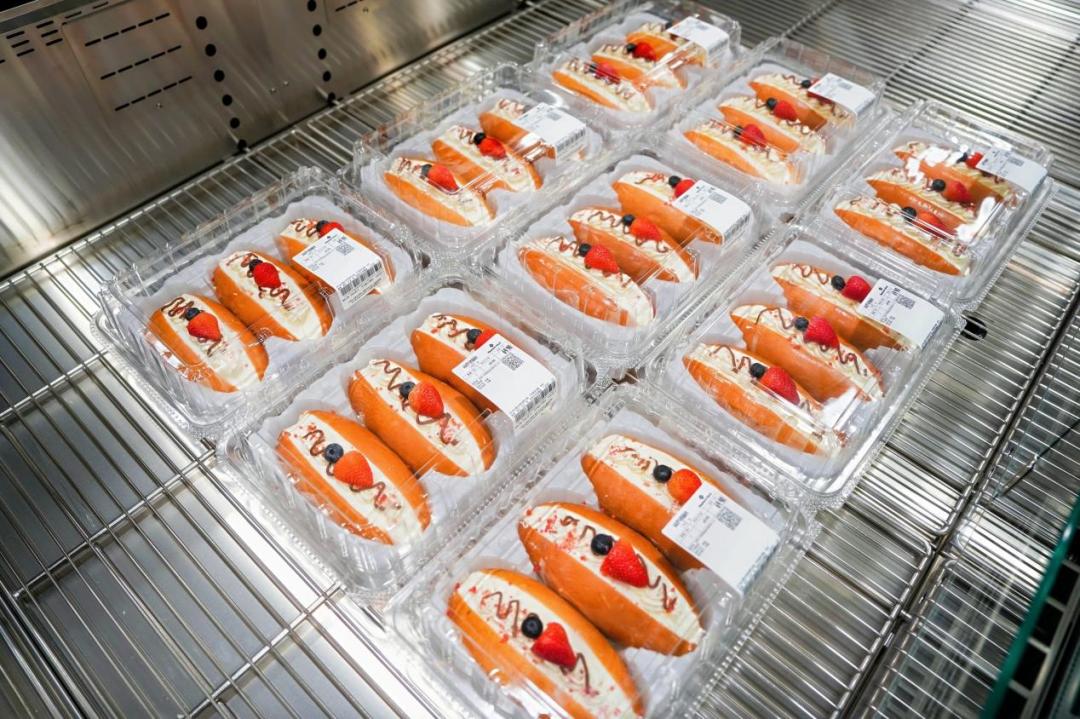
In addition, the evergreen category bird's nest congee has also been upgraded and reconstructed. The procurement team went directly to the origin in Indonesia to lock in raw materials, fully upgraded broken bird's nests to whole bird's nests, established a dedicated bird's nest warehouse and a one-item-one-code traceability system at the factory, and derived a ganoderma bird's nest gift box for the Mid-Autumn Festival. For the already very popular nut category, targeting the segmented demand of a large number of members who dislike the astringent skin of nuts and do not want to consume dried fruits, Sam's Club spent several months developing crispy skin-removed mixed nuts with the outer skin removed, and customized independent baking temperature control curves for different nuts.
This extremely restrained and actively iterative product strategy confirms an underlying law: the survival of products does not depend on the subjective judgment of procurement staff, nor on short-term financial statements, but on whether they can continuously deliver compound interest value beyond user expectations in terms of raw materials, techniques and scenarios.
In the core mind-share category of fresh protein, Sam's Club even pushes the technical threshold of the supply chain to the extreme. At the Shijiazhuang store, highly recognized products such as beef, whole Boston lobsters and deep-sea prawns form a solid daily supply. More representative is the Spanish chilled Iberian black pork, and Sam's Club is the first membership store in China to introduce this category in the form of full-process chilled cold chain.
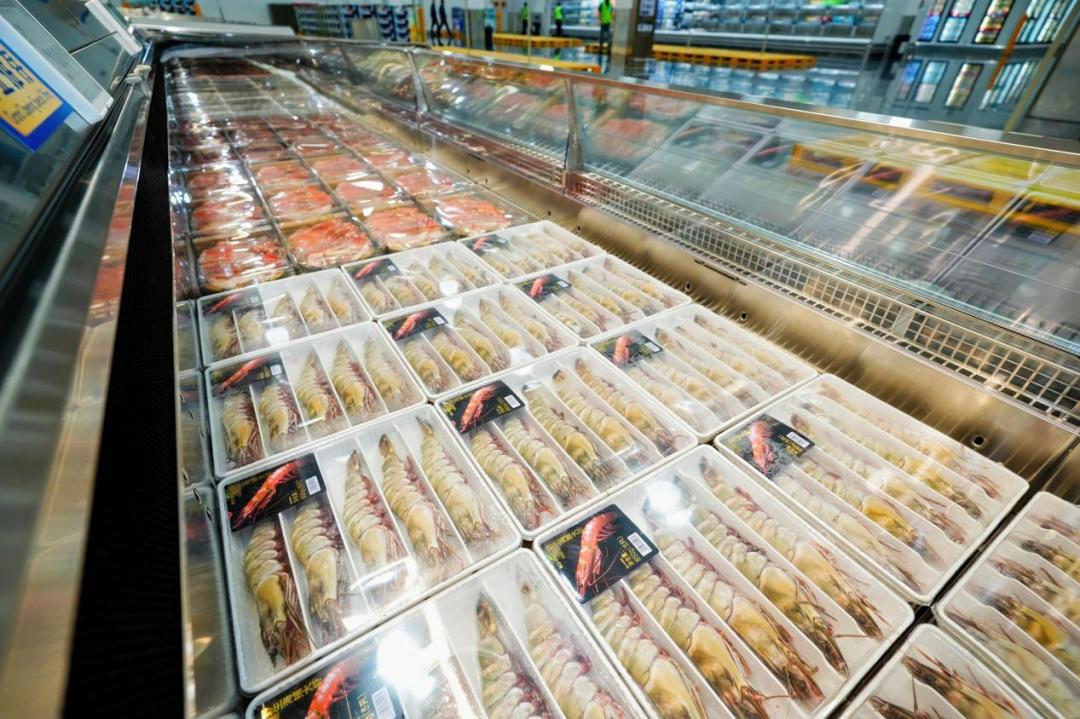
Sam's Club's introduction of Spanish black pigs is based on the core consideration that this pig breed is free-range for more than 10 months, and the snowflake texture of intramuscular fat and cooking flavor can bring a distinct differentiated experience. The direct procurement team spent one year opening up the cross-border full-process 0-4°C cold chain channel. Together with grain-fed chilled beef from Canada and Australia, Sam's Club converts high-threshold ingredients that were previously limited to high-end catering into stable supplies that are affordable for daily family use, and fully spreads the upfront investment of the supply chain relying on its huge centralized procurement scale.
Supporting the stable operation of this selection logic is a strict quality control foundation. Sam's Club has comprehensively raised the access audit standards for source suppliers from the previous 69 items to 159 items, introduced internationally authoritative certification bodies to participate in the evaluation, and pre-positioned quality control risks through high-frequency unannounced inspections. In the circulation process, digital temperature control tools are used to implement dual strict control over the whole-process time and temperature of fresh food.
Against the industry background of frequent food safety trust crises, this control mechanism that intercepts risks outside the shelves essentially pays the high search and risk control costs for members, thus turning the mentality of "shopping without hesitation when entering the store" into an extremely certain psychological account.
III. From Bentonville to Shijiazhuang: The 60-Year Echo of a Set of Common Sense
In the 1960s, Sam Walton, the founder of Walmart, set an entry condition for regional managers: every Monday morning, they must squeeze into a plane, fly across the country to the branches under their jurisdiction, and listen to voices from the grassroots. He explained the reason in his autobiography *Made in America*: "Computers can tell you exactly how much money you have sold, down to the cent, but they can't tell you how much money you will sell in the future."
Sixty years later, the same scene reappeared in Shijiazhuang. In order to understand the dining tables of this city, Sam's Club's procurement and operation team studied the history of this land, understood the local diet habit of simple and easy-to-preserve food from the past urban development, and then adjusted the product volume and display layout accordingly. The procurement team flew to the origin in Indonesia for a bowl of bird's nest congee, and spent a year on the supply chain construction for a piece of chilled pork.
From Bentonville to Shijiazhuang, what has changed are the means of transportation and geographical coordinates, and what remains unchanged is the attitude of going to the front line.
Qu Yan told 36Kr: "Data can only help us discover and verify problems, and experience can help us understand problems, but when it comes to the final decision on product retention or upgrading, we must return to member needs." This sentence forms an exact echo across 60 years with Walton's judgment on the boundary of computers. Sam's Club is not short of data tools. Digital temperature control and quality inspection run through the whole circulation of fresh food, but at the highest priority of product decision-making, the judgment of member value always comes before the statements.
Walton also wrote down another creed back then, which is to keep experimenting and keep trying to do something different.
This also has its echo in the Shijiazhuang store. The procurement team tested white wine, red wine, brandy and whiskey one by one to verify the flavor of wine-filled mooncakes; to solve the industry pain point of high-count cotton being easy to shrink, the Member's Mark 140-count mercerized long-staple cotton 4-piece bedding set improved fiber performance to achieve machine wash resistance and reach Class A maternal and infant standards.
Amber Bynum, Global Vice President of Walmart China and Head of Non-Food Procurement of Sam's Club, told 36Kr: "When Sam's Club judges the value of supply chain resources, it does not focus on where they come from, but on whether they can continuously provide members with better quality products." This is essentially the same sentence as Walton's summary of continuously meeting customer needs.
Over the past 60 years, the technology, channels and business models of the retail industry have all been completely renewed, but Sam's Club has always operated on this set of simple common sense. It will not be shaken by scale, deformed by cycles, or attenuated by the extension of geographical coordinates. Members at the Shijiazhuang store are served by the same set of principles as customers in Arkansas 60 years ago.
This is perhaps the confidence behind the statement of "continuing to deepen local operations" at Walmart China's 30th anniversary event. Sam's Club's moat is never a single-point advantage, but a common sense system that has been repeatedly verified by time and always implemented seriously. Hit items will become outdated, and models will be imitated. Only the longer common sense settles, the more powerful it becomes. In an industry chasing hit items and traffic, the slowest way often runs the farthest.
—————— Brand Feature ——————