At this AI competition, the young people have pushed the human touch to the max.
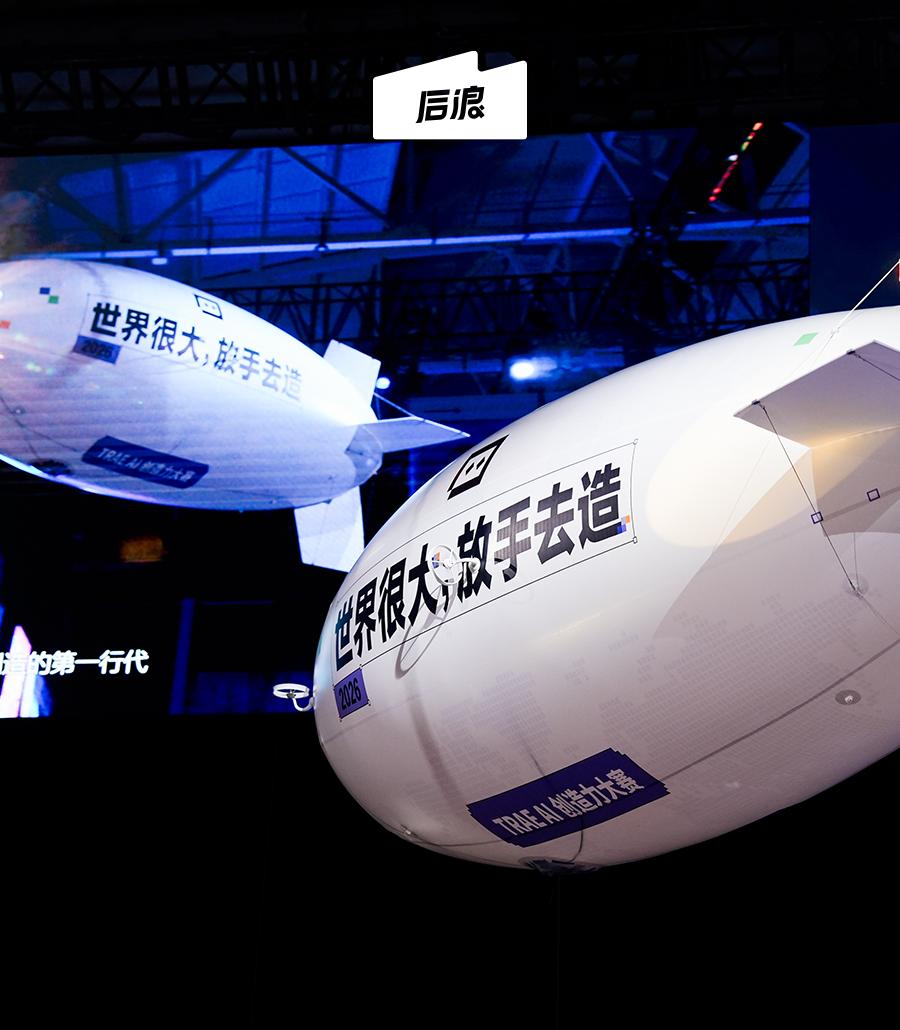

The AI built from scratch by a former security guard kept Hu Yanbin and Tim fully engaged in fun on site
Written by | Shen Hai
This is perhaps an AI competition brimming with full "human touch" — on August 21, the final scene of the TRAE AI Creativity Contest had an atmosphere more like a lively carnival fair.
The championship went to three young entrepreneurs who met at the Shenzhen Institute of Creative Technology. They developed an AI hardware development tool, a dedicated AI generation tool for making circuit board demos for hardware devices. Filled with complex technical terms and hardcore AI hardware infrastructure, the project fully fits the typical vibe of a tech hackathon.
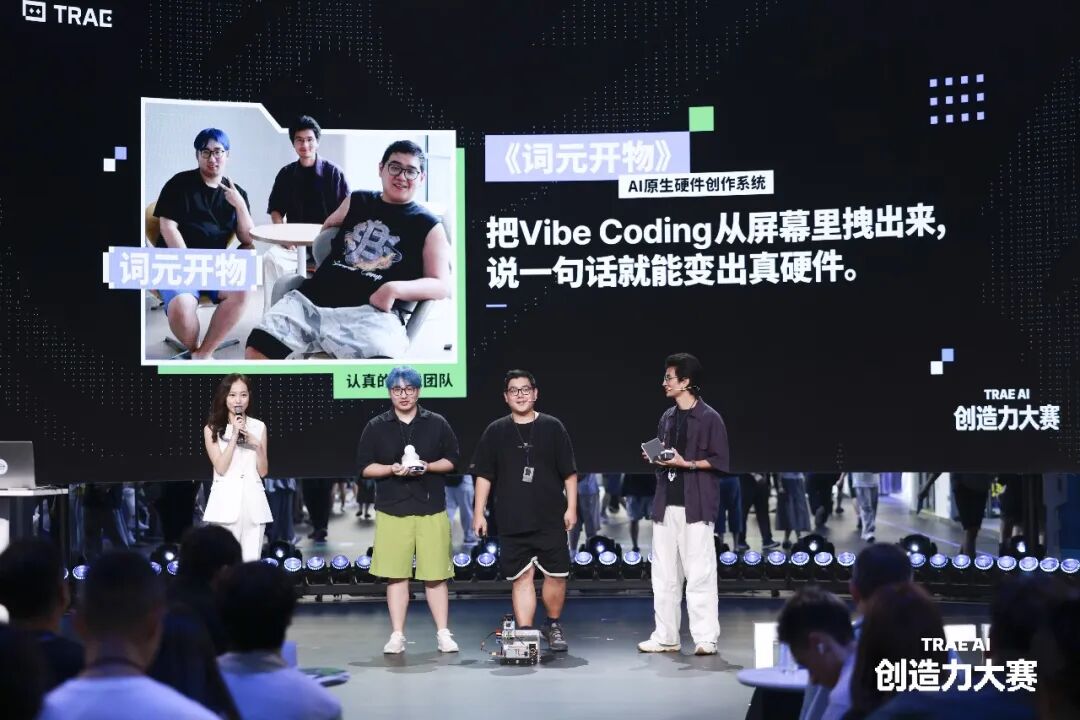
But not all projects are this "geeky", and more entries look extremely interesting.
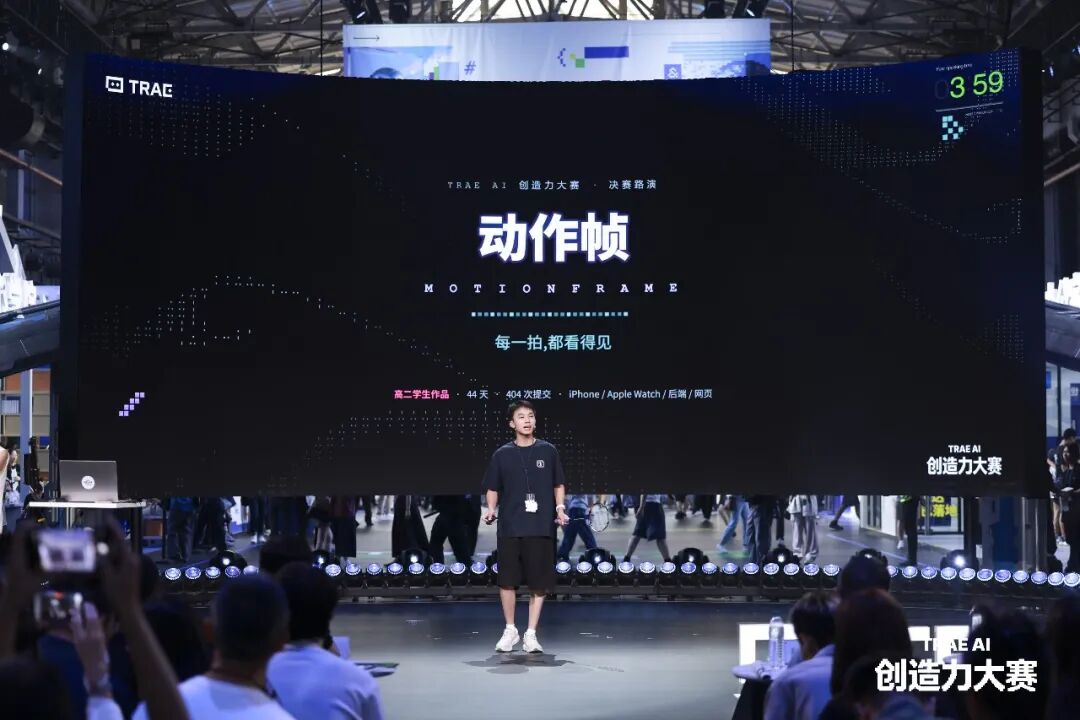
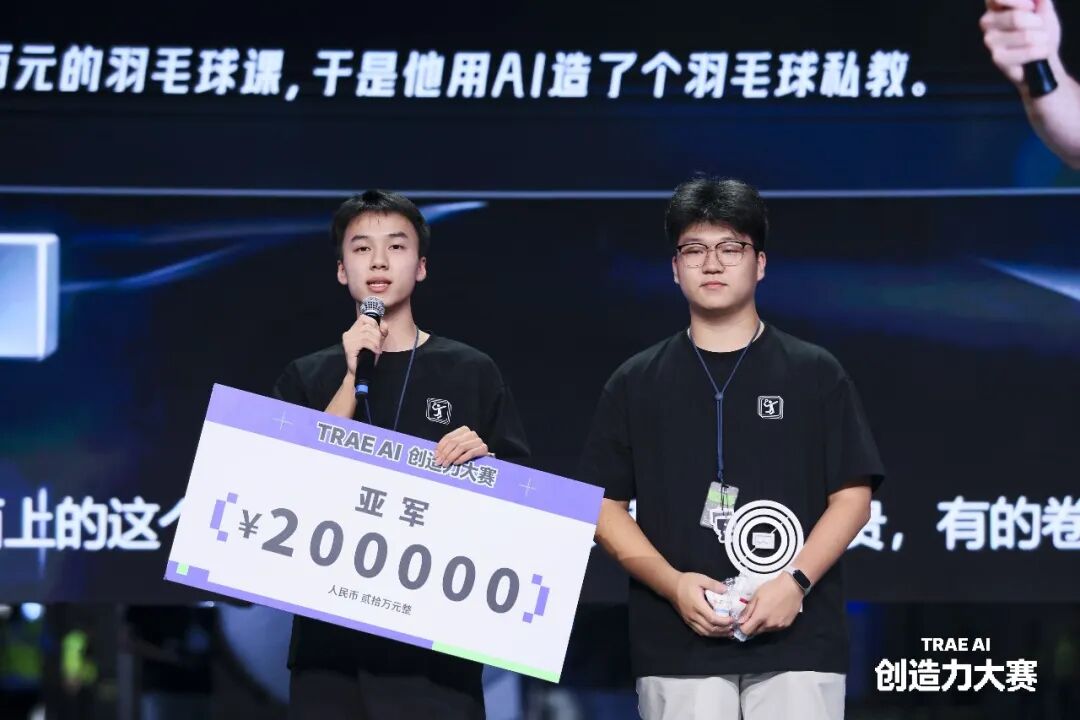
For example, a high school sophomore took home the 200,000-yuan runner-up prize. The 16-year-old amateur badminton enthusiast developed a badminton app that can correct swing movements frame by frame;
A father-son team claimed the 100,000-yuan third-place prize. The 40-year-old father, who switched to the aerospace industry after being laid off by a large tech company, partnered with his son in the second year of junior high school to develop a satellite simulation software to help his son explore space.
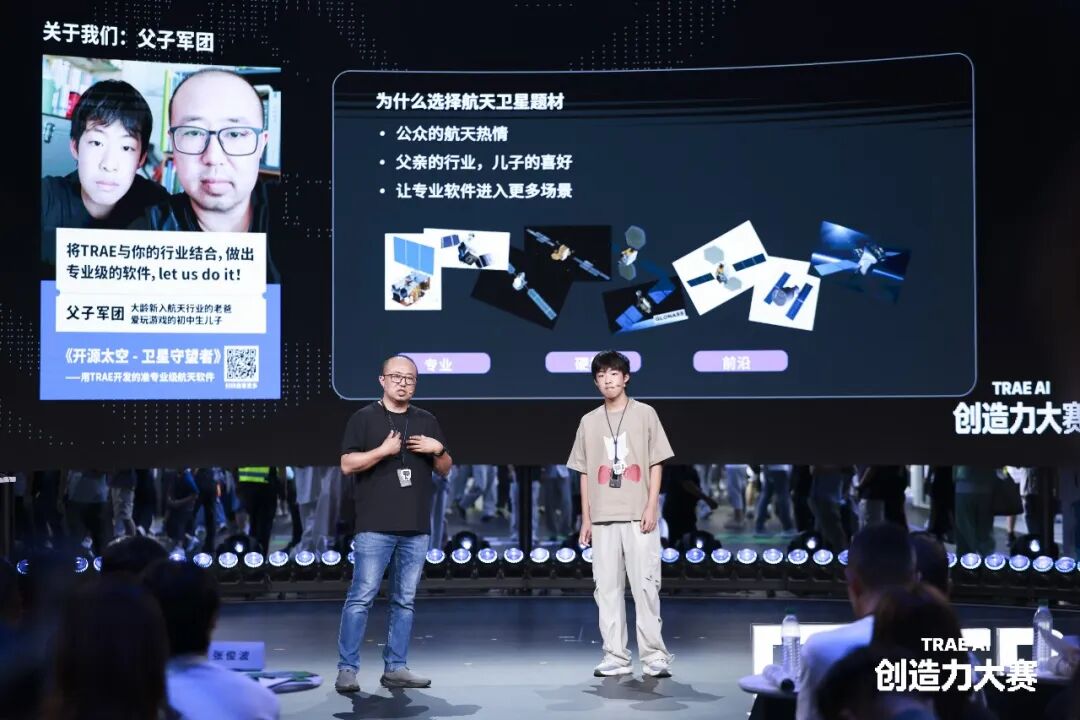
It seems almost impossible to find two "peers" with similar backgrounds on the award stage.
Even more legendary is a 24-year-old young man who used to work as a security guard and had previously worked in a factory. While on duty at the security booth, he was browsing Douyin and got curious about how the special effects were made. He taught himself the relevant skills after work, and when his income from making Douyin special effects exceeded his salary as a security guard, he quit his job to work on special effects full-time. Due to long hours of working at the desk, he often suffered from cervical soreness, so now he taught himself vibe coding and developed a motion-sensing game that lets users "move their necks around".
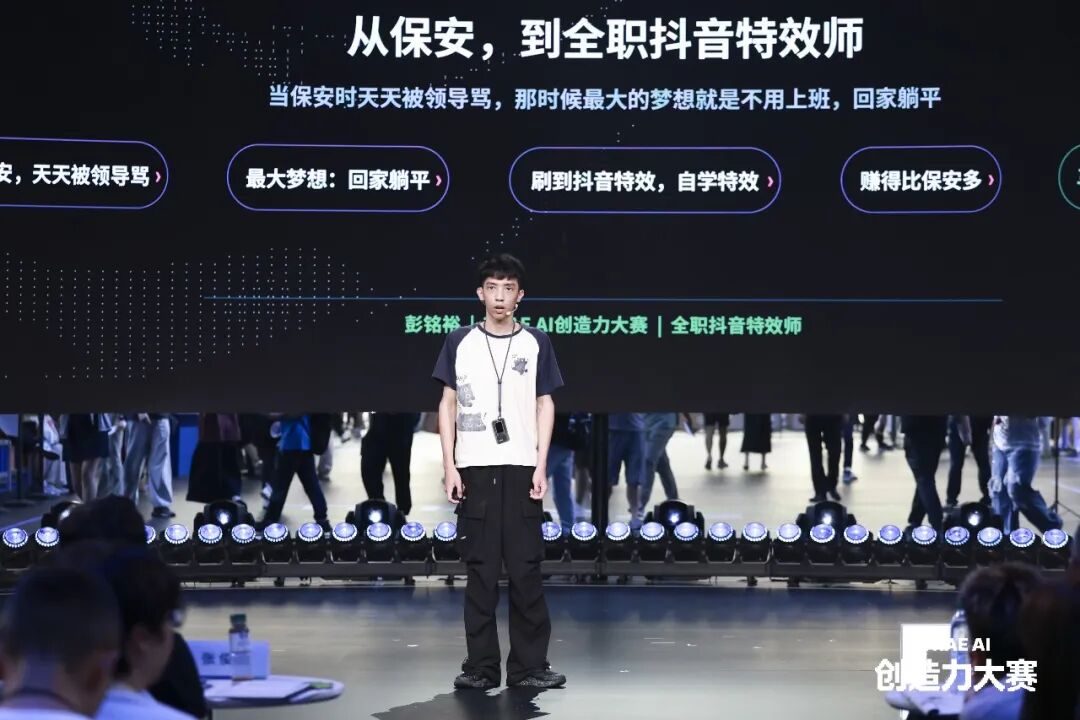
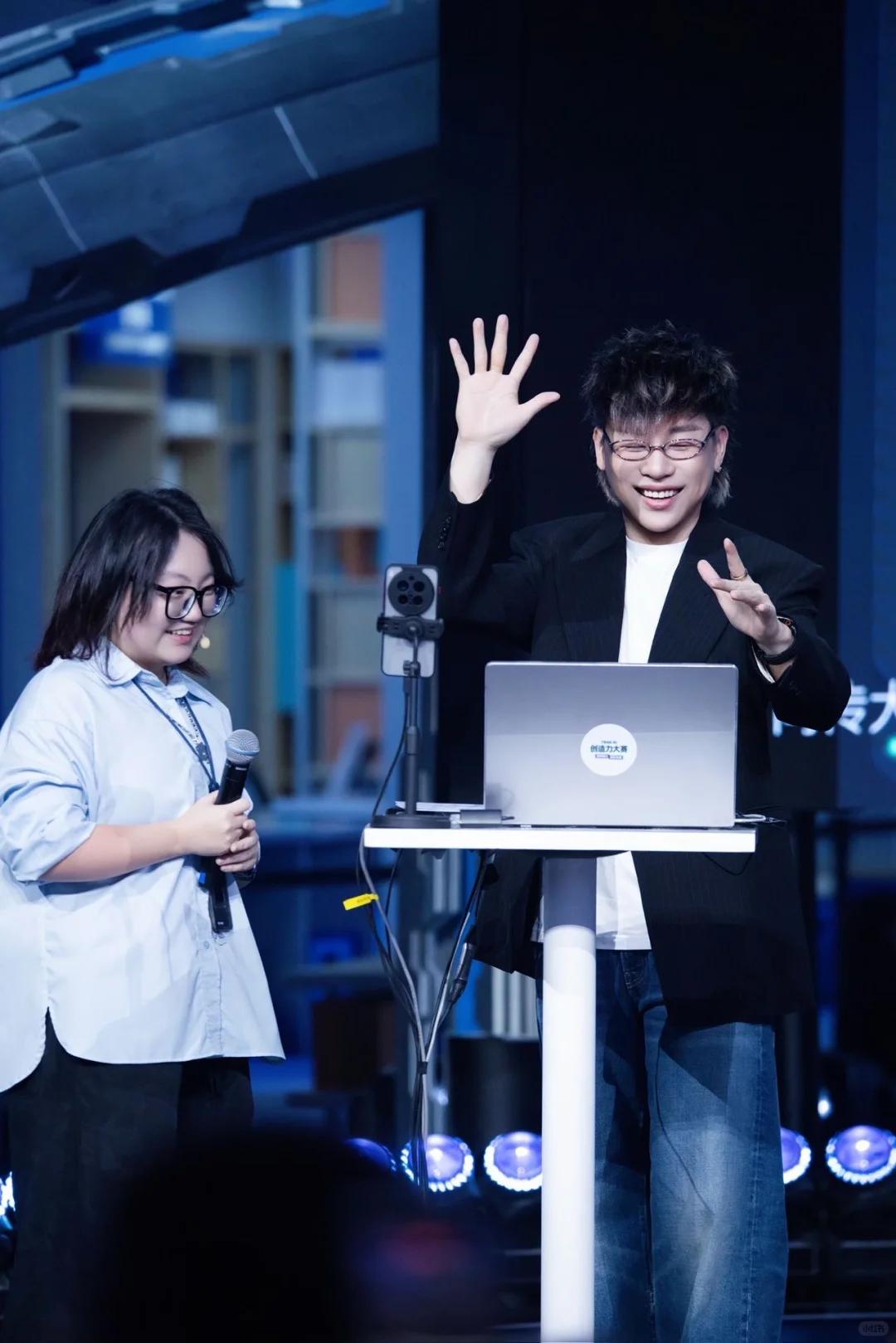
With this app, when you are tired from work, you can face the camera, turn your head left and right to play table tennis, or shake your head to swing a fishing rod. While playing, your neck gets fully stretched. At the final site, this mini game directly attracted Tim from Film Hurricane and musician Hu Yanbin from the judge's bench to come down and do a set of neck exercises together.
Hu Yanbin also surprisingly met a fan in the contestant seating area. This fan was so fascinated by watching Hu Yanbin play with vibe coding that he tried to use TRAE to create an "Air Conductor". Unexpectedly, his work made it to the final, and he successfully met his idol, performing on the same stage as Hu Yanbin at the final to fulfill his dream.
An AI contest has gathered so many extraordinary people with vastly different identities, industries and legendary life experiences — thanks to the emergence of AI coding software like TRAE, the threshold for creativity has been eliminated. For this competition, 37,000 ordinary people signed up and submitted 14,000 works. Among the top 20 contestants who finally stood on the final stage, more than half had no R&D background at all.
When the power of creation is handed over to young people, they truly make the most of AI.
They Turn Their Passions Into Products
When young people are free to create, industry trends and tracks are things to consider later, and the number one driving force is definitely interest — most of the first products built from scratch by this generation of young people are rooted in things they truly love.
16-year-old Kyle's work is very pure. He loves playing badminton, but has long been troubled by not being able to see his actual movements on the court. Hiring a coach costs two to three hundred yuan an hour, and the coach can only shout a few instructions on the sidelines like "don't twist your body" or "the hitting point is too low". Verbal guidance is never intuitive enough. He once inquired about the actual price: a one-hour coaching class costs 360 yuan, plus 100 yuan for the court fee, but he only had 200 yuan in his pocket at that time.
So why not make one by himself? Especially when he found TRAE, this low-threshold AI coding product, he felt like he had discovered a new continent. He immediately spent a whole summer vacation developing this "Motion Frame" App — as long as you prop up your phone on the sidelines to record videos, the AI can analyze frame by frame whether the elbow angle, hitting point height and swing speed of each shot are up to standard, and finally give a rating.
During the competition, he kept improving his product. In the semi-final, a mentor reminded him: "Why should users trust the judgment of AI?" Indeed, if the AI tells a user that his elbow lift is insufficient, the user has no real human movement as a reference, so why would he believe that what the App teaches is correct? So he contacted professional coaches at local badminton clubs overnight, and filmed all the standard movements and common wrong movements one by one.
He also added more auxiliary functions to "Motion Frame": lesson plans arranged according to physical conditions, quantified movements shot by shot, real human voice-guided practice, and a badminton player community. The original small idea of correcting playing mistakes has been expanded into an all-round badminton assistant with richer dimensions. After being rejected by the Apple App Store three times, it was finally launched on the App Store — 10 days after launch, it ranked 22nd on the popular list. At the final site, it helped Kyle win the 200,000-yuan grand prize.
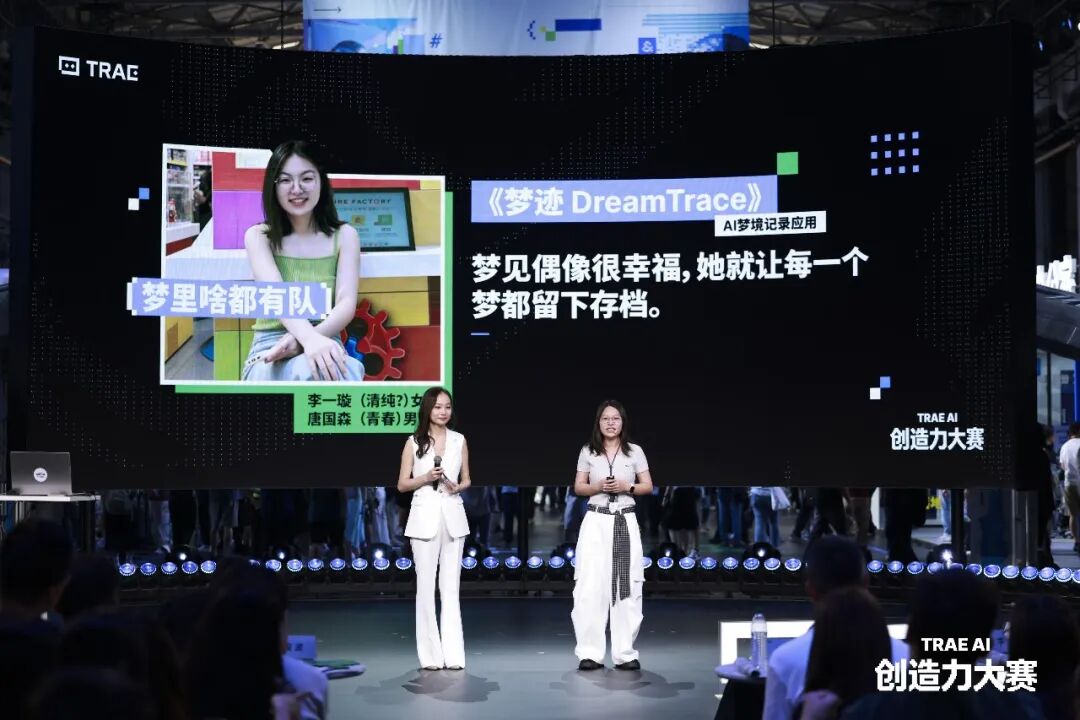
Another young contestant, Jessicy, a sophomore college student, is a girl who loves daydreaming and chasing stars.
She still clearly remembers a dream in which she went to her idol's concert, got an autograph and took a photo with him. The excitement and happiness when she woke up was still vivid, but she knew that soon, it would disappear like all other dreams. When she was under great pressure, she would always dream of the college entrance examination — the people she met and the things she experienced during the day would come back in another form at night.
She thinks dreams deserve to be carefully preserved. So she teamed up with a 21-year-old teammate to form a team called "All in Dreams", and used TRAE to develop the "Dream Trace" App. You can speak the dream scenes you still remember to your phone right after waking up, and the AI will turn the dream into a painting, interpret the emotions in the dream, and you can also share it in the community to find people who "have had the same dream". Everyone who has had a good dream and then forgotten it can find resonance here.
Music is the most concentrated passion in this contest. Contestant Pu, 41, has been writing code for 20 years and is a pure software developer. This is the first time in his life that he has dabbled in hardware. The "Light Radish" he made is a creative AI musical instrument as long as an arm, glowing all over, and can be played with one hand. He thinks many people can hum a melody casually, and everyone has a sense of music, so he wants to make an instrument with a lower threshold, so that people with zero foundation can hum a melody, and the instrument can help play it out.
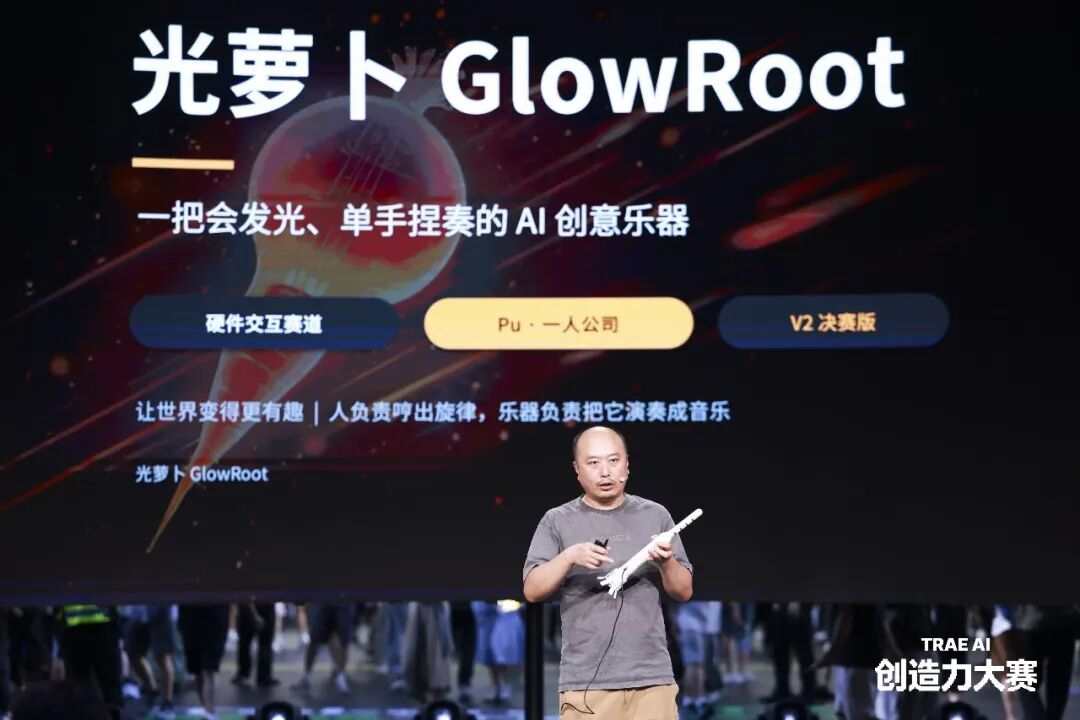
He started from scratch to learn CAD drawing, select components, and solder circuit boards, and even burned a development board in the process. In the past, this would require at least four people: a hardware engineer, a structural engineer, an embedded developer and a front-end developer. Now, one person plus TRAE is enough.
After AI empowers ordinary people with the ability to create, everyone can do something to give their passion a proper destination.
People Who Haven't Been Worn Down by Life Can See the Smallest Entry Points
When the power of product design was concentrated in the hands of a few people, the perspective was inevitably not diverse enough, and most product development tended to follow the rules and avoid making mistakes.
But when the whole public joins in the creation, especially those young people with strong observation skills and unpolished edges and corners, they can see the smallest entry points, pick up the troubles they see and take them seriously.
Peng Jialiang, a junior college student, took the problems he encountered during the job hunting season seriously and tried to solve them. From the end of June to the beginning of July, he kept submitting internship resumes, and was trapped in an endless cycle of revisions: applying for different positions required different versions of resumes, he had to adjust the format after revising the wording, export PDF after adjusting the format, improve a paragraph one day, and find that another position needed to highlight a different experience the next day.
In fact, every job hunting season, thousands of college students repeat the same action late at night. But most people just think it's a little extra work of copy and paste, and treat this tiny pain point as a small pebble in their shoe, getting used to it as they walk.
But Peng Jialiang didn't want to put up with it, and there was no tool on the market that really solved this pain point. What he wanted was to send a screenshot of the job position, and the AI would directly generate a customized resume, and preferably prepare the interview questions and the content to fill in the online application as well. So he used TRAE to build a "FRESUME Intelligent Resume Workbench" from scratch.
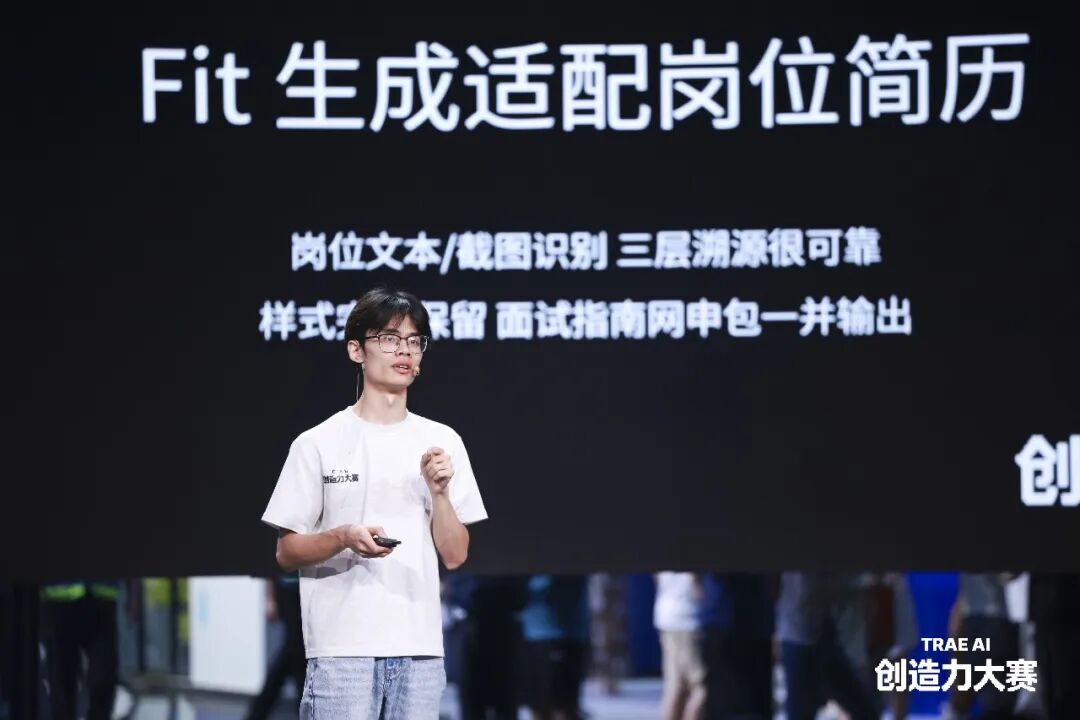
Later, he posted the demo video online, which quickly got nearly a million views — as expected, far more than just him were tortured by this process. He took the opportunity to set up a job hunting mutual aid group, and every question raised by the group members became a function in the new version. The latest practical test was that his girlfriend revised her resume with FRESUME and successfully passed the interview, which gave him a great sense of achievement.
Contestant Roy used TRAE to improve the quality of life for his family members.
When he went home for the Spring Festival this year, he found that his father was installing a surveillance camera for his grandmother. His grandmother is old and not good at using a mobile phone. It's common for her to leave her phone behind or forget to charge it, and the whole family will get worried when they can't reach her. Once they couldn't get in touch with grandma, his father drove over to check, only to find that grandma was just watching TV in the living room.
Roy understood this worry, but installing a camera at home always made him uncomfortable. He thought the elderly should also have privacy and dignity, and people should not be monitored like pets.
Many people have had this awkward feeling, but most of them will comfort themselves with the excuse of "putting the care of the elderly first" and let it go. But Roy didn't let it pass.
He used TRAE to develop a care system called "Fanglian", which was named after his grandmother. As long as you stick this small sensor on the medicine box, put it under the water cup, or place it on the bedside