Cultural and entertainment investment is bidding farewell to the "betting on blockbusters" logic, and five categories of assets are becoming the core main line of the new round of investment.
The cultural and entertainment industry has gone through a drastic capital cycle in the past few years.
During the period of rapid growth of mobile internet traffic, as long as a company had users, celebrities, copyrights or popular themes, it could obtain financing; before a film and television project even started shooting, its valuation was already built on the expected box office; when a game was just entering the testing phase, capital began to calculate the possibility of it becoming the next hit.
However, when the traffic dividend peaked, content supply became oversupplied, and project returns fluctuated more sharply, capital tightened rapidly. Financing in tracks such as film and television, variety shows, long videos, and talent agencies cooled down, and a large number of companies that relied on external funds for expansion withdrew from the market. The cultural and entertainment industry was once labeled as "long investment cycle, unpredictable hits, difficult asset valuation, and limited exit channels".
Now, new changes are emerging in the market.
Financing activities are starting to pick up, and games, micro dramas, trendy toys, animation, cultural technology and cultural exports are regaining attention. However, this is not a simple repetition of the last round of cultural and entertainment investment boom.
The new round of capital no longer only asks "will this project be a hit", but begins to ask: Does this company have reusable content production capabilities? Can one IP span film and television, games, animation, trendy toys and offline spaces? How much cost has artificial intelligence reduced? Can overseas revenue be sustained? Can the enterprise form a stable cash flow?
The investment and financing logic of China's cultural and entertainment industry is shifting from "betting on hits" to "operating assets".
Capital is facing a highly differentiated market
From macro data, China's cultural industry still maintains strong growth.
Data from the National Bureau of Statistics shows that in 2025, the national cultural and related industries achieved operating revenue of 20.83 trillion yuan, a year-on-year increase of 8.8%; among which the revenue of the cultural service industry was 12.31 trillion yuan, a year-on-year increase of 12.8%, contributing 82.7% to the revenue growth of the entire cultural industry.
What deserves more attention is the new cultural business forms. In 2025, 16 new cultural business form industries with obvious digital and networked features achieved operating revenue of 7.67 trillion yuan, a year-on-year increase of 15.1%, 6.3 percentage points higher than the growth rate of the entire cultural industry, and their proportion in the total revenue of the cultural industry rose to 36.8%. In the same period, R&D investment of cultural enterprises above designated size reached 182 billion yuan, a year-on-year increase of 12.1%. This means that the growth engine of the cultural industry is increasingly concentrated in the fields of digital content, games and animation, platform services and cultural technology.
Industrial growth has also begun to transmit to the financing market.
The report released by the Cultural and Creative Finance Research Center of PBC School of Finance, Tsinghua University shows that in the second half of 2024, the number of financings and the financing amount of the cultural industry resumed growth; in the first half of 2025, the growth rates of the two indicators reached 63.2% and 88.9% respectively. Bond financing maintained growth, private equity investment rebounded accelerated, and the M&A market also gradually recovered under policy support.
More recent data also continues this trend. According to the standard of Xiniu Data, the number of cultural industry financing events rebounded from 132 in the second half of 2024 to 180 in the first half of 2026, and the disclosed financing amount rebounded from 2.625 billion yuan to 8.557 billion yuan, the proportion of cultural industry financing events in the entire venture capital market increased from 2.35% to 3.01%.
However, these figures cannot be interpreted as "the entire cultural and entertainment industry has re-entered a bull market".
In 2025, the total profit of the national cultural industry increased by 7.3%, lower than the 8.8% growth rate of operating revenue; the revenue of traditional cultural manufacturing industry only increased by 0.6%, and the revenue of cultural investment and operation increased by 3.1%. The expansion of the total industry volume does not mean that every track has the same profitability.
A more accurate judgment is: the cultural and entertainment industry has entered a stage of structural recovery. Capital is back, but only to those tracks that can prove technical efficiency, business closed loop and long-term value.
Why is capital no longer willing to pay only for "content dreams"?
The particularity of the cultural and entertainment industry lies in the fact that supply is difficult to be fully standardized.
The manufacturing industry can measure future revenue through production capacity, orders and costs, and the consumer goods industry can observe repurchase rate and channel efficiency, but films, dramas, games and talent agencies are highly dependent on creativity. Investing more funds does not necessarily produce more popular works.
In 2025, the total box office of China's film market reached 51.832 billion yuan, a year-on-year increase of 21.95%, and the box office of domestic films accounted for 79.67%. But in the same year, the box office of animated films exceeded 25 billion yuan, close to half of the national box office, the pulling effect of head works is very obvious.

This not only proves the huge commercial potential of high-quality content, but also exposes the core risk of the industry: the market may grow rapidly due to one or two super works, but a single investor may not be able to replicate this success stably.
Therefore, capital is redefining what a "good content company" is.
In the past, the market was willing to value based on directors, actors, copyright reserves and number of projects; now, investors pay more attention to whether enterprises have stable production processes, budget control, user insight, distribution channels and IP operation capabilities. What is really valuable is not "having made a hit once", but "being able to continuously increase the probability of making hits and still survive when there is no hit".
This is also the most important difference between film and television project financing and corporate equity financing: the former shares the revenue of one work, while the latter buys a set of repeatable production systems.
Five types of assets are becoming the main line of the new round of investment
1. Cultural technology: from auxiliary tools to core means of production
The clearest investment mainline at present is the integration of artificial intelligence and the cultural industry.
The report of PBC School of Finance, Tsinghua University shows that in 2024, the number of "AI + Culture" projects in the private equity market accounted for more than 30%; by the first half of 2025, this proportion exceeded 40%. According to statistics from Xiniu Data, in the cultural industry financing in the past year, the number of "Culture × AI" related projects reached 138, accounting for about 41%.
This round of investment is not only about AI-generated images or AI writing, but covers script development, storyboard production, character design, video generation, animation production, digital humans, dubbing and translation, advertising materials, game assets and smart toys and other links.
The "Opinions on Deeply Implementing the 'Artificial Intelligence +' Action" issued by the State Council also clearly proposes to promote the role of artificial intelligence in cultural production, cultural communication and cultural exchanges, and assist in the creation of content with Chinese cultural elements.

However, AI cultural projects will enter the knockout stage next. Capital will not pay a premium for "accessing a large model" for a long time, but will verify three issues: whether it has high-quality data with clear copyright, whether it truly reduces production costs, and whether it has formed products that users are willing to pay for.
The AI concept itself is not a barrier. Data, workflow, industry understanding and business scenarios are the real barriers.
2. Games: from traffic business to industrialization and globalization
Games are still one of the sectors with the most mature business models in the cultural and entertainment industry.
In 2025, the actual sales revenue of China's domestic game market reached 350.789 billion yuan, a year-on-year increase of 7.68%; the user scale reached 683 million. The actual sales revenue of China's self-developed games in overseas markets reached 20.455 billion US dollars, a year-on-year increase of 10.23%, exceeding 100 billion yuan for six consecutive years.
After the user scale is close to the ceiling, the valuation logic of game companies has also changed.
Capital no longer only looks at the revenue of a single product, but focuses on R&D pipeline, multi-terminal distribution, long-term operation, global distribution and IP derivative capabilities. Companies that can cover mobile, PC, console and mini-programs at the same time and have a global production and distribution system are more likely to gain recognition from long-term capital.

Future game investment will not disappear, but will be more concentrated. Small and medium-sized teams can still obtain financing by relying on innovative gameplay, but once entering the large-scale production stage, technical capabilities, project management and capital reserves will become decisive thresholds.
3. IP economy: from selling copyright to operating life cycle
IP is becoming the core asset connecting multiple tracks of the cultural industry.
A mature IP can start from online literature and extend to animation, dramas, games, audio content, trendy toys, card games, theme exhibitions and offline parks. Capital is no longer investing in a novel or a character, but a long-term commercial chain.
In 2024, the overseas market revenue of China's online literature industry reached 4.815 billion yuan, a year-on-year increase of 10.68%; by 2025, the number of overseas active users of Chinese online literature was about 200 million, covering more than 200 countries and regions around the world.
The growth of trendy toys, card games and "goods economy" has provided IP with a faster monetization method. Compared with film and television projects, derivatives can reduce risks through small-batch testing, rapid restocking and channel data, and can also convert one-time content popularity into long-term consumption.
However, there are also misunderstandings in IP investment. Popularity does not equal commercial value, and the number of fans does not equal purchasing power. What really matters is character recognition, emotional connection, authorization boundaries, continuous content supply and cross-category development capabilities.

In the future, capital will prefer enterprises with "self-owned IP + self-owned channels + supply chain capabilities" rather than trade-oriented companies that purely rely on external authorization.
4. Micro dramas and new content forms: opportunities shift from individual works to infrastructure
The significance of micro dramas is not just to make dramas shorter, but to reconstruct the way content is produced and distributed.
Traditional film and television projects often require a long production cycle, while micro dramas can quickly test themes, launch materials and users' willingness to pay. Free mode, brand customization, platform revenue sharing, overseas subscription and localized production have formed a variety of business paths.
However, purely investing in a single short drama still has strong uncertainty. As competition intensifies and user acquisition costs rise, capital will gradually turn to the "water sellers" in the industrial chain: script and IP platforms, intelligent production tools, distribution systems, copyright management, translation and production services, and overseas localization teams.

In other words, micro drama investment will shift from "betting on which drama will be a hit" to "who can provide stable services for thousands of works".
5. Offline entertainment and cultural tourism integration: rediscover operable space assets
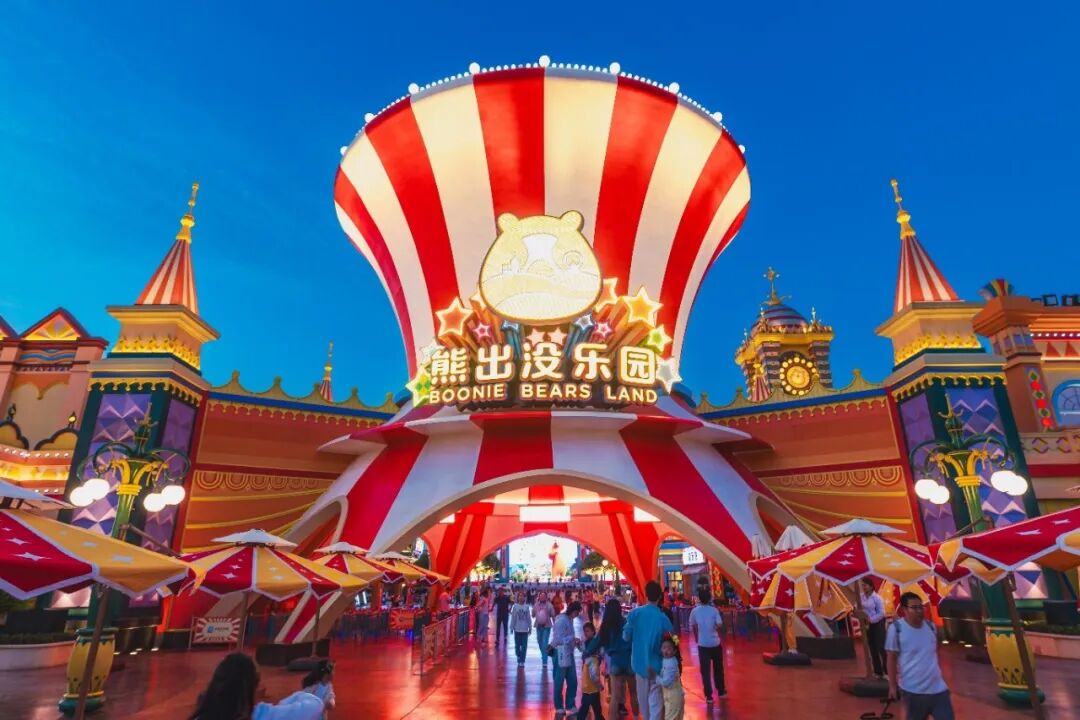
Concerts, music festivals, immersive performances, theme parks, cultural tourism blocks and new cultural spaces are becoming important growth points for cultural consumption.
The advantages of such projects are that the consumption scenarios are real, which can drive ticket, catering, accommodation, retail and urban tourism; the disadvantages are large upfront investment, long payback period, and high dependence on location and operation capabilities.
The "Several Economic Policies for Promoting High-quality Cultural Development" issued in 2025 clearly supports cultural enterprises in listing, refinancing and issuing bonds, and also proposes to support qualified tourism infrastructure projects to issue infrastructure REITs, and improve the copyright pledge and intangible asset financing mechanism. Relevant policies of the General Office of the State Council
This means that the financing structure of cultural tourism and offline entertainment may be gradually stratified: content companies are responsible for IP and operation, industrial capital is responsible for scenario coordination, and long-term funds invest in infrastructure with stable cash flow.
Investors are changing from financial investors to industrial organizers
Another important change in the new round of cultural and entertainment investment is that the source of funds is changing.
In the last round of industry prosperity, a large number of market-oriented VCs and PEs chased traffic platforms, talent agencies and film and television projects. Today, local state-owned assets, government guidance funds, internet platforms, game companies, film and television groups and consumer goods enterprises are playing a more important role.