4S car dealerships have been drastically transformed into food stalls and gyms, does the 4S dealership model still have a future?
Once, 4S stores were the most critical automobile sales channels. However, along with the continuous development of the direct sales model for new energy vehicles in recent years, traditional 4S stores have been severely impacted. Recent media reports have revealed that some 4S stores have been completely renovated into street food stalls. Faced with such large-scale changes, people can't help but wonder: does the 4S store model still have a future?
1. Are 4S stores being completely renovated into street food stalls?
According to reports from China Business News, against the backdrop of the automotive industry's transition from traditional fuel vehicles to new energy vehicles, the spatial operation form of some traditional automobile 4S stores is ushering in new changes.
Reporters from China Business News visited the site and found that the vacant space of a former automobile 4S store has been leased and renovated into a seafood street food stall. Song Tishuai, General Manager of Yizhou Jiayan, said that the main reason for choosing to lease this site is the impressive facade of the former 4S store and the high ceiling. In the same area, the office and ceiling structure of the former 4S store have been retained and renovated into a gym. Zhang Yanquan, store manager of FLEX GYM, introduced that the site retains the original open and transparent features, and parking along the street is relatively convenient.
In addition to direct leasing and renovation, some 4S stores are also exploring cross-border space cooperation. A brand 4S store has transformed the original customer lounge space on the second floor into an intangible cultural heritage cultural and creative space. Tang Xiaochen, co-founder of Weilan Culture, said that car owners can drink coffee, participate in hands-on experiences and learn about the heritage of intangible cultural heritage in this space while waiting.
Recently, the latest monitoring data released by the China Automobile Dealers Association shows that in June 2026, the inventory warning index of Chinese automobile dealers was 57.2%, up 0.6 percentage points from the same period last year, and down 0.7 percentage points month on month. The index has remained above the 50% boom-bust line, and the industry's inventory pressure still exists. 76.9% of the stores failed to achieve their half-year sales targets, of which the stores with a completion rate of less than 70% accounted for 39.8% in total.
The industry report released by the China Automobile Dealers Association shows that nearly 5,000 4S stores were shut down, merged or transferred across the country in 2025, exiting the original brand authorization system, with an average of more than ten stores ending their brand agency business every day.
2. Does the 4S store model still have a future?
Recently, news about large-scale "complete renovation" of 4S stores has been emerging constantly. 4S stores, which once represented the service standards of automotive brands, have now been transformed into street food stalls, gyms, warehouse stores and even various life and consumption spaces. What on earth is going on?
First of all, the heavy asset model of 4S stores with large investment and large scale is no longer sustainable. For a long time, domestic automobile 4S stores have always followed the heavy asset operation logic of "large investment, large site and large scale". Most of the stores are located in the core business districts of urban suburbs or automobile industrial parks. The thousands of square meters of exhibition halls, maintenance workshops, supporting warehouses and parking lots mean extremely high fixed costs of rent, decoration, labor and operation and maintenance. In the era of incremental growth of fuel vehicle popularization, the multiple profits from new car sales margins, after-sales vehicle maintenance, and rebates from financial insurance can fully cover the heavy asset costs. This model has a stable business closed loop, and it is also the core support for the rapid expansion of the 4S store industry in the past decades.
However, after the industry entered the stage of stock competition, the original profit logic was completely broken. On the one hand, the automotive market has shifted from incremental expansion to stock game, the demand for new car consumption is becoming saturated, consumers are becoming more rational in car purchase, the natural customer flow to stores has continued to plummet, the customer acquisition efficiency of traditional offline exhibition halls has been greatly reduced, the display value of large-area exhibition halls has continued to shrink, and the original core assets have gradually become idle burdens.
On the other hand, the rise of new energy vehicles has completely reconstructed the industry's pricing and profit system. With the popularization of the direct sales model of automakers and the intensification of price involution of new cars, the profit margin of new car sales has been extremely compressed. Most traditional 4S stores can no longer make profits by selling cars, and even suffer losses from car sales. The once stable after-sales maintenance profits have also continued to shrink with the improvement of car owners' maintenance awareness, the rise of third-party auto repair institutions, the simplification of the structure of new energy models, and the reduction of maintenance demand.
When the drawbacks of the heavy asset model are magnified infinitely, relying solely on the core automobile business can no longer maintain the normal operation of the stores. Splitting the site, introducing cross-border formats, and revitalizing idle spaces have become an inevitable choice for the vast majority of 4S stores to survive.
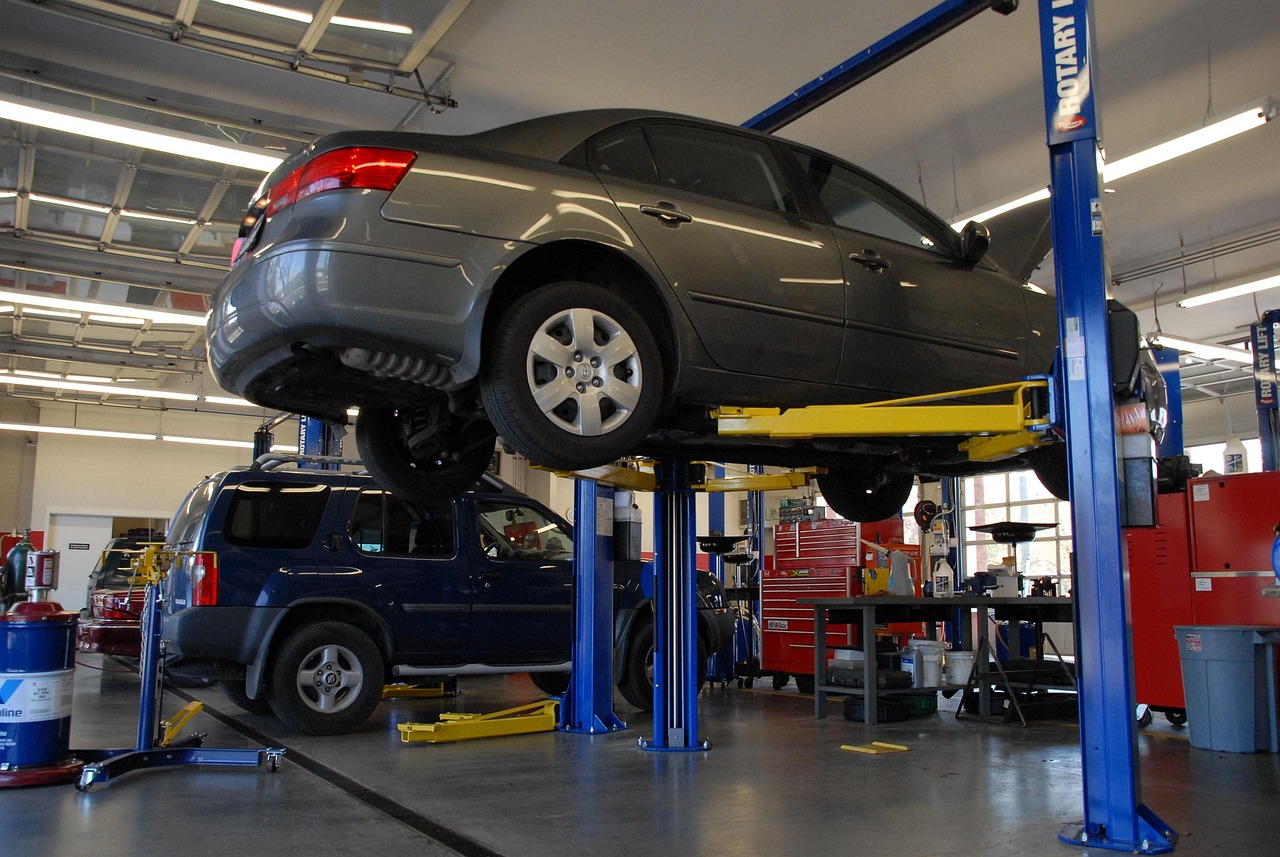
Secondly, the seemingly absurd complete renovation is very much in line with reality. Traditional 4S stores have an obvious physical feature: large flat floors, high ceilings, strong street-facing display surfaces, sufficient parking spaces, and some stores are even located at urban traffic nodes or urban-rural junctions. Such spaces were originally designed to meet the needs of automobile display, test drive, maintenance and customer service, but after the automobile business shrinks, they have the potential to be transformed into other consumption formats.
Street food stalls, catering complexes, fitness venues, children's entertainment, warehouse retail and other formats share a common feature: they have high requirements for space area, certain requirements for floor height and moving lines, and sufficient capacity to carry passenger flow. 4S stores already have these conditions. Instead of letting a huge exhibition hall stay vacant for a long time, it is better to transform the automobile sales space with low frequency, high unit price and low gross profit into a life service space with high frequency, faster cash flow and lower consumption threshold through space splitting and functional reorganization.
From the perspective of business logic, this is a typical "rediscovery of space value". In the past, 4S stores sold cars, which essentially operated low-frequency bulk consumption; while formats such as street food stalls and gyms operate high-frequency daily consumption. The former relies on brand trust, after-sales system and long-term services, while the latter relies on location, traffic, table turnover rate and repurchase rate. The two seem to be very different, but under the pressure of cash flow, high-frequency formats are often easier to recover funds quickly.
This also shows that the problem of many 4S stores is neither poor location nor worthless assets, but that the original formats can no longer match the current market demand. The automobile consumption channels have changed, and consumers' habits have changed. If stores still adhere to the single logic of "must sell cars", they will easily be dragged down by asset costs. Transforming 4S stores into street food stalls seems to be cross-border, but in essence, it is releasing the value of space in a more flexible way.
Third, traditional 4S stores have lost their advantages but are not without a future. On the one hand, the super-large exhibition hall model of thousands of square meters may be unsustainable, and the small and exquisite model may be more popular. Now we see that many new power brands open stores in shopping malls, which are only tens of square meters, display one or two cars, and set up a coffee bar, which can still sell cars. What does this mean? It means that consumers have lost their fascination with the "grand narrative" style exhibition halls. Nowadays, young people pay attention to experience and efficiency when buying cars, rather than going to a palace for pilgrimage. The future automobile sales terminals will inevitably sink to communities and business districts. There is no need for such a large warehouse to stock cars, nor such a large maintenance workshop crowded in the city center. Warehousing and after-sales services can be completely placed in the back end and operated separately. This "small and exquisite" model greatly reduces the risk of fixed asset investment for dealers, making the operation more flexible.
On the other hand, the previous model focusing on car sales is gradually transforming into a full life cycle service provider. In the future, if 4S stores do not make profits by selling cars, what will they rely on? They will rely on services. From the moment you buy a car, insurance, finance, maintenance, repair, used car replacement, and even the surrounding life services related to cars, these are the long-tail profit pools. The current trend is "free hardware, paid services". Although cars cannot be completely free yet, cars will increasingly serve as a traffic entry. Whoever can do a good job in the full life cycle services for car owners can survive, instead of the previous extensive one-off deal that ignores customers after selling the car, that era is over.
Fourth, where should 4S stores go in the future? In the long run, the 4S store model will still exist, but transformation is something that most 4S stores must do. I want to emphasize here that don't think the 4S store model is completely dead, that's too absolute. Why does it still exist? Because as a complex industrial product, automobiles, especially involving after-sales maintenance and technical support, still need professional offline outlets to support. Although the direct sales model of manufacturers is good, its coverage cost is too high. For the huge stock market, especially the vast sinking market, the dealer system is still an indispensable capillary. However, the surviving 4S stores will definitely not look like what they are now.
Therefore, what is being changed by the complete renovation of 4S stores is not the automobile industry itself, but the old model that can no longer carry the new reality. The future automobile stores will not necessarily disappear, but they will definitely become lighter, more flexible, closer to users, and more focused on service efficiency. For dealers, transformation is no longer a multiple-choice question, but a survival question.
This article is from the WeChat official account "Jiang Han's Vision Observation", author: Jiang Han's Vision Observation, published by 36Kr with authorization.