Nokia's closure of its Hangzhou R&D center sends out an important signal.
Recently, there has been a surge of news in the communications industry.
On the one hand, the three major telecom operators have successively released their first-half performance reports, with widespread profit declines and an overall situation that is far from optimistic. On the other hand, Nokia, as a leading equipment vendor, officially announced a major adjustment to its business in China, launching a plan to shut down its Hangzhou R&D center, which is expected to cut 1,600 jobs.
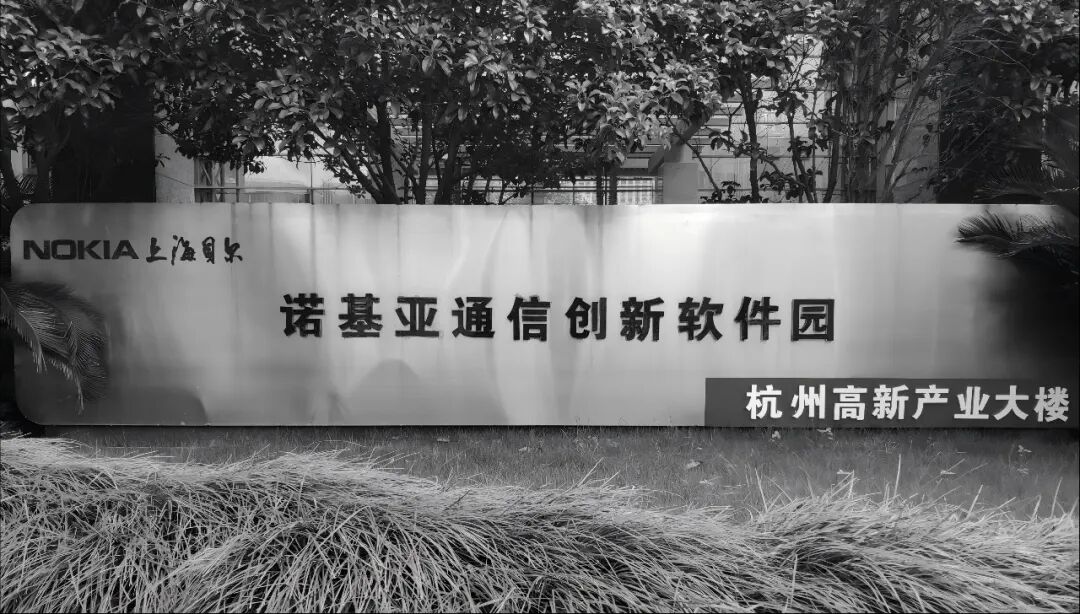
Nokia Hangzhou R&D Center
In today's article, I would like to start by discussing Nokia's layoff incident with all readers.
Personally, I believe this is far more than a regular corporate layoff. It is a signal of profound changes in the entire communications industry landscape, with impacts that go much deeper than what appears on the surface.
40 Years of Deep Local Cultivation, Yet Unavoidable Exit Outcome
Nokia is one of the world's four leading communications equipment vendors, with a history of more than 160 years and great influence across the industry.
People outside the industry may think Nokia is a leftover legacy of the old mobile phone manufacturer, but in fact, the current Nokia carries pure communications equipment genes in its business DNA. Well-known old communications brands familiar to the older generation, including Alcatel, Lucent, Siemens, Motorola, were all integrated into today's Nokia through mergers and acquisitions in past years.
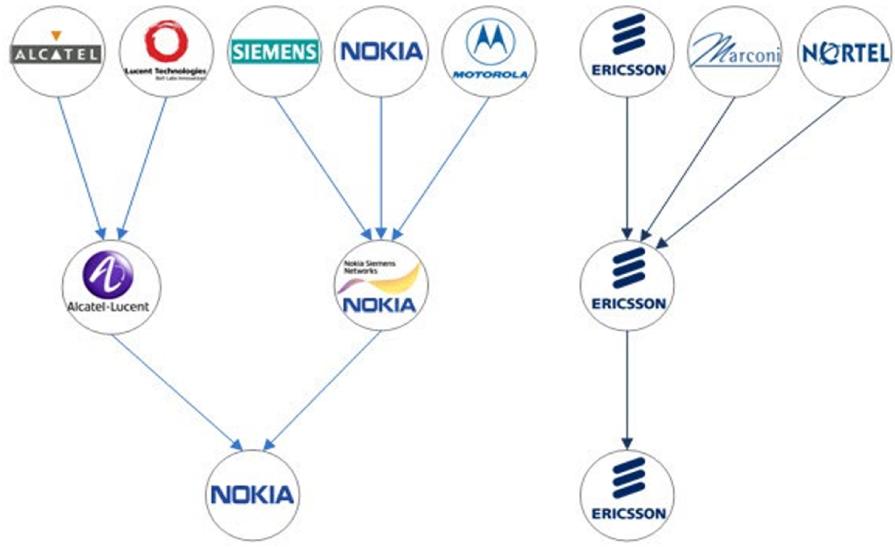
Nokia has cultivated the Chinese market for more than 40 years, deeply participated in the construction of China's full-generation communication networks from 2G, 3G, 4G to 5G, and witnessed and supported the entire process of China's communications industry growing from scratch to global prominence.
In 2015, Nokia acquired Alcatel-Lucent. In 2017, Nokia integrated its domestic business and jointly established a new Sino-foreign joint venture with Huaxin Post & Telecommunication under China Poly Group, namely "Nokia Bell (Nokia + Shanghai Bell)".
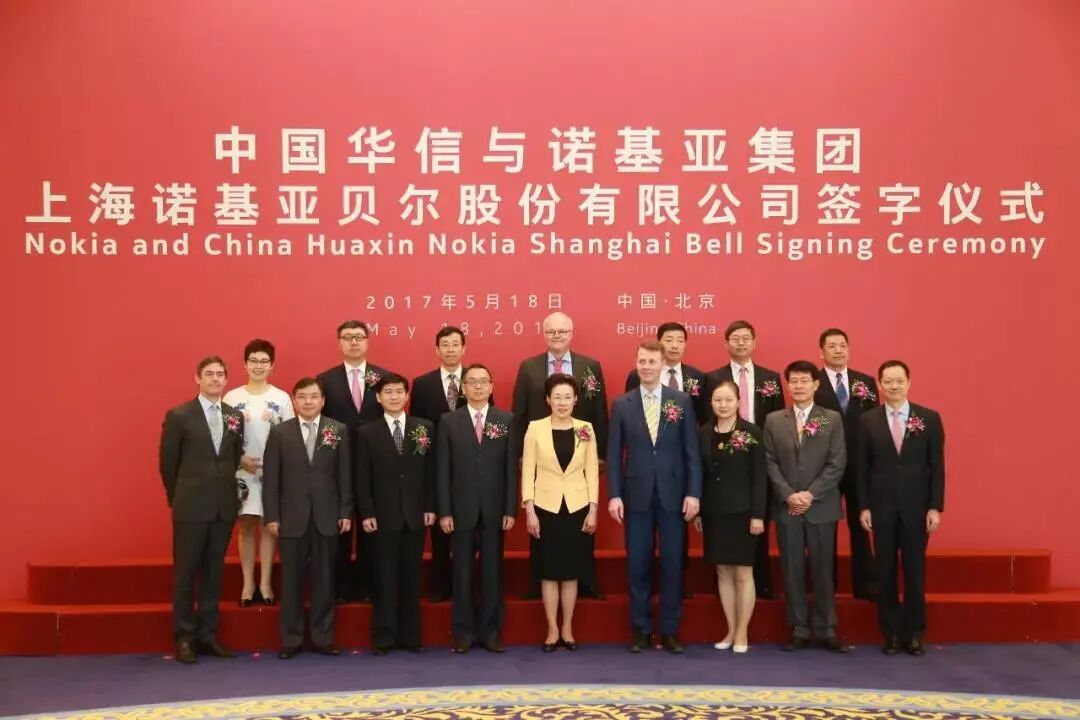
"Nokia Bell" held the identity of a state-invested joint central enterprise. Nokia made this arrangement hoping to leverage this identity to better carry out its local business.
At the end of 2025, Nokia spent 4.1 billion RMB to acquire the 50% stake held by Huaxin Post & Telecommunication, turning "Nokia Bell" into a wholly-owned subsidiary completely.
At that time, many people could not figure out the purpose of this move. In hindsight, the equity adjustment was fully prepared for large-scale layoffs.
In fact, Nokia has been continuously adjusting its business and optimizing its workforce over the years. In 2020, Nokia had 13,700 employees in China. By 2025, the number had dropped to only 7,200, nearly halved.
The reason is obvious: its market share declined, and revenue could no longer support its huge R&D and operating costs.
In the 2G and 3G eras, Nokia once occupied half of the Chinese market with its technological advantages. However, entering the 4G era, its market share was gradually eroded by Huawei and ZTE. In the 5G era, this downward trend became more obvious, with its market share falling directly below 3%, basically exiting the mainstream competition ranks.
The reasons for losing market share are multifaceted. To sum up, the products and technologies of Huawei and ZTE are truly strong, they can provide in-depth customization for domestic operator customers, and their prices are more competitive. In addition, as local enterprises, Huawei and ZTE can provide more complete service support and faster response speed.
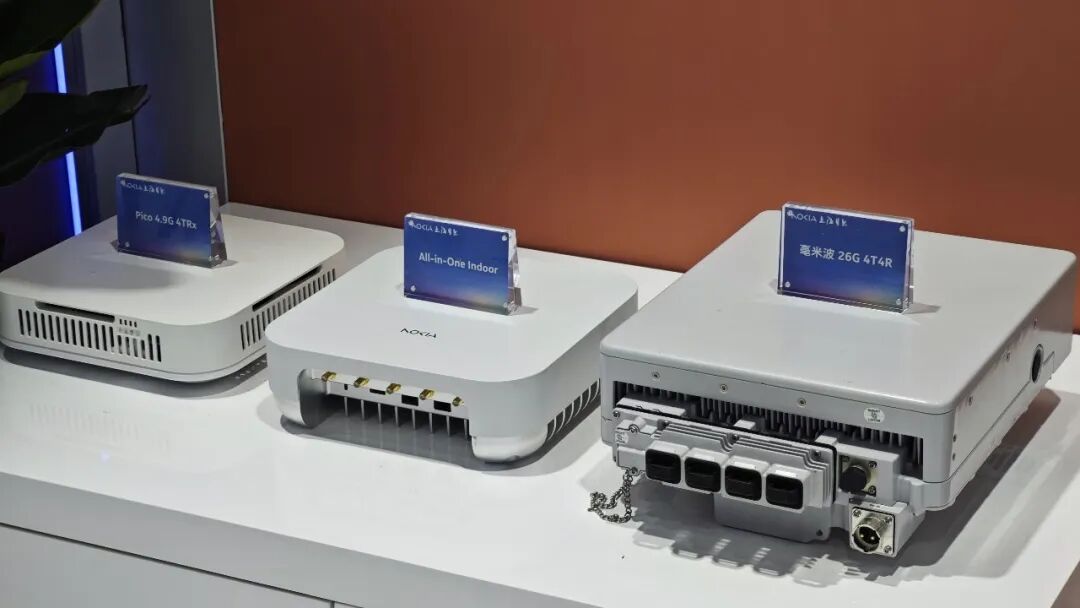
Nokia 5G equipment
Apart from products and services, another important factor is the impact brought by geopolitics.
After the rise of Huawei and ZTE, Western countries led by the United States have been suppressing and restricting them, and many countries have explicitly banned the use of Huawei and ZTE equipment. We have also had to take equivalent countermeasures, but we have been very restrained, we have not carried out a "one-size-fits-all" total ban like some Western countries, and have always reserved a certain amount of market share.
Due to all the above reasons, Nokia's market share in China has continued to decline, and its revenue has also dropped significantly. In 2018, Nokia's Greater China revenue was 2.2 billion euros. By 2025, it was only 913 million euros, a 58% drop in seven years.
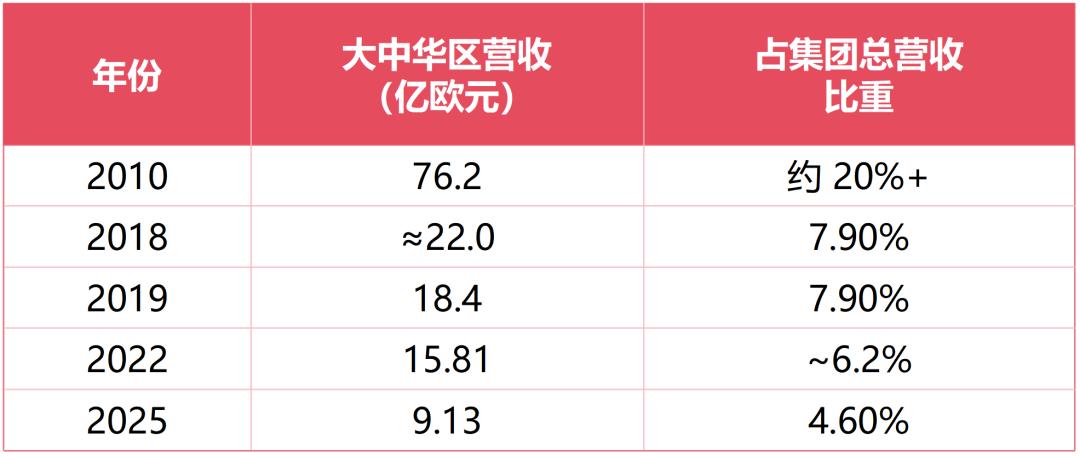
The decline in revenue will inevitably lead to business downsizing. The disbandment of the Hangzhou R&D center this time is a continuation of the business adjustment plans of recent years.
It is worth noting that the Hangzhou R&D center does not only serve the Chinese market, but is part of Nokia's global R&D system. Previous business adjustments mainly involved departments such as sales and technical support. This time, directly closing the Hangzhou R&D center and giving up valuable talent reserves and years of resource investment fully demonstrates Nokia's determination to withdraw completely.
Exiting China Is Not An Isolated Incident
Nokia's exit from China, while partly driven by the shrinking of its domestic market share, has a deeper root in the adjustment of its own global business layout.
The communications industry is currently in a global downward cycle. Especially in the mobile communications field, the peak of 5G construction in China has passed, while international operators are not as aggressive in 5G network deployment as previously expected, with their investment willingness becoming more pragmatic and cautious.
The current global mobile communications market presents a clear geopolitical pattern. In other words, the market has been artificially divided into different camps. Politics has surpassed products and services to become the core factor affecting market share. The unified market form of free competition among global manufacturers in early years no longer exists.
As the world's largest market, China has provided fertile ground for the growth of Huawei and ZTE. In particular, Huawei, based on the Chinese market, combined with overseas stock markets and emerging markets, holds about 30% of the global RAN (Radio Access Network) market share, ranking first in the world.
Ericsson relies on the high-end operator markets in North America and Europe, with its market share closely following at 28%-32%. Nokia and Ericsson share similar target markets, taking North America as the core, Europe as the basic market, and the Asia-Pacific region as the incremental market, with a market share of about 15%-19%. Among them, North America is Nokia's largest source of revenue globally, contributing about 32% of its total revenue.
Europe and the United States are high-value markets that bring considerable profits to Ericsson and Nokia. However, the overall downward trend of global mobile communication infrastructure investment, coupled with increasingly fierce market competition, has forced these two European giants to adjust their business directions.
At the beginning of 2026, Nokia announced a thorough architecture restructuring, cutting its original four business groups into two: Mobile Infrastructure and Network Infrastructure. To put it simply, the Mobile Infrastructure division will continue to focus on its 5G/6G basic business, especially 6G, to make layout for the future. The Network Infrastructure division will target optical communications and data center communications, with an obvious focus on the AI sector to seize the dividends brought by AI development.
Nokia's new CEO Justin Hotard is a US citizen with a background in data center business. After taking office, he immediately established deep cooperation with NVIDIA to jointly develop the AI-RAN platform, using GPUs to replace traditional baseband-specific chips. NVIDIA also invested 1 billion US dollars to take a direct stake in Nokia.
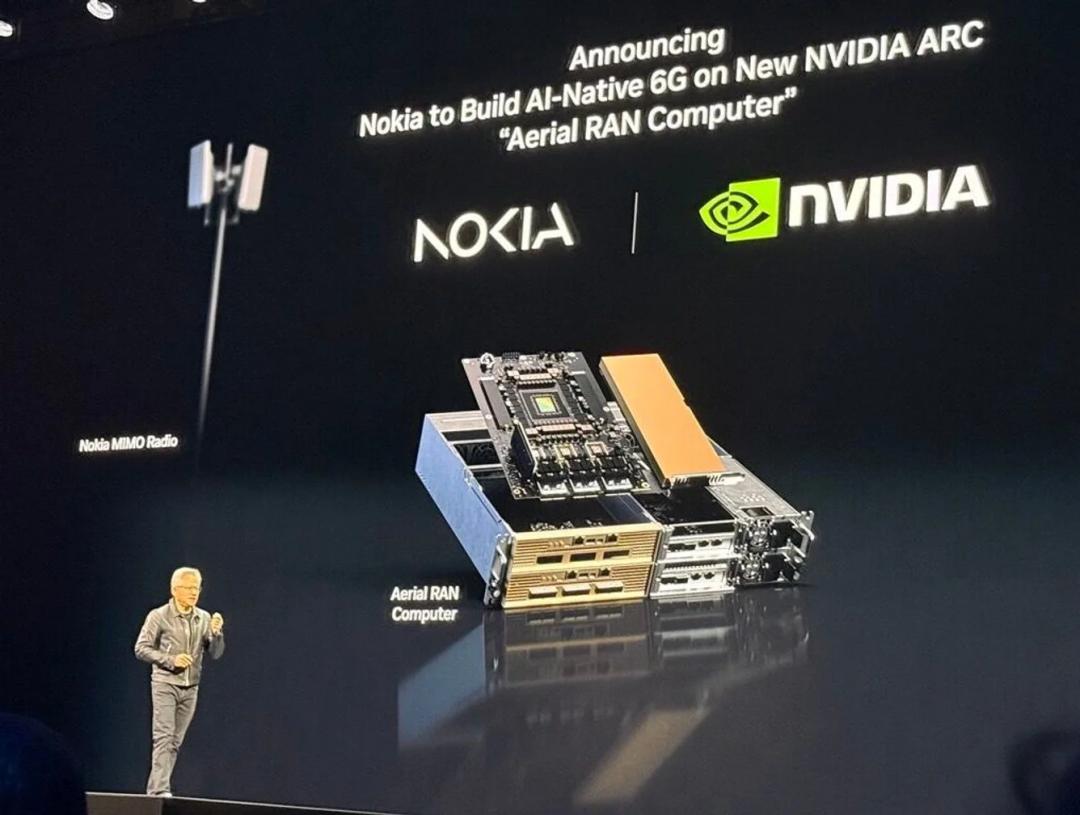
From a certain perspective, Nokia seems to be leaning towards Wall Street, becoming the agent of US tech capital in the field of communications infrastructure.
Justin Hotard has also shown a relatively "hawkish" attitude. At the earnings conference in July this year, he made a public statement: "Why should we allow high-risk suppliers like Huawei to access European networks, especially when they do not allow us to access their markets, given that our market share in China is less than 3%."

Justin Hotard
Against this background, it is not surprising that Nokia's senior management made the decision to shut down the Hangzhou R&D center and further shrink its business in China.
Nokia's current strategy is very clear: to cut costs drastically, concentrate resources on the two high-profit markets of North America and Europe, and at the same time find new growth curves by embracing AI computing infrastructure.
Nokia's layoffs are not limited to China. The total number of Nokia's global employees has dropped from about 103,000 in 2018 to about 78,000 in 2025. Not long ago, Nokia announced that it would further lay off employees in Europe and increase restructuring expenditures by about 200 million euros for this purpose. Preliminary estimates indicate that this will mean another 2,000 job cuts.
This "downsizing" strategy has brought short-term improvements to its financial data. But it is easy to "cut expenditure", while whether it can achieve "revenue growth" remains a question mark. It still takes time to observe whether Nokia's move to embrace Wall Street, align with NVIDIA and the AI-RAN track can finally achieve performance growth.
We Need to Treat Foreign Companies' Withdrawal Rationally
When Nokia withdrew from China, many people did not take it seriously, and even some people believed that this meant Chinese enterprises defeated foreign enterprises and "drove them out" of the Chinese market.
This view with national emotional bias is irrational. Nokia's withdrawal from China is not something worth celebrating for us.
First of all, the most direct impact is the loss of thousands of jobs. Once the Hangzhou R&D center is shut down, it is expected that 1,600 employees will face layoffs or job transfers. Behind this figure is the real pressure that 1,600 families will have to face.
According to sources, the layoff compensation package offered by Nokia is quite generous. Some employees received "N+2" compensation (some said it was "N+3"). The working years are counted to the end of the year, unused annual leave is fully converted to cash, stock options are settled uniformly, and social security and housing fund contributions are paid for two more months, which is a very friendly arrangement.
According to past practice, layoffs will provide job transfer opportunities, that is, employees may be transferred to Nokia's R&D centers in Europe or other regions. Generally speaking, younger employees are more willing to accept this opportunity, while older employees with families tend to accept the layoff compensation and look for new positions in the job market.
In Hangzhou, where many large tech companies are gathered, professional technical talents with foreign company backgrounds have relatively smooth career transition channels. There are rumors that tech enterprises such as Luxshare are intending to recruit some of the technical talents laid off from Nokia.
Many people think that Huawei and ZTE should recruit these talents. But in fact, Huawei and ZTE are also strictly controlling their social recruitment scale now. Looking back to the past, when competitors laid off employees, enterprises would set up recruitment booths at the gates of their competitors. The situation is different now, all enterprises are facing difficult times and are very cautious about recruitment. Employees who are used to the work rhythm of foreign companies like Nokia are not the first priority for Huawei and ZTE.
Some people in the communications industry think that Nokia's layoffs have nothing to do with them. This is not necessarily the case. Generally speaking, when large enterprises lay off employees, the workforce will flow down to small and medium-sized enterprises or start-ups, which will intensify internal competition in these enterprises and lower the overall salary level of the industry.
Layoffs by large enterprises will also affect related enterprises in the upstream and downstream of the industrial chain, such as outsourcing vendors and suppliers, leading to further deterioration of the overall industry situation.
The second important impact brought by Nokia's withdrawal is that it further intensifies the fragmentation of the industrial pattern and the risk of single-source supply chain.
Please remember that at the current stage, globalized cooperation and division of labor, as well as benign market competition, are beneficial to us. Our production capacity needs the global market to absorb, and our technology also needs to be continuously iterated and upgraded in global market competition. This applies not only to the communications industry, but also to the automotive, photovoltaic, consumer electronics and other sectors.
The anti-globalization trend, trade protectionism and "decoupling" policies promoted by foreign countries are unfavorable to us.
From a global perspective, although China is the largest communications market, it is only part of the global landscape. The high-value markets in Europe and the United States, as well as the emerging markets in Asia, Africa and Latin America, still have huge profit margins. We cannot only focus on the domestic market, but need to go global and participate in global competition. Integrating into the global industrial chain, allowing foreign enterprises to enter China and supporting domestic enterprises to go global, is extremely important for the development of China's communications industry (the same applies to other industries).
From the perspective of the domestic market, the withdrawal of foreign enterprises does not have a significant impact on market share, but for operators, the reduction of technology suppliers will weaken their bargaining power, which may lead to higher procurement costs and single technical routes in the long run. Whether you purchase the products is one thing, whether you have alternative options is another.
The products of foreign enterprises may not have the strongest technical indicators, but they can often provide different technical routes and ideas, which can break technical solidification and stimulate innovation vitality.
Nokia's strategic transformation also represents an important signal that the global communications industry pattern is undergoing profound changes, and the "co-opetition relationship" between China and Europe in the field of mobile communication technology standards is facing challenges.
In recent decades, the pattern of the entire mobile communications industry is that China and Europe cooperate to jointly