Three Decades of Shanghai's Commerce: From "One Nanjing Road" to "Hundreds of Shopping Malls"
The commercial history of Shanghai stretches far longer than the era represented by the term "shopping mall".
Since the port was opened in 1843, the cosmopolitan city had gathered merchants from all over the world. The four major department stores on Nanjing Road were lit up with neon lights and installed with escalators as early as the 1920s. At that time, Shanghai was already the largest commercial port in the Far East.
In 1995, Yaohan Department Store opened, leading the boom of the department store industry. Its record of 1.07 million passenger visits on a single day became an unrepeatable starting point. Since that moment, the 30-year development of Shanghai's commerce has been destined to be written amid opening-up and competition.
Hong Kong-funded enterprises, foreign enterprises, state-owned enterprises and private enterprises compete on the same stage, setting landmarks and defining new benchmarks in this city; Hang Lung, Sun Hung Kai Properties, Shui On, Swire have laid out their projects on West Nanjing Road, Lujiazui and Huaihai Road; Bailian Co., Ltd. spans 75 years of development and runs through the whole process; Super Brand Mall, CapitaLand bring the vision of Southeast Asian capital; Wanda, Yinli, Yuesing, Hopson expand their territory in the urban sub-centers; on the other side, Xintiandi, Panlong Tiandi, Suhewan MixC World, West Bund Dream Center redefine the boundary of commerce through urban renewal.
Over the past 30 years, Shanghai's commerce has evolved from department stores to shopping malls, from counters to curatorial retail, from Nanjing Road to the whole city. It is not only a history of fierce competition among developers, but also an evolution history of commercial forms.
01.
Flourishing Department Stores: The Golden Age of Nanjing Road
The commercial development of Shanghai in the 1990s can be summed up in one sentence: Nanjing Road is Shanghai, and Shanghai is Nanjing Road.
The pedestrian street section of East Nanjing Road was put on trial opening in July 1995. Before that, this century-old commercial street had already been the symbol of Chinese commerce. In 1996, Shanghai No.1 Department Store achieved a sales revenue of over 2.6 billion yuan — if converted to the housing price in Shanghai at that time, the revenue was enough to buy more than 500 100-square-meter apartments. Shanghai No.1 Department Store and Hualian Commercial Building ranked top 1 and 2 in national sales respectively, and together with Electronics Commercial Building, Friendship Store (now The Peninsula Shanghai) and Yuyuan Tourist Mart, they formed the full list of shopping malls in Shanghai with annual sales exceeding 1 billion yuan — 5 malls in total, all clustered in the city center, 4 of which are located on East Nanjing Road.
That was an era when "department stores dominated the market". The places people visited most often were the "four major department stores of old Shanghai": Sincere, Wing On, Sun Sun, The Sun. Nanjing Road was the entrance for the older generation to see the world. At that time, commerce was still at the single-function stage of "realizing goods circulation", the concept of brand had not been established, let alone the concept of "interaction".
However, right in this seemingly prosperous era where "Nanjing Road dominated all", the structure of Shanghai's commerce began to change quietly.
New foreign commercial formats first broke through the market. Carrefour, Metro opened their first stores in Hongkou and Putuo respectively, and hypermarkets and warehouse membership stores made Shanghai people realize that commerce is not limited to "visiting shopping malls".
At the same time, the seeds of commerce in Pudong were also sprouting. To solve the problem of inconvenient shopping for Pudong residents, a temporary commercial street with a total length of 2.2 kilometers took shape rapidly on Dongfang Road — that was the most humble starting point of Pudong's commerce. At the end of 1995, First Yaohan opened, and the next year it set a record of 1.07 million daily passenger visits, bringing the "one-stop" consumption concept to China for the first time.
Nevertheless, throughout the 1990s, the core of Shanghai's commerce remained firmly within the inner ring road. Among the top 50 shopping malls in this period, only a few of them such as Yuyuan Tourist Mart, No.1 Department Store, New World City and First Yaohan survived the cycle and remain in operation to this day — they not only witnessed the prosperity of that era, but also foreshadowed the more drastic reshuffle that was about to come.
02.
Shopping Malls: Hong Kong Capital's Entry and the Expansion of Commercial Districts
If the 1990s was a one-man show of East Nanjing Road, the 2000s was the prelude to the "multi-center" pattern. The leading role in this round is Hong Kong capital.
The first to kick off the wave was the opening of Plaza 66 in 1997, which introduced the concept of "shopping mall" to Shanghai for the first time. Shortly afterwards, CITIC Square and Plaza 66 were completed successively on West Nanjing Road, forming the well-known "Plaza 66 - CITIC Square - Westgate Mall Golden Triangle". Plaza 66 became the first luxury shopping mall in Shanghai, and has occupied the leading position of high-end luxury commerce in Shanghai for more than 20 years ever since.
Almost at the same time, Grand Gateway 66 located in Xujiahui opened to the public, becoming one of the largest high-end shopping malls in China. Together with Orient Shopping Center, Pacific Department Store, Metro-City, it drove the takeoff of Xujiahui commercial district. This former subway terminal rose from a district-level commercial center to one of the four municipal-level commercial hubs with the help of passenger flow brought by the opening of Metro Line 1. Huaihai Road also welcomed new members: in 2000, Shanghai Times Square opened with Lane Crawford; Shui On chose to lay out its projects among Shikumen lanes, and the debut of Xintiandi opened a brand new model integrating culture, tourism and commerce; the predecessor of K11, New World Building, also sowed the seeds of development at this time.
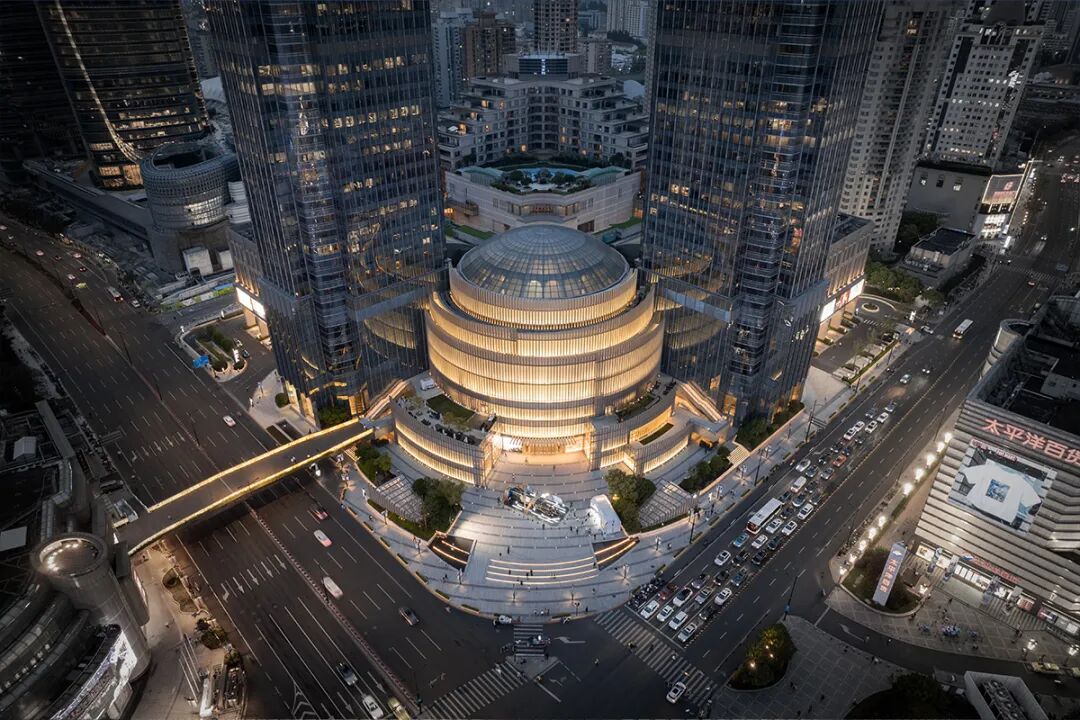
Grand Gateway 66
That was an era when Hong Kong-funded commercial real estate enterprises expanded into the market in full swing. Hang Lung, Sun Hung Kai Properties, Shui On, Wharf, New World Development — almost all top real estate developers from Hong Kong entered Shanghai. A large number of international retail brands also poured into the market along with these shopping malls. After China's accession to the WTO, the commercial sector was fully opened to the outside world. Louis Vuitton, Hermès and other luxury brands accelerated their layout in Shanghai, Shanghai residents began to establish brand awareness, and consumption was no longer just "buying goods", but also focusing on "choosing products that suit them".
The commercial map was also expanding at the same time. Super Brand Mall opened in Lujiazui in October 2002, making Pudong home to the first large foreign-funded shopping mall; the Outlet model entered Shanghai, and Qingpu Outlets opened; Shanghai Sky Mall opened in Xinzhuang, marking the gradual start of suburban commercial development.
In the northeast of the city, Wujiaochang Wanda Plaza was completed at the end of 2006. This commercial complex with a total floor area of over 330,000 square meters is the first project invested by Dalian Wanda Group in Shanghai. Its opening filled the long-term gap of large commercial facilities in the northeast of Shanghai. Main brands including Walmart, Paris Printemps and Wanda International Cinemas settled in together, making Wujiaochang, the former urban sub-center, have a commercial engine matching its positioning.
Shanghai's commerce is quietly moving out of the inner ring road and spreading to the broader urban hinterland. This decade is the transition period for Shanghai's commerce to develop from "single-point glory" to "multi-point growth" — Hong Kong capital has brought comprehensive upgrades of spatial experience, brand matrix and operation concepts, and the expansion of commercial districts has laid the groundwork for the next round of larger-scale pattern evolution.
03.
Experience Economy: First Stores, Curatorial Retail and Commercial Upgrading
The IFC Mall opened in the spring of 2010. Located in Lujiazui, it completed the last piece of the puzzle of the small Lujiazui municipal-level commercial center, and once moved the leading position of top luxury commerce from West Nanjing Road to the other side of Huangpu River — this was the first real "shift" of the commercial core of Shanghai.
In the following years, commercial entities began to think about the "brand" and its social value from the source. K11 came into the public view with the integrated format of "commerce + art", and iapm took the lead in putting forward the concept of "night consumption", driving an important upgrade of the Huaihai Road commercial district. Brand differentiation began to appear. Shopping malls were no longer full of uniform shelves, but became urban spaces with distinct personalities.
The debut of Disney Town showed the industry another possibility of "entertainment + consumption" — the boundary between commerce, experience, culture and entertainment is disappearing at a speed visible to the naked eye. The opening of Bailian TX Huaihai brought the concept of "curatorial retail" to the public, driving the Huaihai Road commercial district to transform towards a younger positioning.
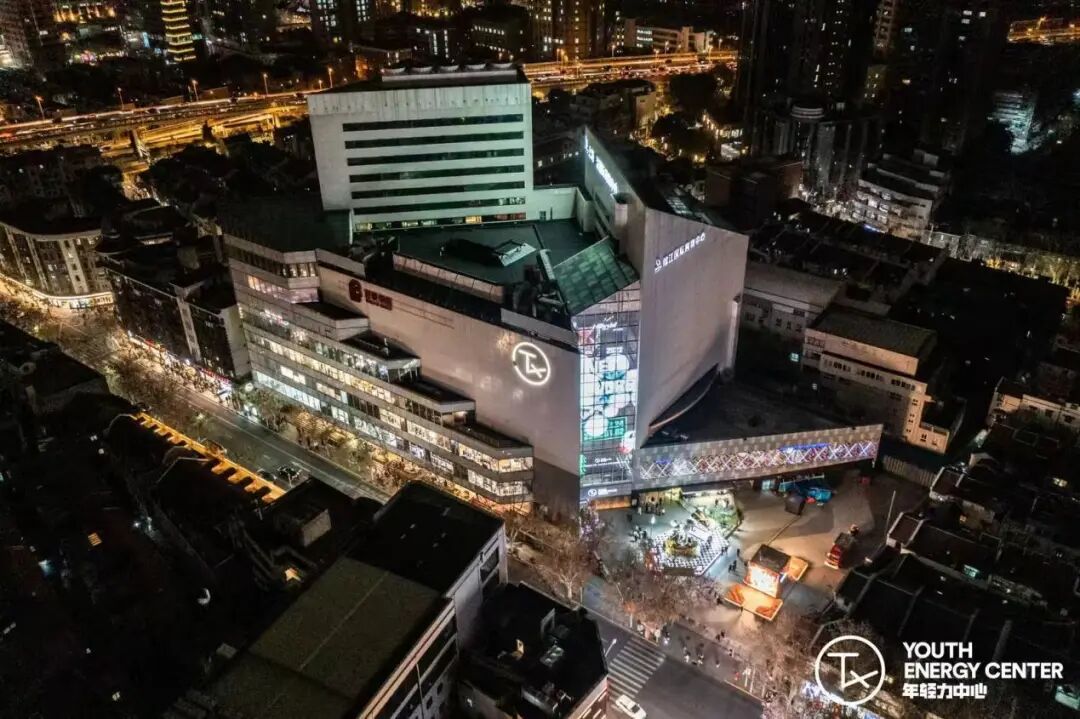
Bailian TX Huaihai
After the blurring of boundaries, "first store" became a new keyword. With the official launch of the "Shanghai Shopping" brand, the first-store economy entered an explosive period. Since the proposal of building a "global new product launch hub", Shanghai has introduced more than 8,400 first stores in total. In 2025 alone, 1093 new first stores were added, 16.8% of which are high-energy-level first stores at global and Asian levels, with the quantity and quality ranking first in China steadily. On average, about 5 first stores open in Jing'an District every week — the first-launch economy has become the core engine for Shanghai to improve its consumption capacity.
In this decade, the logic of commerce has changed from "people looking for goods" to "goods looking for people", and from "selling products" to "selling experiences".
04.
Stock Renewal:
Urban Renewal and Multi-Center Pattern
When the incremental expansion comes to an end, stock renewal becomes the new development priority.
The large-scale renewal of Xujiahui commercial district is the most iconic sample. Shanghai No.6 Department Store, which had been in operation for more than 70 years, was officially closed and demolished, and the investment of the reconstructed "New No.6 HUB" on the original site increased from the initial 700 million yuan to nearly 1.7 billion yuan. The Xujiahui branch of Pacific Department Store, not far away, was closed in 2023 and made its debut in 2026 under the new name "New No.6 YOUNG". The demolition and reconstruction of a single shopping mall reflects the determination of the entire commercial district to pursue self-iteration.
At the other end of stock renewal, the Matthew effect of core commercial districts continues to intensify. The total retail sales of West Nanjing Road commercial district has exceeded 100 billion yuan, making it the first commercial district in China to join the "100-billion-yuan club". Hang Lung Properties obtained the 20-year operation right of Westgate Mall, and the "Plaza 66 - CITIC Square - Westgate Mall" pattern on West Nanjing Road has ushered in a new round of reshuffle, while Plaza 66 itself is also pushing forward the expansion project. Against the background of overall challenges in the luxury retail market, Shanghai Plaza 66 still achieved double growth in revenue and tenant sales — the competition in the stock era lies in refined operation and continuous renewal capabilities.
When we shift our sight from the top commercial districts, another main line of Shanghai's commerce — the multi-center pattern — has long been transformed from a blueprint into reality. Thirty years ago, Shanghai had only 8 municipal-level commercial centers, all located within the inner ring road; now the number has expanded to 29, including 10 within the inner ring road, 9 between the inner and outer ring roads, and 10 outside the outer ring road, basically forming a three-way split pattern.
Judging from the sales ranking of top shopping malls, the "dominance" of the areas within the inner ring road is continuing to decline, and commercial resources are being redistributed in different urban sectors — luxury brands are still highly concentrated in the core areas, but non-luxury fashion brands are gradually expanding their store distribution to the outer areas.
In 2026, Shanghai's commerce is still accelerating its iteration. Xujiahui TOD commercial project Tianhui Plaza, New No.6 YOUNG have opened one after another, and PRISMA Xinjia Center located in Jinqiao, with 360,000 square meters of commercial space, has become the largest shopping mall in Pudong. According to incomplete statistics from Winshang, there are as many as 61 commercial projects under construction or undergoing renewal in Shanghai in 2026. The commercial story of this city is far from coming to an end.
Thirty years ago, Shanghai residents had to "go downtown" to buy high-quality goods. Now, consumption outside the inner ring road accounts for the majority of the city's total consumption, and nearby consumption has become the mainstream — this is not only the result of population overflow, but also the inevitable outcome of the full layout of commercial infrastructure.
The growth logic has also shifted from extensive expansion to stock renewal, experience upgrading and first-store economy driving. The consumer market is evolving from a "pyramid" structure to a "mosaic" structure: luxury brands hold their ground in the core areas; mid-to-high-end brands find broad development space in the areas between the outer ring roads; different brands choose different markets, and different commercial districts attract different customer groups.
All these developments are also shaped by the top-level policy design. From the "Shanghai Shopping" brand launched in 2018, to the first "55 Shopping Festival" in 2020, to the special action to boost consumption, the 3.0 version of first-launch economy and the optimization of tax refund for overseas visitors in 2025, and up to the clear plan in 2026 to promote the transformation and upgrading of key commercial districts including East Nanjing Road, Lujiazui, Xujiahui, West Nanjing Road and North Bund — commerce has long become an important part of the city's development strategy.
Looking back on the past 30 years, Shanghai's commerce has completed the transformation from "one single street" to "the whole city", from "goods distribution hub" to "people-oriented destination", from "single core radiation" to "multi-polar coexistence". Standing in 2026, this exploration that makes the lives of 30 million people better is still ongoing, with a clear direction: more balanced, more convenient and more human-centered.
This article is from the WeChat official account "Winshang", author: Jessie, published with authorization from 36Kr.