Doubao "Boards" Tesla, Why Did Elon Musk Make an Exception?
No launch event, no Elon Musk appearance, not even an official press release.
On August 19, Volcano Engine confirmed through official channels that the Doubao large model has been officially launched on Tesla China's in-vehicle infotainment systems, with functions being continuously rolled out in batches. Twenty days prior, on July 31, Tesla China began pushing the 2026.14.13 OTA update in batches to all Model 3, Model Y, Model S, and Model X models. The Doubao large model was quietly installed in the in-vehicle system of this U.S. company that takes full-stack self-developed AI as its core belief in the form of an independent app.
This is the first time Tesla has integrated a third-party large model into its in-vehicle infotainment system since it entered the Chinese market more than a decade ago. For an enterprise that has written "self-development" into the core of its corporate narrative, this move is far more significant than an ordinary software upgrade.
01
A "vehicle integration" that has been prepared for a whole year
Sorting public information by timeline, this cooperation has been advanced with great prudence and patience.
Comprehensive information from Tianyancha Media shows that in August 2025, Tesla reached a strategic cooperation with Volcano Engine. At that time, the "Terms of Use for In-Vehicle Voice Assistant" on Tesla's official website had already specified the dual-model scheme. In April 2026, Tesla's in-vehicle voice large model service completed the filing in Shanghai. At the end of July this year, the OTA update was officially rolled out in batches, with newly delivered vehicles prioritized for installation. It took a full year from signing the contract to the model being integrated into vehicles.
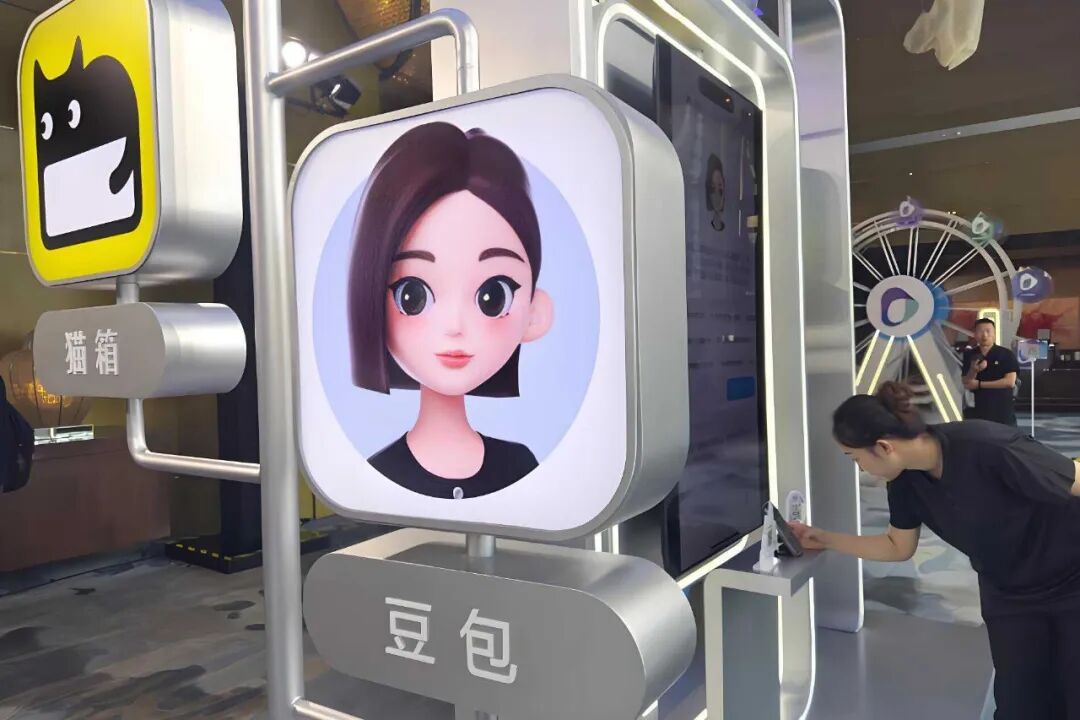
The final implemented solution features dual-model collaboration: both Doubao large model and DeepSeek are connected to the in-vehicle system via Volcano Engine. According to the officially disclosed adaptation plan, Doubao is responsible for vehicle control voice commands such as navigation setting, media playback, and air conditioning adjustment, as well as owner's manual queries, while DeepSeek handles open interactions like casual chatting, weather and information queries. One takes charge of practical tasks and the other takes charge of chatting, with the division of labor deliberately separated — the accuracy required for vehicle control commands and the openness needed for casual chatting can hardly be met by a single model at the same time.
However, the experience of the first batch of car owners still falls short of the solution diagram. Actual tests by media including PConline show that Doubao in the currently pushed version has not obtained full vehicle control permissions, and some car owners reported that "it is equivalent to adding a new chat-enabled app to the in-vehicle system". In addition, there are two hard thresholds: this function requires a monthly subscription of 9.99 yuan for the premium in-vehicle entertainment service, and it only supports new models equipped with AMD chips, while older models with Intel chips cannot be upgraded due to insufficient computing power. Tesla's localized empowerment is being implemented step by step.
02
The belief in self-development
Why did it make an exception in China
To understand this "exception", we must first look at three realistic constraints that Tesla faces in China.
The first constraint is the unbreakable iron gate of compliance. In-vehicle large models in China must go through official filing, and data must be stored domestically. The servers of Grok are located in the United States, so directly connecting to Chinese in-vehicle systems involves cross-border transmission of sensitive data such as voice and location — there is no way to bypass this threshold.
The second constraint is language itself. Grok is mainly trained in English, while the ellipsis expressions, fuzzy commands and dialect recognition in Chinese spoken language rely on data accumulated over a long period of time in local scenarios, rather than the scale of parameters.
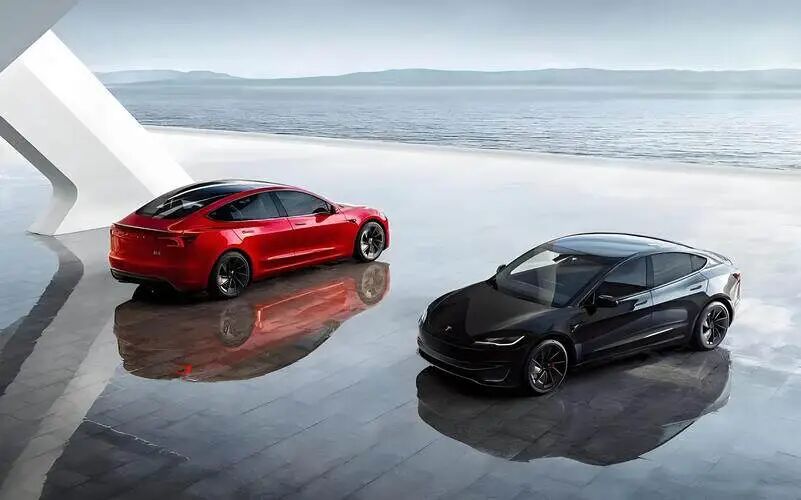
The third constraint is the competition rhythm. While NIO's NOMI and Li Auto's "Li Auto Assistant" have pushed in-cabin interaction to the level of emotional experience, multi-turn dialogue and full-vehicle scheduling, Tesla's voice system still stays at the stage of command recognition. This shortcoming is amplified by comparative consumption decisions much faster than expected.
By choosing Doubao, what Tesla gets is far more than the model itself.
Comprehensive information from Tianyancha Media shows that Volcano Engine has previously cooperated extensively with mainstream domestic automakers. More than 7 million smart vehicles equipped with the Doubao large model cover over 50 brands and 145 models, completing more than 30 million in-cabin interactions per day on average. For Tesla, which has extremely strict requirements for delivery quality, this set of vehicle-grade engineering capabilities verified by millions of vehicles is as important as the model's capabilities.
Third-party data shows that Doubao App has more than 380 million monthly active users — integrating the same model of this national-level application into vehicles means that Tesla can directly leverage the existing user habits that have already been formed.
03
The real tough battle
Is not in the cabin
The shortcoming of in-cabin voice can be quickly filled through cooperation, but the real decisive factor for Tesla's success in China has never been here.
The process of FSD entering China has experienced repeated setbacks for five years: in February 2025, the urban road assisted driving function was briefly pushed out, but it was suspended for approval one month later; in November 2025, Elon Musk optimistically expected approval in early 2026, but by the first-quarter earnings call this year, the CFO adjusted the statement to the third quarter; on May 21, the supervised version of FSD was officially announced to support the Chinese market, but by the end of May, it was only gray-scaled pushed to about 5,000 vehicles equipped with HW4.0 hardware. More importantly, the positioning: the China version is strictly defined as L2 level assisted driving, requiring drivers to take full control and bear legal responsibilities at all times. Tesla China's official website has changed the relevant description from "Full Self-Driving" to "Assisted Driving".
Price is another barrier standing in front of FSD.
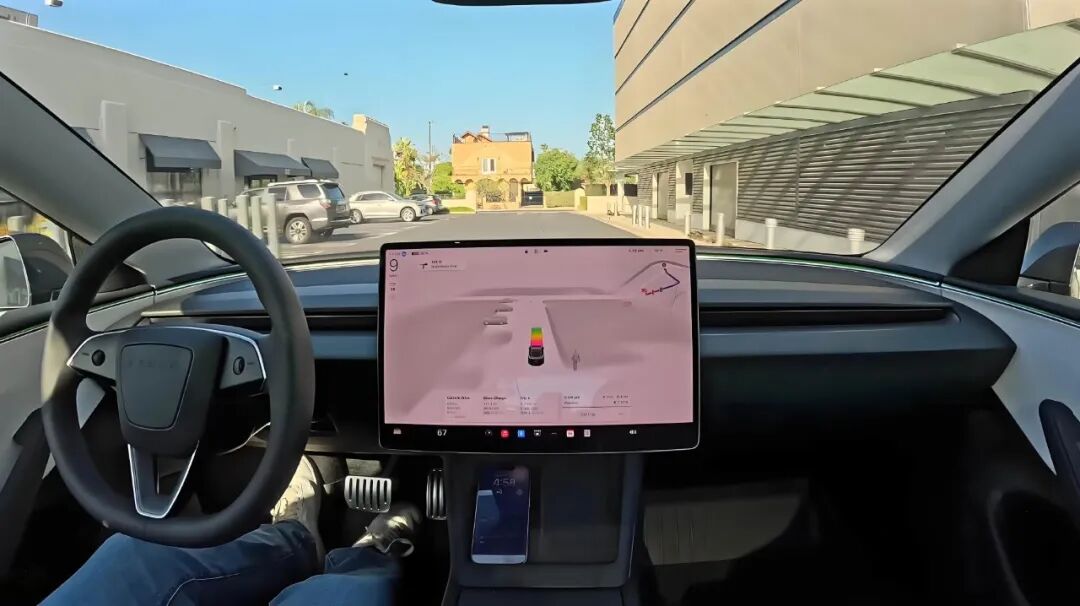
Its one-time purchase price in China has long been fixed at 64,000 yuan, while the actual user payment for Huawei ADS 4.0 after subsidy is 12,000 yuan, and the solutions of Xpeng and Li Auto are concentrated in the range of 30,000 to 36,000 yuan. As domestic intelligent driving is rapidly popularized and the penetration rate of urban NOA continues to rise, the value of FSD, this "futures ticket", is being diluted over time. According to reports from multiple media, the full-version FSD may expand its rollout from late August, but whether it can pass the approval and how many models it will cover are still subject to official announcements.
While the release of the core intelligent driving technology has been postponed repeatedly, the pressure from the market is tangible.
In the first quarter of this year, Tesla China's retail sales reached 112,800 units, down 16.2% year on year; in the whole year of 2025, Tesla delivered 1.636 million units globally, which was overtaken by BYD's 2.26 million units, losing its title as the world's best-selling pure electric vehicle manufacturer. Although there was a recovery in the second quarter — according to the data from China Passenger Car Association (CPCA), the combined sales of Tesla China's Model 3 and Model Y in June reached 89,000 units, up 24.4% year on year, and the Shanghai Gigafactory delivered nearly 468,000 units in the first half of the year, up 28.4% year on year — the competition in the Chinese market is far more intense than it was in 2019 when the Shanghai plant was just put into operation.
04
Cooperating with Doubao
Adapting to local conditions
On July 30, Tesla just celebrated the production of its 10 millionth pure electric vehicle globally at the Fremont Factory, nearly half of which were produced in Shanghai; the next day, Chinese large models were installed in Chinese in-vehicle systems. These two consecutive days exactly mark two sides of Tesla's relationship with this market: it is deeply dependent on China in manufacturing, and begins to leverage China's strengths in intelligentization.
For Tesla, this integration with Doubao does not mean giving up its self-development route — overseas in-vehicle systems will still be dominated by Grok, and FSD will never give up control to any third party. The real change lies in the way multinational companies operate in the Chinese market: for user-centric scenarios such as in-cabin experience, content ecology and application services, local solutions have become the choice with the lowest cost and fastest implementation; while the self-developed barriers of core technologies will remain firmly in their own hands. According to the report from Tide News, the test of integrating Alibaba Qwen into Tesla's in-vehicle system is also in progress. It may become the norm in the future that several Chinese large models run on one car at the same time.
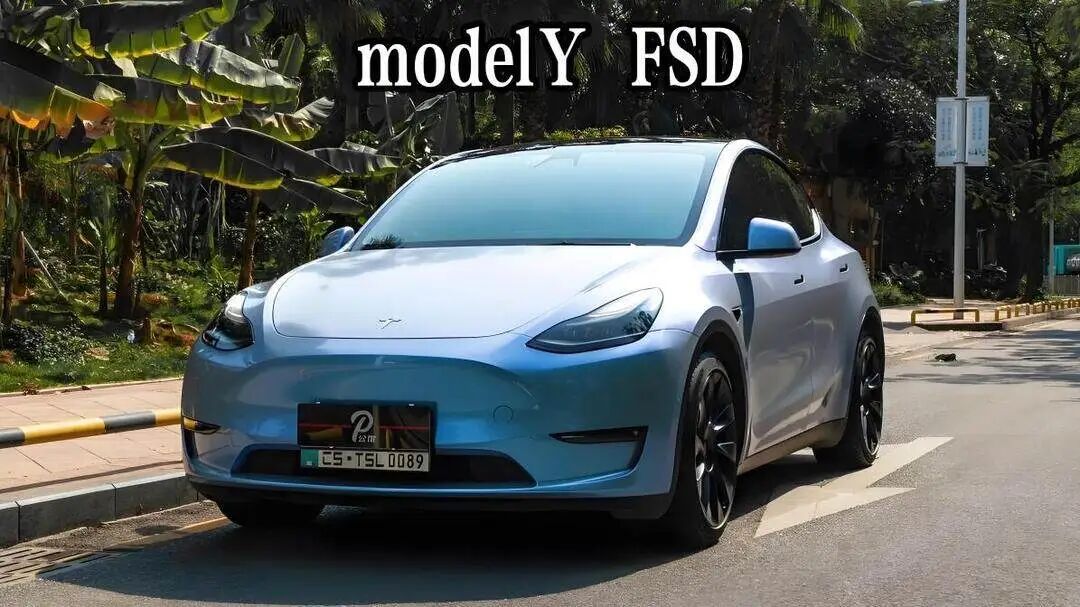
From the Shanghai Gigafactory solving the problem of "whether the car can be manufactured" to Doubao's vehicle integration answering the question of "whether Chinese consumers like the car", Tesla's localization has gone through two stages.
As for the third stage — whether FSD can be truly implemented in China and at what price — that is the question that will determine Tesla's next five years in the Chinese market. But this time, how long Elon Musk can wait is not decided by the market, nor by the approval process, but ultimately by the Chinese competitors on the monthly sales ranking.
This article is from the WeChat official account "LingTai LT" (ID: LingTai_LT), author: Ma Duoduo, editor: Hu Zhanjia, published with authorization from 36Kr.