AI idols cannot simply replicate the logic that applies to real-life celebrities.
The debut of the first wave of AI celebrities did not go smoothly.
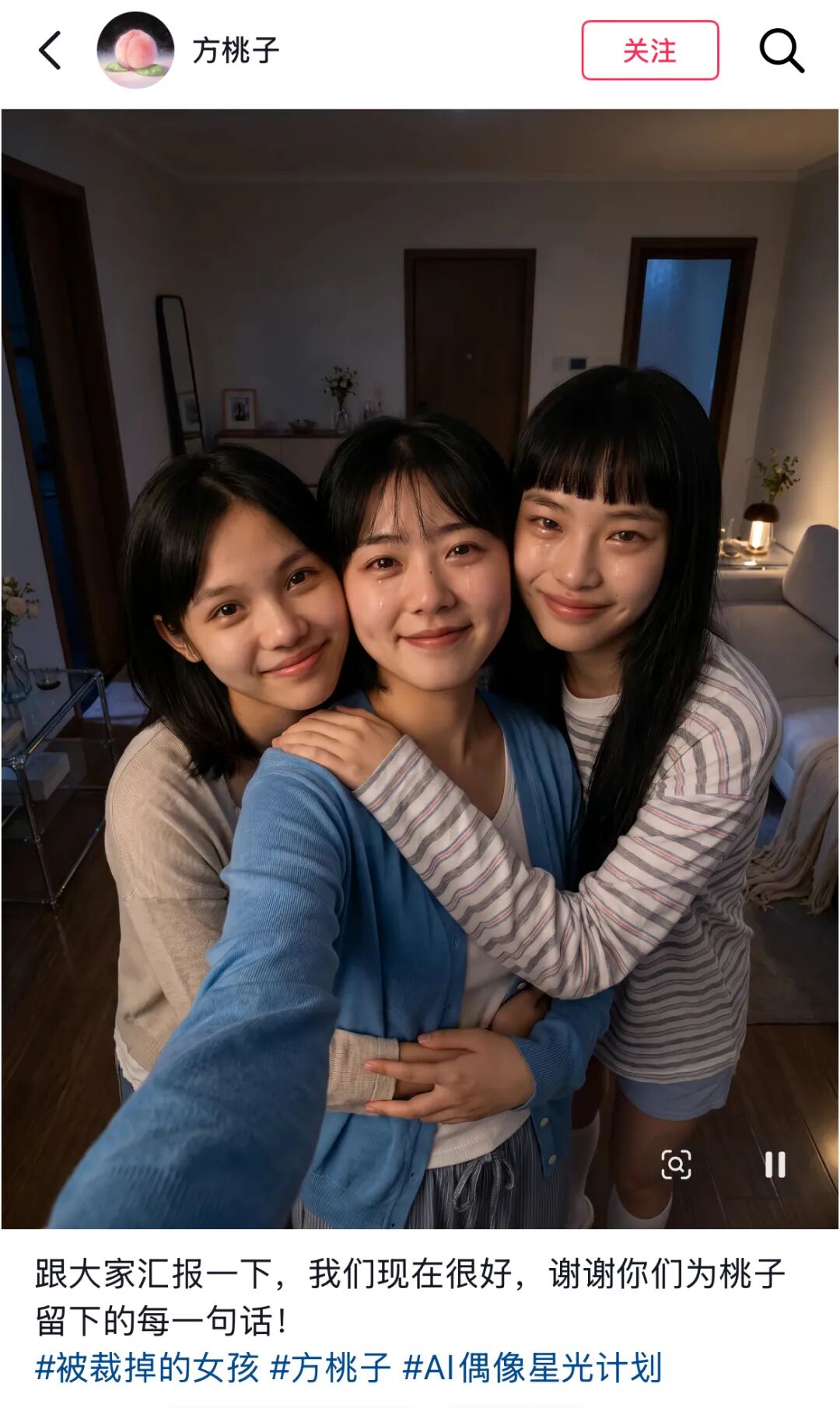
In the short AI drama The Laid-off Girl, Fang Taozi, the virtual female lead, claimed that "it is very comfortable to wear contact lenses for a whole day" when endorsing contact lenses, which was immediately questioned by the public: how can an AI character without a physical body feel "comfortable"? The male and female leads Duan Yan and Rong Jiqiao in Deeply in Love With You, Invading the Rest of My Life "starred" in the new drama The Chaos of Male and Female Fandom After Breakup as actors for their second collaboration, confusing fans about who their idols actually are and which dimension of the world they belong to.
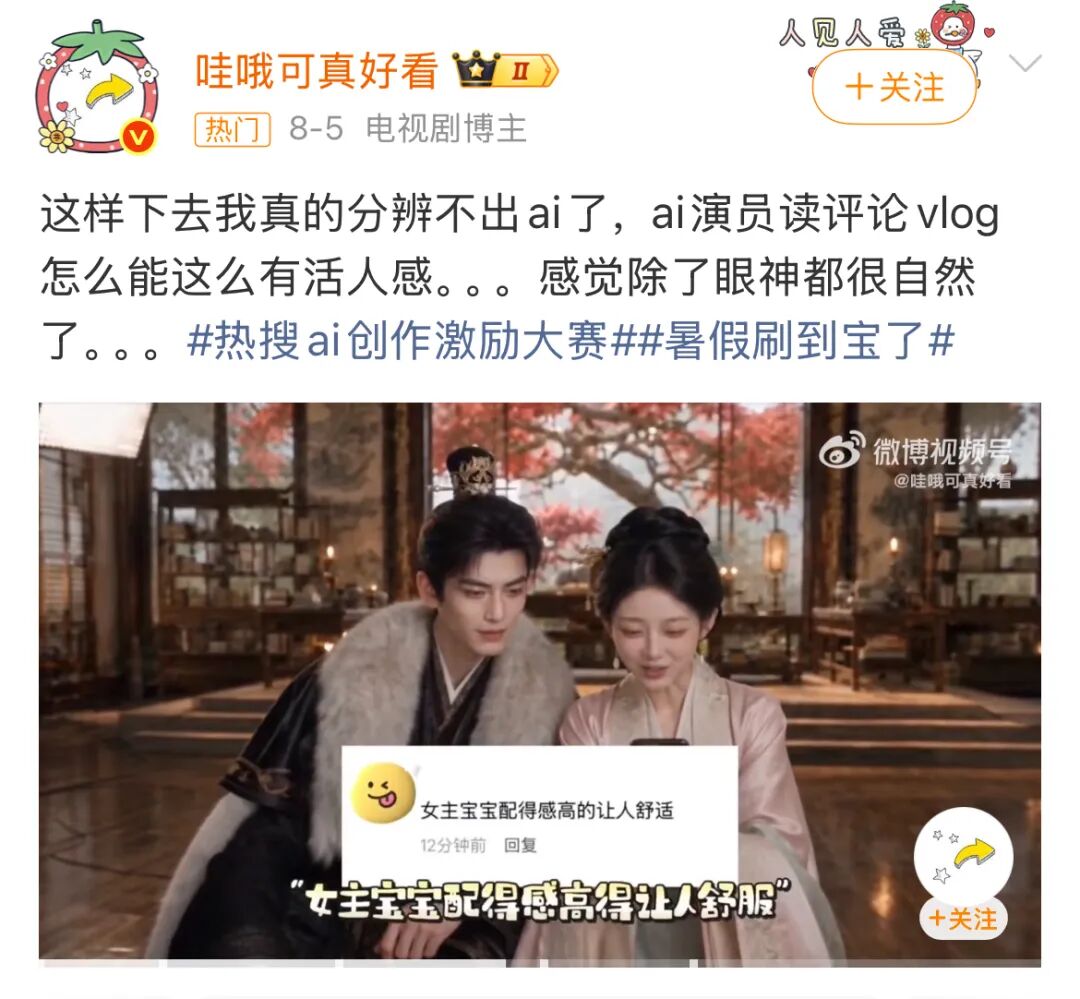
As for the common operation methods of real celebrities such as daily vlogs, on-set candid shots, and behind-the-scenes footage, when applied to AI celebrities, the emotional stickiness of fans is far less than that of real celebrity fandoms.
The problem may be that since the concept of AI celebrities emerged, the industry has subconsciously applied the operation logic of real celebrities. However, although real celebrities, virtual idols and AI celebrities all provide emotional value, they have completely different forms of existence, so they should not follow the same operation path.
Real celebrities can convey emotional value in an all-round way through real life experiences, filming, variety shows, singing and other forms; virtual idols such as live streamers in audio chat rooms are limited by their "2D avatars", and their development paths are relatively limited, mainly focusing on virtual live broadcasts, singing and other activities. But in these limited scenarios, they continuously strengthen the charm of personas such as overbearing presidents and warm older partners through the design of timbre, shape, and the personality of the real person behind the avatar, maximize the emotional companionship value corresponding to the personas, and cultivate a large number of highly loyal female fans.
However, AI idols have no physical entity and are difficult to exist independently by decoupling from the "roles" they play, so their operation and commercial monetization methods should naturally match this unique form of existence. Instead of simply copying the path of real celebrities, it is better to find the scenarios and ways where AI idols can give full play to their emotional value, and in this space, try their best to meet the emotional needs fans project on AI characters, and provide fans with higher concentration and more targeted emotional value.
Therefore, if AI celebrities want to maintain fan stickiness for a long time, the creative team behind them still needs to settle down, get rid of the thinking of eager short-term monetization, seriously think about the unique form of existence of AI idols, and how to truly provide effective emotional value for fans.
01
AI Celebrities Fail to Function When Copying Real Celebrity Models
The mismatch between the operation logic of AI celebrities and real celebrities is most intuitively reflected in commercial endorsements.
Recently, Fang Taozi, the female lead of The Laid-off Girl, released a contact lens promotion video on social platforms, claiming that "it is very comfortable to wear them for a whole day". Subsequently, the video was taken down on suspicion of falsely describing the use effect.
Public discussions have expanded from the types of products endorsed by AI celebrities to issues such as ownership of responsibility. First of all, as virtual beings, AI celebrities have no life perception ability, so they are naturally unconvincing when promoting products such as food, drinks, clothing, and household items in terms of personal experience and real product appearance display. Although some people question that real celebrities may not have really used or experienced the products when promoting them in their oral broadcasts, there is still a difference between the two — real celebrities may not have experienced them, but AI celebrities are 100% impossible to experience them.
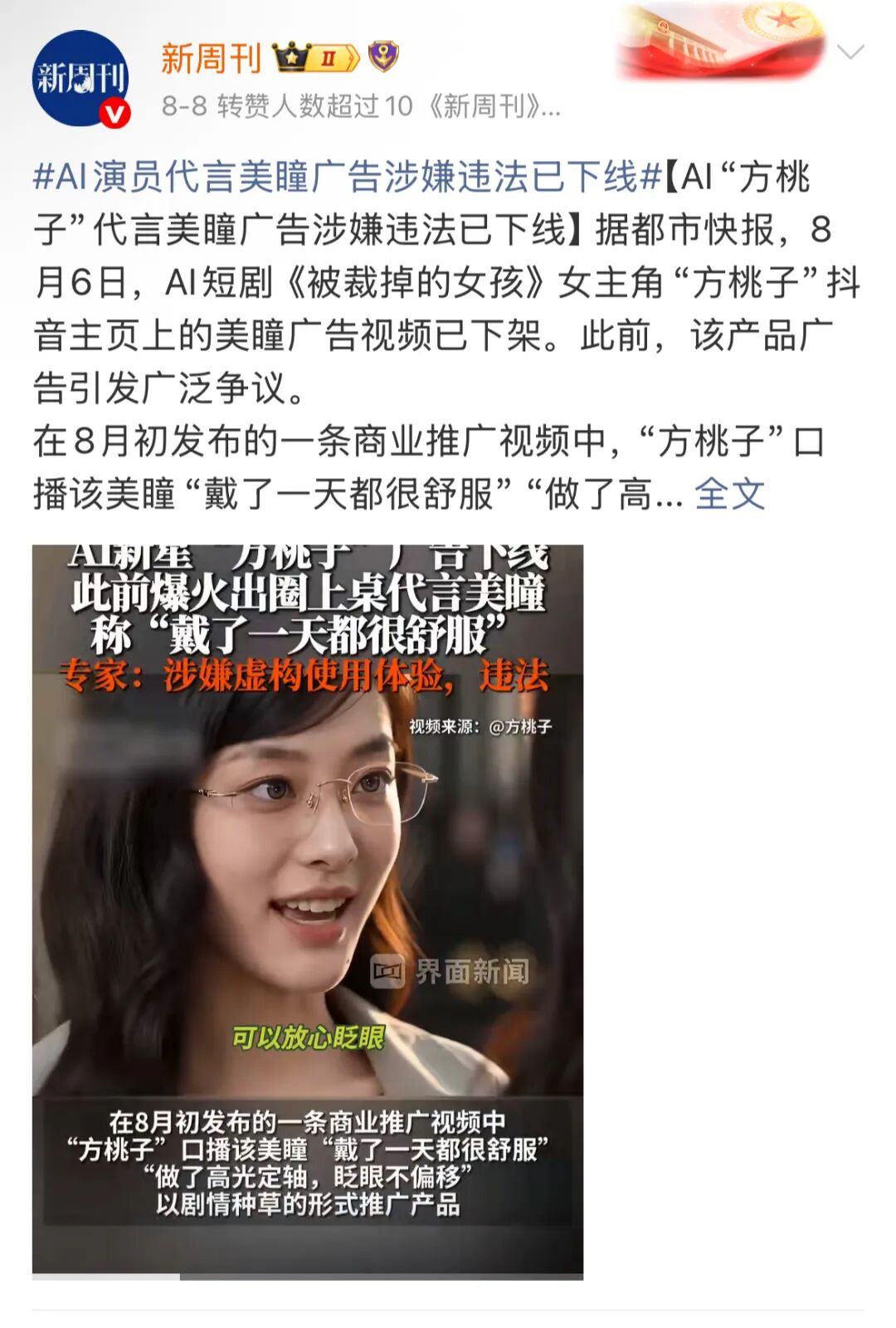
Even for promotions that do not involve product experience, there are other questionable risks, such as "if there is a product quality problem, who will come forward to apologize and respond?" "When real celebrities take endorsements, they usually need to bear the risk of damage to their own reputation, while AI characters have no personal reputation in the real sense, how can consumers build trust?" and so on.
In addition, from the perspective of fans, AI celebrities are also difficult to exist independently outside the drama world like real celebrities.
Deeply in Love With You, Invading the Rest of My Life became popular with its fateful sad romance, and the male and female leads Duan Yan and Rong Jiqiao won a large number of fans with their distinct personas. Among them, Duan Yan gained a large number of female fans with his traits of lack of love, inferiority, and almost paranoid deep affection. After the drama ended, the official announced that the two would collaborate for the second time as "actors" to star in The Chaos of Male and Female Fandom After Breakup.
However, after the new drama was broadcast, many fans felt "weird". When watching the original drama, the audience would default that the characters are people living in the drama world, but once the characters walk out of the drama world and exist as "actors", fans will feel that the characters are separated from their original lives, and the original story world, the extremely affectionate personality, and the fateful experiences seem to be fake. After the AI characters are separated from the plot, they seem to become a blank sheet of paper, lacking their own real experiences and personality charm, and their attractiveness to fans naturally weakens accordingly.
Originally, Duan Yan and Rong Jiqiao were also the names of the characters in the series, but when they collaborated for the second time, they suddenly became the names of "actors", which fully shows that the producers did not actually have an incubation plan for AI actors or AI idols before, but only hoped to reuse the popularity of the work after the work became popular. Facts have proved that this kind of reuse can only rely on the multi-season development of the original story, or the development of works under the same IP worldview, rather than launching a completely new project.
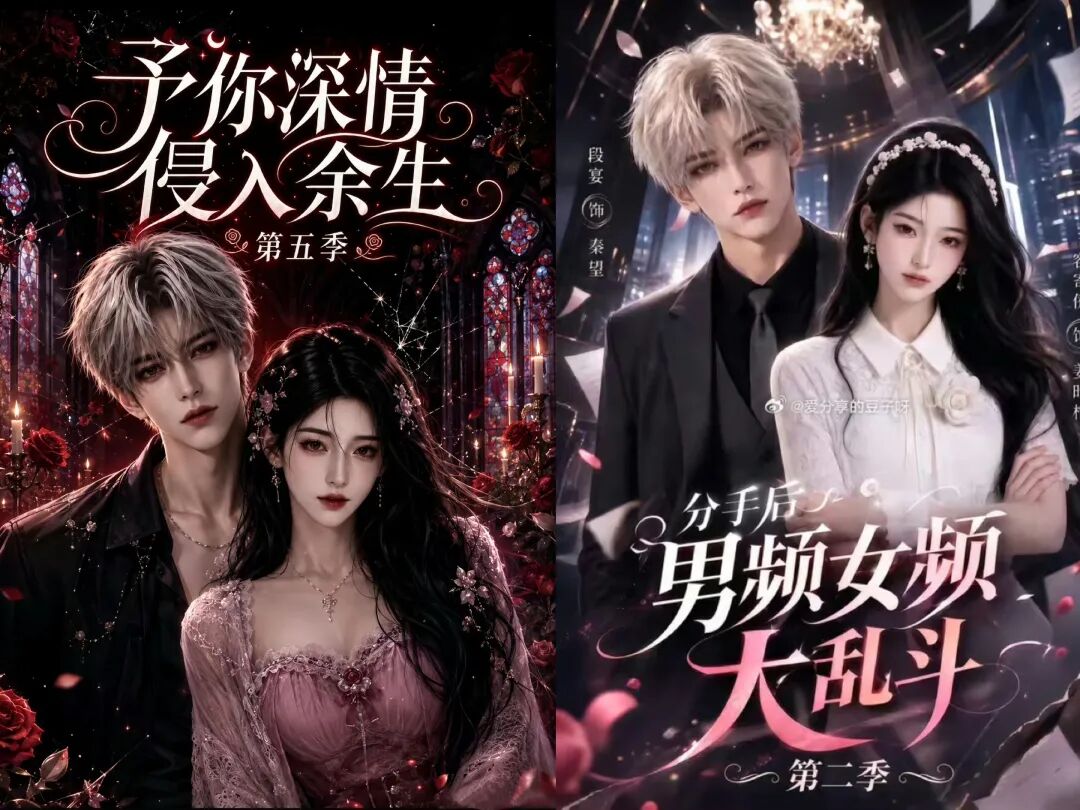
It can be seen that it is difficult for AI celebrities to become exactly the same existence as real celebrities. When the audience watches real film and television works, they know that the actors are "acting", but the actors themselves always exist outside the roles. Different roles can be continuously added to the actor's resume to form the growth story of "this celebrity", while AI celebrities only have the life narrative set in the drama world.
It is precisely because AI celebrities are difficult to separate from the plot that it is difficult for them to form a fan culture exactly the same as that of real celebrities.
At present, the first-generation AI celebrities such as Duan Yan, Rong Jiqiao, Jiang Yuechu, and Fang Taozi have successively opened short video accounts to release content such as daily vlogs and on-set candid shots. However, from the perspective of comment interaction, the discussions are mainly focused on asking for updates of the plot and technical issues such as "how realistic they are", and few people are curious about the private life of the idols like in real celebrity fandoms.
In other words, AI celebrities separated from the plot often lack independent subjects that can continuously carry fans' emotional projection, so it is difficult to form a stable emotional connection outside the works like real celebrities.
Therefore, the problem is not that AI celebrities are "not realistic enough", but that they are not real people at all. Copying the operation template of real celebrities will naturally hardly achieve the same effect.
02
Different Forms of Existence Require Different Operation Logics
Whether they are real celebrities, virtual idols or AI celebrities, due to their different forms of existence, their operation methods should be different.
Real celebrities have real subjects, and their core asset is "the person", so they have the widest operation space in the relationship between stars and fans and commercialization paths. For example, real celebrities can incorporate character shaping and work achievements into their own life narratives through various methods such as filming, reality shows, variety shows, singing, and fashion shows; content such as vlogs, on-set candid shots, behind-the-scenes footage, and super topic interactions are also continuously packaged to jointly form this narrative about "the celebrity himself", and provide fans with a template to project their "ideal self".
In terms of commercial cooperation, real celebrities also have natural advantages. Because they have real life experiences, no matter the product category, promotion form or content expression, they have more choice space, and it is easier to build trust based on real experience.
In contrast, the space for virtual idols is more limited. Take virtual streamers in audio chat rooms as an example, although they will shape popular personas such as overbearing presidents, warm older partners, loyal wolf-like young men, and ancient-style teenagers, their form of existence is "2D image + real person behind the avatar", so it is difficult for them to take the routes of film performance, real-person variety shows and so on. Therefore, they usually take the live streaming room as the core scene, and take live streaming and singing as the main display methods.
But in these limited scenarios, virtual streamers continuously strengthen the attractiveness of personas such as "overbearing president" and "warm older partner" through timbre, shape, song style, and chat style, maximizing the emotional companionship value corresponding to the personas, so they have also cultivated a large number of highly loyal female fans who are willing to continuously vote and cheer for them.
The core assets of AI celebrities are plot and strong personas. Fans like Duan Yan not because he has a real daily life, but because of the ups and downs of the plot and his specific personality traits such as lack of love, inferiority, paranoia and extreme deep affection, which provide a specific emotional experience that real people cannot completely replace.
Therefore, the operation focus of AI celebrities should be based on the "no physical entity" and "bound to the plot" form of existence of AI celebrities, explore matching display methods, and fully amplify the emotional value that their strong personas can provide. In contrast, at present, whether it is on-set candid shots, behind-the-scenes footage, or "second collaboration", they not only fail to give fans the expected star-chasing experience, but also do not further strengthen the charm of the characters themselves to provide the emotional value that fans really need, and most of them are just to maintain exposure and brush up their presence.
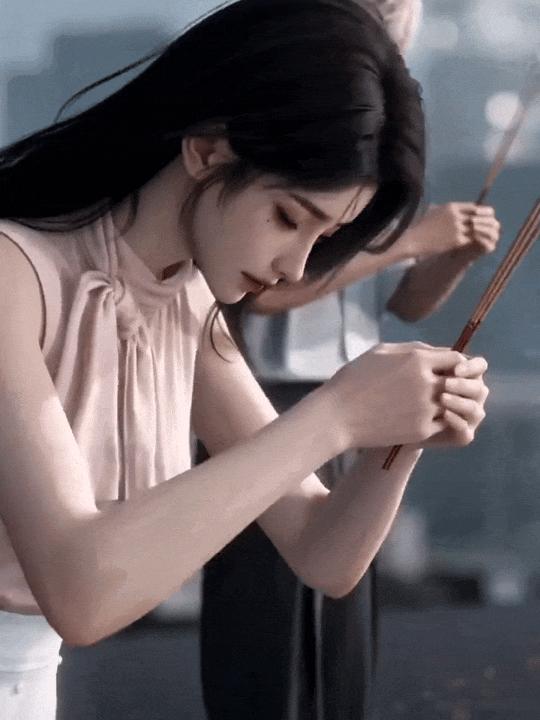
AI Launch Ceremony of The Chaos of Male and Female Fandom After Breakup
The same is true for commercial promotion. The operators of AI celebrities also need to clarify the range of products suitable for endorsement, and explore matching endorsement forms and content expressions. For the same product, AI celebrities should avoid expressions that rely on life experience such as "personal experience" and "real feeling" as much as possible when promoting, and it is better to cut in from the perspectives of product appearance, fashion elements, and social currency.
What AI celebrities really need to explore is not how to copy the life of real celebrities, but how to use the persona, story and emotional value of the characters to build their own content and business models.
03
Let the Characters Continue to Live
Although AI celebrities cannot simply replicate the mature growth path of real celebrities, it is not without advantages for operators. On the contrary, because there is no real subject that real celebrities rely on, AI celebrities have greater operational flexibility and trial and error space.
First of all, AI celebrities often have a longer life cycle. Real celebrities will grow up and grow old, and their images may also be affected by personal life or negative events. AI characters will not have these changes. As long as the audience's emotional demand corresponding to the character setting still exists, their attractiveness can continue to exist.
More importantly, because AI celebrities do not have a traceable real subject, the audience can usually distinguish the "character" from the operation team behind it. Even if there is a mistake in the operation strategy, the dissatisfaction of fans will mostly point to the production team rather than the AI character itself. In other words, one or two operation "accidents" may not directly hurt the attractiveness of the character itself like a real celebrity's public image collapse.
This also means that AI celebrities have more room for trial and error. Compared with real celebrities, their content production and image adjustment costs are lower and the cycle is shorter. Operators can try different content forms and business models faster, and continuously adjust according to market feedback.
For example, AI celebrities may not be unable to form highly loyal fan relationships, but they may not form the traditional sense of "fandom".
Fans of real celebrities follow a real person and regard the idol as the projection object of their "ideal self". But what fans of AI celebrities are really attached to is often the emotional experience provided by the character itself. Therefore, AI celebrities can also explore the direction of character companionship.
It can be romantic companionship, emotional comfort, character interaction, co-creation of plots, or even long-term relationship nurturing. Instead of letting fans follow around an "AI celebrity himself", it is better to let fans continuously interact with the character.
The real competitiveness of AI celebrities may never be to become the next real celebrity, but to give those characters that would otherwise disappear with the end of the drama the possibility to continue to live for the first time.
However, no matter how to explore, the operation team needs to settle down, get rid of the short-term and crude monetization thinking, seriously think about the unique form of existence of AI idols, and how to truly provide effective emotional value for fans.
This article is from the WeChat Official Account "Virtual Eyes", written by Bao Yuncai, edited by Liu Nandou, and published with authorization from 36Kr.