The End of Mathematics: 40 Top Mathematicians Gathered at OpenAI's Secret Meeting
Jacob Tsimerman, who just won the Fields Medal last month, announced at the award ceremony that he will join OpenAI to conduct AI safety research.
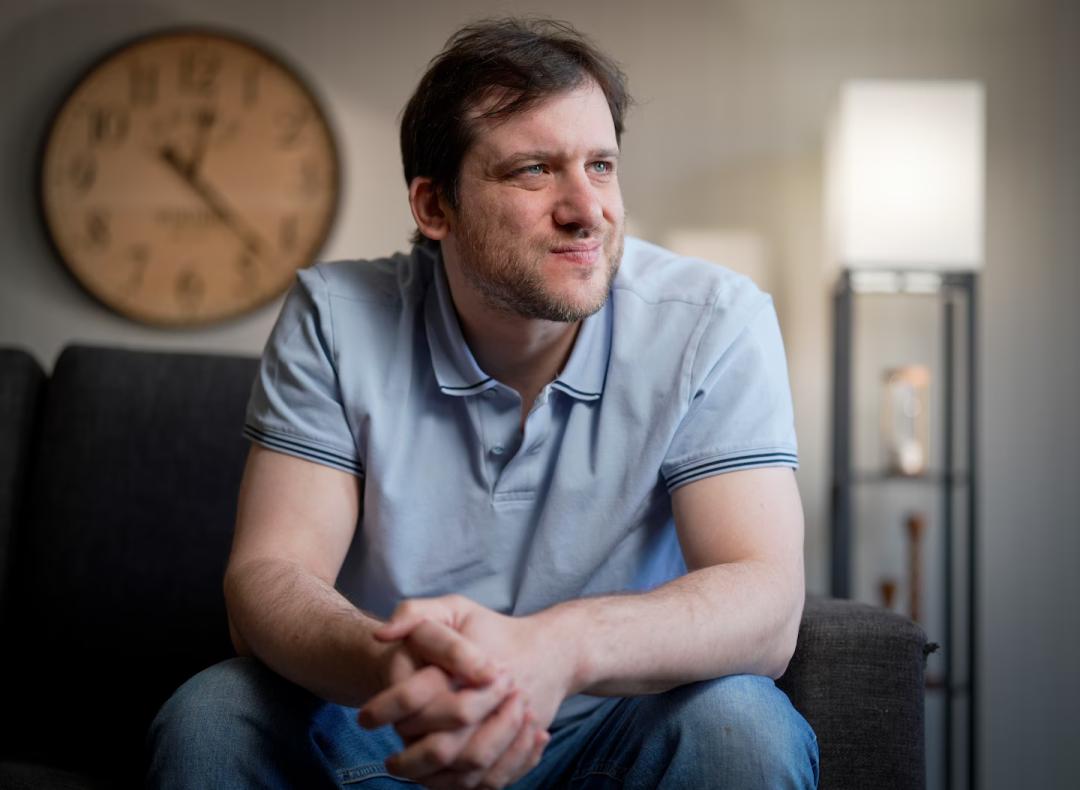
Further reading: Fearing that AI will exterminate humanity, the Fields Medal winner took a leave of absence and went to OpenAI! He wants to tame AI with mathematics
In early August, he and Sébastien Bubeck, a research scientist at OpenAI, convened a closed-door summit of about 40 mathematicians at the San Francisco headquarters, where one of the presentations was titled "The End of Mathematics".
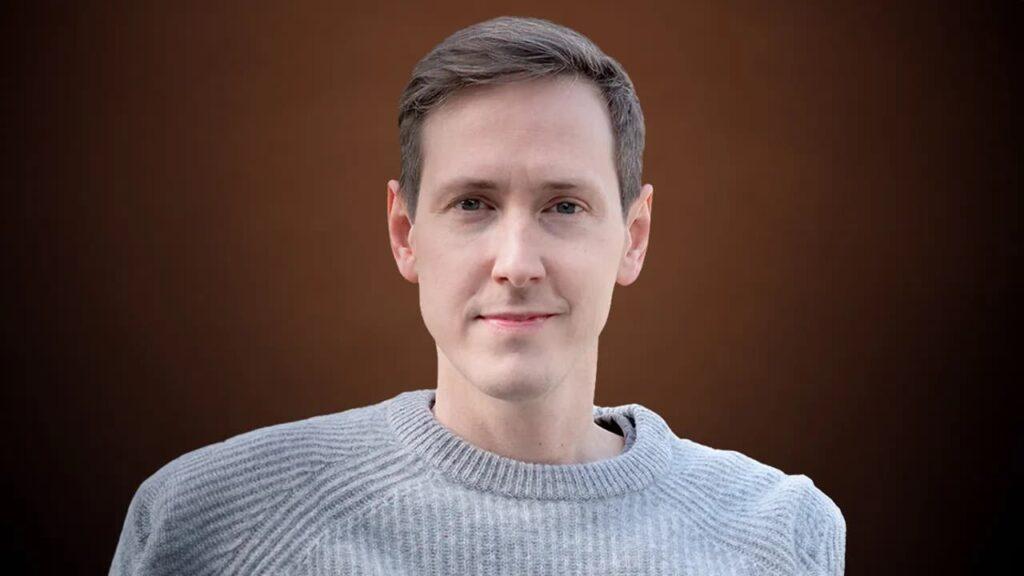
Sébastien Bubeck, Research Scientist at OpenAI
Daniel Litt, the presenter and professor at the University of Toronto, said:
It is possible that we will eventually move towards a world with no high-quality mathematical research, where human mathematical expertise completely disappears.
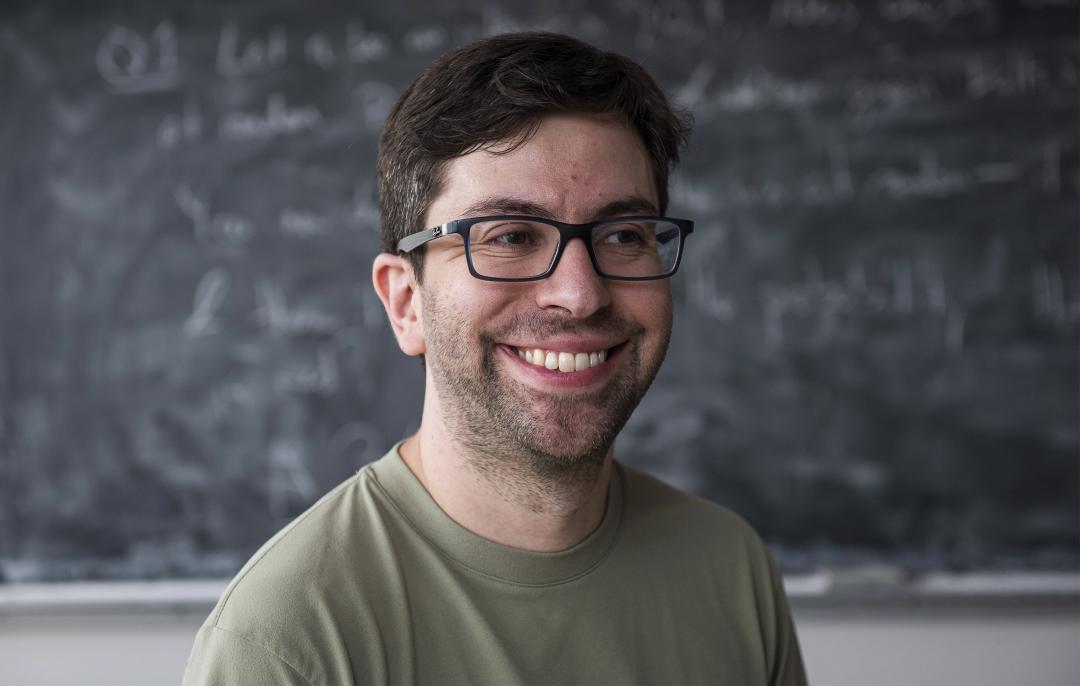
He believes that the extreme outcome is unlikely, but mathematicians must take action.
Drew Sutherland, a mathematician at MIT, put it more directly and bluntly:
Maybe we are just the canaries in the coal mine, and mathematicians will be the first to suffer.
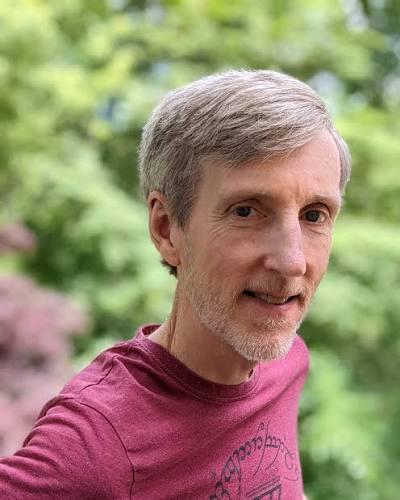
Mathematics was chosen as the test ground for AI because it is a proxy indicator for high-intellectual activities — whatever can be achieved in mathematics will sooner or later be replicated in other fields.
AI is "doing mathematics" in batches
The intensive release of achievements is the direct background of this summit.
In May, an unreleased model from OpenAI overturned the Unit Distance Conjecture.
Further reading: OpenAI completely shocked the mathematics community, the 80-year-old core conjecture was solved! The Fields Medal winner exclaimed that he could not sit still
This old unsolved problem about "the arrangement of points on an infinite plane" has remained unresolved for many years. The AI solved it using a known but difficult-to-manipulate technique in algebraic number theory, which is equivalent to calling tools across subfields.
Tsimerman commented at the time that he would "accept it without hesitation" if this result was submitted to any journal.
This is regarded by many mathematicians as the first major mathematical breakthrough of AI.
Since then, achievements have emerged one after another.
In August, OpenAI announced 10 new AI-generated discoveries in mathematics and computer science at one go, covering multiple subfields that usually take years to get started with.
Further reading: Breaking news! OpenAI's next-generation AI has conquered 10 Fields Medal-level problems
Anthropic has not been idle either.
Levent Alpöge, an employee of Anthropic, used Claude to assist in constructing pairs of orthogonal vectors on a 668-dimensional hypercube.
Mathematicians have always believed that such a construction exists, but no one has ever actually created it.
Alpöge announced the result by posting a 24,000-character post on X, full of + and - signs.
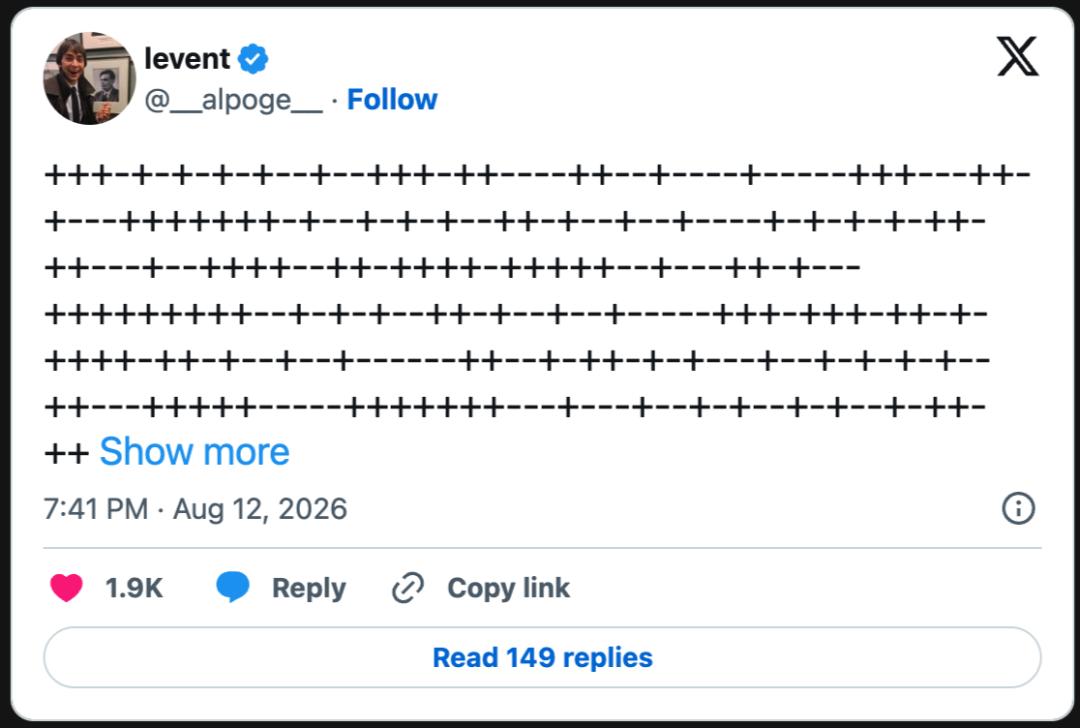
https://x.com/__alpoge__/status/2087504785952182273
Traditional mathematical research follows a fixed pipeline: seminar discussions, peer circulation, posting on the preprint website arXiv, and publication in journals after peer review.
AI-generated achievements are bypassing this pipeline.
Dmitry Rybin, an entrepreneur based in Shenzhen, asked ChatGPT to "make a breakthrough" to overthrow a network flow hypothesis. Every time the model failed, he urged it to continue, acting as an AI encourager.

ChatGPT finally gave a counterexample. After verifying it, Rybin posted a tweet. He was watching a movie with friends at that time.
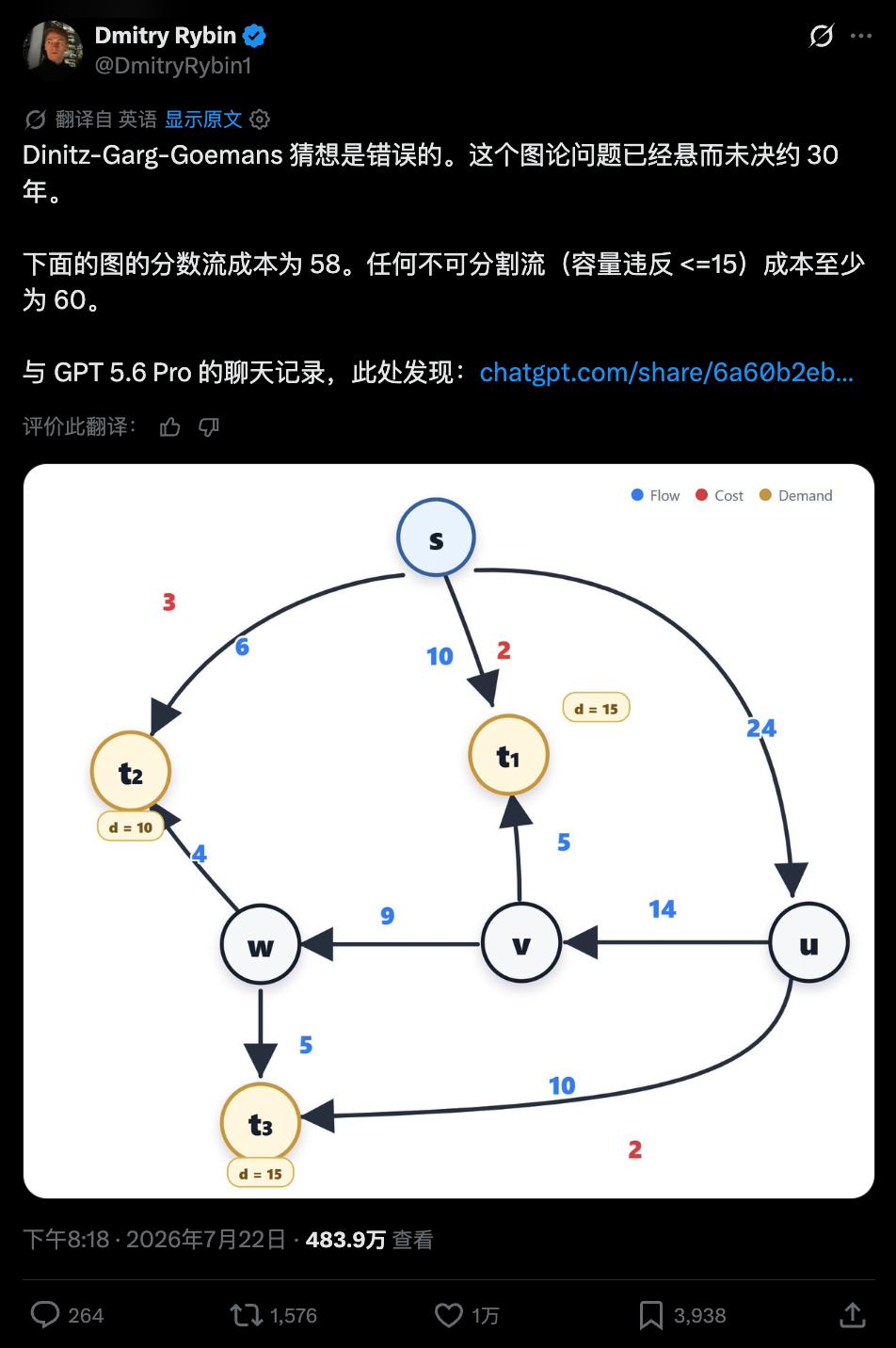
https://x.com/DmitryRybin1/status/2079904005652893709
Further reading: GPT-5.6 falsified a 30-year graph theory conjecture! Peking University alumnus broke 6 problems in 5 days
Mathematician David Bessis raised doubts about this:
You post a tweet saying you proved a big problem while cooking pasta? It will definitely go viral.
The question is, what happens after it goes viral? Who will sort out this pile of stuff and figure out what is really going on?
Last week, Anthropic also announced that one of its employees asked the internal version of Claude to "seriously try" the Riemann Hypothesis.
The Riemann Hypothesis has remained unsolved for more than a hundred years, no one has conquered it so far, and a $1 million reward is offered for its solution.
Under repeated prompts like "continue" and "think again", the model produced new discoveries on a related problem.
Further reading: Breaking news, Claude set a new record for breaking the Riemann Hypothesis for the first time!
3000 people signed the joint letter, and then what?
The reaction of the mathematics community is divided.
In June, an open letter called the "Leiden Manifesto" was released, signed by more than 3000 mathematicians.
Further reading: Set rules for AI! Just after AI broke the 80-year mathematical problem, mathematicians panicked
The letter calls on researchers to use AI tools responsibly, ensuring that results are verified and citations are standardized.
Another group of mathematicians went further, advocating a complete rejection of AI and AI companies to preserve the human position in mathematics.
Bryna Kra, a mathematics professor at Northwestern University, attended the summit and is also one of the 16 initiators of the Leiden Manifesto.
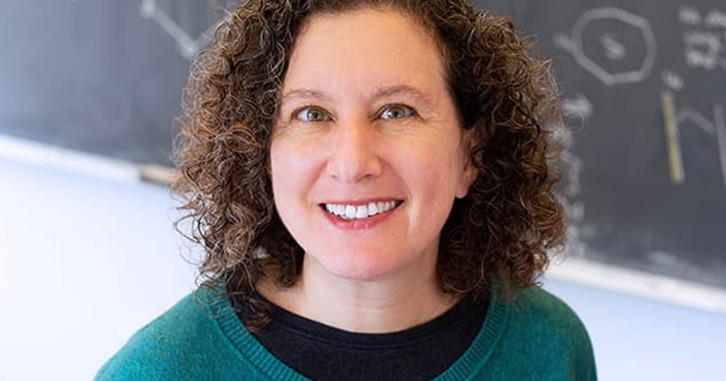
She said:
The core of mathematics is understanding results, not just proving them.
A proof that is not understood will not become part of the literature.
AI can prove problems, but can it clearly explain how it proves them?
Melanie Matchett Wood, a mathematician at Harvard University, wrote a human-readable version of the proof for OpenAI's Unit Distance Conjecture result.
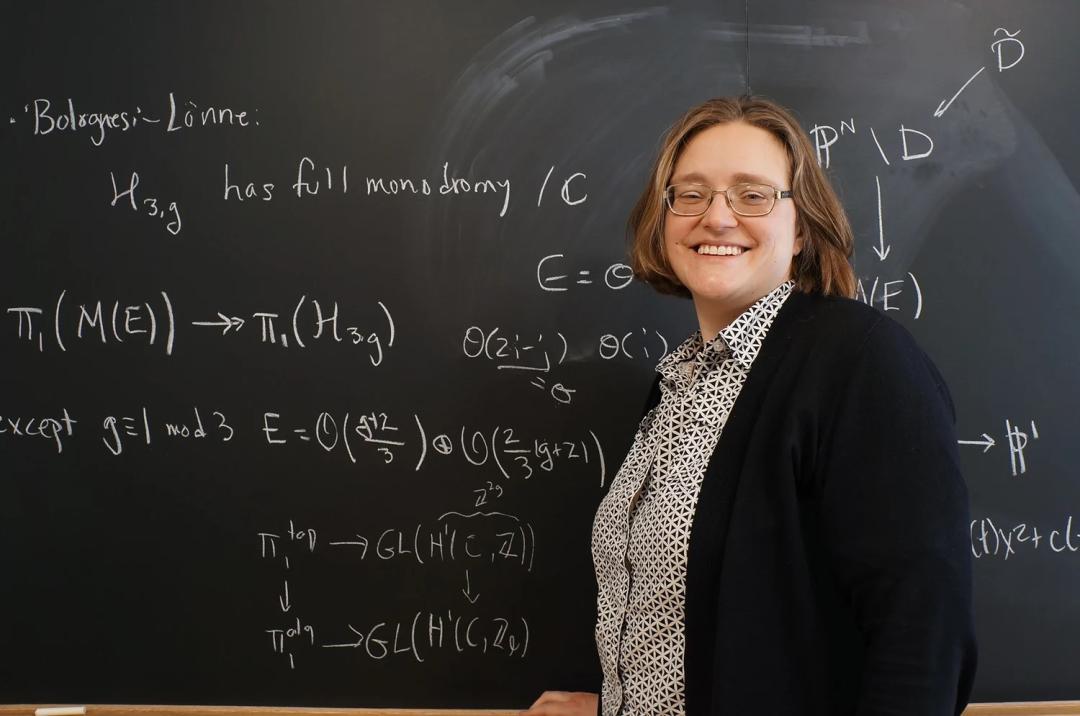
She found that top AI models share a common flaw in explanation: they ramble on about simple parts, but gloss over the difficult parts.
She said:
Top AI models are not yet able to identify the truly difficult parts of an argument and explain them clearly.
German mathematician Andreas Thom gave a more precise distinction.
One of the 10 new results announced by OpenAI is a new construction about "non-sofic groups", which fills the gap between two papers published by Thom and his collaborator Gábor Kun in 2016 and 2019.
The two later published follow-up papers to simplify and expand the AI's discoveries.
Thom said:
AI is solving problems in a very smart and substantial way.
But new concepts only emerged after humans participated in the proof process, which is not yet achieved by AI on its own.
Facing the division, summit organizer Bubeck described four possible futures after the meeting:
Mathematics becomes like software engineering, where AI helps hundreds of people collaborate to tackle the same problem;
It becomes like physics, where computing power and AI models are stacked to replace particle accelerators;
It turns into museum curation, where AI is responsible for output and humans are responsible for selection and interpretation;
Or mathematicians collectively transition to AI safety research.
Bubeck said:
We must put people, put mathematicians first.
Mathematics only makes sense when mathematicians learn something from it.
"A civilization without humans is meaningless."
But the 40 attendees did not reach a consensus.
Tsimerman said:
There is currently no conclusion on what the mathematics community wants.
The purpose of this meeting is more to start a dialogue than to make a certain decision.
He himself has not yet officially joined OpenAI.
The fact that a Fields Medal winner chose to go to an AI company to do safety research is in itself a microcosm of the situation of the mathematics community.
As for what he will do next, the next signal is probably more worthy of attention than the presentations at this summit.
References:
https://www.washingtonpost.com/technology/2026/08/19/mathematicians-ask-whats-left-humans-when-ai-can-do-math-research/
This article is from the WeChat official account "New Zhi Yuan", author: