Beverages are completely unsalable.
Against the backdrop of nationwide sugar control and sugar avoidance, bottled beverage sales have plummeted completely. In the first half of this year, the beverage segments of two major giants, Master Kong and Uni-President, have both fallen into growth bottlenecks. Master Kong's juice and carbonated beverage segments both saw declines, and Uni-President's entire beverage segment reported a downturn.
01
Drinks Are No Longer Selling Well
"The weather is scorching hot, but drinks are not selling well." Have you noticed that you or people around you are buying fewer bottled drinks on impulse? This tiny behavioral change is a microcosm of the "peak season without booming sales" in the 2026 beverage industry.
Even in the sweltering summer with rolling heatwaves, there are barely any people in front of the freezers in supermarkets. The semi-annual reports released by the two leading food and beverage giants not long ago further verified that beverages are indeed difficult to sell.
Let's start with Master Kong, whose beverage business has basically stagnated.
As Master Kong's largest business segment, the beverage business generated revenue of 26.541 billion yuan in the first half of 2026, with a meager year-on-year increase of only 0.7%, accounting for 65.5% of total revenue. Broken down, its beverage business covers tea, packaged water, juice, carbonated drinks and other segments. In the first half of the year, only the tea segment achieved positive growth, while all other segments declined. In the only growing tea segment, Master Kong's core flagship product is iced tea.
In the first half of 2026, Master Kong's tea segment posted revenue of 11.64 billion yuan, up 9.1% year-on-year, accounting for 43.9% of the total beverage business. The packaged water segment's revenue fell 4.9% year-on-year to 2.259 billion yuan, accounting for 8.5%. The juice segment's revenue dropped 13% year-on-year to 2.572 billion yuan, accounting for 9.7%. Revenue from carbonated drinks and other segments declined 2.8% year-on-year to 10.07 billion yuan, making up 37.9% of the total.
The data shows that Master Kong's beverage segment saw the largest decline in the juice category, followed by packaged water, then carbonated drinks. The juice segment mainly includes products such as sour plum soup, rock sugar pear drink, honey grapefruit drink, and the passion fruit double lemon variant of the Daily C series. The packaged water segment mainly covers purified water, "Drink Boiled Water" and alkaline water products. The carbonated drink segment mainly operates PepsiCo's product lines, including Pepsi-Cola, 7-Up, Mirinda and other products.
In the coffee category and other businesses, as the partner of Starbucks' ready-to-drink business, Master Kong operates a number of Starbucks ready-to-drink coffee products, such as Starbucks Coconut Latte, Starbucks Fruity Americano, and Matcha Latte. In the first half of the year, it also launched a new Starbucks energy drink product at Sam's Club. In addition, this segment also includes plant-based beverages, Calpis, Gatorade and other businesses.
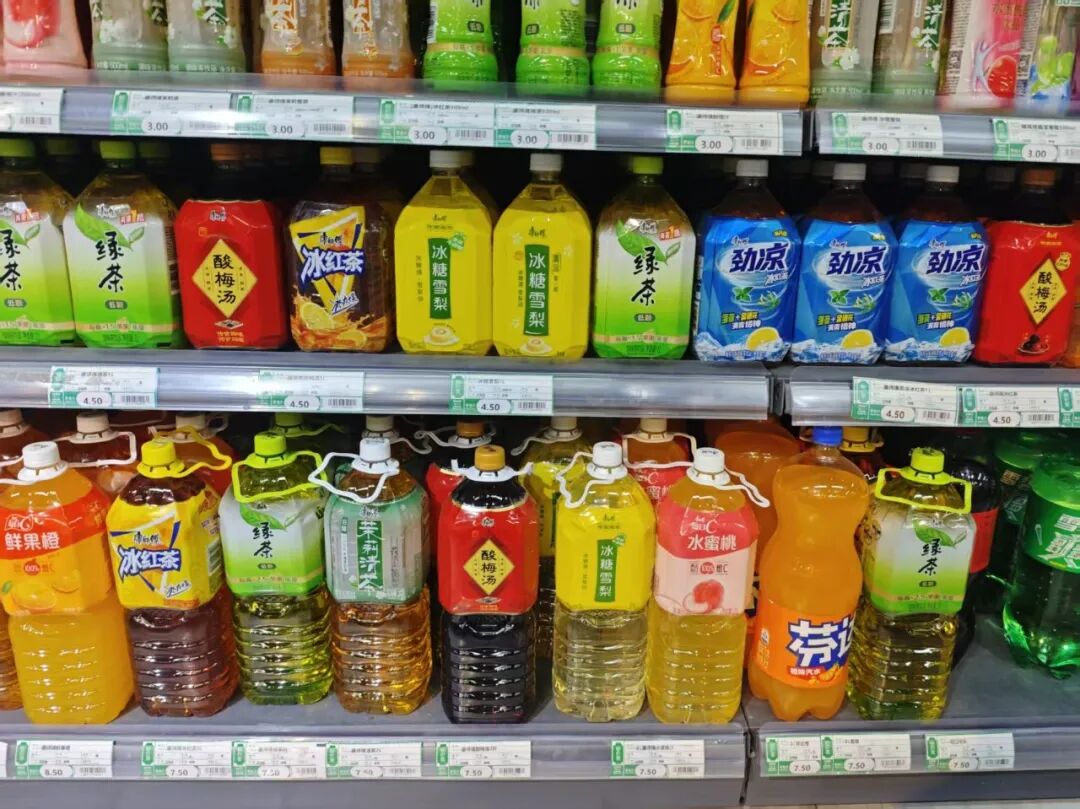
▲ Source / Fortune World
Master Kong has numerous business lines, and many of its products, whether co-branded with other brands or self-developed, are classic, but its beverage business still cannot achieve growth. This did not happen unexpectedly, as its performance already started to decline in 2025.
In 2025, the beverage business, Master Kong's largest segment, sold 1.5 billion yuan less than in 2024, with a year-on-year decline of 2.9%. Among them, tea beverage sales dropped by more than 5%, packaged water by over 6%, and juice by more than 15%.
Looking at the longer time horizon, this trend is even more obvious. From 2021 to 2024, the revenue growth rates of Master Kong's beverage business were 20.18%, 7.89%, 5.39% and 1.34% respectively, gradually slowing down until a decline appeared in 2025. It is clear that the growth pressure it faces is increasing day by day.
Turning to Uni-President, its beverage business performed even worse than Master Kong's in the first half of the year.
Like Master Kong, beverages are also Uni-President's largest business. However, in the first half of 2026, Uni-President's beverage business achieved revenue of 10.751 billion yuan, down 0.3% year-on-year, accounting for 62.1% of total revenue, showing a shrinking trend. Compared with the semi-annual reports of the past 5 years, this is the first time that Uni-President's beverage business has recorded negative growth.
If Uni-President's entire beverage business is broken down, it can be found that just like Master Kong, Uni-President only has one category that achieved growth.
In the first half of 2026, the tea beverage segment of Uni-President's beverage business generated revenue of 4.889 billion yuan, down 3.5% from the same period last year, and its proportion in the beverage business dropped to 45%. The juice segment posted revenue of 1.721 billion yuan, down 5.5% year-on-year, accounting for 16% of the total. The revenue of other segments including packaged water and coffee reached 496 million yuan, down 1.1% year-on-year, accounting for 5%.
Only the milk tea segment achieved positive year-on-year growth, rising 7.3% to 3.645 billion yuan, with its proportion increasing to 34%. However, the growth of the milk tea category with Assam as the core product cannot cover the collective decline of multiple other segments, leading to the overall shrinkage of the beverage business.
As the largest segment of the entire beverage business, Uni-President's tea beverage segment includes many well-known products such as iced tea, green tea, and Xiaoming Classmate. In the first half of 2026, Uni-President continued to make efforts to attract young consumers, but its products still failed to sell well. The juice segment, which has famous products such as Uni-President Fresh Orange and Hai Zhi Yan, faces the same situation. As for ready-to-drink coffee, with intensifying competition, it has not become a new growth driver.
In fact, the two beverage giants Master Kong and Uni-President are just a microcosm. Looking at the overall market, beverages are indeed not selling well. Data from Maiying shows that in the second quarter of 2026, the offline retail sales of beverages fell by about 11.8% year-on-year, the largest decline among all major FMCG categories.
02
All Players Are Focusing on Sugar-Free Products
"So many drinks are full of high-fructose corn syrup or artificial sweeteners, and they are even reluctant to use white granulated sugar." Sweetness is the most easily perceived taste of beverages, and the taste experience it brings caters to people's preferences. However, nowadays, it has become a burden for health-conscious consumers. People are starting to check the ingredient lists of products carefully, and many of them turn to brands like Mixue and Luckin Coffee.
"I usually order coffee or milk tea for takeout, and for bottled drinks, I only drink Oriental Leaf and mineral water." Many people's habits have changed quietly. Among these products, Oriental Leaf and packaged drinking water are both sugar-free products.
Once upon a time, sugary drinks were regarded as "happy water". Today, sugar has become a sweet burden.
The ready-to-drink tea segment where Master Kong's iced tea is located has achieved growth, but this growth is not entirely attributed to the traditional flagship sugary iced tea. This segment has developed into a product matrix composed of multiple series, among which sugar reduction and low sugar are the general trends.
Based on its traditional flagship products, Master Kong is seizing the low-sugar and sugar-free tracks. When introducing this business in its semi-annual report, Master Kong repeatedly mentioned terms such as "25% sugar reduction", "0 sugar", "0 artificial sweetener", and "continuously consolidating the sugar-free tea track".
Master Kong has intensively launched a number of new iced tea products with "low sugar and high fiber" and "sugar-free and high fiber", and directly marked slogans such as "50% less sugar" and "sour and sweet 0 sugar" on the product packaging.
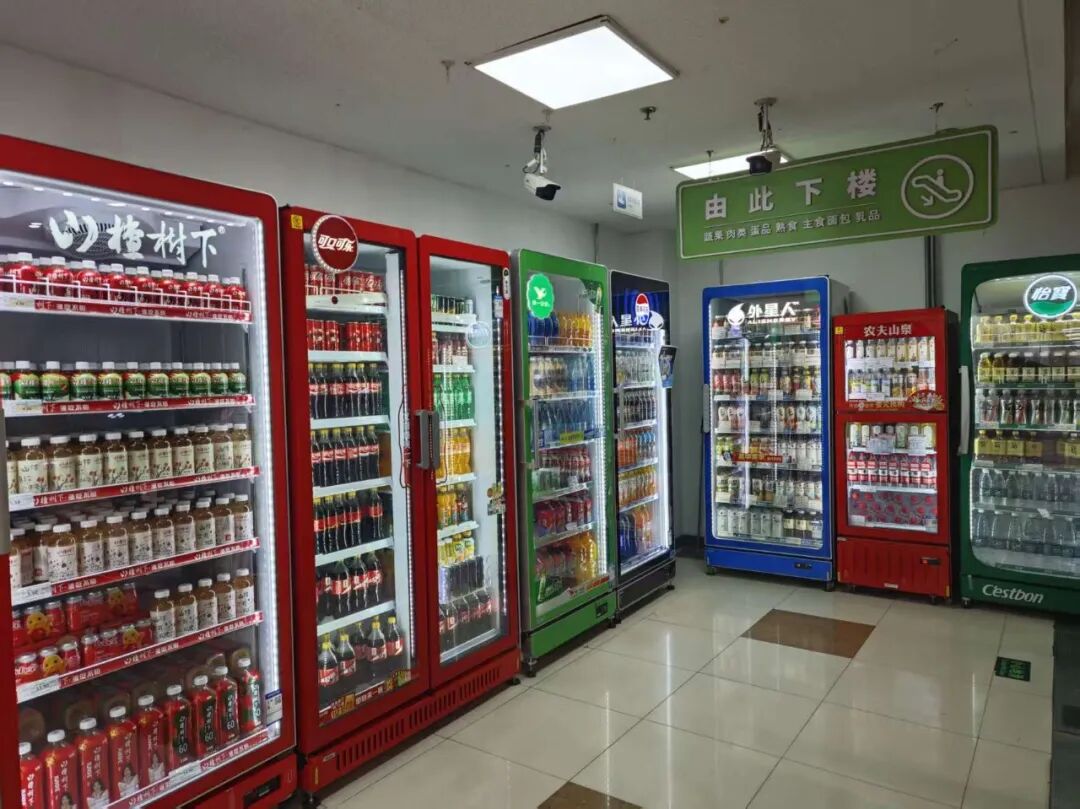
▲ Source / Fortune World
At the turn of the year, Master Kong appointed a new CEO: the former CEO Chen Yingrang retired on December 31, 2025. Starting from January 1, 2026, Master Kong welcomed its new CEO Wei Hongcheng, who also continues to serve as an executive director. Wei Hongcheng is the younger brother of Wei Hongming, Chairman and Executive Director of Master Kong, and the third son of Wei Yingzhou, the founder of Master Kong.
This means that Master Kong has ended its more than 10-year era of professional managers, and the CEO position has returned to the hands of the founding family. As a result, Master Kong has formed a pattern of "co-governance by the Wei brothers".
At the same time, the Wei brothers launched Master Kong's "Back to Day 1" entrepreneurial spirit mode, stating that they will return to the high efficiency, agility and aggressive fighting spirit of the first day of starting a business.
In the ready-to-drink tea segment, the Wei brothers have adjusted their strategy in the first half of 2026, elevating "sugar-free" to a strategic level — setting "anchoring core flagship products + seizing the sugar-free tea track + breaking through through innovation" as the three-tier strategy.
Sugar-free transformation is increasingly important for Master Kong. After taking office as CEO, Wei Hongcheng also set a new goal: by 2030, the revenue proportion of Master Kong's healthy products will rise to more than 70%, and the proportion of sugar-free and low-sugar products in the beverage segment will exceed 50%.
Uni-President also attaches great importance to sugar-free products.
Uni-President stated that its low-sugar jasmine milk green tea has become a new growth driver by accurately grasping consumer demand. In the second half of 2026, it will continue to launch marketing campaigns focusing on jasmine milk green tea, its second growth curve. Similarly, Uni-President printed the words "low sugar" on the packaging of this product, and low sugar has become its key selling point.
The stagnation or even decline of Master Kong and Uni-President's beverage segments is not a problem with the operation of a single enterprise, but a systematic inflection point for the entire traditional bottled beverage track. The beverage industry has reached a key node of health transformation.
Against the backdrop of the overall shrinking of the beverage market, only sugar-free tea drinks have maintained relatively rapid growth.
Maiying data shows that in the second quarter of 2026, by category, only the two categories of sugar-free ready-to-drink tea and ready-to-drink coffee achieved positive year-on-year sales growth. Among them, sugar-free ready-to-drink tea grew by 16.1% year-on-year, making it the only category in the beverage industry that achieved relatively high growth. Ready-to-drink coffee only recorded a meager 0.35% year-on-year increase, almost stagnant and remaining at the same level.
The other 7 typical categories — packaged water, soda, ready-to-drink juice, energy drinks, sports drinks, sugary ready-to-drink tea, and Chinese herbal health water all declined with considerable drops. Among them, soda fell by more than 12% year-on-year, packaged water by over 9%, juice by over 11%, energy drinks by over 8%, and Chinese herbal health water, which grew rapidly in the past two years, plummeted by more than 20%.
For listed companies, there is a possibility of beautifying financial reports by overstocking goods to channel warehouses, and this set of data can better reflect the actual terminal sales situation. It can be seen that whether from the perspective of financial reports or terminal sales performance, the beverage industry is facing a severe situation.
Another beverage giant has confirmed the successful path of sugar-free transformation. Nongfu Spring spent ten years sharpening its tea drink business. Its tea segment, especially the Oriental Leaf series, not only supports its second growth curve, but has also become the company's largest business segment with rapid growth.
However, after the entire industry collectively moved toward low-sugar and sugar-free transformation, competition intensified visibly, and the revenue growth of Oriental Leaf also slowed down. From 2021 to 2023, the revenue growth rates of Nongfu Spring's tea products were 48.3%, 50.8% and 83.3% respectively, with growth accelerating year by year. The growth rate dropped to 32.3% in 2024 and 29% in 2025, showing a continuous slowdown.
This means that the difficulty for the giants that are deploying low-sugar and sugar-free beverages is also increasing. Master Kong has also reduced staff to cut costs and improve efficiency. In 2025, the number of Master Kong's employees decreased by 4082, and in the first half of 2026, it decreased by 1624.
Nationwide sugar control and sugar avoidance have gradually become a public consensus, and ingredient lists have become a source of consumer anxiety. Many beverages that are frequently complained by consumers for "even being reluctant to use white granulated sugar" are being abandoned by consumers. Coupled with the impact of the freshly made tea and coffee market, the former "happy water" giants have reached a crossroads.
This article is from the WeChat Official Account "Fortune World WEEKLY", written by Zhang Xiangyang, and published with authorization from 36Kr.