Will the generation that has been using AI since childhood even outsource their adolescence?
As a parent, would you let your child get exposed to AI?
If they are already using it, what do your children use AI for?
Writing essays, looking up information? Or are you not quite sure, and a little worried?
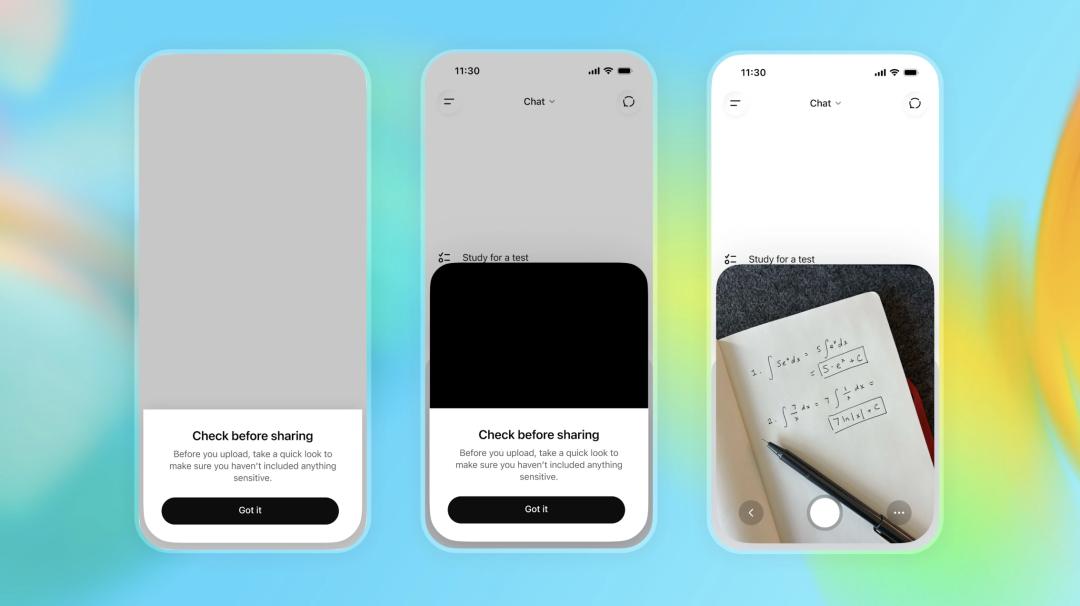
On August 18, OpenAI launched a dedicated ChatGPT version for teenagers. Users who enter their age between 13 and 17 during registration will be automatically assigned to this version.
In 2025, researchers Blake, Carter and Velloso systematically tracked the behaviors of teenagers using Character.AI. They found that among the most active user groups on the platform, users aged 13 to 17 accounted for about half. These teenagers use chatbots not just for entertainment or homework assistance, many of them are using it to find themselves.
"Finding themselves" brings a peculiar feeling.
We are not surprised that teenagers need external tools to understand themselves, which has been the norm for human beings since ancient times. Diaries are like this, poetry is like this, so are friendships and quarrels. However, when this "external tool" begins to have the ability to respond, accompany, and even name and define, the original exploration in adolescence may shift in a direction no one has anticipated.
How can a person who has not yet fully formed grow into their true self in front of a system that is already fully developed and extremely good at responding?
Let AI Speak For You
For teenagers, using AI is more like a natural act of seeking help: before writing a casual essay assigned by the teacher, ask AI how to start first; after a misunderstanding with a friend, input the whole incident into the chat box, and ask the model to provide several reference wordings.
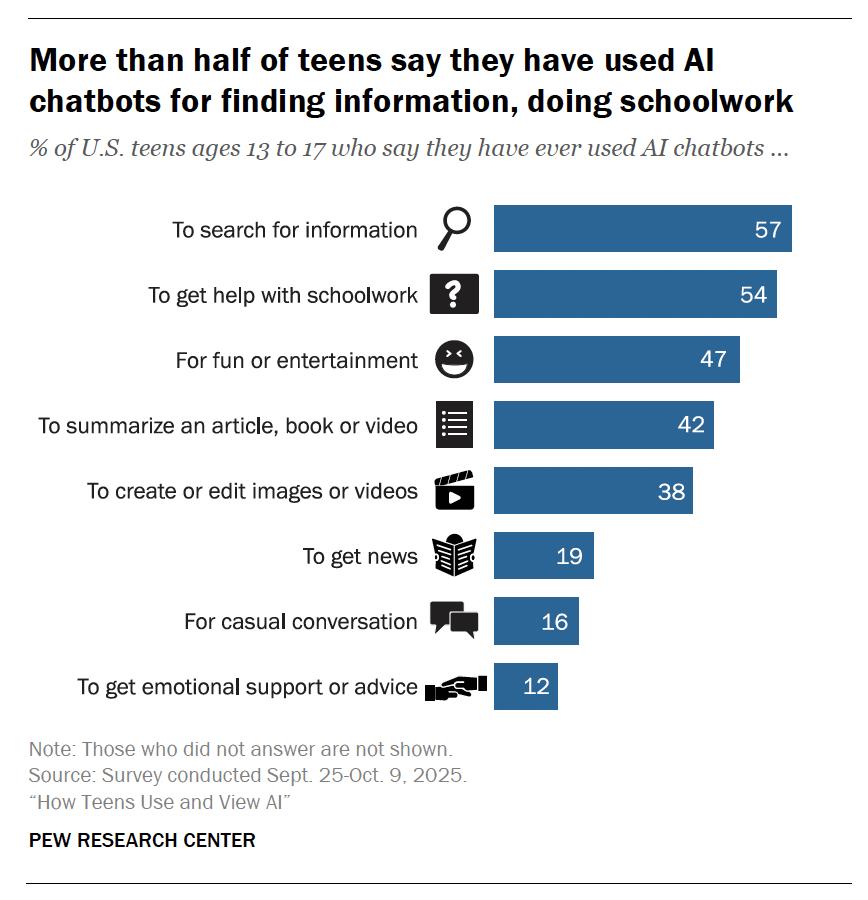
https://www.pewresearch.org/internet/2026/02/24/how-teens-use-and-view-ai/
It all seems reasonable, just saving a little time.
A study published at the top ACM Human-Computer Interaction conference in 2026 elaborated on the logic behind this behavior. The researchers tracked how several teenagers used chatbots across scenarios, and found that the respondents always remained wary of truly private emotional content, but handed over the wording, tone, and the way to present themselves to the outside world to the machine without any hesitation.
In other words, they do not tell AI what they really care about, but tell AI how to express it in an appropriate way.
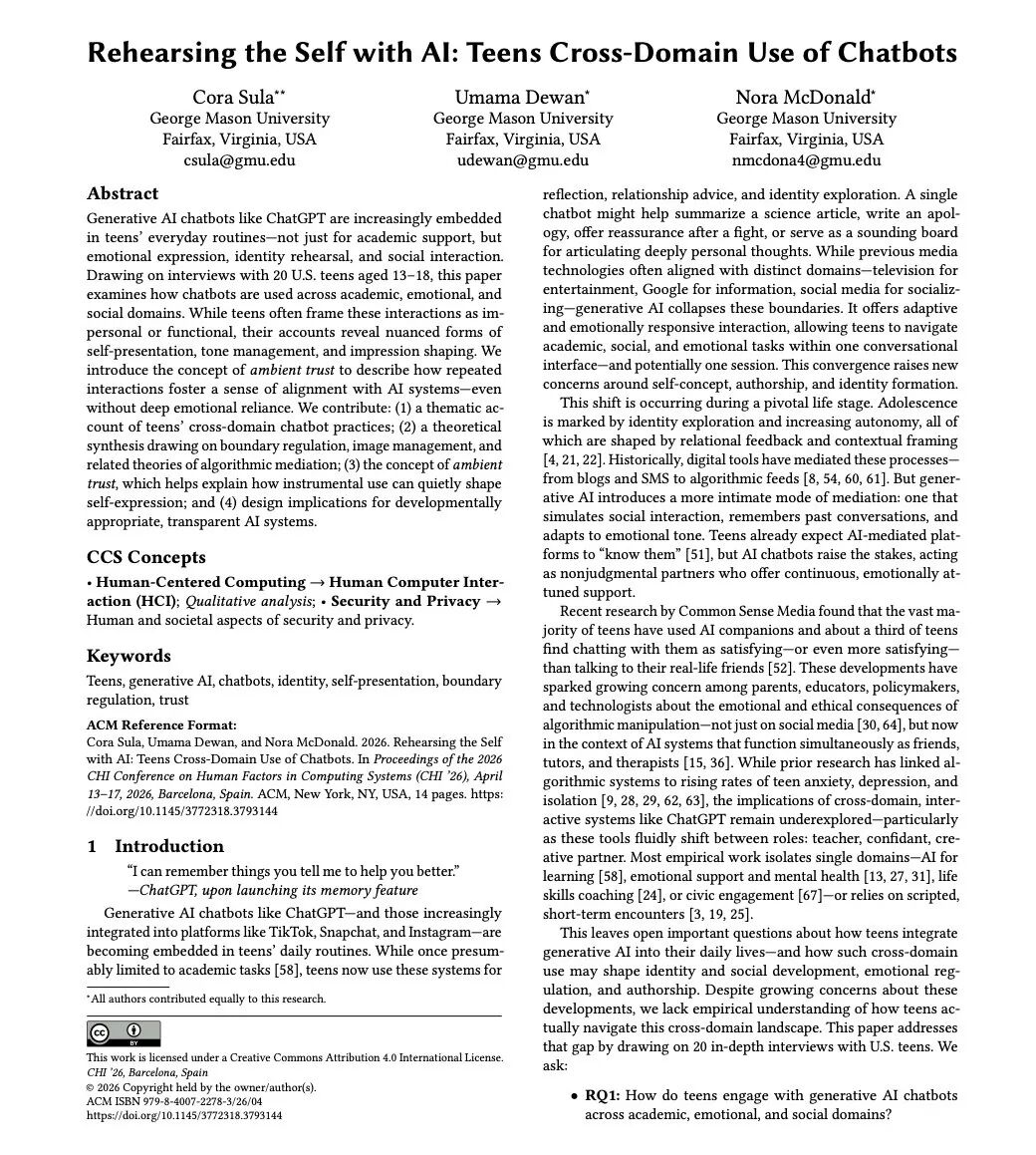
https://dl.acm.org/doi/pdf/10.1145/3772318.3793144
In the relationship between language development and self-construction, the boundary between "how to speak" and "what to say" is not so clear. When a person is looking for the right wording, they are exactly exploring what they really want to express. Repeatedly deliberating on the tone of a sentence often means repeated testing of one's own position.
Skipping this process leaves a more fluent expression, but loses what is generated from friction: the semi-finished state and the self-questioning that only occurs when struggling with language.
Scholars studying the relationship between AI and writing have begun to define this phenomenon as "cognitive outsourcing".
This may only be an efficiency trade-off for adults, but for teenagers who are in the window period of language ability development, the impact may be more far-reaching.
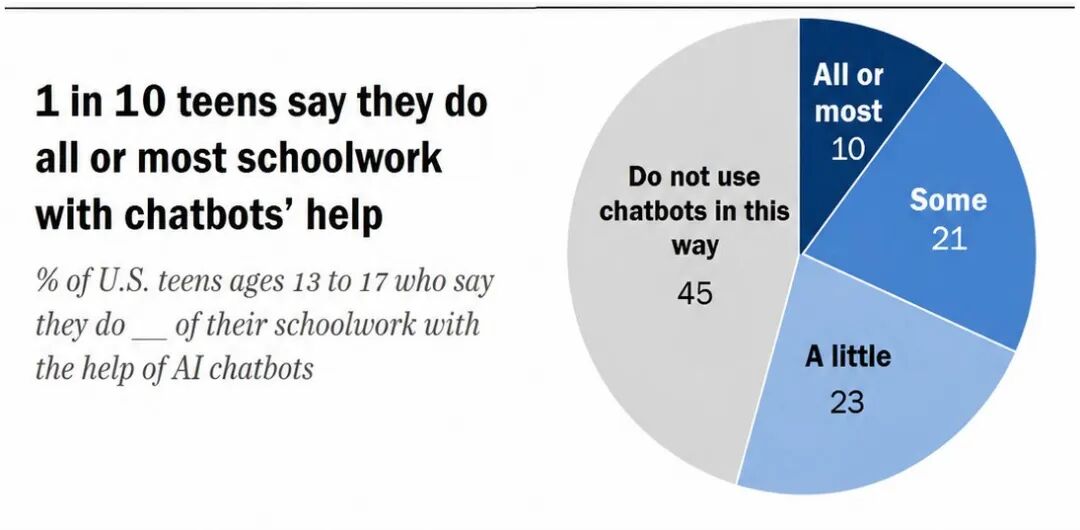
A survey released by Pew Research Center in February 2026 shows that about 12% of American teenagers have sought emotional support or life advice from AI, 16% have used chatbots for daily casual chats, and another about one-fifth said they have obtained news and information through AI.
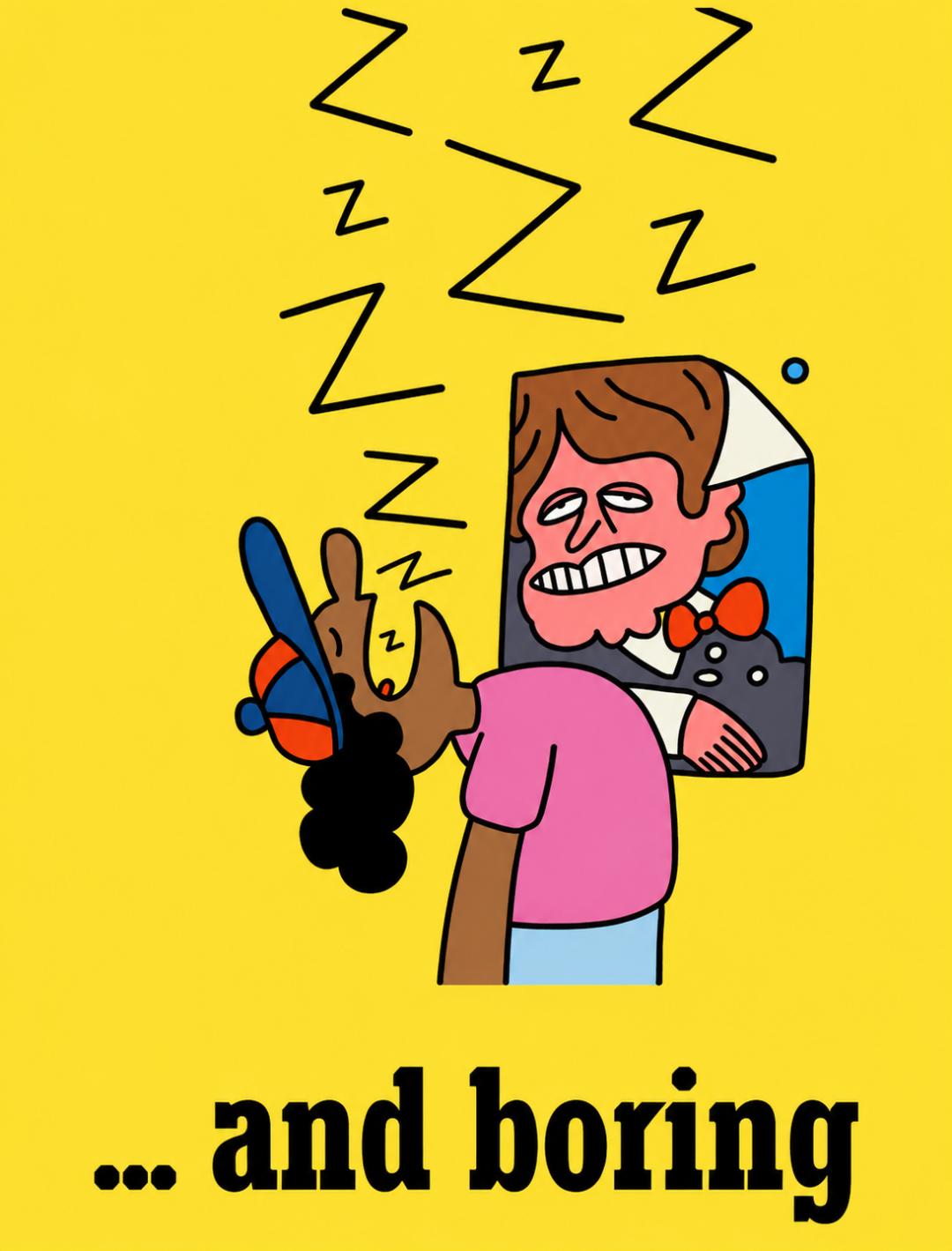
Teenagers are transferring part of their daily experience that originally consisted of friction and exploration to a conversational partner that is always available, forever patient, and never asks back. Those moments of silence, those moments where "I thought for a long time and still don't know how to say it" are smoothly skipped one by one. And those moments are perhaps exactly when a person gets to know themselves through language.
Named Before Fully Formed
The most incomprehensible part of adolescence for outsiders is its inherent uncertainty, and the necessity of this uncertainty.
Psychologist Erik Erikson defines adolescence as the stage of identity crisis. The "crisis" here refers to a necessary open state: a person needs to wander between various possibilities during this period, make mistakes, change their minds, find that they are not who they thought they were, and then start over. There are no shortcuts. It is precisely in this back and forth and repetition that the outline of the self is slowly formed.
However, what AI provides is exactly the opposite: instant, warm responses with a tone of certainty.
A report dedicated to studying the relationship between teenagers and anthropomorphic AI points out that chatbots tend to convert users' temporary emotions into stable personality statements in an authoritative tone. "You are a very sensitive person." "You are actually more assertive than you think." These words sound like understanding and companionship, but are actually a kind of naming, which fixes a still-flowing state into a description.
For adults, this is just a casual comfort that can be ignored. But for a teenager who is in the sensitive period of identity shaping, the way this naming lands may be completely different.
Neuroscience research shows that the prefrontal cortex of adolescents is not yet fully developed, their acceptance of external authoritative signals is higher than that of adults, and their critical resistance is relatively weak. A machine that sounds omniscient and has a gentle tone may penetrate teenagers' cognition at a speed and depth far beyond what its appearance suggests.
On this point, we can see student-run TikTok and Instagram accounts using artificial intelligence technology to create various memes that analogize school faculty members to figures such as Jeffrey Epstein and Benjamin Netanyahu.
Students created this form to mock school faculty members, and sometimes even deliberately damage their reputations, obviously in pursuit of online communication effects.

Elizabeth Gerber, a scholar from Northwestern University specializing in adolescent identity research, has observed a disturbing trend: more and more teenagers are beginning to include AI in the reference frame for self-concept formation, just as they used to rely on family members, teachers, peers and mentors.
Gerber compares this phenomenon to the full entry of social media in the early 2010s: social media hardly encountered systematic questioning in the first few years, and it was not until many years later that its far-reaching impact on adolescent mental health gradually entered the mainstream vision. By then, a lot of damage had already been done.
Growth Has No Fixed Rules
Looking back at the broader technological context of this era, there is a long-pervading logic: extract the "most useful" parts of human beings to make them transferable, replicable, and continuable by the system.
When it quietly seeps into the growth process of teenagers, it tries to extract something that can be stably invoked from a person who has not yet completed development.
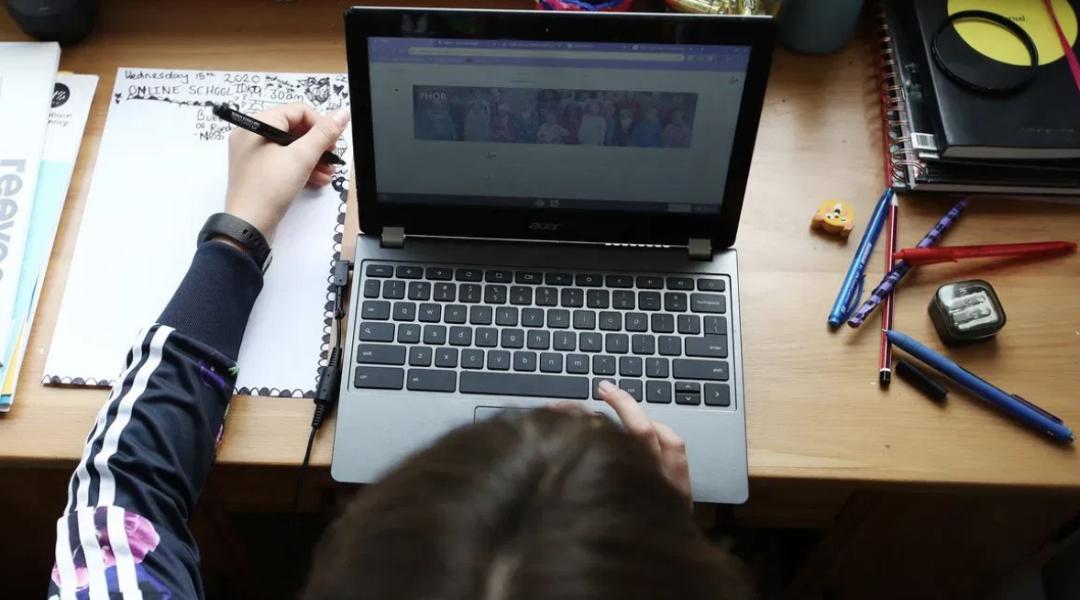
But the value of adolescence is precisely built on its "inefficiency". A 16-year-old teenager can be fascinated by two completely unrelated things at the same time, hold contradictory fantasies about the future, ponder a question over and over for a long time, and finally find that they still haven't figured it out.
It is precisely in the swing that a person begins to identify which feelings truly belong to themselves, which are just echoes from the outside; which are worth sticking to, and which are just temporary illusions.
AI is best at handling parts that follow rules. It can summarize styles, imitate tones, and retrieve knowledge frameworks. And the most worthy parts of teenagers to be preserved are precisely those parts that have no rules yet.
The messy, contradictory words in a teenager's notebook are not materials that need to be sorted out, but the proof that they are who they are, not anyone else. Paragraphs written and deleted, the long time of not finding an answer, the afternoon when you feel strange looking at yourself in the mirror, are exactly the process of a life slowly figuring out its own shape.
A noteworthy finding in the Character.AI study is that among the most active teenage users, 59% are actively creating characters instead of just consuming existing character dialogues. In the space provided by the machine, they are carrying out a certain active world construction and self-practice. Sometimes they are questioners, sometimes creators, and sometimes even using the materials provided by the machine to carry out some kind of internal rehearsal.
Philosopher Foucault once called various practices that people use to work on themselves "technologies of the self". Diaries, reflection, asceticism, and writing are all tools for people to understand and shape themselves. None of them are neutral, and none of them do not carry specific epistemological premises.

Michel Foucault
Today's AI can also be incorporated into this tradition, used as a new technology of the self.
Adolescence is the period of exploration that a person goes through alone as they slowly become themselves. That period of exploration has no bystanders and cannot be outsourced. It must be completed by the person themselves, slowly, sometimes very slowly, sometimes very painfully, but that is exactly why it is meaningful.
As for where a future that also incorporates this process into efficiency optimization will lead, I am afraid no one dares to imagine.
This article is from the WeChat Official Account "APPSO", author: APPSO that discovers tomorrow's products, published with authorization from 36Kr.