Hainan is set to embark on a wild satellite manufacturing spree.
The successful recovery of Zhuque-3 has sparked nationwide celebration.
From state-backed institutions to private players, China's commercial space sector has achieved a historic leap in rocket recovery technology. While the whole world is looking up at the stars, another undercurrent of China's space industry has been quietly unfolding.
June 2026, Wenchang, Hainan.
A super satellite factory has passed the acceptance inspection by an expert panel and is about to enter trial production, with a designed annual capacity of 1,000 satellites.
How staggering is this number? Over the past decades, China's space industry has launched no more than 1,000 satellites in total.
In the whole year of 2025, around 350 Chinese satellites were put into orbit. The total number of satellites all launch sites across China can send into space in a full year is only equivalent to the 4-month output of this factory.
Output of the whole country in one year, completed in 4 months. Is this overly ambitious?
01
Orbit resources wait for no one
Why is there such a push for speed? The answer lies not in Wenchang, but in the sky.
Located on the eastern coast of Hainan Island, Wenchang used to be a quiet coastal town, a popular tourist destination known for its coconut groves and sea breeze. After the launch site was completed in 2014, rockets occasionally lifted off, drawing crowds of onlookers.
Few people expected that this small town would become the new landmark of China's commercial space industry.
China's commercial space sector has planned two constellations: the Qianfan Constellation with 15,000 satellites and the national Xingwang Constellation with 13,000 satellites, totaling 28,000 satellites scheduled to be deployed by 2035.
Calculated based on the roughly 350 Chinese satellites launched into orbit in 2025, it would take 80 years to manufacture all 28,000 satellites.
The problem is, orbit resources will not wait for you.
The International Telecommunication Union implements the "first-come, first-served" principle: if you apply for an orbit and frequency band but fail to launch the corresponding satellite within seven years, the frequency band will be reclaimed and allocated to other applicants.
No one can afford to wait 80 years.
Elon Musk's Starlink has already launched 12,000 satellites, while the sum of the Qianfan Constellation and the national Xingwang Constellation is less than 500. Last year alone, SpaceX launched more than 3,000 satellites, over 8 times the number launched by China.
For the past two decades, overcapacity has always been the top concern for China's manufacturing sector. But today, the biggest headache for China's commercial space industry is insufficient production capacity.
It is not that satellites cannot be manufactured, but that the production speed is too slow.
Why not build more production lines? Because traditional satellites are simply not manufactured on assembly lines.
Under the traditional commercial space model, a single satellite takes at least 18 months from scheme verification to delivery, and even 3 to 5 years in most cases. Even if you pour capital into building 10 production lines, you can only produce dozens of satellites a year.
The problem does not lie in the number of production lines, but in the manufacturing paradigm.
02
Manufacture satellites the same way as automobiles
How are traditional satellites manufactured?
A satellite is fixed at one workstation, where engineers of different specialties covering structure, thermal control, electronics and software take turns working on it. The assembly, commissioning and testing processes are carried out step by step, which not only takes a long time, but also costs hundreds of millions of yuan per unit.
This island-style manufacturing model works for producing one satellite, but is completely unsustainable when you need to make 1,000 units.
When the commercial space industry enters a booming era with a target of tens of thousands of satellites, this old model is completely obsolete. Satellites must no longer be treated as handcrafted artworks, but as mass-produced industrial products.
Elon Musk took the lead in completing this transformation.
He introduced Tesla's manufacturing logic to SpaceX: standardized components, modular design, automated assembly, and paced assembly line operations.
Satellites are no longer produced with customized schemes for each unit, but thousands of units of the same model are manufactured continuously.
The Starlink production line rolls out 6 to 10 satellites per day, with a unit cost of around 500,000 USD. The cost of one large traditional satellite is enough to produce hundreds of Starlink satellites.
Elon Musk proved one thing: Satellites can also be manufactured like cars.
Shortly afterwards, China began to catch up. In 2021, Geespace joined hands with Geely to build China's first super satellite factory in Taizhou, Zhejiang Province.
Wang Yang, founder of Geespace, used to work in state-owned aerospace institutions. Among its 18 founding members, 14 came from aerospace research institutes. They introduced Geely's pulsating production line to the satellite workshop.
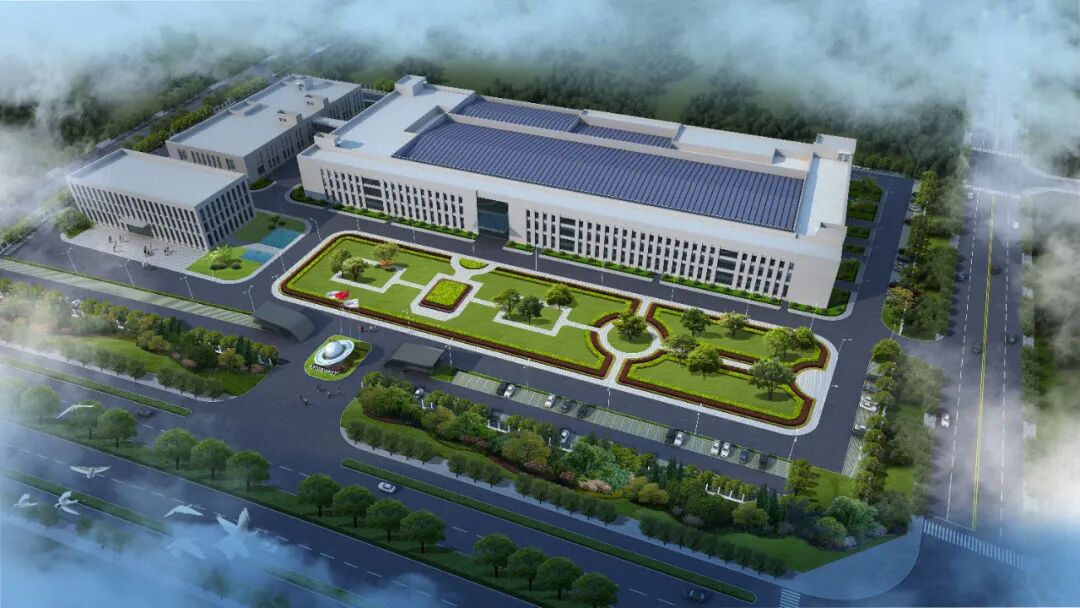
▲ Taizhou Starry Sky Intelligent AIT Center, Source: Geely Technology Group
The effect is remarkable: a satellite rolls off the production line in 28 days, the cost drops by 45%, and the designed annual production capacity reaches 500 units.
After that, Galactic Energy, Shanghai G60, and Spacety also built intelligent factories one after another. Galactic Energy has an annual output of 100 to 150 satellites, and Wuxi Spacety produces more than 150 satellites per year.
Xu Ming, founder of Galactic Energy, once put forward a goal: to reduce the cost of traditional low-orbit satellites from hundreds of millions of yuan to the million-yuan level.
This is not a simple price cut, but a revolution in the way satellites are manufactured.
The person who pushed this cause to the extreme is Dong Guanghong, head of the Wenchang Super Satellite Factory.
This project is directly led by the state-backed aerospace sector. The factory is jointly funded by China Aerospace Science and Technology Corporation (CASC) and the local government of Wenchang, and is built right next to the launch site.
Dong Guanghong, the factory head, comes from the CASC system. His colleagues describe him in two words: extremely frugal. But his frugality is not about saving a few screws, but about recalculating the entire aerospace production process for the first time with commercial manufacturing logic.
In the past, the most important indicator for aerospace missions was success rate, but for commercial aerospace, the first priority is cost control.
Dong Guanghong set a simple goal for himself: to turn satellites from luxury goods into mass-produced industrial products, and further reduce manufacturing costs by 40% to 45%.
To achieve this goal, the team launched a cross-border integration initiative.
On one side are traditional aerospace engineers, and on the other are automotive manufacturing talents. Two completely different corporate cultures collide on the same production line.
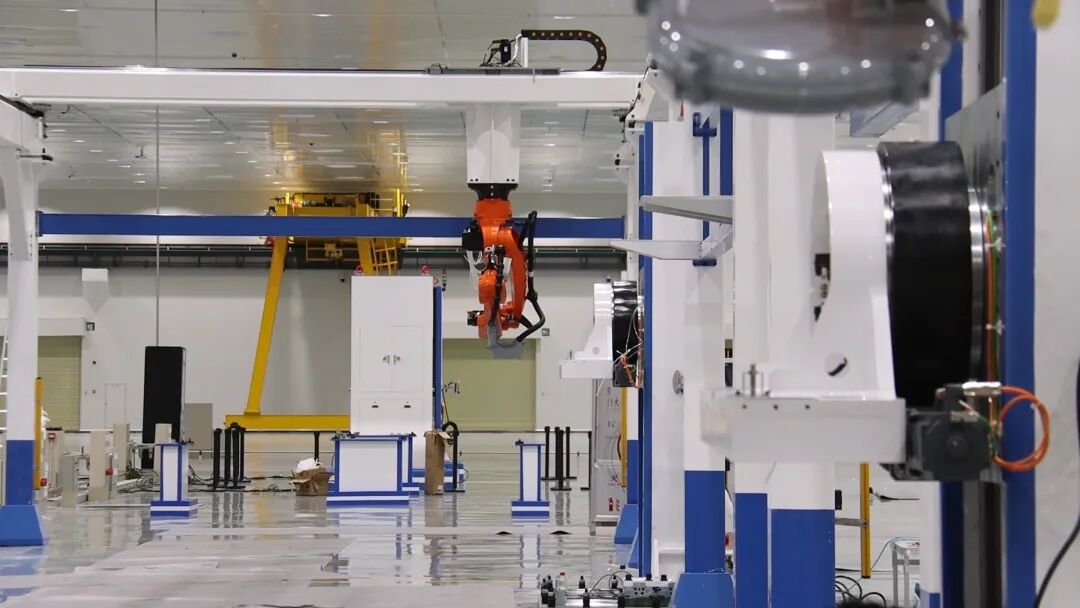
In the end, they developed the pulsating production mode: satellites move forward just like cars, each workstation follows a fixed pace, and one manufacturing node is completed in 4 hours. Once the work is delayed, the entire production line will be affected.
In the past, aerospace production cycles were calculated in months.
Now, cycles are calculated in hours. The final assembly period of a full satellite has been shortened from one week to one day, and the fastest production of one satellite takes only half a day, with efficiency improved by more than 3 times.
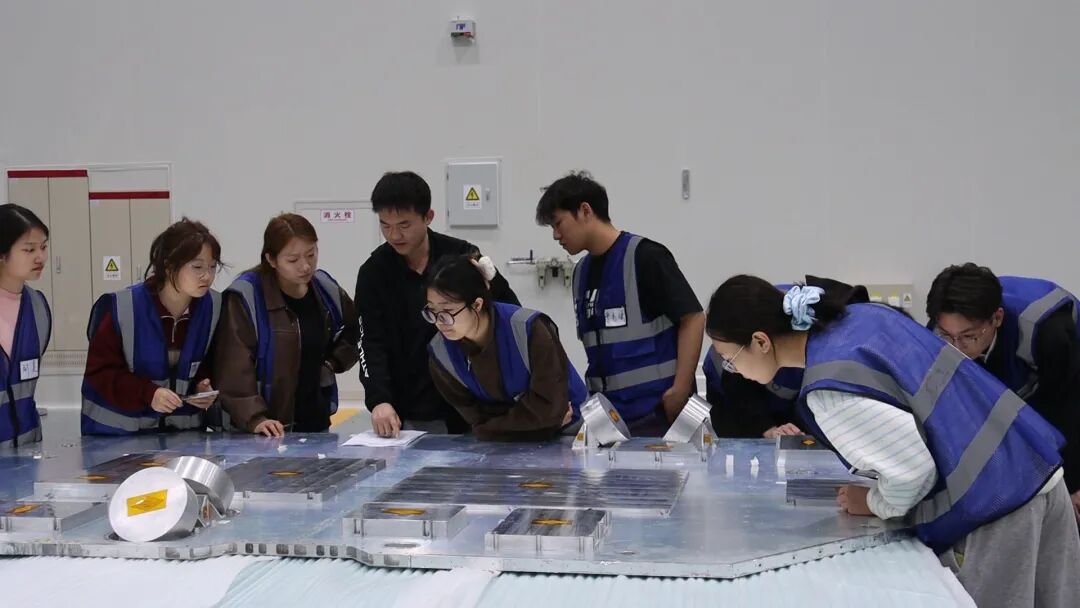
To train the first batch of skilled workers for the satellite manufacturing industry, Dong Guanghong also did a very special thing.
He selected more than 30 students from local colleges in Hainan and sent them to Beijing, Shanghai and Tianjin for training. In the future, they will work on this assembly line.
Someone asked him how to cultivate these young people's precision manufacturing capabilities.
His answer was very simple: copy one page of text every day, it can be *Dream of the Red Chamber*, English textbooks, or circuit fundamentals, anything. His reasoning is that people who can write neatly will also do a good job tightening screws.
This sounds like a joke, but anyone who has worked in the precision manufacturing industry for years knows that this is proven experience.
Steady hands come from a calm mind. A calm mind ensures that screws are properly tightened and will not loosen. In space, if a screw comes loose, the loss could amount to hundreds of millions of yuan.
▲ Source: China Aerospace News
03
A few kilometers away, satellites are ready for launch the moment they leave the factory
The assembly line is fully operational, but many factories are stuck at the same bottleneck: after the satellite is manufactured, how to get it into space?
After being manufactured in Taizhou, satellites need to be transported more than 2,000 kilometers to Xichang for launch. Satellites produced in Nantong, Shanghai and Wuxi all need long-distance transportation to the launch site.
Satellites are precision instruments. Bumpy rides of thousands of kilometers by road, rail and air, any unexpected vibration may loosen the internal components.
After arriving at the launch site, the satellite still needs to be unboxed, re-tested and jointly debugged to confirm everything is normal before it can be mounted on the rocket.
Transportation and re-testing alone take several weeks.
Manufacturing and launching used to be separated geographically. The commercial space industry has long been blocked by this invisible threshold that no one could bypass.
That was until the emergence of the Wenchang Super Satellite Factory.
Wenchang built the factory right next to the launch site. The distance from the factory to the launch pad is only a few kilometers. There is no need for long-distance transportation, no need for unboxing inspection, no need for re-debugging, which truly realizes: launch-ready as soon as it leaves the factory.
For other factories, the first destination of a newly produced satellite after rolling off the line is the logistics center. For the Wenchang factory, the first destination of a new satellite is the rocket.
Behind this advantage is Wenchang's unique "1+1+8" system: 1 super satellite factory, 1 testing and inspection center, and 8 core single-unit R&D and manufacturing institutions.
Manufacturing, testing and launch are all integrated within the same industrial park.
26 industry chain enterprises have settled in the park one after another, covering R&D, core component manufacturing, final assembly, launch, and data application. A complete industrial chain has formed a closed loop for the first time.
▲ Source: China Aerospace News
Wenchang has been preparing for this short few kilometers for many years.
In 2024, China's first commercial space launch site was completed in Wenchang, jointly built by the Hainan local government, China Aerospace Science and Technology Corporation, and China Aerospace Science and Industry Corporation, with Hainan Commercial Space Launch Co., Ltd. responsible for construction and operation.
Yang Tianliang, Chairman of Hainan Commercial Space Launch Co., Ltd., led the team to build a commercial space launch base from a coastal wasteland in only 878 days.
Currently, the launch site is still ramping up its production capacity.
In 2025, it completed 9 launches, sending 92 satellites into orbit. After all 4 launch pads are put into use in the future, its annual launch capacity will exceed 60 times.
Calculated based on 20 satellites per launch, it can theoretically launch 1,200 satellites per year, which exactly matches the annual capacity of the Wenchang Super Satellite Factory.
Wenchang's low latitude also brings great advantages.
It is close to the equator with a low latitude, allowing rockets to fly further and carry larger payloads. The same rocket launched in Wenchang has more advantages than when launched in Jiuquan.
Do not underestimate this small advantage. If more than 20,000 satellites need to be launched in the future, a little extra payload per launch will reduce the total number of rocket launches significantly.
From the assembly line to the launch pad, the distance used to be thousands of kilometers, but in Wenchang it is only a few kilometers. It used to take months to complete the whole process, but now it only takes a few days at the fastest. This is not just a speed increase, but a complete paradigm shift.
Even so, what Wenchang has secured is only a speed advantage.
The orbital window in space is closing day by day. The real countdown has not yet ended.
04
The global race to launch satellites has begun
What Wenchang is really chasing is not itself, but SpaceX.
Elon Musk's Starlink has launched 12,000 satellites, with new satellites entering orbit almost every day. The total number of satellites in China's Qianfan Constellation and national Xingwang Constellation combined is less than a fraction of that number.
There is not much time left for us.
Therefore, the Wenchang Super Satellite Factory has decided to go all out. In the past, factories were built after receiving orders. Wenchang took a different approach: to seize the time window, they built the factory first.
During the 2026 Spring Festival, the Wenchang Super Satellite Factory entered the critical stage of production line joint debugging.
Engineer Hua led his team from Beijing to Hainan. Previously, he participated in the construction of China's first pulsating satellite production line. This time, he will replicate that experience in Wenchang.
During the Spring Festival, while others went home for family reunions, his team stayed in the workshop to debug 8 giant rotary positioners.
Li Xiangyang, Deputy General Manager of a commercial satellite company under CASC, made a special trip to the site to supervise the progress. Hua said: "Our production line is designed for mass production. At present, we have not yet entered the mass production phase of satellites, but the production line must be completed first."
On New Year's Eve, he called his family to say sorry, then went back to the workshop to continue debugging the equipment.
Six months later, on June 30, 2026, the expert review panel completed the acceptance inspection and concluded: the production line interconnection test passed, and the factory can officially enter the trial production phase.
This means that in the next step, the Wenchang Super Factory in Hainan will go all out to manufacture satellites at full speed.
05
Epilogue
Many years later, when people look back at the history of China's commercial space industry, what they may remember is not a certain rocket launch, but this factory in Wenchang.
What truly changes the industry is not just one successful launch, but the assembly line behind it that can continuously replicate success.
In the past, satellites were treated as artworks.
In the future, satellites will roll