You can rant and rave all you want, it just keeps blowing up: the survival logic behind a "fan-tailored drama"
Did you watch Our Teenage Times 2, which had over 1.4 million reservations across all platforms before its premiere?
In the early days of its release, on the fan voting list for Douyin's drama characters, the eight lead actors in the drama once all rushed to the top of the list, which was jokingly called "eight people dominating the entire list" in fan circles.
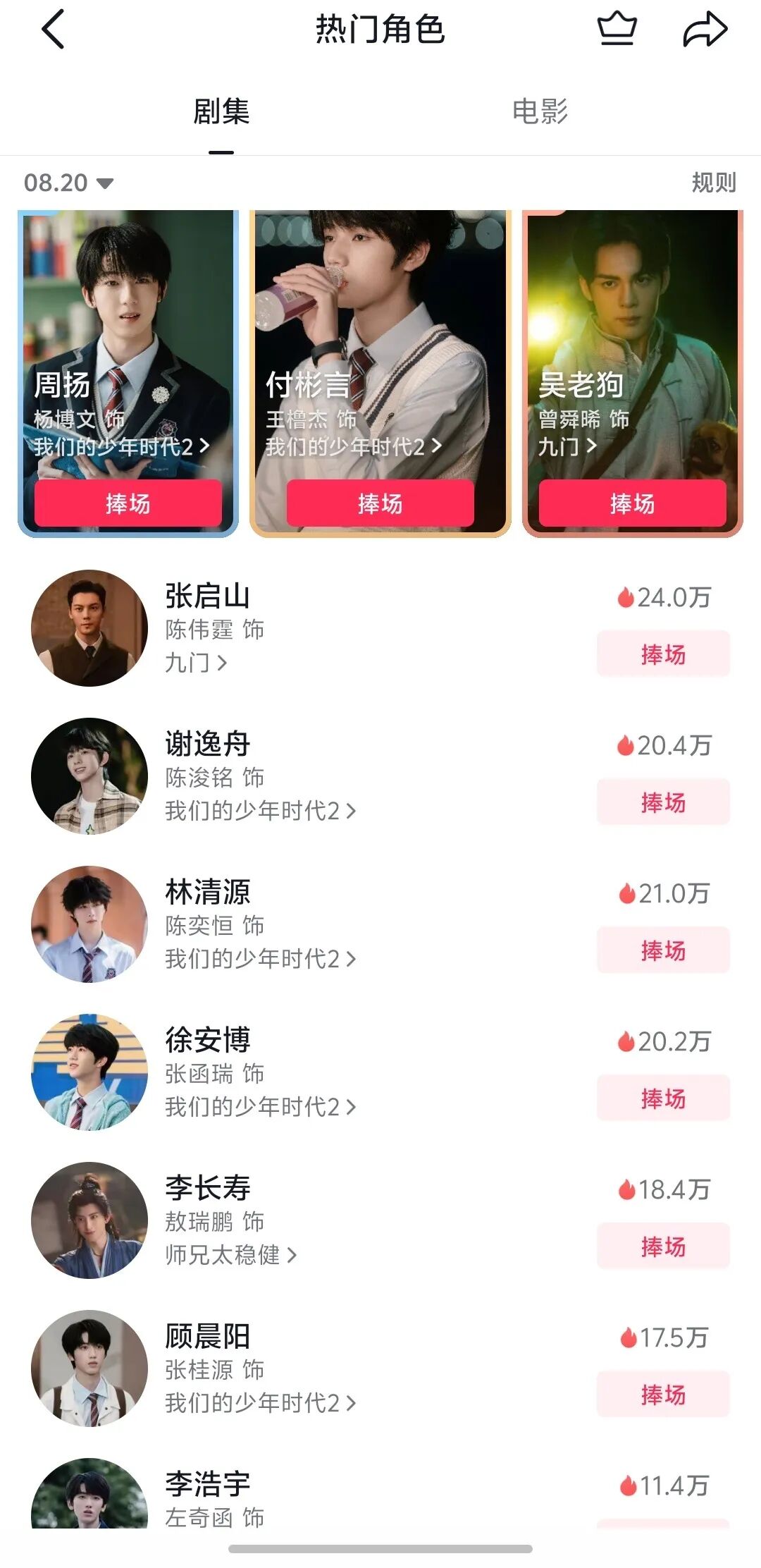
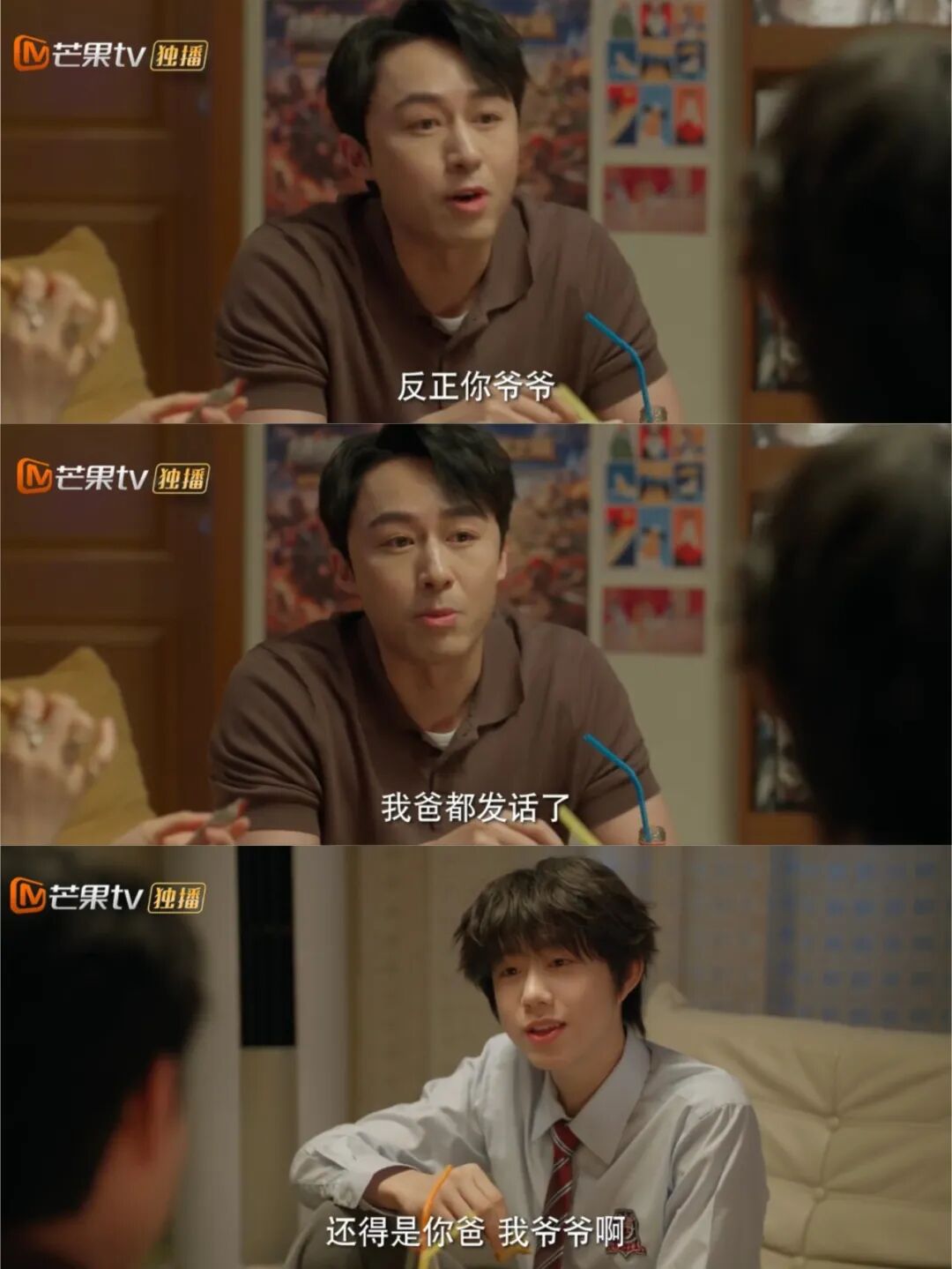
But putting aside the fan-voted list, the public reputation of this drama among ordinary audiences on Douyin can be described as "zero word-of-mouth, purely stress-relieving". Labels such as "absurd comedy", "awkwardly cringey and juvenile", and "recognizing characters is harder than watching the drama" have become the mainstream evaluations of netizens.
Many netizens believe that in order to balance the group portrait setting of all the lead actors, the plot of this drama advances slowly, the character shaping is too thin, and it is even called "the drama version of Niu Lai" by netizens. It can be seen that the enthusiasm of fans supported the opening, but failed to attract ordinary audiences.
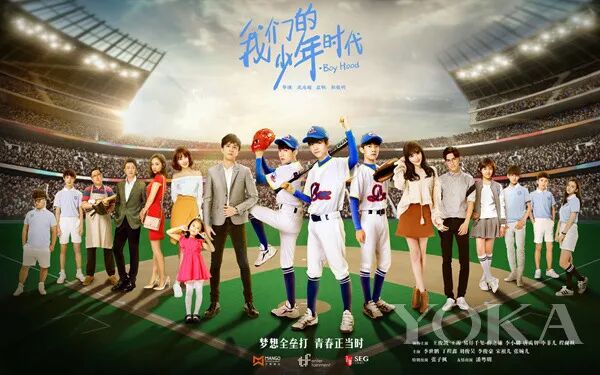
Nine years ago, Our Teenage Times, which was also a TV drama for growth-oriented idol groups, achieved cross-circle spread among the general public. However, today's "sequel" can only be "loved exclusively within its own fan circle". In the past nine years, the operating rules of this track have changed.
From creating stars through mass-oriented content to maintaining stability within specific circles, this step of retreat for custom dramas for growth-oriented idols is an active industrial trade-off made by talent agencies and platforms based on the current film and television risk control rules for underage artists and the public opinion environment of fan circles.
So, what exactly has this trade-off brought in, and what has been sacrificed?
Some criticize it, some love it, nothing stops it
Before its premiere, Our Teenage Times 2 was highly expected by the market.
The total number of reservations across all platforms exceeded 1.4 million, of which over 350,000 came from Mango TV alone. It topped the daily public opinion list of upcoming dramas for 9 consecutive days from April 1 to 9, with a peak value of 9148. After that, its popularity continued to rise, hitting a new high of 9374 on May 14, leading the annual upcoming drama list by a large margin. On the day of its premiere, its Weibo popularity exceeded 90 million in one hour. In terms of data, it has almost obtained all the opening dividends that a head project in the summer slot can get.
The reason why this drama has accumulated extremely high attention before its premiere comes from two aspects.
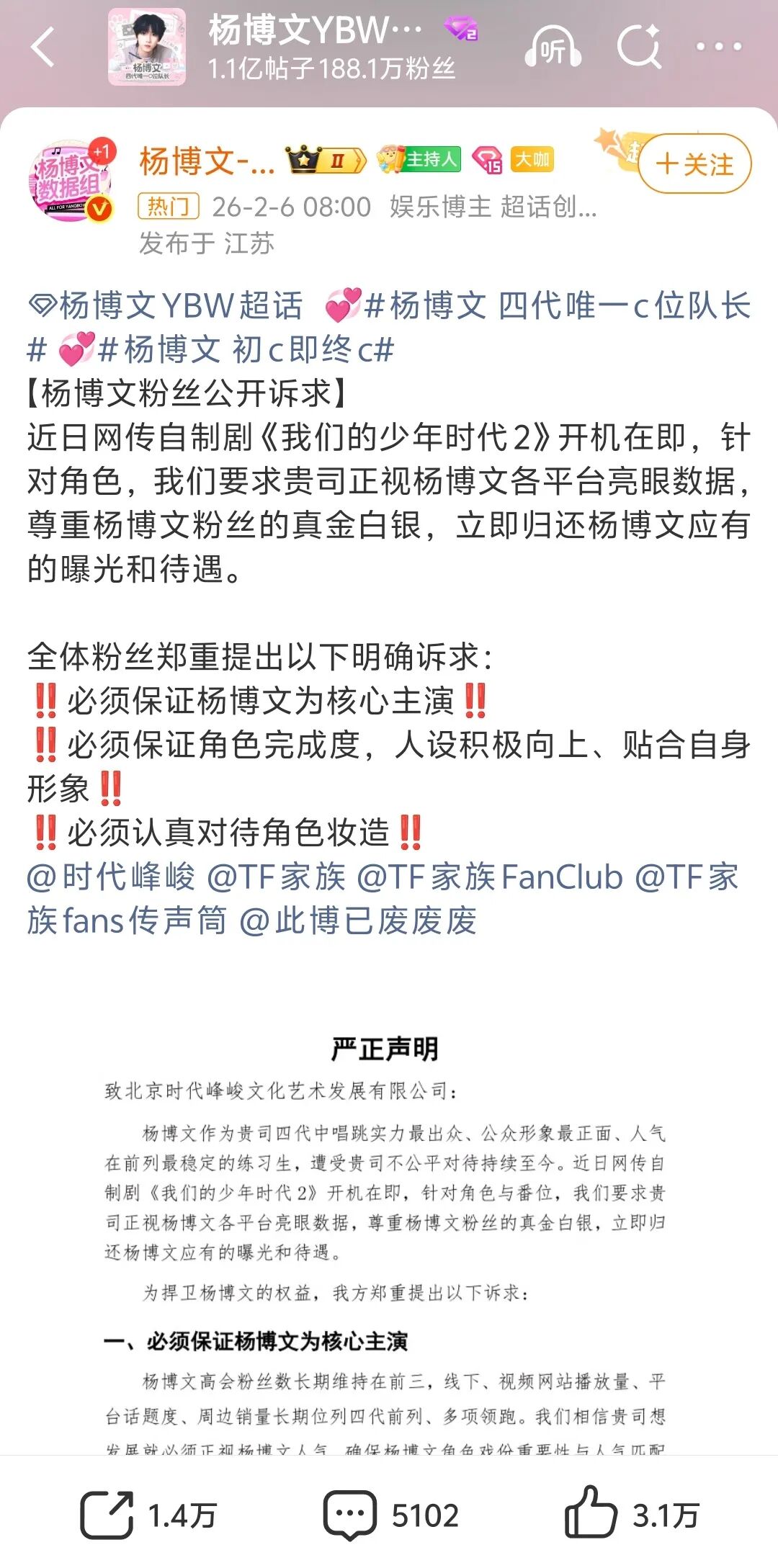
The first is the expectations and demands of fans. From billing order to character screen time, the fans of several lead actors have been fighting for their rights since the beginning of this year. Every round of rights protection and quarrel has pushed up the discussion volume of this drama. The second is the continuation of the memories of ordinary audiences. For those who watched Our Teenage Times nine years ago, this IP represents their childhood nostalgia.
Looking back now, the audiences back then were "spoiled" by far better content.
At that time, Our Teenage Times starring TFBOYS was a phenomenal national hit in the summer slot of 2017. Its premiere ratings exceeded 1.75, topping the dual-network ratings for consecutive periods. The total number of views across all platforms exceeded 7 billion, the Weibo topic reading volume exceeded 3 billion, it won the "TV Landmark" Annual Outstanding Drama Award and the Golden Oak Award at the American Asian Film Festival, and was even selected into the "2017 Chinese TV Drama Selection" of the State Administration of Press, Publication, Radio, Film and Television. It is the youth memory of a whole generation.
But after Our Teenage Times 2 was released, this group of former audiences found that the drama "bears the name of the sequel IP but almost restarts everything, with a strong sense of separation between the old and new stories", "the script is full of clichés, and the campus plots are unrealistic", "the lead actors have immature acting skills and look very similar to each other", which is completely below expectations. After its premiere, a large number of one-star short reviews even appeared on Douban to protest against this gap in expectations.
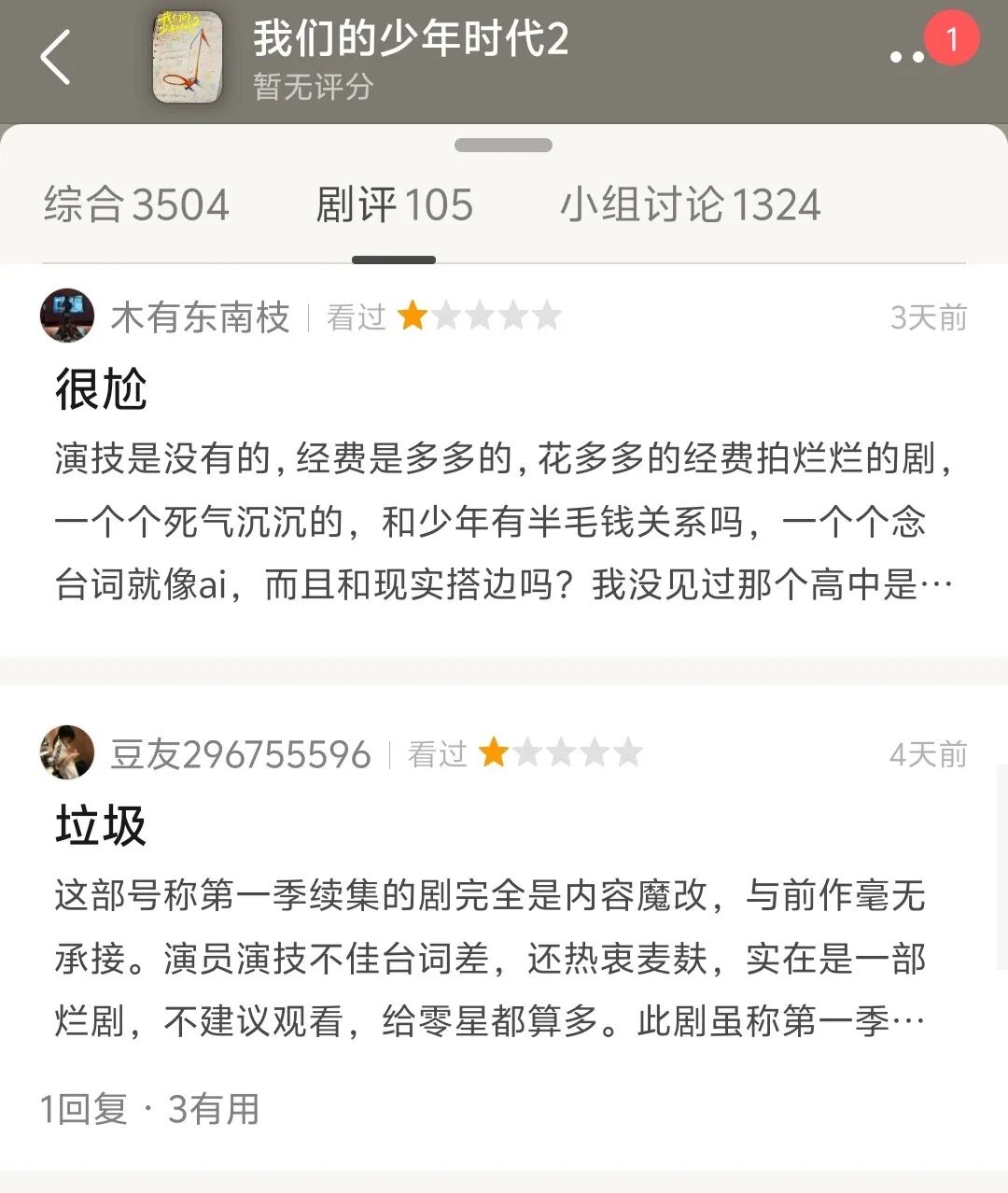
From the logic of traditional film and television dramas, if the difference in texture and plot between a sequel and the previous work is so large, it will be directly sentenced to "death". Audiences will warn each other to avoid this drama, leading to a cliff-like drop in popularity, and then it will be quickly forgotten by the market.
But Our Teenage Times 2 did not. Half of the episodes have been broadcast, and its popularity is still high. Why?
Because the core audience of this drama is not ordinary viewers, but fans.
For a fan-customized drama, the perception of ordinary audiences is only an added value, not a necessity. In fact, the logic of this drama is not to "make a good drama", but to complete a positive cycle of fan economy with one drama.
From the perspective of business logic, making a prime-time TV drama for its own trainees is not only a collective resume upgrade, but also an emotional investment for fans. When fans see their idols have works, their star-chasing experience gets positive feedback, and their loyalty is further deepened. At the same time, the drama itself can also attract a group of young new audiences to accumulate momentum for the subsequent development of the group.
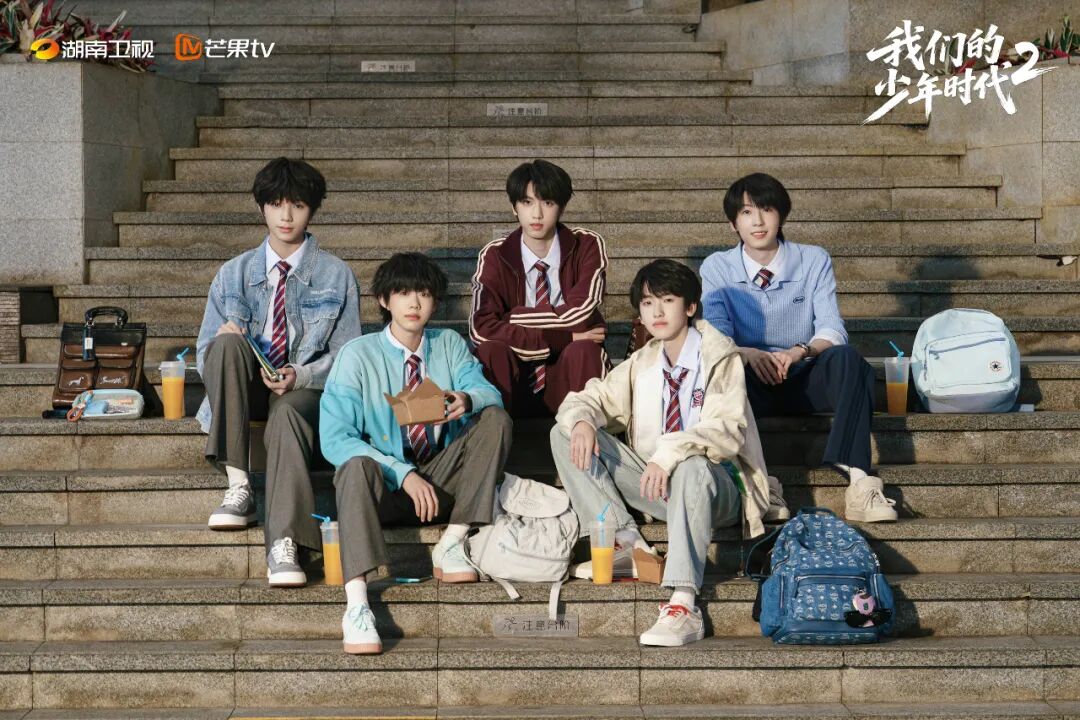
In terms of cost, most of the actors in the drama are from the agency itself, and there is also a guaranteed S-level purchase from the platform, so the cost can be covered without high-intensity external investment. In terms of data, the inherent circle popularity of the trainees can steadily meet the broadcast indicators. The production side does not need to rely on good reviews from ordinary audiences, nor does it need to pursue cross-circle popularity among the public. The enthusiasm of fans supports the data, and the data in turn verifies the business model.
This is a self-sufficient closed business loop that does not need to please everyone, which can be described as "killing multiple birds with one stone" and "guaranteed to make a profit".
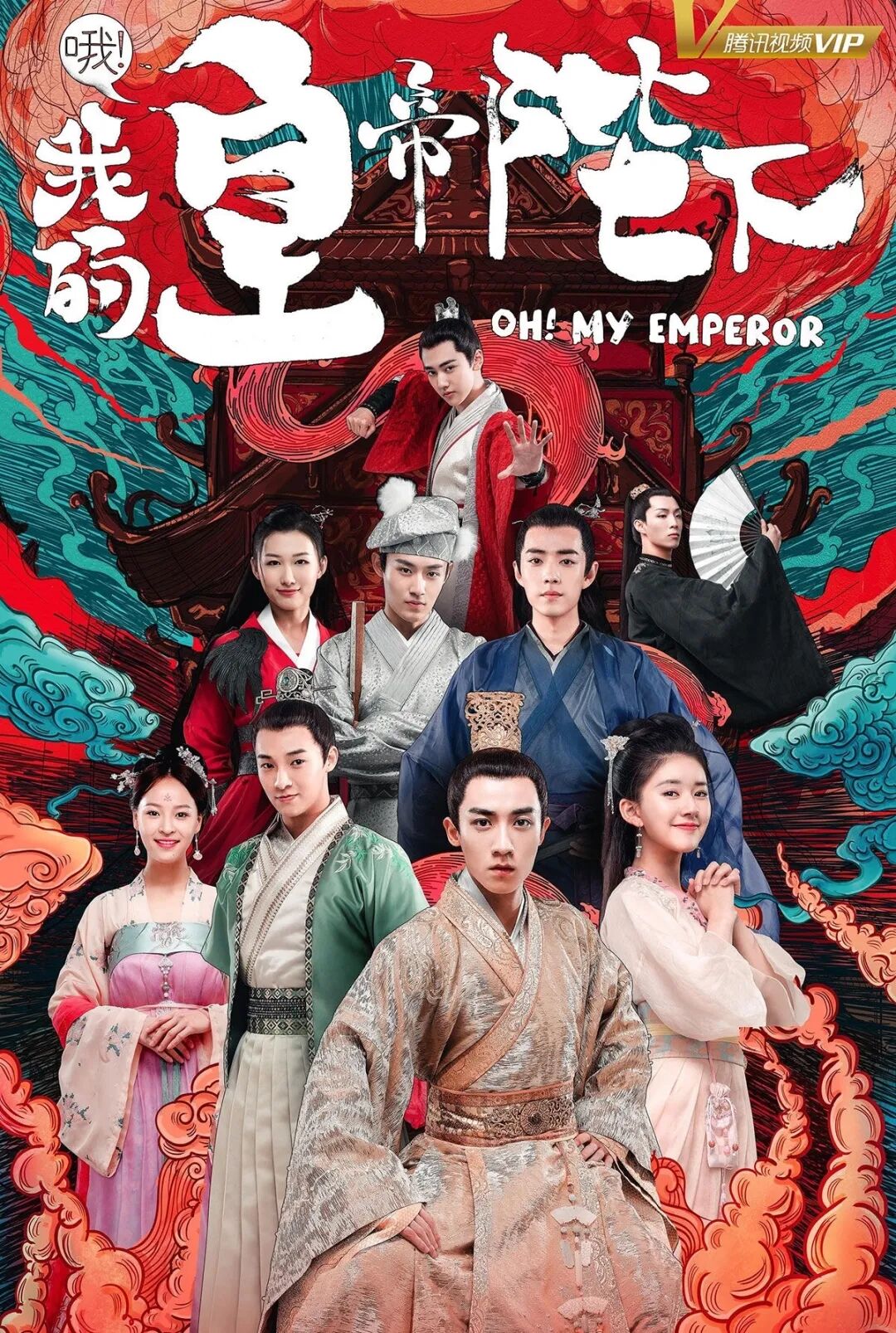
There are not many similar fan-customized dramas in China's entertainment market, and few of them are successful. In the early years, Oh! My Emperor produced by Wajijiwa had a total view count of over 2 billion for its two seasons, but it also showed a situation of high popularity and polarized reputation. Earlier, Nian Nian produced by Times Fengjun adopted the form of an 11-episode short web drama, which basically did not go beyond its own circle. In the current public opinion environment, Our Teenage Times 2 focuses on artist incubation and exclusive supply for fans, which is actually a rational choice.
This model is commercially viable and industrially mature, but its cost is: the content itself has become the lowest priority among all links.
Your youth and my youth seem to be different
In the traditional sense, the core of a good youth group portrait drama lies in the characters.
For example, Proud of Love depicts the youth of ordinary people: Geng Geng's clumsiness, Yu Huai's pride, Lu Xinghe's persistence. Everyone has edges and weaknesses. Our Shining Days depicts a group of misunderstood teenagers who support each other. The characters have complexity, their growth has a process, and their flaws are also part of their personalities.
Our Teenage Times 2 also depicts a group of young people, although the characters in it are relatively labeled and completely positive. But in fact, the creation of this fan-customized drama may be more difficult than many audiences imagine.
The difficulty certainly does not lie in the high creation requirements, but in too many structural constraints.
The first layer is the increasingly strict safety red line. China has clear value orientation guidelines for content involving minors, and does not encourage the deliberate rendering of adultized negative personalities such as scheming and extreme degeneration. Furthermore, the commercial value of several lead growth-oriented idols also needs to be built on a "clean" image. The agency needs to reserve space for the long-term development of the artists, and a controversial role may damage their development value.
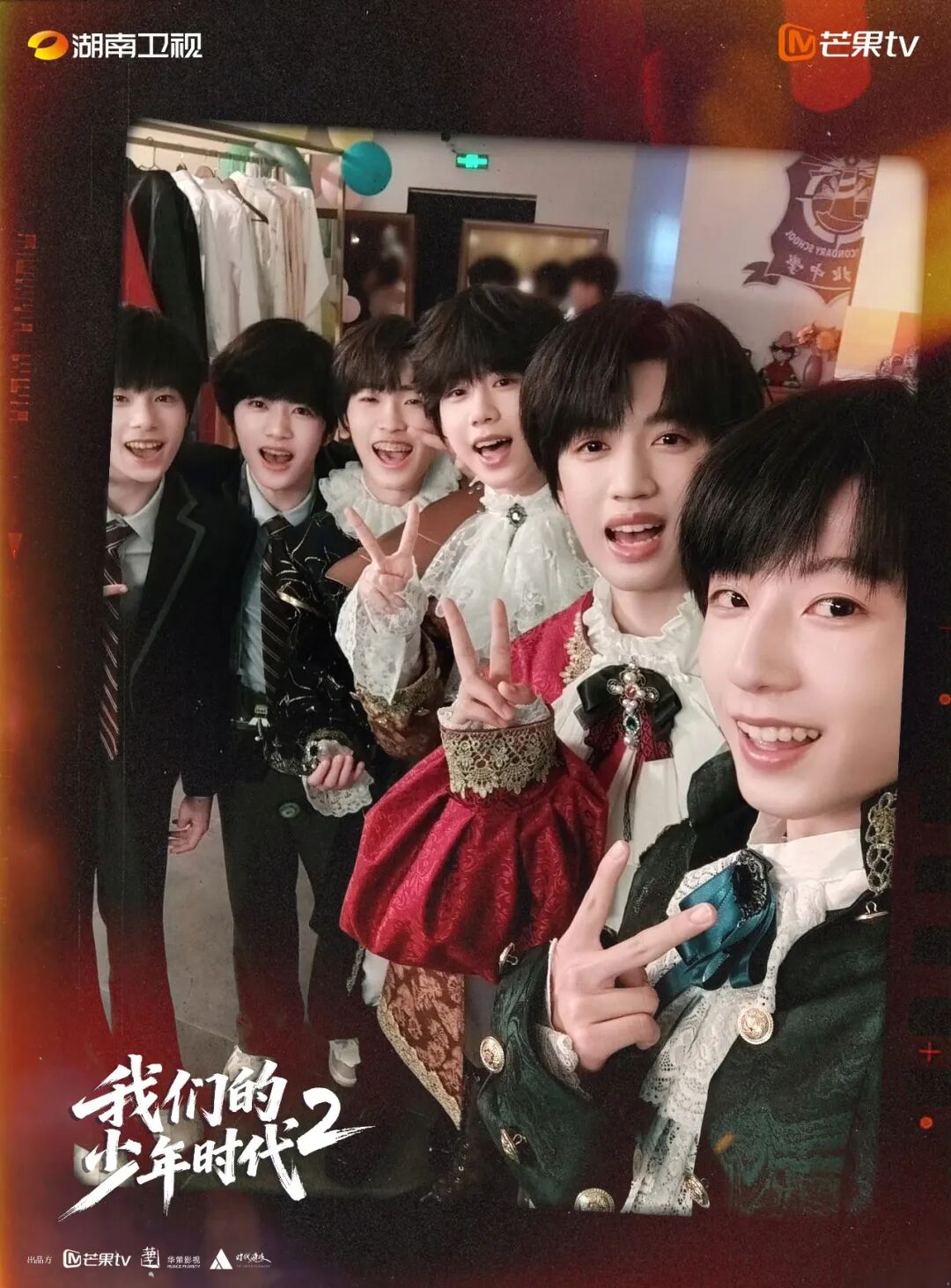
The second layer is the restrictions on the script content itself. Conventional youth dramas usually focus on 2 to 4 core characters. Proud of Love has two parallel storylines of Geng Geng and Yu Huai. Although there are many characters in Our Shining Days, not every one of them has an independent growth line. However, Our Teenage Times 2 has eight leading actors, all of whom need to have screen time, highlight moments and a sense of presence. Even with 36 episodes, the narrative time allocated to each character is still insufficient.
In addition, the characters in the drama cannot have real flaws. The screenwriter cannot promote the plot through the internal contradictions of the characters, but can only rely on external events to drive the story, and the driving force of external events is limited, which will become weak after repeated use. All in all, the screenwriter of this drama is not writing characters at all, but arranging events according to several character labels that satisfy fans.
The third and most realistic pressure comes from the full-process supervision of fans. For example, Wang Lujie's fans demand the positioning of "the first lead actor", Zhang Guiyuan's fans demand that "Zhang Guiyuan is not a tool person, don't use him to set off other characters", Chen Yiheng's fans demand to "ensure the integrity of his screen time", and so on. Every fan group hopes that their idol has enough screen time.
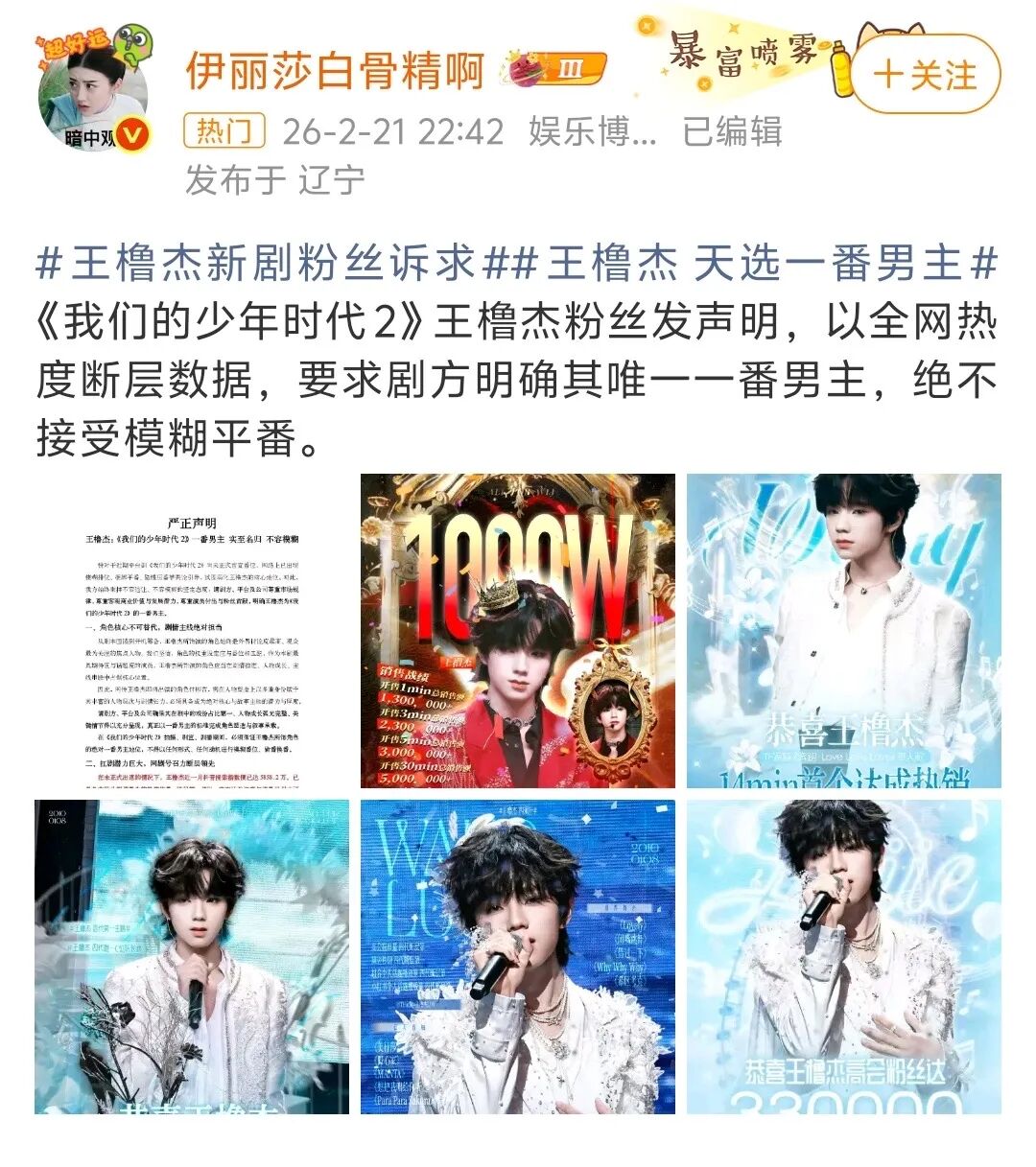
From the perspective of fans, these are of course reasonable demands, but they are impossible to achieve in film and television dramas. In this drama, the screenwriter can't even write a scene where a character looks ugly when he makes a mistake, he must always look handsome. This requirement is absurd in other creations, but it is a rigid demand in this drama.
The screenwriter of a conventional youth drama only needs to be responsible for the story, but the screenwriter of this drama needs to be responsible for safe broadcast, coherent plot and eight fan groups at the same time. These difficulties determine that the creation logic of this drama will inevitably move towards the direction of safety overriding everything else, and fans taking priority over content. Under these structural constraints, it does not have the ability to meet both the preferences of its own circle and the public aesthetic, and the drama side of course chooses to serve fans.
Although this drama also has its carefully designed parts, compared with the previous work, its emergence still means the retreat of content quality.
From star creation to stability maintenance, is it a regression?
Beyond the gains and losses of this single drama, Our Teenage Times 2 allows audiences to perceive that the more essential problem than "the incompatibility between the circle and the public" is the complete reversal of the priority of customized dramas.
Nine years ago, Our Teenage Times was not perfect, but its creation logic was to create stars with high-quality content. The drama retained the conflicts of normal youth dramas, the edges of characters, emotional lines, and growing pains, and achieved cross-circle popularity among the whole nation, high ratings, and the idols gaining public recognition through attractive stories.
However, the logic of this sequel is completely reversed. It prioritizes avoiding all risks, putting "no controversy, no minefields, no complexity" first. Content tension, character depth, and dramatic highlights can all give way to public opinion safety.
Of course, this does not mean that the creative team of Our Teenage Times 2 is perfunctory