How many humanoid robots are actually out there doing real work?
01 The Trillion-Yuan Temptation
In 2026, the most widely recognized consensus in the field of embodied intelligence can be summed up in four words — a trillion-yuan market.
At the site of the World Robot Conference (WRC), more than one exhibitor cited this figure to depict the promising future of the industry.
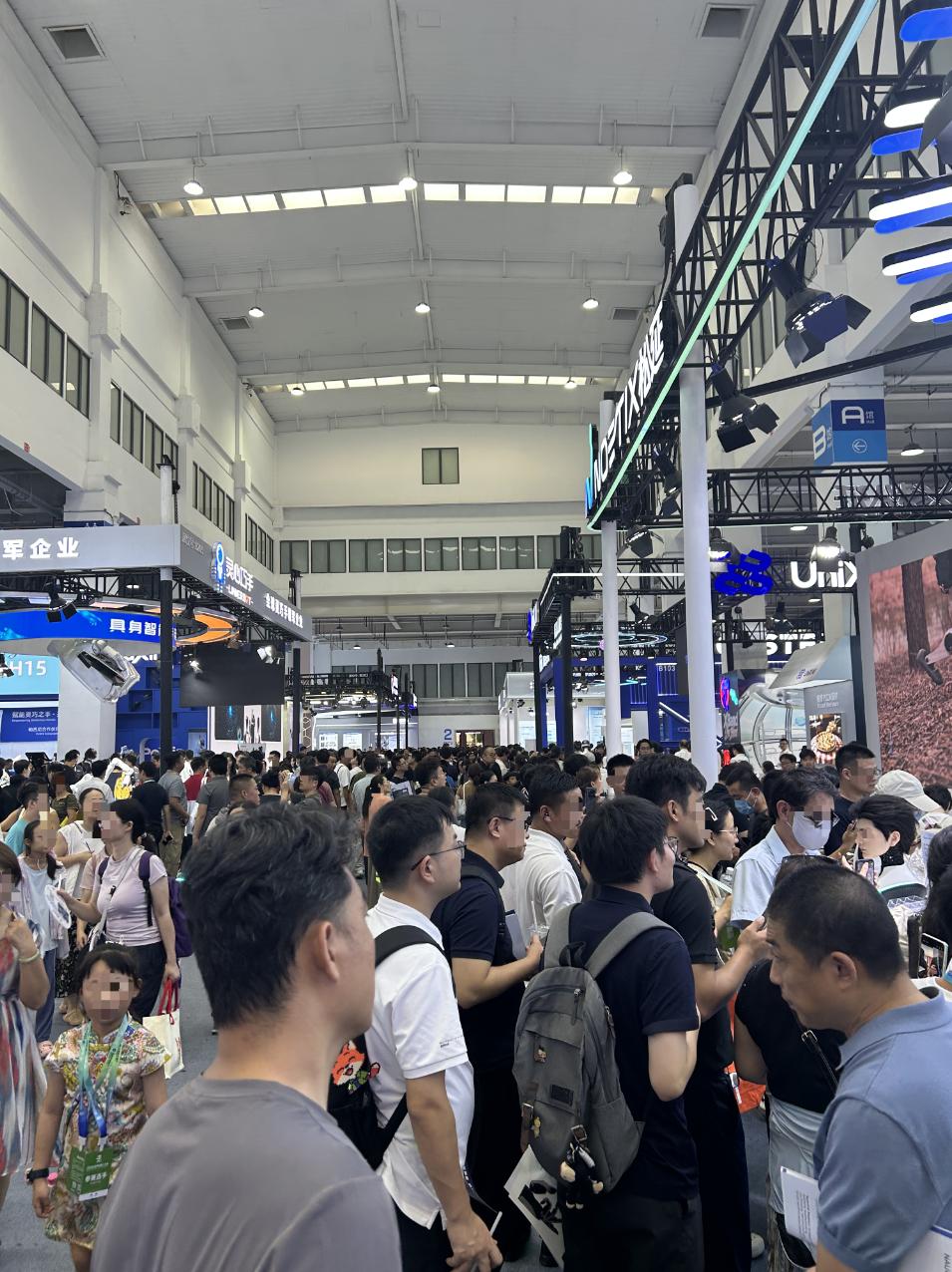
It remains uncertain whether the actual market demand can reach the "trillion-yuan" scale, but the total valuation of enterprises related to embodied intelligence is getting closer and closer to the one-trillion mark.
According to incomplete statistics, as of August 21, there are at least 6 enterprises with a valuation of over 20 billion yuan, including Galaxy General, Starseas Map, Independent Variable, Zhisquare, Superb Vision, and Lingxin Qiaoshou; more than 10 enterprises with a valuation of over 10 billion yuan, including Zhongqing Robotics, Extent Dynamics, Qianxun Intelligence, and Star Era. Coupled with Unitree Robotics with a market value of 270 billion yuan, UBTECH with a market value of 42 billion yuan, as well as Leju, Yun Shenchu, and Zhiyuan which are queuing for listing, the total valuation of the head camp easily exceeds 600 billion yuan.
Judging from the sentiment of the primary market, this figure will continue to inflate —
In the dining area of WRC, two entrepreneurs from a data analysis company talked with great passion:
"Almost all the investments for robot bodies have been wrapped up. Institutions are now turning to upstream models and data. We have to hurry to polish our image properly. You also go inquire about the valuation quotes of our peers. If others ask for 1 billion, we quote 800 million, then we will have a chance to stand out..."
In the audience seating of the main forum, practitioners from state-owned financial institutions came specially to seek opportunities for "creditor's investment" in embodied enterprises; in the exhibition area, "hunters" from top domestic and foreign investment banks shuttled through the booths of those well-known embodied intelligence companies, trying to explore opportunities for financing and roadshow services.
A sales leader mentioned in a communication with a certain investment bank that people from Citi also came yesterday. The other party immediately replied, "Citi is not doing well in this field, which is well known in our industry..."
A commercial leader of an embodied component and robot body company with a valuation of nearly 10 billion yuan told us that many people he knows who want to "have a chat" about investment with the boss now "can't get in at all". The financing rhythm and valuation changes are too fast. The company's Series B financing has not been completed yet, and the Series C has already started. Since November last year, the company has completed 4 rounds of financing.
Of course, capital parties have realistic expectations for the invested enterprises — to go public quickly.
According to statistics from some media, the total financing amount of China's embodied intelligence industry in the first half of 2026 reached 935 billion yuan. All capitals want to invest in the next "Unitree Robotics", and the FOMO mentality has completely shifted from the AI large model track to the embodied intelligence field.
A VC investor analyzed to Caixin that the core reason why the primary and secondary markets are extremely optimistic about this track is probably that this industry is expected to have both "the shipment scale of smartphones" and "the unit price of passenger cars".
As for whether robots can move from the stage to factories and homes, and how long it will take for them to truly "work", this may be a matter for embodied intelligence enterprises to worry about after IPO, after all, listed companies have to issue financial statements every quarter.
It is no wonder that Wang Xingxing, the founder of Unitree Robotics, had a blank expression and did not smile throughout the IPO bell-ringing ceremony. When he gave a speech at WRC last year, he was still optimistic that the ChatGPT moment of embodied intelligence "can be achieved in 1-3 years at the fastest, and 3-5 years at the slowest with high probability"; at this year's WRC, his judgment on the timeline is significantly more conservative, and he changed his statement to "if it is fast, it will be two to three years later, if it is slow, it will be five or ten years later."
The cognitive "misalignment" between investors, the public, industrial customers and embodied intelligence enterprises has become particularly concrete at WRC.
02 Failure to Match Demand
The newly launched humanoid robot "Superman" released by Unitree has a running speed that has broken through human limits, but what Wang Xingxing emphasized desperately during his speech at WRC is that robots cannot be deployed into factories to work on a large scale for the time being, as their efficiency and generalization ability are not high enough.
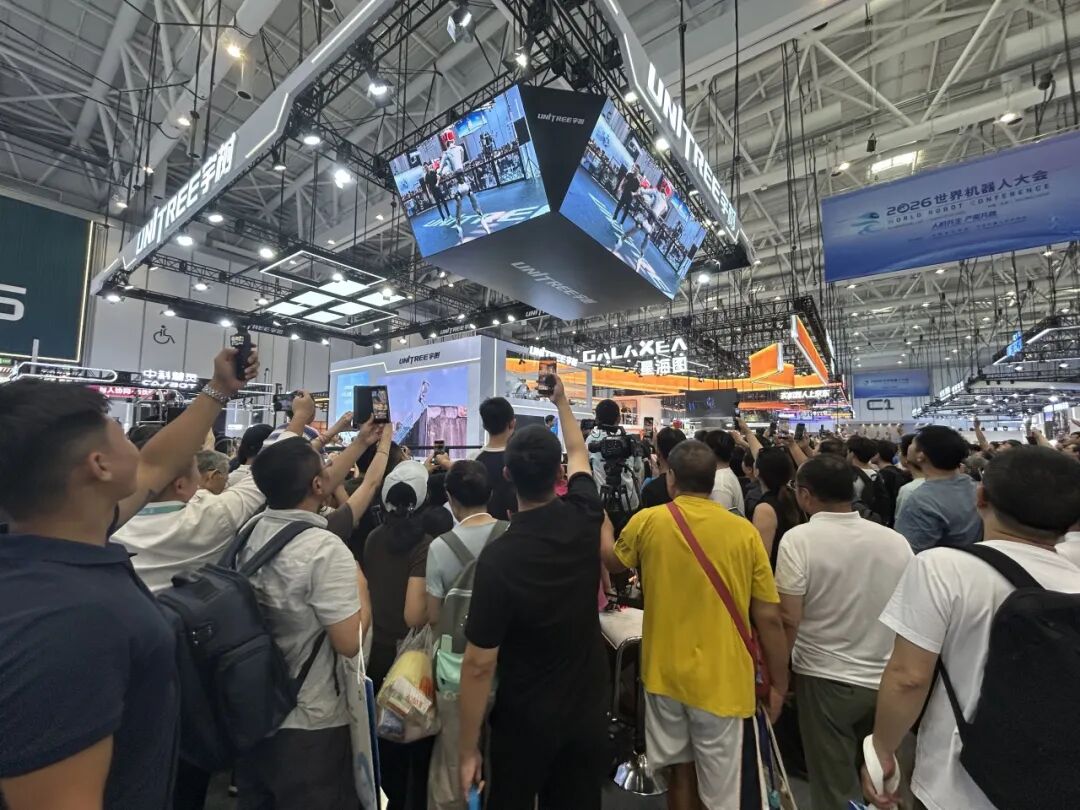
This is like a realistic metaphor for the embodied intelligence industry: "The 'embodiment' is running too fast, while 'intelligence' fails to keep up."
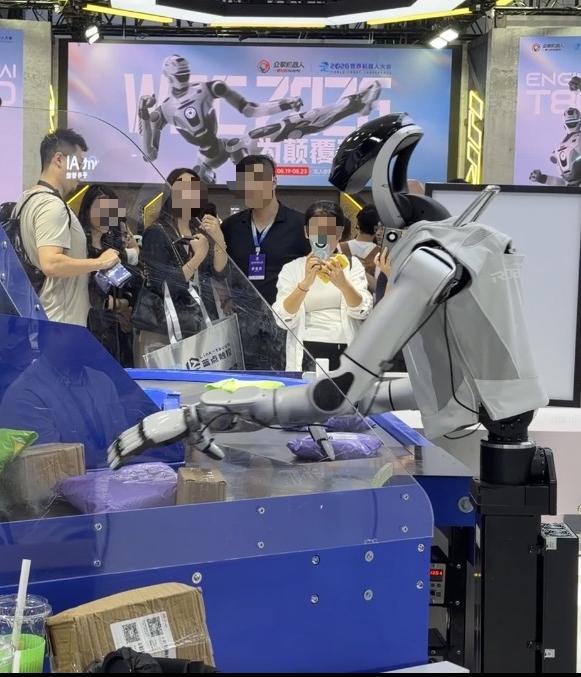
Reflected in productivity scenarios, the work content of robots at WRC booths is highly homogeneous: factory feeding, palletizing and depalletizing, and logistics sorting.
It is hard to tell whether this is an important breakthrough in the implementation of embodied intelligence, or the existing achievement of industrial automation that has lasted for many years.
In our opinion, the difference between "embodiment" and robotic arms ultimately depends on whether it is "intelligent" or not. Otherwise, the awkward reality of factory-deployed robots being "returned" that emerged in 2025 may repeat itself.
A software engineer at a machine tool manufacturing plant told NoNoise that they are also evaluating the possibility of deploying robots in factories. Previously, they communicated with the agent of a leading embodied enterprise, and the full set of configurations including data collection and training, software development, platforms, and robot bodies cost as high as 2 to 3 million yuan.
One of the reasons for the high cost is that for new tasks, the robot model needs to be retrained every time.
But according to his understanding, the output of robots is negligible, "It is just a concept now. If you let it actually work in the factory, its efficiency is still far behind that of human workers."
From the perspective of market demand, thousands of industries are full of expectations —
In the consultation area of Superb Vision, representatives of a factory came to seek intelligent solutions for production lines. The factory has more than 100 workers operating on each production line, and cost reduction is a key priority for them.
In the consultation area of Qianxun Intelligence, a service provider from the Saudi hospitality industry wanted to find humanoid robots that can help guests carry luggage and provide housekeeping services. He told the reception staff that according to Saudi Arabia's "Vision 2030", the total number of hotel rooms in the region is expected to increase to nearly 300,000. If Chinese robots can meet the needs of the Saudi hotel industry, it will be a huge market.
However, judging from the on-site feedback, most of these demands cannot be met by embodied intelligence enterprises for the time being.
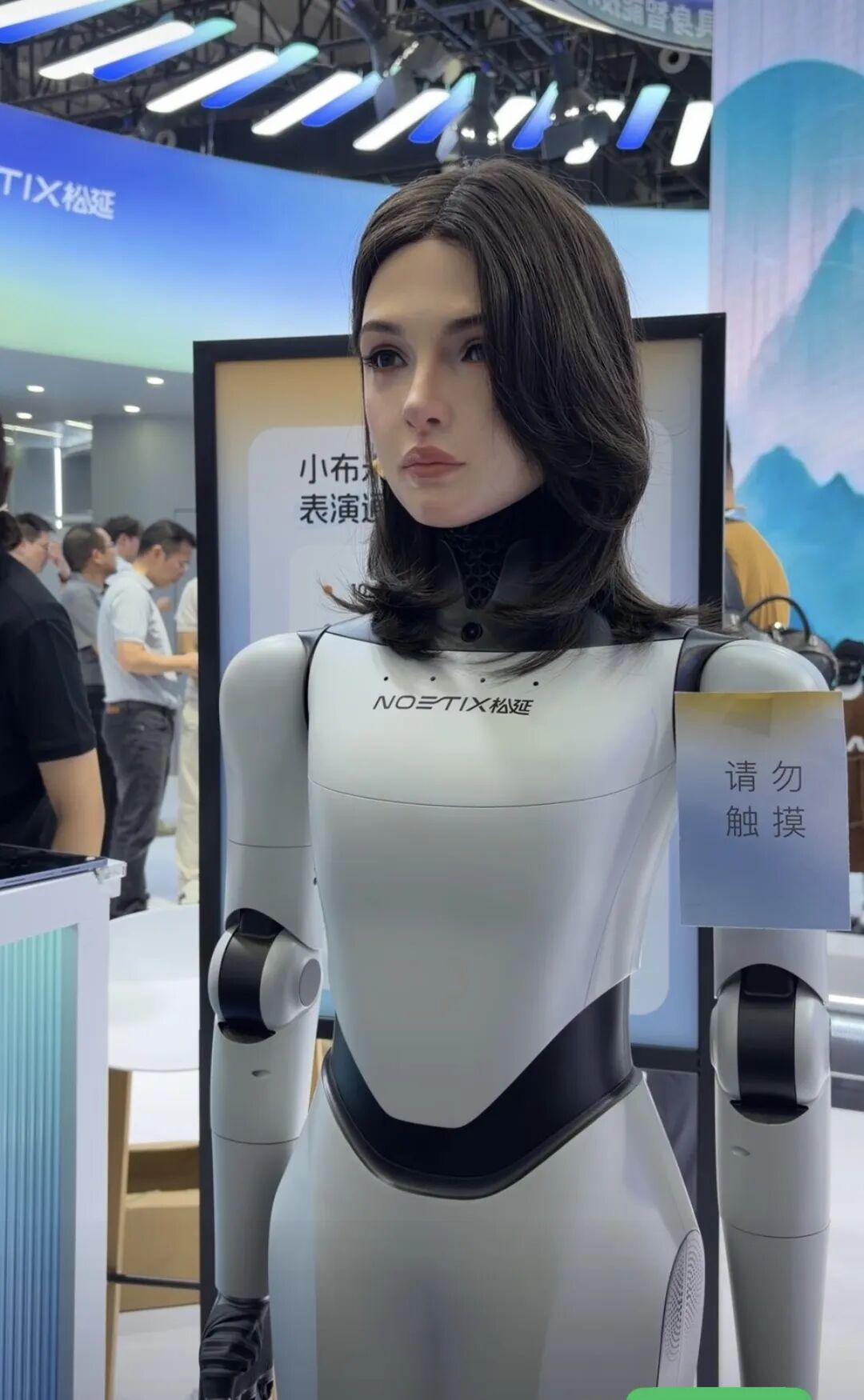
A commercial leader of an embodied unicorn with a valuation of over 20 billion yuan admitted frankly, "For current robots, those with strong capabilities are at the 4-year-old level, and those with weak capabilities are at the 2-year-old level. You can't expect 'child labor' to replace 'adults'. Prematurely requiring robots to directly implement for cost reduction while ignoring the objective reality that current products are still in the iteration stage is a kind of misalignment of focus." Therefore, his enterprise currently prioritizes serving large enterprise customers with long-term iteration willingness.
But if we really want to get to the root of the cognitive "misalignment", those dazzling laboratory demos, tuned specific performances and fanatical capital may have jointly raised the public's threshold for embodied intelligence.
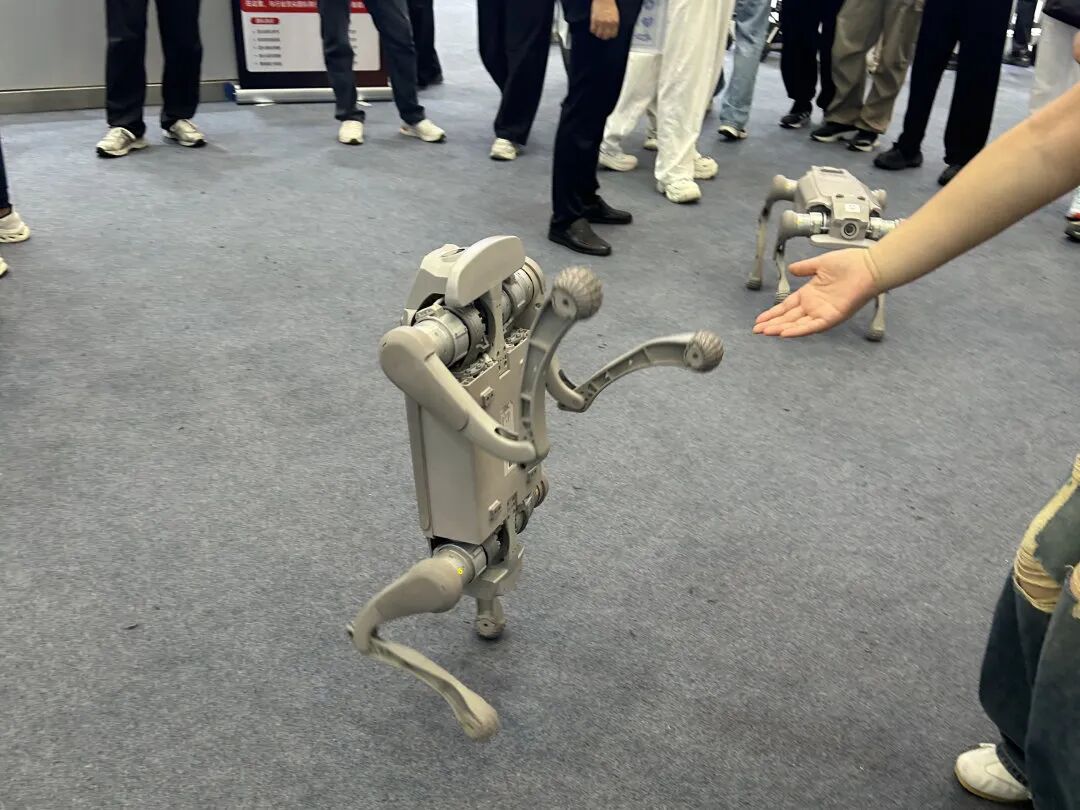
To accelerate implementation, some embodied enterprises are betting on quadruped robots, using such products to expand scenarios such as cultural tourism, fire protection, inspection, and property security. The staff of Zhishen Technology told us that the company's cumulative shipment volume reached 5,000 units last year, and by August this year, the cumulative shipment volume has reached 17,000 units. The company's goal is to reach 50,000 units in total by the end of the year, as the top management found that property security, elderly care institutions and other parties are quite interested in such products.
The aforementioned machine tool factory engineer is still looking for new solutions. He has begun to explore the cooperation space with embodied "general brain" enterprises. Theoretically, "generality" means that the model capability can be reused across different robot bodies, and the development cost can be greatly reduced.
This judgment was initially confirmed when he communicated with the staff of Ant Lingbo. The latter is an embodied intelligence company under Ant Group, committed to building a general "native brain" for robots, which has been gradually implemented in scenarios such as pharmacy sorting.
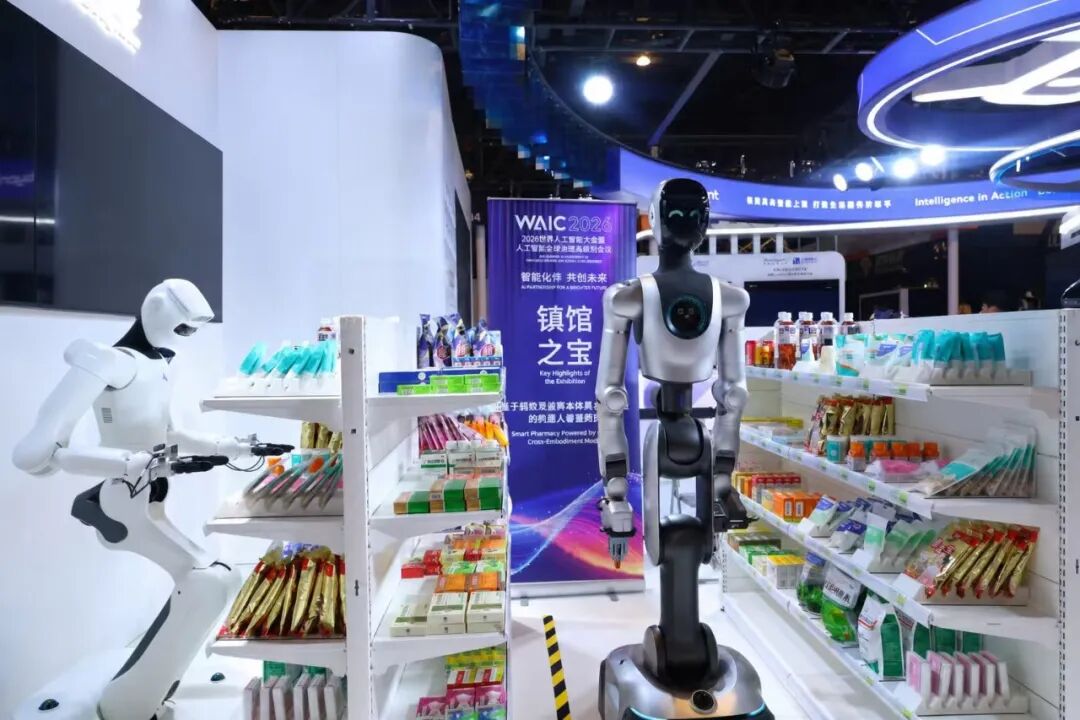
However, the general embodied brain and basic large models are also in the early stage of development, and even the mainstream technical routes have not shown signs of convergence.
This is probably one of the reasons why people like Wang Xingxing want to cool down the entire industry.
03 Industrial Focus Begins to Shift
How quickly embodied intelligence can be deployed into factories on a large scale and do housework in homes depends on the evolution speed of the embodied "brain" and the breakthroughs in physical AI data collection and translation.
From this perspective, the embodied intelligence industry is still in its early stage.
Wang Qian, the founder of Independent Variable, mentioned a viewpoint in his speech at the conference: just as large language models are the foundation of the digital world, the physical world also needs its own foundation model.
This foundation model is the "brain" of embodied intelligence. But now, there is no consensus in the industry on which route, VLA (Vision-Language-Action) or WMA (World-Action Model), is more suitable for the model architecture of embodied intelligence. Most leading companies have deployed and invested in both routes with different focuses. But at the same time, everyone is looking forward to the emergence of a new technical architecture.
A R&D personnel of a general embodied brain company described the current situation as follows, "Every company is doing 0-to-1 output in its own scenario. But at this stage, if we don't compete on capabilities, there is no more effective way."
This is driven by market enthusiasm. A company founded in February last year that mainly manufactures robots for university scientific research revealed that the unit price of its products is about 50,000 yuan, and it has sold more than 300 units this year, currently facing insufficient production capacity. A manufacturer of dexterous hands has seen its sales volume in the first half of this year double compared with the total sales of last year.
There is also external pressure: capital requires embodied intelligence to be implemented in scenarios as soon as possible.
Therefore, since the beginning of this year, the entire industry has felt the importance of "physical data". Because no matter for successful commercial implementation or technical iteration verification, a large amount of reliable real data is required.
This has directly led to the explosion of the data collection business. A data collection service provider of Baidu Maps told us that they have started to transform, and this year they have specially set up a new team of more than 20 people to expand the embodied data collection business.
New demands have spawned a new industrial chain branch, which includes data factories, data labeling vendors, general model manufacturers, and data collection equipment vendors.
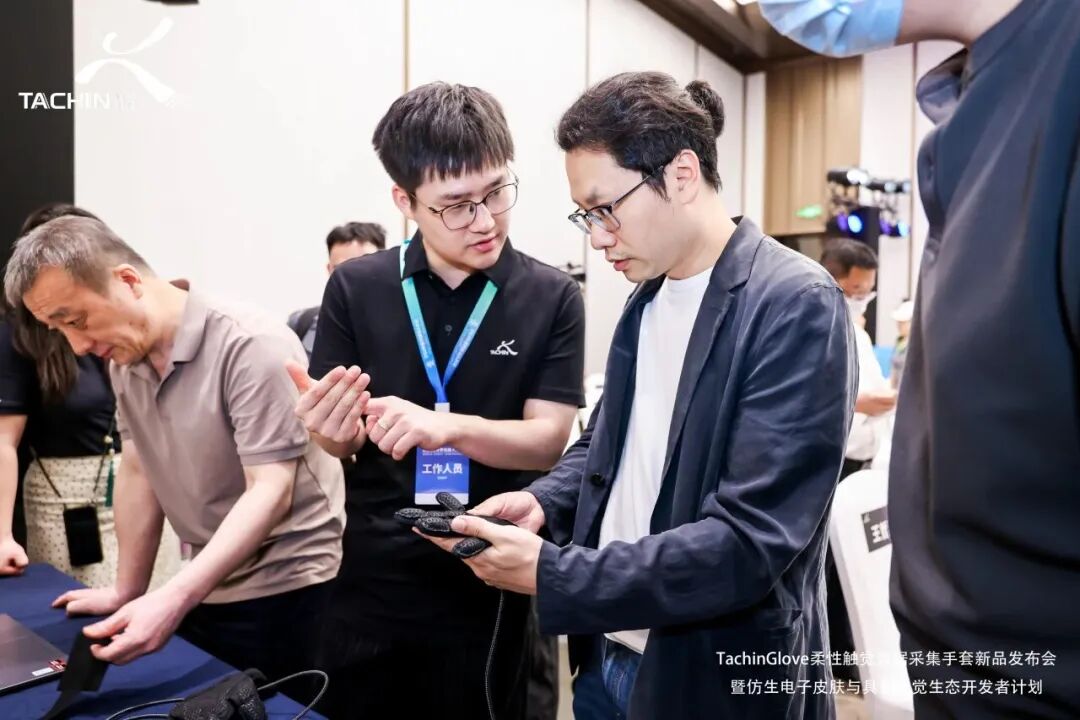
For example, a startup named Tujian Technology promoted its new product at the conference — the TachinGlove flexible tactile data collection glove. It is distributed with thousands of sensing points in the bionic palmprint area, targeting scenarios such as embodied intelligence training, robot teleoperation and industrial operation data collection. Independent Variable also displayed its own robot-body-free data collection solution at the booth. Wang Qian, the founder, believes that the complexity of processing data is even higher than that of developing a model.
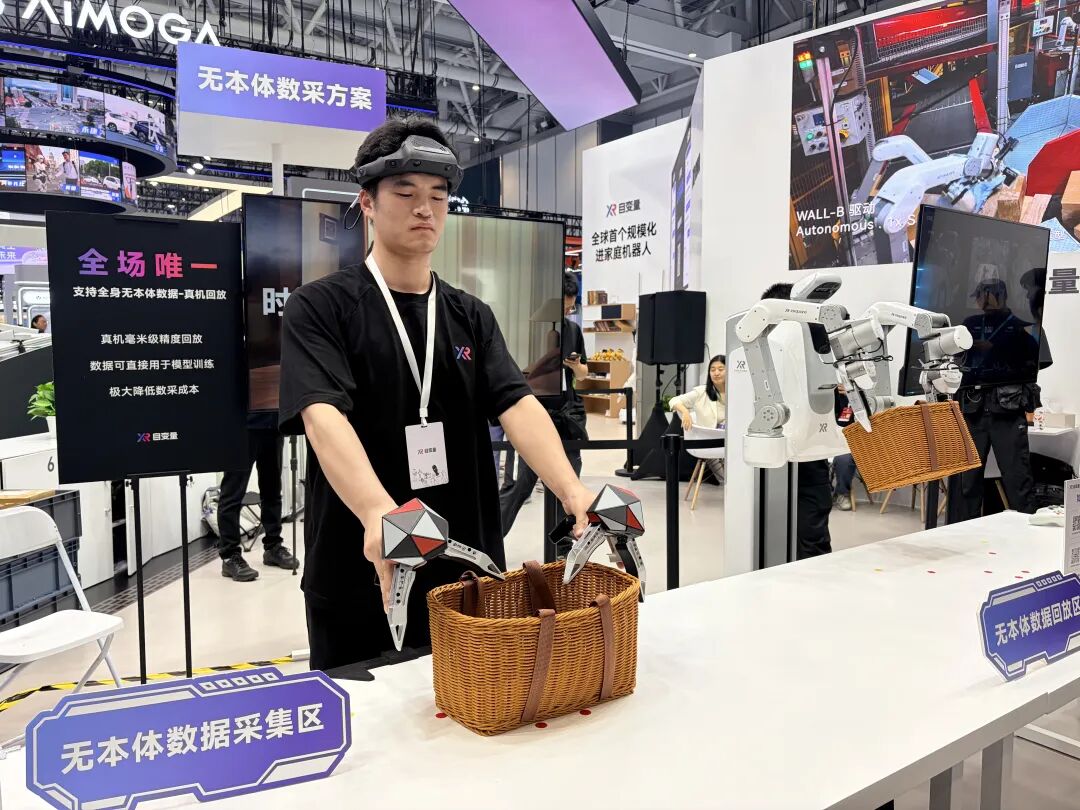
Around data collection, new divergences have also emerged in the industry.
Some robot products of embodied intelligence companies are flowing into data collection centers led by local governments; and then embodied intelligence companies purchase the data collected by their own robot bodies from these data collection centers.
This is more or less suspected of "circular trading" in terms of business model. Previously, NVIDIA's model of investing in AI enterprises with money from its left hand and selling chips to them to take the money back with its right hand made Wall Street uneasy, and people kept warning against the AI bubble.
As for how much bubble there is in the embodied intelligence industry, sales volume and actual use are also an interesting observation window.
The *2026 Humanoid Robot Industry Development Report* shows that in the first half of this year, the shipment volume of humanoid robots in China has exceeded 40,000 units, and its global proportion has further increased to 97%.