Five leading figures in the embodied intelligence industry discuss: Where are the bottlenecks in the 10,000-unit delivery process?
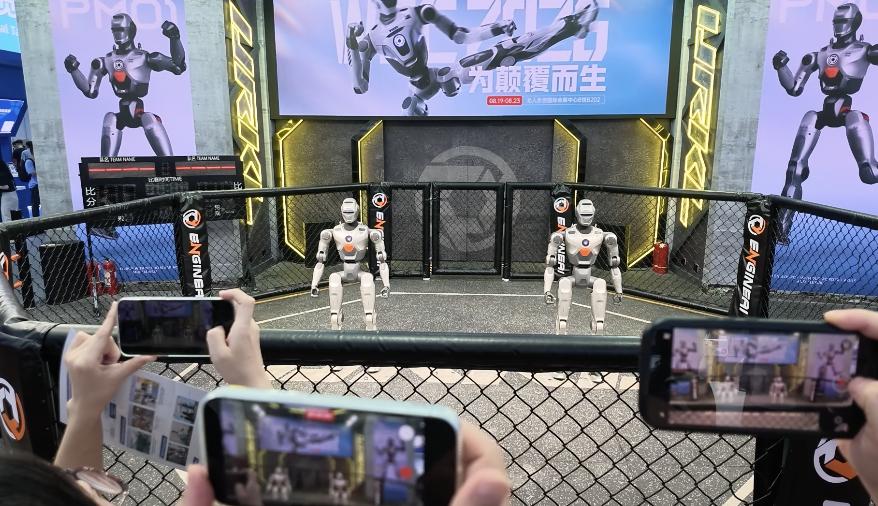
WRC 2026 remains a spectacular event.
The crowd is as dense as the morning rush hour on the subway, and there are so many robots that you cannot finish visiting all of them even after a full day at the exhibition.
Yet amid the prevailing boom, we have noticed that a number of changes are quietly taking place:
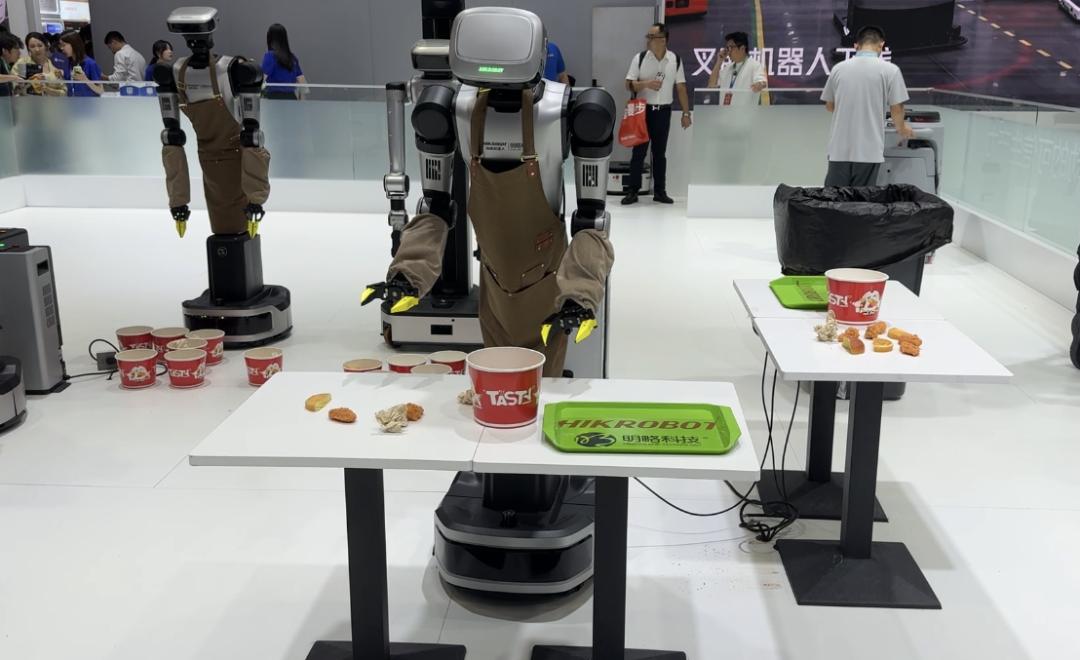
Manufacturers of dual-arm wheeled robots have started to develop humanoid robots, for example, Galaxy Universal has launched its ET1 Xingzai robot, which even performed dances on site;
Humanoid robot developers have also begun to produce dual-arm wheeled robots, such as UBtech's Cruzr Y1 and Cruzr S2. At this exhibition, UBtech once again demonstrated the operation capabilities of box handling and palletizing using its dual-arm wheeled robots on site;
The embodied model sector has added the world model as a new technical path, and the world model has almost become a topic mentioned by all guests and at all forums focused on embodied intelligence, though the definitions of the world model shared by different parties vary to some extent;
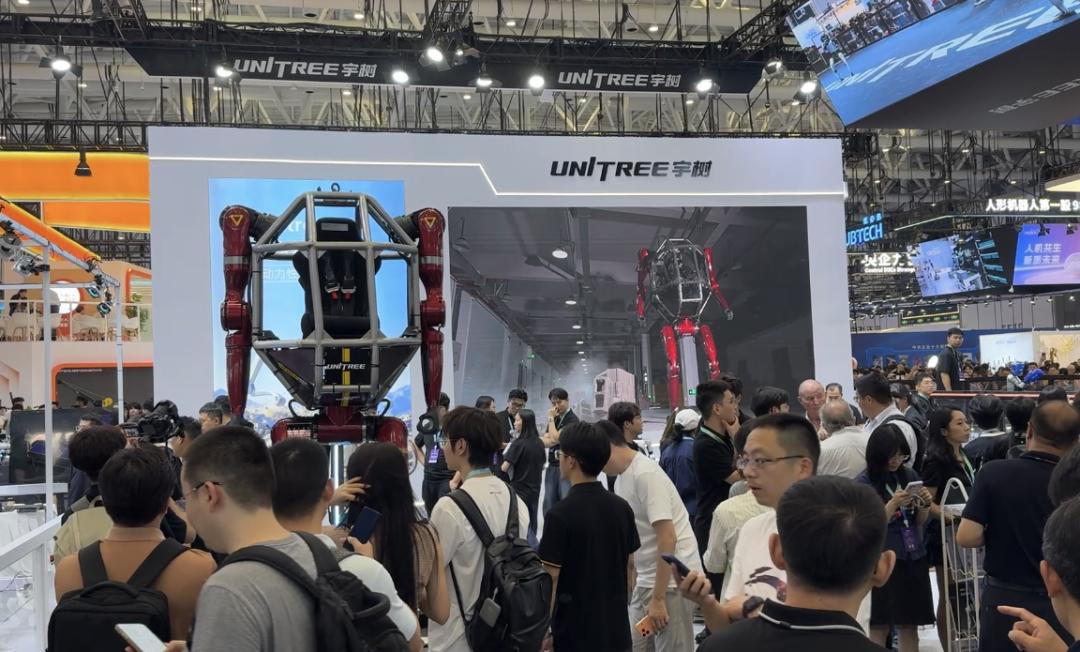
The ultimate topic of real-world deployment has been put on the table. Apart from scientific research and performance scenarios, while all parties are trying their best to push robots to achieve real market deployment, humanoid robots seem to have taken a step back, and companies are trying to deploy more stable non-humanoid robots instead, for example, the centaur robot at Fourier Intelligence's booth;
……
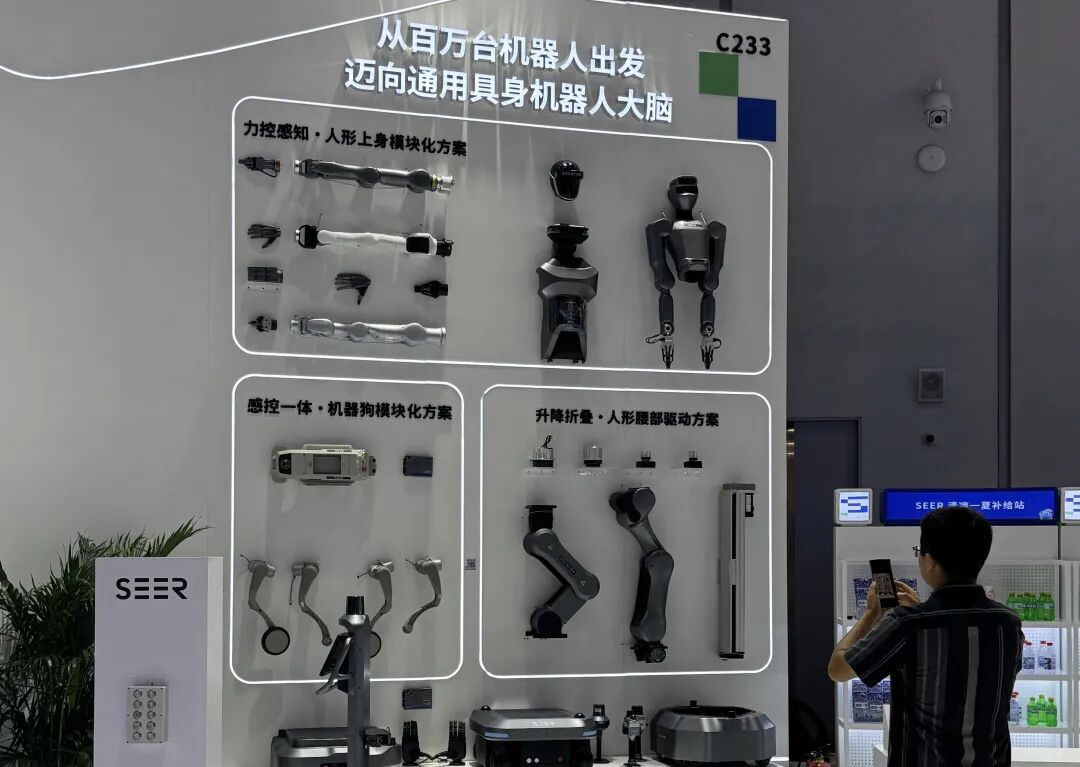
Behind these changes are both technological impetus and capital impetus. Driven by the two factors together, the embodied robot track needs to answer another highly questioned question this year:
How to achieve large-scale mass production of embodied robots?
It is worth noting that many industry practitioners regard the mass production of 1 million units as the real threshold for product mass production. The "mass production" of less than 20,000 humanoid robots last year was always put in quotation marks whenever it was mentioned.
Also in this year, many embodied R&D teams have put forward their mass production goals. UBtech announced that it will mass produce 10,000 industrial humanoid robots this year, while Unitree, which was just listed, recently officially announced that the cumulative output of its humanoid robots has reached 18,000 units.
However, the ideal is plump, but the reality is bony.
When the standardization and stability of humanoid robots are still in doubt, the mass production of 10,000 units has also brought new problems.
At the main forum on the second day of WRC 2026, the organizer invited several leading figures in the embodied intelligence industry to the stage to reveal the numerous difficulties behind the 10,000-unit mass production. The list of guests is as follows:
Zhao Tongyang, Founder and CEO of Q-One Robotics
Cheng Hao, Founder and Chairman of Accelerated Evolution
Liu Yulong, Co-founder and Executive President of Intelligent Body Technology
Jiao Jichao, Vice President of UBtech and Dean of the Institute of Embodied Intelligence and Humanoid Robots
Xu Lei, Head of the Intelligent Robot Business Department of JD
The key issues mentioned in this dialogue include: how to balance the brain capability and engineering reliability, how to make products match real demands, how the software and hardware ecosystem will evolve, and what scenarios enterprises should choose as their entry points.
We have organized this dialogue as follows, let's take a look at the harsh truths behind the boom of the embodied intelligence industry.
01 The 10,000-unit delivery bottleneck lies not only in the brain, but also in production and demand
Q: What are the main current bottlenecks for embodied robots to achieve 10,000-unit delivery?
Zhao Tongyang: The first bottleneck is the brain capability.
Now if the task success rate of a robot is 99%, it means that when it goes out to perform 100 tasks, it may fail to return normally once. This is very bad in real-world applications, and people will not accept such reliability.
Therefore, the brain capability needs to be improved from 99% to 99.99%. This is a huge bottleneck before robots can truly enter the real world.
Cheng Hao: The most critical bottleneck for large-scale deployment is still in technology.
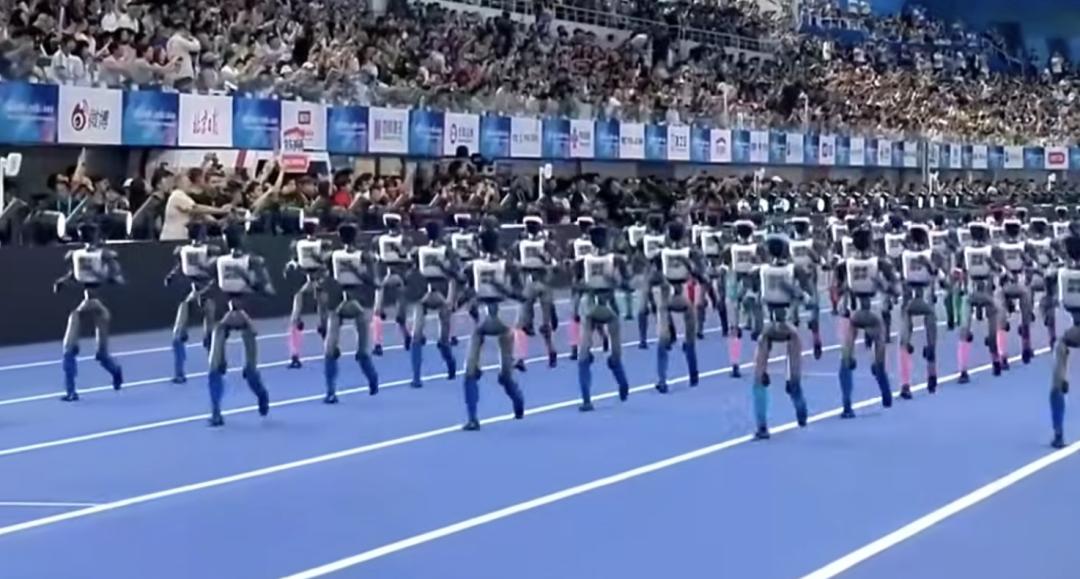
At present, robot bodies have reached a usable state in some scenarios. For example, dozens or even hundreds of robots can form a phalanx with consistent movements, which shows that the consistency of hardware has made obvious progress.
The cerebellum capability is also maturing continuously, including general motion control, the combination of vision and motion control, and whole-body motion control.
In contrast, the technical route of embodied large models has not yet converged, and there are multiple solutions in the industry, but none of them have truly entered the mature stage of engineering deployment.
In addition to the brain, another problem is engineering implementation.
How to improve the reliability to a higher level through a large number of engineering works is a challenge composed of many small problems.
Q: The industrial environment has high requirements for reliability. If the brain cannot reach an extremely high success rate in the short term, can robots still achieve large-scale deployment?
Liu Yulong: From the perspective of the ideal state of embodied intelligence, the current maturity of the brain is indeed not enough, but if the goal is to first achieve 10,000-unit delivery and actual use, the brain only needs to be "sufficient" in specific scenarios.
For example, a quadruped robot that can move autonomously in all-terrain environments only needs to be able to move objects from point A to point B. In this scenario, the capabilities of the brain and cerebellum have reached a usable level.
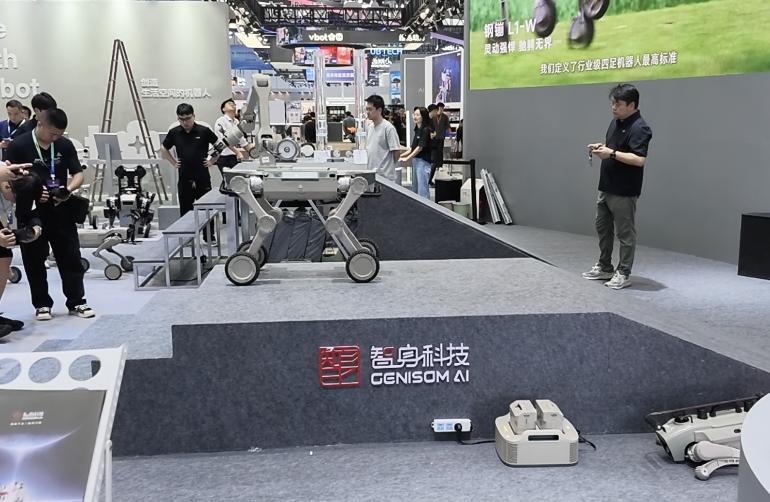
In actual delivery, the first bottleneck we encountered is the hardware indicators.
Robots need to bear a sufficiently large load under limited self-weight, and also meet the requirements of high and low temperature environments, continuous working time and other indicators, which must reach the bottom line of industry customers.
The second bottleneck is batch consistency.
10,000-unit delivery needs to ensure that the yield rate, process, evaluation and final delivery status of products in different batches remain consistent. However, embodied intelligent robots have not yet formed clear and complete industry standards like automobiles, drones and home appliances. Enterprises need to coordinate upstream and downstream parties to jointly establish standards based on scenario demands and supply chain capabilities.
Jiao Jichao: From the perspective of industrial customers, the first is the challenge brought by 10,000-unit mass production to the production line and manufacturing process. Manufacturing efficiency cannot be improved by continuously adding personnel.
From R&D project initiation, software development, NPI introduction to bulk procurement and quality control, the industry needs to establish a standardized process.
For example, if a problem is found when producing the 100th or 200th unit, engineering changes need to be carried out. Whether these changes can be quickly introduced to the factory is directly related to the consistency, stability and reliability of subsequent products.
But not all stations in industrial scenarios require robots to reach extremely high reliability. For tasks such as loading/unloading and logistics sorting, some prioritize efficiency while others prioritize success rate. What customers ultimately calculate is:
After the robot replaces a certain station, whether the investment can be recovered within two years, up to three years at most.
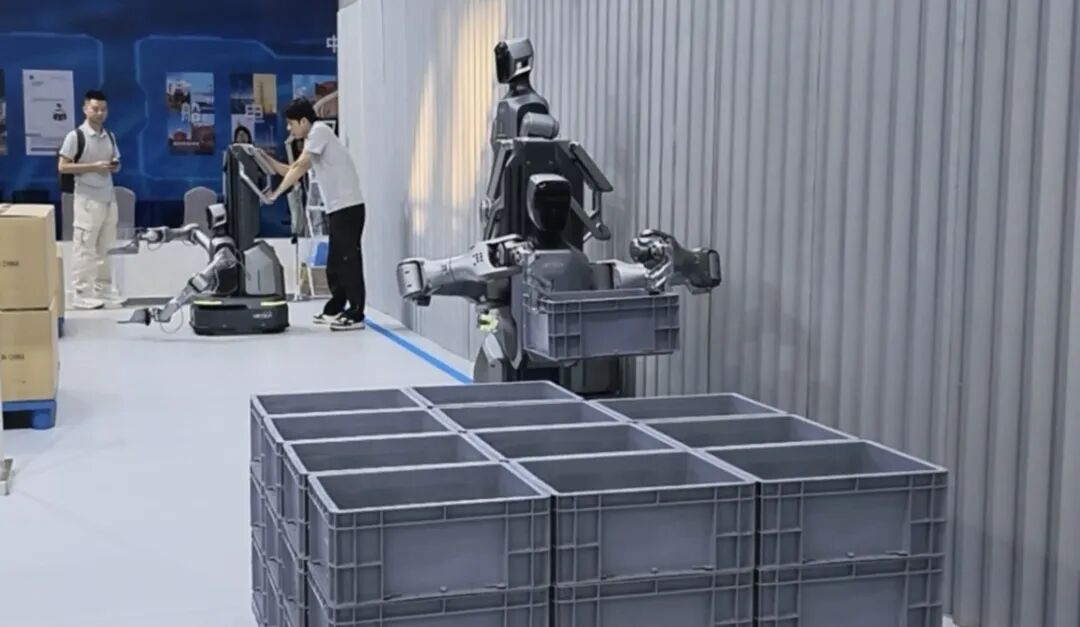
This ultimately comes down to BOM cost, delivery cost and subsequent operation and maintenance cost.
Enterprises can first find one or two deployable stations to let robots enter real scenarios, then iterate gradually through data closed loop, and finally enter more complex tasks with higher accuracy requirements.
Xu Lei: In addition to supply capacity, we also need to consider whether the supply-demand relationship matches.
Before the arrival of general artificial intelligence, do the products currently provided by enterprises truly meet user demands? What problems do robots solve exactly and what value do they create?
Household cleaning robots only complete one type of task, but they can also form a huge market. For humanoid robots and quadruped robots, the key is also to find the matching point with user demands.
From the retail end data, the current sales conversion rate of embodied intelligent products is much lower than that of traditional consumer electronics and mobile digital products, which indicates that products and demands have not fully converged, but it also means there are opportunities in it.
Once the real demand matching point is found, the delivery of more than 10,000 units will no longer be the biggest problem.
02 Will the final pattern of the embodied industry be winner-takes-all?
Q: Will the embodied intelligent industry eventually form a pattern where a few platforms "win all", or will the body, model, supply chain and vertical applications develop respectively?
Xu Lei: This question needs to be viewed in different stages.
The current stage is definitely a period of diverse development, because neither technology nor scenarios have converged. Some enterprises focus on robot bodies, some develop cerebellum, brain and models, while others choose the full-stack route. The collision between different technologies will bring more innovations.
But as the industry moves towards large-scale and commercialization, technology and scenarios will definitely converge gradually. Only by forming standards can the scale be further expanded.
In the long run, I think the industry will still be subdivided according to different scenarios and fields, and it is not necessarily that only a few companies will be left.
Zhao Tongyang: I think the industry will definitely move towards concentration.
In the future, if every household has one or two humanoid robots, the market space will be very large, enough to accommodate many huge companies.
But robots integrate multiple technologies such as large models, hardware, ecology and software, and eventually there may be one or two platform-based enterprises similar to Apple or Microsoft.
Just like after the mobile phone industry entered the smart phone era, a few leading enterprises obtained most of the profits, while other enterprises focused on specific use cases.
Jiao Jichao: From the perspective of the supply chain, leading enterprises will emerge in links such as motors, reducers and embodied intelligent chips.
The robot body market may also form several giants and platforms, and more enterprises will develop applications on these platforms.
The future form may be similar to smart phones:
Hardware platforms will gradually concentrate, while the application end remains rich.
But the special feature of embodied intelligence is that hardware and software are deeply coupled, the body and soul of the robot need to match each other, so body enterprises may need to have full-stack capabilities and platform capabilities.
Liu Yulong: The opportunities brought by embodied intelligence will not only exist in a certain industry.
Different vertical fields such as education, industry, commerce and consumption may all have their own leading enterprises.
Take the industry sector as an example, it also includes a large number of subdivided scenarios, and is affected by factors such as industrial chain, channels and regions, so it is difficult to be completely unified.
At the consumer end, user demands are even more diverse. In the future, the robots owned by everyone may need to take into account price, personalization and specific demands, which will leave room for development for more enterprises.
Cheng Hao: We believe that the development of embodied intelligence will generally go through three stages:
Body stage, Agent stage and model stage.
It is still in the body stage now, so the products are in diverse forms;
After entering the Agent stage, the body and system may gradually converge to a few platforms, and the applications on the platforms will become more and more abundant;
Later, entering the model stage, the embodied large model may further integrate applications, and the applications themselves will also begin to converge.
At the same time, general equipment and special equipment will still develop in parallel. After the emergence of smart phones, cameras have not disappeared, and professional equipment will continue to iterate along their respective directions.
03 Do both the brain and the body need to be self-developed?
Q: Should the robot body and embodied large model be completed by the same enterprise? Can software and hardware achieve decoupling like the computer industry?
Jiao Jichao: At the current stage, data is highly related to the robot body.
Different robots have different motor parameters and