The world's first human-versus-robot tennis match has just kicked off. The robot made incredible extreme saves that left Zheng Jie completely stunned.
The AstraTennis moment for Chinese robots has arrived.
On August 22, the 2nd World Humanoid Robot Games kicked off, with China Media Group broadcasting the event globally.
As the camera panned across the court, the entire audience seemed to hold their breath.
On either side of the net, one side was a top human tennis player, and the other was a humanoid robot.
This moment marks that China's technological innovation has ushered in a landmark embodied intelligence singularity that will go down in history.
The world's first truly human-vs-robot tennis match officially began!
World's First Human-Robot Tennis Match
The event kicked off with an exciting mixed human-robot tennis doubles match.
Surprisingly, the performance of Galaxy Starz was extremely impressive: it moved nimbly with agile footwork, shifting back and forth quickly as needed, and played very smoothly.
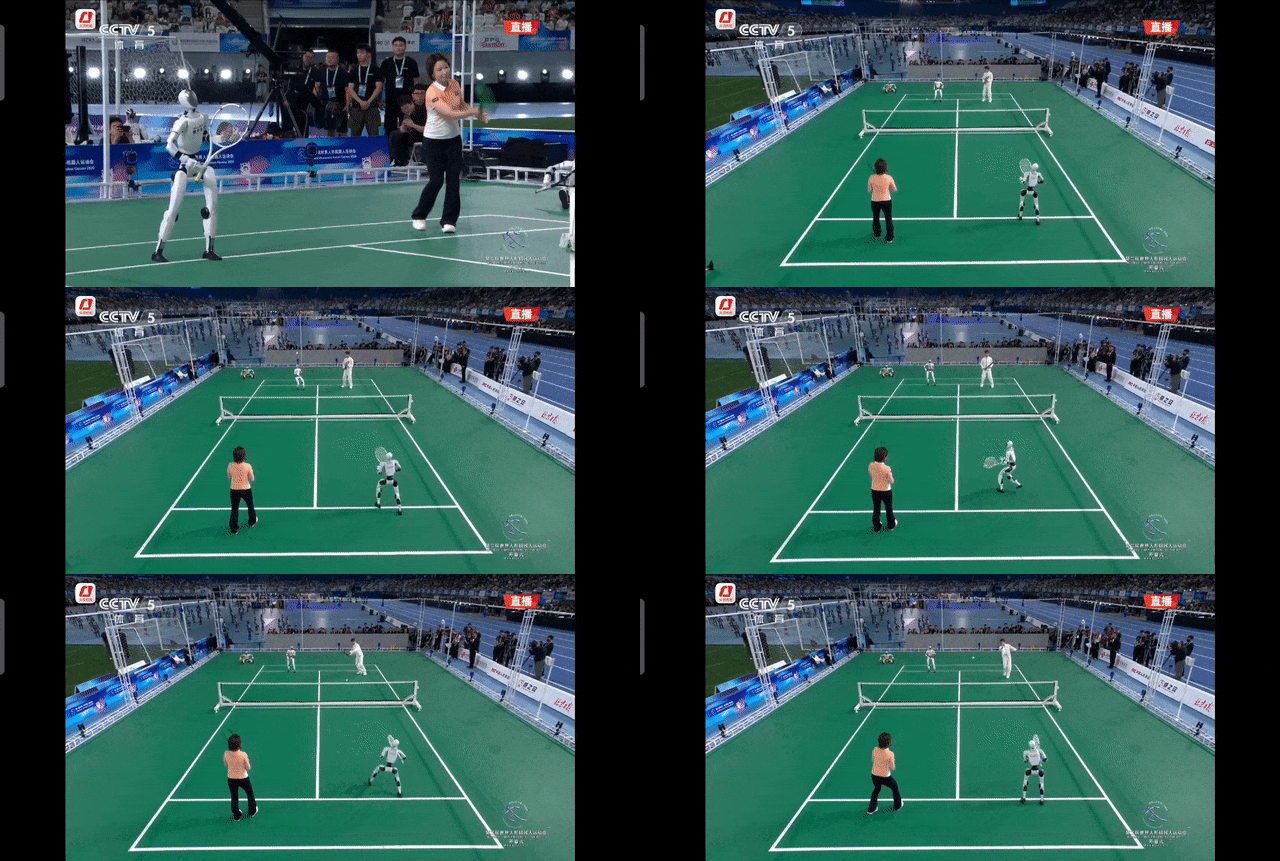
Moreover, Starz and its human partner cooperated with great tacit understanding to form a front-back stance, fully responding to the opponents on the other side.
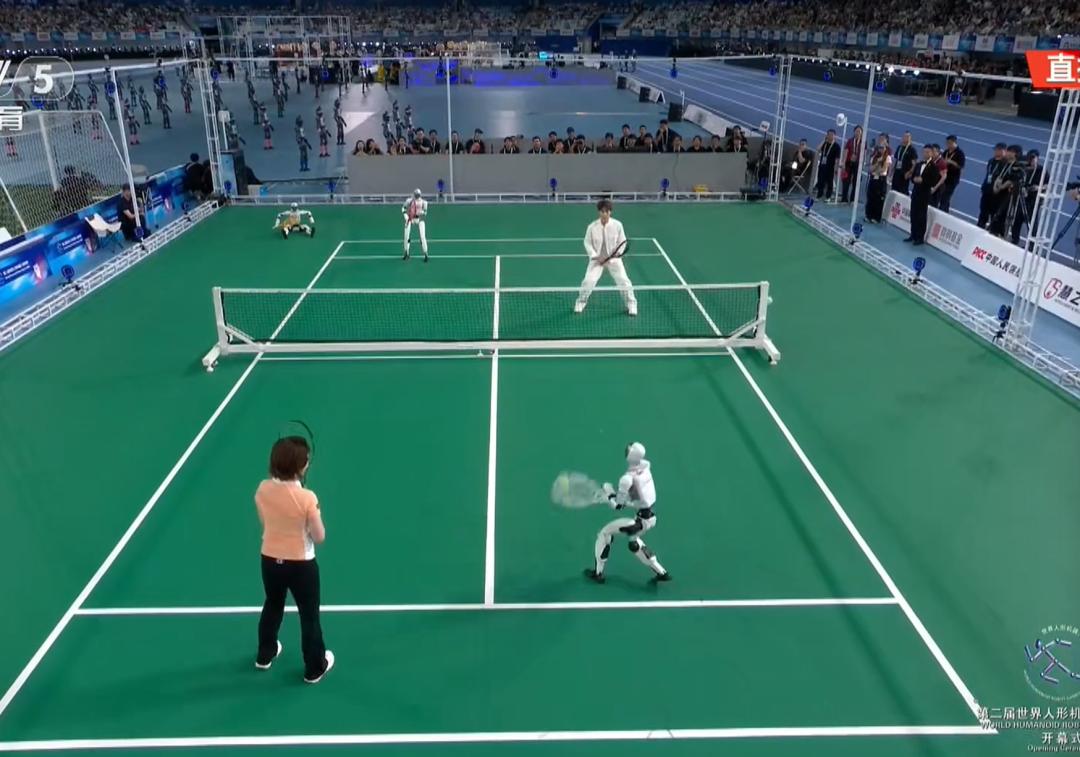
Next, tennis legend Zheng Jie competed against the Galaxy General Robot in the world's first human-robot singles tennis match.
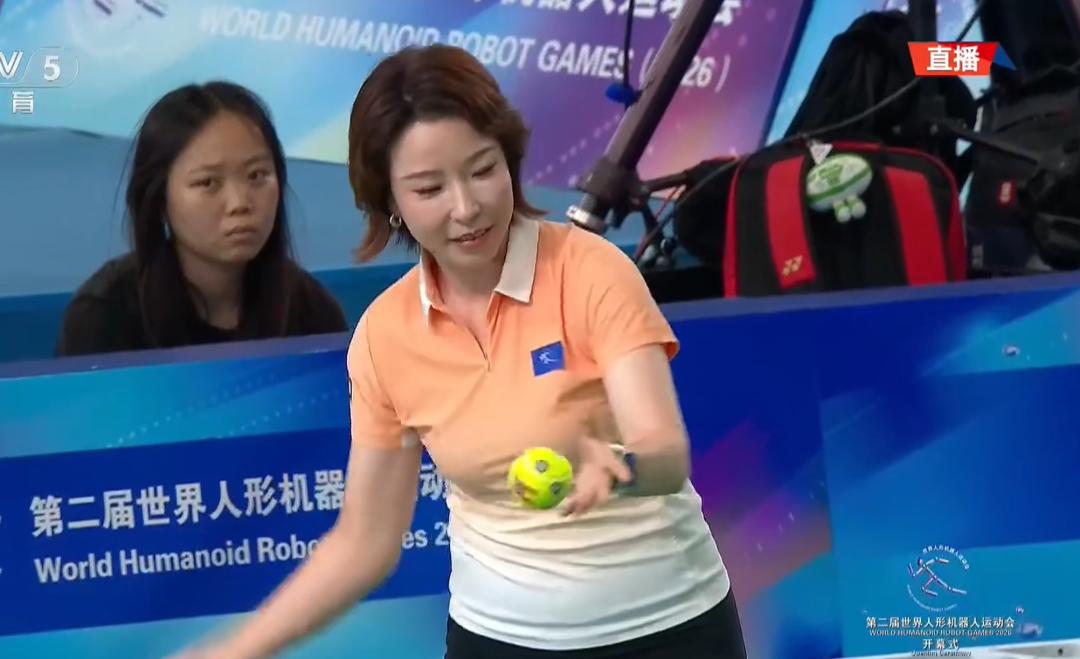
Whether it was forehand or backhand, the robot played evenly against the human player.
Then Zheng Jie decided to raise the difficulty level and hit a lob.
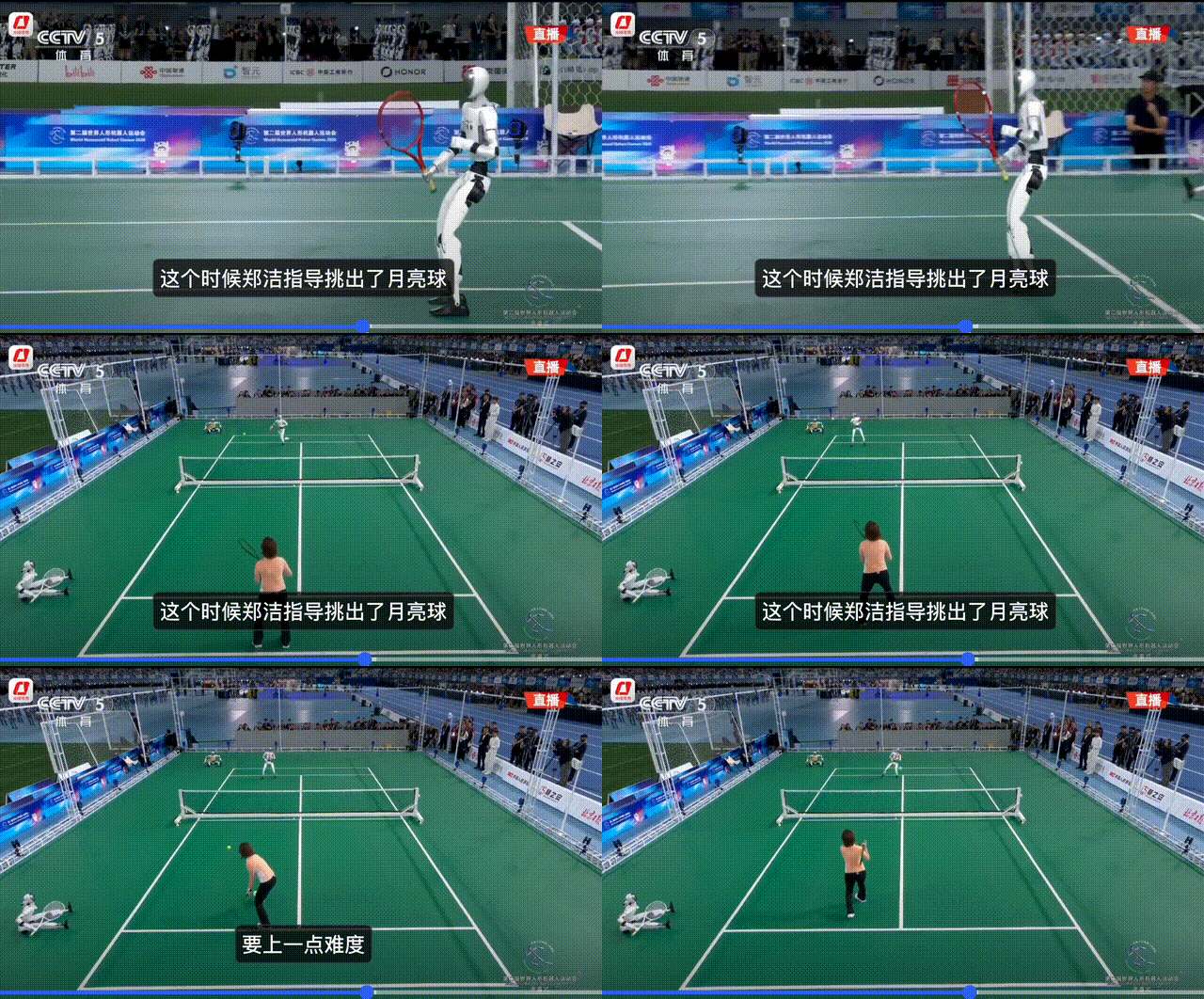
As a result, while being moved left and right by her opponent, the robot accidentally fell flat on its back.
Unexpectedly, the very next second, it immediately adjusted its posture and stood back up.
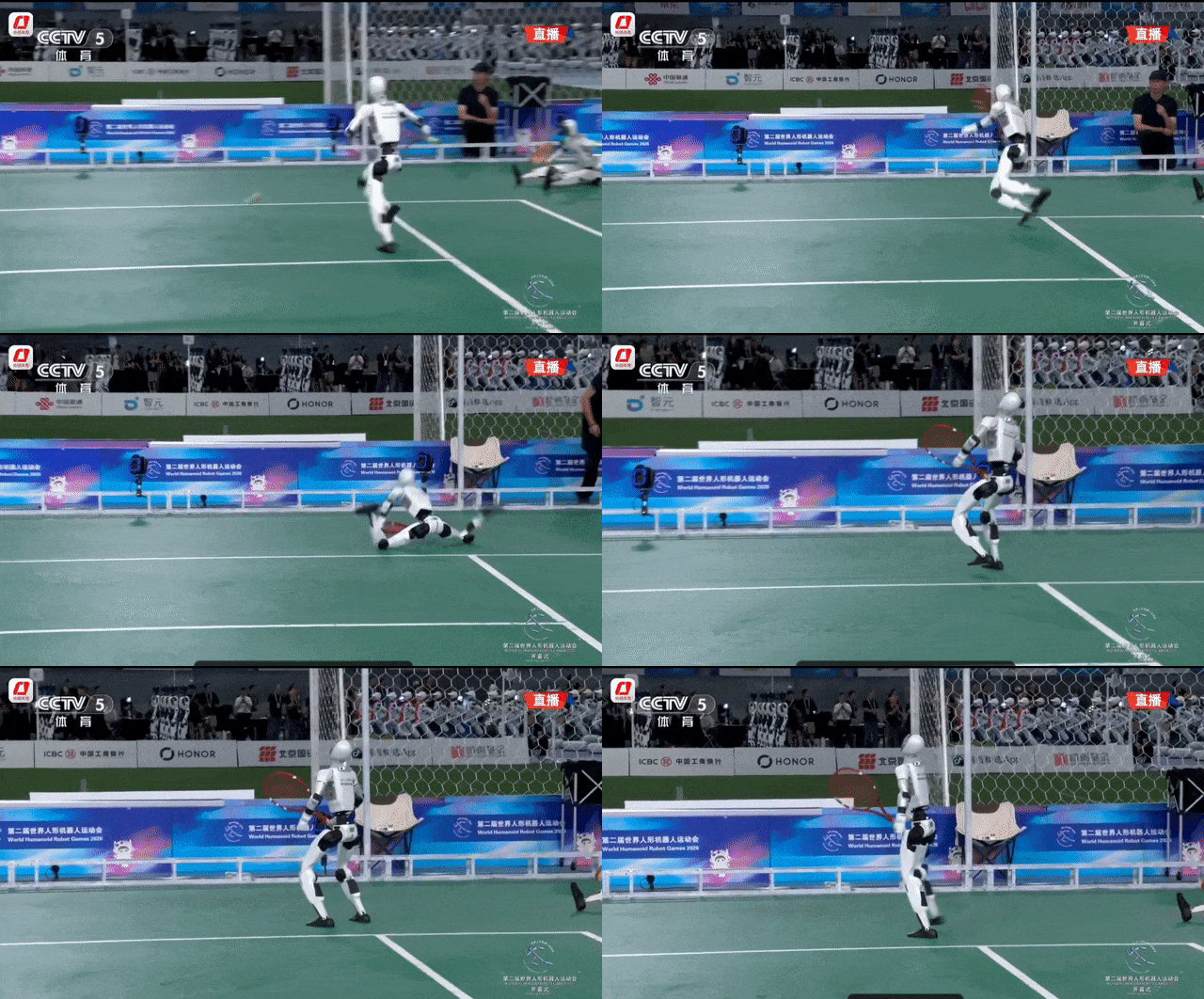
When facing Zheng Jie's chops and spins, the robot's judgment was also surprisingly accurate.
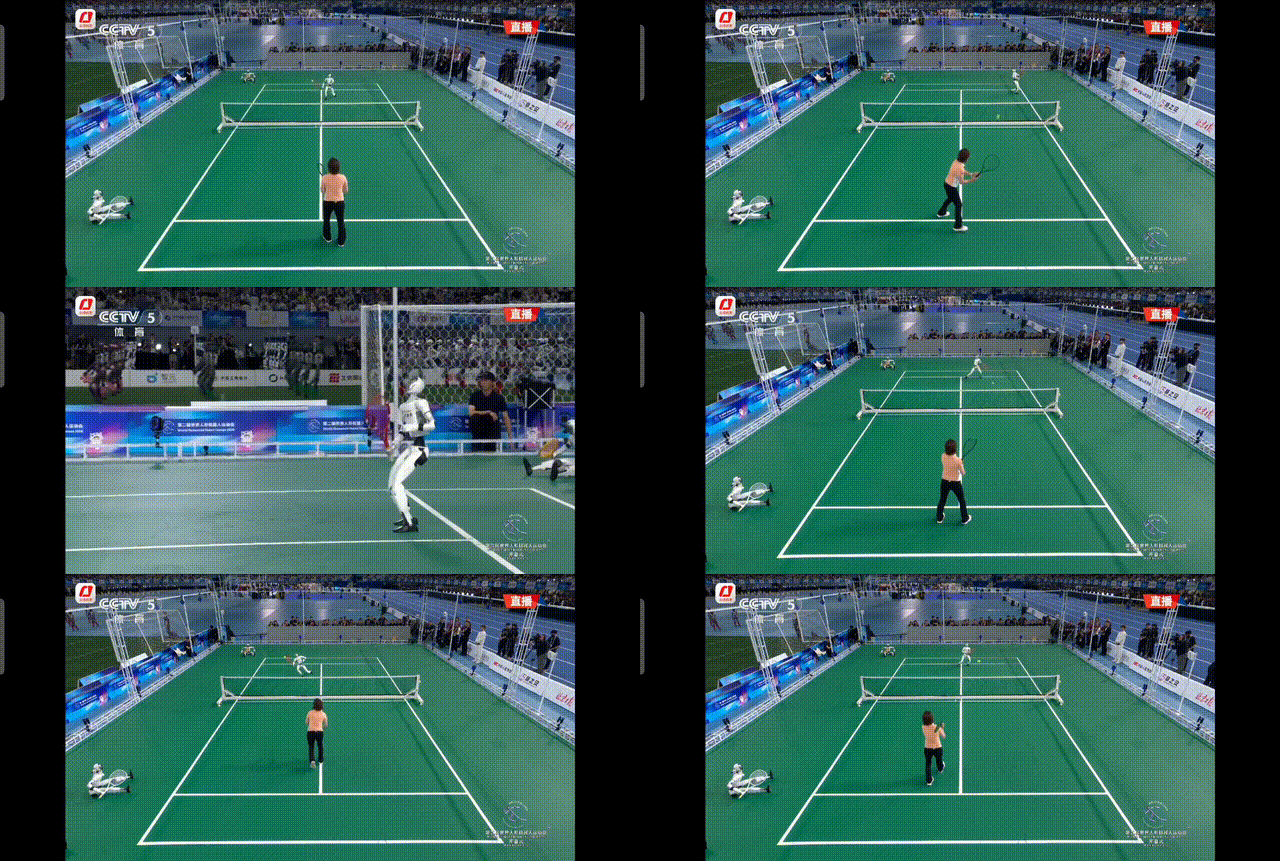
Eventually, Zheng Jie realized she could no longer hold back, and started moving the robot around across the court. The robot unexpectedly completed an excellent stride, winning cheers from the audience.
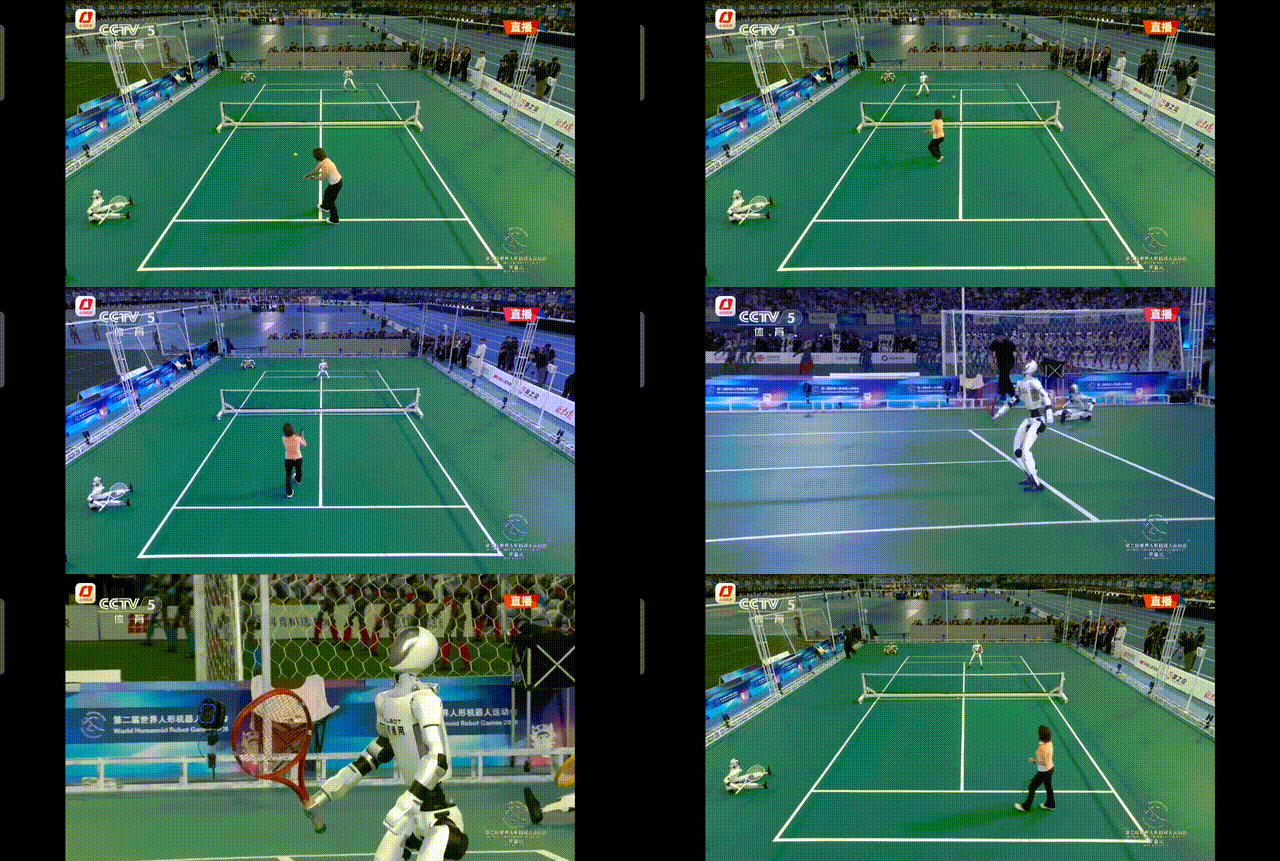
At the end of the match, the robot's performance drew cheers from everyone present.
Throughout the entire game, actions including knee bending, ball tossing, and body rotation were all completed independently by the humanoid robot.
In addition, the speed of its serve reached over 100 kilometers per hour, leaving it with a reaction time of only a fraction of a second, yet it barely made any mistakes.
This robot comes from Galaxy General.
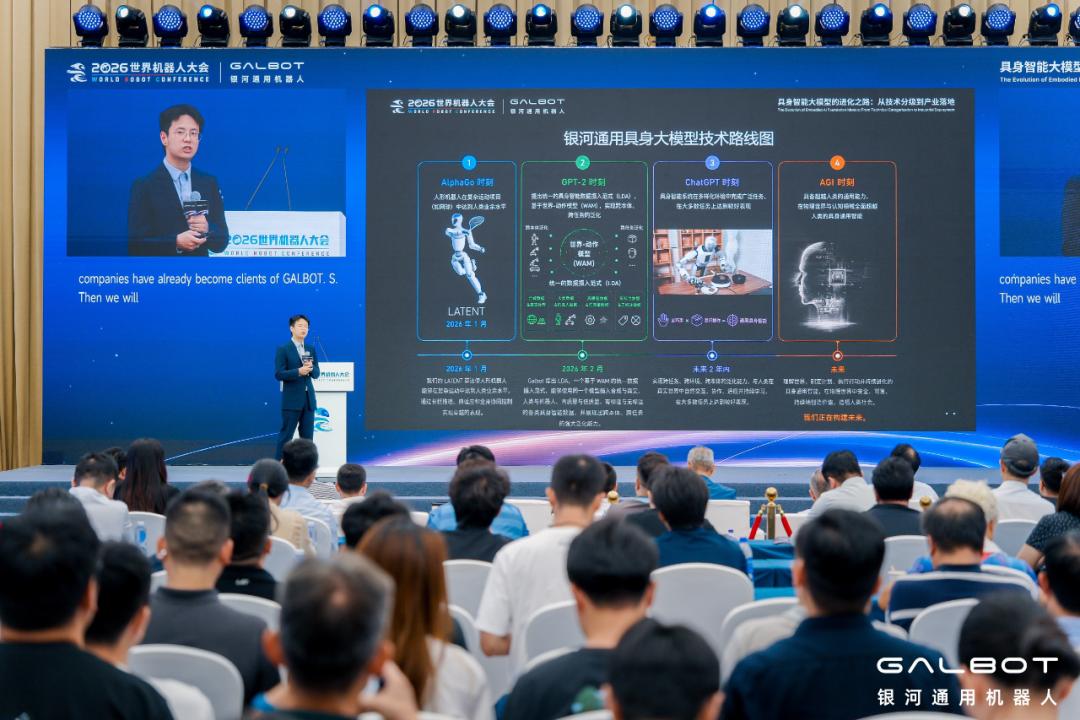
Ten years ago, AlphaGo defeated Lee Sedol. Ten years later, domestically developed robots are competing on the same court against top tennis athletes.
If AlphaGo proved that AI could conquer the digital world, then today, the domestically developed robot from Galaxy General proves that AI can withstand the ultimate stress test in the physical world.
For the first time, it stood up from lines of code, ran, swung its racket, competed in real confrontations, and even got back up on its own after falling to keep playing.
This stunning AstraTennis moment of embodied intelligence is witnessed simultaneously by the whole world!
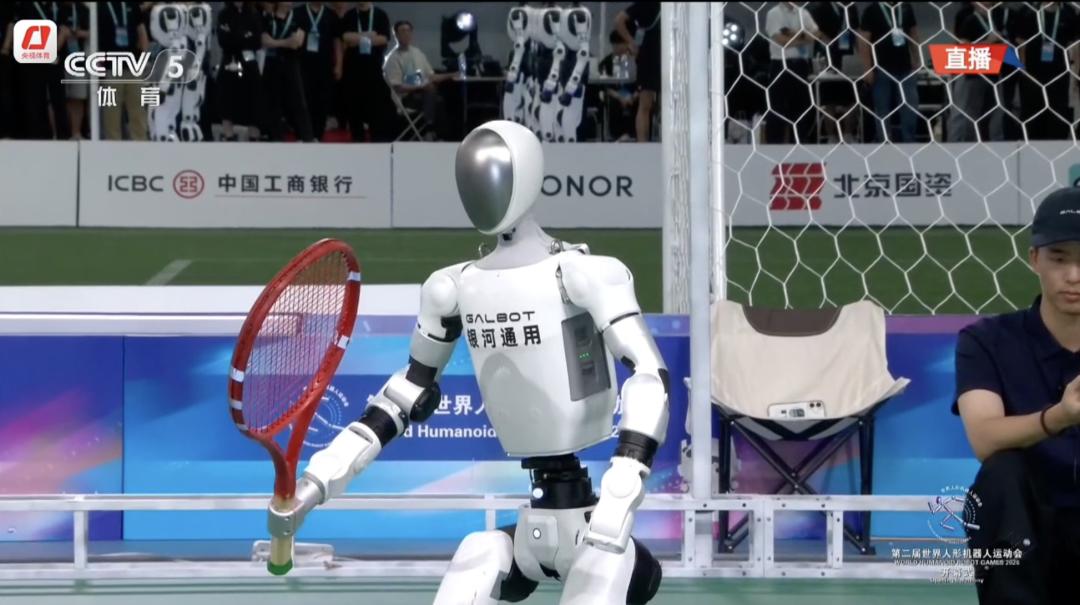
The AstraTennis Moment for Chinese Robots
Why has this tennis match caused such a huge stir in the global tech community?
Because tennis is the ultimate stress test for embodied intelligence.
With a reaction time of only a fraction of a second, this sport pushes the robot's capabilities of perception, decision-making, full-body motion control, and real-time gaming to their physical limits at the same time.
Moreover, playing tennis is far more difficult for AI than playing Go.
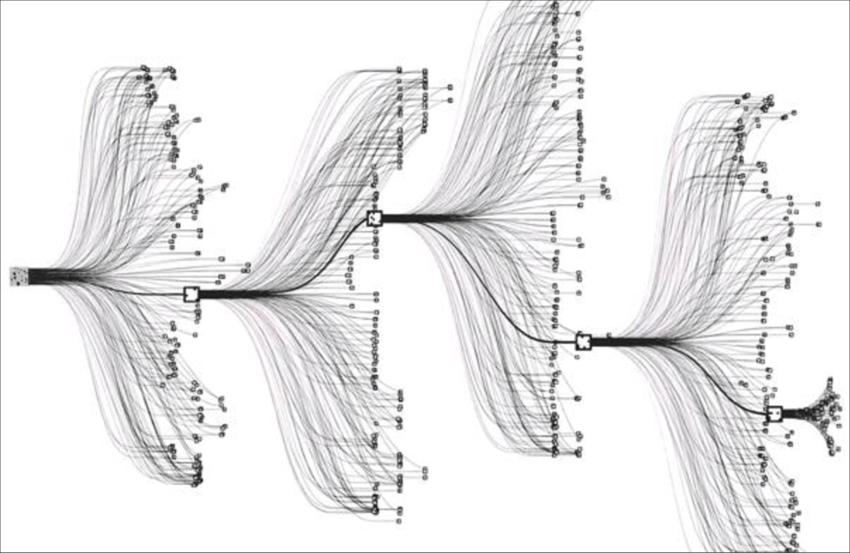
After all, AlphaGo faces 361 defined intersections on a 19x19 grid, and after the opponent places a stone, it has dozens of seconds or even several minutes to deduce its next move.
That is a game in the digital world. Although the solution space is huge, its boundaries are clear and the rules are constant. The entire world is static and discrete, and AI has full awareness of it.
Although the solution space of this problem is larger than the total number of atoms in the universe, for AI, it is nothing more than a "math problem" of higher difficulty.
But the tennis court is a completely different scenario.
The ball flies over at a speed of over 100 kilometers per hour, and its landing point is affected by spin, wind, and court friction. No two hits share the exact same physical parameters.
The robot must complete perception, prediction, decision-making, and full-body coordination within hundreds of milliseconds, while keeping itself from falling. Its opponent is a living human who can mislead the robot and change the rhythm of the game.
This is exactly the live version of Moravec's paradox.
In 1988, Hans Moravec, director of the Mobile Robot Laboratory at Carnegie Mellon University, pointed out: "It is relatively easy to get computers to perform at the adult level in intelligence tests or when playing checkers, but it is difficult or even impossible to endow them with the perceptual and motor skills that a one-year-old child has."
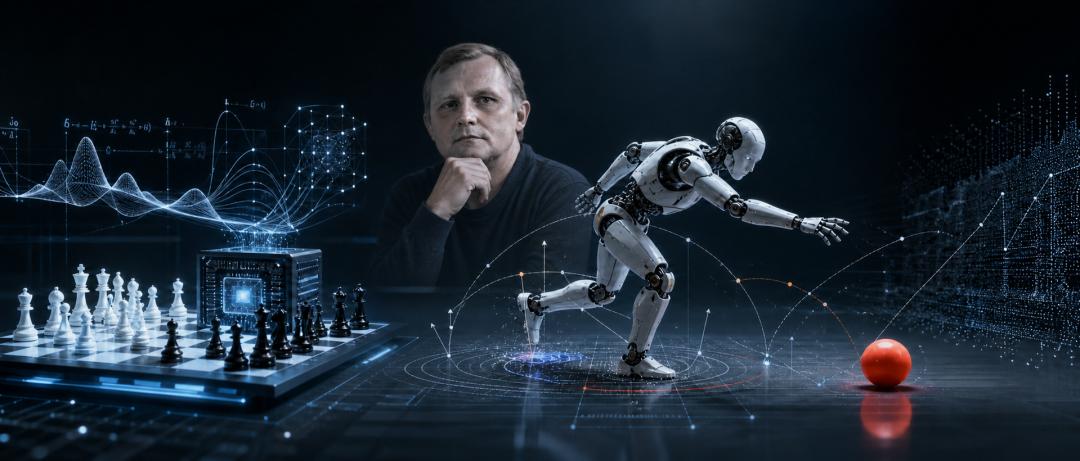
More than 30 years have passed, the first half of this statement has long been realized, but the second half is still very difficult to achieve.
Therefore, the real significance of this tennis match goes far beyond "whether robots can play tennis".
It raises a question: this time, can AI finally break out of the digital world and complete the closed loop of perception, decision-making, motion control, and real-time gaming in the real physical environment?
AI cannot stop at just thinking, it needs to complete the full closed loop from cognitive decision-making to full-body execution.
This time, Chinese enterprises have handed in the answer sheet first!
On the court, the performance of the Galaxy General robot is absolutely stunning.
Individual capabilities including serving, forehand, backhand, baseline movement, and net volley all appeared during the match, and all of them performed beyond expectations.
And the doubles match poses even greater challenges.
When the robot plays on the same court as its human teammate, it needs to judge in real time who will take the ball and who will cover the position, and dynamically adjust the playing strategy.
Therefore, it needs to understand not just the ball, but also what its teammate intends to do next.
In the high-speed offense and defense, there were even scenes of extreme saves. After falling, the robot stood up on its own and continued playing.
Many people's first reaction is: haven't robots already achieved these individual actions before?
Shooting basketball, playing football, running 100 meters — humanoid robot videos over the past two years seem to show robots doing all of these.
But the biggest difference here is that tennis is a confrontation between two players.
The running environment is fixed, but every hit in tennis is a new question posed temporarily by the opponent. You can practice the same running movement ten thousand times, but no two incoming tennis balls are exactly the same.
Being able to stay stable during confrontation is the real sign of true intelligence.
For the First Time, the Cerebrum and Cerebellum Are Integrated Into One Single Model
Supporting all of this behind the scenes is AstraBrain, the self-developed large embodied intelligence model of Galaxy General.
One of its biggest highlights lies in its architectural choice.
The mainstream practice in the industry in the past was a layered structure: a "cerebrum" model is responsible for understanding tasks and making high-level decisions, and a "cerebellum" module is responsible for real-time motion control, with instructions transmitted between the two through interfaces.
The drawbacks of this architecture are very obvious: no matter how clear the cerebrum's thinking is, the instruction will be delayed by the time it is transmitted to the cerebellum; no matter how standard the cerebellum's movement is, it does not know why the cerebrum asked it to move in that way.
A more hidden problem is information discontinuity.
When the cerebrum sends out instructions, it does not know which leg its center of gravity is on at the moment, or how much remaining output power its right arm has; when the cerebellum executes the movement, it does not know whether this hit is intended to move the opponent around or score directly.
Both sides achieve their own optimal performance, but together they form a system that "can think of what to do but cannot execute it" or "can execute it but does not understand the purpose".
For tasks like playing tennis, even a tiny delay will result in losing the point.
The approach of AstraBrain is to integrate the cerebrum layer (task understanding and tactical decision-making), cerebellum layer (high-dynamic full-body motion control), and neural control into the same model.
According to Galaxy General, this is the world's first model that can be responsible for both "thinking clearly" and "executing properly", with no information loss in between.
Derived from the tennis task, this is probably the only feasible solution. Tactical decision-making cannot be separated from real-time perception of the limits of one's own body, and motion control cannot be separated from the understanding of tactical intentions. The two should never be separated in the first place.
Learning From Imperfect Human Data
Competing Ten Million Times in Virtual Courts
Apart from the architecture, another question is: how was this model trained?
One traditional challenge in the robotics field is the lack of data.
Large language models can ingest text from the entire internet, but robots do not have such a dedicated internet of their own.
Collecting one hour of motion data on a real robot takes exactly one hour, requires human supervision, and may even damage the hardware.
This is why the progress of embodied intelligence in the past few years has always been slower than people expected.
Behind this, there is the support of Galaxy General's core technology platform "Galaxy Star Workshop".
The training process is divided into two steps.
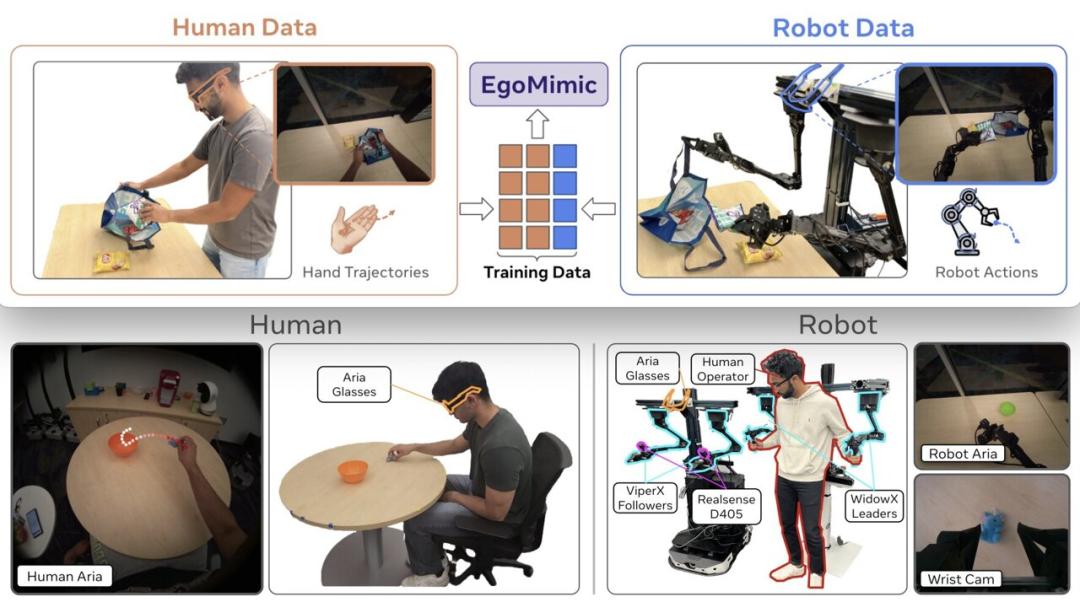
The first step is to learn from "imperfect human data".
Human tennis motion data can be collected through motion capture, video recording, wearable sensors and other methods.
But human movements are not standard in themselves: amateur players have redundant and unpolished movements, while professional players' movements are optimized to match their own physical qualities, which other people cannot replicate. In addition, everyone's height, arm span and joint angles do not match those of the robot.
Traditional imitation learning requires clean, aligned, high-quality demonstration data, which is almost impossible to obtain from human data.
What the Galaxy Star Workshop data platform does is to extract useful prior knowledge from this set of noisy, misaligned, uneven-quality demonstrations: when to start moving, the general rhythm of swinging the racket, how to shift the body's center of gravity, and truly learn the underlying motion rules.
The value of this step lies in cold start.
The robot does not need to start groping from random movements, and it roughly knows what "playing tennis is like" right from the beginning.
The second step is to enter the virtual tennis world.
In the simulation environment, multiple agents compete against each other. It is not one robot practicing against a ball machine, but multiple strategies evolving independently and acting as opponents for one another.
When one side learns to hit the ball close to the sideline, the other side is forced to learn to move laterally