Is AI destroying trust? Hundreds of billions of funds invested by enterprises have gone down the drain, and it is the grassroots employees who end up bearing all the hardships.
A strange thing has recently emerged in the workplace. AI hasn't wiped out humans, but it has first sown mutual distrust among colleagues.
Here's what happened: A project manager in Chicago said he was arranged to work with a so-called AI expert this summer.
It was supposed to be a perfectly normal project, but the partner started using an AI agent to manage his inbox.
Unbelievably, the AI messed everything up. It not only directly filtered out important emails and client text messages, but also kept delaying the promised deliveries, leaving clients unable to get in touch.
Even more outrageous, the expert stopped answering calls, ignored video messages, and vanished off the face of the earth.
The manager was so anxious that he checked the local speaking events the expert was scheduled to attend, planning to go find him in person. He said bluntly: "I would rather have a sloppy real human than a robot. But here's the problem: How am I supposed to contact a machine?"
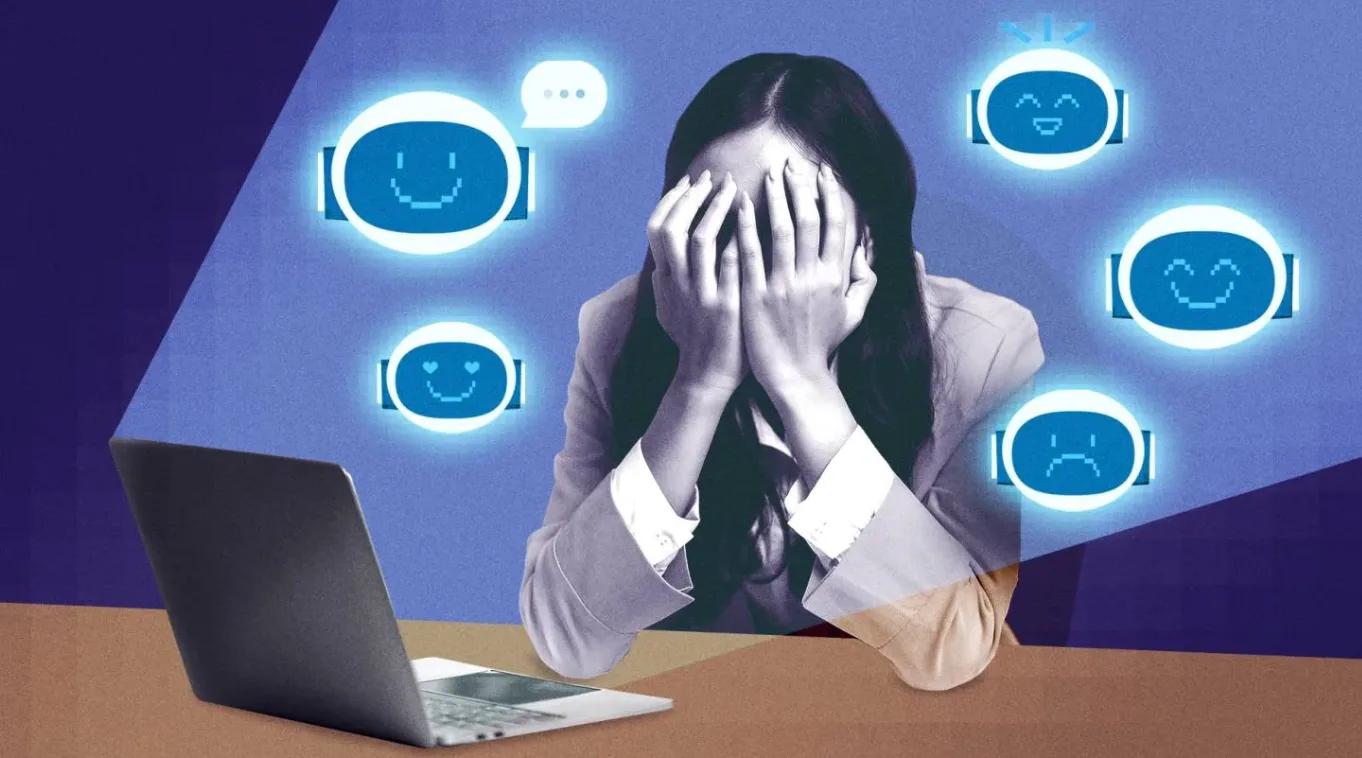
Think about that. He spent the whole summer working with a partner, but never even figured out whether the other party was a real person or not.
CNBC recently interviewed more than a dozen employees and corporate executives, piecing together a chaotic picture of workplace interpersonal relationships in the AI era. After reading it, I can only say it's absolutely mind-blowing!
AI Spawns a Trust Crisis Among Colleagues
Nowadays, as long as you use a computer in the office, you have more or less been exposed to AI.
According to a survey by CNBC and SurveyMonkey, at least half of employees in the United States use AI at least once a week, and most of them are completely self-taught, with no formal training provided by their companies at all.
This leads to a situation where bosses encourage you to use AI to improve efficiency, while your colleagues think you are taking shortcuts.
Joanna, who works in human resources in London, spent half a day carefully writing an email, only to have her colleague say: "Did you write this with ChatGPT?"
She typed every single word herself, but others' first reaction was that it was generated by AI.
I can totally empathize with that.
You spend ages working out a line of thinking, only for others to assume you just typed a few prompts.
I can't help but wonder: Do we have to get fingerprinted and take a temperature check at meetings from now on to prove we are real humans?
Workslop: Vacuous AI Outputs Exacerbate Workplace Conflicts
A new term has been trending recently called "workslop", which can be understood as useless junk content in the workplace. It refers to AI-generated content that looks decent at first glance, but is full of meaningless nonsense when you look closely.
According to research from BetterUp and Stanford, most white-collar workers in the United States have received this kind of junk content.
Far from being helpful, it requires extra time to correct, and the resulting productivity losses alone could easily reach millions of dollars.
Kim, the owner of a public relations firm in Michigan, also fell victim to this. She paid a contractor $10,000 to write campaign copy.
What she got back was full of AI-generated generic platitudes, forcing her to rewrite every single word herself.
From the account of Leitech (ID: xiaoleibbb), the most frustrating part is not that AI writes poorly, but that you can't tell whether the other person genuinely thinks the content is good, or knows it's garbage but still insists on sending it out.
See, AI was supposed to save time, but instead it creates a whole bunch of extra work to fix the mess. That's completely redundant, isn't it?
Employment Anxiety Amplifies Tension in the Workplace
According to CNBC's survey, one in four AI users has done this: When a colleague comes to ask a question, they just tell the other person to go ask ChatGPT.
On the surface, it sounds like they are helping colleagues become more independent, but in reality they just don't want to be bothered and want to save their own time.
Alison Green, former chief of staff and management consultant, called it out directly: "This is just like throwing a Google link at someone when they ask you a question. It's both lazy and rude. People come to you because they value your professional judgment, not to make you a search engine relay station."
That's not even the worst part.
The worst part is that some leaders have started doing the same thing. When employees come to ask for career development advice, the leader just says "Go ask AI".
According to research, this practice increases employees' willingness to resign by 29%, raises burnout rates by 26%, and reduces team coordination efficiency by 12%.
You try to save a few minutes of conversation time, but end up driving people away. Is that a good trade-off?
The vice president of SKILLSOFT once said: "If all communication is mediated by AI, there is a psychological cost to pay."
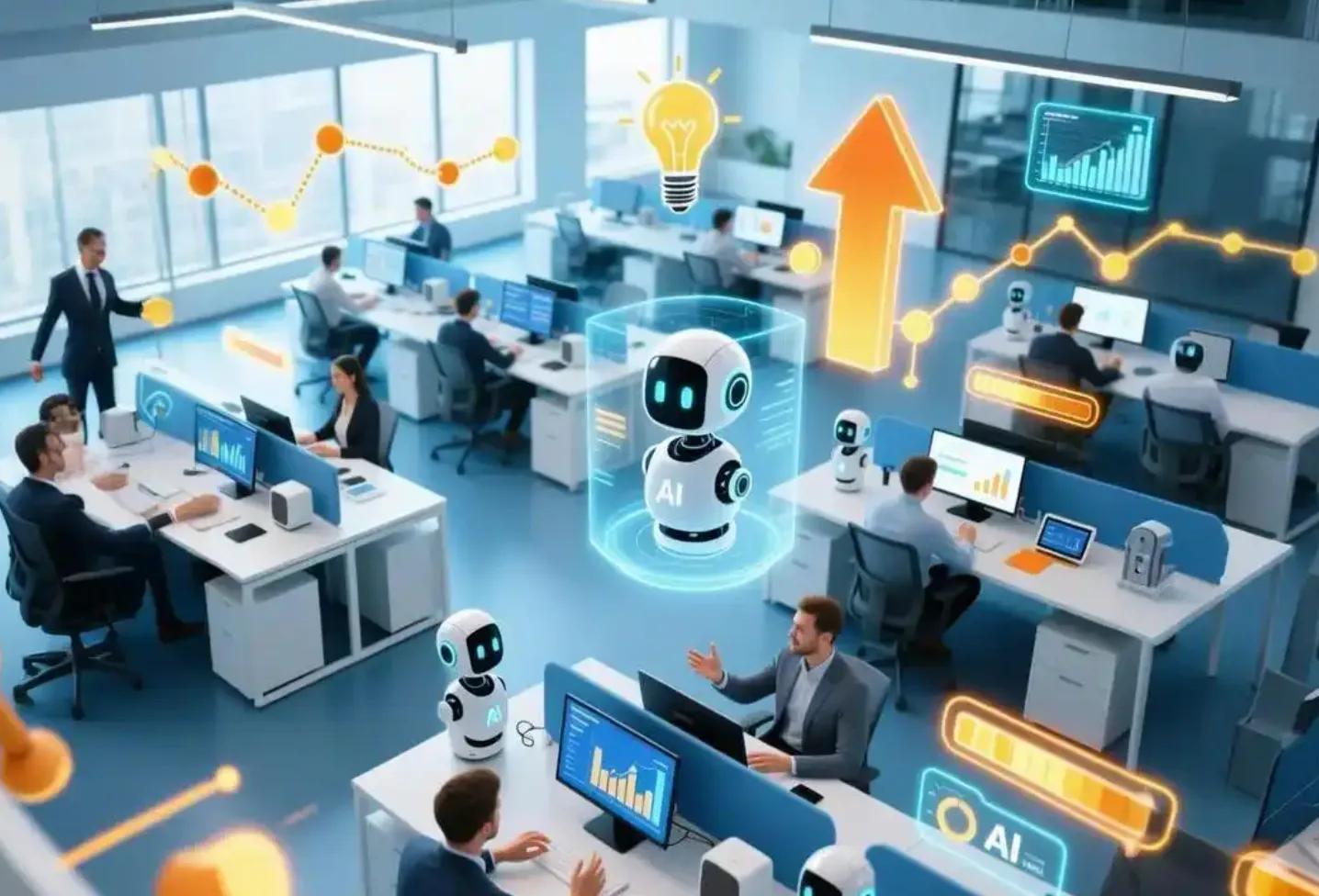
The human warmth between people is exactly what AI can never provide.
AI Breaks the Collaborative Bonds Between People
Of course, AI does not have no positive cases at all.
A construction company in Washington ran into an awkward situation when it first started using Microsoft Copilot. The AI automatically added a note-taker to every meeting and sent the meeting notes to all attendees in a group message.
Some sensitive discussions or critical comments were directly exposed, leading to several urgent HR incidents.
While this was a growing pain, it was still relatively positive. But most of the other chaotic phenomena are essentially human problems: laziness, fear, and the desire to pass the buck.
The team behind Leitech (ID: xiaoleibbb) thought about it: Why does the workplace turn into total chaos as soon as AI is introduced?
Because too many people treat it as a stand-in rather than a tool.
When the boss chases progress, they use AI to churn out content in batches; when colleagues come to ask questions, they push them to AI to deal with it; when they don't want to think, they let AI write everything for them.
As a result, AI hasn't replaced you, but you have turned yourself into a robot first.
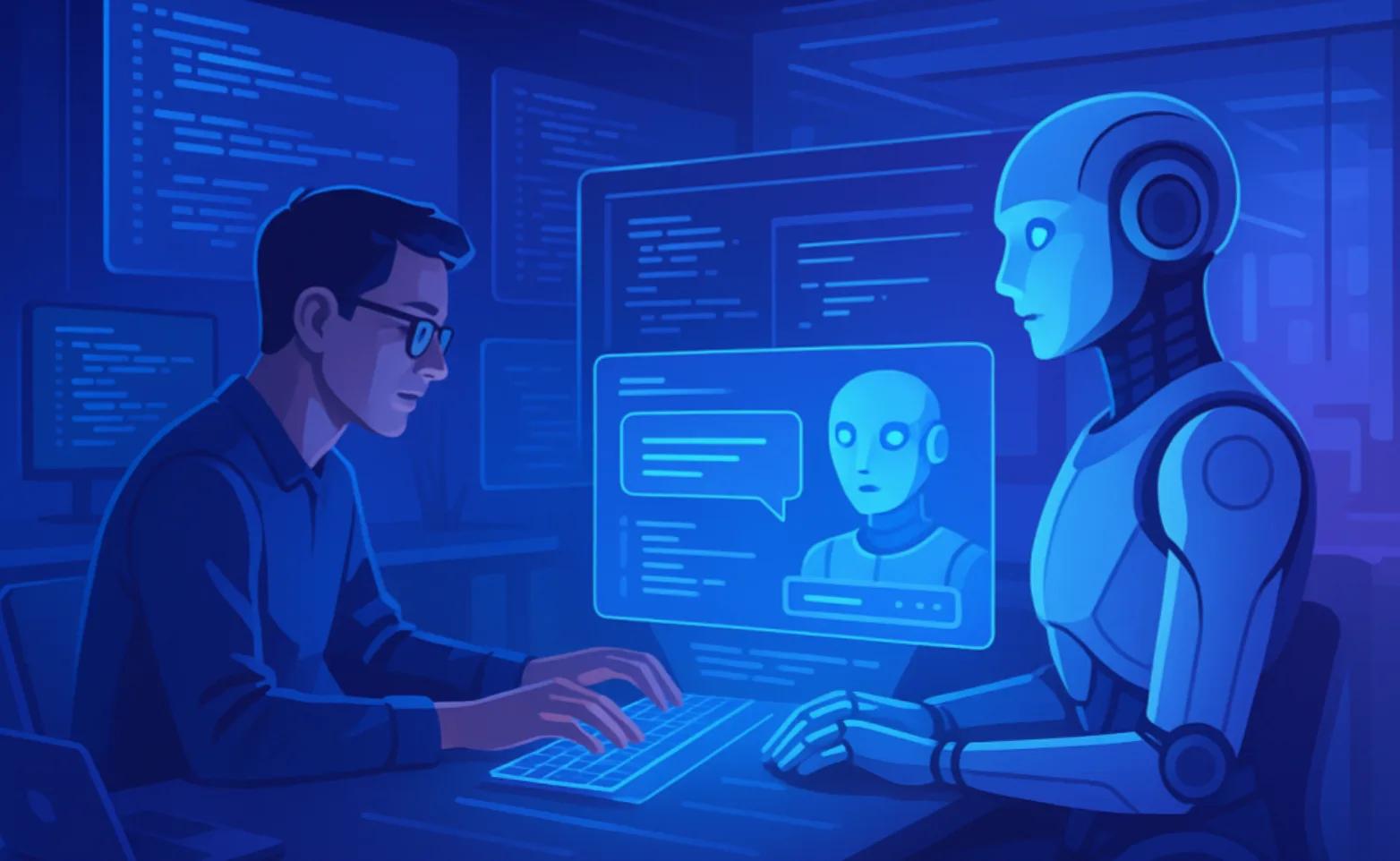
At the end of the day, AI is nothing more than an amplifier.
In the view of the team behind Leitech (ID: xiaoleibbb), it amplifies the carelessness, perfunctoriness and buck-passing that already existed in the workplace, just wrapped in a high-tech shell.
At the corporate level, first, clear AI usage rules should be introduced to define what is allowed and what is not, so that employees don't have to guess blindly. Second, companies should not treat AI as the only way to cut costs. Communication should be done in due time, and in-person meetings should be held when necessary.
Furthermore, you should always go through AI-written content carefully before using it; when you see content written by a colleague, don't immediately assume it was generated by AI, focus on the content itself first.
Trust is easy to destroy, but hard to build.
Finally,
No matter how smart AI is, it is just a piece of code. What really makes the workplace weird is never the code, but us, the people who use code as an excuse to stop making an effort to be decent, reliable human beings.
Welcome to the weird age of AI, but don't let it turn into a more indifferent era.
This article is translated by Leitech from CNBC make it.
Original link: https://www.cnbc.com/2026/08/20/gatekeeping-bots-piles-of-slop-welcome-to-the-age-of-ai-weirdness-at-work.html?&qsearchterm=AI
This article is from "Leitech", authorized for release by 36Kr.