150 million foreign visitors are flocking to China's budget hotels.
01
A couple of days ago, Song, the store manager of an ibis hotel in Zhangjiajie, shared her feelings with me on WeChat that going to work every day now feels a bit like stepping into the United Nations.
Guests from Russia, the United States, Kazakhstan, South Korea, as well as many visitors from European and Central Asian countries whose names she could not recall for a moment, dragged their luggage to the front desk one after another.
She said her hotel enjoys a prime location: just a hundred meters' walk from the exit of the hotel is the entrance to the scenic area. The hotel opened at the end of March, and foreign guests already account for nearly half of its total guests.
What makes Song feel even more interesting is that the customer source has changed.
In the past, when people mentioned foreign tourists in Zhangjiajie, most would first think of South Korean tour groups. But most guests at Song's hotel are individual travelers, and there have been a particularly large number of Russian tourists recently, who often stay for three to five nights in a row.
With more foreign guests coming, the daily affairs the hotel needs to handle have also changed accordingly.
Foreign independent travelers are not familiar with Zhangjiajie. In addition to checking in guests, the front desk also needs to help them plan routes for scenic spots and call for taxis. After staying for several days, laundry service becomes a rigid demand.
While chatting, she flipped through a review on an overseas travel platform and showed it to me.
What shocked the foreigners who are used to staying at ibis hotels abroad is that domestic ibis hotels in China even provide free laundry service that delivers clean clothes directly to the room, and they could not help wondering: isn't this the service standard of five-star hotels?

The foreigners' amazement at the service of domestic hotels also reminds me of my recent chats with several heads of independent and mid-range chain hotels in the travel industry community.
Most of them share the common feeling that the number of foreign guests has indeed increased a lot. An owner of an independent hotel in Xiamen said that during this year's peak season, when he stood at the front desk, he often saw European and American guests leave right before several Southeast Asian tourists showed up.
As for another ibis hotel located near Tiananmen in Beijing, its person in charge said that the hotel has been open for almost three years, and the proportion of foreign guests in the second quarter of this year reached as high as 60-70%. For this reason, the hotel has added more sweet pastries that foreign guests love to its breakfast menu.
Services that many Chinese guests have long been accustomed to, such as robot delivery, self-service facilities, mobile payment, free laundry, and even the fast response of the front desk and breakfast, have become novel experiences worth taking videos of and sharing for foreign tourists.
Speaking of which, when I traveled in Europe when I was younger, I also chose affordable budget hotels.
At that time, I had a limited budget. When I arrived in a strange city and faced dozens of unfamiliar hotels, seeing an ibis would make me feel much more at ease. After all, ibis hotels are usually located in good locations, with affordable prices, and there would hardly be any major problems for a one-night stay.

February 2009, IBIS in Rome, Italy / Travel Industry on-site shot
Now the roles have reversed. Recently I have seen many videos on Xiaohongshu showing foreign tourists staying at ibis hotels in China. Some of them exclaimed that watching football matches in the hotel is even more enjoyable than in bars, while others held up the free cocktail provided by the hotel, saying Chinese hotels have almost spoiled them.

After the "China Travel" trend has been popular for two years, "China Hotel" has become another window for foreign tourists to get to know China.
02
Most of us hold a misunderstanding that since foreign tourists travel all the way to China, they will not care too much about spending money.
Song's observation is not that simple. Against the backdrop of geopolitical turbulence, the global economy has been contracting in the past two years. The foreign individual travelers she contacts attach great importance to cost-effectiveness when booking hotels.
When she talked with a Russian guest, the man said frankly that it was his first visit to China. He wanted to stay at a brand he was familiar with, but did not want to spend too much of his travel budget on accommodation, so his choice was actually very limited.
The ibis brand was founded in France in 1974, which is recognized as the originator of economy hotel chains. It has more than 2,400 hotels in over 70 countries, and people who have traveled in Europe are usually very familiar with its red pillow logo at the hotel entrance.
However, after checking in, many foreign tourists soon find that ibis hotels in China are quite different from the versions in their memory.
The international service standards are still maintained, but after operating in the Chinese market for a long time, ibis has inevitably been driven to upgrade by the fierce competition in China's hotel industry. Services like free laundry and 8-hour breakfast supply are nothing new for domestic guests, but bring totally different experiences to foreign tourists.
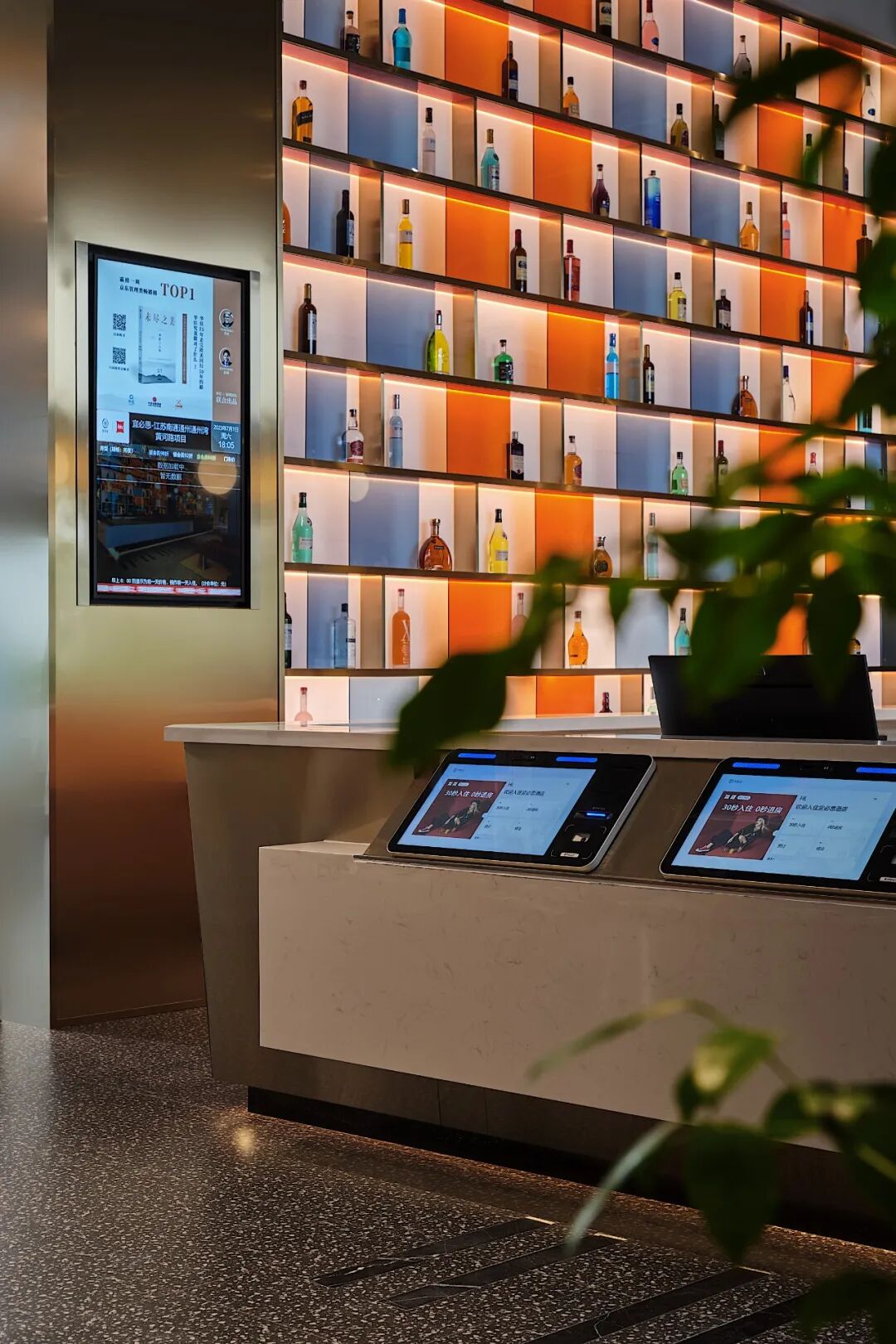
The reason behind this is not hard to understand.
Over the past decade, competition in China's hotel market has been extremely fierce. With the same room rate of 300 to 400 yuan, consumers can get far more services and facilities than they did ten years ago. Some configurations and services that used to only be available in mid-to-high-end hotels have gradually become accessible for guests at mass price points.
On the contrary, based on my business travel experience in Europe over the years, the hotel industry there has taken a different path of reducing service standards. Many budget hotels still only focus on the basic accommodation function, and it is very common that extra services require additional payment. Therefore, when foreign tourists come to China with their familiar price system and measure China Hotel with their original standards, the actual experience they get often exceeds their expectations.
To some extent, an interesting reversed snobbery has emerged in the global hotel industry.
This contrast is particularly prominent for ibis. Since many foreign tourists already have a clear psychological price for this brand, they do not spend extra money in China but get much more services, making staying at Chinese ibis hotels an extremely cost-effective choice.
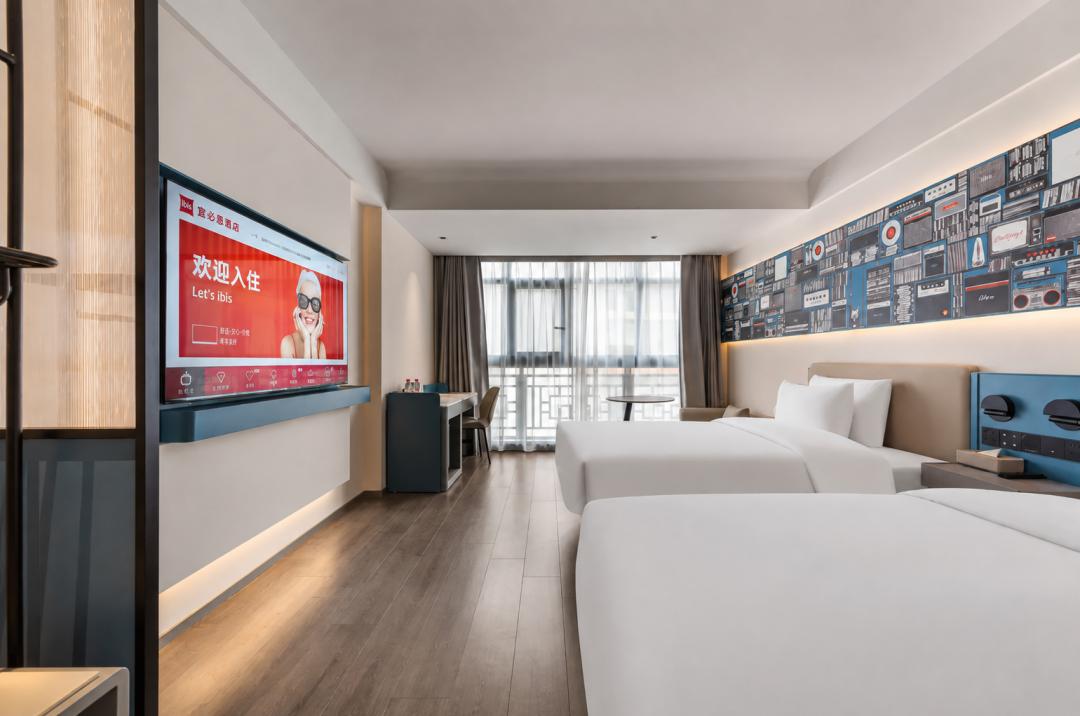
However, Song also reminded me that the fact that foreign guests get more services does not mean the more services the better.
Compared with domestic guests, they pay more attention to a sense of personal boundary, and most of them hang the "Do Not Disturb" sign at the door. Even if the hotel provides valet laundry service, they would prefer to send their clothes to the laundry room by themselves.
Therefore, serving foreign tourists actually tests domestic hotels' understanding of the proper scale of services.
For ibis, the brand recognition accumulated overseas for decades solves the initial trust problem, while the local operation mode formed after entering the Chinese market determines how guests will evaluate the hotel after their stay.
Thus, the fact that 150 million foreign tourists pour into Chinese hotels with overseas brand genes is inseparable from the local operation teams' full understanding of both domestic and foreign customers.
03
The influx of foreign guests is also quietly changing the customer structure of hotels in some Chinese cities.
In the past few years, the supply of domestic hotels has continued to increase. Business travelers, family travelers and weekend tourists have been competed for repeatedly. More and more hotels have opened in the same business district, but all of them are still targeting the same familiar group of domestic guests.
As inbound tourism picks up again, a large number of inbound guests who had little presence in the market before have emerged.
A friend working at a well-known hotel chain group told me that she found hotels with a high number of foreign guest nights show obvious regional patterns.
In addition to popular tourist destinations such as Beijing and Zhangjiajie, hotels in cities with frequent foreign trade exchanges and stores around airports are also more likely to receive foreign guests. For example, hotels in Xiamen have a prominent number of guests from Hong Kong, Macao and Taiwan, and some cities near Japan and South Korea such as Weihai have also seen a sharp increase in the number of inbound tourists.

For hotels in these regions, international customer sources have changed from occasional orders to a business worthy of careful operation.
This change will also gradually affect the brand selection logic of hotel investors.
In the past, when hotel owners chose brands, they mostly focused on the size of domestic membership and surrounding customer sources, trying to calculate whether the hotel could be fully booked by guests from different provinces and cities. But now, if the property is located in a city with active foreign guests, investors have to think more about whether this brand is still recognized by people outside China.
After all, when foreign individual travelers come to a strange country, what can most effectively reduce their decision-making difficulty is a sense of familiarity.
Of course, international popularity is only a ticket to the game.
If foreign guests do not have a comfortable stay experience, the hotel's overseas booking platforms will soon be flooded with negative reviews, and the hotel will be quickly filtered out when the next group of foreign tourists place orders.
This is exactly why the case of ibis in China is worth observing.
With more than 50 years of accumulated overseas brand recognition, and long-term development under Huazhu's operation system after entering the Chinese market, the brand has combined two sets of experience and fully benefited from the recovery of the inbound tourism market.
As more and more foreign tourists actively choose to stay in Chinese hotels, the definition of internationalization for the Chinese hotel industry has also gained new meanings.
In the past, when we talked about the internationalization of Chinese hotels, we often thought of opening hotels in Southeast Asia and Europe to export Chinese brands. Now another path has gradually become clear.
When foreign tourists stay in hotels in Beijing, Zhangjiajie or Xiamen, they get to experience the service efficiency, digital experience and increasingly mature mass accommodation products that the Chinese hotel industry has developed through years of fierce competition, which imperceptibly renews their perception of Chinese hotels.
From this perspective, for Chinese hotel brands to participate in global competition, they first need to make foreign tourists who come to China feel satisfied and willing to share their good experiences. This kind of accumulated positive perception is very likely to become the foundation for Chinese hotel brands to go global in the future.
Chinese tourists go out to see the world, and the world also starts to check into Chinese hotels.
This new group of guests dragging their suitcases into the hotels may be opening up a previously under-valued incremental market for the Chinese hotel industry.
This article is from the WeChat official account "Travel Industry", author: Theodore Xishao, published with authorization from 36Kr.