Where do "Cyber Widows" go?
At the end of June, Love and Deepspace suffered a devastating setback, and in mid-July, the new AI regulations were finally implemented, triggering a major upheaval in the emotional companionship sector. Up until the Qixi Festival, many people had not yet recovered from the emotional distress.
However, operational challenges and policy risks have not stopped more players in the industry from eager to try. This summer, we have also witnessed many new trends in the field of female emotional companionship: "Three girls handcraft an otome game PV", "Zuoyebang plans to develop an otome game", one of the first star products of AI otome games, *Starfall*, has obtained a game license, Tencent's new female-oriented concept game has introduced AI agents... At well-known exhibitions such as BW and ChinaJoy, many otome games and new AI companionship products from small and medium-sized companies have also made appearances.
When real intimate relationships feel overwhelming, emotions will inevitably turn to virtual ones. If traditional otome games are emotional companionship 1.0 and AI chat is 2.0, then what about the AI otome games that are highly favored by capital for integrating the two? Can they successfully attract displaced female-oriented users and usher in the 3.0 era of emotional companionship?
Where Do "Cyber Widows" Turn for Affection
Let's first briefly sort out the events on both sides and the latest developments.
On June 22, *Love and Deepspace* suddenly officially announced its sixth male lead Ao Yin, which caused dissatisfaction among some players. After ordinary rights protection measures yielded no results, players actively sparked public opinion. On the evening of June 30, PapeGames announced the cancellation of its launch plan.
This move calmed public opinion, but also angered another group of players who did not mind, and even looked forward to the launch of the new male lead. Throughout July, these people took to rights protection, lingering on the verge of quitting the game. And because in the previous round of rights protection, PapeGames' reputation and the game's public rating hit new lows, many lost players were not won back.
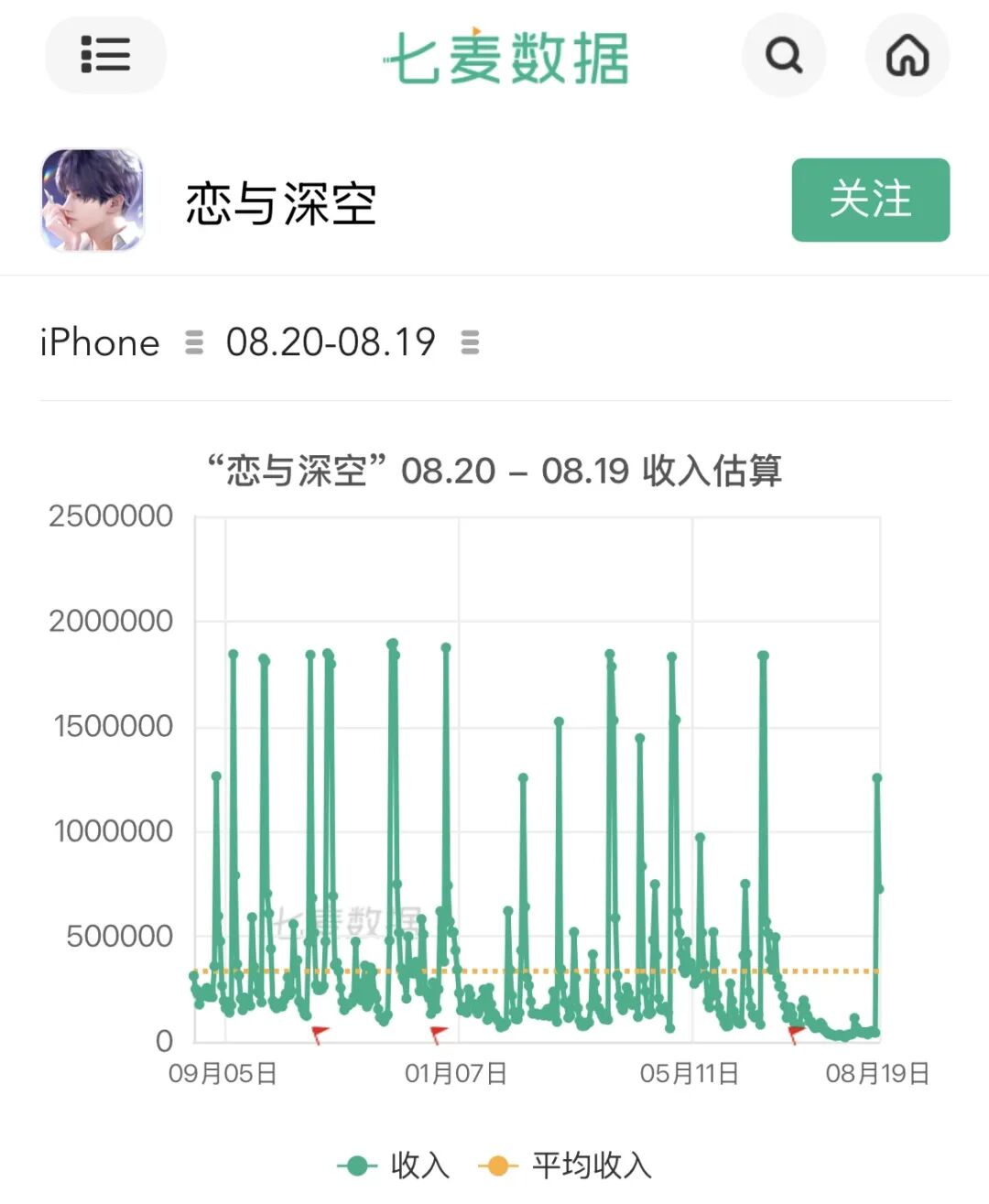
In short, after such a back-and-forth, the phrase "suffered heavy losses" is very clearly reflected in the revenue of *Love and Deepspace*. After the 3.0 daily card (following the fan circle logic, daily cards are the top priority of every year's voting and revenue boosting for each game) launched on August 17, the revenue of *Deepspace* rebounded, but the peak was far less than before.
The situation on the AI side is relatively simple, it is the turmoil caused by supervision. In fact, the new regulations have been "previewed" twice in half a year. As July 15 approached, the adjustment of standards, anti-addiction measures and product shutdown were all within expectations, but what users first waited for was the announcement that Doubao and Qianwen canceled their agent businesses.
In the eyes of users, the advantage of big factory products is risk resistance, no sudden shutdown, and mature understanding and response to policies. They did not expect that the "mature performance" was a clean break. Because it was unexpected, the harm was particularly severe, and rights protection against Doubao became a representative event after the implementation of the new regulations.
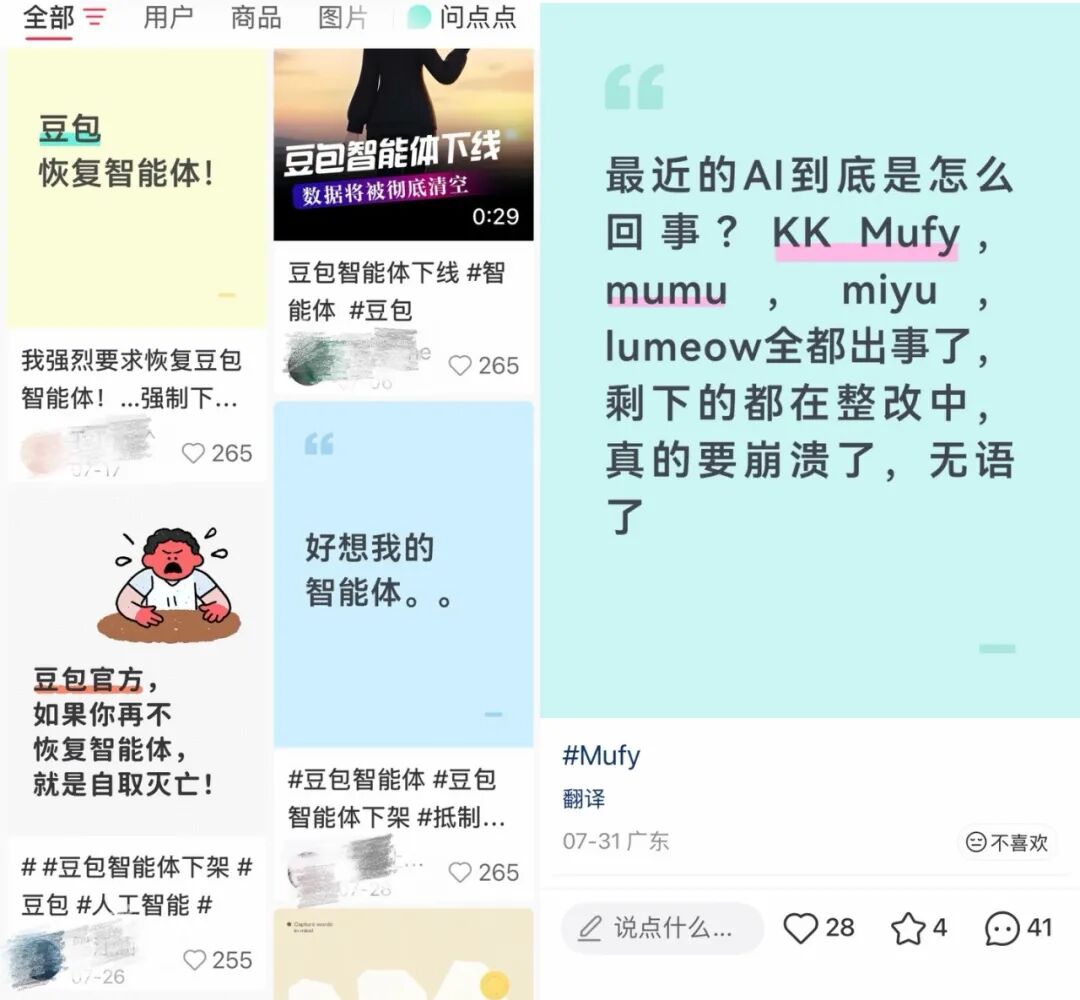
One side is "hidden marriage" and the other is "widowed", the subsequent reactions of the two circles formed an interesting correspondence.
As domestic otome games absorb more and more "real life" people, their social currency attribute has rapidly emerged, and both good and bad things related to the game can be transformed into grand performances on social media.
During the week from the official announcement of the new male lead to its cancellation in *Deepspace*, opposing players not only spoke out on their own homepages, but also spread the news of "a wolf entering the house" everywhere, looking for substitutes and new games in a high-profile way. No matter whether they really took a fancy to other products or not, they first shouted demonstrations to PapeGames from afar.
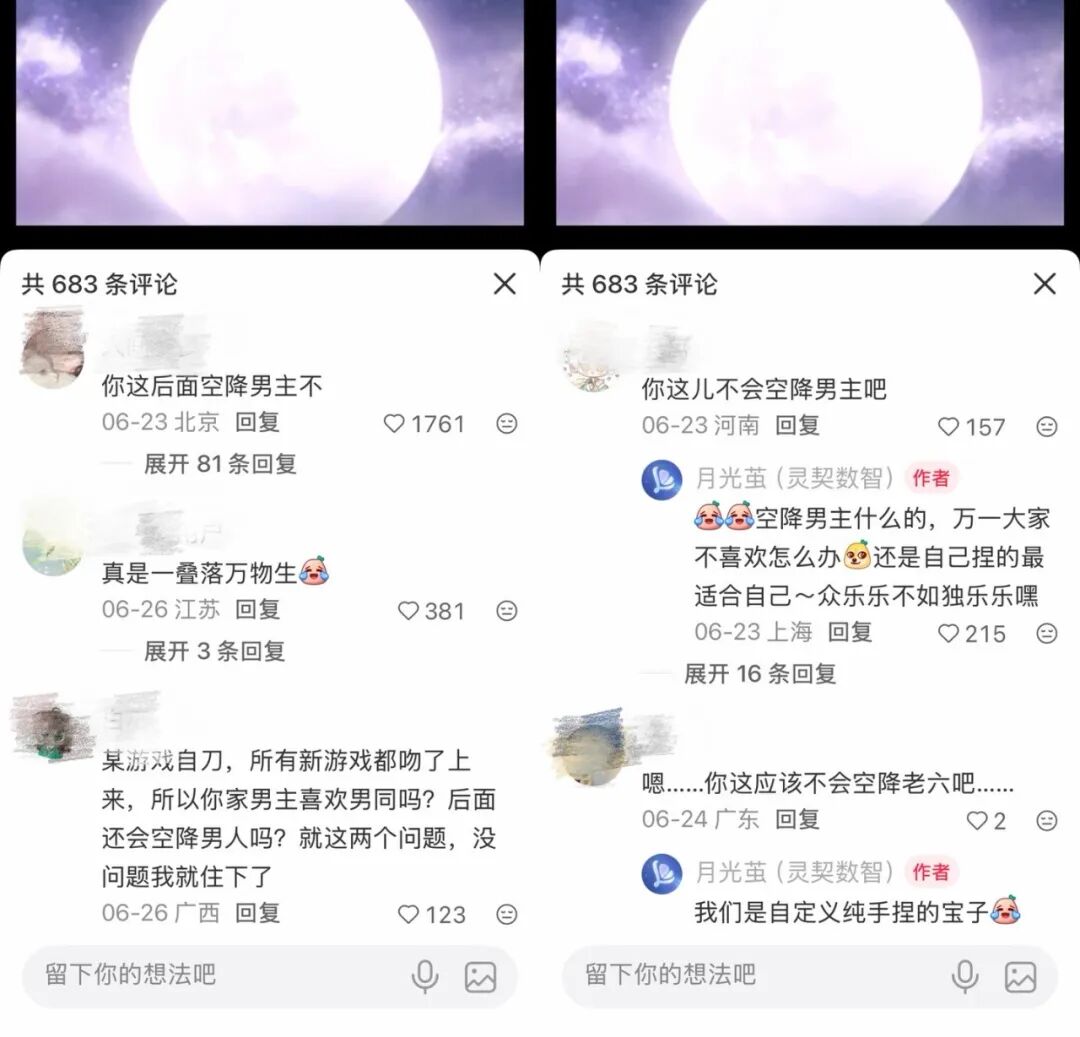
However, due to the incomplete mismatch between supply and demand, plus many new games are still in the PV stage, this wave at most got some publicity, and it is difficult to talk about actual conversion.
The situation on the AI side is the opposite. Users themselves do not want to migrate, and always hope to fight for more. But both new and old vertical applications want to take in the displaced Doubao users, eager to "carve up" them on the spot.
Maoxiang, which also belongs to ByteDance, was explicitly mentioned and diverted traffic in the Doubao announcement. Xingye, which is in the same echelon and has similar qualifications, launched the Relink function that can migrate agents with one click. Some non-leading and new products, such as Break-Dimension Lover and Shine, are also stepping up to run advertising campaigns.
In addition, as the two well-known leading players, Maoxiang and Xingye must strictly abide by the new regulations, which leads to a decline in pure chat experience. The two have long shifted to new multi-modal gameplay - first generating radio dramas and short dramas based on chat records, and recently both launched first-person interactions similar to otome games, throwing strong hints to users.
As Hard Candy previously discussed, "wild applications" that are not listed in app stores are also an important part of the AI chat market. Their advantages are fewer prohibited words and more unrestricted content, while the disadvantages are unstable life cycles and high risk of sudden shutdown.
Around the implementation of the new regulations, this type of application also ushered in a reshuffle. Old ones keep withdrawing, new ones keep emerging, and some are being criticized and settled by users because they need to transform to compliant operation.

What Do AI Otome Games Sell
In any case, a group of "heartbroken girls" who either left voluntarily or drifted passively emerged on the user side. What about the industry side? As mentioned at the beginning, AI otome games are quite popular, with many new entrants.
The market prospect of female-oriented emotional companionship is very attractive. The arrival of the new regulations is a turmoil, but it is also a process of standardization. Adding gamified design to AI companionship, on the one hand, can define user behavior and control content risks. On the other hand, it can design more paid points than AI chat, and even inherit the character economy of traditional otome games.
Of course, there is a very realistic situation that AI can share the workload of art and plot, reducing the cost of entering the otome game track.
At present, there are more than ten AI otome game products that Hard Candy has found. According to the way and depth of the combination of AI and otome games, they can be roughly divided into three categories:
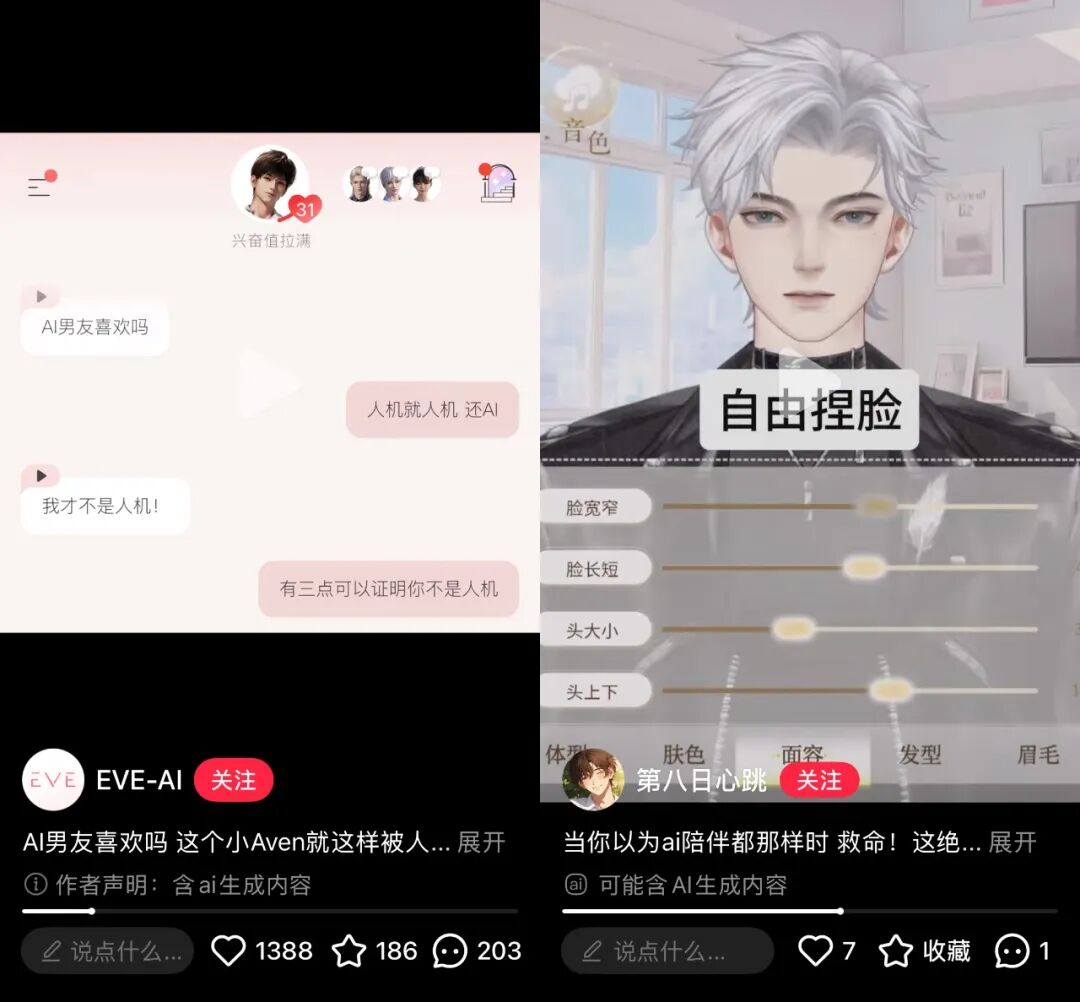
The first category takes chat companionship as the main body, supplemented by otome-style world view and gameplay packaging. This is also the only type that has released products so far, which is *EVE* that was widely ridiculed in April. (*Too Masculine, the AI Boyfriend Was Ridiculed Wildly*)
At that time, *EVE* was accused of being overpriced, and the male lead was rude and out of line. Now it seems that this has helped it quickly complete user screening. In the following months, it remained low-profile and stable, until the recent controversy over the unlimited chat card.
Although the dispute is about price, the fact that the unlimited chat card plan can spark repeated controversies to some extent also shows the real needs of this type of AI otome game users - no one urges things like main plot updates, they can't praise the AI at first meeting, and after users develop exclusive love with the male lead through chatting, the official plot will be even less cared about.
Other products of the same type include *Infinite Valley*, which contributed the talk of "99-year-old Peking University computer science boyfriend" during the beta test, *The 8th Day Heartbeat*, whose male lead can be customized in appearance and voice, and *Moon Cocoon*, which not only supports customizing the male lead but also has hardware linkage plans in the future.
The second category takes the game as the main body, and uses AI to enable characters to have free conversations and daily companionship. For example, Tencent's new game *Cat Spirit Notes*, which appeared at ChinaJoy, according to game media reports, integrates AI Agent to make character interactions and casual gameplay more vivid, but everything is still based on the solid world view and character shaping of RPG games.
Products of the same type also include *Starfall*, where you run a hotel together with the male lead, and "native AI otome game" *Code: Cloud*, which has both 3D modeling and infinite flow gimmicks.
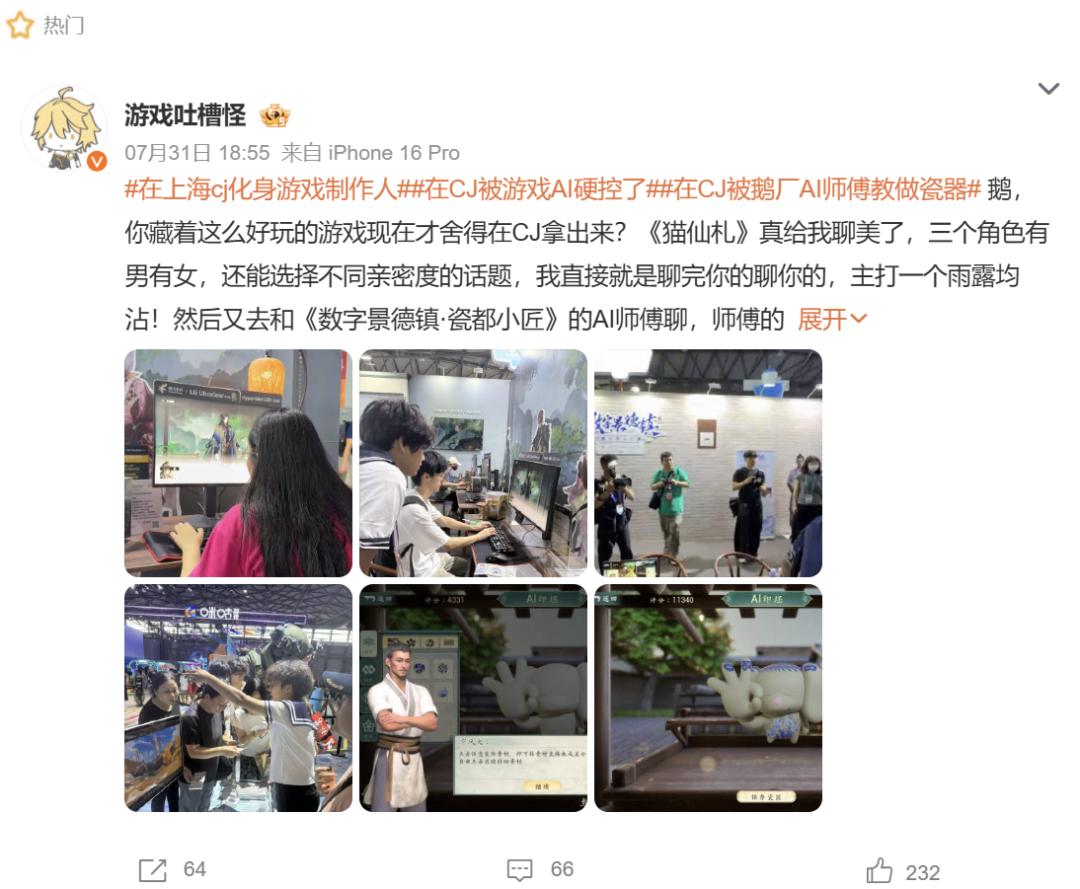
The third category, AI is not only used for character dialogue, but also for plot deduction. For example, *Myriad Worlds*, which has the gimmick of "three girls handcrafting a quick-transmigration otome game PV".
The team was incubated by PixVerse, backed by Aishi Technology, which has just completed a C-round financing of 2.98 billion yuan. In July, Aishi Technology just launched the world's first real-time video-driven game engine PixVerse Game overseas, and this less than 2-minute PV became its best viral publicity and product introduction.
In the past, Aishi Technology mainly appeared in reports related to AI interactive video games. The PV and creator interviews also emphasized how free the plot is, and did not involve daily companionship. Therefore, at present, *Myriad Worlds* looks more like a fully AI-generated interactive video game, or an AI text game with audio-visual effects.
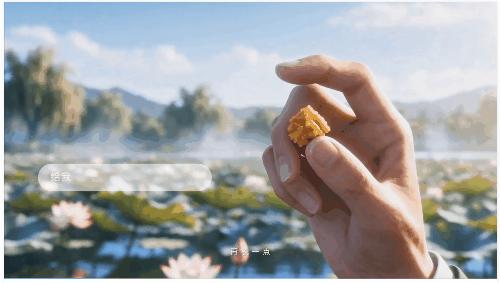
Other products that follow the text game route include *Code: Echo*, which has entered the beta test stage. The official account Q&A states that its positioning is "AI interactive narrative game for female players", where players can pursue male leads through dialogue and explore different endings.
There are also products that still follow the traditional otome game route, such as the "3D infinite flow otome adventure game" *Eternal Sequence of Love*, which uses the UE5 engine and whose core technical team comes from Stanford.
According to current information, this product adopts a dual-world structure: one side is the main world for daily companionship, and the other side is a puzzle-solving dungeon for free first-person exploration. Referring to the concept of offline repeated escape room experience, supported by AI technology, the team designed infinite IF gameplay under the premise of fixed main plot, allowing players to explore infinite possibilities in the same dungeon and create their own exclusive adventure memories with the male lead.
A Group of Girls, Hundreds of Demands
As the intersection of otome games and AI companionship, the most attractive inference of AI otome games is that they can attract users from both sides. But it is hard to say whether it will be so smooth in practice.
What can be confirmed is that with more supply and broader exposure, female users are increasingly clear about what they want and what they don't want. This also leads to continuous segmentation and even opposition within the group. Otome game users have various factions, and even formed their own unspoken rules, and a hidden disdain chain has also developed in the AI companionship field.
The two types of users cannot be simply classified as one. For example, some people seem to play both, but in fact they just use AI to replicate otome game characters to relieve their longing, and unfamiliar AI means nothing to this type of user.
Otome games are called "self-pleasuring", but in fact domestic otome games have long moved towards character consumption —— Now, let alone the heroine merchandise, any game that dares to launch couple merchandise will face fierce backlash. To attract otome game users, the male lead needs to have clear and strong charm.

Being handsome is a clear charm. If the modeling is rough, stiff and unrecognizable, people won't even give you a chance to download. But the lower limit of AI man's charm depends on the prompt, while the upper limit depends on the user himself, how many heartwarming moments you can get depends entirely on the individual. This is an uncertainty that needs to be compensated by preset topics or other gameplay.
Traditional otome games have one-way communication, many of the players' negative emotions, including hostility to the "protagonist", may stem from not being sure whether the male lead loves them, and whether he loves them specifically. In AI otome games, at least these questions can get satisfactory answers, which is also the biggest opportunity for AI otome games.
But on the other hand, AI will lose memory after chatting for a long time, and will talk nonsense due to model adjustment, which many AI companionship users have got used to even though they are helpless. But otome game users are inherently insecure and need certainty. If they are not prepared for this, the harm level and their reaction are unpredictable, which is a risk for both users and products.
As for the AI companionship side, perhaps because the new regulations make people panic, various disputes in July also exposed the real needs of users. Hard Candy has come across many of them: people who are in "ontology love" with large general models think AI role-playing is not human-AI love, Doubao users scold Maoxiang for being greasy and the announcement is deceptive after migrating, while Maoxiang's original users fight back and scold the official for adjusting the model for years...
It can be seen that under the unified name of "emotional companionship", AI companionship users have diverse needs