A car costing only 100,000 yuan can play movies on its windshield?
The windshield is becoming the second LCD dashboard for China's smart vehicles, and even the largest "screen" in the vehicle.
In April 2026, the standard installed volume of HUD for domestic passenger vehicles reached 342,000 units, with the installation rate exceeding 25% for the first time, and the price even dropped to below 90,000 yuan. In particular, the installation volume of the latest generation of AR-HUD is rising rapidly. Last year, some media reported that from January to August 2025, the number of domestically produced vehicles equipped with AR-HUD had exceeded 800,000 units. And recently, AR-HUD has even appeared on updated models priced below 100,000 yuan.
At this stage, domestic automakers' development of new functions for HUD configurations is in a vibrant and highly competitive state.
Some enterprises have put the traffic light countdown into the HUD screen, and others directly project the reversing image. If these are still reasonable operations, the launch of "Light Chasing Panorama" through AR-HUD, which claims to insert an 87-inch navigation light carpet directly onto the real road surface and display all lane changing, braking and parking paths with the light carpet, is somewhat excessive in terms of information display. What's more, some enterprises have greatly expanded the entertainment functions of HUD, making AR-HUD a video and audio screen with an equivalent screen size of 70-96 inches. Its competitors simply overtake by a different path, using multiple Mini LEDs to piece together the so-called "Skyline Screen", launching custom theme modes that can display pet animations, which is almost turning HUD into a digital photo frame.
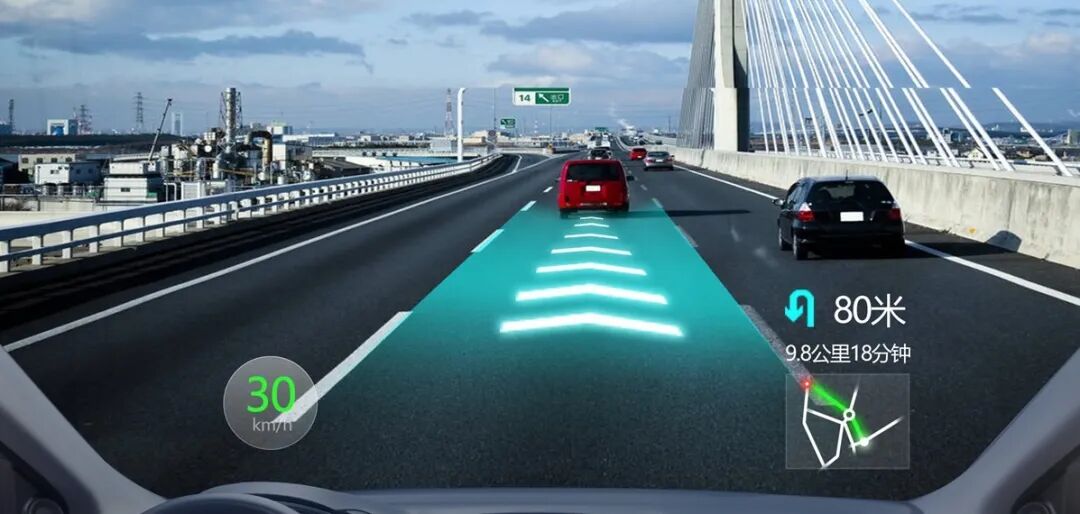
If this continues to develop, will it evolve towards the display interface of Stark's Iron Man suit?
Originally, the main purpose of HUD is to display various basic driving information including vehicle speed, at most providing some navigation lane change prompts and so on. However, at this stage, the practices of domestic enterprises have far exceeded the original intention of providing drivers with the convenience of not looking down at the dashboard, and are rushing wildly in the dangerous direction of causing "information overload" in the driver's brain.
While domestic enterprises are frantically competing to cram more functions into the small space of windshield projection, overseas markets are working hard to reduce the functions and display content of HUD.
As early as September 1, 2023, the UN R125 regulation under the framework of the World Forum for Harmonization of Vehicle Regulations (WP.29) of the United Nations Economic Commission for Europe (UNECE) was officially implemented. Led by the Working Party on General Safety Provisions (GRSG) under WP.29, this regulation defines the visual information displayed on the windshield or other glass surfaces to assist the driver's perception as "assisted field of vision", and brings it into mandatory regulation.
This is the first time that HUD has obtained a legal identity at the global industrial specification level.
The EU regulations draw a red line for the driver's "forward field of vision"
To understand what the EU is regulating, we have to return to a simple common sense: the 180° field of vision in front of the windshield is the lifeline of drivers, passengers, and even related vehicles and personnel on the road.
The essence of a driver controlling a vehicle is a race against time in the process of human response and adjustment. The bandwidth of the human visual system to process information is extremely limited. The link from the eyes capturing the road scene, to the brain identifying risks and making decisions, and then to the hands and feet performing braking or steering, usually needs to be calculated as 0.75 seconds. If the vehicle is traveling at a speed of 100 kilometers per hour, 0.75 seconds means a driving distance of 20 meters. But this is only under the premise that the driver is fully focused.
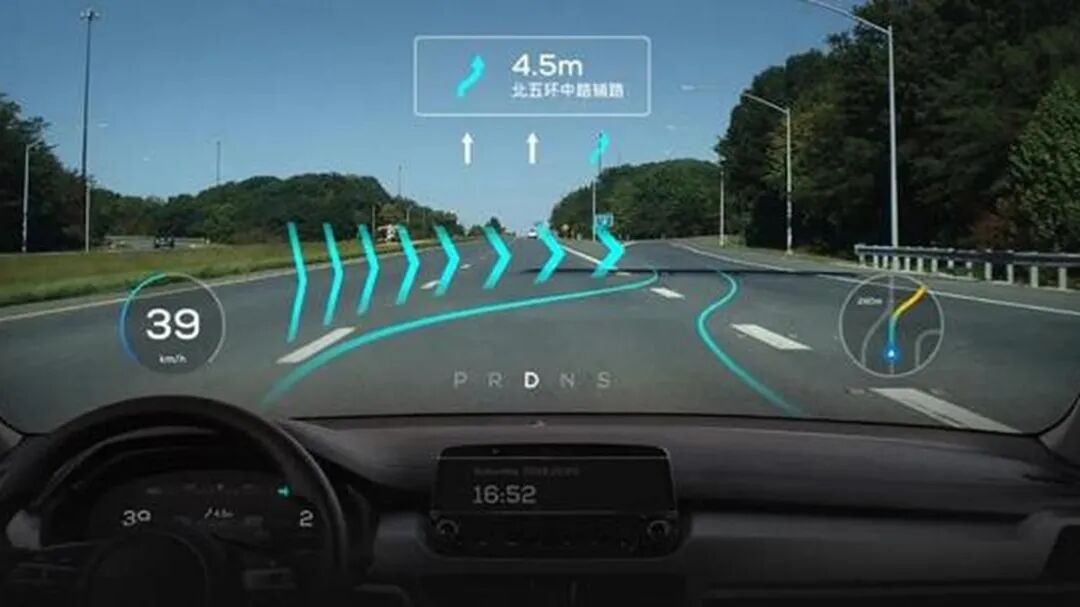
To be honest, this guidance interface would definitely be praised by players if it was put in *Dead Space*, but if you use it for driving, it can only be described as somewhat problematic...
Just imagine, if the HUD is flooded with redundant information, complex 3D animations or incorrect multi-target highlighting, the limited cognitive resources of the brain will be forcibly occupied to process these "noises".
This kind of "information overload" will lead to an exponential increase in the delay of the brain in processing key road conditions, triggering the "cognitive tunnel" effect — the driver stares at the fancy HUD, but "turns a blind eye" to the vehicle that suddenly stops ahead. The reason why EU regulations are so strict is based on this physiological logic: every extra bit of information on the windshield is compressing the driver's life-saving reaction time, and even directly inducing misoperations caused by distraction.
The UN R125 regulation clearly states at the very beginning: there shall be no obstacles within the 180° forward field of vision of the driver. Since HUD is projected on the glass, it was originally a violation of the regulation. Therefore, a special regulation was formulated to standardize it, clarifying what information can be projected and what specifications need to be followed.
The action of setting "special rules" for HUD took place in November 2024. At the 194th session of WP.29, GRSG submitted the regulatory proposal R17X *Unified Provisions Concerning the Type Approval of Vehicle Visual Assistance Systems (FVA)*, which aims to solve the occlusion problem caused by FVA and define the conditions for allowing FVA to be activated to limit interference to drivers. It should be clarified that R17X is still a "regulatory proposal" and has not yet become an official mandatory regulation, but it points out the mandatory bottom line direction of global HUD supervision in the next 2 to 3 years.
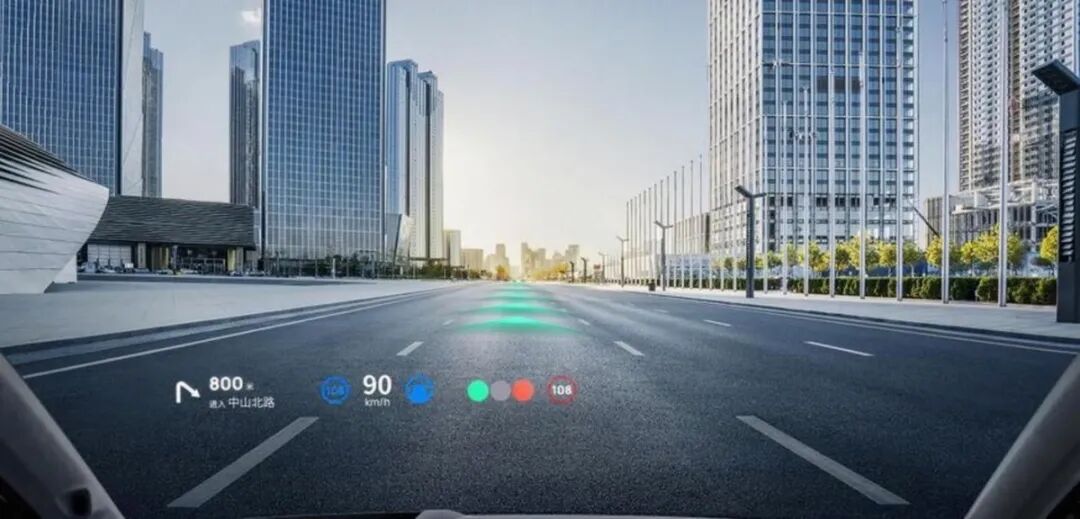
According to the R17X regulation, the HUD projection effect can only reach this level at maximum
The core logic of R17X is to divide the forward field of vision into two upper and lower parts: Zone 1 and Zone 2. Zone 1 is the upper part of the driver's forward field of vision, which stipulates that only non-static information can be displayed in this area, such as dynamic danger warnings and navigation arrows. Zone 2, the lower part of the field of vision, can display some fixed data windows, such as vehicle speed and engine speed. At the same time, it sets a "double 50%" upper limit for the opaque pixel coverage rate — the maximum opaque pixels in Zone 1 shall not exceed 50% of the FVA display area, and the coverage rate of opaque pixels in the basic graphic shall not exceed 50%.
This restriction is specifically designed to prevent a pitfall: when the system malfunctions or performs multi-target recognition, multiple pedestrians and vehicles are highlighted at the same time, instantly occupying the entire HUD area and blurring the driver's view. In addition, it is mandatory that the driver must be able to adjust the brightness and manually turn off the HUD through a maximum of two consecutive steps. When an electrical fault affecting visual information occurs in the HUD, it shall be automatically deactivated.
More critically, mandatory signals (such as AEB alarms) shall not be displayed separately on the HUD, and must be retained on the dashboard or central control screen. In short — HUD can duplicate information, but cannot replace other display devices.
Prosperity and hidden worries: we must fill the loopholes before accidents happen
Looking back at China, the HUD market is experiencing a wild growth of a hundred-billion-yuan scale. Huayang Multimedia has a market share of over 30%, followed by Zejing, Yili, Crystal Optech, Huawei and other suppliers, with the top 10 suppliers accounting for a total of 94.8% of the market share. The price has been reduced from 8,000 to 12,000 yuan set by foreign giants in the early years to 1,500 to 2,000 yuan. As explained at the beginning of this article, the current mainstream domestic vehicle market in the 100,000 to 200,000 yuan price range is accelerating the popularization of HUD across all configurations.
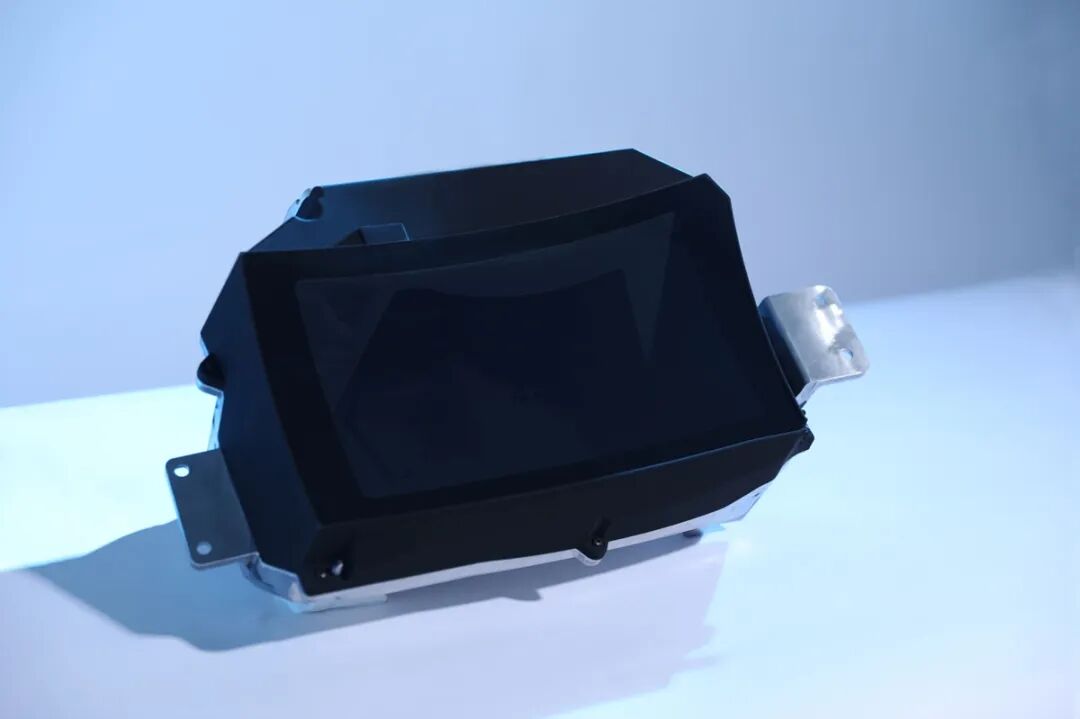
The AR-HUD DLP solution of Puchuang Intelligence
The other side of the explosive growth in scale is triple internal friction in the era of no standards. First, automakers are competing in customized functions, with different strategies for each vehicle and disordered experiences. Second, there is competition in adaptation, and the same hardware has vastly different experiences on different vehicle models. The general background of all this is the absence of national mandatory rules. As a result, wild growth has become the norm — what a good HUD is is entirely defined by the automakers themselves.
As for user experience, the chaos is concentrated in three points: treating HUD as a "second central control screen" to stuff excessive content, the AR fitting accuracy and clarity under strong light cannot keep up with the hardware stacking, and the "human factor bottom line" of HUD of different automakers varies greatly. Data from J.D. Power shows that 34% of users report that too many animation effects are easy to distract attention. About 83.3% of users think that the navigation information at complex intersections is not clear enough, and 84% of users hope to improve the picture clarity, especially in strong sunlight.
Fortunately, regulators have begun to make up for the gaps.
On December 31, 2025, the State Administration for Market Regulation and the Standardization Administration of China jointly issued GB/T 46926-2025 *Technical Requirements and Test Methods for Light-Duty Vehicle Vision Assistance Systems*, which is under the jurisdiction of the National Automobile Standardization Technical Committee, with the competent department being the Ministry of Industry and Information Technology, and will be implemented on July 1, 2026. The "T" in the standard number indicates that it is a recommended national standard, but as a supporting standard for the mandatory national standard GB 11562-2025 *Requirements and Measurement Methods for Driver's Forward Field of Vision of Light-Duty Vehicles*, its main clauses are actually enforced in vehicle type certification.
During the revision, this standard referred to the main content of the UN R176 FVA regulation on vision assistance, which is highly aligned with the direction of the UN R17X proposal, with core clauses such as the Zone 1/Zone 2 division and the double 50% restriction corresponding one by one.
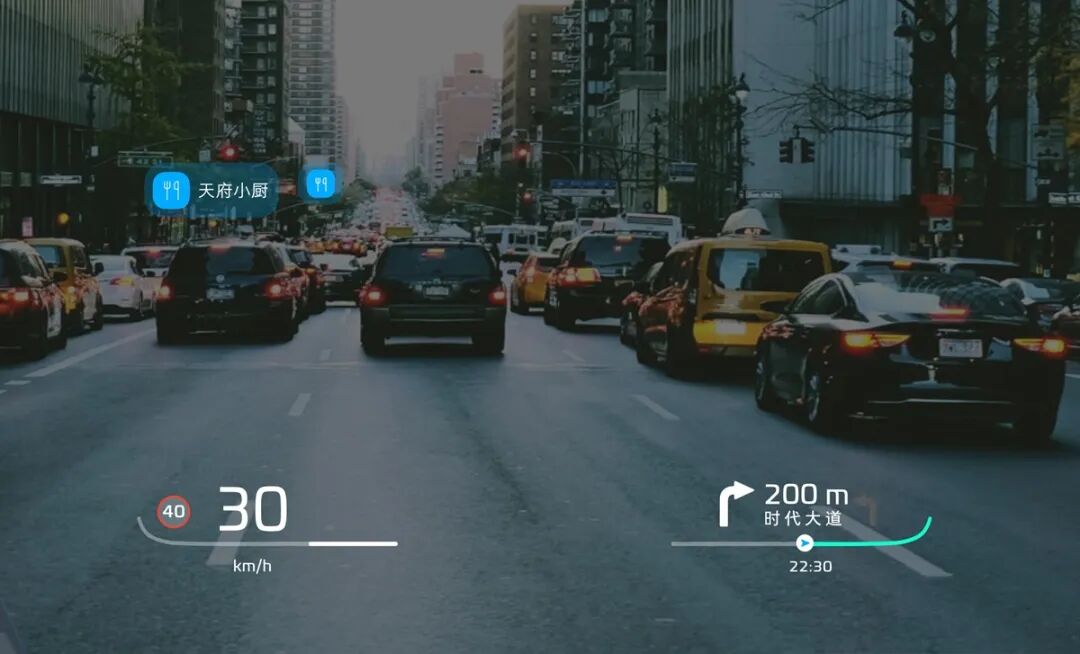
Obviously, the original intention of this AR augmented display is to help drivers find restaurants, but it will cause significant interference to road recognition and operation judgment
What is more milestone is that on July 20, 2026, the international standard ITU-T F.749.20 *Requirements for Smart Vehicle Head-Up Display Interface*, which was led and formulated by Changan Automobile, was officially released by the International Telecommunication Union (ITU), an authoritative institution under the United Nations. This standard took three years and was formed after a total of 7 proposals, putting forward systematic requirements for HUD information presentation from the perspective of human factors. As an international standard and recommendation, it does not have mandatory access binding force, but provides a unified reference benchmark for the design and application of HUD worldwide, marking that Chinese automakers have for the first time obtained international discourse power in the field of HUD human factors engineering.
It needs to be specially emphasized that all the above analysis and elaboration do not mean to forcibly compare foreign countries with China. After all, how sluggish Europe is at present, the news, data, and the derived memes are endless. However, one point is that after driving for more than 100 years, various mandatory safety standards in Europe have been launched as early as 70 or 80 years ago. After all, old Europe has experienced the "pain" in advance and thus has the lessons.
Hegel lamented helplessly in *Lectures on the Philosophy of History*: The only lesson mankind learns from history is that mankind never learns any lessons from history. The author does not want us to step on the pits that others have stepped on in the automotive field.
As for how much interference the information on HUD will cause to driving, the research of the University of Toronto has long poured cold water on it: every additional set of visual information on the windshield will make the driver divert attention to process that "popping up" content, and the driver's reaction error rate to sudden obstacles will rise significantly. The 0.75-second perception-decision-execution window cannot accommodate any fancy unnecessary operations on the windshield.
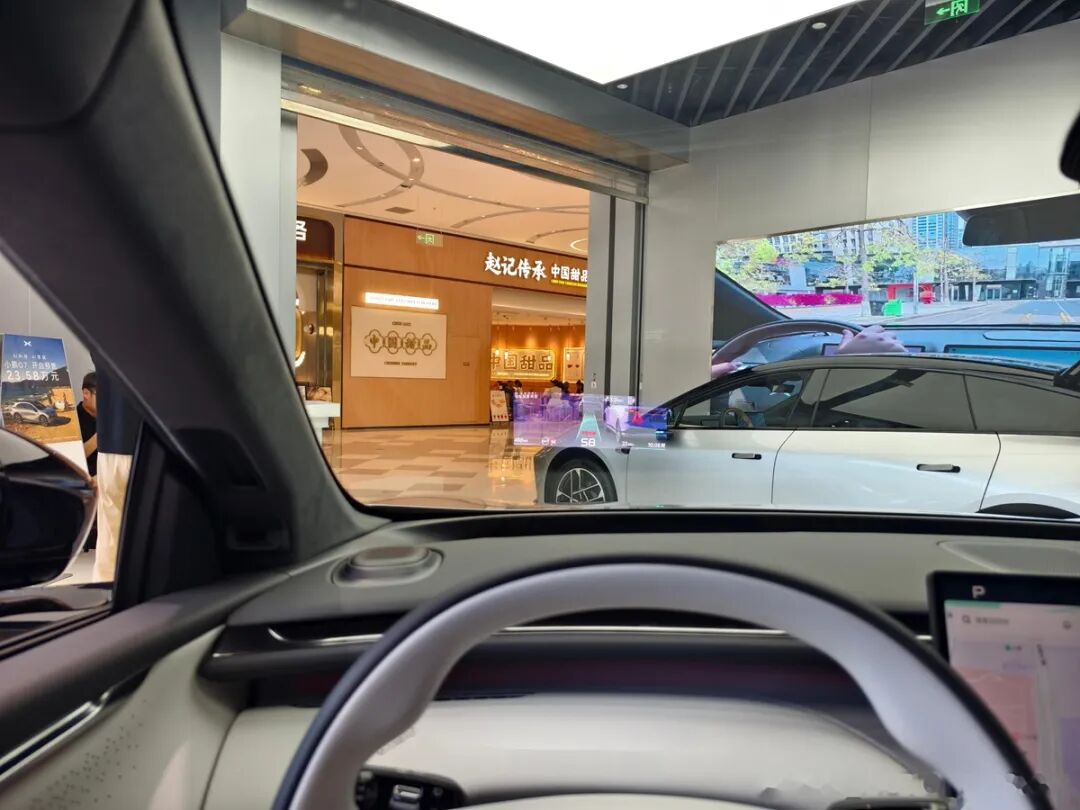
Ladies and gentlemen, the lessons of the EU and the standards of China are already there. The windshield is not a Bilibili projection screen. Don't wait until an accident happens to remember Hegel's sarcasm. Making HUD well, restrained and safe is more competitive than filling the screen with fancy effects.
After all, users buy cars to get home safely, not to watch a concert on the road.
This article is from the WeChat official account "C Dimension", author: Lin Dengwan, published with authorization from 36Kr.