Tencent rolls out new products, ByteDance ramps up its efforts, and AI video tools have begun to compete fiercely in the "going global" market.
In the AI video tool track in August, going global has become the most frequently mentioned keyword.
On August 12, ByteDance's ScriptBird AI short drama Agent completed the upgrade of special overseas service capabilities, iterating from a "translation and migration tool" to a localized creation workstation.
Two days later, Tencent launched its brand-new AI creation platform OnSolo, focusing on an all-in-one workstation for AI short dramas and interactive film games, with its product interface and operations fully oriented to overseas users; on the same day, AI animation and 3D content creation platform "LaHua" announced the completion of 68 million yuan Series D financing, and one of its core growth sources is the Middle East AI comic drama business that it quietly laid out in 2023.
In late July, OiiOii, which has long been focused on the comic drama track, launched the "One-Click Globalization" function. Users can upload a domestic short drama, and the system will automatically generate multi-language and multi-ethnic overseas versions.
The four products released market signals intensively within the same month, pointing to the same industry judgment: the competitive focus of AI creation tools is shifting from the generation effect competition in the domestic market to capability output in the overseas market.
Intensified Involution in Domestic Market, AI Creation Tools Are Collectively "Going Global"
The fact that going global has become the core keyword of the AI creation tool track is not so much a strategic choice of a single company, as a collective turn of the entire industry after being cornered by fierce domestic involution.
The content end was the first to feel the pressure. According to the *2026 H1 AI Drama and Comic Drama Data Report* released by DataEye in July, the market size of domestic AI drama and comic drama has reached 220 billion yuan in the first 5 months of this year, and the whole-year figure is expected to exceed 400 billion yuan, with a year-on-year growth of 138%.
However, the other side of the expanding scale is the brutal elimination rate: in the first half of the year, 221,900 new AI dramas/comic dramas were launched on Douyin, among which only 1055 works had views exceeding 100 million, with a 100-million-view hit rate of only 0.47%; if 50 million views are taken as the break-even line, only 1.3% of new dramas can recover the cost, and the hit rate of AI comic dramas is less than 0.1%.
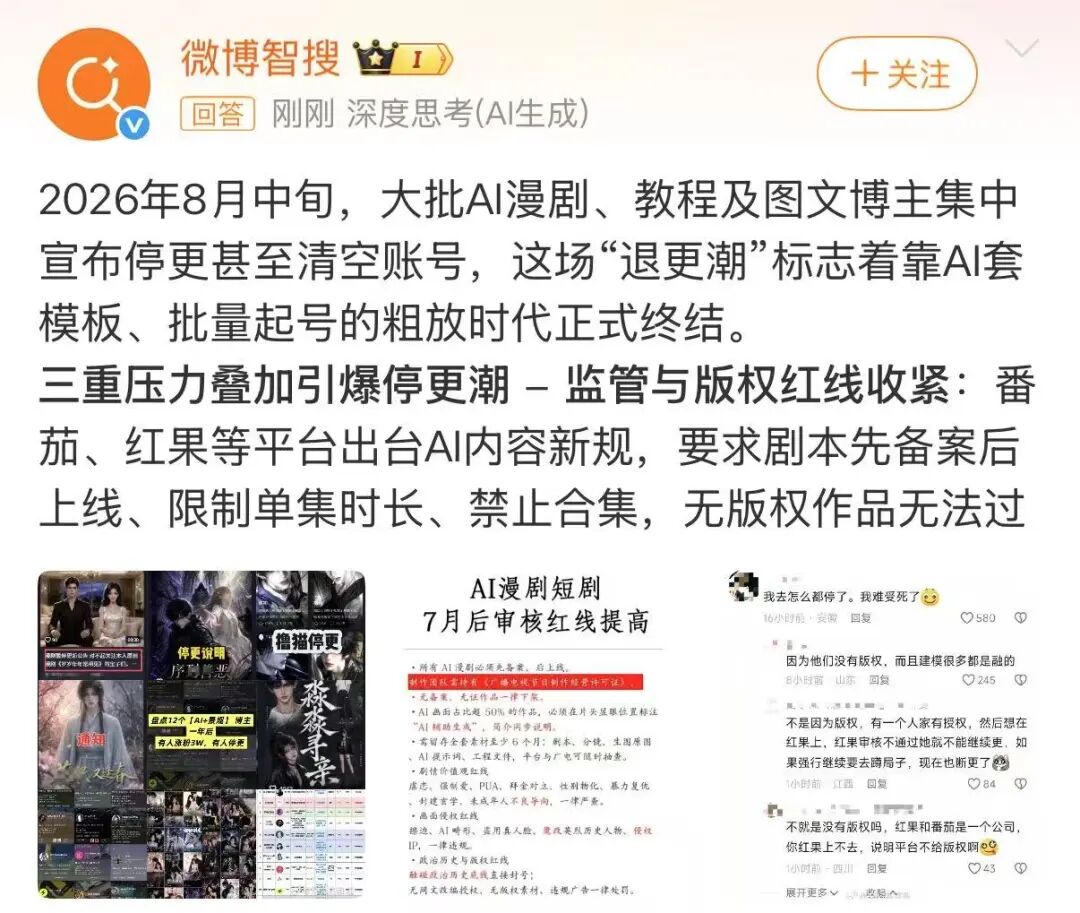
Regulatory pressure followed. Since July, the *Classification and Hierarchy Standards for AI Micro Short Dramas* and the *Measures for the Administration of the Development of Micro Short Dramas* issued by the National Radio and Television Administration have been implemented one after another, and the platform's implementation rules have directly caused a large number of AI comic drama creators to stop updating their works, further narrowing the maneuvering space of the domestic market. With 220,000 works produced in half a year but less than 2% of them able to recover the cost, it is almost an inevitable choice for short drama and comic drama manufacturers to turn their attention to overseas markets.
The tool side itself has also reached a point where it has to break through. Since 2026, dozens of AI video creation tools such as ScriptBird, LibTV, OiiOii, and Flova AI have flooded into the market, with highly similar interfaces and functions. Under the homogenized competition, platforms keep fighting on the price of model calls and compete for users with subsidies, which some media directly call "selling at a 10% discount with money-losing subsidies". The domestic AI video tool market has already become a red ocean with similar operation methods and thin profits.
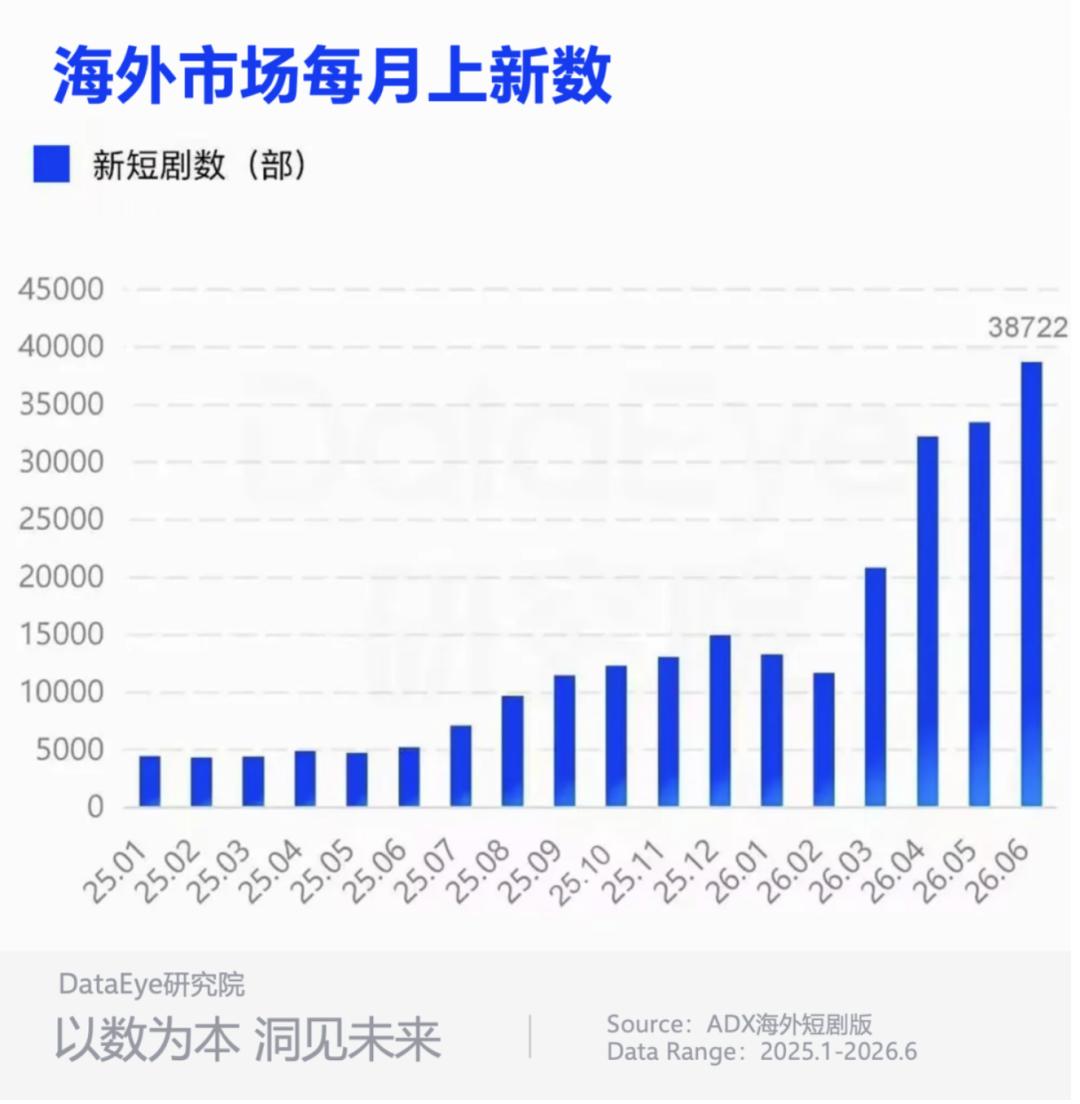
In contrast, the volume and growth rate of the overseas market are sufficiently attractive. DataEye Research Institute estimates that the market size of overseas AI drama and comic drama will exceed 4 billion US dollars in 2026. In June, the number of new short dramas launched overseas every month has exceeded 38,000, and the revenue sharing data of TikTok is more intuitive: the single-month sharing in June exceeded 22 million US dollars, and the overall traffic of short dramas on the platform surged by 400% month-on-month.
On August 13, TikTok officially launched three special incentives for AI short dramas, with a maximum reward of 50,000 US dollars for a single hit work, and the support scope extends from the content after launch to the upstream links of script IP and AI production teams.
The overseas short drama market is following the development path that the domestic market has gone through, but the competition density is far from reaching the level of domestic involution.
The rapid release of overseas demand is also forcing tools to upgrade. In the early stage, going global was in the mode of "original film + machine-translated subtitles", then it was upgraded to "simple manual polishing + basic picture fine-tuning", and now it has entered the stage of "full localized implementation". In the environment of rapidly growing overseas content supply and continuously improving user tastes, works with shallow migration are increasingly difficult to gain a foothold, and in-depth localized adaptation has changed from an advantage item to a basic access threshold.
This all-dimensional localized reconstruction cannot be supported only by manual translation and editing teams, which features high cost, long cycle and unstable quality. Large-scale overseas expansion inevitably requires the support of industrialized tool capabilities.
From One-Click Adaptation to Localized Platform, the Path of Tool Globalization Is Gradually Stratified
Even though all the four products are targeting overseas markets, the users they face and the problems they solve are quite different.
OiiOii's "One-Click Globalization" is oriented to domestic teams that have already created hit works. After uploading a verified domestic short drama, the AI will automatically complete shot splitting, character ethnicity replacement, multi-language dubbing and regional visual adaptation, and the same drama can output multiple versions in English, Spanish, Arabic and other languages at the same time.
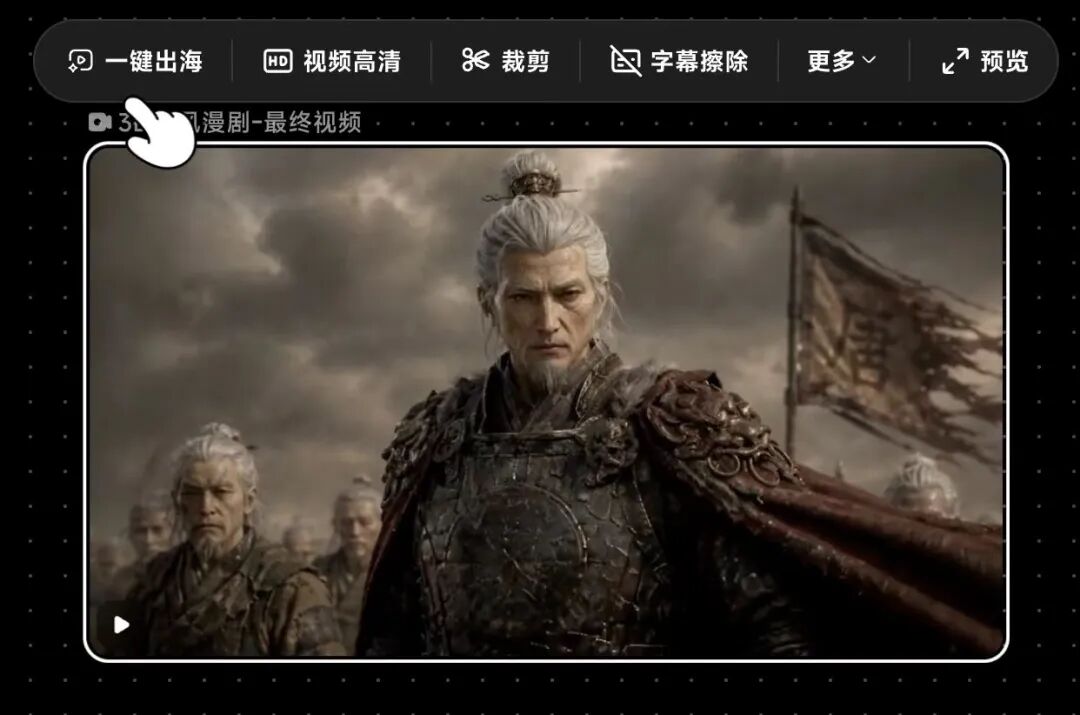
Its core function is not to produce new content, but to realize secondary monetization of verified content assets in overseas markets, with low threshold and high speed, which is suitable for quickly testing feedback from different markets.
What ScriptBird aims to solve is a common pitfall in the process of short drama globalization: directly applying domestic scripts will most likely lead to acclimatization in overseas markets, such as too formal lines, inconsistent character settings, and mismatched rhythm with the expectations of overseas audiences. The ScriptBird script model can complete the localized adaptation of domestic scripts in 3 minutes, including colloquial polishing of lines, adjustment of character behavior motivation, and adaptation of plot rhythm; on the picture side, it will automatically match overseas aesthetic standards after intelligent shot analysis, generate Western white character images by default, and synchronously adapt the scene style and picture tone.
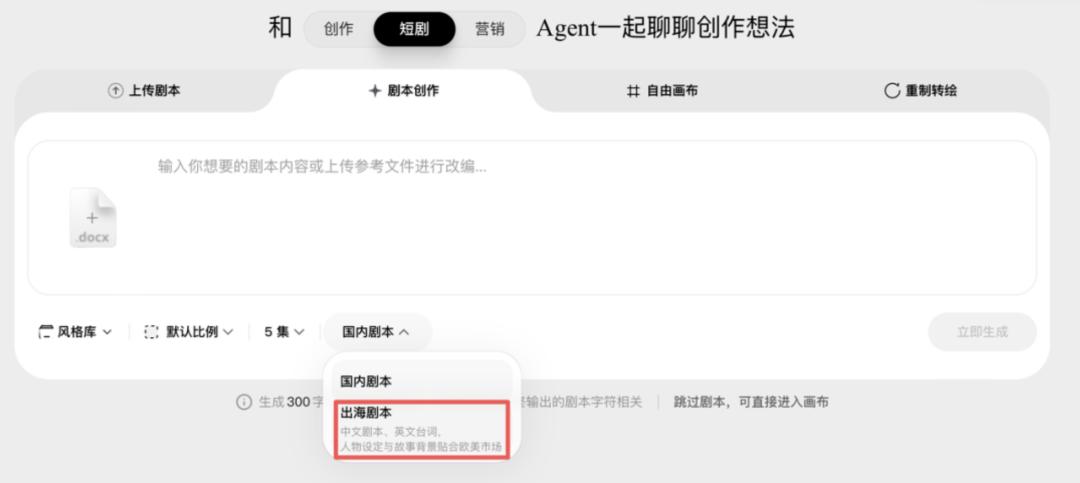
ScriptBird's goal is to turn content localization from manual work relying on manual experience into an assembly line that can be replicated on a large scale, targeting professional teams that take overseas expansion as their main business. For such users, the ability to produce high-quality localized content in batches and stably is more important than a single high-quality generation effect.
OnSolo has a completely different target user group: it does not target domestic overseas expansion teams, but independent local creators overseas, including independent filmmakers, brand content producers, and social media marketers. The platform, renamed from the internal test product WorkSolo, has the slogan "a Crew of One", focusing on enabling one person to complete all links from script to finished film. During the internal test in July, the operation team began to invite overseas video creators on X in a targeted manner, and its cold start method is a pure overseas product operation approach.
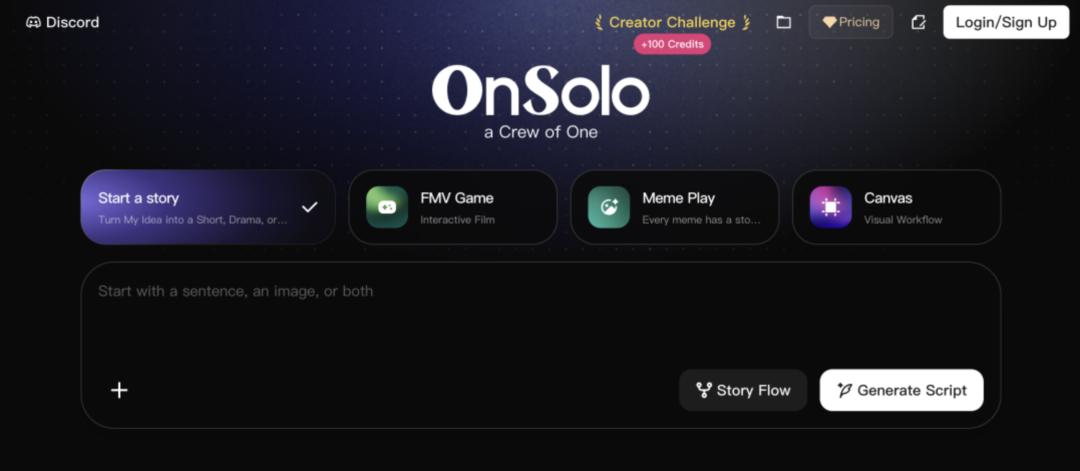
The four entrances on the OnSolo homepage cover four forms: short drama, interactive film game, viral short video and free creation, among which the zero-code FMV interactive film game production is a rare function in the global scope. In the core "Start a Story" mode, users only need to input a one-sentence inspiration, and the AI will confirm the episode type, number of episodes, aspect ratio and visual style through questions, then automatically complete script generation, asset extraction of character three-view drawings and scene props, and batch generation of storyboards, and finally complete editing, dubbing and export the finished film in the same product.
It shares a set of technical base with Tencent's previous WorkRally for institutional teams, and lightweight the industrialized capabilities into a creation process available for individuals. From the first day of its launch, OnSolo has no intention of targeting the domestic market, and directly competes for the same user group with overseas tools such as Runway and Pika.

LaHua has chosen the most heavyweight path: it neither sells tools to domestic overseas expansion teams, nor serves overseas creators, but directly operates content platforms overseas with its AI tool capabilities. It has launched the VinaShort platform in the United Arab Emirates, Saudi Arabia, and Bahrain, accumulating tens of millions of users through the closed loop of "content production + platform distribution + commercial monetization", and the per capita consumption of AI comic dramas in the Middle East is 2 to 3 times that of the domestic market. AI capability here is the infrastructure supporting the operation of the platform, and the revenue comes from the operation of the platform and channels.
The four paths cover different links in the overseas value chain, which also shows that the overseas path of AI creation tools has diverged: OiiOii realizes cross-market reuse of existing content assets, ScriptBird realizes industrialization of localized production, OnSolo realizes original globalization of tool products, and LaHua realizes AI-driven regional platform operation. This is a gradually stratified diversified market, not a competition among multiple players on the same track.
Overseas Products Are Still Focusing on Single-Point Generation, Full-Link Capability Becomes Breakthrough Point
In this wave of short drama globalization, the most noteworthy point is the difference between Tencent and ByteDance's layouts, because the ecological logic of the two companies is completely different, which largely determines the future competition pattern of AI video tool globalization.
ByteDance's advantage is that it currently has the only full-link closed loop in China covering from model to tool to distribution: the underlying layer is the Seedance video model, the production end is the ScriptBird AI short drama Agent, and the distribution end, TikTok has deployed both free and paid modes through two independent apps PineDrama and LimeShorts.
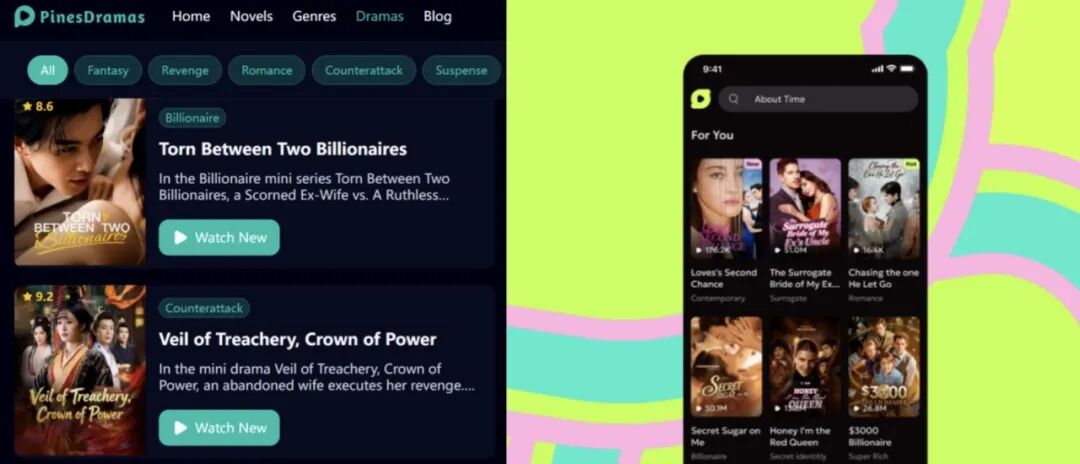
For overseas expansion teams, choosing ByteDance's tools means getting an integrated solution of model, production and distribution at the same time, which shortens the whole link from production to monetization to the shortest. No other manufacturer can replicate this position at present.
Tencent's situation is much more complicated, which is why OnSolo chose to bypass the domestic market and directly target overseas users. In the domestic market, Tencent's video model does not have a dominant advantage, and it also lacks strong channels in the short drama and comic drama distribution end. Under the circumstance that the domestic AI creation tool track has been occupied by various players, OnSolo directly targeting overseas creators is an active dislocation competition strategy.
However, OnSolo also faces obvious challenges: it does not have a distribution ecosystem like ByteDance, and the content produced by the tool needs to find channels for monetization by the creators themselves; relying on third-party video models such as Seedance and Kling, it does not have an advantage in price. The end-to-end narrative creation experience and scarce functions such as interactive film games are OnSolo's real differentiation points, but whether they can make up for the shortcomings in distribution and models is still an open question.
In the overseas AI video tool track, the differentiated opportunities for products going global come from the industrial production system that has been implemented in China. The creation methodology and practical experience accumulated by tens of millions of local creators can be output and reused overseas.
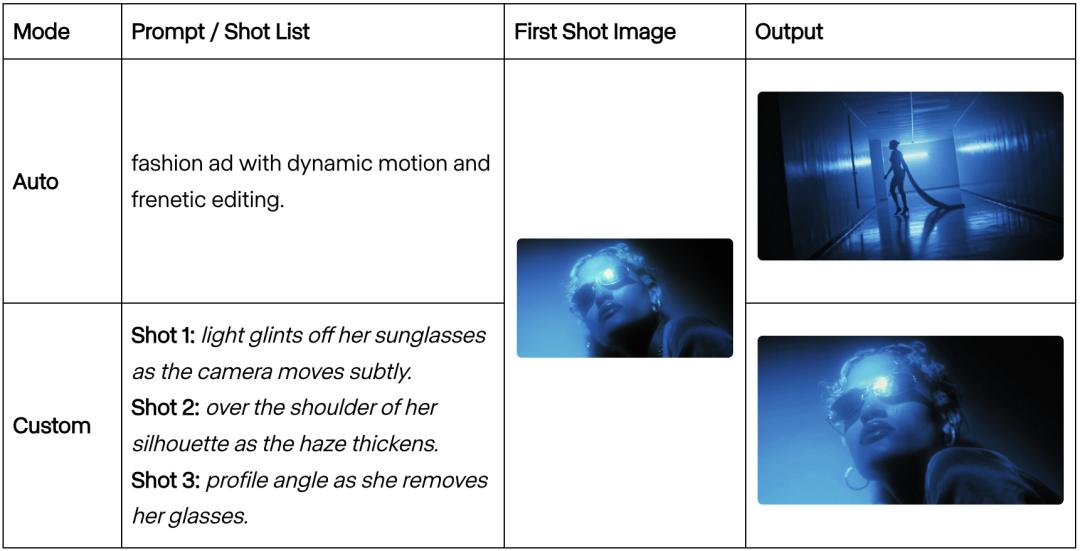
At present, similar overseas products are still focusing on improving single-point generation effects, with competition concentrated in picture realism, lens stability and output resolution, and generally do not have a complete full-link narrative production capability. Although Multi-Shot released by Runway in May this year tried multi-lens automatic generation, the upper limit is only 5 lenses, which is not enough to support the production of complete episodes.
China has already got through the full-link capability from script to finished film. Packaging this set of engineering capabilities into products for overseas creators, and relying on the complete end-to-end experience to distinguish from overseas tools that focus on single-point generation, is the most feasible breakthrough direction for products like OnSolo, ScriptBird and OiiOii.
Domestic AI short dramas and comic dramas have gone through the whole process from outbreak to involution in one year. After accumulating production capacity, tools and industrialized experience, exporting capabilities to overseas markets has become a natural next step.
However, going global is never a simple copy of domestic operation methods. The final competition will fall on four dimensions: localization capability, model cost, end-to-end experience and distribution channels. The answer to who can successfully run the business in overseas markets may become clear soon.