It caught fire after landing, but this Chinese rocket still achieved an overwhelming resounding success.
Yesterday, Mr. Bad Review was surfing online, and found that foreigners on his recommendation list were extremely anxious.
A bunch of people were ranting that the Chinese only know how to copy everything.


Some netizens have even taken the topic to the level of China and the US competing for dominance of the solar system.

There are also classic self-deprecating jokes from Europeans.

Even Elon Musk could not hold back, dug up his statement from 15 years ago, and replied with a "😂".

What on earth caused such a huge stir?
In fact, it is simply that Chinese rockets can not only fly, but also land steadily.
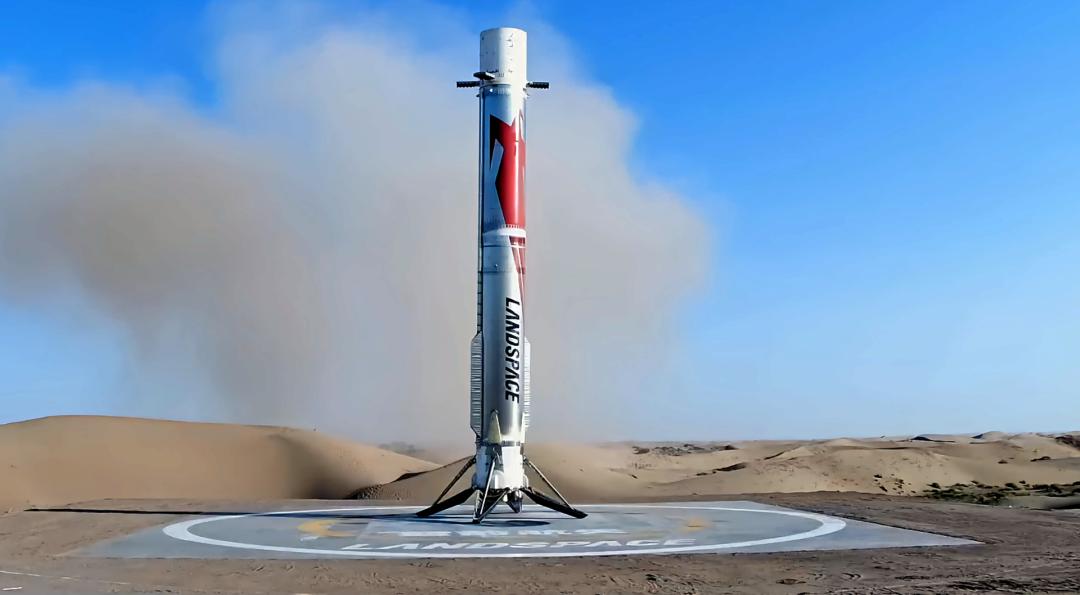
Early yesterday morning, a 66-meter-tall silver rocket sent a satellite into orbit, then landed itself steadily back on the Gobi Desert in Gansu.
In the live broadcast footage, the silver rocket body stood on the pad with four landing legs extended. This action that used to frequently appear in SpaceX videos finally has its Chinese version now.
The protagonist of this story is the Zhuque-3 Y2 launch vehicle, developed by LandSpace, a private Chinese aerospace enterprise.
It should be noted that just over a month ago, China's state-owned Long March 10B rocket completed the country's first rocket sea recovery using an arresting net.
Now that the two outstanding teams have achieved consecutive victories, it is no wonder that many foreigners are getting anxious.
Apart from the lively discussions among netizens, the domestic aerospace circle is also extremely excited this time.
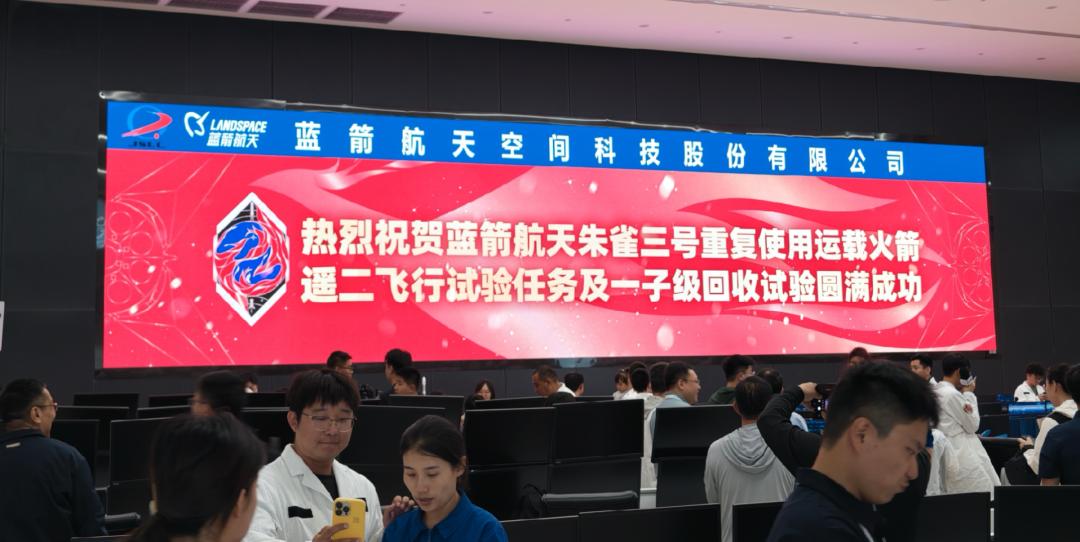
Last night, we interviewed a senior rocket engineer named Alai (pseudonym) overnight. He told us that many practitioners, engineers and space enthusiasts were staring at the countdown on WeChat Moments and WeChat groups during yesterday's launch.
Everyone was excited not just because "Chinese rockets finally landed successfully", but more importantly, within just over a month, the state-owned team and private enterprise have both mastered two completely different rocket recovery routes.
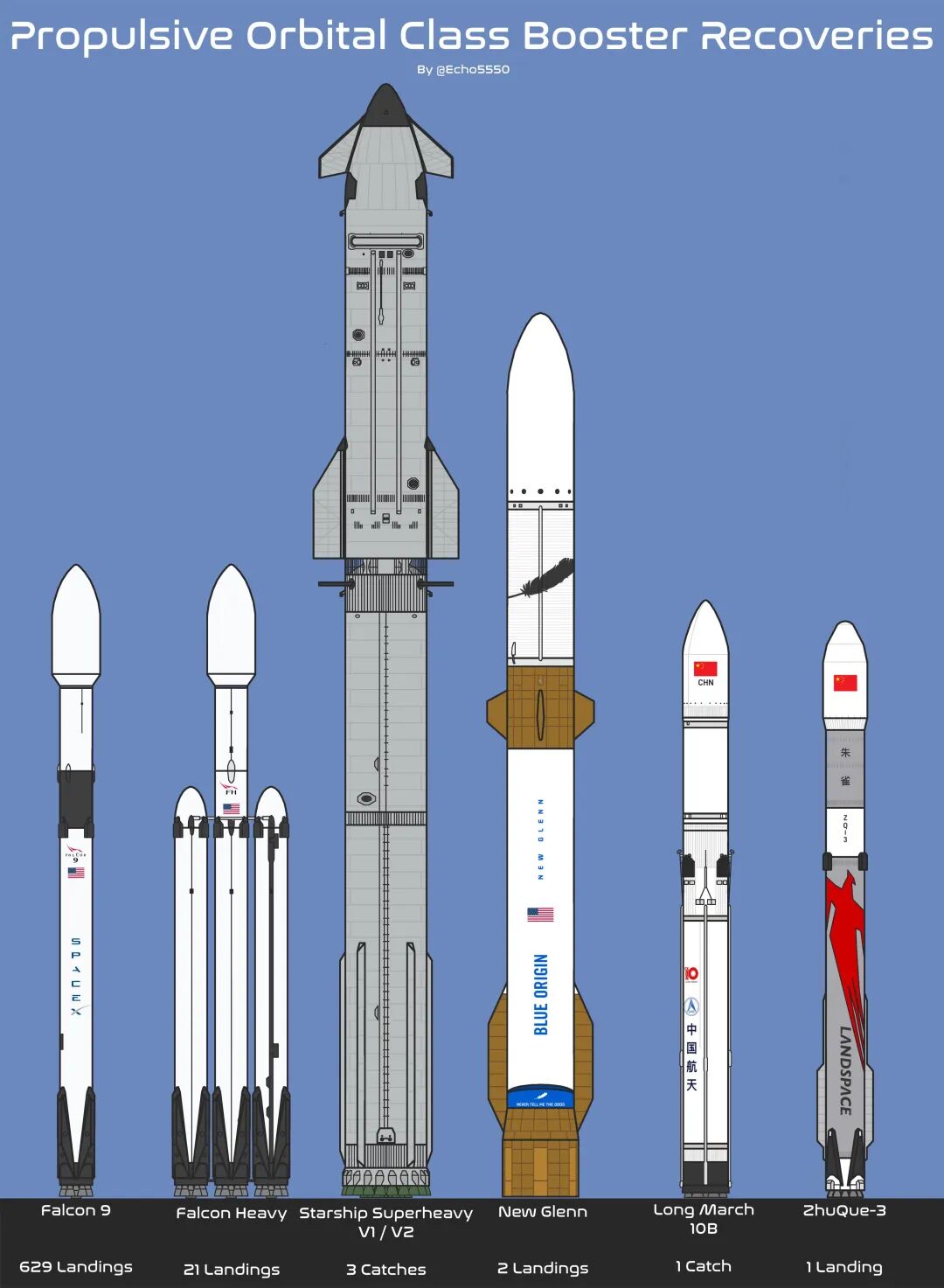
These two successful recoveries have given a strong boost to the domestic commercial aerospace industry. "Although there is still a huge gap compared with Musk's hundreds of reuse records so far, it at least gives everyone confidence, breaks the myth, and proves that rocket recovery is not as unattainable as people thought."
However, for many insiders, the successful recovery of Zhuque-3 Y2 yesterday is a pleasant surprise, but not an unexpected outcome.
Because back in December last year, Zhuque-3 Y1 had already completed the mission of sending the payload into orbit, only encountering a small problem during the first stage recovery process.
At that time, when the rocket was preparing for "emergency braking" 3.3 kilometers above the ground, abnormal combustion occurred, and it finally made a hard landing.
But anyone with a discerning eye could see that the rocket maintained a good attitude during the return process, and the fuselage was still intact.
According to the on-site photos circulated on the Internet at that time, the rocket had almost returned to the designated location.
Therefore, the outside world generally predicted at that time that after about 5 more trial-and-error attempts, the technology would basically be mastered. Unexpectedly, LandSpace performed so well that Y2 succeeded directly on its first try.
This success is of course inseparable from the LandSpace team's rapid error correction and efficient optimization capabilities.
According to the review by Dai Zheng, the chief commander of LandSpace for the Zhuque-3 rocket, in response to the abnormal combustion of Y1, the team decisively adjusted the landing power scheme for Y2.
For example, they changed the 5 engines used for recovery ignition to 3, and even sacrificed part of the payload weight to strengthen the thermal protection structure.
Although it sounds easy when we describe it, Alai explained to us that during the ascent phase of an ordinary rocket, the tail of the rocket is basically hidden behind the fuselage. But when the first stage returns, the rocket rushes back with the engines facing downward, so the original tail end and engine compartment have to face the atmosphere and withstand high dynamic pressure and high heat flow.
Although the tail temperature of Zhuque-3 during return is only a few hundred degrees Celsius, which is not as extreme as Starship's re-entry into the atmosphere, the thermal protection conditions it faces are far harsher than those experienced by the rocket tail during normal launch ascent.
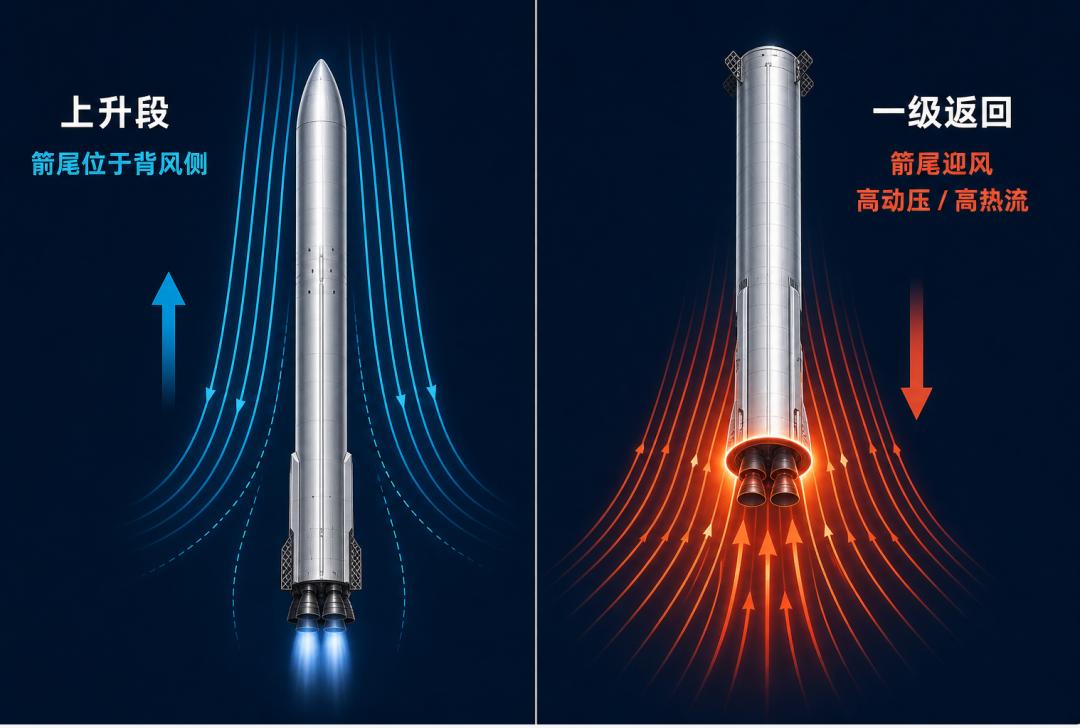
Before that, there was no real return data of this level in China at all.
Therefore, the targeted strengthening of the tail cabin thermal protection and adjustment of the landing ignition scheme for Y2, plus the one-time success, can almost be described as incredible.
This also reflects LandSpace's amazing R&D efficiency. According to observations from industry insiders, it took less than 3 years from the project approval to the first flight of Zhuque-3, which is very rare for the development of a new generation rocket that contains a large number of innovative points.
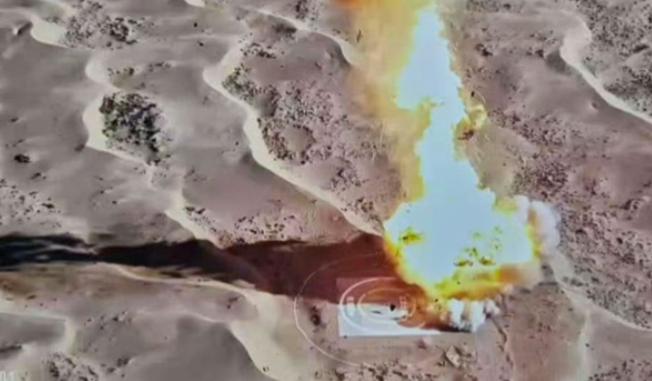
However, it is slightly regrettable that after the soft landing of Y2 was successful this time, one of the landing legs was ignited for some undisclosed reasons when draining excess fuel.
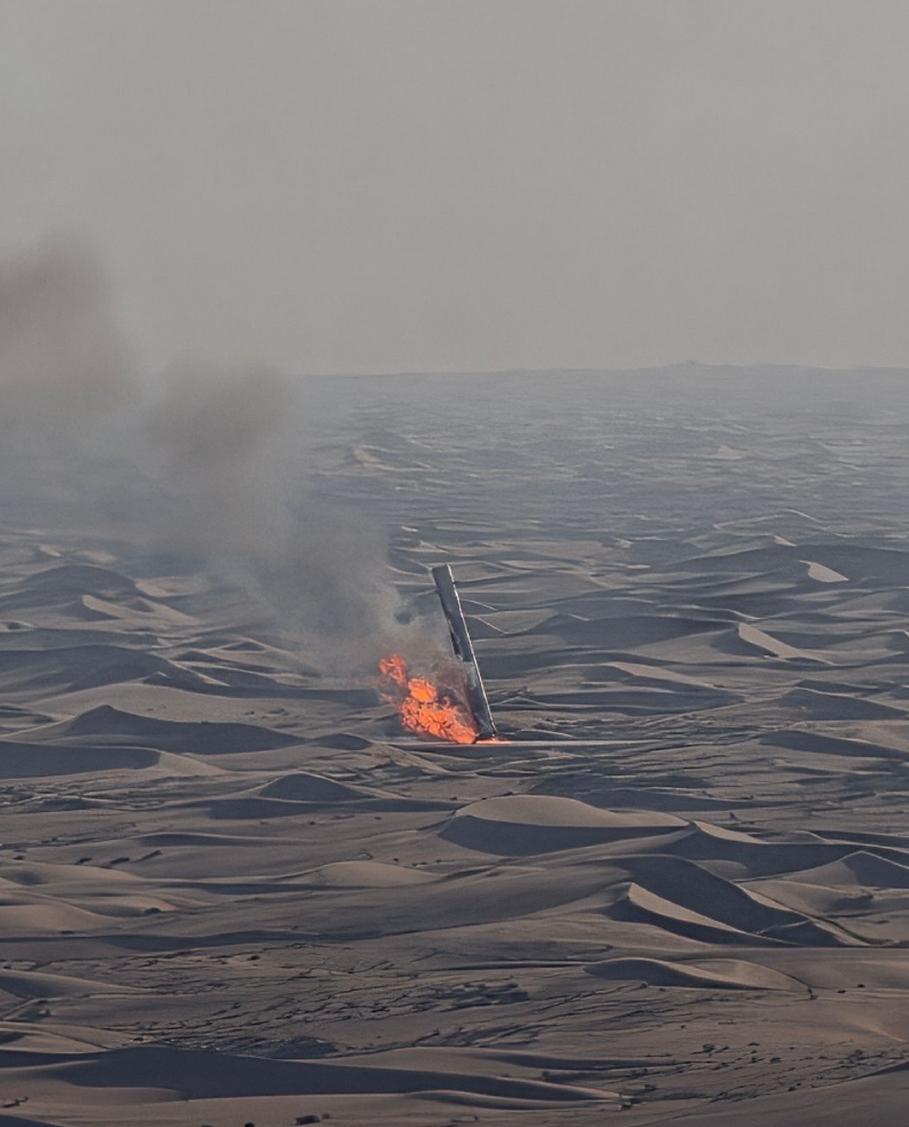
However, the widely circulated picture showing the rocket collapsing due to the burning landing leg is fictional
Many people are curious why the rocket caught fire even after landing.
Alai judged that this is most likely because a fuel leak occurred after landing, and the leakage volume was too large for the small fire-fighting robot responsible for spraying water to cool down to handle, which finally ignited the attachments on the metal structure, making it an unexpected accident.
Fortunately, this does not mean that the value of this recovery was completely destroyed by the fire.
The engineer told Mr. Bad Review that for the first rocket that returns completely, the most important thing is not to rush to send it back to space, but to conduct a full physical examination to fully understand the real state of each component after a flight, and accumulate more data for subsequent rockets.
Although the complete rocket body was not preserved, in terms of technical route, compared with Falcon 9 more than 10 years ago, the current Zhuque-3 can be said to be more advanced.
From some basic parameters, Zhuque-3 Y2 and Falcon 9 are very close in terms of size, weight, power, and flight recovery mode.
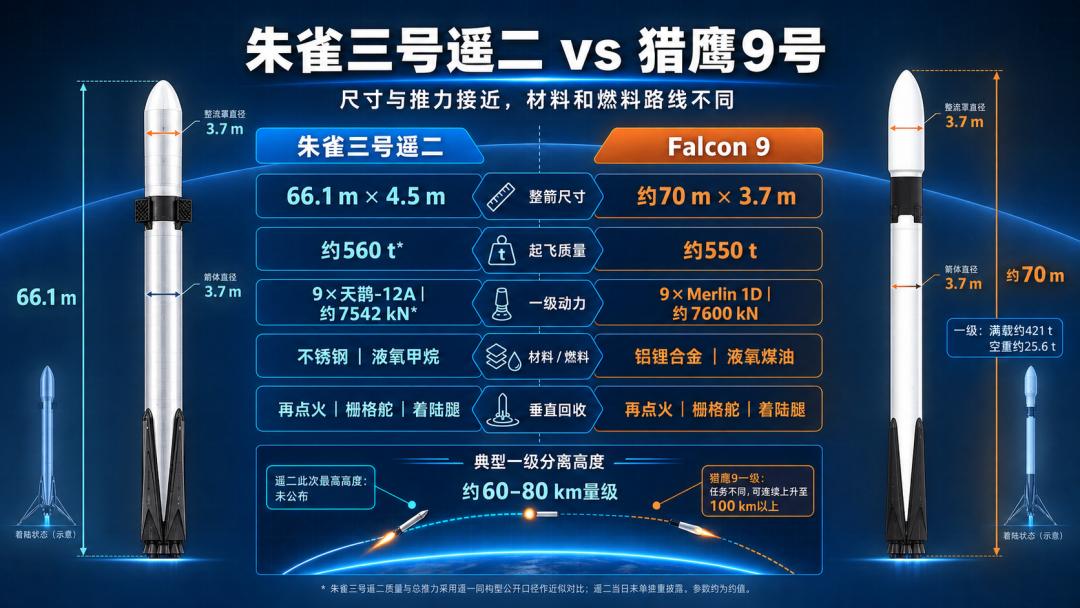
But Zhuque-3 is obviously more similar to Starship, the elder brother of Falcon 9, in terms of fuel and fuselage material.
Because Falcon 9 uses an aluminum-lithium alloy fuselage and liquid oxygen kerosene, while Zhuque-3 uses a stainless steel fuselage and liquid oxygen methane.
Compared with the dark and dirty appearance of the Falcon series after each recovery, the Zhuque-3 after landing this time is much cleaner.
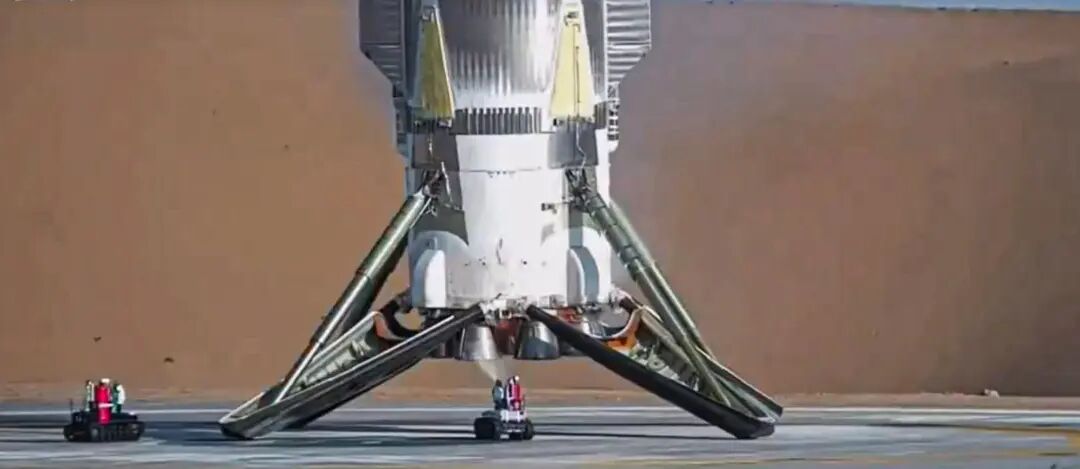
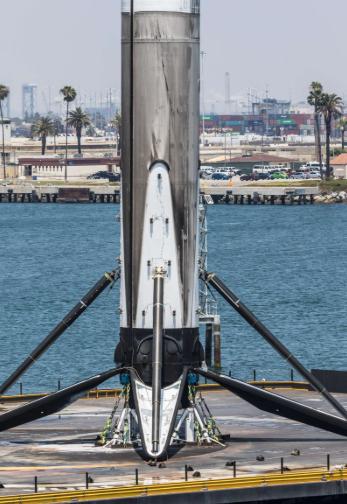
In addition, liquid oxygen methane basically does not produce carbon deposition, which means that theoretically it can save a lot of time for deep cleaning of the engine, and the future overhaul cycle is expected to be faster than that of Falcon 9.
Although the successful recovery of Zhuque-3 Y2 this time is very encouraging, we have to admit that we still have a long way to go if we really want to catch up with the current dominance of Falcon 9.
The first priority is to shorten the reuse cycle. As mentioned earlier, the successful recovery of the first stage of the rocket does not mean that it can immediately enter the high-frequency reuse phase. Take Falcon 9 as an example, it just completed its 100th launch this year, and can be refurbished and re-launched within 20 days.
Can Zhuque-3 achieve high-frequency reuse in the future? How long will the secondary preparation take? Do the internal core components (such as engines) need to be replaced frequently?
All these still need further verification.
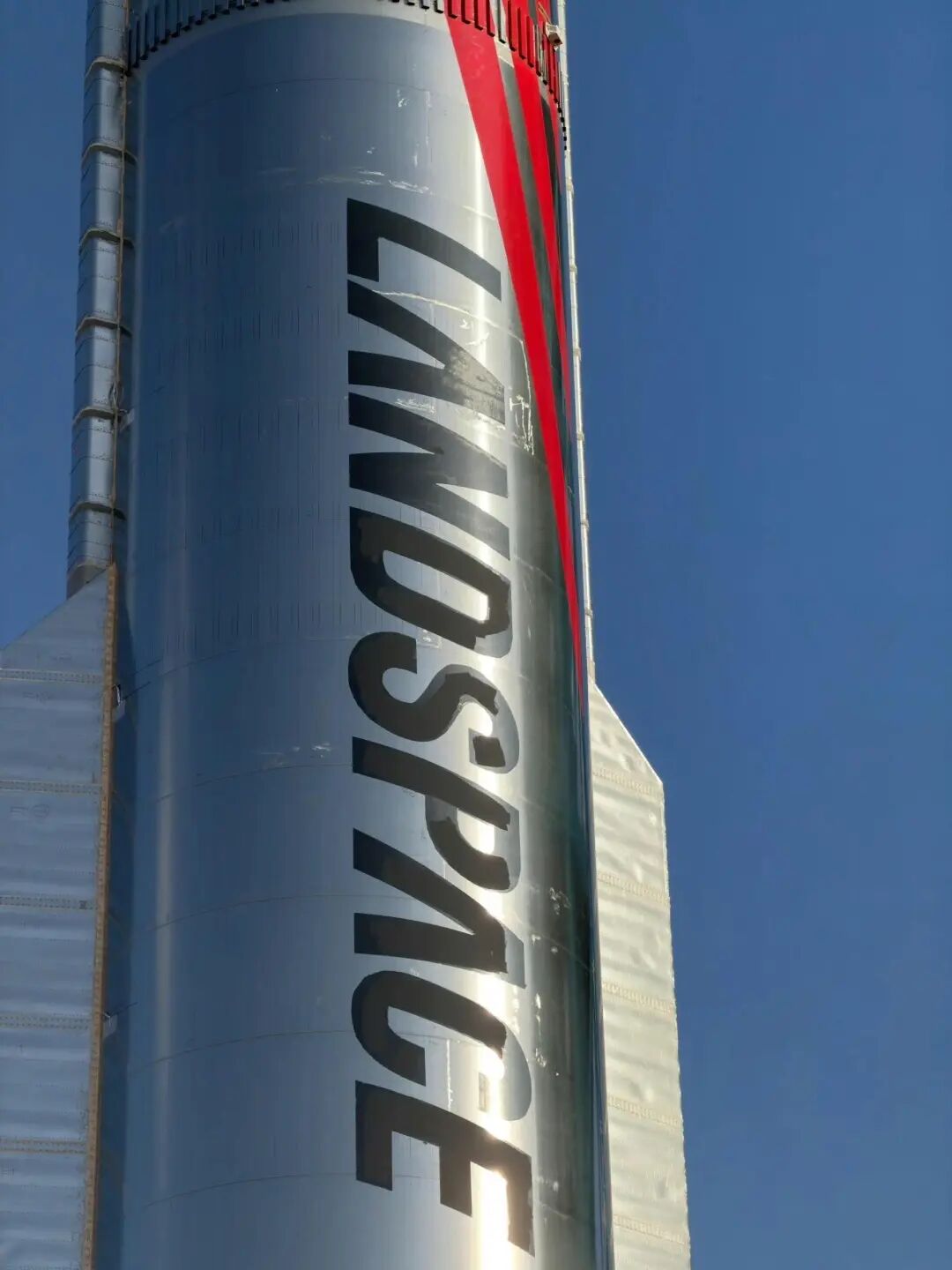
On the other hand, there is a payload capacity gap between the two at the current stage.
According to some public information, in recovery mode, the LEO (Low Earth Orbit) payload capacity of Zhuque-3 is less than 10 tons; while the Falcon 9 published on SpaceX's official website can reach a payload capacity of about 17.5 tons when recovered at sea.
However, Alai thinks that there is no need to compare the payload capacity at the current stage.
Because stainless steel materials are relatively heavier, but the foundation of liquid oxygen methane allows it to target a more distant future, rather than just focusing on the current Falcon 9.
