The "minimum guarantee scheme" of Tencent is the core business of Alibaba and Baidu.
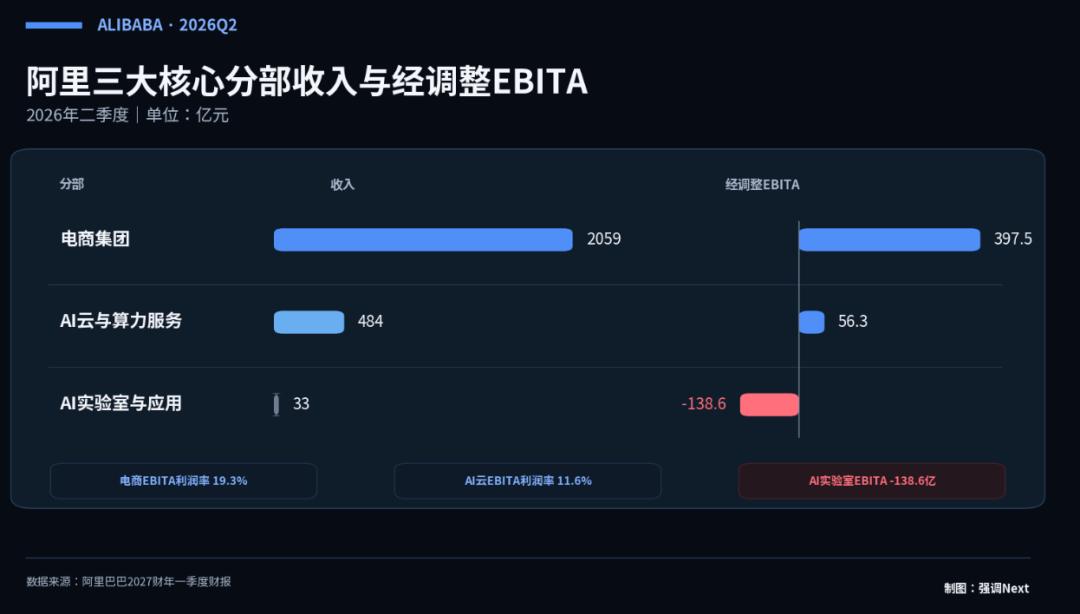
On the evening of August 20, Alibaba released its financial results for the first quarter of fiscal year 2027. The new segment structure features the name "AI Cloud and Computing Power Services": its single-quarter revenue reached 48.4 billion yuan, representing a year-on-year increase of 45%. For the first time, the AI business of leading tech giants has grown large enough to deserve a separate income statement.
The same matter has another name at Tencent: the fallback solution. At the earnings call on August 12, Tencent President Martin Lau stated that if there is idle self-used computing power, it can be put on Tencent Cloud for external lease at any time to quickly generate revenue, profits and return on investment, and "the investment risk is completely controllable".
When it comes to purchasing chips and building data centers, the computing power Tencent buys is a means of production for its own use, while the computing power Alibaba buys is a commodity to be sold outward. In this earnings season, all major tech companies are telling AI stories and their stock prices have corrected collectively, but the real differentiation lies right here.
Everyone is buying, first look at what they have turned the purchases into
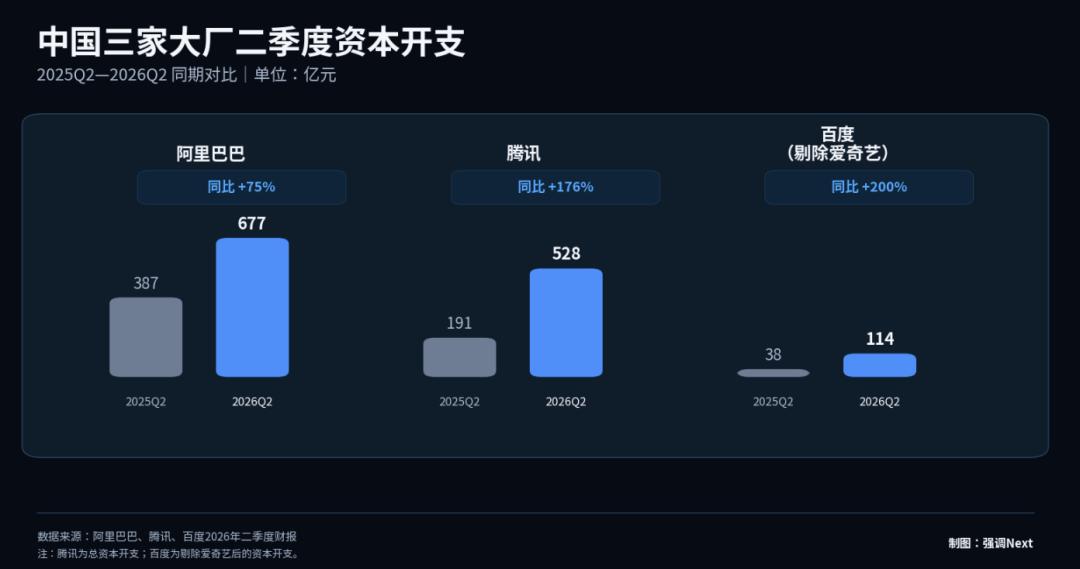
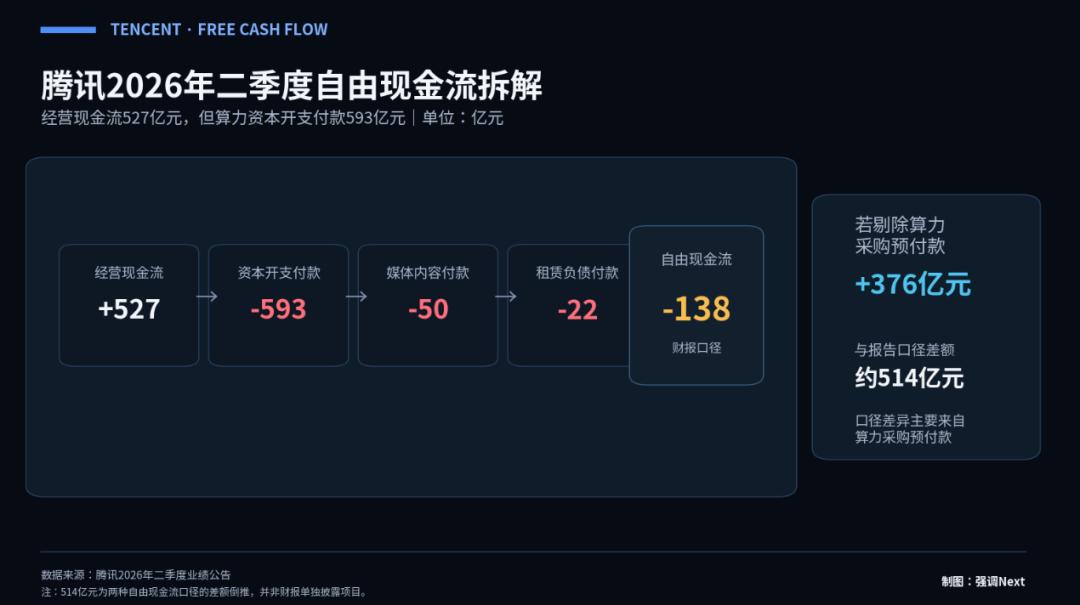
Tencent's capital expenditure in the second quarter was 52.78 billion yuan, up 176% year on year. That's not all: another 51.4 billion yuan in prepayments for computing power procurement was not included in capital expenditure. Based on the actual payment standard, the computing power expenditure amounted to 59.3 billion yuan. Combined, Tencent spent more than 100 billion yuan in cash on AI in a single quarter. After excluding iQiyi, Baidu's capital expenditure was 11.4 billion yuan, up 201% year on year, with a capital expenditure ratio of 45.2%, the highest investment intensity across the industry. Alibaba recorded 67.678 billion yuan in capital expenditure, up 75% year on year, ranking first in absolute terms.
The cost is directly reflected in the cash flow statement. Tencent's free cash flow was -13.8 billion yuan, the first time it turned negative in a single quarter since 2005. Alibaba's net outflow of free cash flow was 44.67 billion yuan. This is not a unique phenomenon in China: Google's capital expenditure in the second quarter was 44.9 billion US dollars, with a negative free cash flow of 5.9 billion US dollars. Its stock price fell by more than 7% the day after the earnings release, wiping out about 300 billion US dollars in market value in a single day. The capital expenditure growth rates of Amazon, Microsoft and Google in the second quarter were 69%, 69% and 100% respectively.
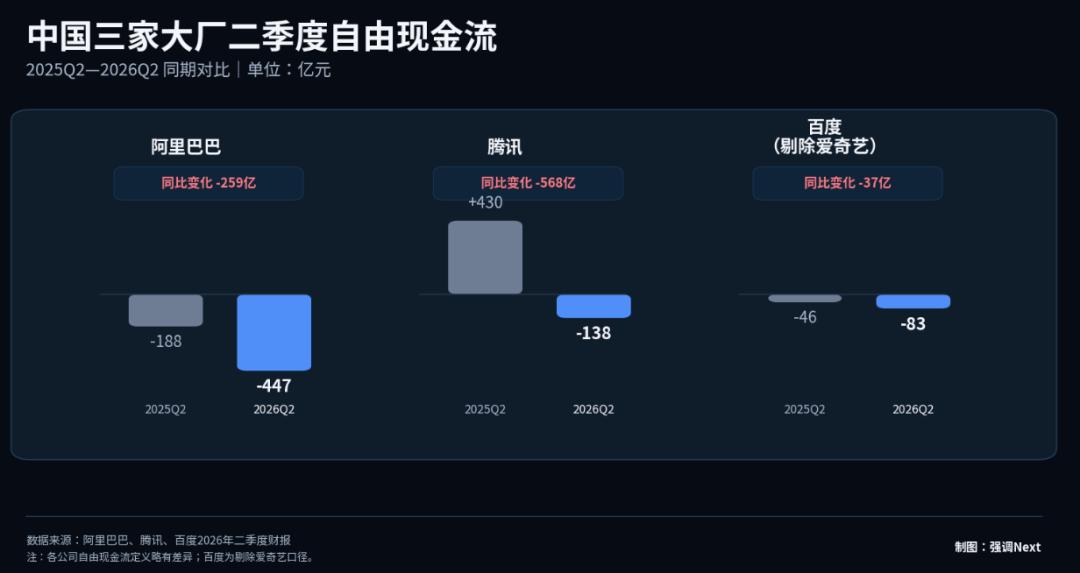
Most global tech giants have collectively entered the era of negative free cash flow in the same quarter. Internet companies that used to make easy cash with asset-light models and high gross margins over the past two decades are queuing up to transform into heavy-asset computing power companies. The market has not yet learned how to price such companies, so it has collectively voted with its feet.
On August 13, Changxin Technology, a manufacturer of memory chips, had a market value of 3.54 trillion yuan, surpassing Tencent to become the listed company with the highest market value in mainland China. The application company has given up the top spot, and the upper-stream player of chips has taken over.
Alibaba's difference: It has turned AI into a business that can be priced on financial statements
This quarter, Alibaba separated AI into a separate statement for the first time. In the new segment structure, "AI Cloud and Computing Power Services" (Alibaba Cloud plus T-Head) has for the first time a complete income statement. Alibaba has thus become a company whose AI business scale, growth rate and profit margin can be verified quarter by quarter.
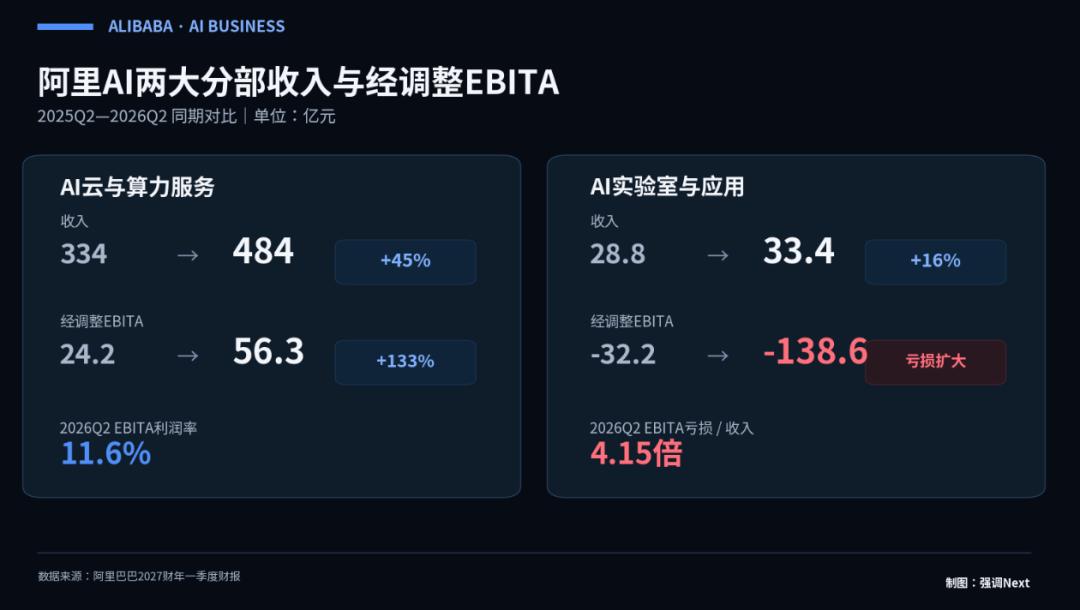
The revenue of Alibaba Cloud's segment was 48.437 billion yuan, up 45% year on year, hitting a new high in 22 quarters; the adjusted EBITA was 5.628 billion yuan, up 133% year on year, with a profit margin of about 12%, and the management promised that it will continue to increase quarter by quarter. Among this, the revenue from AI-related products reached 12.376 billion yuan, recording triple-digit growth for 12 consecutive quarters, with the annualized recurring revenue (ARR) exceeding 49.5 billion yuan, accounting for 35% of Alibaba Cloud's external revenue.
Following a caliber difference, we can also calculate a number not directly given in the financial report: Alibaba Cloud's total segment revenue is 48.4 billion yuan. Back-calculated from the rule that "AI-related products account for 35% of external revenue", the external revenue is about 35.4 billion yuan. The remaining about 13 billion yuan, more than a quarter of the total, comes from the internal group, meaning Alibaba itself is a major customer of Alibaba Cloud. External customers contribute the majority of the growth, and this business is not supported by internal blood transfusion.
Baidu can be used as a reference. This quarter, Baidu's "core new AI business" recorded a single-quarter revenue of 12.5 billion yuan (accounting for 50% of general revenue), which is almost at the same level as Alibaba's AI-related product revenue of 12.376 billion yuan, but the growth rate differs by an order of magnitude: Baidu's this segment's revenue increased by 25% year on year, while Alibaba's is in triple digits.
Tencent's AI monetization follows another path. Its marketing service revenue reached 43.6 billion yuan, up 22% year on year, which the management attributes to the optimization of AI recommendation models and the upgrade of intelligent delivery products. As for the AI products themselves, including Hunyuan, Yuanbao, WorkBuddy, CodeBuddy and Xiaowei, they brought a net drag of 10.5 billion yuan on operating profits: excluding these products, Tencent's Non-IFRS operating profit increased by 19% year on year, while including them, the growth rate is 9%.
Martin Lau's "fallback solution" comes from this context: idle computing power can be put on Tencent Cloud for external lease at any time to quickly generate revenue, profits and return on investment, and "the investment risk is completely controllable", but Tencent values the long-term value of self-developed models and applications more.
Leasing out is only the fallback, which shows that self-use is the main priority. Tencent buys chips to make its own advertising, gaming and office businesses more valuable; Alibaba buys chips, and the chips themselves are commodities. Alibaba Cloud's 45% growth is the full-speed operation version of Tencent's "fallback solution".
There is another set of supporting evidence beyond the financial statements. The super-node instance of T-Head's new generation AI processor Zhenwu M890 has been launched on Alibaba Cloud for large-scale sales; Zhenwu chips have cumulatively served more than 650 external customers, covering more than 20 industries; the delivery cycle of large AI data centers has been shortened to 100 days. More than 460 models have been open-sourced at the model layer, with over 3 billion downloads worldwide, and the 2.4-trillion-parameter Qwen3.8-Max has been newly open-sourced.
From chips, data centers, models to Qwen Office, Alibaba has built a full chain of "computing power - model - Token - application - revenue". Wu Yongming's exact words are: "Any increase in customer demand at any layer of computing power, model or application will be converted into business opportunities for Alibaba."
While other companies' AI is still in the story of cost reduction and efficiency improvement, Alibaba's AI has already become a quotation sheet.
The real ledger of phased achievements
The phased achievements of Alibaba's this round of transformation can be summarized in one sentence: the revenue side has been realized, and the profit side is still waiting in line.
The curve on the revenue side is very clear. Alibaba Cloud's external revenue growth rate has continuously accelerated from 26% in the same period last year and 40% in the previous quarter to 45% in this quarter. The 380-billion-yuan three-year investment plan announced in February 2025 has spent 190 billion yuan by the end of June. At the pace of 67.7 billion yuan this quarter, the three-year plan will actually be completed in about two years, with an annualized investment of about 270 billion yuan, which is roughly equal to two years' capital expenditure of China Mobile. The execution speed also shows that the progress is faster than promised.
Wu Yongming has matched a payback formula for this set of investments: based on the average gross profit level of Alibaba Cloud's AI products, the computing power investment can be recovered within three years, and if the gross profit margin continues to rise, the payback period can be shortened to 2.5 years or even 2 years. Putting the numbers in statically, the 49.5 billion yuan ARR still has a gap compared with the annualized expenditure of 270 billion yuan, so the key variable of the formula is demand.
At present, the evidence on the demand side is not weak: Wu Yongming predicts that the ARR of AI-related products in the next quarter will be close to 10 billion US dollars (about 71 billion yuan), increasing by another 40% month on month; the basis is that "judging from current market feedback and contract orders, computing power demand will continue to exceed supply", and the industry consensus is that the shortage of computing power will not be significantly alleviated before 2030. 12 consecutive quarters of triple-digit growth, plus supply-constrained orders, this is the only visible AI revenue curve with contract endorsement in the Chinese market so far.
Investment on the application side is also shifting positions. The "AI Lab & Applications" segment (Qwen models, Qwen App, Qwen Office) recorded a single-quarter revenue of 3.338 billion yuan, with an adjusted EBITA loss of 13.861 billion yuan.
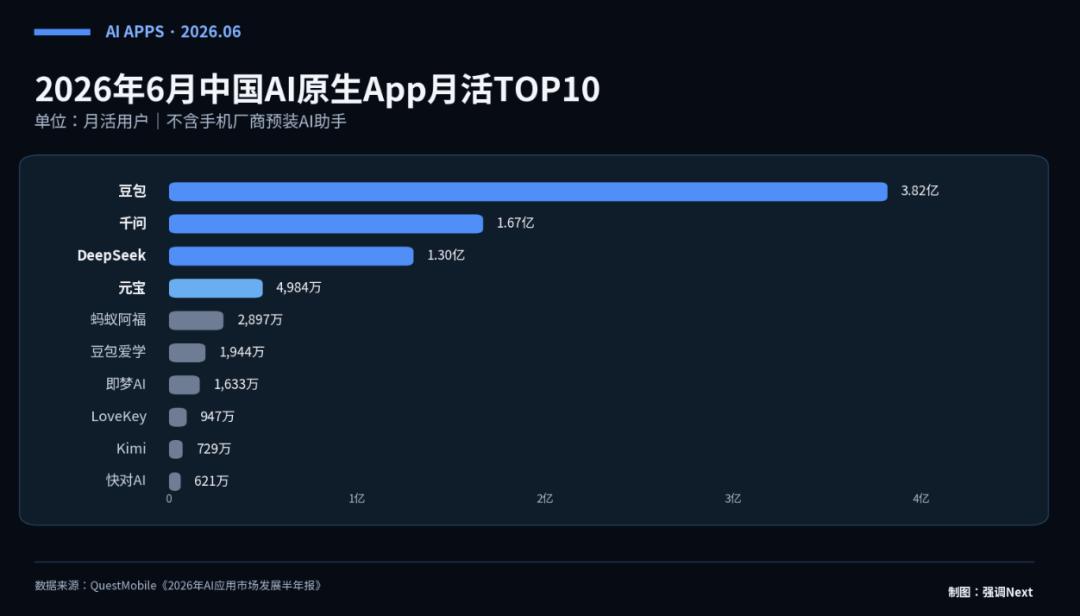
This number depends on how you interpret it. The monthly active users of Qwen App have climbed from the 6th place in the industry last November to 167 million, ranking the 2nd. 250 million users have experienced AI shopping through Qwen Agents. Alibaba is not just buying a higher ranking for an App, but also taking the first-mover position for the "AI shopping" entry. The e-commerce fundamental that supports all this is also relatively solid: the adjusted EBITA of the e-commerce group reached 39.749 billion yuan, supporting the overall profit base. The old engine is still outputting, and the new engine has already ignited.
Three trends beyond the financial statements
First, the heavy-asset transformation of China's Internet is irreversible. The total capital expenditure of Alibaba, Tencent and Baidu in a single quarter reached 131.9 billion yuan, with an annualized value exceeding 500 billion yuan. The valuation anchor will gradually shift from profit margin to return on invested capital. Major tech companies need to prove that the return on their AI assets is significantly higher than that of telecom towers and base stations, and Alibaba has taken the lead in handing in a verifiable answer sheet quarter by quarter. The divergence in stock prices is not a long-short dispute, but a handover between two sets of valuation frameworks: old shareholders who came for cash flow are selling, and new funds that value computing power and models are buying. Every such handover transfers the pricing power to the party that truly understands the business.
Second, domestic AI chips are "sellable" for the first time. Alibaba's Zhenwu chips serve more than 650 external customers, and Baidu's Kunlunxin P800 supplies chips for Kimi, GLM, MiniMax and Tencent's Hunyuan. The fact that chips have changed from "backup solutions" driven by policies to commodities that people are queuing up to buy is the structural change brought by this round of arms race, and also the most solid credit endorsement for the domestic computing power chain.
Third, the ranking of C-end AI applications is determined by scenarios. According to QuestMobile's June ranking, Doubao has 382 million monthly active users, ranking first by a large margin, and has taken the lead in charging C-end subscription fees; Qwen ranks second with 167 million MAUs, relying on the shopping scenarios integrated with Taobao and Flash Purchase; Yuanbao has 49.84 million MAUs, but failed to retain the users attracted by red envelope campaigns. Under the same generation of model capabilities, players with scenarios are building closed loops, while players without scenarios are burning money.
Therefore, the core of Alibaba's next financial report can focus on two figures: whether the ARR of AI-related products exceeds 10 billion US dollars, which determines whether the payback formula still holds; whether the EBITA profit margin of cloud business continues to climb, which determines whether large-scale operation is being realized.
As for the longer-term judgment, this earnings season has already given the answer: when