For the next leg of the joint venture, survival is victory.
Up to this year, when it comes to the electrification transformation, the attitude of joint-venture automakers is no longer as arrogant as it used to be, watching the industrial changes with a hint of condescension.
After several rounds of market re-education, as consumers continuously remove joint-venture brands from their car purchase options, the feeling of being like a frog boiled in warm water has become increasingly prominent, repeatedly stinging the nerves of joint ventures.
Facing a consumer market that has completely changed, accelerating transformation is only the most basic strategic guideline. To continue existing in the Chinese market or make achievements, even giants like Volkswagen and Toyota have no choice but to correct their attitude, face up to the harsh demands of Chinese consumers, and all realistic factors point directly to the most simple issue: "survival".
In other words, years from now, efforts are one thing, but if there is no significant effect in the end market, who can say that in the post-joint-venture era, the market can still reserve the due living space for everyone?
In the first half of 2026, the share of joint-venture and foreign brands in China's passenger vehicle market has dropped to 28.2%. No one can guarantee that this figure will rebound later. But for the future of China's auto market, what is certain is that the remaining foreign brands can only maintain stability in specific market segments, and it is almost unrealistic for them to regain a pivotal role in the whole market.
It is widely said that after accumulating 2 to 3 rounds of experience in deploying electrified products, this year is the year for all participating joint ventures to stage a comeback. When consumption returns to rationality, and the public opinion field once dominated by new power brands returns to the hands of mainstream enterprises, everything will eventually return to the original starting point.
In the vision of leading joint ventures, once the right to define products is truly handed over to China, coupled with the complete system strength of foreign investors, the market will give the fairest judgment: the new ID. product lines of FAW-Volkswagen and SAIC Volkswagen, and the new energy vehicle camps of Japanese brands such as Toyota and Nissan that have fully shifted their focus to China, are all the most competitive products on the market now.
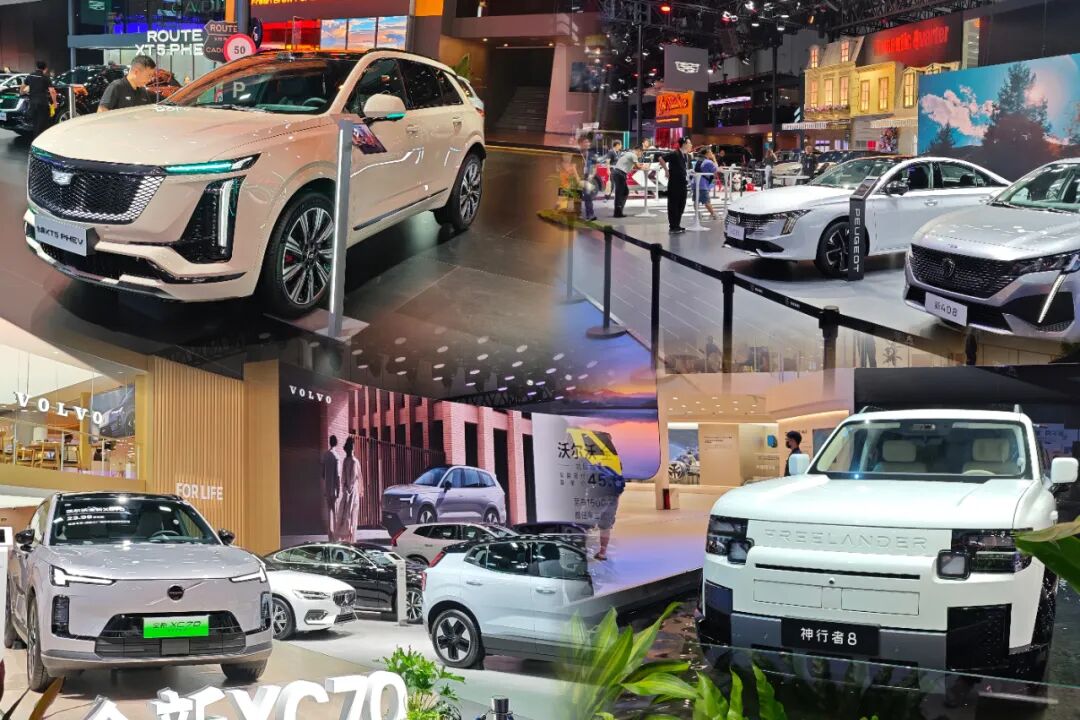
However, as we enter the second half of 2026, the market pattern has not reversed. We are increasingly feeling that Chinese consumers in this era have been completely reshaped. Under the fierce involution of Chinese brands, perhaps no one has the ability to hand back the market dominance to joint ventures.
If things go on like this, the best result is that in the process of market share quickly sliding to 20%, being qualified to stay in China's auto market and maintain a positive input-output ratio is already the development ceiling in the post-joint-venture era.
No matter it is Volkswagen, Toyota, General Motors, or Honda, Hyundai, Stellantis, every foreign automaker can do nothing but accept this reality as soon as possible. When the answers they give cannot solve the new problems brought by market evolution, "staying alive" is already a victory.
After all efforts, the result is still unsatisfactory
Looking back at 2020, when the new energy industry was still finding its way amid fierce competition, the market share of joint-venture automakers was more than 60%. At that time, except for weak brands such as Suzuki and Renault that left the market in advance, no one thought they could not keep up with the evolution speed of China's auto market.
In the past six years, the market share of joint ventures has directly changed from 60-40 to 30-70. Such a change is beyond our expectation, but in any case, "as you sow, so shall you reap" is always an unchanging truth.
While Chinese automakers were fighting hard to find the right direction amid chaotic competition and trying to find solutions in disorderly competition, joint ventures adopted a wait-and-see attitude, waiting for the industry to return to the environment they were familiar with, so they have to accept the consequence that things will not develop as they expected.
Since last year, when the Chinese market ruthlessly drove out all second-tier joint ventures, brands including Toyota and Nissan finally launched new energy products suitable for the Chinese market.
At first, as the first batch of products completely localized for China, Toyota bZ3X, Nissan N7, and even Mazda EZ-6/EZ-60, finally reversed the previous downward sales trend. If things had continued to develop step by step, there would be no major problem.
It is said that the "freshness guarantee period" of new cars in China's auto market is only 3 months.
Perhaps Toyota bZ3X, relying on high cost-effectiveness and OTA frequency comparable to Chinese brands, managed to survive this cycle. But entering 2026, a very obvious trend is: as the whole market enters a value judgment system dominated by low prices, and a crazy era where high-frequency iteration of new cars is regarded as normal, the effect of this round of counterattack by joint ventures has been greatly weakened.
Nissan N7, N6 and NX8, Buick Electra L7, Electra E7, and other similar new joint-venture models, all show a momentum of insufficient follow-up sales, which is essentially the sequelae brought by the rapid transformation of the era.
It is not that joint-venture brands are unwilling to move forward by leaps and bounds, but that the direction of this war has been completely led away by Chinese automakers.
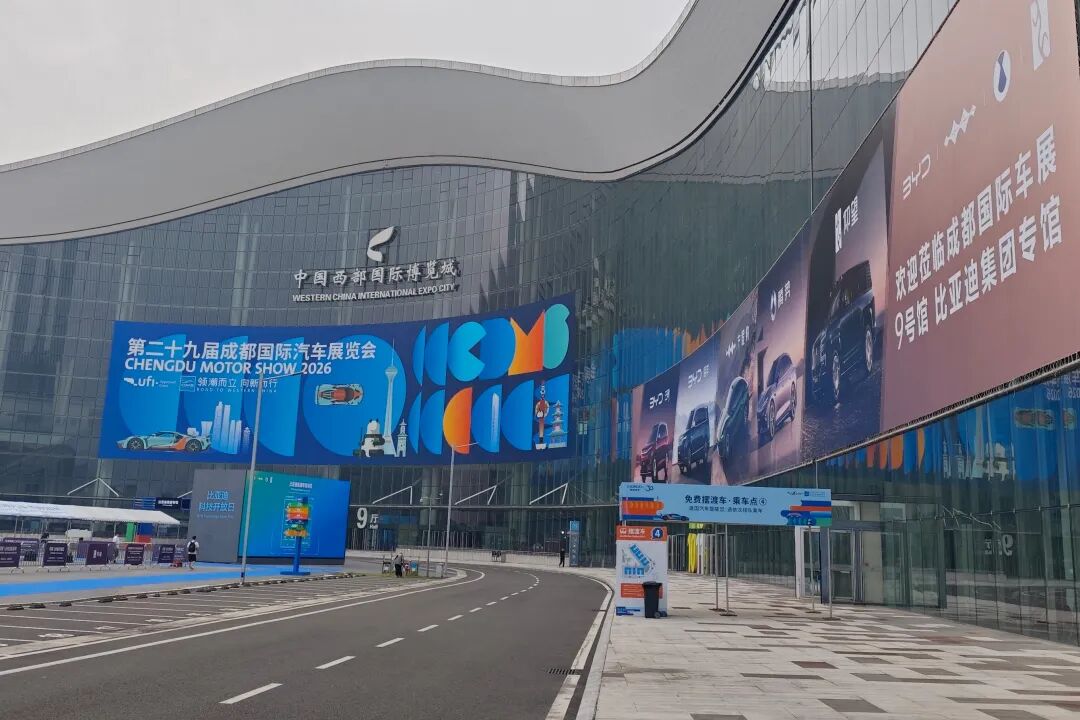
To be honest, after realizing that the entire ID. series is selling at an increasing loss and the electrification process has entered a dead loop, everyone expects that Volkswagen in 2026 can systematically show us the future playing style of joint-venture automakers. The Chengdu Auto Show is another stage to present these contents.
SAIC Volkswagen ID.ERA 9X, Volkswagen (Anhui) and the Lanyue 08 took the lead, followed by FAW-Volkswagen AURA T6, Volkswagen (Anhui) Lanyue 09, SAIC Volkswagen ID.ERA 8X, 5S and 5X are all ready to go, which in fact shows all the cards of a foreign automaker that has been operating in China for 40 years.
Since the national consumer subsidies were phased out and new energy support policies were narrowed, the market situation this year has indeed deteriorated a lot, and the domestic sales data of most automakers are unsatisfactory, which shows that the current situation of China's auto market is difficult to ease in the short term.
However, when we watch the terminal monthly sales of both north and south Volkswagen drop to tens of thousands of units, and the new electric vehicles that entered the market in the early stage only reach a monthly sales level of 2,000 to 3,000 units, the market situation of the entire Volkswagen (Anhui) has not improved at all, and Honda's sales have fallen to the bottom, all the expectations from the outside world are instantly covered with a sad tone.
In 2018, Suzuki voluntarily withdrew from China's passenger vehicle market and shifted its focus to India; two years later, Dongfeng Renault's passenger vehicle business was suspended, and the Renault brand withdrew from China. After that, joint-venture brands ended their operations in China one by one, handing over all market share to Chinese automakers.
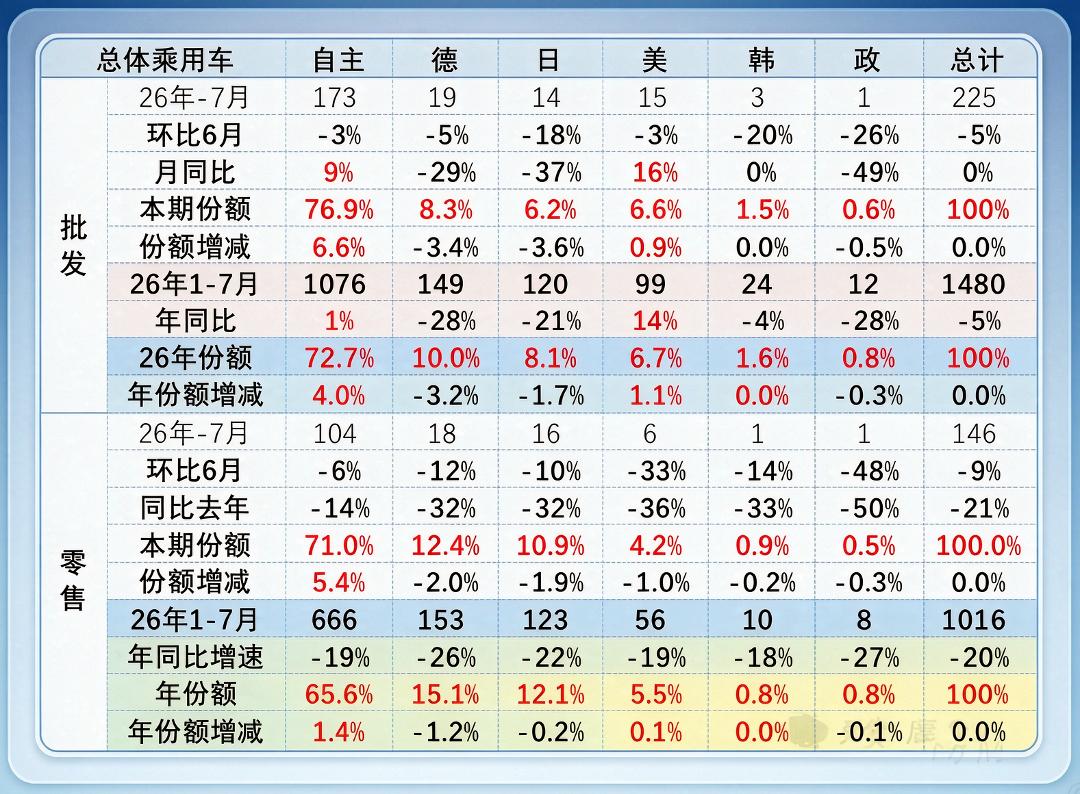
According to the latest data released by the Secretary-General of the China Passenger Car Association, mainstream joint-venture brands sold 290,000 units in retail in July, down 35% year-on-year and 12% month-on-month. In July, the retail share of German brands was 12.4%, down 2.0 percentage points year-on-year; the retail share of Japanese brands was 10.9%, down 1.9 percentage points year-on-year; the retail share of American brands was 4.2%, down 1.0 percentage points year-on-year.
"It's already like this this year? How will we get through next year?"
This is the most frequently asked question inside joint ventures recently, and it has also become a proposition that the whole industry urgently needs to answer at present.
Find a new way of life, and the future will be broad
The current Chengdu Auto Show is still another auto show where Chinese brands make collective efforts. According to public information, the absence of Dongfeng Honda, Dongfeng Nissan, and Yueda Kia is mostly due to the lack of new car launches or the inability to hold the southwest market.
However, in the foreseeable future, this list may continue to expand. Is it still necessary for joint ventures to stay in China? If so, can they get the expected returns by staying in China? Whether it is profit or reputation, it is acceptable.
Not long ago, General Motors decided to stop the retail business of the Chevrolet brand in China. After hearing the news, the whole industry was in an uproar, and consumers also expressed regret, just like the reluctance when Skoda, Jeep and other brands left the market in those years.
But to be honest, at this critical juncture, there is no need for more sentiment. "Rome wasn't built in a day", the essence of the difficult situation of joint-venture brands is that the Chinese market no longer provides enough space for them to survive.
While everyone feels pity for the century-old brand Chevrolet exiting China, few people know that at the four major vehicle manufacturing bases of SAIC-GM, namely Jinqiao, Dongyue, Shenyang and Wuhan, all Chevrolet production lines are kept running, and all the vehicles produced are exported, targeting emerging markets such as Southeast Asia, Latin America, the Middle East and Mexico. This undoubtedly shows that the way out for joint-venture brands is not to make achievements in the retail market as everyone expected.
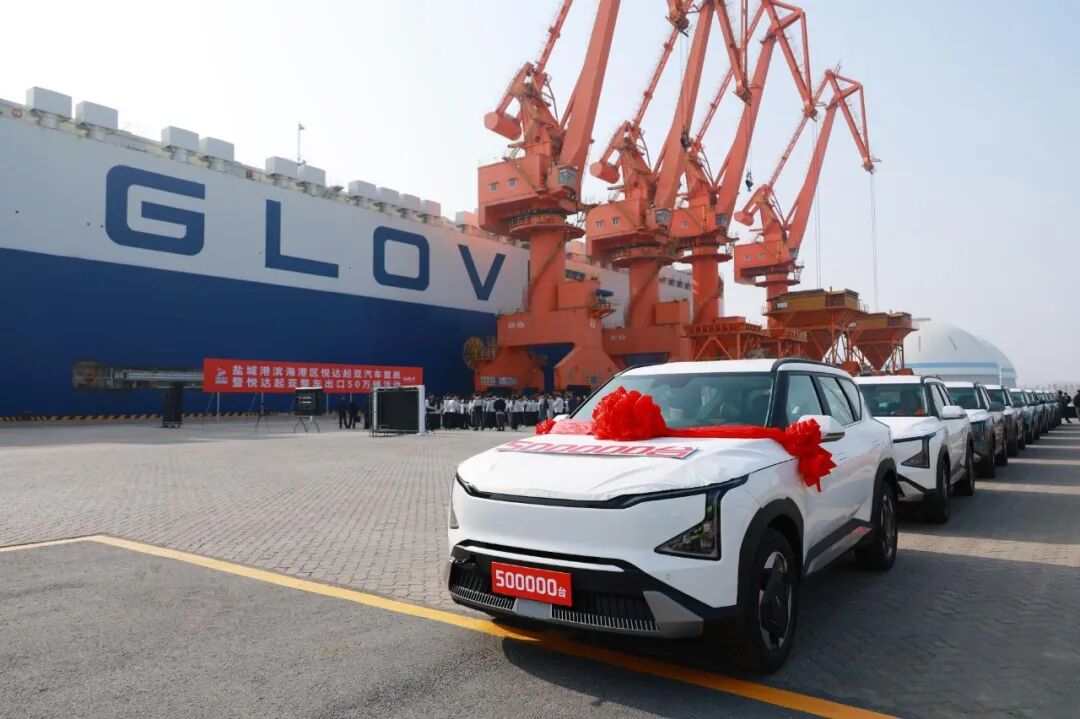
On November 20, 2018, Yueda Kia loaded 400 KX1 vehicles at Dafeng Port and shipped them to Egypt, officially launching its global export business. In 2024, Yueda Kia's total vehicle exports reached 170,000 units, a 135-fold increase over 2018. By the end of last year, Yueda Kia's total vehicle exports had exceeded 500,000 units, which is enough for it to find a balance between profit and loss.
Chevrolet and Kia can come up with this solution, so it is absolutely impossible that joint ventures with existing vehicle export business such as Dongfeng Peugeot Citroen Automobile and Beijing Hyundai do not know how to make money by leveraging China's supply chain.
For a long time, we have always believed that as long as retail sales are poor, the survival probability of joint ventures will be challenged. But today, as long as they figure out why they stay in China, everything seems to be easily solved.
Facing the crazy offensive of China's new energy vehicles, struggling to cope is what Volkswagen, Toyota and other brands are doing. On the one hand, in order to hold the existing market base, the terminal prices of fuel vehicle products have been cut again and again; on the other hand, locally developed new energy vehicles are unveiled one after another. Their purpose is nothing more than to hold the meager profits and market share left.
But then again, since the ultimate goal is to make money, there seems to be no need for joint-venture automakers to be so obsessed with whether their electric vehicles meet market demands.
Besides, under the current situation, who can guarantee that even if products that cater to the market are built with the help of Chinese partners of joint ventures, the sales volume will meet expectations? And looking forward from now on, the answer is most likely negative.
As long as expectations are lowered, life will be easier. This is not a sign of discouragement. For joint ventures, this may be the premise to find a clear way out. In the future, no matter what new energy vehicles are launched, compared with similar Chinese models, achieving monthly sales of 3,000 units can be regarded as a victory. Furthermore, using the experience learned from the Chinese market to feed back the global new energy business will be a great bonus.
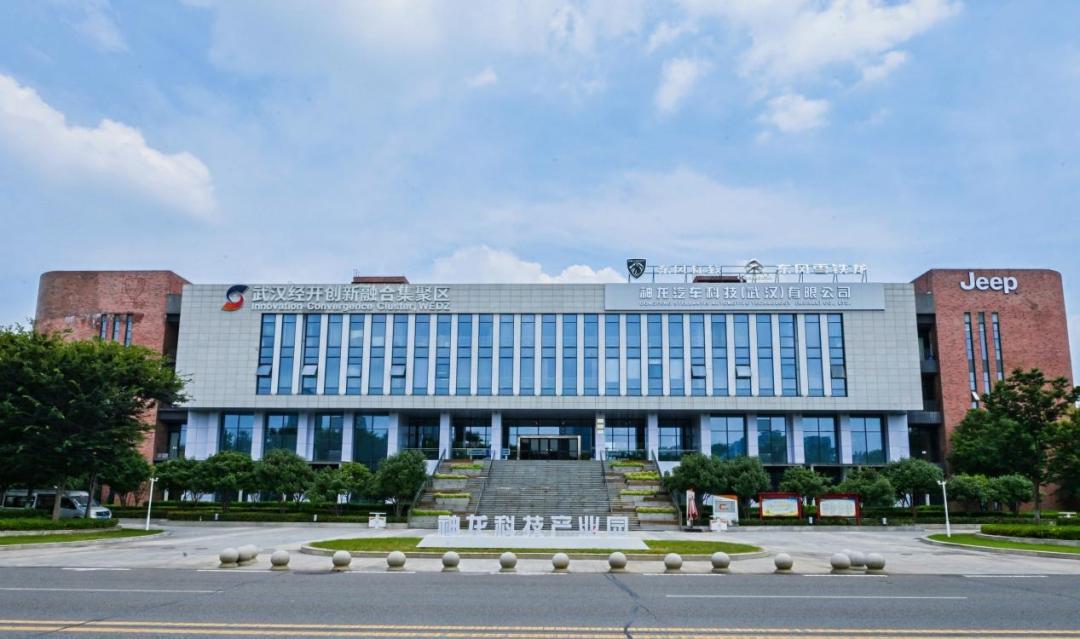
Stellantis joined hands with Leapmotor, Volkswagen invested in XPeng, Renault retained ACDC (Advanced China Development Center), Hyundai set up a forward-looking design center in Shanghai... It is hard to say that any of these moves is redundant. Now, the completion of Dongfeng Peugeot Citroen Technology (Wuhan) Co., Ltd. is presumably for the same reason.
In fact, every auto show is an achievement display of a certain stage of the auto market development. The Chengdu Auto Show is no exception. But today, when we see joint-venture brands falling silent collectively, and rounds of product updates have no obvious effect, perhaps choosing a different way of operation is a wise choice.
This article is from the WeChat Official Account "Auto Commune" (ID: iAUTO2010), written by Cao Jiadong, authorized by 36Kr to republish.