36Kr Exclusive Interview | Yang Yun, CEO of Shokz China: Overthinking is useless, just go to the market and get things done.
Author | ZHANG Ziyi
Editor | YUAN Silai
Even in Shenzhen, a city always known for its pragmatism, Shokz's low profile is quite rare.
The founders and senior executives of Shokz rarely speak to the public, and there are not many first-hand stories about the company in the market.
But none of this stops Shokz from defining a product category. It has defined the "bone conduction headphone" product, thus becoming a hidden champion in the consumer electronics track. The focus on "bone conduction headphones" has allowed Shokz to build a distinct professional sports label, which also means there is a certain boundary to the crowd it can cover.
Breaking out of the niche has become the core proposition for Shokz in recent years.
In the public impression, Shokz may seem a little old-fashioned probably because it rarely speaks out. But as early as 2023, Shokz launched its first over-ear open-ear headphone OpenFit, expanding from professional sports scenarios to commuting, office and daily life scenarios. They hope users will not only think of Shokz when doing sports. In 2025, Shokz launched its first clip-on headphone OpenDots ONE, further expanding its reach to the general public.
During the years when Shokz expanded to become an open-ear headphone brand, this category also experienced rapid growth in the Chinese market.
According to IDC data, the shipment of Bluetooth headphones in the Chinese market reached 121 million units in 2025, a year-on-year increase of 6.9%; among them, the shipment of open-ear headphones was close to 30 million units, a year-on-year increase of 20.2%, significantly faster than the overall market. Clip-on headphones have become the fastest-growing form factor in open-ear products, with shipments growing 51% year-on-year in 2025.
The high growth has quickly attracted more players, including a large number of traditional audio brands and mobile phone manufacturers with a huge user base.
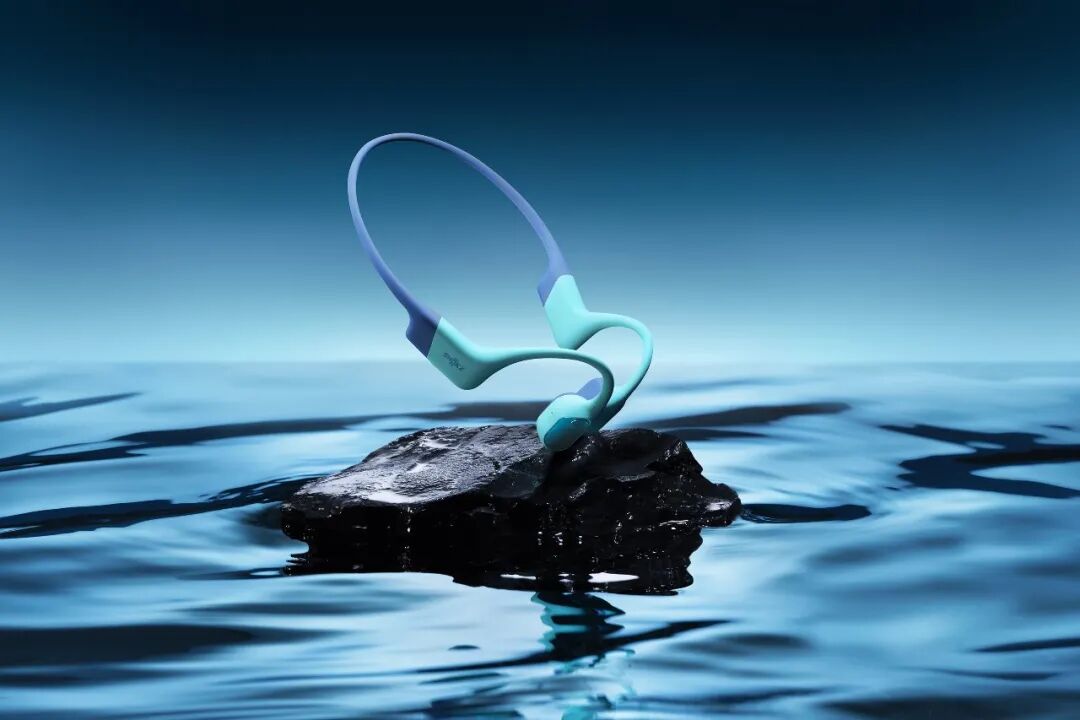
(Source / Enterprise)
Yang Yun, CEO of Shokz China, described Shokz's development in the past bone conduction headphone market as "a big victory", and "big victories are accumulated by small victories one after another". Now, they are about to step out of their comfort zone.
In the era of bone conduction headphones, Shokz has accumulated a large number of exclusive patents and built extremely high technical barriers. However, entering the open-ear headphone market, Shokz can migrate its previously accumulated capabilities in materials, ergonomics and open acoustics to new products, but it also has to answer many new questions: How can a professional sports brand cover a broader mass audience? When competitors expand from professional headphone companies to mobile phone ecosystem manufacturers, can the past advantages still hold?
Shokz has clearly developed a sense of urgency. In addition to clip-on headphones, in August 2026, Shokz launched its first AI headphone OpenFit 2 AI, integrating AI capabilities such as recording, transcription and translation into headphones to cover business and meeting crowds.
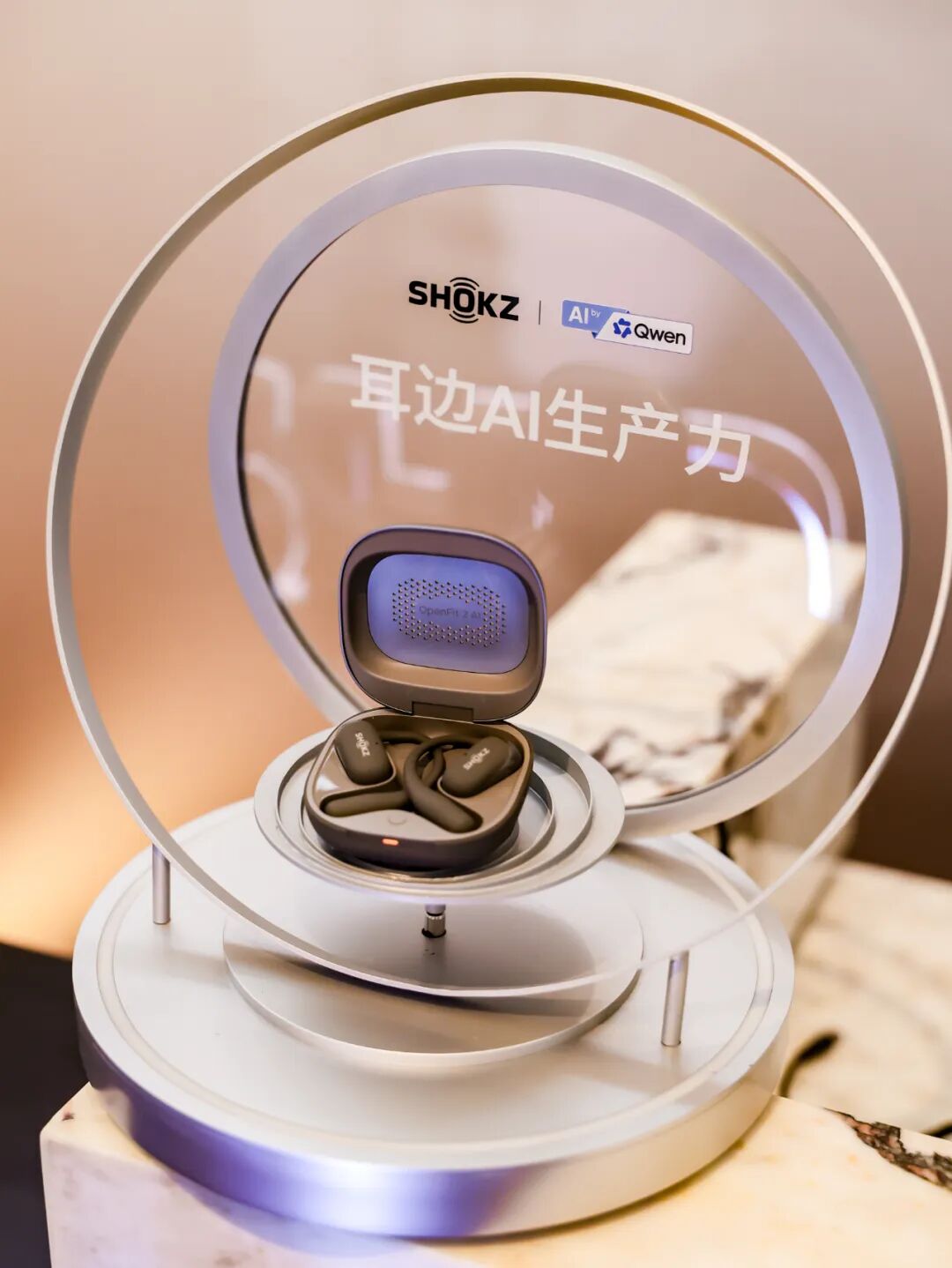
(Source / Enterprise)
There is no lack of doubt inside Shokz about this expansion, but Yang Yun is unwilling to waste time hesitating. "Of course we will think about all these things internally. But in my opinion, thinking alone is useless, just rush to the market and get things done."
He is used to finding answers in the real battlefield. Sometimes, Yang Yun would recall the first time he participated in CES Asia many years ago. Shokz only had a 9-square-meter booth in the corner of the exhibition hall. Later, Shokz gradually became the world's No.1 bone conduction headphone brand, and even the world's No.1 open-ear headphone brand. Although they rarely make public expressions, Shokz always has a strong combat effectiveness, and they will never be content with the status quo.
We talked with Yang Yun for two hours about the product boundary, AI headphones and the changes of Shokz China in the past more than ten years.
01 From Bone Conduction to Open-Ear Headphones, The Boundary of Expansion
Hard Krypton: Shokz initially focused on bone conduction, when did you decide to expand to the larger open-ear headphone market?
Yang Yun: Bone conduction headphones are the earliest form factor of open-ear headphones in essence, but the open-ear headphones that everyone generally refers to now mostly refer to forms such as clip-on and over-ear styles.
When we used to make bone conduction products, we dug one kilometer deep for a thing that was one meter wide. Moreover, we did not even cover all sports scenarios, but focused very much on endurance sports, including running, cycling, cross-country running, and later swimming.
But we hope to influence more people, so it is natural for us to extend and expand the boundary. We already have the technical reserve of open acoustics, why not make a true wireless, split-type open-ear headphone?
This is also related to the way we do things. Before we launched the first generation of OpenFit in 2023, we had actually done a lot of internal work. Our technical innovation team had been conducting basic technical research on open acoustics. If we trace further back from the first over-ear open-ear headphone, we can go back three or four years earlier.
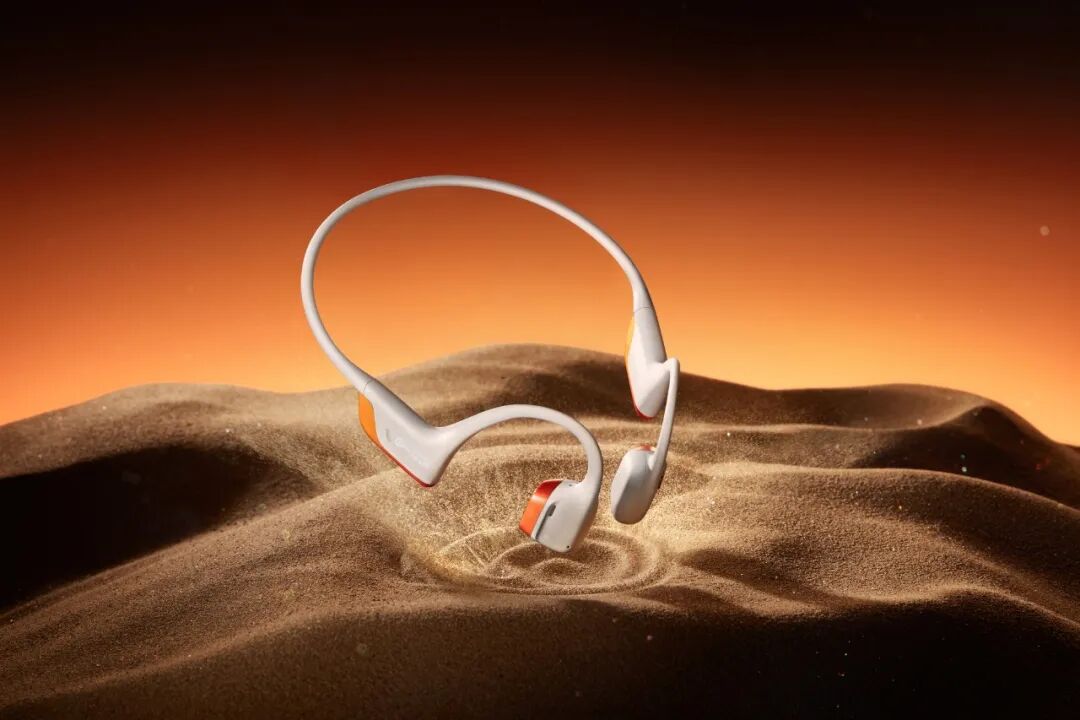
(Source / Enterprise)
Hard Krypton: From bone conduction to clip-on headphones, what past technical capabilities can be directly reused?
Yang Yun: For example, the rear frame of our bone conduction headphones has always used titanium alloy. When it is stretched, the change of clamping force will not be particularly large. In addition, the differences in face shapes and ear shapes of people in different regions such as Asia, Europe and the Americas are actually very large, so the same standard SKU needs to be adapted to people with different face shapes and ear shapes.
For clip-on headphones, the position of the connecting bridge will also use titanium alloy. In the past, we could make this part large and long, and now we can also make the titanium sheet very thin and very small.
There is also a very direct problem with clip-on headphones: if the clamping force is too large, you will feel uncomfortable and painful; but if the clamping force is too small, the headphone will easily fall off. Therefore, how to ensure that it does not fall off under appropriate clamping force while ensuring the comfort of long-time wearing is what we have been studying.
Hard Krypton: For clip-on headphones, from large mobile phone manufacturers to many new small brands are all making products. What capabilities of Shokz are difficult to replicate?
Yang Yun: I don't think there is a demand that only we have discovered and no one else has found. The key still lies in how you make the product.
I think the core commercial capability is not a certain parameter or a specific technology. For us, it is whether we can coordinate open acoustics, product structure and form factor, ergonomics based on user understanding, algorithms, and understanding of real usage scenarios. We think this is a systematic capability.
The most easily underestimated part is often the details in long-time wearing. For example, how to adapt to different ear shapes, whether the headphone is stable during exercise, whether the call quality is reliable, and whether these experiences can remain consistent for a long time.
For example, we have our own silicone factory. Silicone is actually a very common material, and there are many suppliers, but we need to make it very soft and very small, while having our own requirements for the entire production process and yield. Later, we found that building our own factory is a way to meet these requirements.
This seems to be a very small thing, but the investment behind it is very large. Our research and use of materials such as silicone, as well as the collection of a huge amount of human ear data around the world. For different ear shape demands, we have established a database to ensure the effectiveness of product testing. I think this example can well explain what the "system engineering" we are talking about is.
Hard Krypton: How will open-ear headphones differentiate in the future?
Yang Yun: I did a sharing at an audio forum in Shenzhen many years ago. I have always believed that the instrumentalization of headphones is a long-term trend, and different headphones will be used in different scenarios.
Of course I am the biggest advocate of our own headphones, but when I take a long-distance flight, I will also bring noise-cancelling over-ear headphones or in-ear headphones.
So in my opinion, open-ear headphones and traditional TWS are not a zero-sum game. Before the category is truly differentiated into specific tools and specific functions such as translation and recording, I think everyone has a chance.
But no matter how it differentiates in the future, headphones are first and foremost tools for listening to sound, and they need to be worn for a long time. Therefore, basic attributes such as sound quality and long-time wearing comfort are very important. It is more appropriate to let users be able to wear your headphones for a long time and feel that the sound is good and the sound quality is excellent, before talking about other functions.
Bone conduction will not be replaced as a result. It is more focused on hardcore, professional sports, especially endurance sports. People who like bone conduction will still love bone conduction, but we also find that many heavy users of bone conduction headphones will also buy Shokz's clip-on and over-ear headphones for daily use.
Hard Krypton: When the first generation of OpenFit was launched, you were in charge of the Chinese market. In the past, Shokz was recognized as a sports, bone conduction-oriented brand, but now you need to face a larger crowd. What is the biggest challenge?
Yang Yun: I started from the front line. I worked as an engineer in the company for two years at the very beginning, and then did To B sales. In 2013, the company asked me to set up the China region. I always consider myself a person who is rooted in the front line.
But at that time, we really needed to abandon some of our past mindsets. For example, the past understanding of the sports market, how to view the future development direction of the brand, and how to define the crowd of this category.
The relatively big challenge is how to expand everyone's perception of Shokz from a traditional sports-oriented brand to more scenarios and a larger market.
When the first generation of OpenFit was launched, we also thought internally: Will our past users buy this product? What will bone conduction users think of this change?
Although in our own opinion, this matter is a natural progression, consumers may think: "Why did you launch such a product?"
Of course we will think about all these things internally. But in my opinion, thinking alone is useless, just rush to the market and get things done.
Hard Krypton: Looking back now, what is the one thing you did correctly at that time?
Yang Yun: I think it is to re-sort out the information that the brand wants to convey.
In the past, we were a sports-oriented brand, and all the materials, scenarios we went to, and exhibitions we participated in were all sports-related.
After the first generation of OpenFit was launched, we hope this product can cover more and younger crowds. Therefore, we have made a series of adjustments to the positions where the brand reaches users, the occasions it covers, and the brand image presented to users.
But all these actions are based on products. You can't just say for no reason that you want to do a brand upgrade.
When we made split-type open-ear headphones, the expansion of products, the expansion of user boundaries and the expansion of the brand happened at the same time. For us, this is not a multiple-choice question of "to do or not to do", but: How should open-ear headphones be made? How to define the product? How to define the user? How to define the scenario?
An enterprise cannot stay in the comfort zone forever. We need to challenge our own capability boundaries more.
Hard Krypton: The consumer electronics industry in China is so competitive, but Shokz doesn't seem to launch new products very fast?
Yang Yun: In the past, our flagship bone conduction products were updated about every two years. Even now when the open-ear headphone track begins to explode, we launch a new product in one series about one to one and a half years.
We are relatively stable in the pace of product development and launch, because we hope that every product we launch has gone through sufficient internal research and development, with qualified product performance, user experience and comprehensive experience.
Moreover, I think the headphone category is naturally not suitable for very fast iteration. There is a lot of pre-research on technology and product verification inside, and only a part of the projects can finally be launched on the market. Some projects that are still in the prototype or pre-research stage will be stopped if we think they cannot meet the requirements, or if the technology needs to be further refined and deepened.
Hard Krypton: When did you first feel that the expansion of the new category really went from 10 to 100?
Yang Yun: I think it was when the first generation of clip-on headphones was launched.
Sales volume is of course one aspect. But the second aspect is more important to me: Although many brands are making clip-on headphones, users began to associate "Shokz" with "easy-to-use clip-on headphones". After we launched the product, we got a lot of recognition from consumers. I believe that product helped us reach a lot of new users, and quite a number of them, maybe more than half, did not even know that we had made bone conduction headphones before.
I think this is of great significance for acquiring new users and breaking out of the original niche.
Hard Krypton: From bone conduction to open-ear headphones, will the two replace each other? Will bone conduction move towards more professional and segmented scenarios in the future?
Yang Yun: I don't think they can replace each other. The application scenarios of bone conduction are more focused on professional sports and endurance sports. Sports users will like the professionalism of bone conduction, but they may use over-ear, clip-on and other open-ear headphones in work scenarios.
When the category differentiation needs to be implemented in specific scenarios, it is the time for category segmentation. At the current stage of bone conduction, people will consider it in professional sports scenarios, highlighting its sports value. The open-ear headphone category is still in the process of continuous establishment of public awareness, and it will definitely become popular in the future. Moreover, bone conduction is still a very important product line for us, and we will continue to invest in it, there is no doubt about that.
Hard Krypton: What is the growth trend of the headphone category in China in the next three years?
Yang Yun: Each category has its own growth and development history stage. Relatively speaking, clip-on headphones are developing relatively fast. At the same time, the AI market is expanding rapidly, and AI + scenario-based products will have more opportunities in the future.
02 14 Years of Shokz China
Hard Krypton: You joined Shokz as an engineer in 2007, why did you later switch to sales and take charge of the China region?
Yang Yun: I only worked as an engineer for two years. In the summer of 2009, I was responsible for the traditional To B business of the company, which could be called sales engineer or pre-sales engineer, responsible for providing services and customized solutions.