The supermarket shelves are fully stocked with Chinese Baijiu that was produced three or four years ago.
Run your hand over the Baijiu bottles on the supermarket shelf, and your palm will be covered in dust.
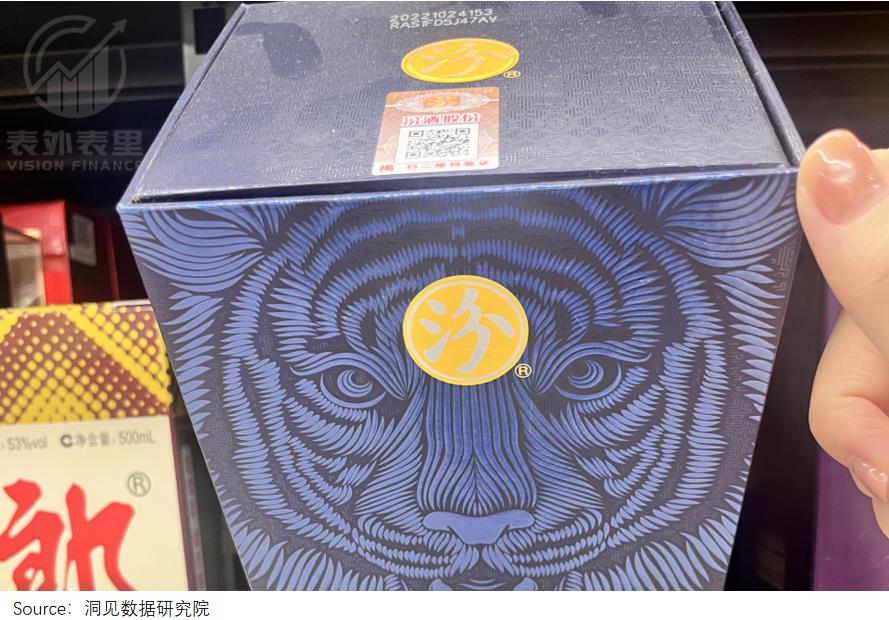
Xiao Wu, who was planning to buy Baijiu as a gift for her elders, was taken aback. She took a closer look at the packaging and found the bottles had been produced back in 2022.
She counted inwards along the shelf, and found that once best-selling mid-to-high-end Baijiu products such as Wuliangye 1618 and Qinghua 20 were neatly stacked on the inner side of the shelf, stock from three or four years ago, like capsules forgotten by time.
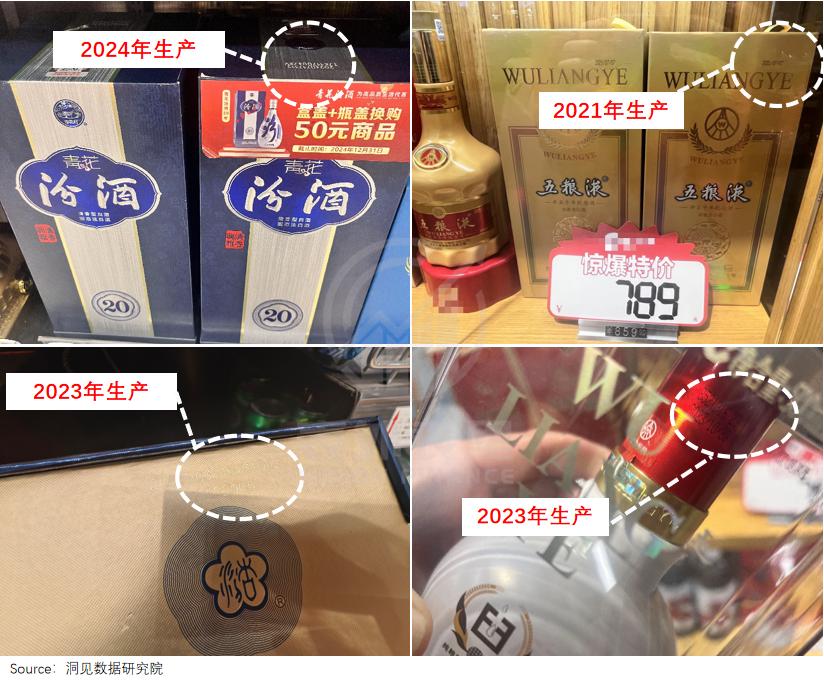
Even entry-level daily-drink Baijiu is struggling now — major distilleries including Yanghe and Gujing Gongjiu have launched unbranded plain-bottle Baijiu priced under 100 yuan, but the plain-pack Baijiu section in supermarkets offers discounts every month, and even the notoriously steady 53-degree Glass Bottle Fenjiu now has old stock dating back to 2023.
The only products with fresh production dates and almost no overstock are Hongxing Erguotou priced at 15 yuan per bottle, and bulk Baijiu sold in large barrels for 80 to 90 yuan each.
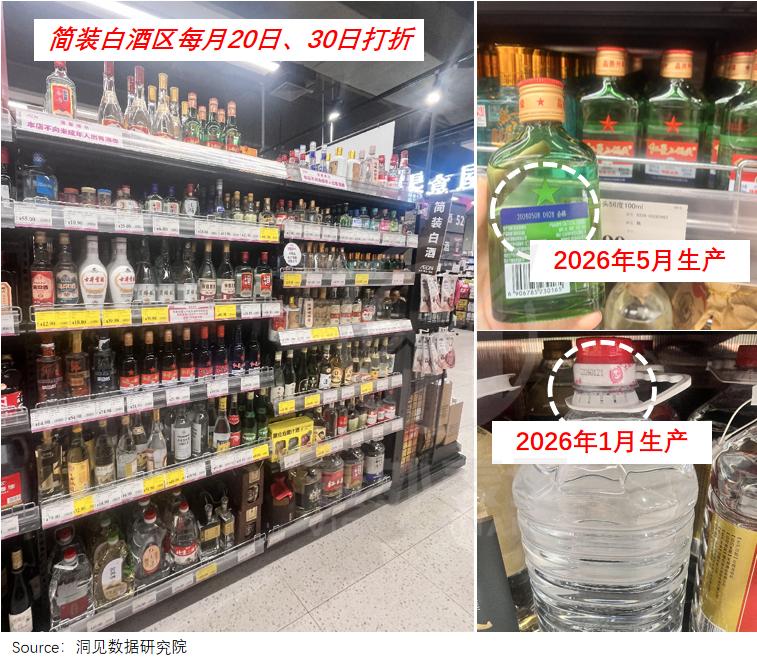
The scenes Xiao Wu came across are no accident, playing out everywhere from AEON and Walmart chain stores to independent neighborhood supermarkets.
The Baijiu industry has been in turmoil for five years, and many people believe signs of "bottoming out" are emerging: after all, Feitian Moutai has seen rising sales volume and prices, and iMoutai recorded a 274% surge in revenue in the first half of 2026; low-alcohol and fruit-flavored alcoholic drinks have bucked the trend and exploded, with their market size nearly doubling over five years.
However, the unsold aged Baijiu bottles gathering dust on offline supermarket shelves silently indicate that the hardest phase of the industry may be far from over, just hidden deeper.
Baijiu is no longer "better with age". From leaving the factory to being poured into a glass, a bottle of Baijiu now passes through collapsing traditional distribution channels, a whole new generation of consumer habits, and the growth myth that will never return.
Even tech industry insiders drinking one 8000-yuan Moutai bottle each cannot prop up a "second glory" for the Baijiu industry
When A Wu arrived at the private dining room, the small gathering of tech industry people had moved to its second round, with everyone finishing one bottle of Moutai in the first round.
It was not even the regular Feitian Moutai. He took a closer look and found it was a special white-bottle commemorative edition, once priced as high as 8000 yuan per bottle. Doing the math, the drinks alone for this meal cost tens of thousands of yuan.
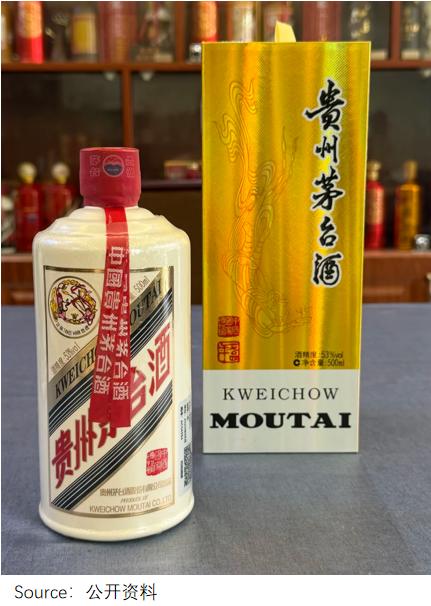
"I thought people in the tech industry didn't drink Baijiu," A Wu said in slight surprise. The friend sitting next to him filled his glass and explained: Nowadays, when tech companies select senior executives, in addition to high education, high emotional and intelligence quotient, deep cognition and good health, they add one more requirement: being able to drink Baijiu. After all, overseas markets are blocked, and the industry relies entirely on domestic capital support. From lobbying to site visits, almost every deal is closed over the dinner table with drinks.
For the new tech millionaires who earn 1 million yuan as easily as pocket money, their entertaining drinks start with premium Moutai, and it is not uncommon for them to serve 15-year vintage Moutai to guests.
The high-end consumer circle remains rock-solid, which is good news for the Baijiu industry, but A Wu knows clearly that the total alcohol consumption from this group is not even a fraction of what it was during the large-scale construction era.
Looking only at the "building materials" segment of the industrial chain, there were more than 5 million building materials enterprises upstream during the peak of the real estate industry, while there are only over 10,000 optical module enterprises that are critical to the AI industry. Not only is the scale hundreds of times smaller, the AI industrial chain is also shorter, and the frequency of business drinking parties is far lower than that of the real estate industry which covers dozens of sectors including auction, construction and decoration.
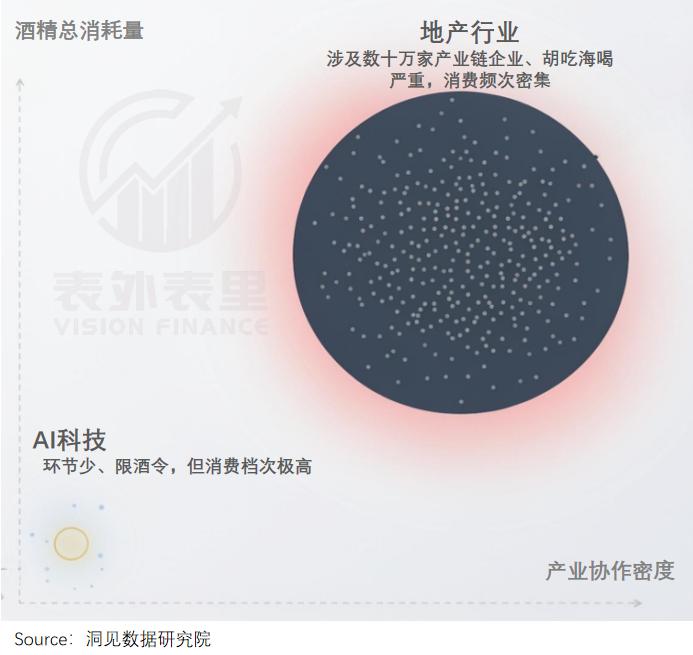
"There is no culture of excessive drinking and feasting in the tech industry, and alcohol ban policies also keep people relatively restrained. The consumption they contribute cannot reverse the general trend," A Wu said frankly. The price inversion of Baijiu is still shocking: the price drop of sub-premium Baijiu products this year has exceeded 30%, and the coverage rate of price inversion has reached 60%.
This is not the end, and the Baijiu bubble may be far from being fully squeezed out.
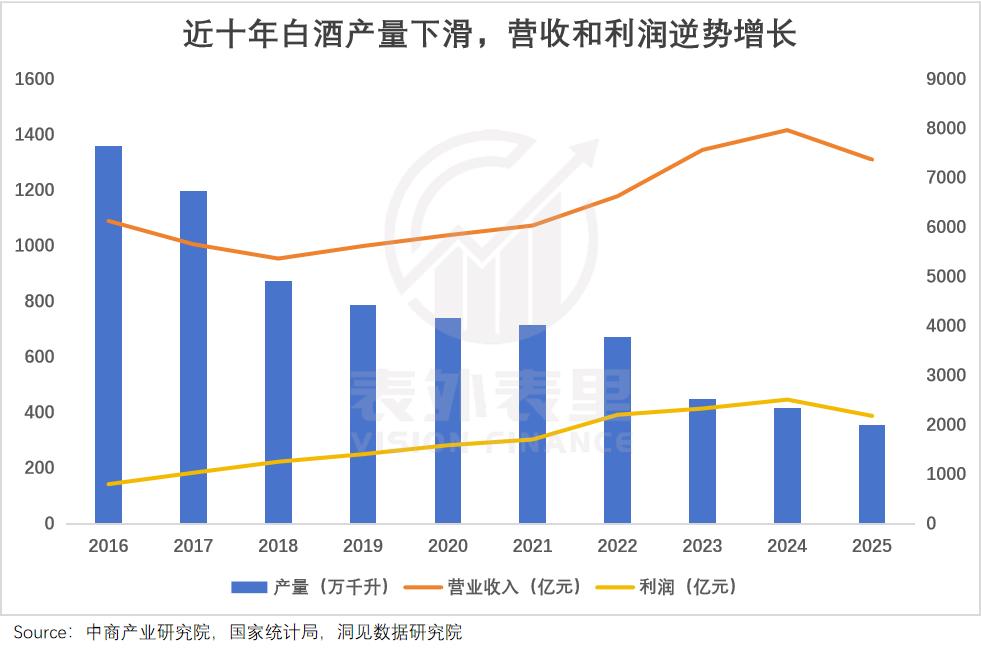
Over the past decade, fewer and fewer people drink Baijiu and the total output has almost halved, but riding the east wind of the economic upcycle, distilleries kept raising prices year after year to make huge profits, pushing the total sales revenue up by nearly 30% and total profit up by 215%.
Sauce-flavored Baijiu, known for getting better with age and having a unique flavor that cannot be replicated outside Moutai Town, was once the most popular category. When Xiao Ma took over his family's liquor store six years ago, the sauce-flavored Baijiu craze was in full swing: "Hot money was either in Moutai Town or on the way to Moutai Town."
A case of custom sauce-flavored Baijiu cost 800 yuan to produce and sold for 1800 yuan, and the wholesaler would take the entire batch away without hesitation. Xiao Ma recalled that he could sell out millions of yuan worth of stock a month back then, and sauce-flavored Baijiu contributed 80% of the store's total sales.
Now it is time to pay the price. Wholesalers shake their heads as soon as they hear about sauce-flavored Baijiu, with millions of yuan worth of unsold sauce-flavored Baijiu piling up in their warehouses. "Consumers won't buy it anymore, because the price drops the day after they purchase it," Xiao Ma said helplessly. Now affordable strong-flavored and light-flavored Baijiu sell faster and have more stable turnover, accounting for 60% of his store's sales.
It is not just small liquor stores that are transforming to survive. As low-alcohol drinks quickly take over young people's tables and form a 100-billion-yuan incremental market, a large number of distilleries have swarmed in, lowering the alcohol content of Baijiu from 40 degrees and 30 degrees all the way down to 20 degrees.
Xiao Wu was bombarded with news headlines like "Sold 100 million yuan in just two months after launch" and "Orders are about to exceed 500,000 bottles", so she also bought a bottle of low-alcohol Baijiu on a whim. It tasted smooth and not harsh on the throat, but after a few sips she found the flavor too light and the aftereffect too weak.
What is more awkward is that low-alcohol Baijiu is not cheap at all: the low-alcohol version of Gujing Gongjiu Gu 20 priced at 1 yuan per milliliter is almost as expensive as Wuliangye Pu Wu at 1.44 yuan per milliliter, and Shede Zizai is priced on a par with Yanghe Mengzhilan.
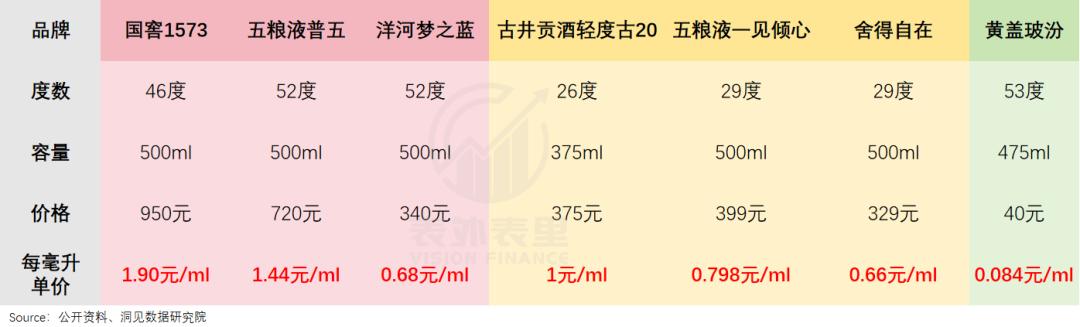
"We are paying the price of premium Baijiu, but we may not get the same rich flavor profile," Xiao Wu admitted. One lesson is enough. That is true for many low-alcohol Baijiu products that saw a hot start: as soon as the hype fades, they gather dust on shelves.
After years of calling for transformation, what the Baijiu industry ends up with are all "pseudo-transformations" similar to the low-alcohol alcohol trend.
A Wu has deep feelings about this. He once attended an international promotion event for sauce-flavored Baijiu, and saw European experts asking in-depth questions while the Chinese promoters stuttered and knew nothing about the details. He felt a wave of sadness welling up inside him.
Premium positioning and international expansion should have been the way for Baijiu to break through, but the industry is still stuck in the old brand narratives of "master blending" and "century-old fermentation pits", disconnected from the international market's discourse system that focuses on technology, data and quantitative quality standards.
China's Baijiu output accounts for about one third of the global spirits total, but its export volume is tiny: for every 1000 bottles of Baijiu produced, less than 5 are exported.
Even when opportunities present themselves, distilleries cannot seize them, and can only keep competing in the small domestic market. As a result, the industry cannot get out of the woods, and the vicious competition is getting increasingly fierce.
Squeezed from both upstream and downstream, the traditional Baijiu distribution channels are collapsing
When A Wu was wandering in the supermarket, a shelf caught his eye: next to the 49-yuan Glass Bottle Fenjiu, there was a supermarket private-label plain-bottle Baijiu with an almost identical bottle shape, priced at only 9.9 yuan.
He immediately understood: The supermarket does not actually want to sell much Glass Bottle Fenjiu, it just uses it as a "reference group" for price comparison to promote its own branded liquor.
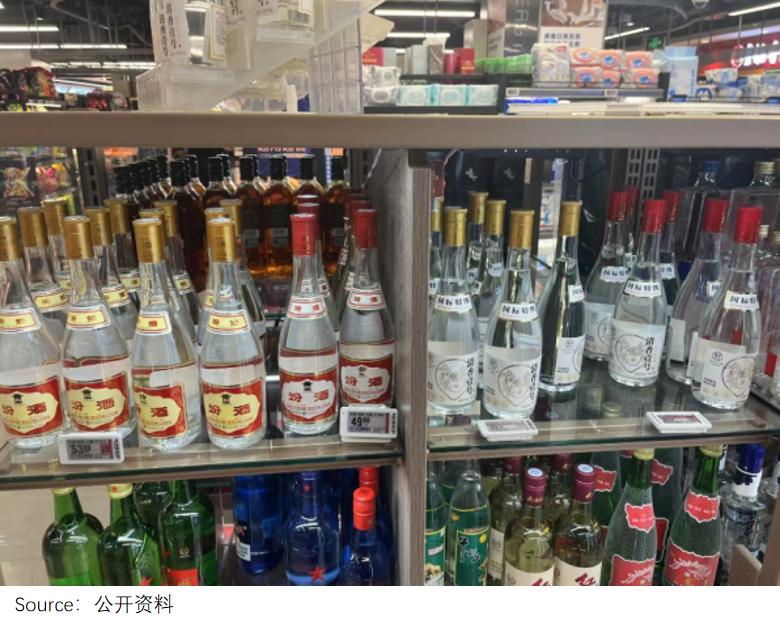
This seemingly trivial scene, in the eyes of veteran Baijiu industry observer A Wu, is a signal of an impending storm.
Previously, a cost disclosure document for a domestic supermarket private-label Baijiu shocked the entire industry: all 12 cost items were made public, and the gross profit margin of 15.87% was eye-catching and jarring.
What does a 15% gross profit margin mean? Looking across the entire Baijiu sector, even the distillery with the lowest gross profit margin has a figure higher than 42%, and leading players including Luzhou Laojiao, Wuliangye and Moutai maintain a high gross profit margin of 80%-90% all year round. 15% not only falls far below the bottom line, but smashes through it completely.
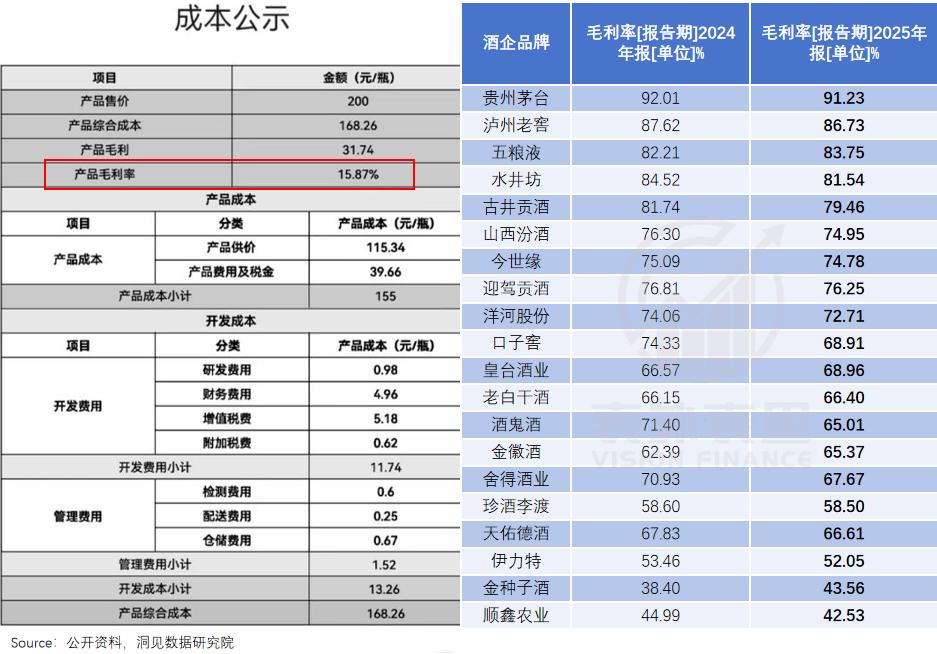
As soon as this bottle of liquor was launched, it was snapped up, so popular that the supermarket had to implement purchase limits. In just half a year, it has sold nearly 200 million yuan worth of product, outperforming the original distillery's high-end product line, and directly becoming the distillery's largest customer.
Distributors are on pins and needles. In the past, they relied on regional agency monopolies to mark up a high-end Baijiu with an ex-factory price of 900 yuan to more than 2000 yuan layer by layer, leaving very little profit for terminal channels such as supermarkets, while the high price also led to unsold inventory.
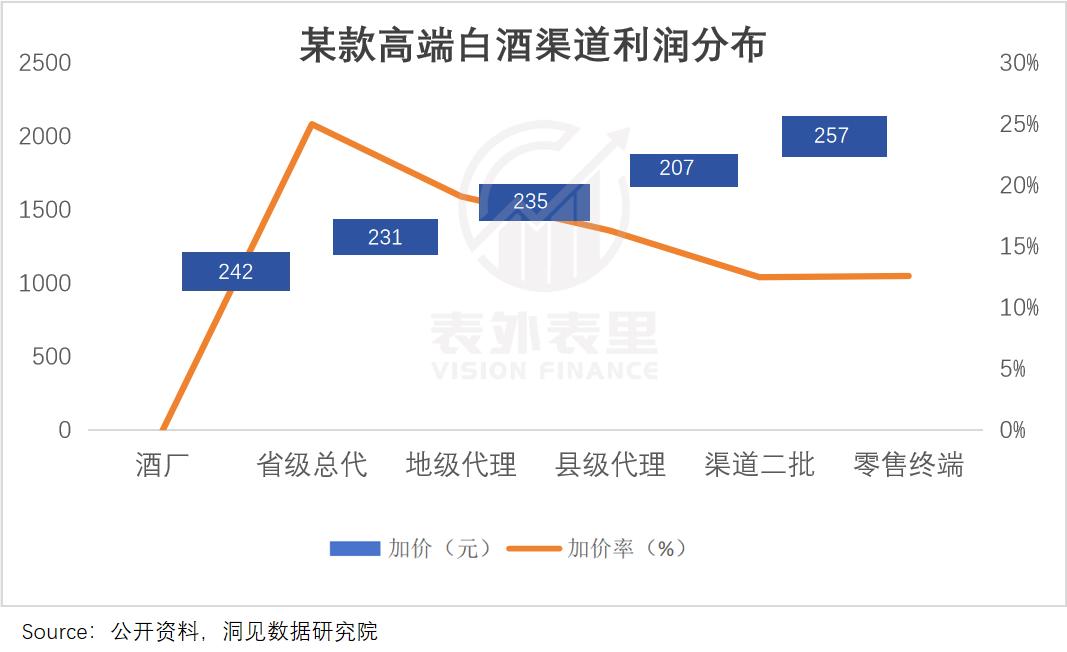
Now supermarkets skip distributors and cooperate directly with contract manufacturers, pushing the gross profit margin of their private-label liquor down to 15%, breaking the traditional distribution channel's "price black box". A Wu judged: "Mass entry-level daily-drink Baijiu will face direct and fierce competition, distributors have almost no ability to fight back in this price range, and mid-to-high-end Baijiu will also not escape the squeeze."
In fact, even the high-end liquor market share is not guaranteed, because it is not just supermarkets that want to "overthrow the distributors", upstream distilleries are also doing the same.
"There is a rumor in the Baijiu industry that even if some distilleries stop supplying products to distribution channels for two years, there is still enough inventory available on the market," shared Xiao Ma. This is not an exaggeration, it is the reality.
Jiugui Liquor was the first to show its hand: it announced a "30-day supply suspension" ahead of the peak Mid-Autumn Festival sales season. Shede Liquor followed closely, and even though its net profit in the first half of 2026 plunged