The second satellite Internet of Things license is here.
The commercial aerospace sector has been delivering a string of exciting updates. On August 19, the Zhuque-3 Y2 carrier rocket lifted off from the Dongfeng Commercial Aerospace Innovation Test Zone, with its first stage successfully landing at the designated position in the recovery site. This marks China's first successful land recovery of the first stage of an orbit-class carrier rocket. Following its maiden flight in December 2025, Landspace, this private rocket firm, has passed another major milestone in less than a year, moving toward large-scale and regular commercial launches.
Shortly after that, China's second satellite IoT license was issued!
On August 20, the Ministry of Industry and Information Technology approved Geespace to carry out commercial pilot operations for satellite IoT services, with a two-year trial period.
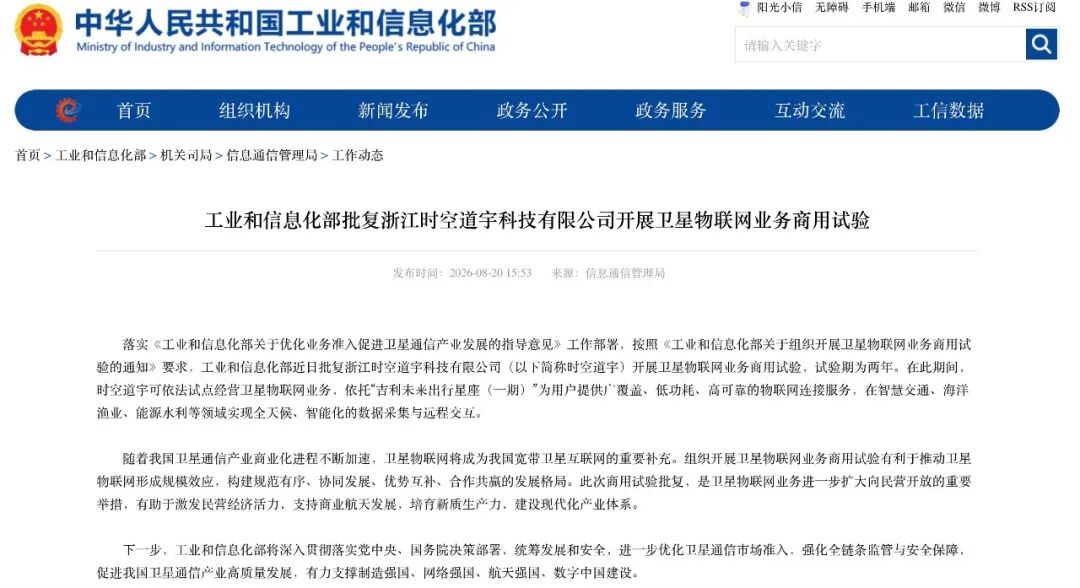
According to the Ministry of Industry and Information Technology, during the pilot period, Geespace can lawfully conduct trial operations of satellite IoT services. Relying on its full-stack self-developed low-orbit satellite IoT constellation, Geespace will provide global users with wide-coverage, low-power, highly reliable IoT connection services, delivering all-weather intelligent satellite IoT services across sectors including intelligent connected vehicles, construction machinery, marine fisheries, energy and water conservancy, transportation and logistics, and low-altitude mobility. Meanwhile, Geespace can carry out IoT NTN technology tests to accelerate the R&D and commercialization of 6G satellite communication technologies.
The satellite IoT sector now has a legal access for large-scale commercial use, and more importantly, this access is open to private commercial aerospace companies. This marks that China's commercial aerospace industry has officially entered the global satellite IoT commercial era.
China's Satellite IoT Enters the World's First Tier
Prior to this year, satellite internet or IoT services had never been open to private enterprises. It was not until May 6, 2026 that the Ministry of Industry and Information Technology approved Beijing Guodian Hi-Tech Co., Ltd. to carry out commercial pilot operations for satellite IoT services, which marked the issuance of China's first satellite IoT service license.
Recently, China Mobile has made a strategic capital injection into Guodian Hi-Tech. Enterprise information query platform Qichacha shows that China Mobile's investment arm China Mobile Capital has completed a strategic investment in Guodian Hi-Tech, holding 39.85% of shares after the investment and becoming its largest shareholder. This means Guodian Hi-Tech has been incorporated into the "national team".
As the only private enterprise that has obtained the satellite IoT license so far, Geespace's achievement is particularly hard-won. After all, the access threshold for obtaining the satellite IoT commercial pilot license is extremely high.
The "Notice of the Ministry of Industry and Information Technology on Organizing and Launching Commercial Pilot Operations for Satellite IoT Services" released in November 2025 clearly states that applicant enterprises must meet five strict mandatory access requirements at the same time: holding the satellite mobile frequency use license and space station license; the constellation construction project has been approved by the National Development and Reform Commission; possessing in-orbit serviceable satellite systems and complete supporting ground operation control, service and management support systems; having full-fledged capabilities for network security, data security and emergency support; being able to provide long-term stable services across the country.
The requirement of possessing in-orbit serviceable satellite systems and supporting systems alone is of extremely high value. From constellation system design, satellite R&D, mass satellite manufacturing, constellation measurement, operation and control, to the R&D, mass production and scenario-based application of core chips, modules and terminals, Geespace has realized full-process independent control, which is its critical moat that allowed it to obtain the "stepping stone" of the license.

In terms of the number of satellites, Geespace has 64 satellites in orbit, while the "Tianqi Constellation" currently operated by Guodian Hi-Tech has 41 satellites in orbit. Among all global satellite IoT constellations, the number of Geespace's in-orbit satellites ranks second in the world, comparable to the 66 satellites of Europe's "Iridium Next".
That means China's satellite IoT sector has already entered the world's first tier.
Two Distinct Networks, Finally Obtaining Legal "Identity"
"With the license, the business is legally recognized, allowing compliant operations such as charging fees, signing long-term commercial contracts and expanding industry clients," an industry insider explained to the IT Times reporter. The industry significance of the license issuance lies in the legal compliance of satellite IoT operations.
For a long time, satellite IoT lacked an independent business classification, and its management mostly followed the rules for ground IoT or traditional satellite communication modes, with vague compliance boundaries.
However, "satellite IoT" and "satellite internet" are essentially two different networks. The former can be analogized as "space data capillaries", providing connectivity for massive sensors and control terminals to connect "things"; while the latter can be analogized as "space fiber optic network", providing broadband internet access for humans to connect "people".
When you watch movies or hold video conferences on an ocean-going cargo ship, what you need is satellite internet. When you want to know the position of a cargo ship, or the data from a weather station in a remote area, what you need is satellite IoT.

The two networks are vastly different. Compared with the "space fiber optic network" of satellite internet, satellite IoT can be put into practical use faster. First of all, low-orbit satellite IoT constellations do not require high bandwidth, and usually less than 100 satellites can achieve global coverage, making the investment return cycle more controllable. In contrast, satellite internet constellations often require tens of thousands of satellites to achieve continuous global coverage. Its low construction cost leads to much lower tariffs, which are about 1% of the tariffs of traditional satellite internet communication. Only with low tariffs can thousands of "things" be connected to the internet. Industries including logistics, energy, agriculture, fisheries and emergency response are in urgent need of low-cost, low-power, wide-coverage satellite IoT infrastructure.

As a result, the policy has reached a turning point, with a series of policy documents released to establish a regulatory framework and development path for the satellite IoT industry.
In August 2025, the Ministry of Industry and Information Technology released the "Guiding Opinions on Optimizing Market Access to Promote the Development of the Satellite Communication Industry", putting forward the key task of organizing commercial pilot operations for satellite IoT. In November of the same year, the Ministry of Industry and Information Technology issued the "Notice on Organizing and Launching Commercial Pilot Operations for Satellite IoT Services", officially kicking off the commercial pilot operations for satellite IoT services, and set industry access conditions from multiple dimensions including frequency use, constellation approval, in-orbit service capabilities and security guarantees.
After obtaining approval, private enterprises can participate in the construction of the national satellite IoT system under a clear framework, and truly complete the commercial closed loop.
90% of Growth Comes from Practical Application, Commercial Aerospace Crosses the Turning Point
Real value growth often comes from practical application landing. Data from the Satellite Industry Association of the United States shows that satellite manufacturing and rocket launch only account for 7% to 8% of the total value of the aerospace industry, and the remaining 90% of the market value is concentrated in operation and application fields, including ground equipment, terminal production and operation services.
"The logic of industry competition has changed. In the past, companies competed on their satellite manufacturing capabilities and the number of in-orbit satellites. Now it is time to truly compete on operation services and commercial implementation," the aforementioned industry insider said.
Geespace did not wait for the license to be issued before starting its commercialization efforts, and it has already verified its commercialization capabilities across multiple sectors.
Vehicle-mounted satellite communication is undoubtedly a high-weight consumer market.
In 2023, Geespace took the lead in realizing the pre-installed mass production of vehicle-mounted satellite communication technology, and there are currently more than 20,000 intelligent connected vehicles running on roads with this technology. Once the vehicle enters a remote and uninhabited area, the satellite can monitor the vehicle's position in real time, and enable emergency call for help in case of accidents, achieving "never losing connection".
In 2025, Geespace's vehicle-mounted satellite communication terminals began to be installed on the Robotaxi fleet of Caocao Mobility, empowering the intelligent scheduling and safety management of autonomous driving vehicles. So far, real vehicle tests have been carried out in multiple cities, with a total test mileage of nearly 100,000 kilometers, verifying the stability and practicality of low-orbit satellite communication in autonomous driving vehicles.
In the near future, "air taxis" will become a reality. At present, Geespace is cooperating with Zhejiang Tuniao Low-Altitude Economic Development Co., Ltd. to provide redundant backup links of low-orbit satellite communication for drone landing stations, so that drones can still take off and land stably when there is no ground signal or in extreme environments. The two parties are also promoting the integrated application of low-orbit satellite communication technology with low-altitude aircraft such as manned helicopters.
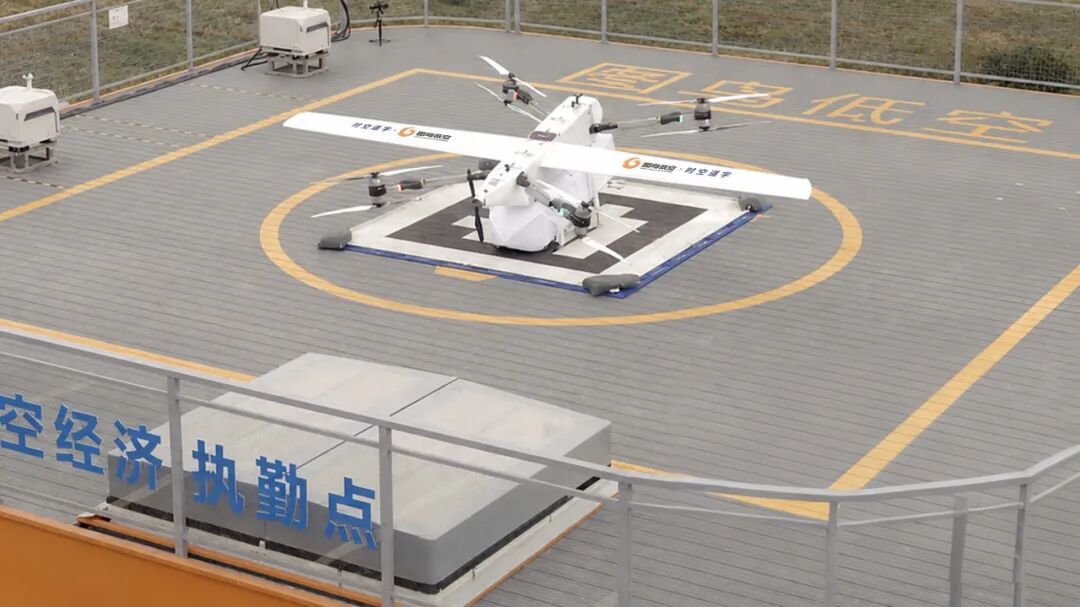
At that time, the space-ground integrated network can ensure that people and objects "never lose connection" when traveling in the air or across the sea.
In the process of global expansion, Geespace has obtained multiple intent orders from markets in the Middle East, South America and other regions, mainly driven by the rigid demand of satellite IoT in the marine fisheries sector. Ocean-going vessels and offshore fishing boats can use low-orbit satellite IoT to realize functions such as position tracking, automatic alarm, distress call, and two-way short message transmission.

In March 2026, Geespace's low-orbit satellite communication equipment was successfully installed and put into use on the maritime patrol law enforcement boat in Zhejiang, marking the first application of this technology in the marine law enforcement sector in Zhejiang Province. Traditional high-orbit satellites have shortcomings such as weak signals, high latency, high cost and easy signal blind zones in the open sea, which bring many difficulties to maritime supervision. Low-orbit satellite equipment makes up for the shortcomings of open-sea communication, and with the advantages of high precision, low latency and wide coverage, it can realize real-time positioning, dynamic tracking and data return of open-sea vessels.
Satellite IoT not only plays the role of emergency communication in scenarios such as earthquake relief, but is also quietly integrated into daily applications. In Wolong National Nature Reserve in Sichuan Province, low-orbit satellite IoT is solving pain points such as forest fire prevention and ecological monitoring; in the flood control drill in Guiping, Guangxi, the low-orbit satellite communication system stably returns rainfall and water regime data. At the same time, Geespace has completed commercial verification tests with multiple leading domestic enterprises in the construction machinery sector, and the annual installed capacity is expected to exceed tens of thousands of units. It is also cooperating with China National Petroleum Corporation to promote the implementation of "commercial aerospace + energy" applications in domestic and overseas scenarios across the entire oil and gas industrial chain.
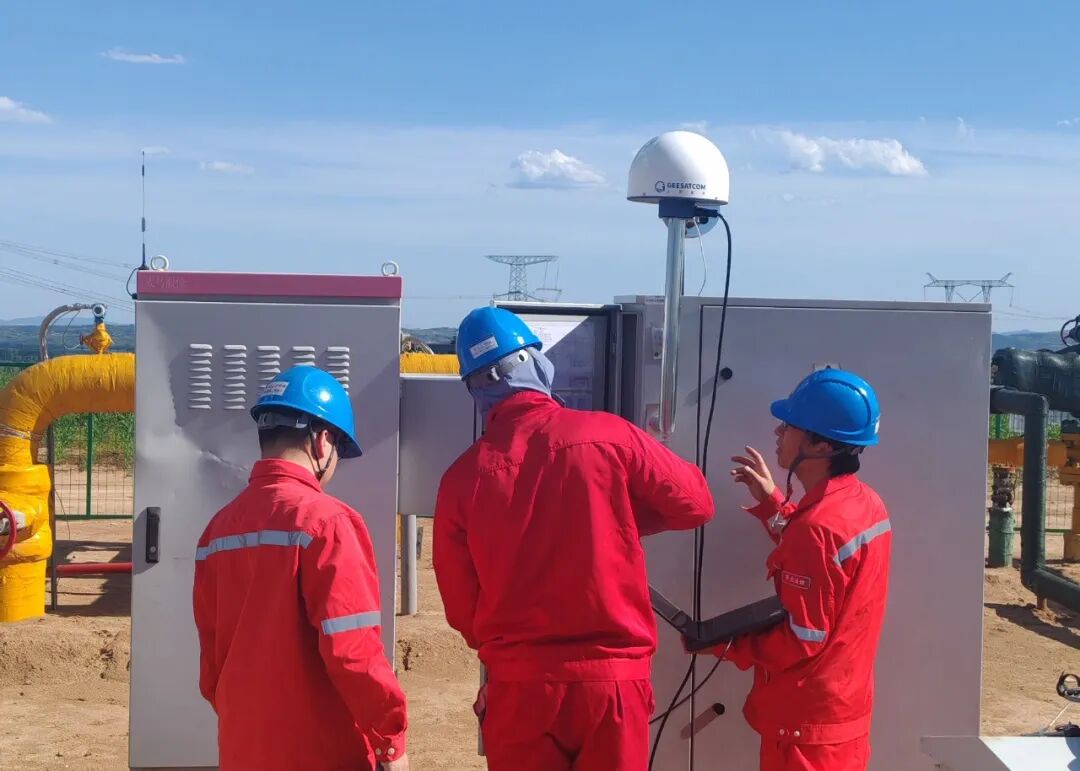
90% of the value potential is hidden in the applications of thousands of industries. With the issuance of the license, all pilot projects will be implemented in batches, and the value of China's commercial aerospace will be released in a short period of time.
Following the earlier issuance of the satellite internet license and now the satellite IoT license, China's commercial aerospace is crossing a historic turning point. The past decade was a revolutionary decade for commercial aerospace to grow from 0 to 1. The next decade will be the decade of transition from infrastructure construction to full commercialization.

This article is from the WeChat Official Account "IT Times" (ID: vittimes), written by Sun Yan, edited by Wang Xin and Sun Yan, published with authorization from 36Kr.