600 new car models hit the market, with 60 of them posting single-digit sales. The strategy of flooding the market with a huge number of car models is losing steam, and who is swimming naked?
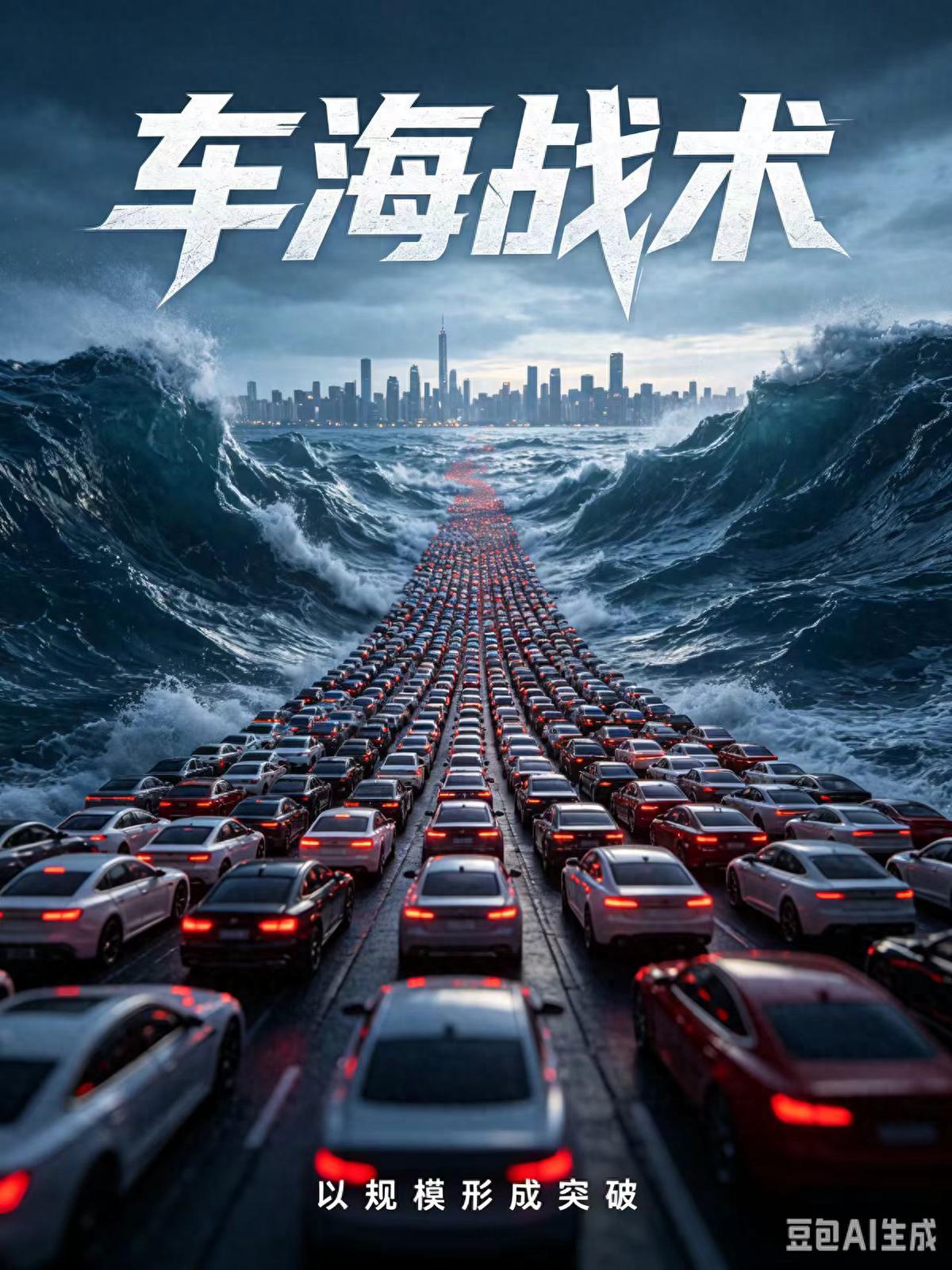
In the first half of 2026, a nearly mind-boggling "vehicle sea tactic" unfolded in China's domestic auto market.
A popular joke circulating in the automotive circle recently goes: in the first half of the year, more than 600 "new vehicles" hit the market in a concentrated manner, averaging over 100 units per month, or at least 3 units per day.
Of course, there is obvious moisture behind this figure. Most of the so-called new vehicles are nothing more than "old wine in new bottles" after a name change, added color options and adjusted configurations.
After excluding these restyled products, there are only about 116 brand-new models developed from scratch. Even so, the launch pace is still close to one new model per day.
However, the flip side of this vehicle sea tactic is alarming unsold inventory.
According to China Auto News, in the first half of the year, there were around 60 models that recorded single-digit total sales across the whole market, and some models only had 1 to 3 units registered per month. For example, Dongfeng Citroen Fukang ES600 only had 3 units registered in total in the first half of the year, and Venucia D60 EV only had 1 unit registered for many months, remaining at the marginal position of the market for a long time.
Another set of data is equally thought-provoking: in the first 4 months of this year, there were at most 46 domestic models that achieved monthly sales exceeding 10,000 units, and the number dropped to less than 30 at the lowest point.
On one hand, automakers are frantically launching new products and expanding SKUs on a massive scale; on the other hand, a large number of models have been reduced to "zombie vehicles". This sharp contrast is prompting the whole industry to rethink the vehicle sea tactic.
Is the vehicle sea tactic reversing the entire automotive industry?
The vehicle sea tactic is a classic strategy for automotive giants in the incremental market era. Its core is to cover all sub-segments and suppress competitors through brand matrix and dense model layout. The Volkswagen Group is a typical representative in the traditional fuel vehicle era, with more than a dozen brands ranging from Volkswagen to Porsche occupying all price segments.
BYD's Dynasty series and Ocean series also seized market share through multi-line expansion and scale effect.
This strategy has its market rationality: it can quickly expand price coverage, disperse the risk of failure of a single model, and capture new demands through rapid trial and error.
But in essence, the vehicle sea tactic is based on the idea of "having more children to win more fights". Its precondition is an incremental market, where the overall market cake keeps expanding, new models target newly generated demands, and the friction cost between different products can be covered by overall market growth.
Once the market enters the stock game stage, this logic will be completely reversed.
At present, China's auto market has fully entered the stock era: total sales in the first half of the year reached 9.921 million units, down more than 21% year on year.
When the overall market stops growing, the logic of the vehicle sea tactic may transform from an "expansion tool" to an "internal friction mechanism".
The first impact is that every new model no longer grabs incremental market share, but seizes the existing stock share from other models under the same brand.
For example, BYD stopped production of the Qin L last month. This is not because the model cannot sell well, but mainly because it has cannibalized the market share of its sibling models.
Looking at lower price segments, the Qin PLUS has a solid user base, with monthly sales stably exceeding 30,000 units. It independently supports the 80,000 to 100,000 RMB price range and acts as an indispensable sales cornerstone for the Dynasty series.
Looking at higher price segments, new models including MAX, Ultra and other "large" series products have been launched one after another, with updated platforms, larger dimensions and more comprehensive technical configurations.
In such a product layout of the brand, the L series is in an awkward middle position that cannot highlight its own advantages.
This is not an isolated case. In the product matrix of Harmony Intelligent Mobility, the first SUV of Xiangjie, the G9, has a highly overlapping pricing range with the AITO M9, and the two flagship models have formed direct head-on competition at the price level.
Geely recently established a group-level general sales company, and one of the core reasons is that intensified internal competition has forced the organizational restructuring.
In the same city, the hybrid models of Galaxy, the plug-in hybrid products of Lynk & Co, and the pure electric models of Zeekr often compete in similar price ranges. When consumers make horizontal comparisons, the competition is no longer only between Geely and BYD or Tesla, but also the mutual diversion of user groups among Geely's own sub-brands.
More critically, the vehicle sea tactic has shifted from driving sales expansion to diluting resources.
For the automotive industry, the development of a new model often requires an investment of more than 1 billion RMB, and the development cycle lasts more than two years.
R&D funds, engineer manpower and marketing budgets are diluted by massive SKUs. Every model gets certain resource input, but most of them end up as accompanying products that cannot generate corresponding returns.
The 60 "zombie vehicles" with only single-digit sales in the first half of the year are the most direct proof of resource mismatch: they occupy production lines and inventory funds, but hardly create any market value.
In addition, it is increasingly difficult for automakers to make profits in the stock market. The profit margin of China's automotive industry in the first half of 2026 is only 3.8%.
The so-called idea of "having more children to win more fights" has now become a situation where enterprises can afford to develop many models but cannot afford to support their subsequent operation.
From the consumer side, the vehicle sea tactic is constantly hurting consumers and reshaping their purchase decisions.
There is an essential difference between the vehicle sea tactic in the electric vehicle era and that in the fuel vehicle era: technologies such as intelligent driving and in-cabin systems require continuous iteration, and frequent updates have become the norm.
Not to mention the fast iteration, the homogenization of new products is also extremely serious.
Wan Liangyu, CEO of M-Hero, once pointed out sharply in a complaint: "More than 600 new vehicles were launched in the first half of this year. If you cover the car logos, you will find there are only three types of vehicles: one looks like a Land Rover Defender, one looks like a Range Rover, and one looks like a Porsche."
The most direct cost of frequent and homogeneous iteration is that consumers are completely desensitized to the concept of "new vehicles".
In the past, a new product launch could bring three to six months of public attention, because new vehicles used to be a rare event, and every debut meant substantial progress in technology or user experience.
However, when dozens of "new vehicles" enter the market every month, consumers' attention is infinitely diluted. "New product launch" has changed from a pleasant surprise to noise, and a large number of new models fall into the "valley of death" as soon as they go on the market.
On July 16 alone, 8 automakers held new product conferences and launched 7 new models. Under such intensive information bombardment, no new model can get enough long-term attention from consumers.
For this reason, Li Xiang, Chairman of Li Auto, named this phenomenon "launch conference inflation".
Some perceptive automakers have taken the initiative to adjust their marketing strategies and collectively cut the number of launch conferences.
For example, BYD's 2026 versions of Sea Lion and Seal chose to go on the market directly without holding a launch event; Leapmotor D99 canceled the pre-sale link and was directly pushed to terminal stores; the Zeekr 9X five-seat version even skipped the traditional offline launch conference and directly opened official reservations.
More importantly, consumers in the stock market are no longer the early adopters who were easily attracted by "exclusive launch benefits" and "limited-time reservation offers" a few years ago. They are experienced users who have made full information comparisons, are familiar with all parameter configurations, and will no longer pay for "facelift restyled models" easily.
The harm deeper than attention dilution is the systematic erosion of consumers' purchase confidence caused by the sense of "being betrayed by the brand".
In the fuel vehicle era, a vehicle usually has a life cycle of 3 to 4 years, the restyle pace is slow, and the residual value of used cars is relatively stable. After purchasing a vehicle, consumers can at least maintain a sense of security that their car will not be outdated for 2 to 3 years.
But in the electric vehicle era, the pace of automakers launching several new models a year makes consumers who just bought new vehicles fall into continuous anxiety about depreciation. The vehicle they buy today may become an "old model" three months later, and there is almost no residual value guarantee in the used car market.
This strong expectation of "being betrayed" directly restrains current purchase decisions: more consumers choose to hold their money and wait for "the next better model".
The vehicle sea tactic was originally intended to stimulate consumption through high-frequency new product launches, but in fact it has created a collective expectation of "the longer you wait, the more cost-effective you get", which has eaten into the current overall sales of the industry.
From a broader perspective, the internal friction caused by the vehicle sea tactic is not only limited to automakers and consumers, but also spreads to the entire automotive industry ecosystem.
A large number of new vehicles have impacted the entire used car market. In 2025, the transaction volume of used cars in China exceeded 20 million units, among which the proportion of used electric vehicles in the total used car transaction volume was only 7.9%, and the liquidity of used electric vehicles is extremely low.
In addition, the rapid iteration of new energy vehicles means that the production of spare parts cannot achieve the scale effect seen in the fuel vehicle era. The amortization period for special molds and customized parts is sharply shortened, and the production cost remains at a high level.
One industry insider complained: So many electric vehicles have been developed, and their spare parts are hard to find after only a few years. They are just like fast consumer goods for lighting fixtures: the store that sold you the light closed down after 2-3 years of purchase, and you cannot find any spare parts when the light breaks.
In addition, in order to seize speed, launch window and first-mover advantage, many automakers have to compress the test cycle, frequently switch suppliers for components before mass production, and continuously shorten the verification process.
The result is more minor faults, unstable quality control and frequent product problems. Fast iteration has turned into high risk, and car owners have unknowingly become "guinea pigs" in the trial and error process of automakers.
For example, not long ago, the Xpeng X9 had widespread stalling faults during driving under high temperature weather, and many car owners questioned directly: "There are such large-scale faults, didn't the brand conduct extreme high temperature tests before launch?"
At the same time, some commercial vehicles equipped with CALB 177Ah batteries have recently suffered from concentrated battery faults. Industry insiders pointed out that the manufacturer may have rushed to assemble the products to seize the market window, and drastically compressed the verification and testing time...
Generally speaking, from used car dealers, spare parts suppliers to the verification system of automakers themselves, the entire industry is paying the price for the vehicle sea tactic more or less.
Transforming from "having more children to win more fights" to "having well-raised high-quality children"
The industry has not failed to reflect on the failure of the vehicle sea tactic.
In July, He Zhiqi, Executive Vice President of BYD, posted on Weibo, citing a set of shocking data: from January to May this year, 542 new models were launched in the domestic market, averaging 3.6 models per day. He could not help but exclaim: "This is completely crazy, we are talking about automobiles here."
What is more dangerous than the out-of-control number of new models is that the problem of "quickly churned out low-quality vehicles" has been exposed to the public.
At the 2026 China Automotive Forum, Li Fenggang, General Manager of Beijing Hyundai Motor Co., Ltd., publicly criticized that some brands cut necessary testing links to speed up the launch process, making consumers act as test drivers indirectly and pay for the rush work of enterprises, leaving huge safety hazards.
It is encouraging that leading enterprises have begun to correct their strategies.
Volkswagen plans to cut half of its models in the next few years, Changan announced that it will reduce 43% of its on-sale models within five years, and Audi has also abandoned its global unified strategy and turned to refined customized products for the Chinese market.
This is no longer an individual action of a single brand, but a collective "slimming" movement of the whole industry. The old model of relying on expanding SKUs to achieve growth is exiting the stage.
As Li Bin, Chairman of NIO, said at the Chongqing Automotive Forum, the competition of China's automotive industry is shifting from single-point competition to systematic competition.
The real competition in the future is not only about product strength, but about the full competition in every screw of the supply chain, every after-sales response, and the entire life cycle of users — shifting from "making a good car" to "building a good full-service ecosystem".
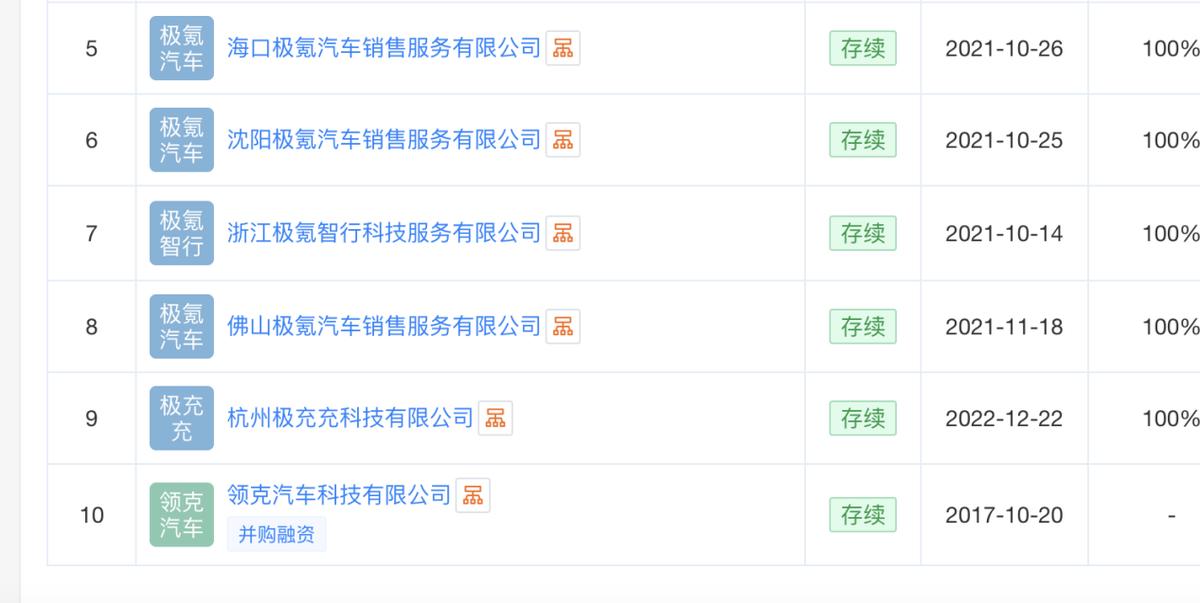
For this reason, since last year, Geely has returned to the "One Geely" strategy. According to Tianyancha App, Zeekr and Lynk & Co completed the merger in 2025; Dongfeng Motor has integrated its Yipai Technology business.
From "spreading out the business layout blindly" to "improving internal capabilities", from "having more children" to "having well-raised high-quality children", this is not only the result of market pressure, but also the only path for the industry to mature.
At present, the penetration rate of new energy electric vehicles has risen to 60%. Against the background of geopolitical trends, energy security and energy substitution expansion, the era of fuel vehicles has officially entered a countdown.
Li Bin predicts that the penetration rate will exceed 90% by 2030, and Geely has even announced that it will stop the R&D of traditional fuel vehicles.
In sharp contrast, the penetration rate of new energy vehicles has soared all the way, but the back-end services of the entire industry have not kept up with this unprecedented pace of industry transformation.
One of the most criticized problems is the maintenance and after-sales service of new energy electric vehicles.
It is understood that the maintenance cost of new energy vehicles after an accident is 1.7 times that of traditional fuel vehicles.
An article from The Beijing News shows that some car owners reported that repainting the bumper of a car worth less than 150,000 RMB cost thousands of RMB, and repairing a not-so-obvious scratch cost more than 3,000 RMB.
Minor maintenance often costs thousands of RMB, and major maintenance may cost half the price of the whole vehicle. The money saved on fuel for electric vehicles is finally all spent on maintenance.
The core problem behind this phenomenon is that the three-electric system, integrated die-casting body, lidar and integrated headlight of new energy vehicles are all exclusive customized parts of automakers.
These parts cannot be bought from third-party channels, and you can only go to the 4S store to repair or replace them.
A deeper problem is the closed maintenance access. Most automakers have strictly sealed their maintenance systems, so third-party repair shops cannot perform testing, maintenance or adapt spare parts for these vehicles.
This also highlights a contradiction: The popularity rate of electric vehicles and the development of the industry's back-end services have not improved synchronously, but show a clear deviation.
The more rapid the front-end expansion is, the more