SF Express, STO Express, YTO Express, ZTO Express and Yunda Express are embarking on different development paths, the competition has shifted to new tracks, and brutal industry differentiation has arrived.
During the off-season for traditional industries, enterprises have not chosen to scale back and play defense, but continued to increase investment to sharpen their competitive edges.
Judging from the latest July performance, it is not difficult to see that the old industry model that blindly competed on business scale and frantically chased shipment volume is collapsing, the four leading enterprises SF Express, YTO Express, STO Express and Yunda Express have embarked on completely different development paths. Some choose to expand their scale, while others prioritize improving per-order profitability, pushing the industry into a stage of differentiated competition.
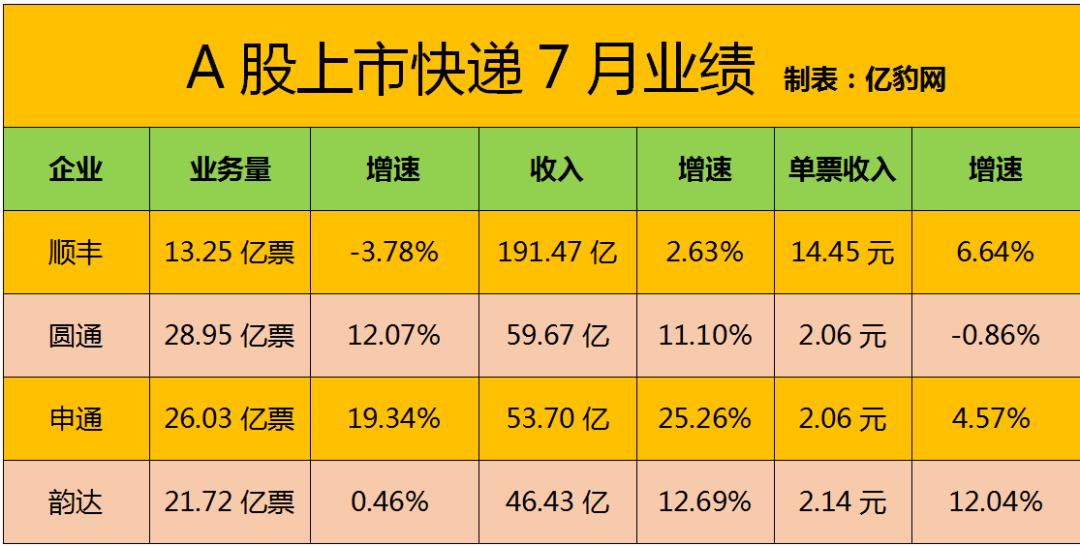
At the same time, ZTO Express and YTO Express, the leading franchise-based enterprises, have taken the lead in releasing their semi-annual reports. The net profits of both companies have risen sharply, with business scale expanding steadily and profitability continuing to improve. The results of anti-involution are directly reflected in the financial statement data.
July is the traditional off-season for the express delivery industry, a gap between major e-commerce promotions. Without the traffic boost from the 618 Shopping Festival, the overall market shipment volume growth rate has returned to normal. However, the July operating data still reveals the strategic choices of various enterprises.
Among them, SF Express has taken a differentiated path of "reducing volume while increasing revenue". The number of business shipments in July slightly declined, but revenue maintained growth, which is backed by the continuous optimization of product structure. Recently, SF Express has heavily upgraded its three core time-sensitive products: same-day delivery, next-morning delivery and next-day delivery, and publicly launched the service commitment of "compensation for late arrival", directly elevating industry competition from the past price dimension to the level of service, timeliness and guarantee.
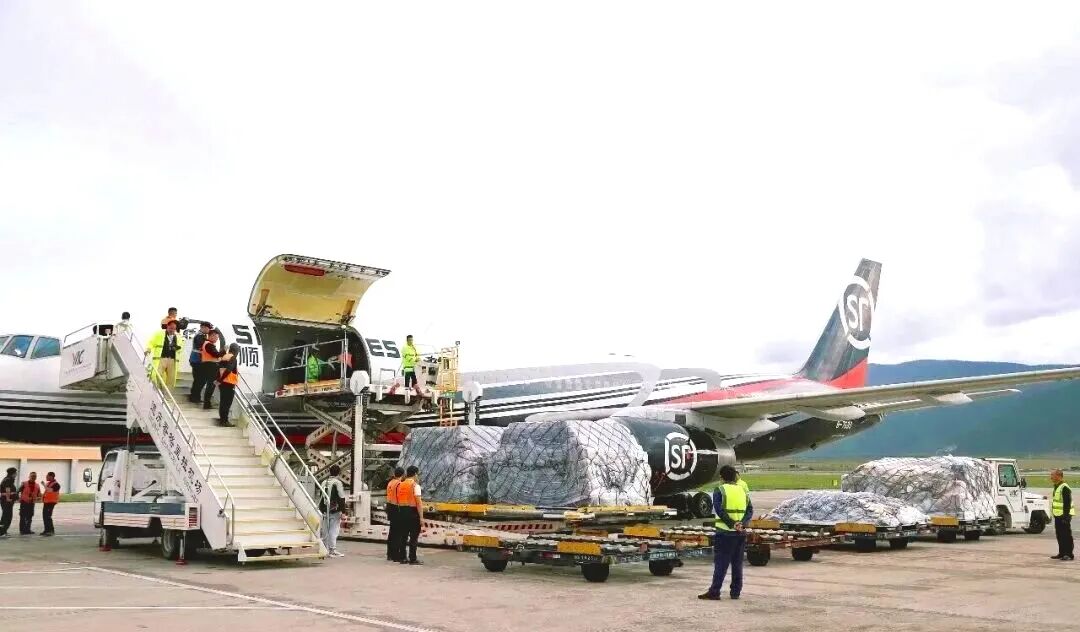
YiBao Network believes that this move is of great industry signaling significance, which means that the high-end express delivery track no longer only competes on speed promotion, but implements performance responsibility, provides compensation for overtime delivery, and gives the right to choose services to consumers and clients. Even in the industry off-season, SF Express did not choose to cut prices to grab orders. Instead, it increased investment in product upgrades, and used service premium to drive the increase in per-order revenue, which exactly confirms the underlying logic of SF Express's per-order revenue increasing for 5 consecutive months.
YTO Express adheres to the scale-first strategy, and strives to balance price and revenue on the basis of stabilizing its market share. Combined with its strong semi-annual performance, it is not difficult to see that although per-order revenue is slightly under pressure in July, the overall profit base has been consolidated, and the past situation of chasing volume at all costs will no longer occur.
With the support of Danniao, STO Express has achieved real growth in both shipment volume and price. Its network governance, cost control and product structure adjustment have achieved tangible results, not only seizing market share but also maintaining basic revenue.
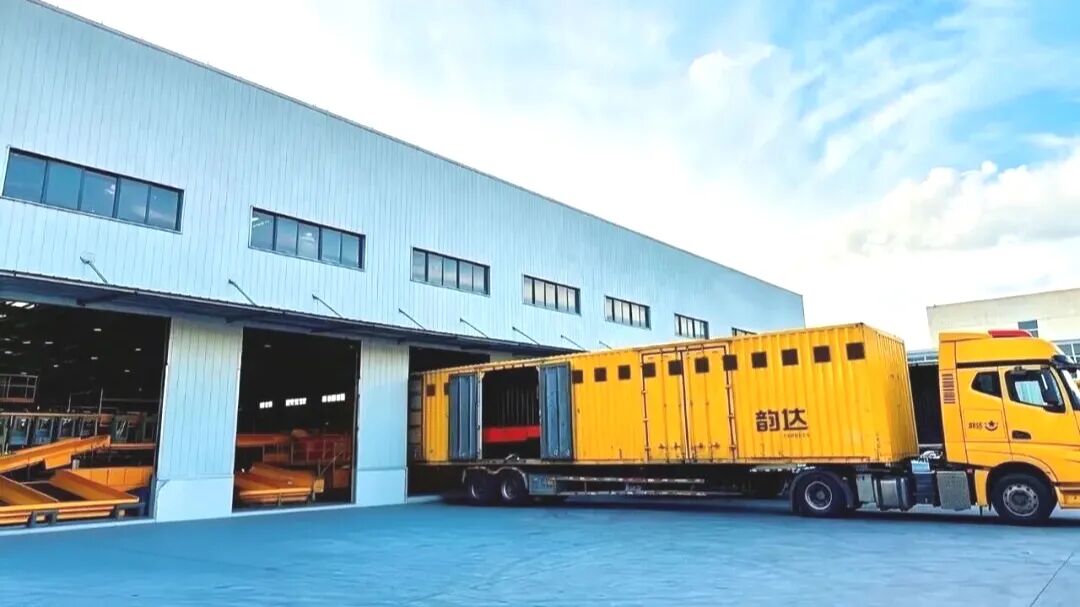
Yunda Express is no longer obsessed with seizing shipment volume, and has shifted its focus to improving per-order revenue, preferring to sacrifice the growth rate of scale to give priority to ensuring profitability. The cost is that the expansion of market share has almost stagnated. In the general environment where the overall incremental volume of the industry has peaked, how to balance scale and profit in the future is a practical exam that Yunda Express needs to face.
Looking at the entire industry, the continuous regulatory guidance for anti-involution and curb on vicious low-price competition is the general premise for the collective recovery of express delivery enterprises' performance in this round.
YiBao Network finds that anti-involution does not mean no competition. On the contrary, after price involution is suppressed, the real high-intensity competition has just begun. From the moves of leading enterprises, it is not difficult to see that everyone no longer puts their main energy on price wars, and the battlefield has shifted to timeliness, products, networks, services and supply chain capabilities.
Different enterprises have also made completely different strategic trade-offs. Some enterprises adhere to scale priority, while others choose profitability priority. There is no absolute distinction between the two routes, but they have a profound impact on thousands of front-line franchisees at the terminal.
In the general anti-involution environment, the overall profitability of the industry is improving, while internal differentiation is intensifying. For terminal outlets, the times have changed, and the living space that purely relies on parcel collection and delivery is getting smaller and smaller. Choosing different brands means that the revenue and pressure faced by outlets are completely different.

The leading enterprises increasing investment in competition during the off-season also sends a clear signal: the express delivery industry has bid farewell to the era of wild growth, and it is no longer a situation of general rise and fall under the windfall dividend. Even without the boost from large promotions, enterprises need to continuously polish their core capabilities. The strong semi-annual performance is a phased achievement under the anti-involution policy, but it is not the end.
Competition in the future will not be relaxed, it just changes tracks.
Of course, challenges still exist objectively. Fluctuations in e-commerce demand, changes in the consumer market, and games between peers will still bring uncertainty to the industry.
When the Tongda system enterprises expand their scale, they still need to be alert to the resurgence of price pressure; SF Express needs to consolidate its advantages in high-end services while balancing trade-offs in the e-commerce parcel market; Yunda Express needs to figure out how to reactivate business volume growth on the basis of high per-order revenue.
This article is from the WeChat Official Account "Express Observer" (ID: exobserver), the author is YiBao Network, and published with authorization from 36Kr.