Wang Xingxing manufactures machines, while Dong Mingzhu nurtures talents.
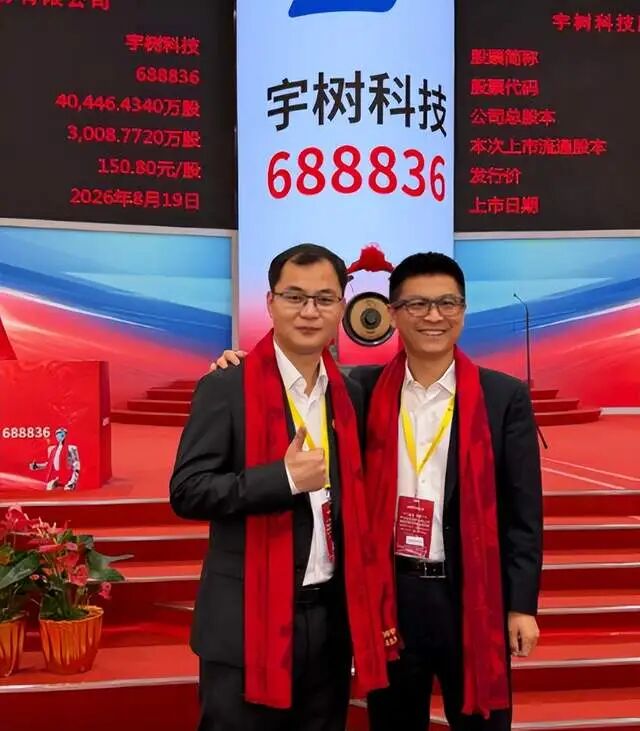
On August 19, 2026, Unitree Robotics officially landed on the Sci-Tech Innovation Board of the Shanghai Stock Exchange, surging 629% at opening, with its total market value once skyrocketing to 444.9 billion yuan.
On the same day, the company known as "the first stock of humanoid robots" released its new humanoid robot "Superman" just two days ago — with a leg length of 0.85 meters and a maximum in-situ jump of about 2 meters, exceeding the human in-situ high jump record.
Almost at the same time, Zhuhai Gree Technical School under GREE Electric released its first enrollment information, planning to recruit 300 junior high school graduates aged 15 to 18, with 72-year-old Dong Mingzhu personally serving as the principal.

One manufactures machines, the other cultivates talents.
One is a futuristic tech upstart, the other is a traditional manufacturing industry giant; one is fully committed to "machine manufacturing", the other is dedicated to "talent cultivation".
The convergence of the two pieces of news just outlines the dual changes that China's manufacturing industry is experiencing.
I. Development Philosophy: The Symbiosis Logic Between Machines and Humans
When Unitree Robotics' humanoid robots demonstrate amazing athletic capabilities, a sense of anxiety pervades the market: will robots accelerate the elimination of ordinary workers?
This is a typical misreading of technological utilitarianism.
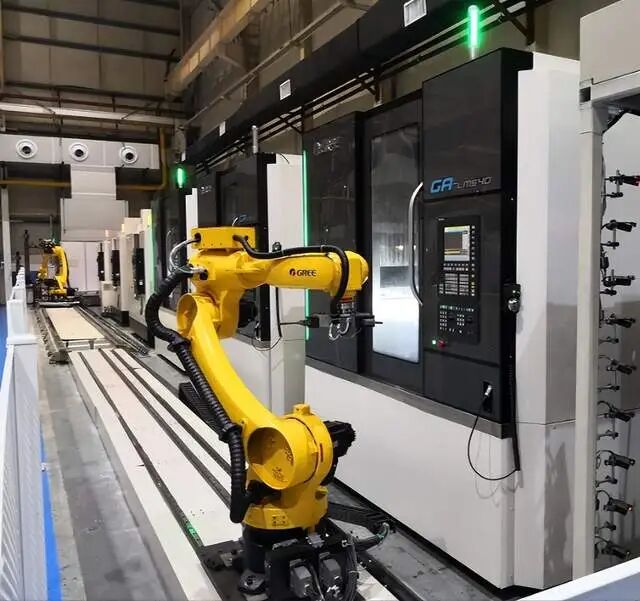
From the perspective of development philosophy, the essence of technology has always been "people-oriented".
Whether it is artificial intelligence or robots, their ultimate goal is not to "oppress humans" or "replace humans", but to liberate humans from labor scenarios with high repetitiveness, high risk and harsh environments.
In the evolution of every industrial node in history, the intervention of machines has never led to the permanent disappearance of the value of human labor, but promoted the reshaping of the labor force form.
Just as Jensen Huang describes robots as "AI immigrants" that fill the labor gap caused by population aging, machines only replace positions, not human beings themselves.
The robotic arm replaced the porters, which gave birth to engineers who operate industrial robots; the automated assembly line eliminated manual assembly, which nurtured senior technicians who master system debugging. Machines take on the lower limit of "physical strength and repetition", which is precisely to liberate humans to engage in more creative and forward-looking work.
Wang Xingxing builds machines to polish "tools" that extend the limits of the human body;
Dong Mingzhu runs education to upgrade the "brains" that control advanced tools.
The two have no differences in underlying philosophy — technology is responsible for providing the upper limit of efficiency, and humans are responsible for giving value direction. The two form a double helix symbiosis structure for the transformation and upgrading of China's manufacturing industry.
II. Industrial Perspective: The "Two-Wheel Drive" of Producing Products
Comparing Wang Xingxing and Dong Mingzhu in the same dimension, we can find an industrial path:
Wang Xingxing produces products through humans,
Dong Mingzhu cultivates the people who produce products.
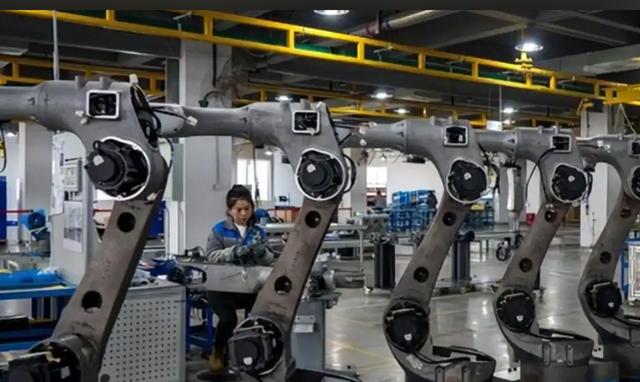
The self-developed and self-produced rate of core components of Unitree Robotics exceeds 90%.
This means that every link from algorithm design, technical assembly to production line debugging is highly dependent on the support of excellent engineers and high-skilled workers. Wang Xingxing uses the engineer dividend and high-skilled talents to develop and produce integrated software and hardware robot products.
The transformation of GREE Electric touches on another deep pain point of manufacturing enterprises.
Modern factories are not short of imported equipment and automated assembly lines, but lack "new industrial workers" who understand both mechanical structure, electrical control, and can operate digital Internet of Things systems.
Dong Mingzhu moved the talent supply chain forward to the stage of junior high school graduates aged 15 to 18, offering majors such as refrigeration equipment application, intelligent equipment operation and maintenance, and implementing the model of "enter school as enter enterprise, graduate as fit for post".
This is not a simple school-running behavior, but to reshape "people" as the core productivity factor of the enterprise, changing talent cultivation from "recruitment after graduation" to "cultivation after enrollment".
The two are not in a substitution relationship, but a mutually promoting closed loop:
As enterprises like Unitree Robotics create more and more intelligent machines, factory production lines will be completely transformed;
It is precisely the compound skilled talents trained by Gree who are needed to install, debug, maintain and optimize these complex intelligent machines.
Without the breakthroughs of people like Wang Xingxing, the talents trained by Dong Mingzhu will face the embarrassment of no advanced machines available; without the industrial workers delivered by people like Dong Mingzhu, the machines built by people like Wang Xingxing cannot take root on a large scale in industrial sites.
III. Educational Perspective: The Divergence of Two Routes and Targeted Talent Cultivation
Zhang Dongwei, a technology industry expert and college student employment and entrepreneurship mentor, believes that Gree's "cross-border" operation of a technical school has sounded a wake-up call to the current talent cultivation and employment system.
The mainstream path of China's current education system is "junior high school - high school - university - employment", which tends to cultivate academic talents, but the real manufacturing industry is in urgent need of a large number of skilled talents.
Facing the impact of industrial upgrading, even if it is the same enterprise running education, the industry has clearly differentiated two different school-running routes:
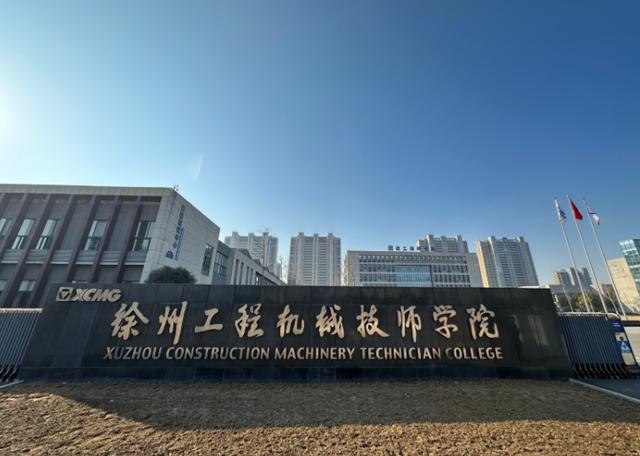
- The sinking "applied skill-oriented" route:
It is represented by GREE Electric running a technical school and XCMG Group founding Xuzhou Construction Machinery Technician College.
The essence of this route is the advance of the talent supply chain. Enterprises directly bring factory workshops, industrial equipment and senior engineers into teaching, shorten the distance between "classroom and workshop", and accurately output compound skilled talents who can take up posts directly.
- The upward "new research-oriented" route:
It is represented by Cao Dewang initiating the establishment of Fuyao University of Science and Technology, Yu Renrong promoting the establishment of East China University of Technology, and Geely upgrading Geely University.
The essence of this route is the combination of top scientific research and practical operation. Entrepreneurs use capital and industrial resources to run new research-oriented universities with a high starting point, covering cutting-edge directions such as intelligent manufacturing, materials, and computer science, to solve the problems of underlying technology innovation and academic research implementation.
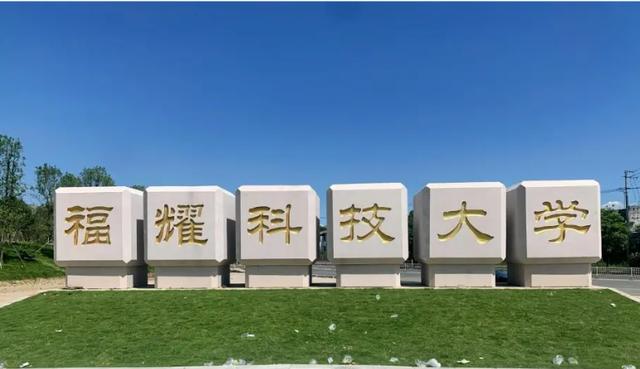
The divergence of these two routes hits the shortcomings of the current education system: academic research and industrial application are two completely different needs, and we cannot expect traditional schools to cultivate them with the same model.
Zhang Dongwei suggested that a new mechanism of "regular diversion and targeted cultivation" needs to be established at the school education stage:
- Academic research-oriented diversion:
For students with outstanding logical thinking and scientific research potential, through the path of research-oriented universities, they will deeply conquer underlying technologies such as algorithms, materials, and chips, so as to reserve R&D strength for cutting-edge enterprises like Unitree Robotics.
- Industrial application-oriented diversion:
For students with strong hands-on ability and interest in technology application, provide a clear vocational education channel as early as possible, and targetedly train senior craftsmen who can skillfully control intelligent manufacturing equipment.
Whether enterprises choose to sink to do vocational and technical education or rise to run research-oriented universities, the essence is to make up lessons for the education system.
Establishing a reasonable diversion mechanism in junior high school and high school stages, allowing those who are suitable for scientific research to engage in scientific research and those who are suitable for learning skills to practice skills, is the fundamental way to ease the structural contradiction of youth employment and match industrial upgrading.
Conclusion
Wang Xingxing bets on the speed of machine iteration, Dong Mingzhu bets on the possibility of human growth.
Wang Xingxing determines how high China's manufacturing industry can fly, and Dong Mingzhu determines how far China's manufacturing industry can go.
The capital market gave the former a market value of 400 billion yuan, while the latter only got 300 junior high school students.
But ten years later, when Unitree's robots can jump 3 meters high, the group of young people who graduated from Gree Technical School will be the few people who can make machines serve humans instead of being driven by machines.
People who build machines get rich first, people who cultivate talents grow old first.
But in the end, people who understand both machines and humans go the farthest.
Machines replace positions, not humans.
Education does not teach to escape, but teaches to control.
This is the symbiosis.
This article is from the WeChat official account "Zhang Dongwei", author: Zhang Dongwei, released by 36Kr with authorization.