Insights from China's AI short drama practitioners: The number of daily job openings exceeds 19,000, and small, medium and micro studios keep churning out breakout hit works frequently.
I. Data Insights for AI Drama and Manhua Drama Creators
(1) Estimation of the user scale of AI drama and manhua drama
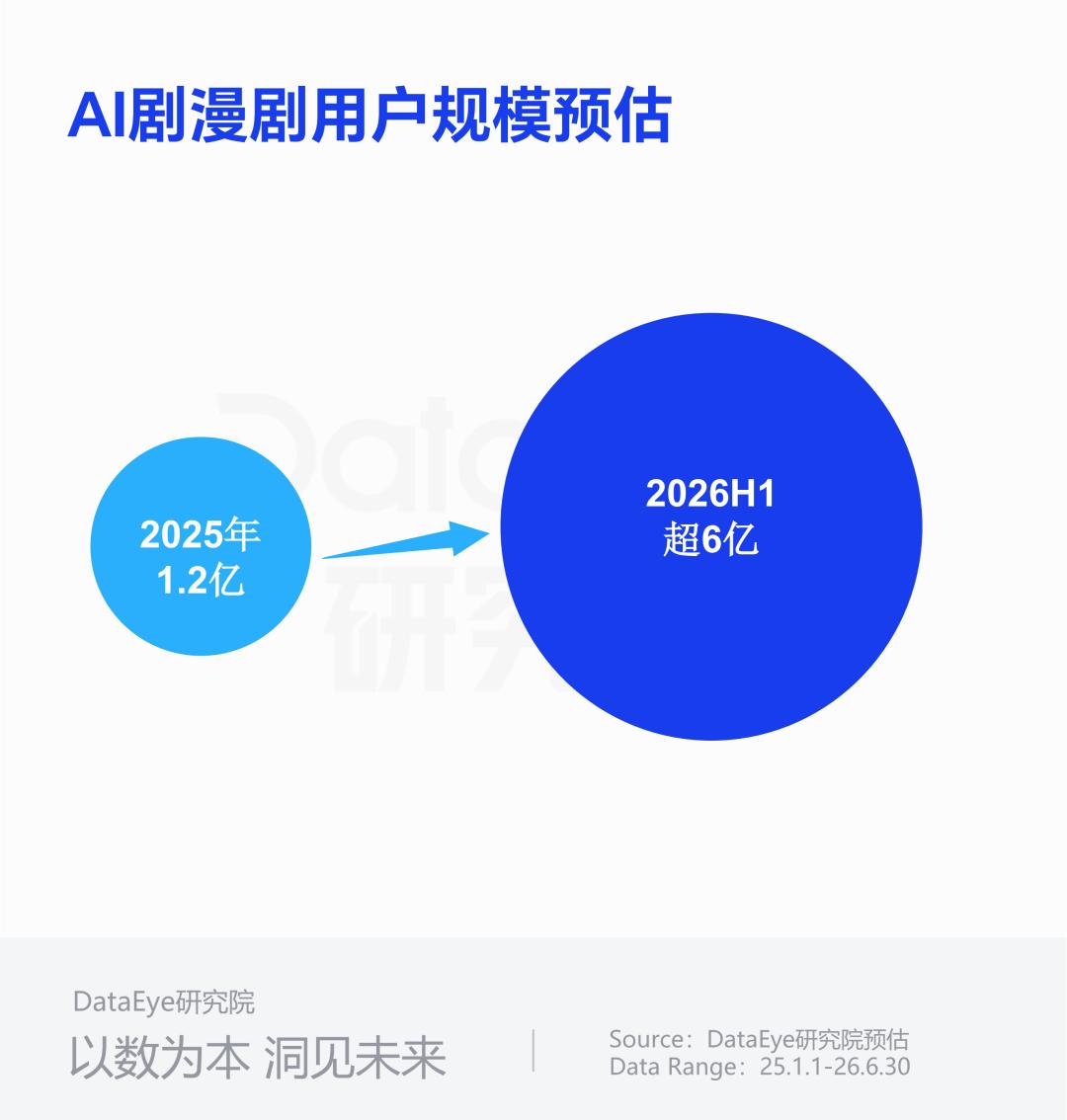
In 2025, the domestic manhua drama user scale was only about 120 million. In the first half of 2026, the domestic user scale of AI drama and manhua drama is expected to rapidly exceed 600 million, more than doubling the previously estimated 280 million and achieving higher-than-expected growth. Notably, the user groups of AI drama, manhua drama and live-action short dramas have a high degree of overlap.
The main reasons for the surge in users are: the huge production capacity of AI realistic dramas brought by mature technologies, as well as platform incentives and recommendations, which have realized rapid conversion of pan-entertainment audiences.
(2) Number of new AI drama and manhua drama releases
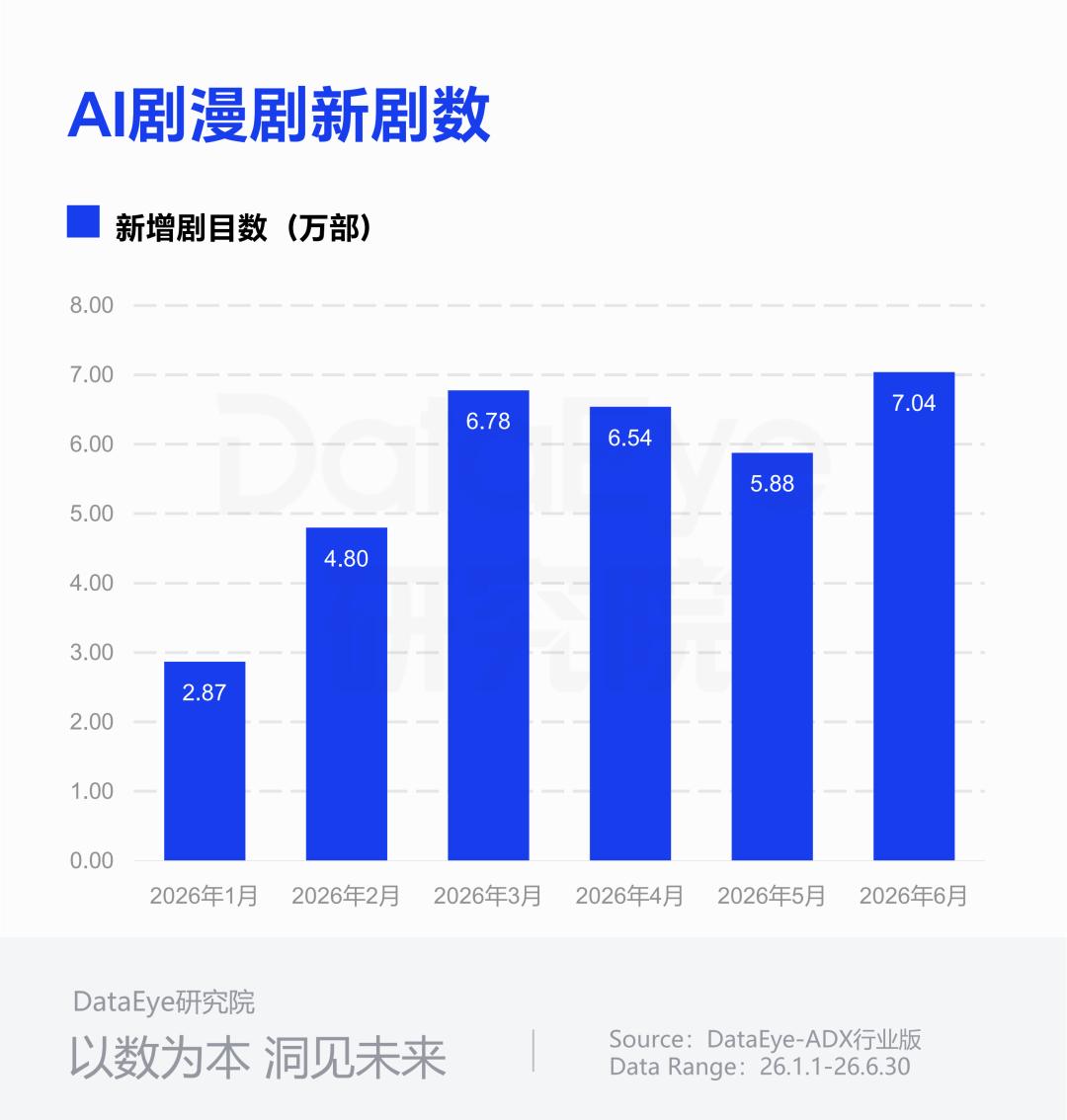
In the first half of 2026, the total number of newly launched domestic AI drama and manhua drama releases reached about 339,000 (covering multiple mainstream platforms in the industry).
From the perspective of the monthly supply trend, the industry as a whole shows a fluctuating upward trend: the number of new dramas rose steadily from January to February, reaching 67,800 in March and breaking the 60,000 mark; the market entered an adjustment phase in May, with the number of new releases dropping to 58,800; supply rebounded strongly in June, with 70,400 new dramas added in a single month, hitting a new high for monthly new releases in the first half of the year.
(3) AI drama and manhua drama official theater accounts
As of early August 2026, there are over 8,300 domestic official theater accounts for AI drama and manhua drama.
The AI drama and manhua drama industry has officially entered the era of branded content. The theater accounts settled on major platforms include corporate accounts such as Hippo Manhua Drama, Official Kyushu Short Drama, Shanhai Xingchen, Paoman Theater, Tianqiao Manhua Drama, Lingju Animation, and Aikan Interactive Short Drama, as well as many OPC or small and medium-sized team creators, such as Guangyu Production, the producer of *Legend of Ten Thousand Demons*, Duoduoduo Animation, the producer of *Exiled to the Border: The Convict Wife Develops Wasteland and Raises a God of War*, Chenke Culture, the producer of *The Magic Treasure Basin: The Mixed Spiritual Root is the Real BOSS*, and Xuanjiu Culture, the producer of *Return to the Ruins Season 1*.
II. Data Insights on New Occupations Born in the AI Drama and Manhua Drama Industry
(1) Recruitment data: City distribution
According to the monitoring of three major recruitment platforms by DataEye Research Institute on August 10, there were more than 19,000 recruitment positions related to AI drama and manhua drama on that day. Recruitment for AI drama/manhua drama related positions has become an industry trend, with a tight talent supply. According to public statistics from the Human Resources and Social Security Bureau of Shenzhen Municipality, the talent gap in the manhua drama and micro-short drama fields has reached 10,000 people.
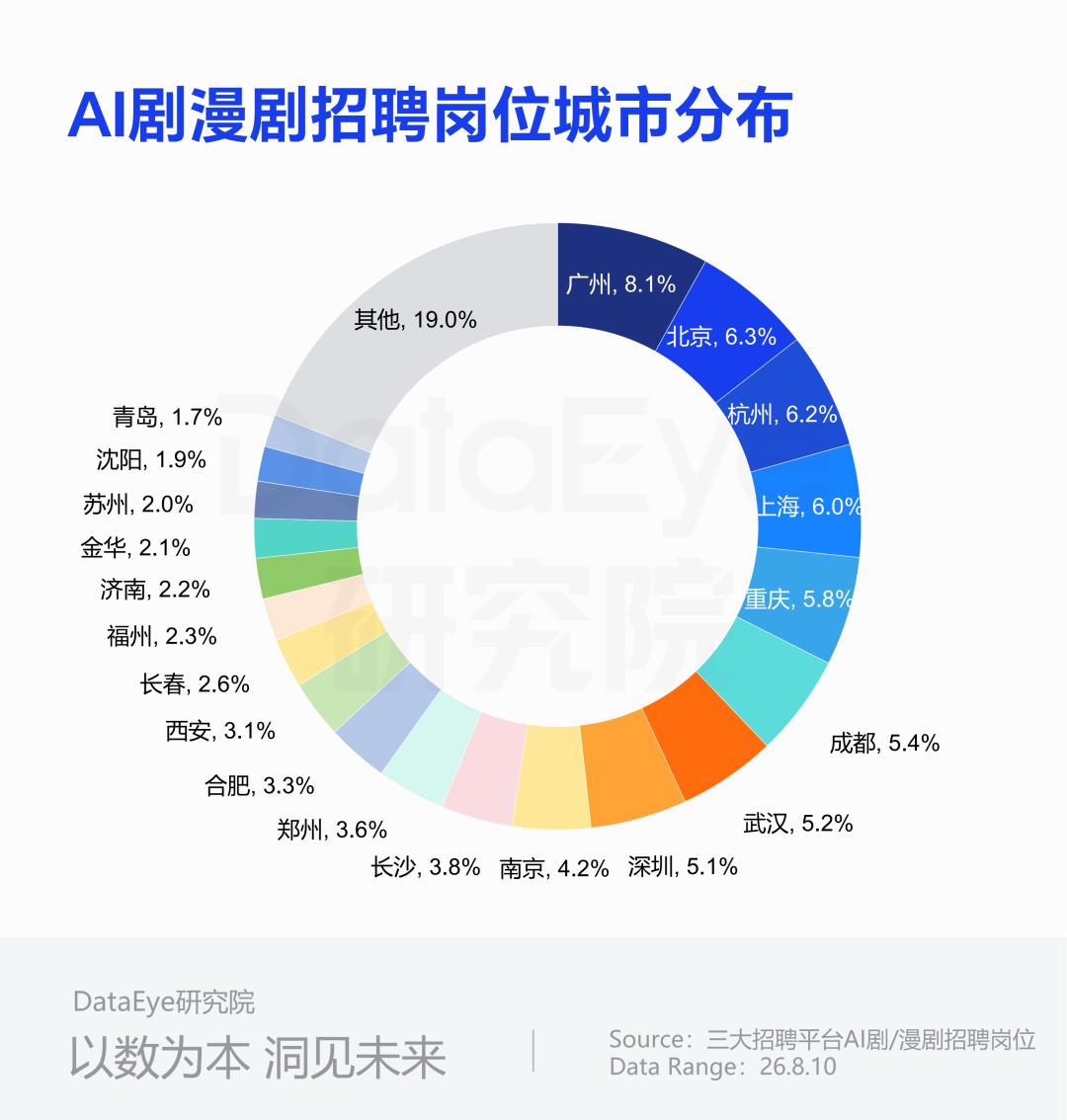
From the city distribution of recruitment positions, Guangzhou leads the country in position supply, followed by Beijing and Hangzhou; position resources are generally concentrated in core first-tier and new first-tier cities, with the top 10 cities accounting for 56% of total positions, and the top 20 cities accounting for nearly 80%.
But in general, the industrial layout is still relatively scattered, and the distribution among cities is relatively balanced. This is because employment in the AI drama/manhua drama industry is highly flexible, with low dependence on traditional cultural and entertainment infrastructure and local basic industries, and high freedom in industrial site selection, making it suitable for lightweight entrepreneurial layout.
(2) Recruitment data: Position distribution
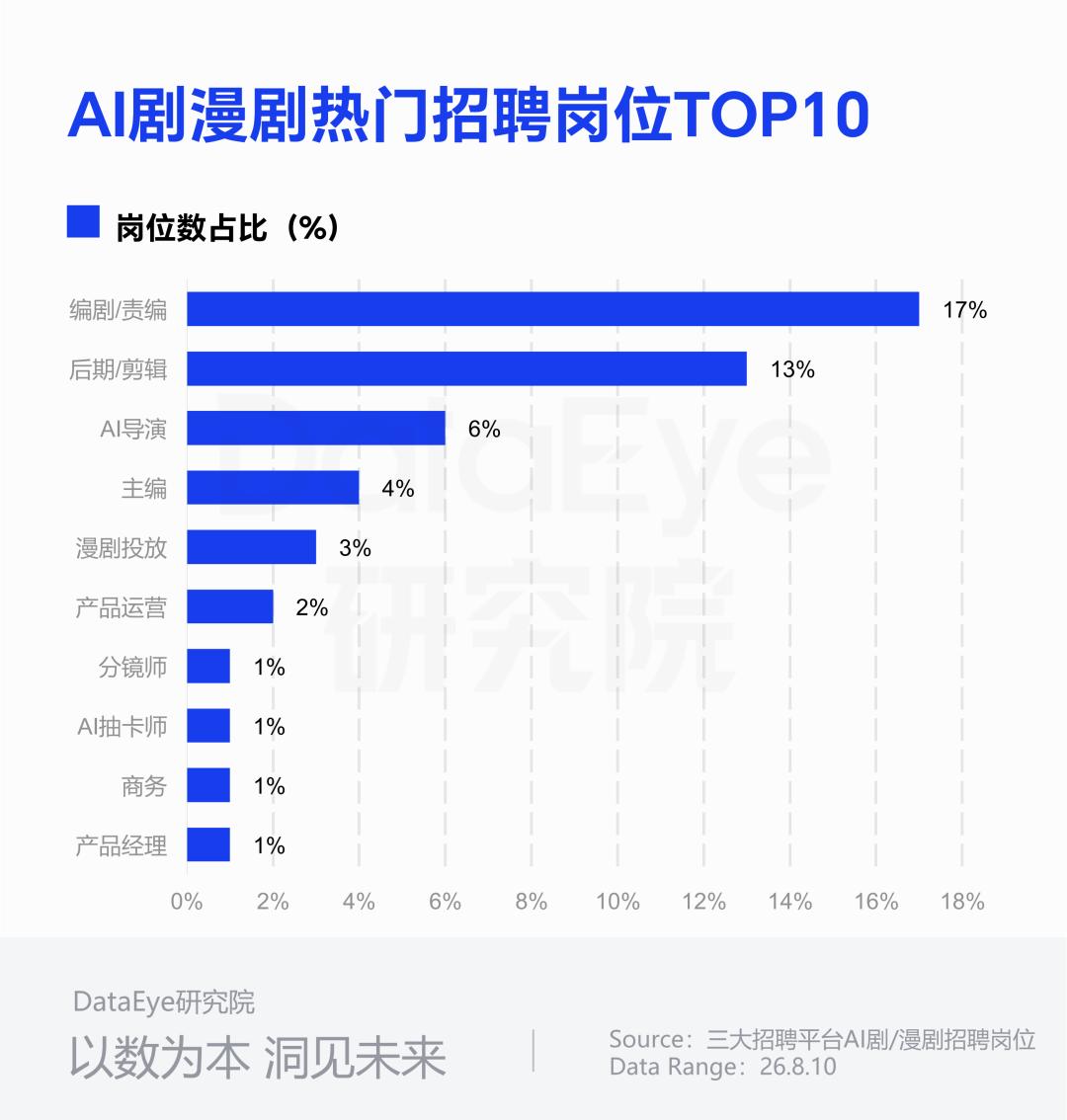
From the perspective of recruitment positions, the demand for screenwriters/editors and post-production/editors far exceeds that of other positions. Script creation and finished film editing are the core basic links for the mass production of AI drama and manhua drama. With the large-scale expansion of the industry, there is a strong rigid demand for basic creation and execution talents.
There is a shortage of high-end creative talents: the demand for AI director and chief editor positions accounts for 6% and 4% respectively, which is significantly different from that of basic positions. These two types of positions require a combination of industry experience, AI tool proficiency and overall planning thinking, with high thresholds and low market supply, making them scarce core creative resources that enterprises are vying for.
Supporting positions are steadily expanding: manhua drama distribution and product operation undertake the core commercial functions, with continuously rising demand; segment positions such as storyboard artists, AI card drawing specialists, business specialists, and product managers are relatively small in scale, arranged around visual production, channel cooperation and product iteration to adapt to the refined development rhythm of industrialization in the industry.
(3) New occupation data: AI Director
From the distribution of work experience requirements, the demand for AI director positions with 1-3 years of experience accounts for the highest proportion, reaching 52%; 3-5 years of experience accounts for 26%, and the two together account for nearly 80%.
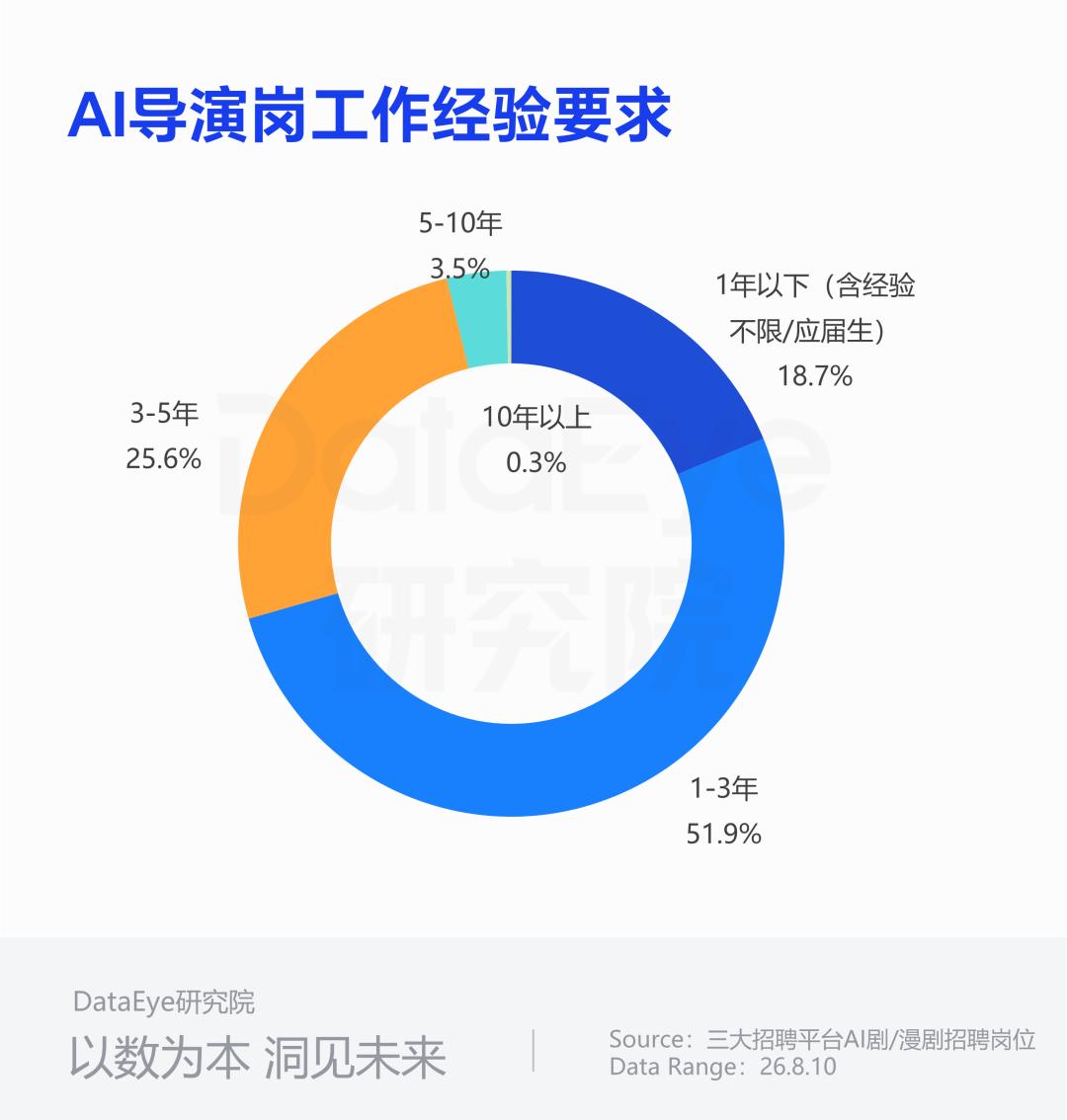
This structure is highly consistent with the attribute of AI drama and manhua drama as an emerging track. The industry is still in its early stage, and the stock of talents with mature AI director experience is limited. Enterprises prefer to recruit young practitioners with certain content foundations and strong learning abilities for training.
From the perspective of salary distribution, the 10-15k range accounts for the highest proportion, exceeding 30% (32.3%), which is the most concentrated salary band for AI director recruitment, mainly corresponding to growing AI directors with 1-3 years of experience.
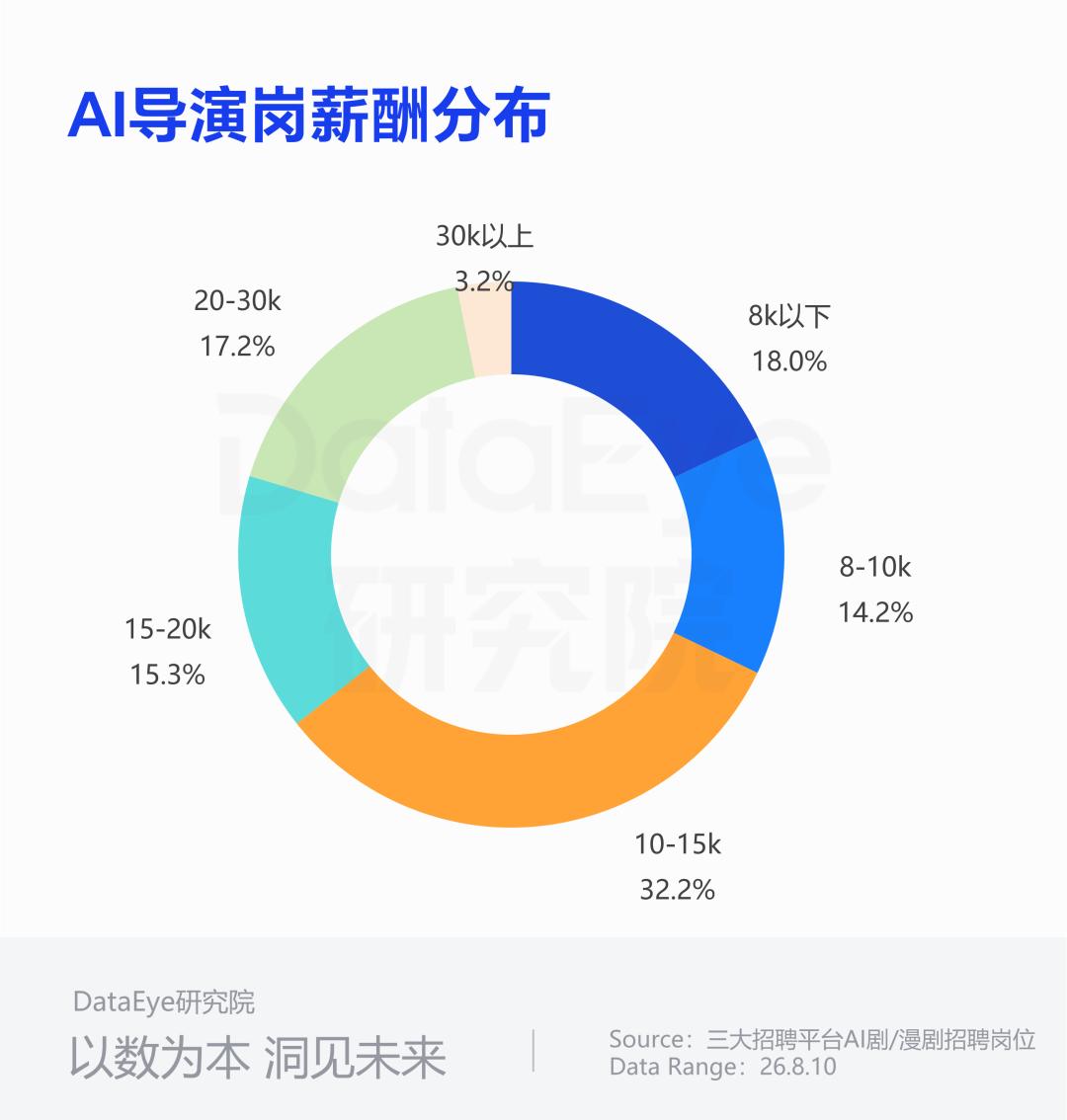
The 15-20k (15.3%) and 20-30k (17.2%) ranges form the mid-to-high end echelon, accounting for 32% in total, covering mature directors with 3-5 years or more of experience who have the ability to independently control projects.
At the entry level, the ranges below 8k and 8-10k account for 32% in total, corresponding to new directors with less than 1 year of experience or no experience requirements.
However, high-paying positions above 30k only account for 3%, and senior core creators and management talents are extremely scarce, which is mutually confirmed by the conclusion that positions with more than 5 years of experience account for less than 4% in the experience distribution, reflecting the reality of supply gap for high-end directors in the industry.
At the same time, positions with 5-10 years of experience only account for 3.5%, and positions with more than 10 years of experience account for 0.3%. The supply of senior AI directors is extremely scarce. The gap in high-end core creative talents has become one of the core bottlenecks restricting the industry from upgrading from large-scale mass production to high-quality content creation.
(4) New occupation data: AI Card Drawing Specialist
From the distribution of work experience requirements, the AI card drawing specialist position has relatively low requirements for working years as a whole, showing obvious characteristics of "younger age and low threshold": positions with less than 1 year of experience (including no experience requirement / fresh graduates) account for the highest proportion, reaching 55%; positions with 1-3 years of experience account for 42%, and the two together account for more than 90%. Positions with 3-5 years of experience only account for 3%, and positions with more than 5 years of experience account for 0.
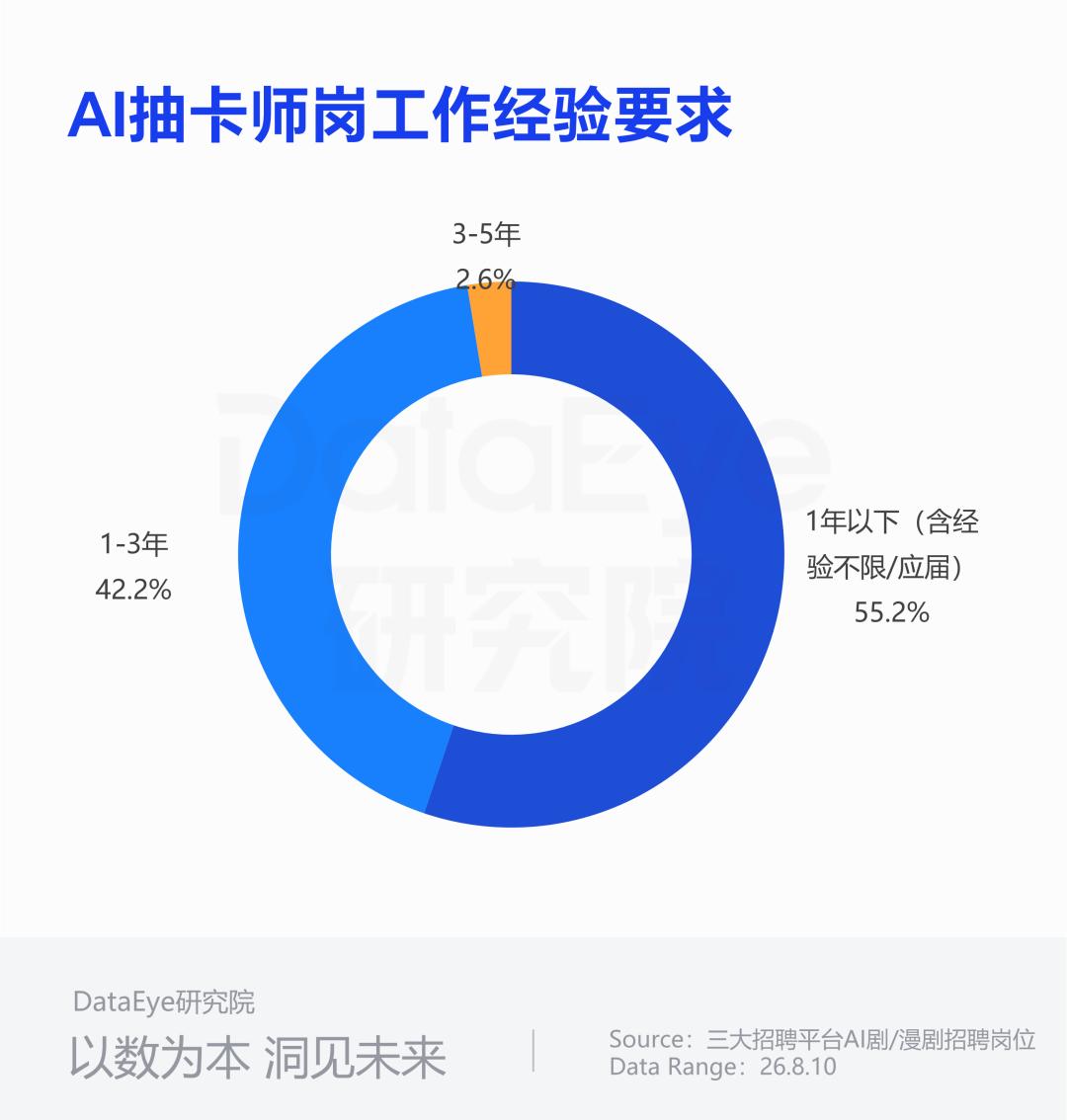
As a basic execution position in the AI drama and manhua drama industry, the skill threshold of AI card drawing specialists is relatively manageable, and enterprises prefer to recruit new people for standardized training. But at the same time, the turnover rate of this position is relatively high, and enterprises are generally in a state of continuous recruitment and repeated replenishment of staff.
From the perspective of salary distribution, the 5-8k range is the absolute main force, accounting for as high as 66.5%, which matches the positioning of AI card drawing specialists as basic execution positions.
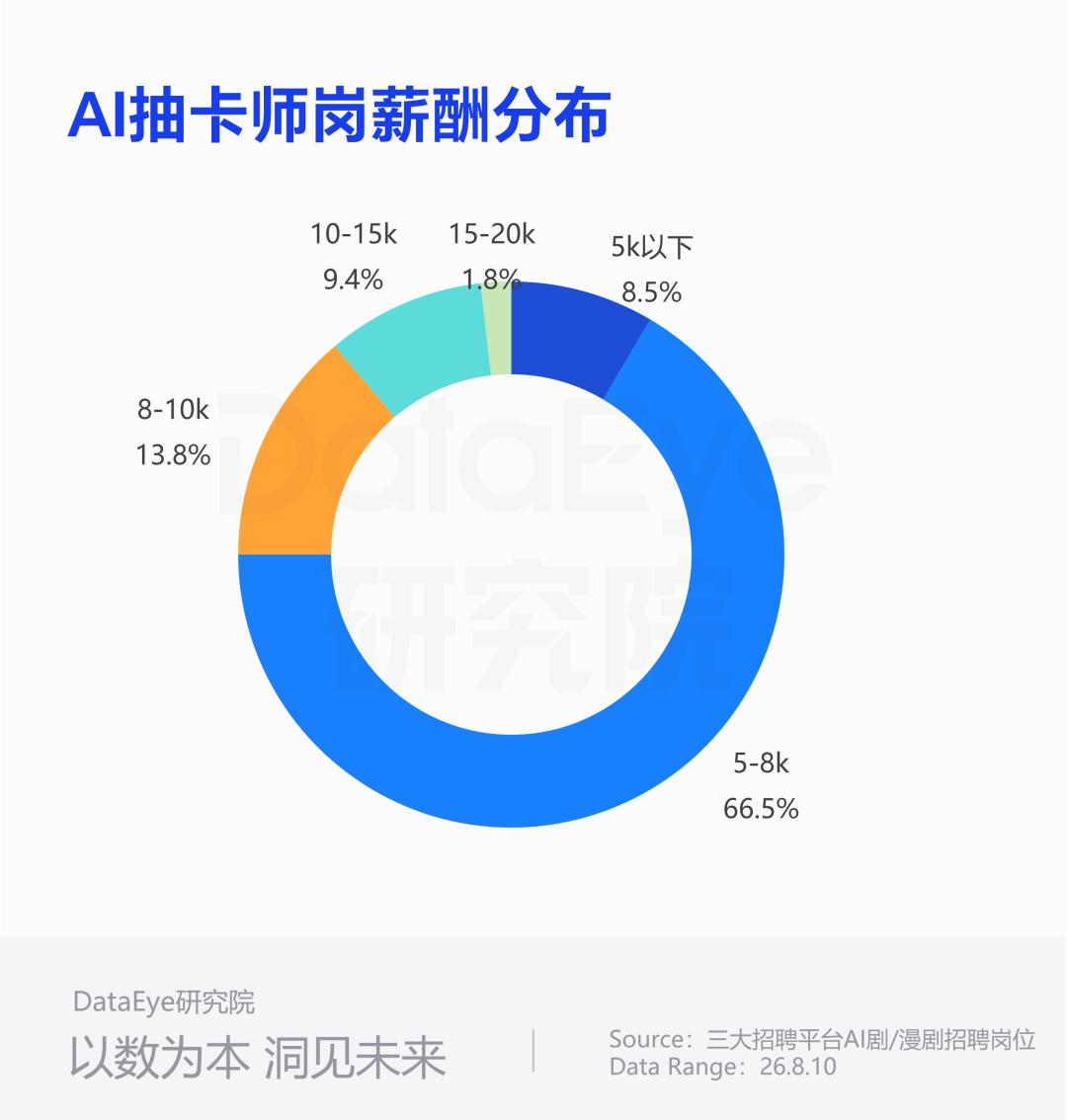
The 8-10k (13.8%) and 10-15k (9.4%) ranges form the second echelon, corresponding to experienced workers who have certain image generation experience and can independently complete card drawing tasks. Entry-level positions below 5k account for 8.5%, mainly for internships and assistant positions.
Positions above 15k only account for 1.8%, and positions above 20k account for 0. The salary ceiling of AI card drawing specialist positions is relatively low, and there are almost no senior high-paying positions, which is consistent with the conclusion that positions with more than 5 years of experience account for 0 in the experience distribution.
(5) New occupation data: AI Storyboard Artist
From the distribution of work experience requirements, the experience threshold for AI storyboard artist positions is relatively loose as a whole, and nearly 90% of positions are concentrated in the two ranges of 1-3 years (47.7%) and less than 1 year (44.8%), 3-5 years of experience accounts for only 6.8%, and more than 5 years of experience is almost negligible (0.7%).
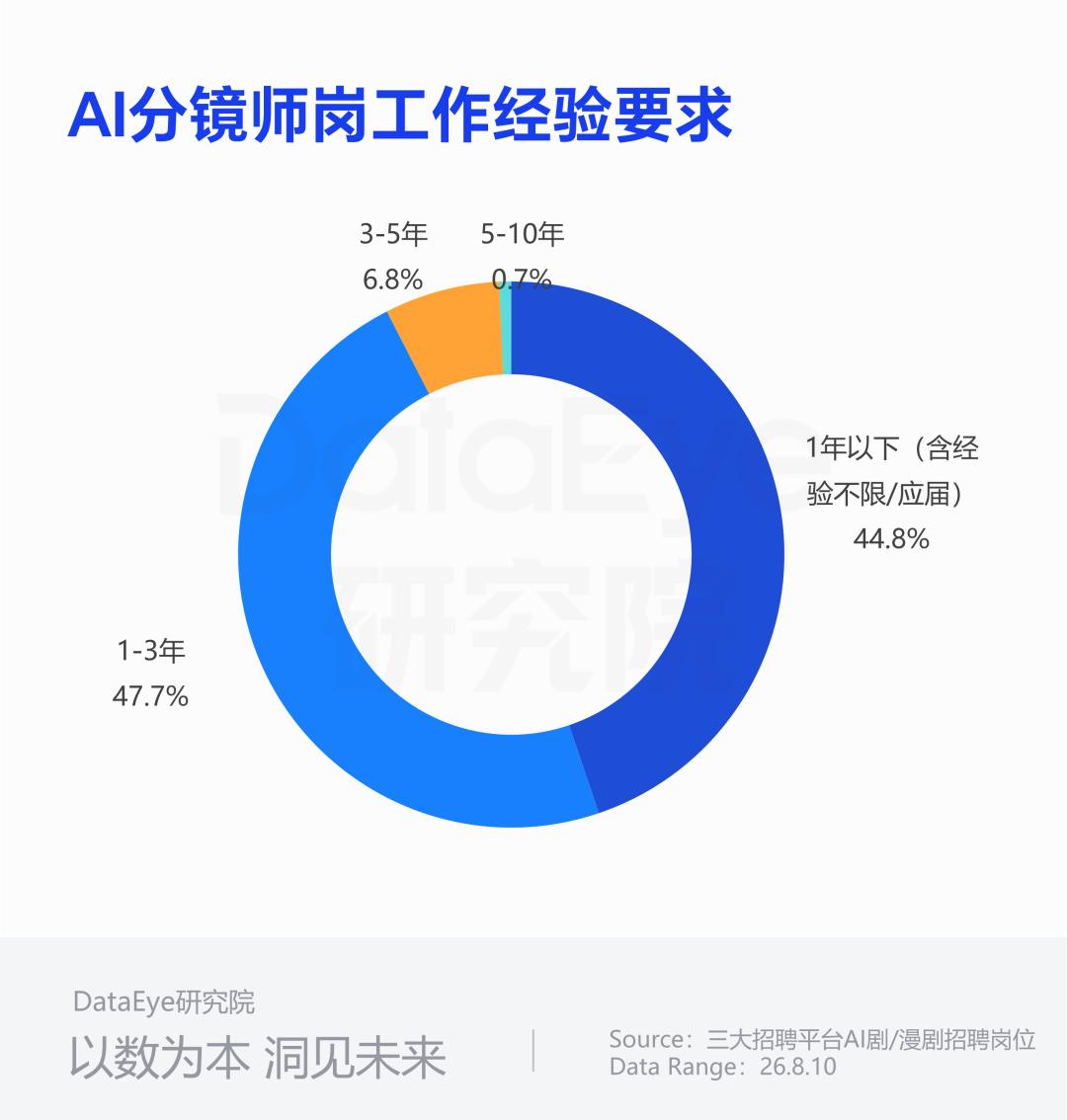
This means that enterprises do not expect to recruit mature experienced staff, but are more willing to absorb young people with lower labor costs and let them get started quickly through internal standardized processes.
Accompanied by this is the high turnover of positions: on the enterprise side, it is manifested as long-term posting of positions and batch recruitment, which essentially uses "continuous recruitment" to offset the labor loss caused by "continuous turnover".
From the perspective of salary distribution, the 5-8k range accounts for the highest proportion of market income, reaching 58.7%, which is the main salary band with the most concentrated recruitment in the industry. The overall level is relatively low, matching the positioning of basic execution positions.
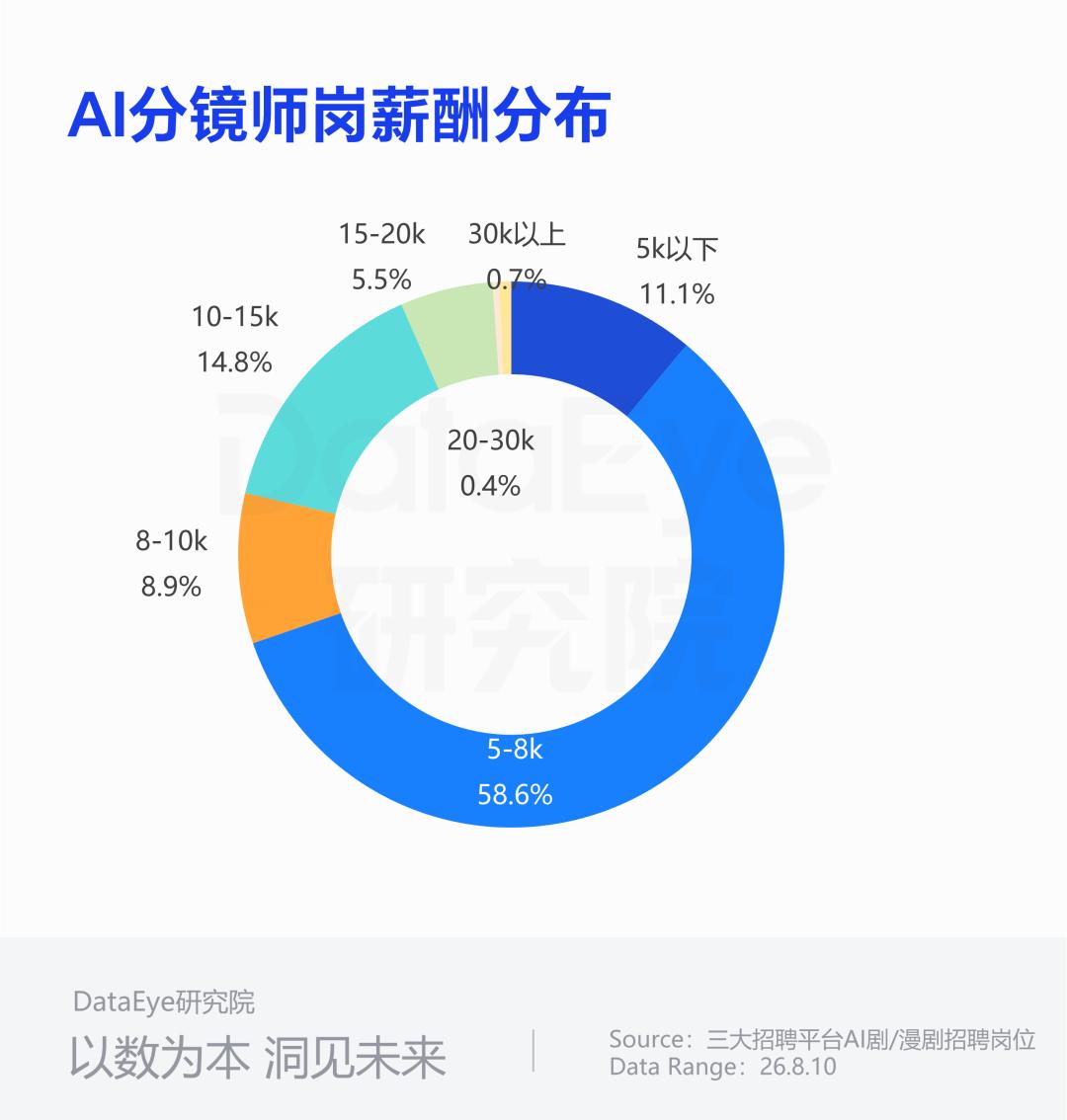
The 10-15k range accounts for 14.8%, which is the second echelon, mainly corresponding to experienced workers who have certain project experience and can independently complete tasks.
Entry-level positions below 5k account for 11.1%, mainly for internships and assistant positions. Positions above 15k account for only 6.6% in total, and the high salary ceiling is relatively low.
III. Trend Outlook
Trend 1: AI drama effectively drives entrepreneurship and employment for creators in small and medium-sized cities, and a large number of small and medium-sized teams are rooted in non-first-tier cities behind hit dramas
Although current domestic AI drama and manhua drama employment positions are more concentrated in first-tier and new first-tier cities, a large number of hit drama creations and industrial chain enterprises are rooted in small and medium-sized cities, effectively driving local employment and entrepreneurship, such as Duoduoduo Animation (Bazhong), Guangyu Production (Bijie), Liuyao Manhua (Yanbian), Qimiao Media (Huai'an), Mujing Lingxin (Xuzhou), Zhi Xinghe Culture (Jining), Ju Huoying Jiang (Yingkou), Lemai Culture (Shangrao), Xianglin Information (Tangshan), Donggehua Media (Luoyang), etc.
Among them, *Legend of Ten Thousand Demons* produced by Guangyu Production has been updated to Season 11, and the highest popularity of Season 9/10/11 has exceeded 100 million; *The Junior Sister of Our Sword Sect Who is the Favorite of the Group* produced by Liuyao Manhua has been updated to Season 4, and the highest popularity of Season 4 has exceeded 100 million;