The second-hand mobile phone market is booming, can Zhuanzhuan successfully achieve its expected IPO as planned?
IPO is not only a test from the capital market, but also a comprehensive review of its business model.
For different enterprises, the surge in memory prices does not bring the same impact.
Taking the mobile phone industry as an example, IDC data shows that in Q2 2026, the shipment volume of China's smartphone market was 66.01 million units, a year-on-year decline of 4.3%, marking five consecutive quarters of year-on-year decline.
Due to the lack of cost-effectiveness of new phones, consumers have turned to second-hand mobile phones. IDC predicts that the scale of China's second-hand smartphone market will exceed 100 million units in 2026, surging 20% year-on-year.
Against this backdrop, Zhuanzhuan, which mainly engages in second-hand mobile phone transactions, may usher in a unique development opportunity. In April 2026, Huang Wei, founder and CEO of Zhuanzhuan Group, publicly stated that Zhuanzhuan will set up an international business headquarters in Hong Kong in about a year, and plans to list on the Hong Kong Stock Exchange within three years.
However, it should be noted that the second-hand mobile phone transaction track does not only have Zhuanzhuan as a player. Enterprises such as Xianyu and Aihuishou have taken the lead with their scale advantages. Without forging differentiated competitiveness, it is difficult for Zhuanzhuan to win the favor of investors.
I. Unable to compete with Xianyu, Zhuanzhuan shifts to the C2B2C model
As a project derived from the second-hand channel of 58.com, Zhuanzhuan's initial business model was similar to that of 58.com, positioning itself as a C2C asset-light trading platform.
Unfortunately, relying on Alibaba's mature e-commerce ecosystem, trading system and user base, Xianyu has long established a leading advantage in the C2C second-hand trading market, and Zhuanzhuan has never been able to shake the industry pattern.
The *2019 China Second-hand E-commerce Development Report* disclosed by Net E-Commerce shows that in the idle trading market, Xianyu's penetration rate is as high as 70.7%, while Zhuanzhuan accounts for only 20.2%.

Source: Zhuanzhuan
To get out of the shadow of Xianyu, in 2019, Zhuanzhuan began to increase its investment in the C2B2C model, launched the "Official Inspection" service, introduced a professional quality inspection team and standardized quality inspection processes, and launched after-sales services such as 365-day warranty and 7-day no-reason return, committed to creating a guaranteed second-hand trading experience.
Facts have proved that with stronger product control capabilities, the C2B2C model has helped Zhuanzhuan gain a certain market space. According to a report by *Jiemian News*, in 2025, Zhuanzhuan's revenue exceeded 200 billion yuan, with more than 400 million registered users and 50 million monthly active users. In comparison, data from BigData-Research shows that in June 2021, Zhuanzhuan's monthly active users were only 16.189 million.
As the business focus gradually shifts to the C2B2C model, Zhuanzhuan has begun to strategically abandon the C2C business. In September 2025, Zhuanzhuan issued an announcement stating that it will gradually close the "Free Market" C2C business and fully shift to "Official Inspection". It is reported that the C2C business accounts for less than 3% of Zhuanzhuan's total business volume.

Source: Zhuanzhuan
In this regard, Huang Wei said, "It is difficult to effectively improve users' experience in the original C2C 'Free Market', and it is difficult to move towards a more ideal state in the future. Since we judge that this business can no longer get better, we might as well frankly tell users: we decide to stop this service."
Due to the limited scale of the C2C business, Zhuanzhuan does have sufficient reasons to weaken this business and turn to C2B2C. However, as the business focus shifts to the C2B2C model, although Zhuanzhuan avoids head-on competition with Xianyu, it has entered a new battlefield that puts more tests on supply chain capabilities and operational efficiency.
II. Going deep into the transaction link, Zhuanzhuan faces a trust crisis
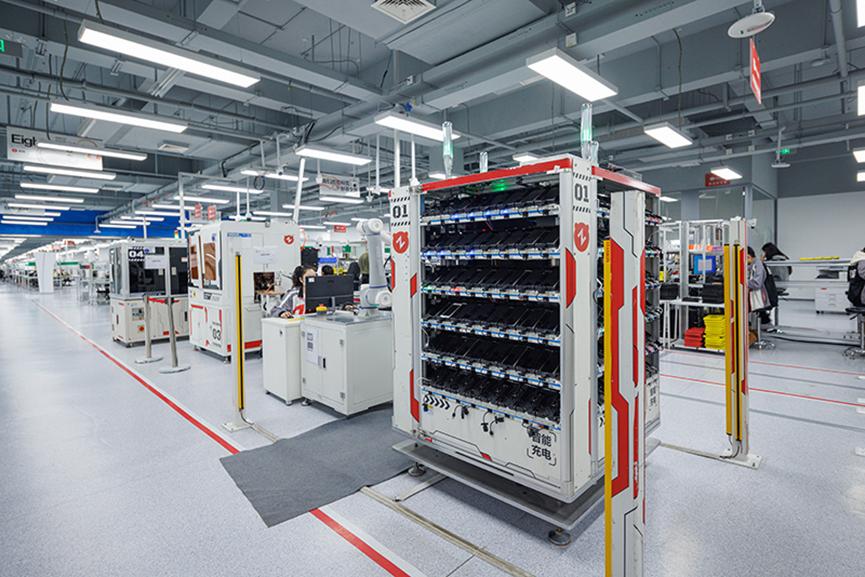
Talking about why he is committed to making heavy-asset supply chain investments, Huang Wei said that the main reason is to "be closer to users and gain more trust. From quality inspection to door-to-door service to opening stores, every step is a step towards the goal of 'building trust'."
Source: Zhuanzhuan
It is reported that Zhuanzhuan has built three major quality inspection centers in Shenzhen, Chengdu and Qingdao across the country, with a total area of nearly 70,000 square meters. In addition, Zhuanzhuan has 17 quality inspection sub-stations across the country and more than 2,500 strictly trained quality inspection engineers.
However, it should be noted that due to the excessively high supply chain cost, after deeply intervening in the transaction chain, on the scale between commercial benefits and user interests, Zhuanzhuan has tilted towards the former.

Source: Douyin
In September 2023, Douyin blogger "Hou Dawan" released a video questioning that Zhuanzhuan had the problem of "dual standard inspection reports". "Hou Dawan" found that due to different inspection standards in Zhuanzhuan's stores, the same second-hand mobile phone would get completely different quality inspection reports and be sold at different prices in different Zhuanzhuan stores.
In fact, Zhuanzhuan not only has the problem of "dual standard inspection reports". Searching with the keyword "Zhuanzhuan" on the consumer service platform Black Cat Complaint, 129,000 complaints can be found. Many users have accused Zhuanzhuan of problems such as distorted inspection reports, shirking responsibility after returns, and forced buying and selling.
Obviously, the persistently high number of complaints largely indicates that Zhuanzhuan's C2B2C model has inherent flaws. Making large-scale investments in the quality inspection link can strengthen the capabilities of "Official Inspection". However, due to the high upstream operating costs, in order to safeguard its own commercial interests, Zhuanzhuan, which acts as both "athlete" and "referee", inevitably puts its own commercial interests above the rights and interests of users.
III. With Aihuishou ahead, Zhuanzhuan's IPO can hardly attract the attention of the capital market
Although derived from 58.com, Zhuanzhuan did not grow only by relying on the strength of its parent company, but introduced multiple rounds of financing. After gaining a firm foothold in the second-hand trading track, IPO has also become a must-answer question for Zhuanzhuan.
However, it should be noted that the C2B2C second-hand trading market does not only have Zhuanzhuan as a heavyweight player. As early as June 2021, Aihuishou, a second-hand trading platform that also focuses on the C2B2C model, has successfully landed in the capital market.
Although Aihuishou's performance has steadily climbed and its cash flow turned positive in 2025, its profit margin is very limited due to the excessively high operating cost of the C2B2C model.
Source: Aihuishou
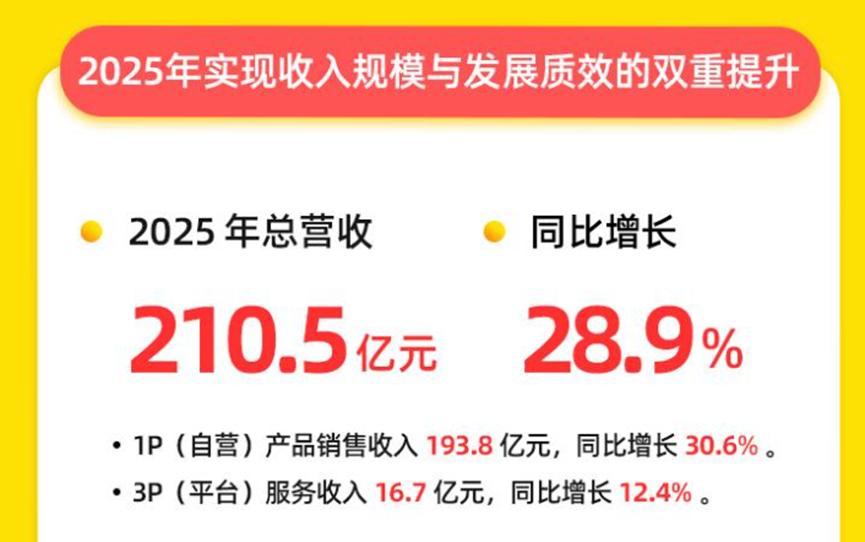
Financial reports show that in 2025, Aihuishou's revenue was 210.5 billion yuan, a year-on-year increase of 28.9%; its net profit was 340 million yuan, and the net profit margin was only 1.62%. A slight mistake may lead to negative growth again. Due to the lack of growth imagination, Aihuishou's stock price has fallen year after year since its listing, with a cumulative decline of about 80%.
At this stage, the capital market no longer blindly pursues corporate IPOs, but pays more attention to companies with strong profitability, core competitiveness and growth potential. It is foreseeable that with Aihuishou standing in the way, coupled with the endless chaos in the second-hand trading industry, even if Zhuanzhuan successfully lands in the capital market, it will be difficult to attract the attention of investors.
Next, if Zhuanzhuan wants to become the favorite of the capital market, in addition to strictly governing the C2B2C model to avoid "trapping" consumers, what it needs to do more is to draw a brand new growth curve.
Source: Zhuanzhuan
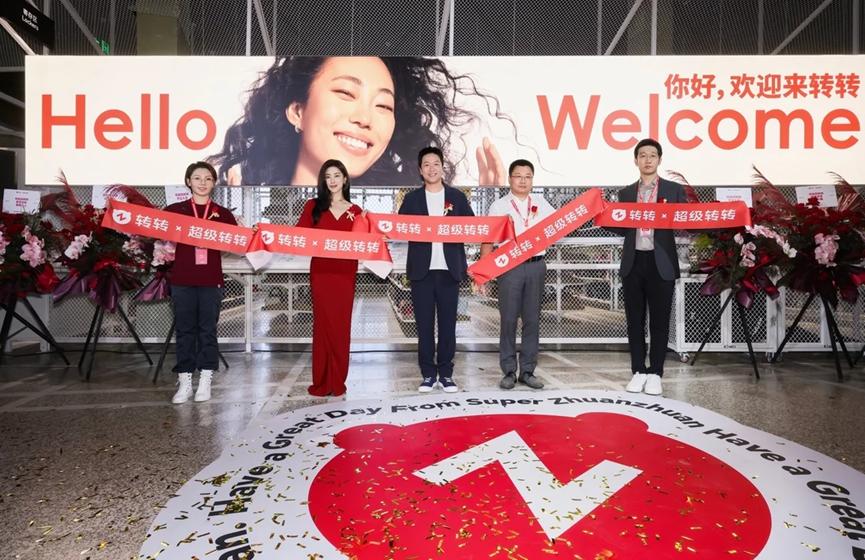
In recent years, in addition to the traditional C2B2C transactions, Zhuanzhuan has carried out many attempts. For example, Zhuanzhuan has opened a number of offline circular stores in Zhengzhou, Dongguan, Beijing, Qingdao and other places. In addition, in November 2025, Zhuanzhuan also stated publicly that AI and overseas expansion are the two major directions for the company's future development, and AI will be introduced into the quality inspection field; the first overseas destination will be Dubai.
It remains to be verified by time whether new businesses such as offline stores, AI technology and overseas markets can become Zhuanzhuan's new growth curve. But what is certain is that the competition logic of the second-hand trading industry is changing. The era of gaining advantages by relying on traffic and scale is fading away. In the future, competition between platforms will focus on dimensions such as product identification, transaction process management, and user trust.
For Zhuanzhuan, IPO is not only a test from the capital market, but also a comprehensive review of its business model. When "Official Inspection" becomes the core selling point, what Zhuanzhuan needs to prove is not only the transaction scale, but also whether it can transform trust, which is the most difficult to quantify in second-hand transactions, into a standardized, replicable and sustainable business capability.