Why are insurance companies still operating at a loss even with the sky-high premiums for new energy vehicles?
In June this year, Xinhua News Agency reported the experience of a NIO car owner renewing her auto insurance. Her ES8 had no claim record and no traffic violation in 2025, but the renewal quotation was nearly 2,000 yuan higher than the previous year, with the total premium exceeding 10,000 yuan [1].
The car owner originally thought she had saved on fuel costs, but unexpectedly the extra money went straight to the insurance company.
When the premium exceeds 10,000 yuan, most people's first reaction is that insurance companies must be making huge profits. In the past few years, the high premium of new energy vehicle insurance has been one of the major pain points of the new energy automobile industry that is comparable to battery safety issues.
However, in 2025, the entire new energy vehicle insurance industry underwrote 43.58 million new energy vehicles, collecting 190 billion yuan in premiums, but the underwriting end suffered a loss of 5.6 billion yuan.
So here comes the question: how on earth did the new energy vehicle insurance sector end up with car owners complaining about high prices and insurance companies complaining about losses at the same time?
Reasons behind the high premium
In 2025, the average new energy vehicle insurance price was 4,360 yuan, about 180 yuan less than that in 2024, but still nearly double the average premium of fuel vehicles.
Why is the price of new energy vehicle insurance so much higher? In a nutshell, in the eyes of insurance companies, new energy vehicles are representatives of high risks.
The most important job of insurance companies is to price risks.
The first factor directly linked to the risk of a car is its driving mileage. New energy vehicles are cheap to charge and not restricted by traffic control policies, so they have more opportunities to go on the road, resulting in higher use intensity and higher average driving mileage.
Among vehicles with high driving mileage, operating vehicles such as online car-hailing services, passenger cars and trucks have always been the key targets of supervision for insurance companies. They have higher accident frequency and greater accident losses, and their premiums are generally more than twice that of private cars.
Due to government guidance and low electricity prices, about 1.3 million cruise taxis and millions of online car-hailing vehicles in China have long been highly electrified.
The collective migration of operating vehicles from fuel vehicles to new energy vehicles has transferred the largest high-risk group in the eyes of insurance companies from fuel vehicle insurance to new energy vehicle insurance.
Apart from the high-risk group of operating vehicles, other vehicles and car owners in the new energy vehicle camp also have more concentrated risk characteristics.
In the era of fuel vehicles, a car with 0-100 km/h acceleration of less than 7 seconds would be called a "hot hatch", while new energy vehicles with 0-100 km/h acceleration of less than 6 seconds are everywhere. The overall new energy vehicles have greater weight and stronger power, and faster acceleration. If misoperation occurs, the time window for avoiding accidents is smaller.
On the other hand, there are more young drivers among new energy vehicle users. The proportion of new energy vehicle owners under 35 years old is 14 percentage points higher than that of fuel vehicle owners [2]. Young drivers with relatively insufficient driving experience but strong impulsive emotions, paired with high-power new energy vehicles, bring higher accident risks.
For fuel vehicles, the overall situation is that the cars are older (higher average vehicle age), the power performance is more conservative (slower acceleration, higher delay), and the drivers are more experienced (higher average age of drivers, larger proportion of veteran drivers). This characteristic from the vehicle to the driver means higher safety for insurance companies.
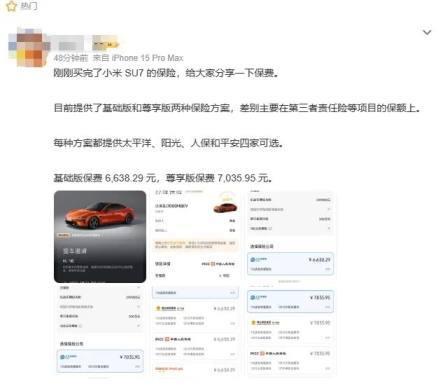
Xiaomi SU7, a frequent target of complaints over high premiums
The superposition of several major risk factors pushes the claim probability of new energy vehicles to about 1.5 times that of fuel vehicles [3], so insurance companies will naturally raise premiums.
But the problem of new energy vehicles is not only that the frequency of claims is higher than that of fuel vehicles, but also that the compensation amount after accidents is higher than that of fuel vehicles.
Different from fuel vehicles whose component values are relatively scattered, new energy vehicles are characterized by high value of single component and high integration, which is friendly to manufacturing but greatly reduces the economical efficiency of maintenance.
For pure electric vehicles, the battery pack can account for up to 50% of the component cost, and the probability of replacing the whole pack instead of partial repair is extremely high. In case of damage caused by collision, chassis scratch or wading, the battery pack is usually replaced as a whole rather than partially repaired. For a 200,000-yuan pure electric vehicle, the claim compensation involving battery replacement may be as high as 100,000 yuan.
In addition to the battery with high parts-to-whole ratio, new energy vehicles tend to adopt various integrated and highly integrated designs, such as the integrated die-casting process that Tesla took the lead in popularizing. This process indeed helps automakers reduce the number of parts and improve manufacturing efficiency, but in case of accidents, the consequence is that "one crash destroys a large area": it seems to be a minor injury from naked eyes, but when assessing the damage, it is found that the whole structure is severely damaged, and the maintenance cost is extremely high.
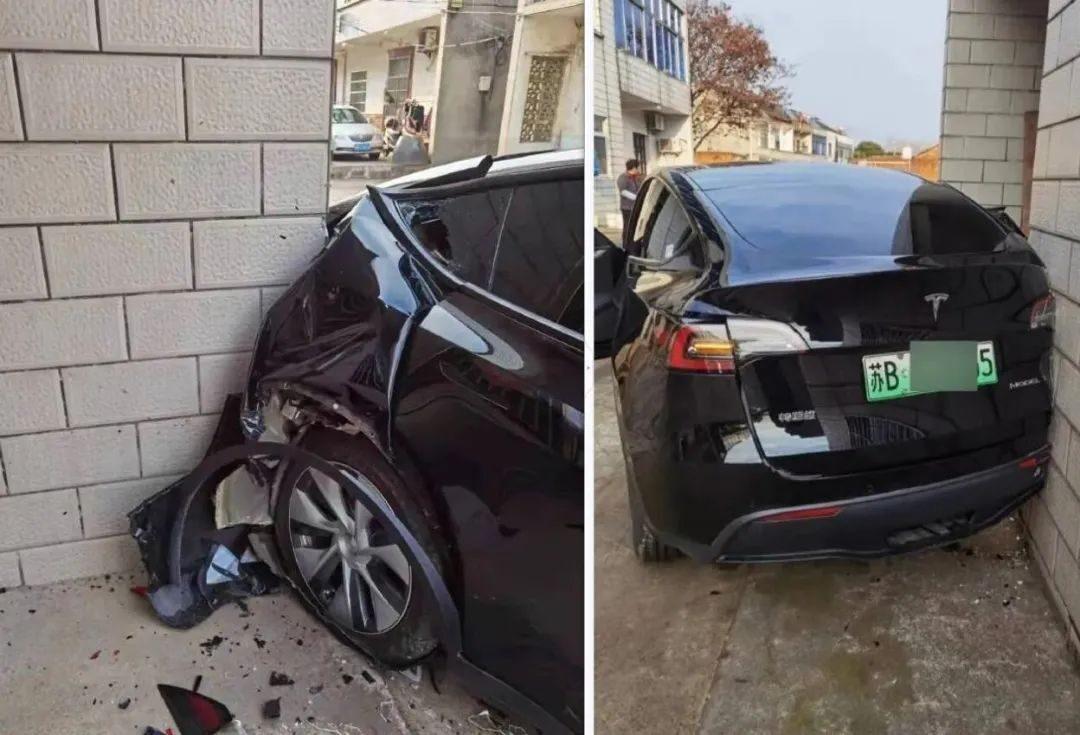
A Model Y purchased for 280,000 yuan has a damage assessment of 200,000 yuan
The surprisingly high maintenance cost is not only the "price of technological progress", but also related to the closure of the new energy vehicle maintenance system. On the one hand, the technology of new energy vehicles is relatively new, on the other hand, automakers want to keep more maintenance profits in their own hands, and the open authorization to the outside world is limited, leading to insufficient competition in the new energy vehicle maintenance market, so the maintenance price cannot be lowered.
Finally, in the two core indicators: claim frequency and compensation ratio, new energy vehicle insurance shows values far higher than fuel vehicle insurance. Insurance companies are not charities, so they will naturally set a high new energy vehicle insurance quotation accordingly.
Even so, insurance companies are still complaining that the price of new energy vehicle insurance does not truly reflect the risk of new energy vehicles. To put it another way:
Our pricing is already very reasonable.
Hidden difficulties behind the losses
Profit data can roughly confirm this statement.
In 2025, China's fuel vehicle insurance made profits for the second consecutive year, while new energy vehicle insurance continued to see revenue growth without profit growth, with a loss of 5.6 billion yuan.
Why are insurance companies still making losses even though the premium of new energy vehicles is so high?
The profit of auto insurance can be roughly calculated as premium income - compensation cost - expense cost, among which compensation is the main cost item. The difficulty of new energy vehicle insurance lies precisely in the excessive compensation.
Due to the inherent shortcomings of low maintenance economical efficiency and the closure of the maintenance system, among 429 large-scale new energy vehicle models in 2025, 143 of them have a compensation ratio exceeding 100% — for every 100 yuan of insurance premium received, insurance companies have to pay more than 100 yuan for compensation, and the loss will be even higher when operating costs are included.
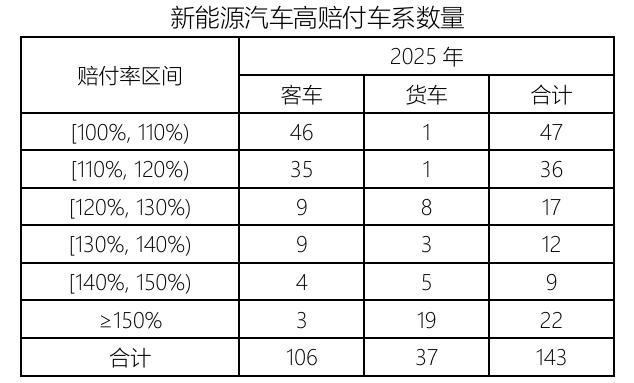
Picture from the official website of China Association of Actuaries
Zhang Xiaolei, Executive Vice President and Secretary-General of China Association of Actuaries, released a set of data in 2024: the average risk cost of new energy vehicle insurance is 2.2 times that of fuel vehicles, but the average premium is only 1.7 times that of fuel vehicles. The compensation cost cannot be reduced, and insurance companies have not collected enough premiums.
To deal with the problem of high maintenance cost of new energy vehicles, insurance companies originally need more accurate pricing to hedge risks. However, the core ability of insurance companies to price risks is restricted by policies that are updated slowly, insufficiently open data, and the fast-developing industry at the same time.
Insurance is a business based on actuarial science. Insurance companies with more accurate risk pricing are more likely to make profits.
However, from 2021 to the first half of 2025, the policy stipulates that the independent pricing coefficient of new energy commercial auto insurance is [0.65-1.35], which means that insurance companies can, based on the risk assessment of users, offer a maximum 35% increase or a maximum 35% discount (multiply the base premium by the no-claim discount coefficient of 0.4-2.0).
Compared with the independent pricing coefficient of [0.5-1.5] for fuel vehicle insurance, the narrower independent pricing coefficient of new energy vehicle insurance seems to maintain fairness, but it also weakens the ability of insurance companies to accurately reflect risks through prices:
Experienced veteran drivers may not make claims for several years, while novice drivers or aggressive drivers may make claims several times a year. The difference in compensation cost brought to insurance companies can reach dozens or even hundreds of times, but the narrow independent pricing coefficient forcibly limits the premium difference to less than 10 times.
The result is that low-risk groups are forced to pay for high-risk groups: high-risk models and car owners do not pay enough premiums corresponding to their risks, while low-risk car owners become the party that bears the cost, forced to pay more for transfer payment. Those new energy vehicle owners who have no claim record but face rising premiums are very likely to be "averaged" in this way.
But low-risk car owners are not fools. Facing the excessively high premium, some low-risk models and car owners will choose to buy only the mandatory traffic insurance and give up commercial insurance. High-risk car owners who take advantage of the low premium will tend to continue to buy insurance. For insurance companies, this is the last situation they want to see: high-quality customers are lost, and the proportion of low-quality customers increases.
At the same time, the premise for insurance companies to accurately price risks is sufficient and reliable data accumulation. But this premise does not exist in the new energy vehicle insurance business of most insurance companies.
The profitability of fuel vehicle insurance largely depends on the maturity of the industry. With hundreds of years of experience abroad and more than 20 years of experience in China, all kinds of information of a fuel vehicle, such as reliability, maintenance cost and user portrait, have ready-made databases. Insurance companies have long found the sweet spot of what premium can maximize profits.
However, the explosive development of new energy vehicles in China has only lasted for 5 years at most. Not only is the industry too new to accumulate data, but new energy vehicle automakers have a much stronger desire to control data than in the fuel vehicle era. Data that have a decisive impact on premiums, such as battery health, daily driving mileage, driving behavior, and assisted driving usage/handover rate, are firmly controlled by automakers and will not be easily disclosed to the outside world.
Without sufficient data to establish a correct actuarial model, insurance companies can only constantly adjust their business through trial and error (and losses).
However, the new energy vehicle industry is so competitive that "quickly developed immature vehicles" frequently appear on hot searches, which brings new trouble to insurance companies: by the time insurance companies finally piece together data and work overtime to establish an actuarial model and premium rate for a certain model, the model has already been updated.
Not collecting enough premiums, not getting the required data, and the data obtained is already outdated, this is the dilemma faced by most new energy vehicle insurance businesses of domestic insurance companies, and it is also the root cause of losses.
It cannot and will not keep losing money forever
From the data point of view, new energy vehicle owners as a whole have taken advantage of new energy vehicle insurance in the past few years, which gives people a sense of satisfaction that vulnerable consumer groups gain benefits from capital.
However, the reason why insurance can play the role of balancing risks through crowdfunding is based on the premise that all parties can make profits. If the operation is maintained by the continuous losses of insurance companies, the final result may be the withdrawal and refusal of insurance by insurance enterprises, which will affect social fairness and stability.
Therefore, when the new energy vehicle insurance industry faces long-term losses, the government is the first party that cannot sit still.
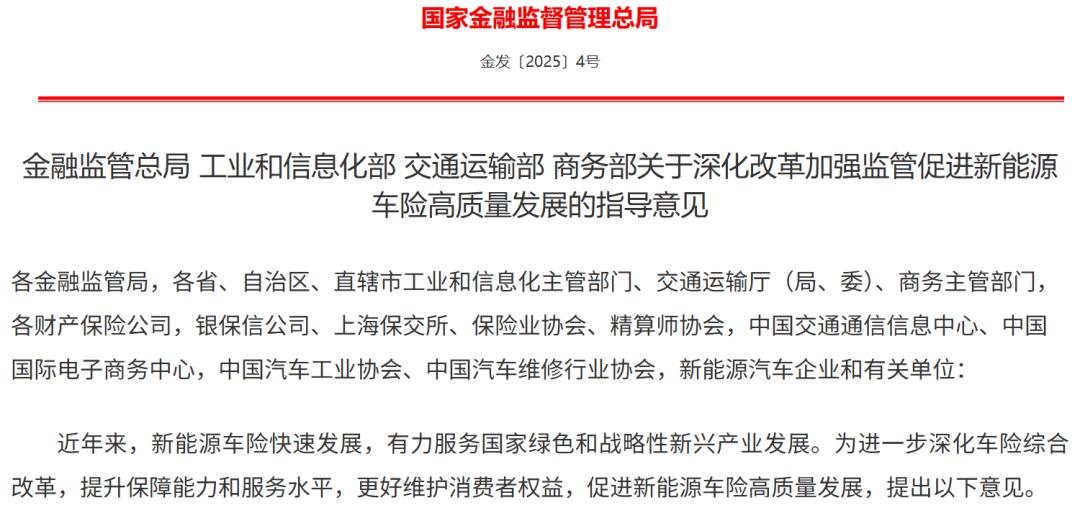
Four government departments issued documents to solve the problems in the new energy vehicle insurance industry
In January 2025, the State Administration of Financial Regulation and three other ministries and commissions jointly issued the "Guiding Opinions", deciding to expand the independent pricing coefficient of new energy vehicle insurance to [0.6-1.4], to help solve the profitability problem of the new energy vehicle insurance industry. In September 2025, the official adjustment of the coefficient was finally implemented. Although it failed to save the profitability of the new energy vehicle insurance industry in that year, it set a precedent:
The regulatory idea of new energy vehicle insurance has changed from providing full support through strong price intervention to granting higher freedom to insurance companies, to achieve more accurate pricing through market games, so as to realize overall fairness.
Following this idea, the independent pricing coefficient of new energy vehicle insurance has been adjusted to [0.55-1.45] this year, which is only one step away from that of fuel vehicle insurance.
In addition to loosening control over premium pricing, the government has also taken measures to address the high maintenance cost of new energy vehicles, requiring automakers and power battery enterprises to open technical information and break the closure of the maintenance system. Furthermore, local governments such as Shenzhen have also begun to promote cooperation between automakers and insurance companies, guiding them to move from mutual precaution to equal mutual benefit:
The two sides open data permissions to each other. Automakers can use claim settlement data to feed back vehicle design, and insurance companies can use battery health and driving behavior data for pricing and damage assessment.
For insurance companies, in addition to the conventional actions of reducing costs and increasing efficiency, their development in recent years is more like a battle royale game:
Exchange losses for scale, exchange scale for bargaining power in the maintenance link and big data with sufficient coverage, then use big data to build a more accurate actuarial model, and then continuously reduce losses, turn losses into profits, and squeeze competitors out of the market.
The three leading enterprises in the new energy vehicle insurance sector, PICC Property and Casualty, Ping An Property & Casualty, and China Pacific Property Insurance, have almost fully followed this path. In 2025, although the industry is still making losses, the three enterprises jointly occupied 76.1% of the market share [4], and successively achieved positive underwriting profits.
Outside of them, more small and medium-sized insurance enterprises can neither get data nor obtain high-quality insurance policies, and are shrinking their new energy vehicle insurance business.
But this does not mean that the industry competition of new energy vehicle insurance has reached the final stage, it is more like approaching the halftime.
When