Just now, the "AI lifeline" relied on by tens of millions of developers across the globe changed ownership overnight.
An epoch-making acquisition has finally been settled!
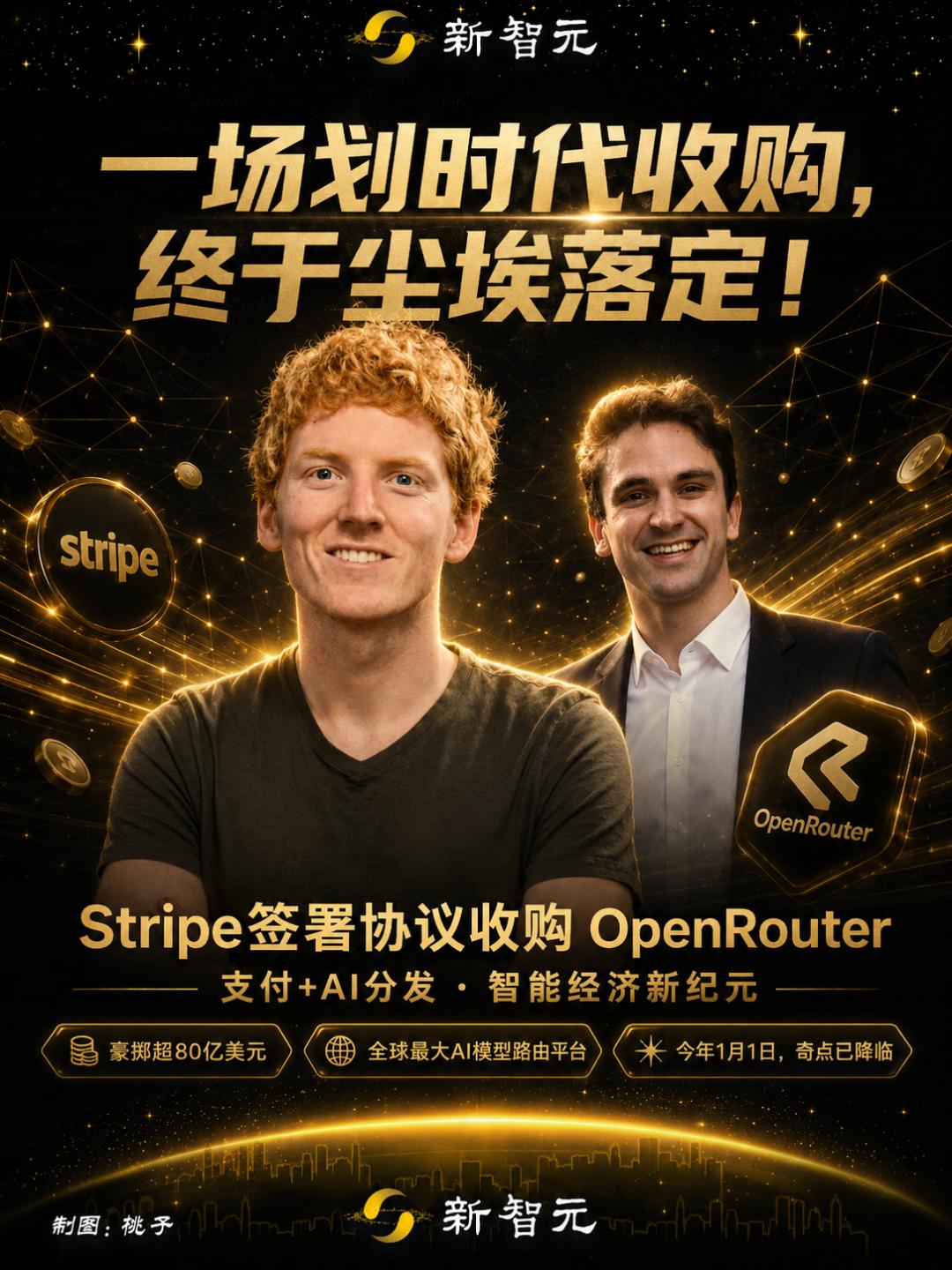
Today, the CEO of Stripe officially announced that an agreement has been signed to acquire OpenRouter.
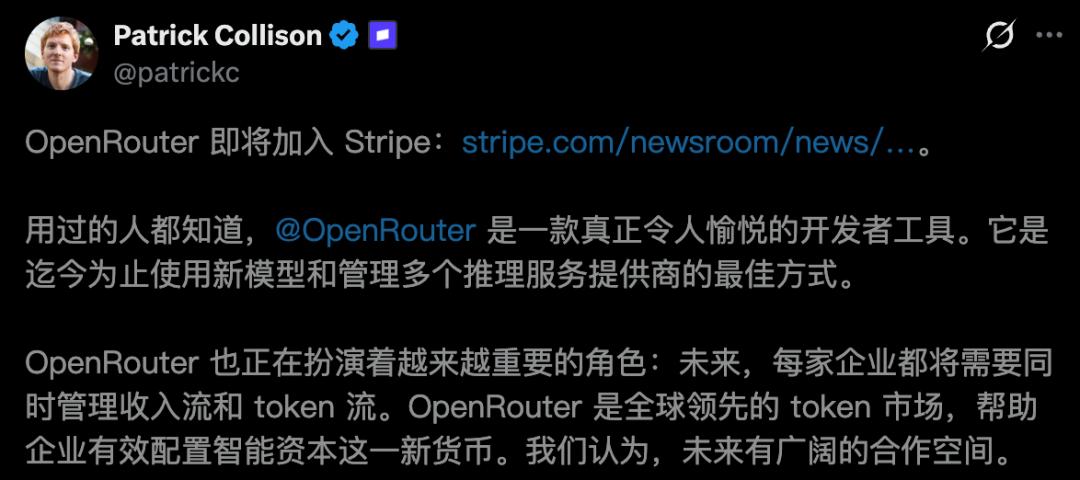
This "marriage" is rumored to be valued at over 8 billion US dollars.
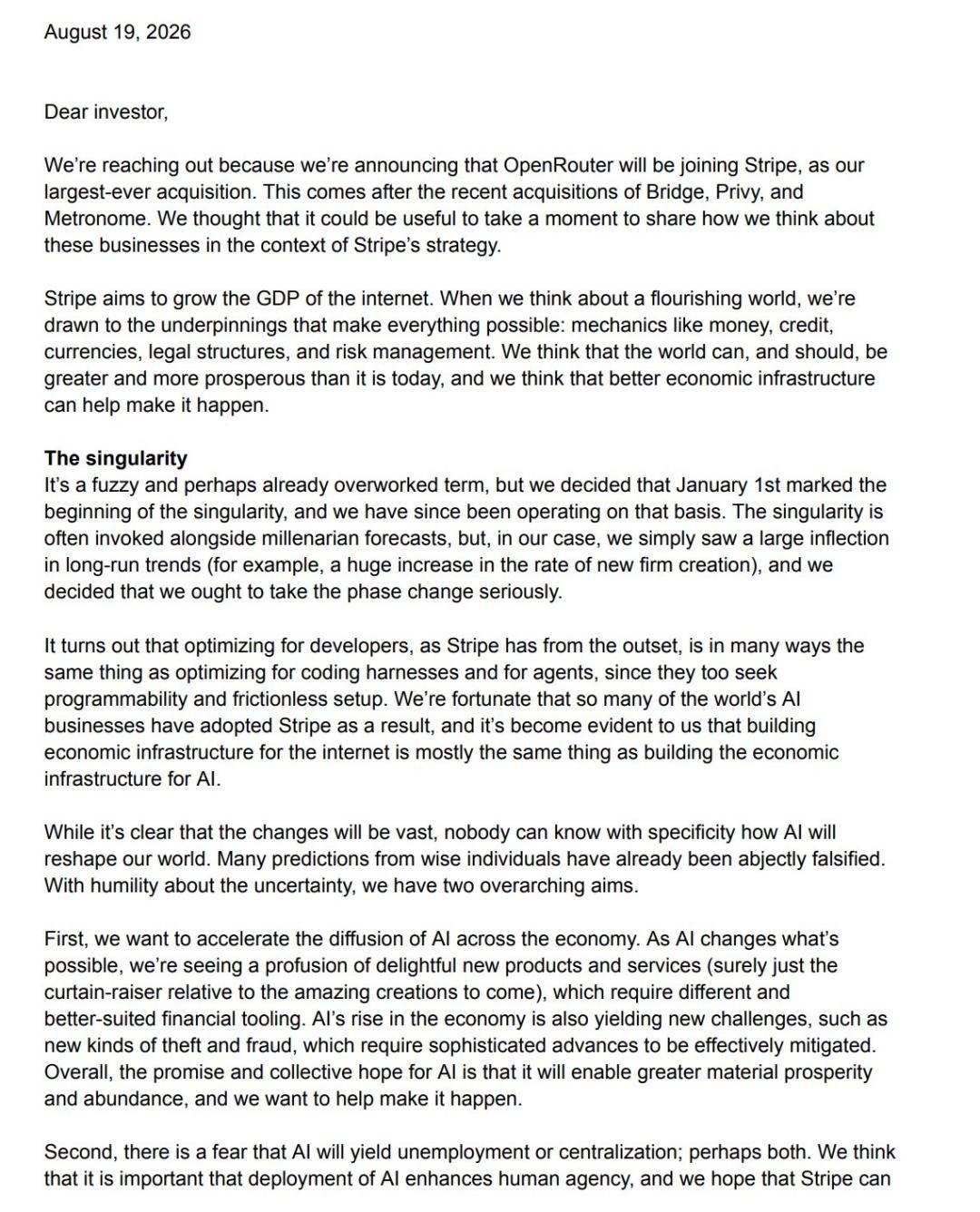
On the same day, an internal letter from Stripe to its investors revealed a key detail —
On January 1 this year, the Singularity has arrived.

A payment giant has acquired the world's largest AI model distribution entry.
From then on, the "AI lifeline" of more than 10 million developers around the world has changed hands overnight.

Planning to Spend 8 Billion US Dollars to Buy the World's Largest "Token Entry"
In the official blog, CEO Patrick pointed out the truth of the future business form in one sentence —
In the future, every enterprise needs to manage two things at the same time: revenue stream + Token stream.
The Internet solved the problem of "how money flows". Stripe rose to prominence by turning the complex financial network into several lines of extremely simple APIs.
Now, the AI era is spawning an increasingly huge "Token stream".
Developers have to choose between different models and different inference service providers every day —
Which one is cheaper, which one is faster, which one is more stable at the moment, and which one is the most suitable for this task.
OpenRouter emerged at this moment, and it has long been regarded as the "Stripe of the LLM world" in the industry.
It completely puts an end to the nightmare of programmers, people no longer have to painstakingly go through the documentation of OpenAI, Anthropic and Google one by one.
With one line of API access, you can directly connect to more than 400 models and more than 80 inference providers.
Each task request can achieve millisecond-level dynamic distribution: accurately match the optimal solution, automatically switch away when any provider goes down, and stay online forever.
OpenRouter does not produce intelligence, but it determines where intelligence flows.
It is not difficult to see that what Stripe spent a lot of money to acquire this time is essentially a counter that "exchanges money for intelligence".
400 Large Models, 10 Trillion Tokens Per Day
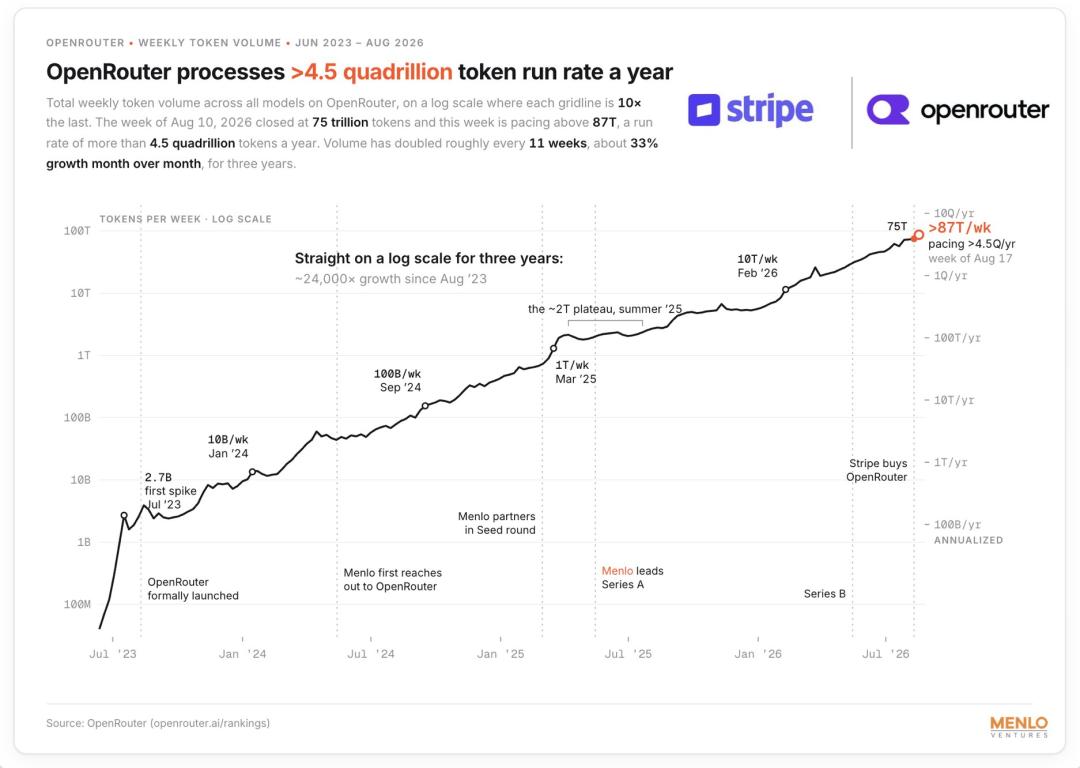
As the world's largest Token market, OpenRouter's growth curve is very impressive.
Now, it processes more than 10 trillion Tokens every day, and more than 10 million developers around the world are using it.

Since its establishment, its inference volume has increased by at least 10 times every year. According to statistics, the annual total exceeds 45 quadrillion.
An Experiment Three Years Ago Led to the Decision to Start a Business
However, if we turn the clock back three years, all of this was just a tiny, insignificant bud.
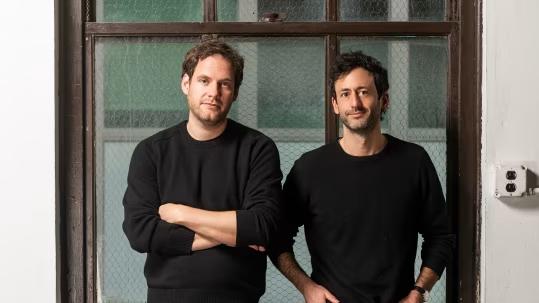
Founder Alex Atallah was born into a cross-cultural family in Colorado, his father is a Colombian immigrant and his mother is American.
He obtained a bachelor's degree in computer science from Stanford University, and his first job after graduation was to work as a programmer at Palantir.
What really prompted him to make up his mind to break through was the two major open source releases in the spring of 2023.
In February of that year, Meta open sourced LLaMA.
Atallah recalled that the first-generation LLaMA could not carry out conversations at all, but it beat GPT-3 in multiple benchmark tests, while its size was only one-tenth of GPT-3.
Just one month later, Stanford University released Alpaca: researchers fine-tuned LLaMA using synthetic data generated by ChatGPT.
As a result, LLaMA, which originally only knew how to continue writing text, began to learn to answer questions like ChatGPT.
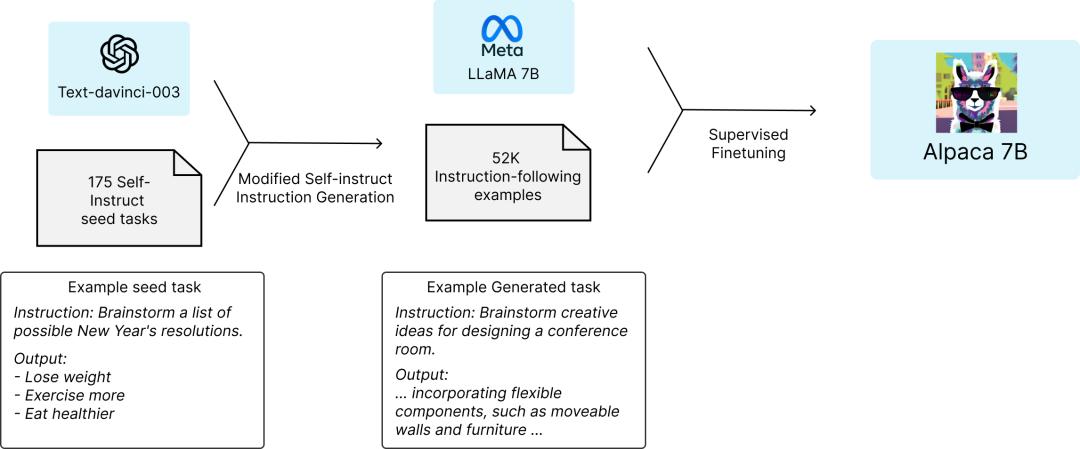
The total cost to complete all of this was less than 600 US dollars.
Atallah admitted that it was the Alpaca project that became the catalyst for him to take the decisive step.
His reasoning logic is very clear: if a capable model can be built with 600 US dollars, the future will inevitably be an era of thousands of models running concurrently. And behind this, a super marketplace is definitely needed.
At that time, the whole industry was frantically betting on "who will win": OpenAI, Google, or other giants, while what Atallah bet on was another thing —
No one can win all, and the large model market will eventually become fragmented.
Three years later, what Stripe spent more than 8 billion US dollars to acquire is essentially this god-level prediction.
The Singularity Has Come, No Rush to Go Public
This transaction also has a very interesting background.
Stripe wrote a very bold sentence in its letter to investors — January 1 this year marks "the beginning of the Singularity".
The "Singularity" mentioned by the founder is the moment when a long-term trend takes a fundamental inflection point.
It was also in this letter that they told investors that in such a critical period, remaining private is a more favorable corporate structure.
In other words, the Stripe IPO that the market has been waiting for many years will most likely have to wait longer.
This is not because Stripe does not have the qualifications to go public.
At the same time, they disclosed that their revenue in the first half of this year increased by 41% year-on-year, and free cash flow increased by 43%.
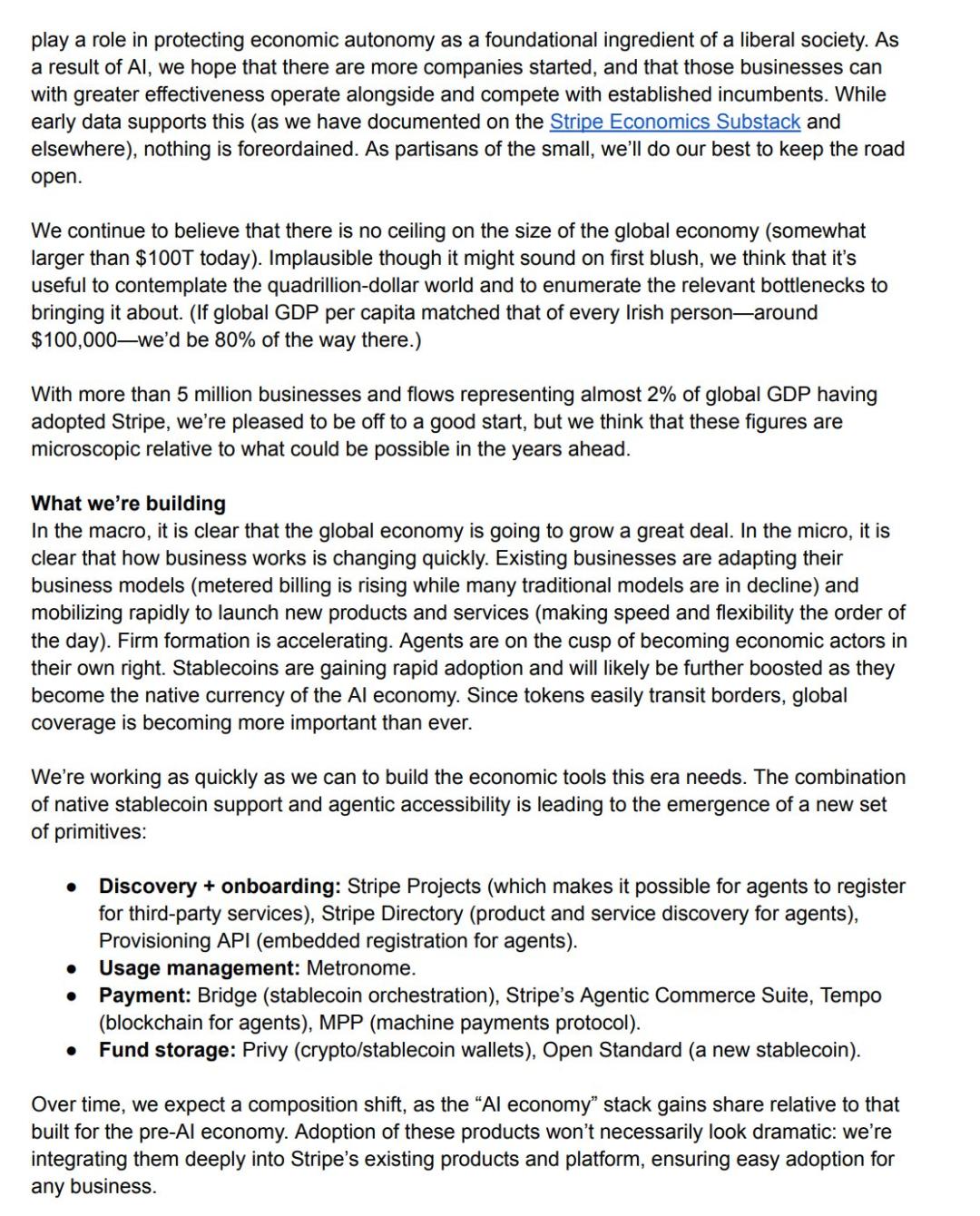
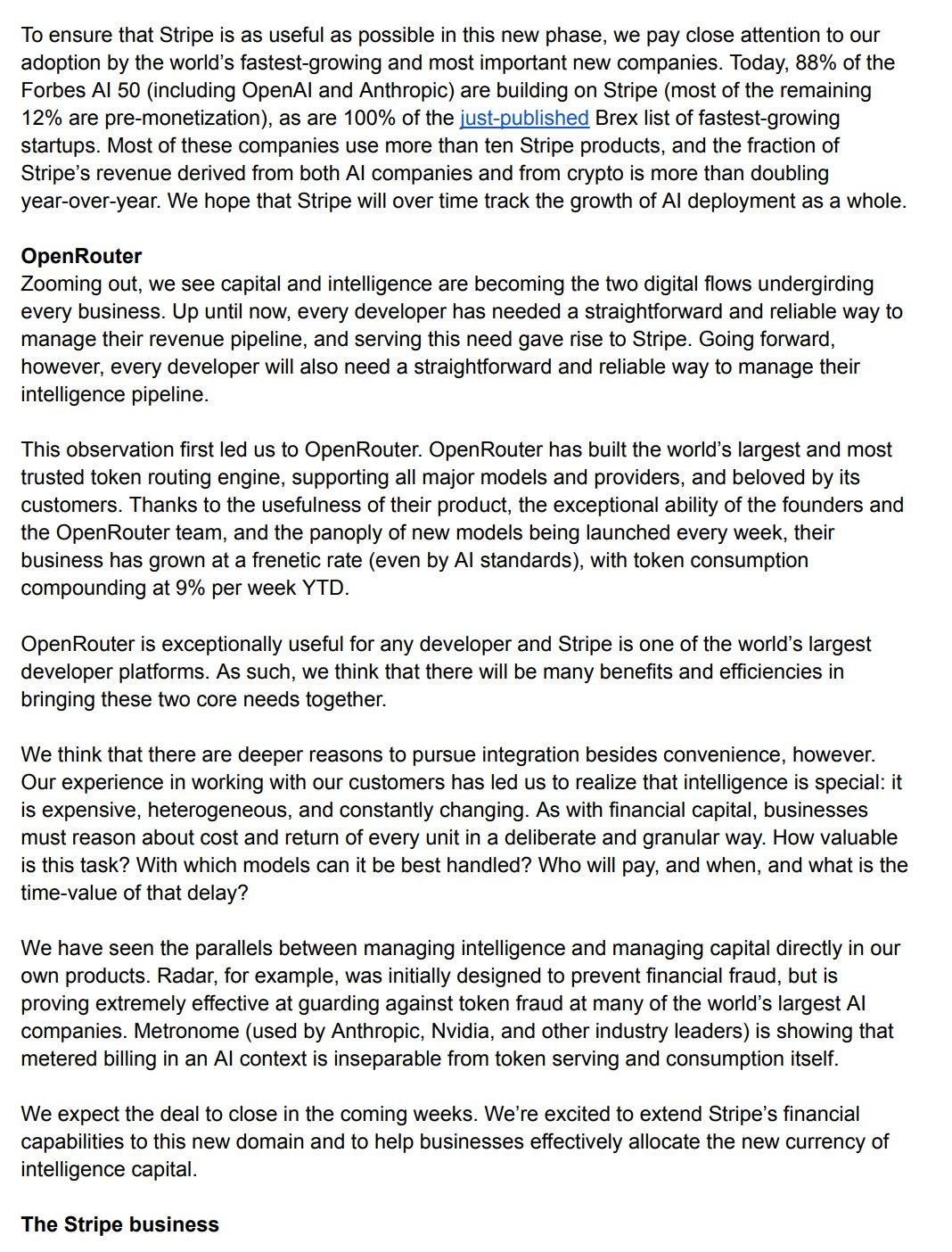
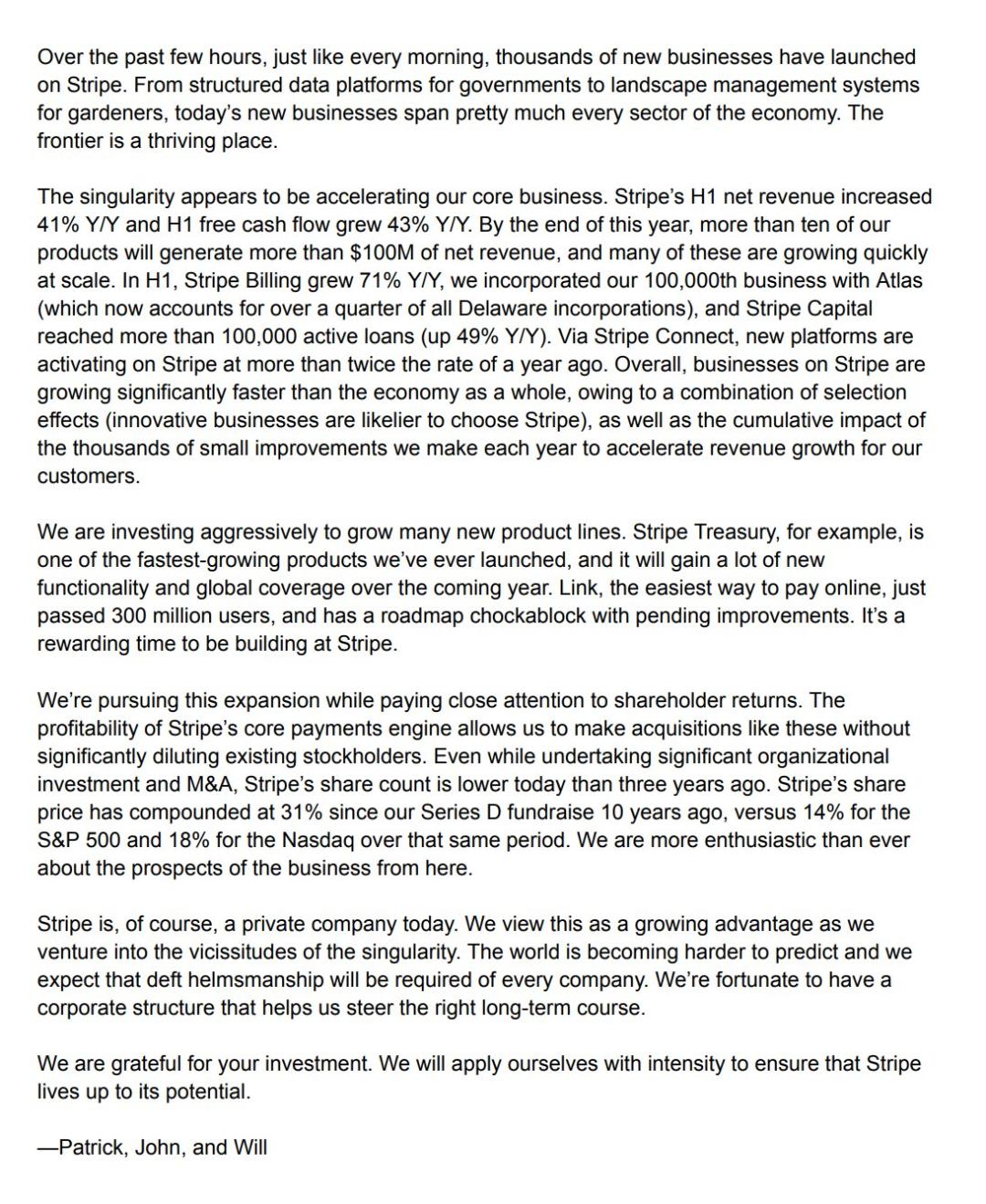
Stripe's consideration is that if AI is rewriting the entire Internet economic infrastructure, going public now will limit the speed of its bets.
What they are betting on is far larger than a single IPO.
Token Is Becoming Another Kind of "Currency"
When talking about this transaction, a16z partner Martin Casado used a very radical statement:
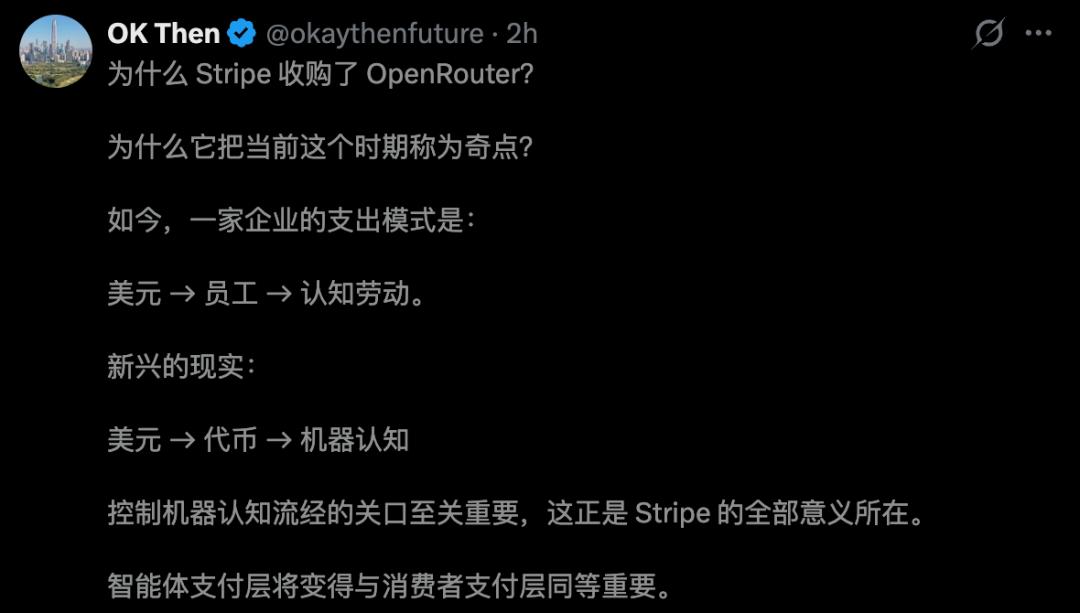
Tokens are the new dollars.
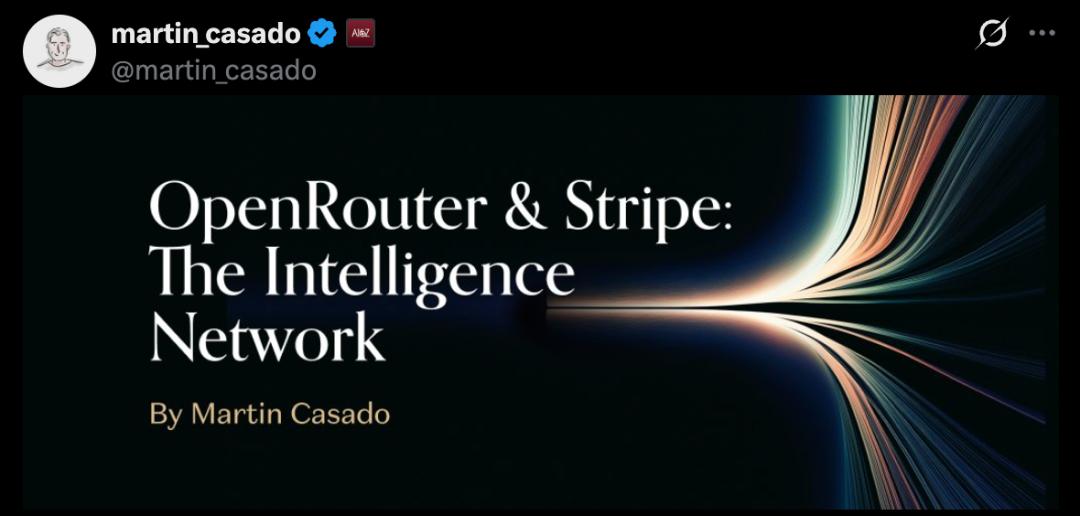
The real meaning of this sentence is: AI is making "intelligence" a factor of production that can be standardized, measured, called, exchanged and settled for the first time.
In the past, if a company wanted to get more "intelligence", it could only hire more people.
Now, it can buy Tokens.
If you need to write code, call the code model; if you need reasoning, call the reasoning model; if you need search, call the search model.
Electricity enters the data center and is converted into Tokens; Tokens then enter enterprises and are converted into code, customer service, design, research, sales and even decision-making.
As a result, a new economic network is beginning to emerge.
Model companies produce intelligence, application companies buy intelligence, and someone in the middle needs to complete pricing, routing, risk control, scheduling and settlement.
This set of payment infrastructure allows "intelligence" to flow freely between companies.
Therefore, Martin calls the merger of OpenRouter and Stripe an "Intelligence Network" —
A network that allows global AI companies to exchange intelligence.
No model can dominate forever, but there will always be a need for a "scheduler" that stands above all models.
The scepter of the new world will belong to the person who determines the flow of "intelligence".
References:
https://stripe.com/zh-sg/newsroom/news/stripe-agrees-to-acquire-openrouter
This article is from the WeChat official account Xinzhiyuan, author: Taozi, published with authorization from 36Kr.