Young people have turned their noses up at those "pseudo-Hilton" wannabes.
01
The summer vacation is drawing to a close, and my nephew plans to arrange an off-the-beaten-path travel trip with his friends to avoid crowds.
He compared several small cities including Jinhu in Jiangsu and Ningguo in Anhui repeatedly, and accidentally found that these county-level markets that were rarely associated with international hotels in the past have seen international brands such as Hilton open their outlets one after another in recent years.
But when he actually tried to book a hotel, my nephew was confused by the information displayed on his mobile phone screen.
Take Ningguo in Anhui as an example, the local Hilton Garden Inn costs just over 300 yuan that night, which is almost at the same price level as local chains such as Atour and Ji Hotel nearby. A closer look shows that the guest ratings of the local Hilton Garden Inn, Ji Hotel and Atour on OTA platforms are all 4.8, and the number of reviews for local chains like Ji Hotel is even higher.
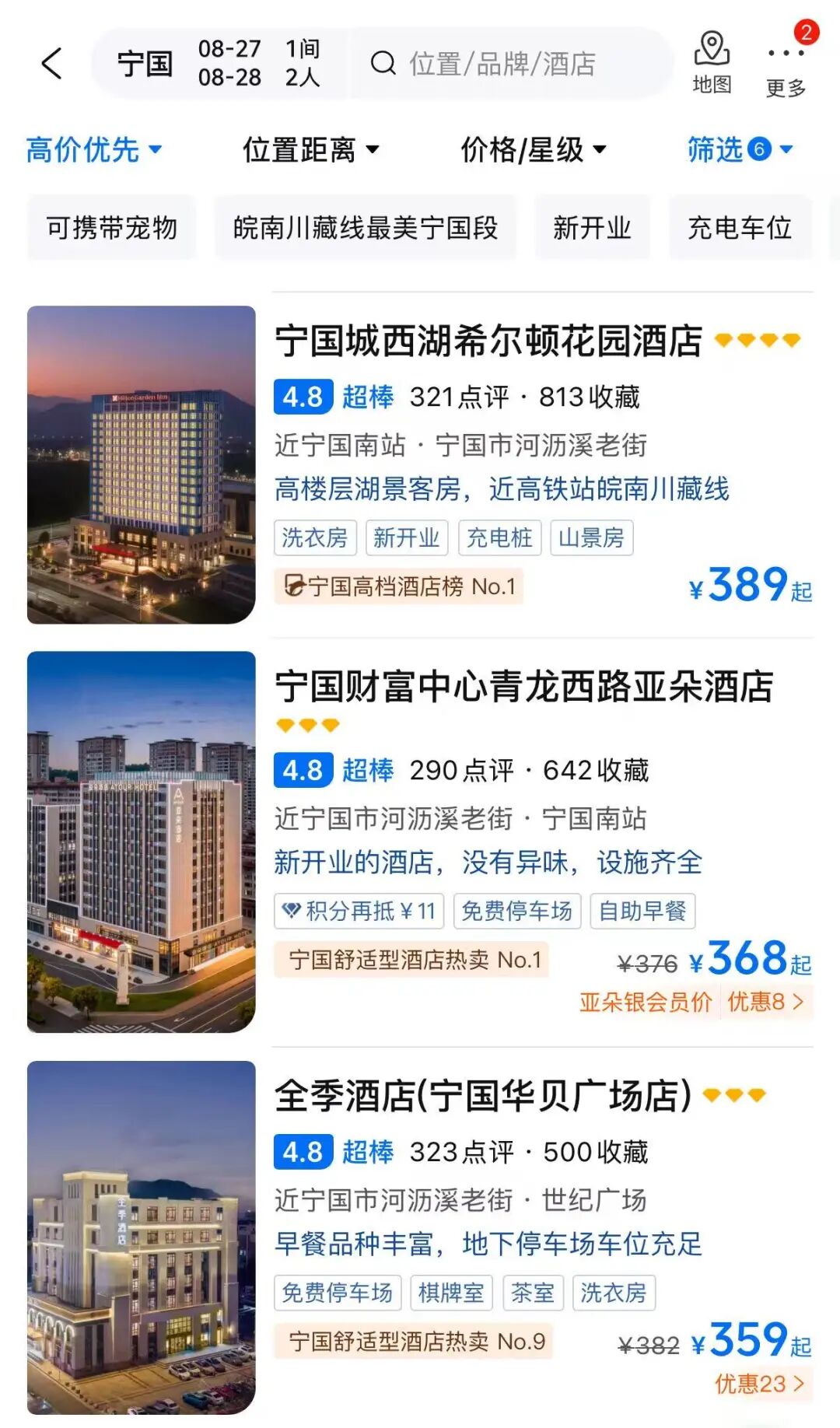
My nephew held up his phone and asked me, since when did Hilton sell at the same price as local hotels?
I told him that the "Hilton" here is not the same as the traditional Hilton hotels he remembers, which usually cost more than 1000 yuan a night and are equipped with executive lounges and banquet halls.
Hilton Garden Inn is a select-service brand under Hilton Group. It can be simply understood as a franchise brand that removes the heavy asset and heavy service parts of traditional high-star hotels, and only retains the core functions required for accommodation. It is not surprising that it is priced at more than 300 yuan in third- and fourth-tier cities.
Then I told him that many frequent business travelers prefer to stay at such foreign chains, mainly because they have a mature membership system behind them. They can accumulate points and retain membership levels after enough stays, which can also be used when they travel to other cities.
My nephew was even more confused after listening.
He stays in hotels for less than dozens of nights a year, and has little interest in membership level retention and points. When booking a hotel, he first checks the opening year of the hotel, then scrolls through several real photos taken by guests, to see if the breakfast is good and if he can wash his clothes at night. These practical details are far more important than the status symbol brought by foreign brands.
Since all these hotels cost 300 to 400 yuan, he would rather choose a local chain that he has stayed at before and roughly knows what to expect.
This kind of sentiment is not uncommon on social media.
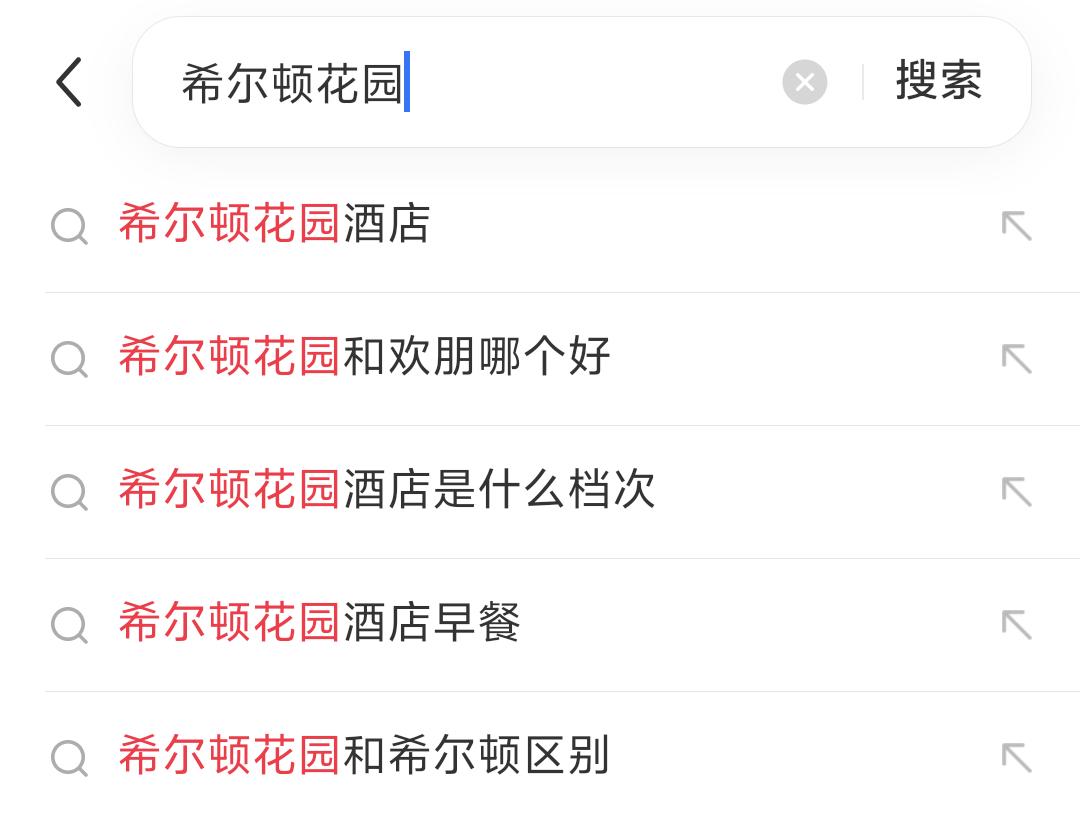
When you search for Hilton and Marriott, there will always be a lot of posts about identifying genuine and fake brands and complaints. Some people are distinguishing imitators with confusingly similar names, while others have checked into official regular stores, but still wonder after checking out why the hotel they stayed at is so different from the Hilton they imagined in the past.
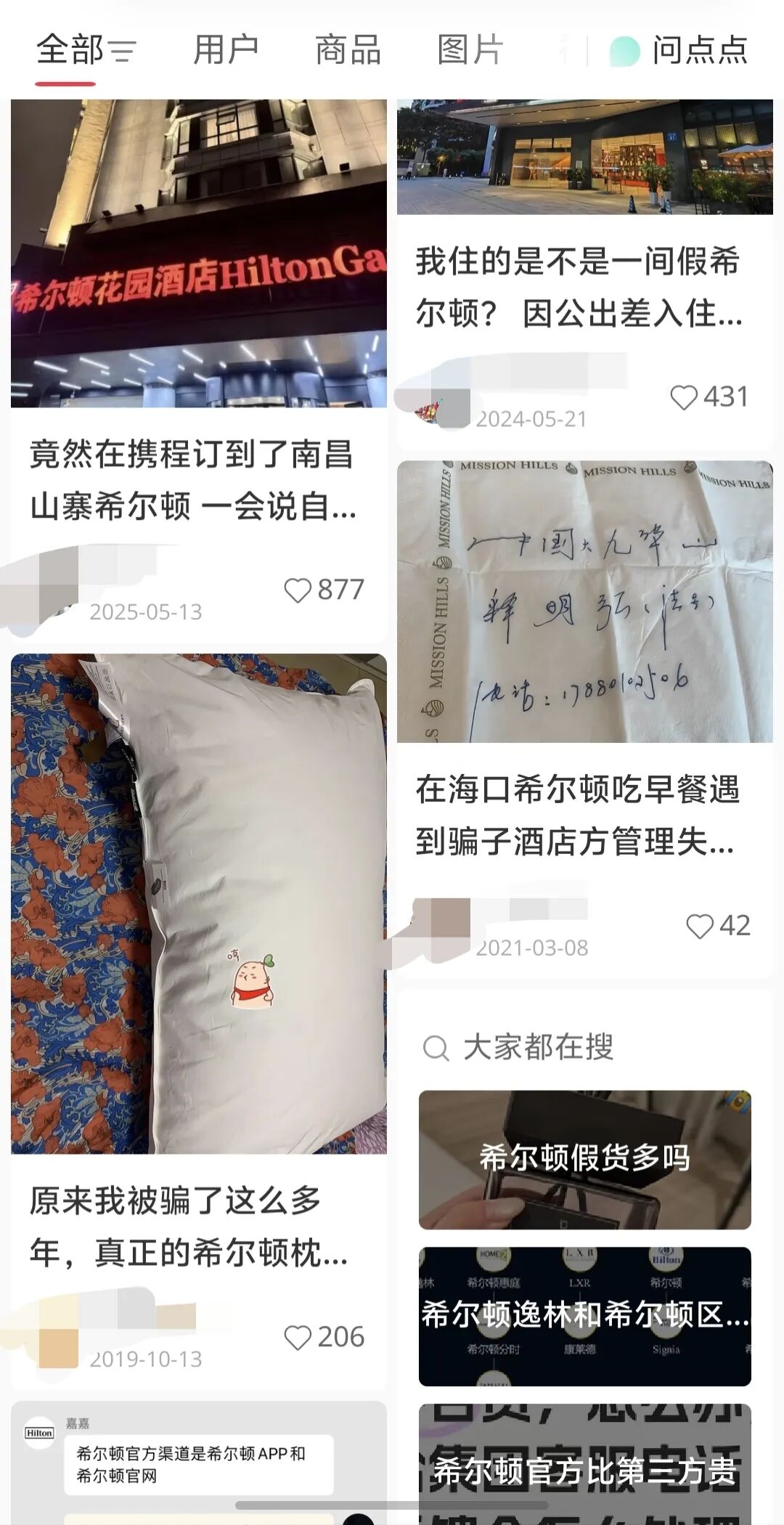
The sense of gap sometimes even comes from very small details.
Not only for franchise brands like Hilton Garden Inn, with the prevalence of cost reduction and efficiency improvement, some foreign five-star brands only provide bottled water like Binglu and Chunyue in guest rooms. In contrast, local chain hotels such as Ji Hotel and Atour at least provide Nongfu Spring in their rooms.
In addition, the material of disposable slippers has become visibly thinner, welcome fruits have been quietly downgraded, and the basic courtesy benefits of many foreign brands have also shrunk significantly inadvertently.
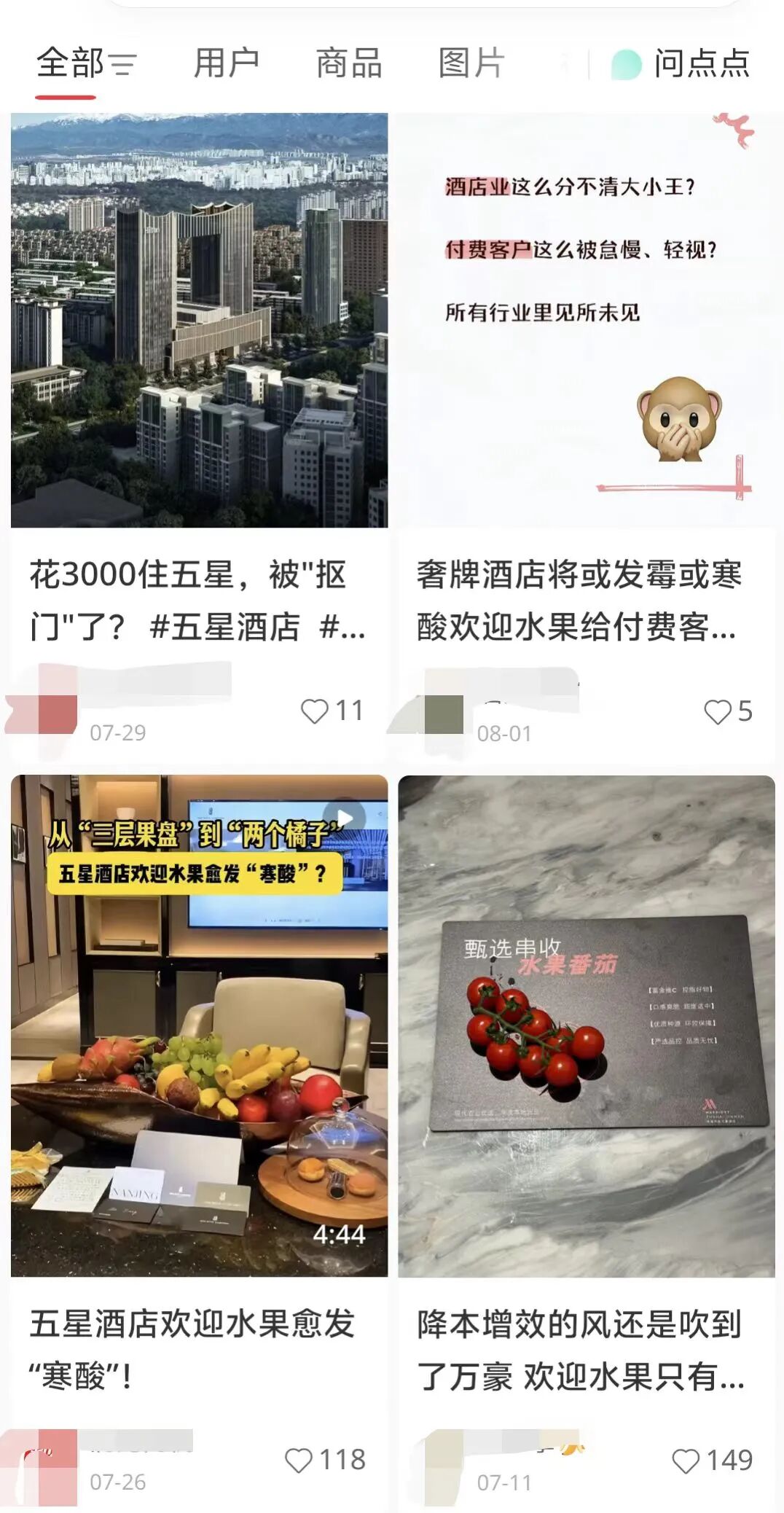
Especially in recent years, local hotels have become increasingly adept at catering to Chinese people's accommodation habits, and the old method of simply judging the hotel grade by international brands has become less and less applicable.
My nephew's generation doesn't even bother to figure out whether a hotel belongs to Hilton, Marriott or any other international group. They care more about whether they can sleep comfortably with the 300 to 400 yuan they spend.
02
Young consumers are gradually disenchanted with some foreign chain brands that overpromise and underdeliver, and there are deeper changes behind this trend.
A while ago, I talked with many hotel investors, and when it comes to international brands, everyone has an increasingly obvious feeling that the entry threshold is going down, and this trend is completely irreversible.
Lao Huang, a franchisee who has opened six or seven local and foreign mid-to-high-end chains in East China, recalled that when he wanted to put up an international hotel sign in the past, he tried every means possible, because foreign brands had very strict requirements on property area, public area configuration and hardware standards, and the transformation would cost a huge sum of money.
Nowadays, as reported by TravelPress last week, as international hotel groups are paying more and more attention to China's huge stock hotel market, they have successively launched a variety of fancy new brands, put on the name of international brands, and adopted the light transformation mode of franchising to lower their stance and compete for franchisees.

Marriott recently introduced its franchise brand Marriott Bonvoy Hotels to the Chinese market
For old hotels that have been in operation for many years, foreign brand parties have provided more and more flexible transformation plans, allowing some properties that were previously difficult to meet the traditional international high-star standards to only replace the soft furnishings and logos required by the brand, and then reopen with the new brand sign after a few months.
At first glance, this is a cost-effective choice for property owners, but problems arise after the hotel actually opens.
The conditions of stock properties vary widely, and the amount of money the owners are willing to invest is also completely different. When the same brand is settled in different cities, the final presented guest rooms, public areas and even service levels are naturally difficult to maintain the high consistency as in the past.
It is worth mentioning that the reduction of investment threshold does not necessarily mean higher returns.
If the room rate premium and occupancy rate after branding cannot cover the brand fee, relatively higher operation requirements and commission fees of foreign hotel brands, the revenue per available room and investment return may even be lower than that of a mature local economy chain.
Lao Huang said frankly that especially for many franchisees who have been operating economy or ordinary mid-range hotels for a long time in the past, when they suddenly take over the international mid-to-high-end brand system, their service experience cannot keep up, and inherent problems such as poor sound insulation will not disappear with light transformation, which will still drag down the selling price and occupancy rate of the stores.
After a guest pays 500 yuan to check in, he may find that the guest room of the local brand next door priced at 400 yuan is not only more comfortable, but also provides laundry service, and the breakfast also fits his own habits. It is inevitable that he will doubt whether this foreign brand sign is worth the extra 100 to 200 yuan.
Speaking of which, the post-80s and post-90s consumers were willing to pay more for international brands, because when they arrived in a strange city, they didn't need to study the hotel carefully. As long as they saw the familiar sign, they roughly knew what level the rooms and services would be.
However, compared with the past when international hotel chains such as Hilton and Marriott were mostly directly managed by management teams appointed by the brand, under the current foreign franchise model that makes superficial changes without adjusting the core, most old properties only change their signs to foreign ones, while the operation teams remain the same as before, so the service quality is very likely to be a random draw.
But once the international brands that symbolize high quality also require people to check the specific brand, opening year, and search for reviews on social media to know what they are like, the brand credit of international hotels that used to be the most valuable has begun to loosen.
Seemingly small disputes such as cheap mineral water and thinner slippers are also constantly amplified under this expansion logic.
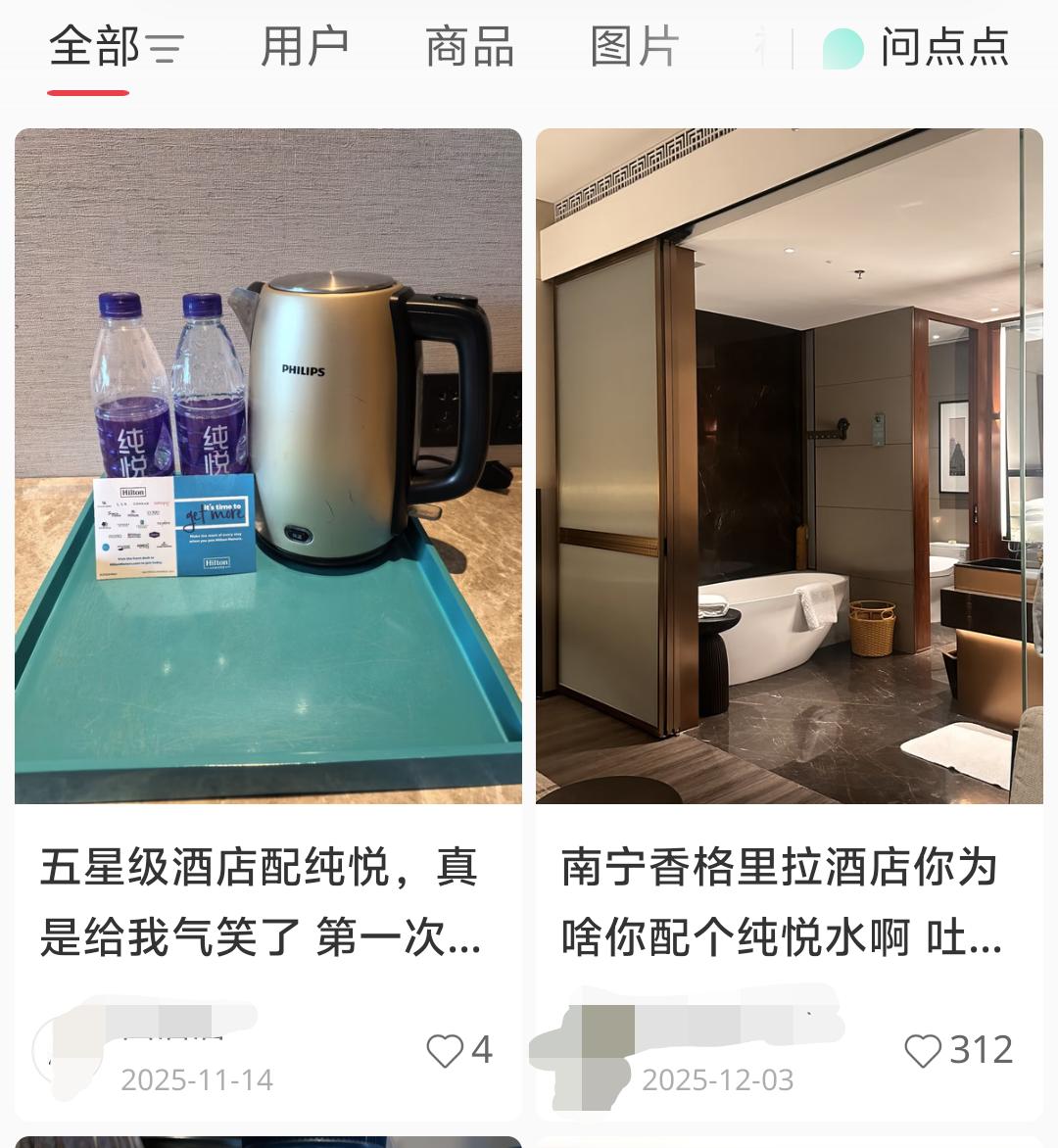
After all, the post-2000s guests who started working in the era of economic slowdown have not had time to establish faith in Marriott and Hilton, and they are even more unwilling to be exploited by foreign brands under the franchise model.
In the past, the rapid expansion of international groups relied heavily on the brand trust accumulated over decades.
Nowadays, when the light transformation model helps foreign chain hotels quickly enter county towns and stock properties, the flip side of the coin is that many young people do not think these signs deserve the names of Marriott and Hilton, so the harsh but real social media complaints of "pseudo-luxury" have emerged.
03
After the younger generation who no longer blindly trust foreign signs gradually becomes the main consumer group, the domestic accommodation market environment has undergone fundamental reshaping.
Many practitioners are well aware of the cruel fact that the path for foreign brands to sink rapidly and achieve great success in the last round is extremely difficult to replicate completely at the current node.
In the past, Hampton by Hilton and Holiday Inn Express caught up with the golden window period for the rapid growth of China's mid-to-high-end hotels.
At that time, many cities still lacked the supply of local mid-to-high-end chains with relatively stable quality. When consumers saw the familiar name of an international hotel group on a business trip, they would naturally have more trust.
Investors also had far fewer choices than they do today. A Hilton sign, combined with the development and operation capabilities of local teams, could easily form a brand premium.
More than ten years later, the scarcity and era dividends of foreign brands have long been exhausted.
By the end of 2025, Atour alone has 2015 hotels in 230 cities across the country. The intercity hotel under Huazhu also exceeded 100 stores by the end of 2025, and the average occupancy rate of its mature stores has long been stable at more than 85%.
Coupled with the rise of some local economy hotel brands, franchisees naturally recalculate the accounts in their minds.
In Ningguo of Anhui, the price difference between Hilton Garden Inn and Hanting is only more than 100 yuan, but after sorting out the materials provided by the hotel development staff, Lao Huang found that the single-room construction cost of the new version of Hilton Garden Inn and Hanting 4.0 differs by about 100,000 yuan. However, in terms of the hardware experience that guests can perceive, he believes that there is no obvious gap between the two.

After entering the stock era, franchisees have no shortage of hotel brands to invest in, and foreign chain hotel groups also need to re-prove their profitability.
To put it bluntly, how much a hotel can sell for after hanging up an international sign, how much business the membership system can bring, and how much profit can be left after deducting transformation investment and various expenses, franchisees nowadays will calculate all these figures more carefully.
Looking at the consumer side, the consumption concepts of young people, such as saving money when they can and spending money when it is worth it, and being willing to pay for good products but not being overcharged, are also quietly affecting the quality and services of local chain brands. They have not only made up for the shortcomings of the membership system, but also have a deeper understanding of the emotional value of young Chinese consumers that foreign brands lack.
To a certain extent, the brand credit of mid-to-high-end hotel brands that only hang foreign signs is being gradually eroded by local chain hotels.
Invisibly, this also weakens the ability of brands like Marriott Bonvoy Hotels and Hilton Garden Inn to make money only by selling their store signs.
In fact, young people only need to browse the real situation of the stores on social media platforms such as Xiaohongshu and Douyin, and they can easily expose the "pseudo-luxury" hotels in their past cognitive misunderstandings.
In the future, there will still be a large number of consumers willing to pay a premium for foreign chain brands, and their decades of accumulated brand influence will not disappear suddenly.
But for these foreign chain hotels that are accelerating their expansion in China, what is more important than selling brand franchises now may be to prevent the decades of accumulated brand dividends from being exhausted in the successive waves of blind brand licensing expansion.
This article is from the WeChat official account "TravelPress", author: theodore Xishao, published with authorization from 36Kr.