AI is sweeping across everything, but the tremendous transformation in the gaming industry has only just begun.
By Liu Shiwu
Every summer vacation witnesses a cluster of game exhibitions, among which the most widely concerned is ChinaJoy that has been held for over 20 consecutive years.
There are two major trends in the game industry in recent years: one is the rise of domestic games, especially indie games and 3A blockbuster titles; the other is that AI technology is rapidly penetrating every process of game development and even user experience. For ChinaJoy, the progress of game content itself is a long-term trend, while the changes brought by technological explosion have swept in like a tide in the past two years.
At ChinaJoy last year, people were still asking "whether AI can really make games"; this year, the theme keyword of CJ has been replaced by "Play with AI". The difference between the themes of the two years seems insignificant, but a walk around the venue will make you realize that AI is not necessarily a mandatory discussion topic on every booth, but is quietly influencing the entire industry.
01
During the four days of ChinaJoy, we visited every venue and found that different manufacturers have different understandings and practical implementations of the "Play with AI" initiative.
As a large manufacturer that has participated in the exhibition for a long time, Tencent connects C-end experience and B-end tools into a complete industrial chain through three activity lines: from the "Game IP Special Exhibition" to the "AI Game Zone" and then to the "AI Product Zone".
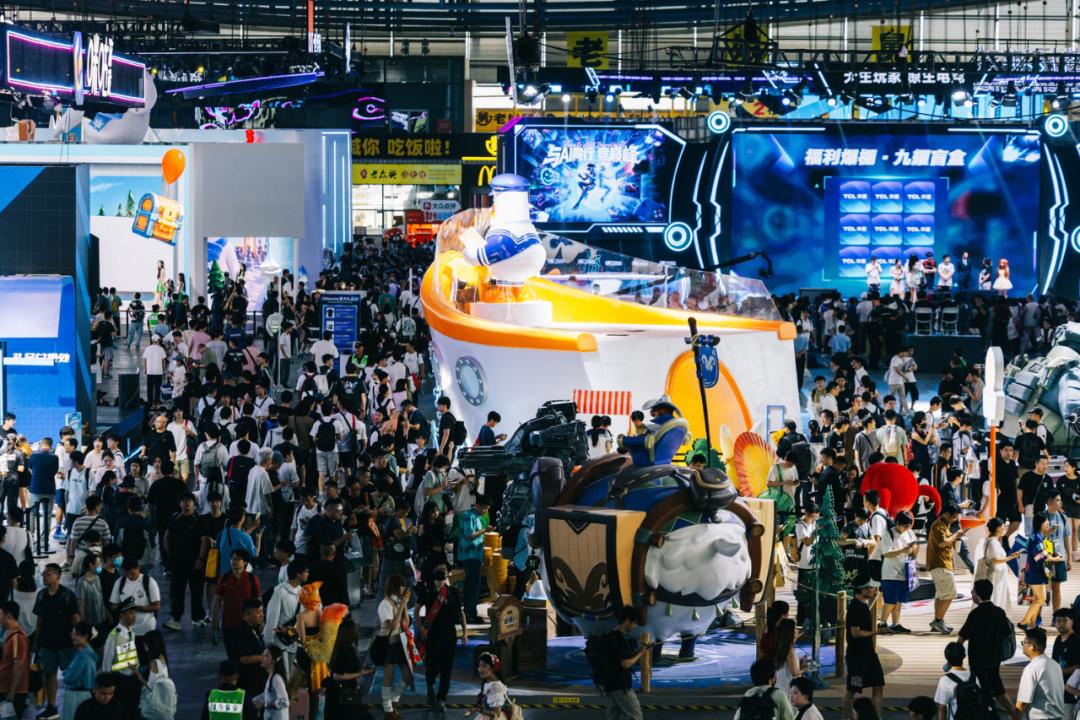
Tencent Games Exhibition Zone
In the Game IP Special Exhibition area, giant exhibits of 8 games including Honor of Kings, Delta Action, Crossfire: Future, Arena Breakout: Infinite, Roco Kingdom: World, Lili's Little People Kingdom, Dungeon & Fighter: Innovation Century, and Rainbow Six Siege: Assault are displayed for players to check in and take photos. In the AI Game Zone, three games are collectively unveiled: the intangible cultural heritage themed mini-game Digital Jingdezhen · Little Craftsman of Porcelain Capital, the AI agent narrative RPG The Cat Immortal's Notes, and the narrative-focused platform adventure AI Game Man Cannot Fly. In the AI Product Zone, four AI tool products including Code Name Craft, LAP, MagicDawn and MagicLomix are showcased, covering multiple production links such as game development, rendering and art creation.
Digging deeper, Tencent divides AI into two layers: C-end experience and B-end tools. In terms of C-end experience, Code Name Craft allows players to describe their ideas in natural language and generate a runnable DIY game on site; LAP is an AI platform for game asset production that covers various content scenarios; MagicDawn integrates spatial audio, global illumination and AI package compression into the cutting-edge rendering pipeline; MagicLomix relies on the AI-native engine to support complex gameplay and high-quality art performance.
Unity's booth is completely different. As a leading game engine, Unity supports more than 70% of the top mobile games around the world, covering over 3 billion monthly active devices. This year, Unity focuses on displaying three products including Vector, Offerwall and Aura, as well as the upcoming Unity Ads MCP and Campaign Assistant conversational AI assistant. Among them, Vector has been deeply integrated with AI: developers only need to set business goals, and AI can continuously optimize to achieve the expected results. After full deployment on the Unity Ads ad network, the installation volume of ad campaigns with ad revenue as the optimization target has increased by 24%.
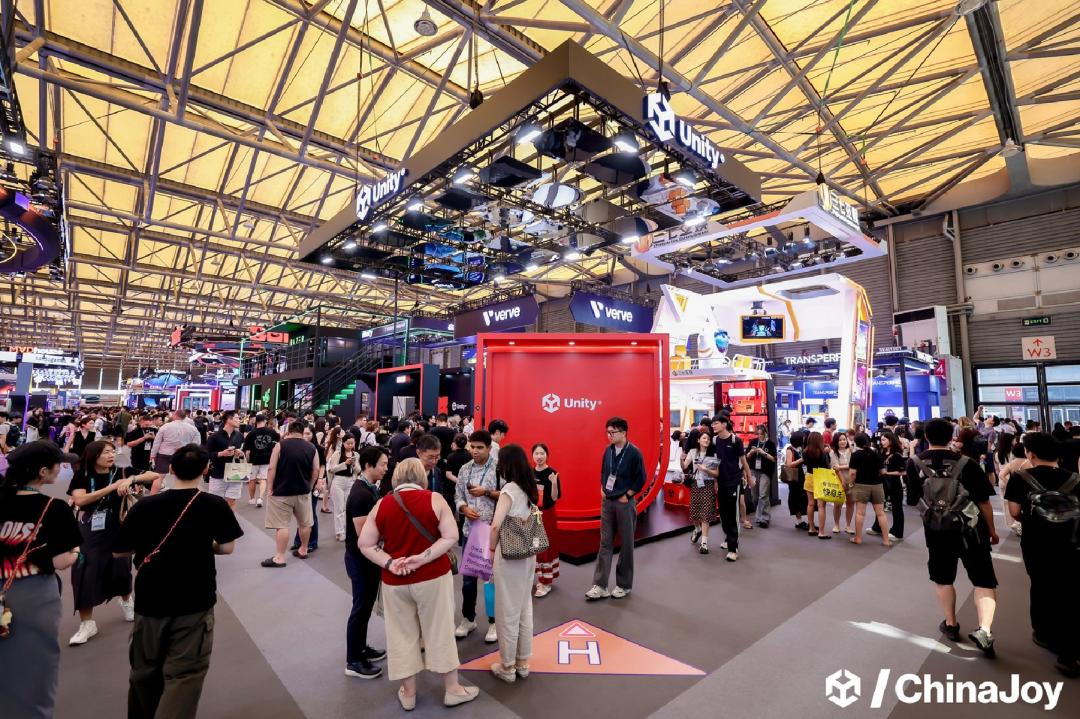
Unity Exhibition Zone
Of course, there are also some contrasting exhibits that "hardly show any trace of AI".
This year, Sony Interactive Entertainment takes "Play the World" as its theme. Among the eight trial games, there are domestic games from the China Star Project including Daba: Land of Water Traces, Subthreshold, and A Sound of Autumn: Jinyiwei, as well as overseas works such as Gran Turismo 7, Helldivers 2, and Marvel Battle Souls: Soul of Fighters. The fourth phase of the China Star Project was launched last year, with full upgrades in support intensity compared with the previous three phases, providing stronger guarantee and support for each selected project.
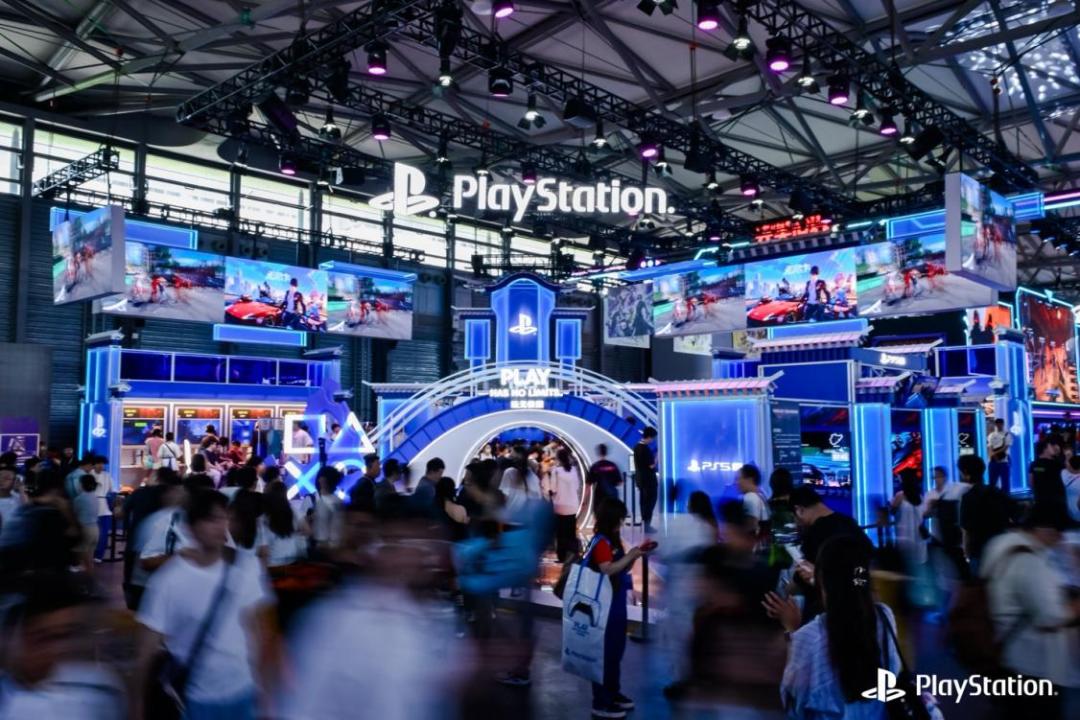
Sony PlayStation Exhibition Zone
Another game The Defiant, whose PV was first exposed two years ago, also attracted a large number of players. It is a single-player first-person shooter game set against the background of the Chinese People's War of Resistance Against Japanese Aggression, and this year it chose to open trial play at the CJ site. The Chinese battlefield is the main eastern battlefield of the World Anti-Fascist War, but it was rarely presented systematically in the mainstream international war games before. The release of The Defiant adds new weight to the diversification of domestic games.
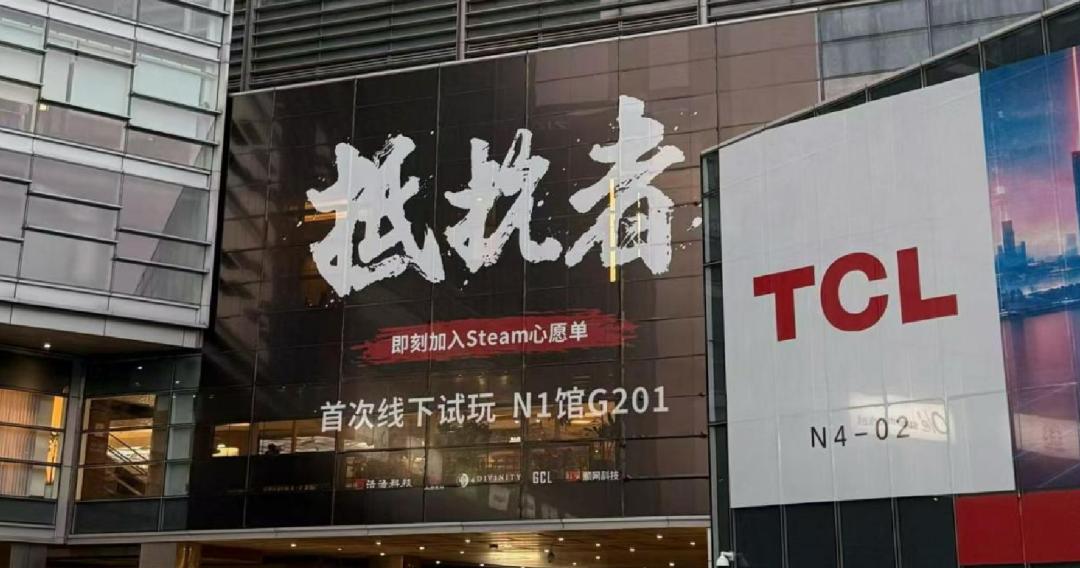
Giant advertisement of The Defiant outside the venue
Putting all these exhibitors together, ChinaJoy 2026 is not only a stage for AI, but a field where AI and non-AI, technology and culture, C-end experience and B-end tools are intertwined.
During ChinaJoy, Chen Haisheng, Senior Solution Architect of Alibaba Cloud, and Zhao Tianyi, Head of Product of TapTap Maker, participated in a live dialogue initiated by 36Kr Games, talking about the AI transformation trend of the game industry. Chen Haisheng said that what customers are asking now is no longer "whether AI can write game code", but "how to use it and how to use it well".
AI has indeed become ubiquitous, but AI is not the whole of CJ; this "both and not" position makes the "internalization" of AI even more thought-provoking.
02
If we break down the AI actions of large and small manufacturers, we will find that the internalization of AI is taking place simultaneously at four levels.
The first is tool internalization. Model capabilities are no longer limited to laboratory demos, but are embedded into the production pipeline of products. For example, in the core creative links of TapTap Maker such as game logic generation and code writing, various models have been integrated, and creators can selectively call them according to their needs; Tencent's Code Name Craft allows creators without programming or art background to describe their ideas in natural language and automatically generate a runnable game prototype.
These products are subtly influencing the future game creation pipeline, which in turn brings changes to the pipeline process. Most of the creators we communicated with this year are not discussing the separate application of AI in a certain link, but carrying out comprehensive AI integration along the process of "planning, art, development, verification and distribution".
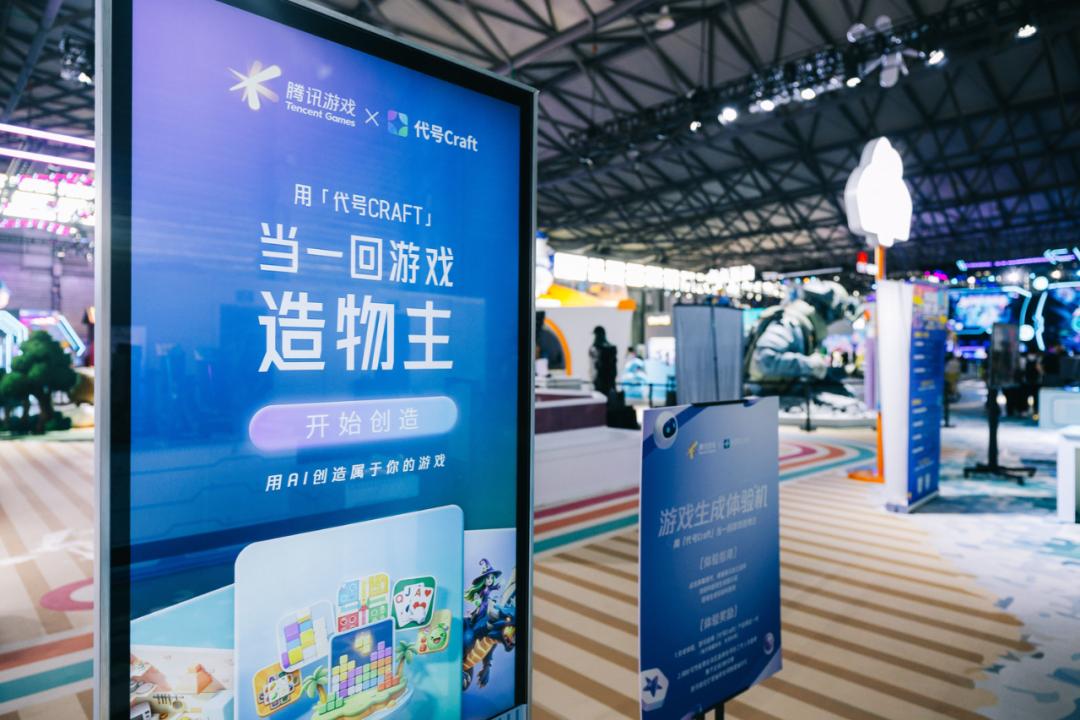
Tencent Games Code Name Craft
The third level is identity internalization. More and more game companies are beginning to redefine their products in an AI-oriented way. At an event in May this year, Liu Wei, co-founder of miHoYo, stated that the company will invest up to 1000 billion yuan in AI projects in the next three years. Earlier, Cai Haoyu's Silicon Valley-based subsidiary Anuttacon has targeted the next-generation game-specific large model with emotional understanding and autonomous interaction capabilities. The established manufacturer 37 Interactive Entertainment has covered multiple key links of Physical AI including world model, perceptual interaction, execution control, AI ontology and terminals through investment. NetEase Fuxi's Youling Agent AOP, ACE high-performance distributed engine, and swarm intelligence and collaboration mechanism form a comprehensive ToB platform capability.
The AI company founded by Cai Haoyu overseas
Finally, there is the cognitive internalization of AI applications. To put it simply, AI has evolved from an innovative topic to the default trend of the game industry, which itself is the deepest layer of AI internalization.
In the live dialogue during CJ, Chen Haisheng divided the past few years into three stages: two years ago, people were anxious about "not being able to make it"; last year, they were anxious about whether Agent can really execute tasks; now they are anxious about "how to distribute, how to comply with regulations, and how to grade after the product is made". Zhao Tianyi cited the data: the number of games produced by TapTap Maker in the first half of last year was 502, and this year the number exceeded 5000, of which more than 4000 were games made with AI participation.
However, the explosion of supply raises a new question: who will play these finished games?
The answer to this question may keep changing with the development of technology, and people from different perspectives will give different answers. For example, Zhao Tianyi said that "the progress of AI will keep eroding many things, so when making tools, we must invest in the parts that will not be eroded by AI."
Conclusion
Looking back at the AI tools in the CJ venue, we will find that the AI transformation of game companies is taking several completely different paths.
Tencent takes the path of ecological betting. Its total R&D investment in 2025 reached 857.5 billion yuan, of which 180 billion yuan was invested in Hunyuan and Yuanbao throughout the year, and the investment will continue to increase in 2026. This path of fully integrating AI brain, platform, cloud infrastructure and full-stack ecosystem is a typical way for Internet giants to bet on AI.
miHoYo takes the path of long-term independent R&D. Relying on the long-term accumulation of multiple hit mobile games, miHoYo has become one of the manufacturers with the best cash flow in the industry, which enables it to support the 1000 billion yuan AI investment. Of course, betting on AI is never a sudden decision for miHoYo. As early as 2018, miHoYo established the Entropy Research Department and launched the R&D of Glossa, its self-developed game-specific large model.
Judging from the timeline of recent years, miHoYo participated in the investment when Minimax was first established in 2021; Cai Haoyu founded Anuttacon in Silicon Valley in 2023, and the 3-year 1000 billion plan was announced in 2026. Therefore, miHoYo has become the game manufacturer that takes AI as the "next-generation soul of the company" to bet on.
Coupled with the 37 Interactive Entertainment mentioned earlier, all manufacturers seem to take different paths, but their ultimate goal is clear: AI will definitely be the core competitiveness of the game industry in the next era.
Back to the site of ChinaJoy, AI is not in the absolute center position, but it is ubiquitous.
"Play together" is the current situation, and "internalization" is the final destination. The great transformation of the game industry has just begun.
This article was first published on 36Kr Games.