Is Meet Noodles really expensive?
Mr. Noodles failed to enter the Chongqing market because its taste is not good enough, and it cannot make inroads into Wuhan for the simple reason that its price is too high...
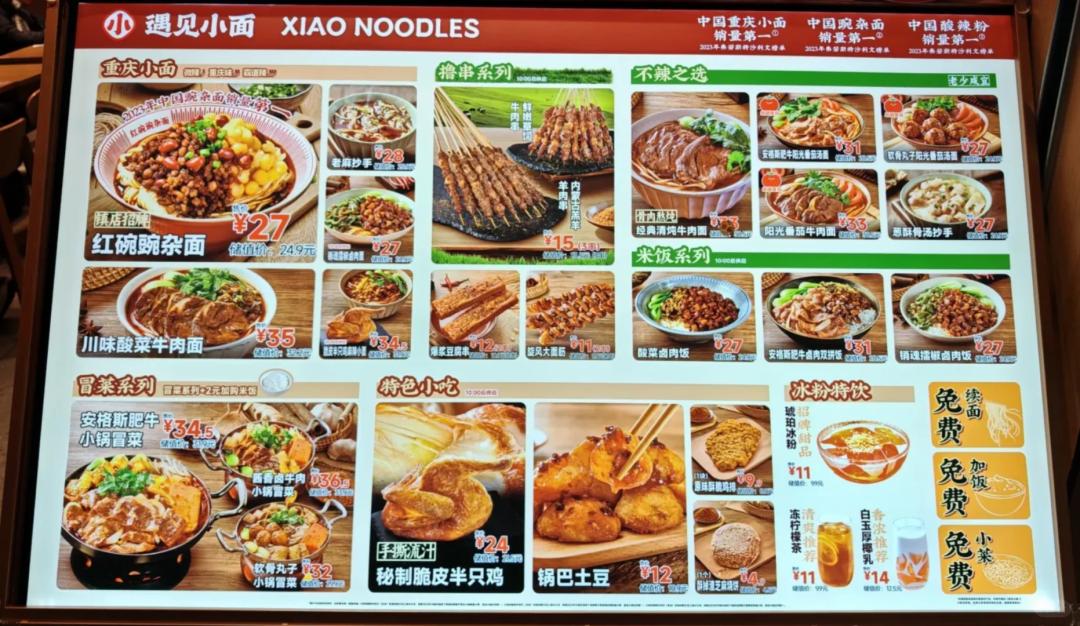
On August 18, the official team of Mr. Noodles confirmed that starting from August 17, all its stores across the country will further cut dish prices. This "first public-listed Chinese noodle restaurant brand" has lowered prices for four consecutive years. Its signature red bowl pea and chili noodle is priced at 20.5 yuan, down from 26 yuan, marking a cumulative drop of 21.2%. The average per-customer spending at its directly operated stores has fallen from 36.2 yuan in 2022 to 28.6 yuan in the first half of 2026.
From the perspective of Chongqing locals, this bowl of noodles has bland lukewarm chili oil and tasteless Sichuan peppercorns, which looks like a rigid specimen of the once vibrant local food culture. For Wuhan locals, the noodle is overpriced: a 20-yuan bowl of it is enough to buy four bowls of local hot dry noodles with an extra egg. Mr. Noodles lacks the lively down-to-earth atmosphere in Chongqing, and carries an overblown price tag in Wuhan, failing to get any advantage in either market. Consumers' feedback is very direct: it is still expensive.
550 Stores: Why the Cost Dilution Effect Remains Limited
According to normal business logic, the more stores a brand operates, the stronger its bargaining power for bulk procurement will be, the higher the capacity utilization rate of its central kitchen will be, and the marginal cost per bowl of noodles should keep decreasing. The number of Mr. Noodles' stores is indeed on the rise, from 417 at the middle of 2025 to 550 at the end of June 2026, with a net increase of 133 stores in one year. However, a close look at its financial report shows that the scale effect has been realized to a very limited extent.
In the whole year of 2025, the proportion of raw materials and consumables in revenue dropped from 34.3% to 32.4%, labor cost from 23.0% to 21.9%, and rent from 18.2% to 17.0%. The three core cost ratios were optimized by a total of about 4 percentage points, which seems not bad. But when it comes to the cost of a single bowl of noodles, the food material cost ratio only dropped by 1.9 percentage points. The procurement scale of 550 stores, compared with that of 417 stores, has not achieved a qualitative leap in the optimization range of food material cost per bowl.
If we look at the data of the first half of 2026, the trend has reversed. The proportion of raw materials and consumables in revenue was 31.8%, up 0.4 percentage points from 31.4% in the same period of the previous year; the proportion of labor cost in revenue was 23.6%, up 1.0 percentage points from 22.6% in the same period of the previous year; the proportion of rent in revenue was 16.9%, down 1.1 percentage points from 18.0% in the same period of the previous year. The company attributes the rise of labor cost ratio to the increase of the proportion of directly operated stores; the synchronous rise of raw material cost ratio is only partially explained by the change of business structure. In the half year with the fastest store expansion, the scale effect failed to further dilute the food and labor costs, which instead rose against the trend.
The real source of profit growth lies elsewhere. In the first half of 2026, the rent expenditure was 158.6 million yuan, a year-on-year increase of 25.6%, which was significantly lower than the revenue growth rate of 33.6%, and the rent proportion dropped from 18.0% to 16.9%. The reason is that new stores are expanded from core business districts to low-rent areas on the urban periphery, and the rent of old stores remains stable. The proportion of advertising and promotion expenses dropped from 1.4% to 1.1%, and the headquarters management expenses are diluted by more stores. In other words, profit growth relies on expanding the total number of stores, lowering rent by choosing locations in lower-tier areas, and diluting headquarters expenses. The health level of the single-store operating model itself has not improved at all.
The same-store data can better illustrate the problem. In the first half of 2026, same-store sales decreased by 4.3% year on year, and the same-store per-customer spending dropped from 31.3 yuan to 27.7 yuan. The average daily order volume increased from 372 to 401, up 7.8%, but there is still a gap between the order growth range and the decline of per-customer spending. The profitability of single stores has improved limitedly with the expansion of scale. According to rough calculation, the average profit attributable to shareholders per order at the company level is about 1.7 yuan.
This leads to a more sharp question: Has Mr. Noodles fallen into the vicious circle of diminishing returns to scale?
The Chinese noodle restaurant track is highly fragmented, with the top five brands accounting for only 3% of the total market share, and Mr. Noodles ranks fourth with a 0.5% share. The 550 stores are still far from the inflection point of scale effect, but the management radius, quality control difficulty and organizational cost have risen synchronously with the expansion of stores. Most of the benefits brought by scale are eaten up by the costs brought by scale, the marginal cost of each bowl of noodles remains stagnant, and price cuts can only be achieved by squeezing profit margins, which is the fundamental reason why it is still considered expensive after four consecutive years of price reduction.
550 stores did not bring down the cost per bowl of noodles, and the food and labor cost ratios even rose against the trend. Profits rely on lower rent from location selection in low-rent areas and dilution of headquarters expenses, the single-store operating model remains unchanged, and the profit per order is only 1.7 yuan. Diminishing returns to scale and limited cost dilution effect are the root causes for its high price even after four years of consecutive price cuts.
5-yuan Hot Dry Noodles Can Make Profit, Why Does the 20-yuan Pre-made Noodle Claim Low Profit
Let's turn our sight to Wuhan. Some stores of Cai Lin Ji use the 5-yuan signature hot dry noodle as a loss leader, and the hot dry noodles in community stores of Chang Qing Mai Xiang Yuan are priced at 5 to 8 yuan. Multiple commercial formula calculations show that the food material cost of a bowl of hot dry noodles is about 2.2 to 2.8 yuan: 200 grams of noodles cost about 0.8 yuan, sesame paste costs about 0.5 yuan, seasoning sauce costs about 0.3 yuan, and side dishes and tableware cost about 0.6 to 1 yuan. According to this cost range, the gross profit margin of the 5-yuan product is about 45% to 55%, and that of the 8-yuan product is about 65% to 72%, which falls into the healthy profit range of fast food.
It is worth noting that Wuhan hot dry noodle brands also adopt central kitchen operation and full standardization. Chang Qing Mai Xiang Yuan builds its own central factory, equipped with 4 automated hot dry noodle production lines, and the amount of sesame paste is precisely controlled at 25 grams per spoon. According to public reports, Cai Lin Ji locks the ratio of flour, salt and alkali at 250:2:1, the diameter of noodles is 1.5 to 1.6 mm, and a new employee can master the whole operation in 7 days. Its standardization level is equivalent to that of Mr. Noodles, and it can still make profits even at 5 yuan per bowl.
The difference lies outside the bowl.
Hot dry noodles are a rigid demand category for breakfast, and the serving process is counted by seconds: it takes less than one minute to blanch the noodles and add seasonings. Community small stores feature low rent, simple decoration and few staff, and make profits by extremely high table turnover rate and small profits but quick turnover. Wuhan sells more than 4 million bowls of hot dry noodles every day, and the annual in-store consumption output exceeds 2 billion yuan, following the path of "low per-customer spending, high frequency, and extremely light operating model". Mr. Noodles mainly opens stores in shopping malls and office districts, and all the costs including shopping mall rent, decoration standards, service configuration, headquarters team expenses, and compliance costs for listed companies are added to the price of that bowl of noodles. What is behind this bowl of noodles is a complete set of solutions for shopping mall fast food, but consumers only evaluate the value based on the content inside the bowl.
What is more fatal is the degree of prefabrication. According to the breakdown by netizens, most dishes of Mr. Noodles are pre-made uniformly in the central kitchen, the noodle cakes are supplied by factories, the soup bases and seasonings are all packaged products, and the toppings are pre-made meal packages. Stores only need to unpack, heat and assemble the products, and the serving process is highly simplified. Some consumers say they can get their order within 3 minutes. Some consumers point out that the serving process is exactly the same as making instant noodles, and the same type of pre-made noodles in the supermarket only cost 3 to 5 yuan per bag, with similar taste after cooking at home. When the back-kitchen process of a bowl of noodles is close to that of Master Kong instant noodles, consumers' price anchor will shift from "shopping mall catering" to "convenient food". Although hot dry noodles are also delivered with pre-made noodles and sesame paste, the on-site operation of blanching noodles in boiling water and manually mixing seasonings retains the sense of operation and lively down-to-earth vibe, which forms the psychological basis for consumers to pay for freshly made food.
The price of Mr. Noodles is hard to reduce, and the root cause lies in its overly heavy business model. The food material cost saved by the central kitchen can only cover a small part of the shopping mall rent and headquarters expenses. It adopts the cost structure of full-service restaurants to run a fast food business, and faces consumers' price judgment with the category attribute of fast food, thus getting nothing from both sides.
With the same central kitchen operation and the same standardization level, Wuhan hot dry noodles can still get a 50% gross profit at 5 yuan, relying on the extremely light store model and extremely high table turnover rate. Mr. Noodles adds all the costs including shopping mall rent, headquarters expenses and listed company compliance costs into the price of noodles, while its back-kitchen operation process is almost the same as that of instant noodles. The operating model is too heavy, and consumers' intuitive feeling is that the noodles are very expensive.
One Noodle, Two Pricing Systems: Airport Stores Can Be Expensive, Why Should Community Stores Follow the Same Rule
Netizens' complaints are always accurate. Some say "the back kitchen almost only unpacks and reheats pre-made food, which is exactly the same as making instant noodles, but sells for 20 to 30 yuan"; some point out that "dishes are highly dependent on standardized prefabrication, lacking the wok-hei aroma, but the price is still high even with reduced taste quality"; some mention the past case that an 8-yuan noodle run by a family shop in Nanyang was sued, and joke that the 8-yuan noodles are called "low-end instant noodles" by netizens, so the 20-yuan noodles naturally make people feel that they are paying an unnecessary premium. These comments are full of emotions, but point out a real problem: the pricing of a bowl of noodles should be determined by the scenario where it is located. The scenario comes first, and the unified brand pricing should give way to differentiated pricing based on scenarios.
Consumers have psychological expectations for the high price of noodles in restaurants at airports, high-speed railway stations and highway service areas. The rent in these locations is extremely high, the passenger flow is dominated by one-time consumption, and the price sensitivity is low. The premium is essentially paid for the location and convenience. The same goes for high-end shopping malls, the general catering price level in the business district is there, and consumers have accepted the premium when they walk into the shopping mall.
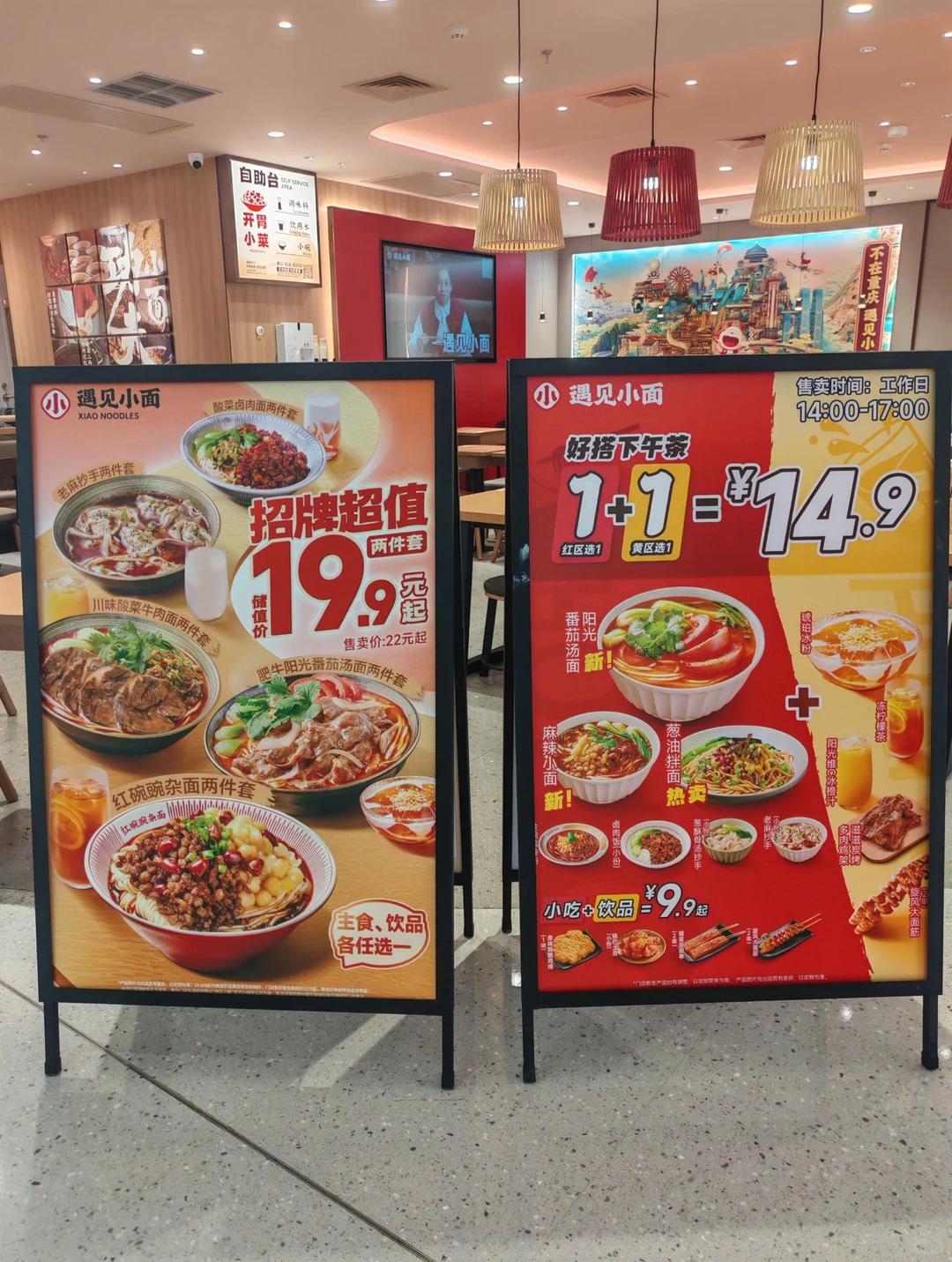
But community stores and CBD office building stores follow a completely different logic. Community stores have low rent and fixed customer groups, and their business relies on repeated purchases from local residents, so the pricing must be close to the affordable level for ordinary people. The stores in CBD face office workers who have lunch there every day, who are highly sensitive to prices, and their price tolerance is hugely different between eating there three times a week and three times a year. Catering analyst Wang Hongdong put it bluntly: the price is acceptable at airports, stations and shopping malls, but the price reduction is still too small when the same price is applied to communities and street-side stores.
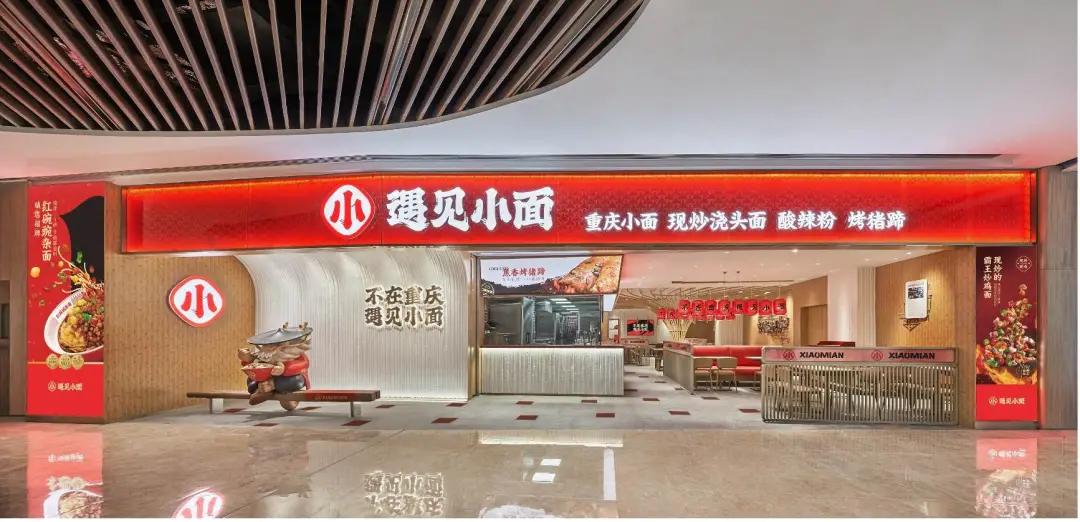
Mr. Noodles' current location selection covers all scenarios including shopping malls, office districts, residential areas, schools, airports, railway stations, and ports, but it implements a nearly unified pricing system. This creates a mismatch: stores opened in communities carry the cost structure and pricing inertia of shopping mall stores, and use the premium logic of airport stores to run the repeat purchase business of local residents. When consumers walk into a Mr. Noodles store in the community, they see prices similar to those in shopping mall stores, and eat pre-made noodles that are only unpacked and heated, so they naturally feel the premium is too high.
The core of the "one noodle, two pricing systems" concept is to make the price match the scenario. High-rent scenarios adopt high pricing, and low-rent scenarios return to affordable prices, which has been a mature practice in the chain catering industry. Mr. Noodles has the ability to do this. Its financial report shows that it is already reducing rent costs by choosing lower-rent locations, but the dividend of price reduction has been rarely transmitted to the menu of community stores. After four consecutive years of price cuts, what has been reduced is the national unified average price, and the price gap between different scenarios still exists.
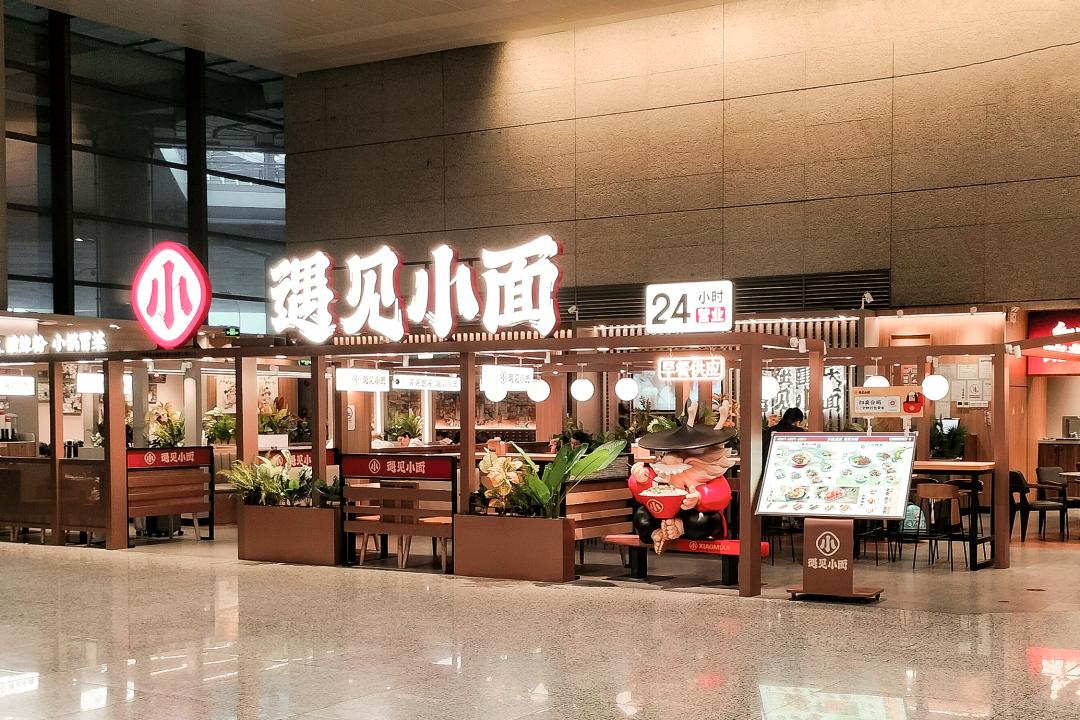
Image source: Internet
Noodles are a category with the most limited premium space. Consumers have an instinctive judgment on the cost of a bowl of noodles, and they have a clear idea of how much the flour, sauce and toppings are worth. A 20-yuan bowl of noodles in a shopping mall is acceptable, but people will hesitate when the same bowl of noodles sells for 20 yuan in a store downstairs of their community. The core problem Mr. Noodles needs to solve is to make the community-located noodle stores truly match their price from the rent model, decoration standard to personnel configuration. No matter how many years of price cuts they carry out, consumers' answer remains two words: really expensive.