China has seized the core lifeline of CPO.
In today's capital market, the most sought-after chemical elements besides silicon and copper are probably indium, or more precisely, a compound named Indium Phosphide (InP).
Indium Phosphide sits at the very upstream of the optical module industry chain. High-speed optical modules and CPO require optical chips, and more than half of these optical chips are made of Indium Phosphide.
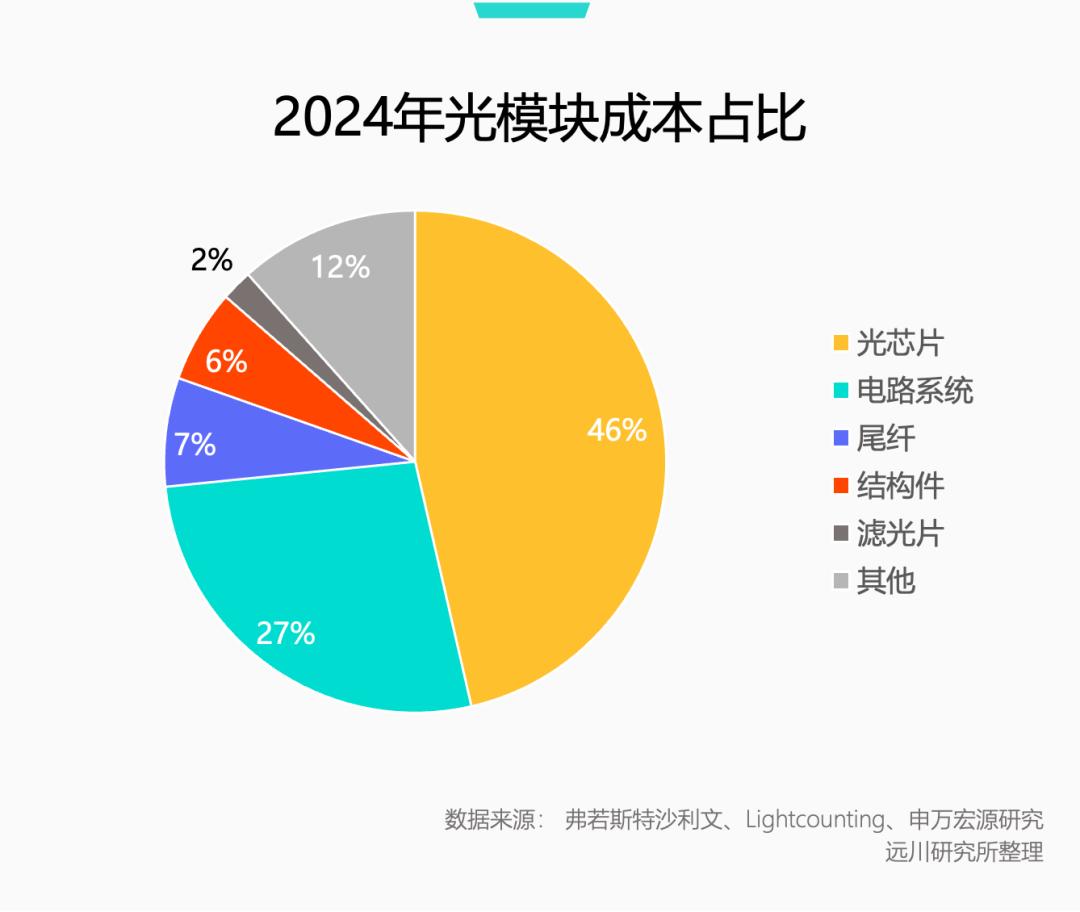
The boom in AI data center construction has driven both volume and price of high-speed optical modules to rise, and the domino effect has spread all the way to the most upstream end, pushing indium, a rare chemical element not covered in nine-year compulsory education curriculums, to the center of the stage. The secondary market has been hyping this trend since last year, all centered on the core keyword of "supply shortage".
Earlier this month, the CEO of optical chip giant Lumentum stated at an industry summit that the shortage of Indium Phosphide is even more severe than that of memory chips. "I do not believe our production capacity together with Coherent can meet the demands of Nvidia and other customers [1]." The two companies hold a combined share of over 80% in the high-end Indium Phosphide optical chip market.
On the other side, Nokia, one of Lumentum's major customers, has been forced to build its own production capacity. Last year, it acquired Infinera to take over its Indium Phosphide wafer factory in California, and recently made another acquisition of NXP's Arizona plant, aiming to renovate it into an Indium Phosphide optical chip production line.
Complaints from downstream players keep emerging, putting huge pressure on Indium Phosphide wafer manufacturers, making Japan's Sumitomo and US-based AXT, which monopolize the supply, the target of public criticism.
However, AXT refuses to take the blame, and has repeatedly emphasized in recent earnings calls that the real culprit behind the Indium Phosphide shortage is someone else.
Natural Endowment and Regulation
When Trump visited China in May, the CEO of Coherent booked a seat on the accompanying Airbus earlier than Jensen Huang.
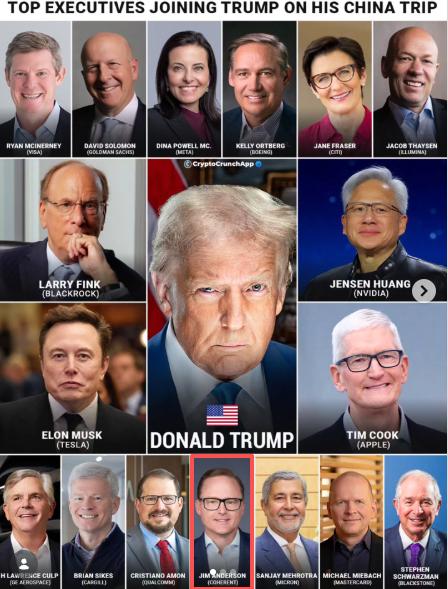
Coherent CEO Jim Anderson on the accompanying list of Trump's visit to China
Coherent is one of the world's largest suppliers of Indium Phosphide optical chips, and the CPO products of Nvidia use Coherent's Indium Phosphide lasers. To ensure supply, Nvidia not only made a $2 billion strategic investment in Coherent, but Jensen Huang also personally attended the topping-out ceremony of Coherent's new plant in June, encouraging the partner to step up capacity expansion.
Coherent's trip to China this time is ostensibly to "promote Sino-US optical chip cooperation", but the real purpose is obvious to all inside and outside the industry: to secure supply.
The production of Indium Phosphide wafers can be simply divided into three steps: smelting of primary indium, purification of indium, and manufacturing of Indium Phosphide wafers. Coincidentally, China has a certain degree of control over all three links.
The first step is the smelting of primary indium.
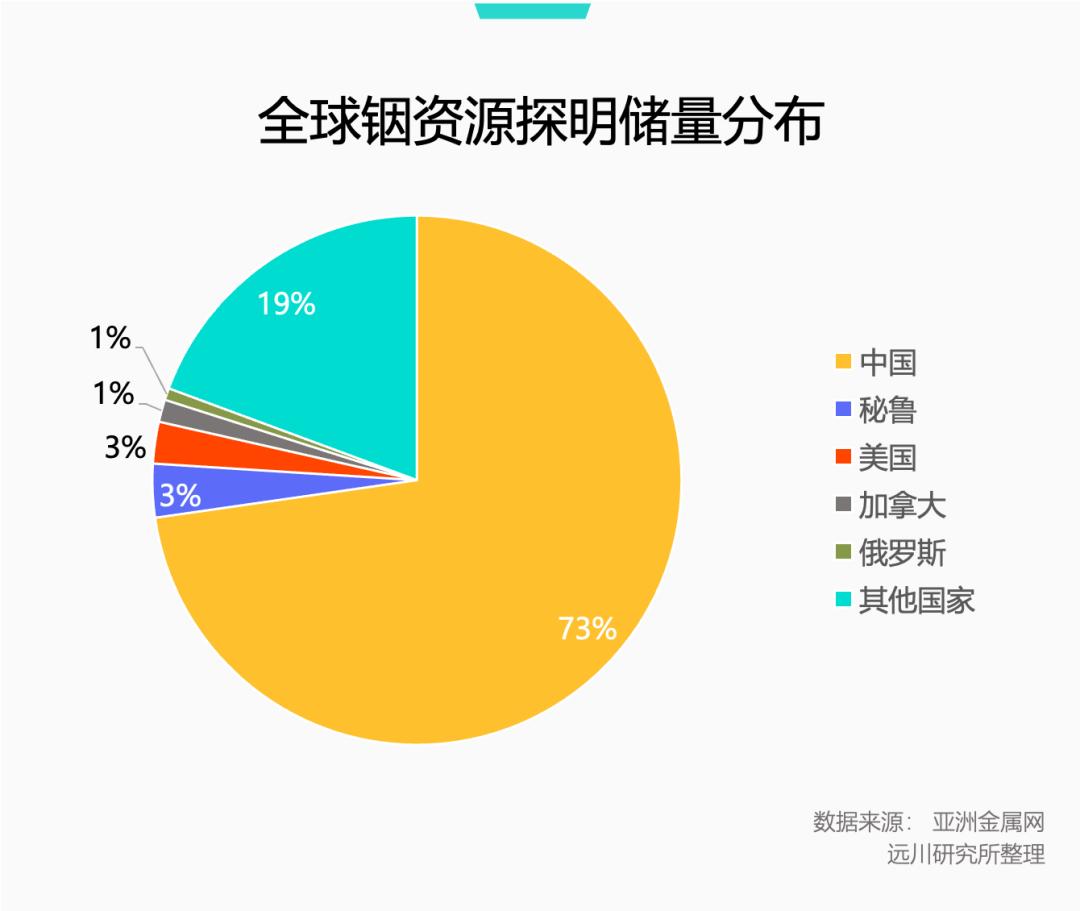
China's biggest advantage lies in its vast territory and abundant resources. The global reserve of indium is only 50,000 tons, half of which is exploitable. Among the proven global indium reserves, China accounts for more than 70% [2].
Another advantage is the world's largest metal smelting scale.
Since indium is scattered in the crust (no rich ore has ever been discovered) and is difficult to mine separately, the vast majority of indium is produced as a by-product during the smelting process of zinc or tin. Its production capacity depends on the supply and demand of zinc and tin, rather than fluctuating with the price of indium itself.
It is just like the bean dregs left after making tofu: no one will build a tofu factory specifically to get bean dregs.
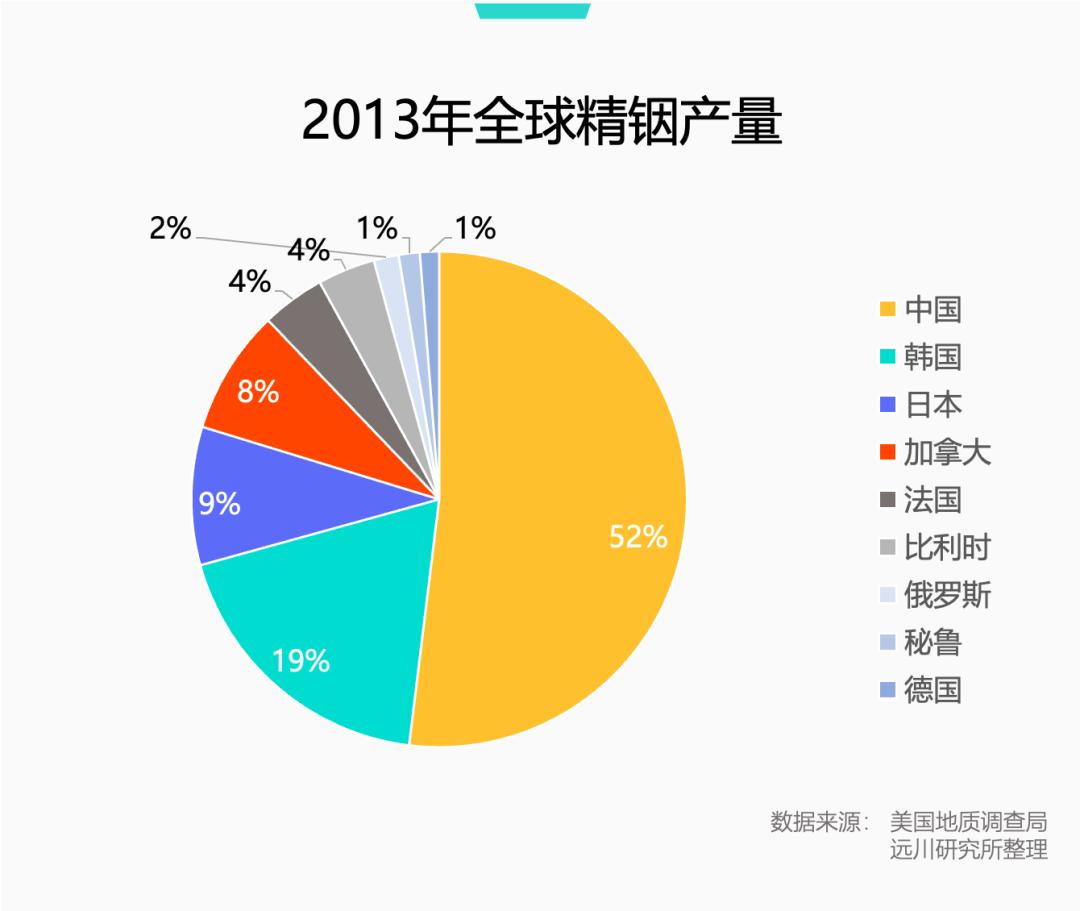
But China produces the largest amount of "tofu" in the world, so it leaves more "bean dregs" than other countries. China's primary indium output accounts for more than 50% of the global total. At its peak, 80% of the 400 tons of indium produced globally every year was exported from Yunnan, China [3].
The second step is the purification of indium.
Primary indium (purity 95%-99%) needs to be purified into refined indium (4N-5N grade, purity 99.99%-99.999%), and then further purified into high-purity indium (6N grade, purity 99.9999%) before it can be used to manufacture Indium Phosphide optical chips.
China's refined indium output accounts for 70%-80% of the global total, making it the absolute dominant player in this segment. The 6N grade and above high-purity indium market is still dominated by Japanese manufacturers, with Dowa and JX Metals occupying most of the market, but almost all the primary indium they use for purification comes from China.
The last step is Indium Phosphide wafers, and the situation here is rather special.
This segment is China's weakest link, but there is a Beijing Tongmei that actively "integrates into the local market".
Beijing Tongmei is the operating entity of US-based AXT in China, and is currently the world's second largest Indium Phosphide wafer manufacturer (the first is Japan's Sumitomo). Back then, to get closer to the primary indium production site and save transportation costs, AXT moved all its Indium Phosphide wafer production lines to China.
Later, Beijing Tongmei gradually took over all the physical business operations of AXT, including the production of Indium Phosphide wafers, while its North American parent company is only responsible for capital operations. That means, in theory, all Indium Phosphide wafers produced by AXT are made in China, and even if they are shipped back to the US, they have to go through the export process for Chinese goods.
With natural endowments and acquired advantages, China has seized the initiative in the indium industry chain across all three links, but the more lethal factor is the big hand of export control.
In February last year, China included Indium Phosphide and related products in the export control list, and the first affected party was Beijing Tongmei (AXT). Although the official said it obtained the export license in June, "the quantity is less than expected", leading to its revenue in the fourth quarter of that year being lower than expected.
The long-term uncertainty brought by export control has put a heavy yoke on the already fragile supply chain. AXT stated at its second-quarter earnings call that even with strong demand and sufficient production capacity, AXT's ability to ship to customers outside China depends on the licensing decisions of the Chinese government [5].
That is not all.
Earlier this year, China extended the control to the more upstream indium, stipulating that the export volume shall not exceed 30% of the total output, and further tightened the export approval for 6N grade and above high-purity indium [4], directly putting the knife on the main artery of the Indium Phosphide industry.
Japan's Sumitomo and JX Metals have become the targets of public criticism, as more than 90% of their high-purity indium raw materials are purchased from China. Reports say that due to supply restrictions, their annual production capacity has dropped from 180,000 wafers to less than 100,000, and the delivery cycle has been extended from less than half a year to 18 months.
Under such circumstances, it is easy to understand why Coherent's CEO is in a hurry to come to China to build temporary friendship and plead for "allowing the goods to be released".
However, it is not only the Chinese government that determines whether companies like Coherent can deliver goods, but also Chinese manufacturers along the industry chain.
Capable of Taking on Important Responsibilities?
There is no doubt that under the dual pressure of supply shortage and tightening regulation, the biggest beneficiary is China's Indium Phosphide industry chain.
To be fair, in the chain of "primary indium -> high-purity indium -> Indium Phosphide wafer", China's real dominant position is still in the most upstream primary indium segment.
In terms of high-purity indium, Chinese manufacturers mainly have production capacity advantages in mid-to-low end products below 6N grade, while the 6N/7N grade high-end products that can be used for optical chips are still long-term dominated by Japanese companies such as DOWA and JX Metal. Although some Chinese enterprises have made breakthroughs in recent years (such as Zhuzhou Keneng), the verification process still has a long way to go.
The situation of Chinese Indium Phosphide wafer manufacturers (excluding Beijing Tongmei) is similar, that is, strong in mid-to-low end segments, weak in high-end segments.
The localization rate of low-end 2-inch wafers is the highest, and mid-end 3/4-inch wafers can already compete with overseas rivals and occupy most of the domestic market. However, for the most advanced 6-inch wafers, the localization rate is less than 5%. Counting all sizes, China's global share is still less than 10% [4].
The most direct benefit brought by the current export control is the transfer and growth of orders.
When overseas giants are blocked from obtaining raw materials from China and the supply uncertainty rises sharply, downstream customers who are eager to get goods will naturally prefer more stable Chinese manufacturers, especially local Chinese customers who have easier access to domestic resources.
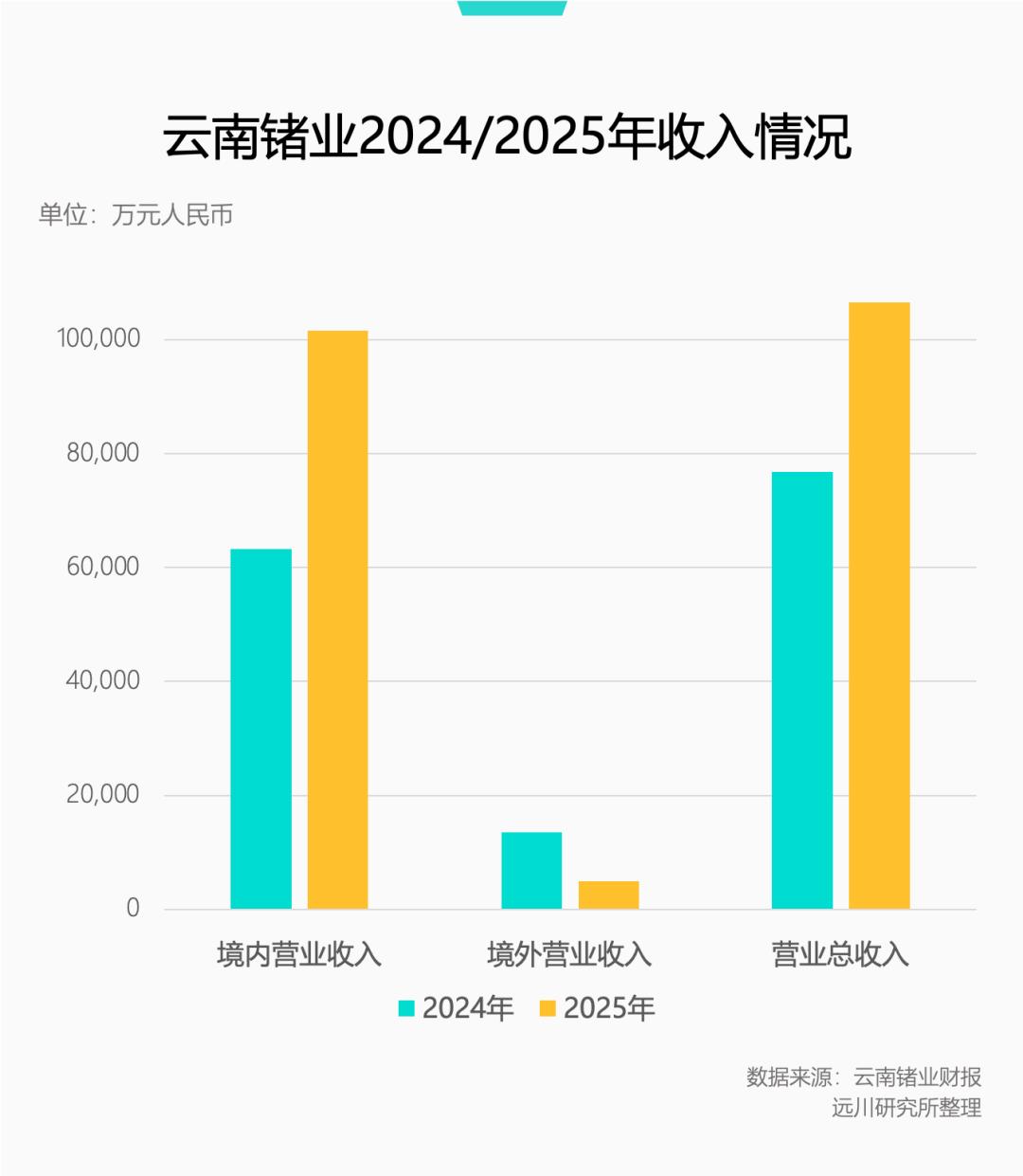
Yunnan Germanium is the leading domestic Indium Phosphide wafer manufacturer and currently the only domestic enterprise that can mass-produce 6-inch Indium Phosphide wafers. In 2025, its domestic operating revenue increased by 60.77% year-on-year (reaching about 1.016 billion yuan). According to its first-half performance forecast for this year, its non-net profit surged by more than 500%.
Last month, its subsidiary Yunnan Xinyao signed an Indium Phosphide wafer supply agreement with customers, with a total amount as high as 570 million yuan to 855 million yuan (tax included), which is higher than Yunnan Germanium's total annual revenue in 2025.
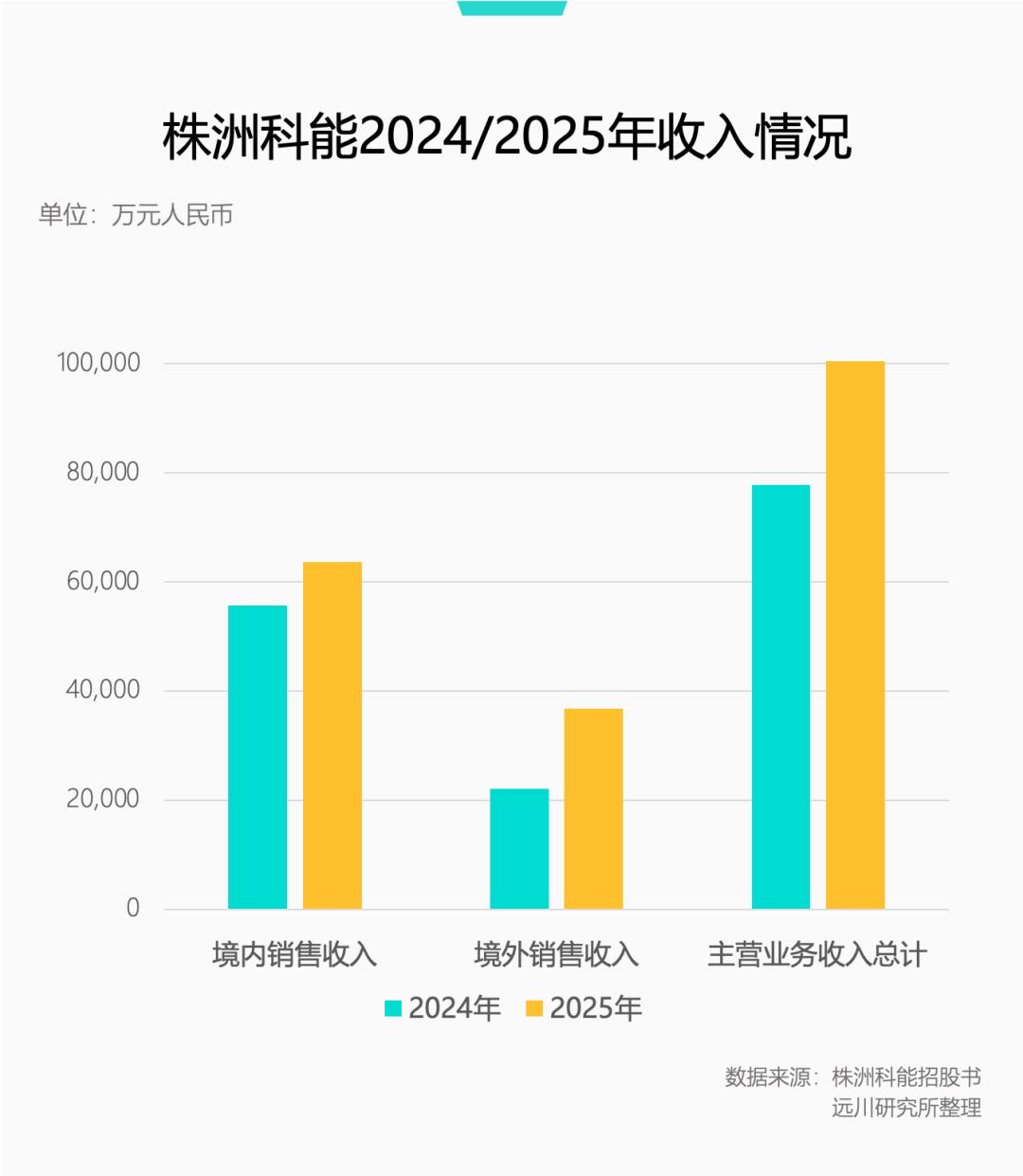
The more upstream high-purity indium giants are not to be outdone. Zhuzhou Keneng's domestic order revenue increased by more than 60% in 2025, with its domestic revenue exceeding 1 billion yuan for the first time. Meanwhile, its overseas revenue also soared from less than 30 million yuan in 2023 to nearly 200 million yuan in 2025.
Gaining access to the high-end product market is another benefit for domestic manufacturers.
In the Indium Phosphide wafer capacity expansion and production plan of Yunnan Germanium this year, 6-inch products are clearly included, which proves that its large-size products have moved from the laboratory R&D stage to the verification sprint and delivery stage.
Not only has Zhuzhou Keneng achieved stable supply of 6N/7N grade and above high-purity indium to overseas Indium Phosphide giants such as Wafer, but it has also broken the monopoly of the US, Japan and Europe on the 8N grade ultra-high-purity indium that represents the top level of the industry, and has achieved substantial sales.
At this point, there are only two problems left for the domestic Indium Phosphide supply chain: verification and production capacity.
The further upstream the chip industry goes, the stricter the customer verification becomes. The verification cycle for Indium Phosphide wafers usually takes several months to one year, and the cycle for high-purity indium is longer, usually 1-5 years. Before establishing cooperation, downstream customers will carry out multiple small-batch product verifications.
Among the manufacturers that have made breakthroughs in the high-end field, there are not only Zhuzhou Keneng and Yunnan Germanium, but a large part of them are stuck in the verification link.
For example, Yuguang Gold & Lead has achieved stable mass production of 7N high-purity indium. It is reported that it has sent samples to leading enterprises such as Huawei and Accelink for verification. According to its latest response on the investor interaction platform, it is currently in the stage of downstream customer sample certification and waiting for feedback results from downstream customers.
According to institutional estimates, the global demand for Indium Phosphide wafers will reach 2.6 million to 3 million pieces in 2026, but the global effective production capacity is only 600,000 to 700,000 pieces, with a shortage rate as high as 70% [7]. In terms of high-purity indium, according to industry media data, the indium gap in the optical communication field will be about 50 tons in 2026 [8].
With the accelerated mass production of Nvidia's CPO and the rapid volume growth of high-speed optical modules, this gap is likely to be further expanded, becoming a decisive battlefield between Chinese manufacturers and overseas giants.
As of the end of 2025, Yunnan Germanium's Indium Phosphide wafer production capacity is 150,000 pieces per year, and the planned production capacity will be increased to 180,000 pieces in 2026. In contrast, Japan's Sumitomo has a monthly production capacity of 39,000 pieces, with an estimated annual production capacity of more than 400,000 pieces, and the gap is still obvious.
The under-construction "high-quality Indium Phosphide single crystal wafer project" of Yunnan Germanium is said to add 300,000 pieces of annual production capacity. Japanese rivals are also ramping up capacity expansion, and it all depends on who can land their projects faster.
As of the end of 2025, Zhuzhou Keneng's annual production capacity of "5N and above" (